Category Archives: Hand Crafts

Looking back at “Tails”

Tails Quilt, made for Gareth
Miles “Tails” Prower
74″ x 94″
made 2008, photographed July 2011

Once upon a time, I made a quilt for my son.  The coolest part about this quilt is that he designed it himself. He was 10* at the time.

Tails Chart

With a tiny bit of help from me, my kiddo created this chart using an image he loved of his favorite video game character.  The main part of the quilt, excluding the solid pieces of fabric at the top and bottom, is made of 1,054 individual 2″ squares.

I pieced almost all of the mosaic while at retreat with my bee in 2008 on my Singer 301A. I remember chain piecing from different colored stacks of 2 1/2″ squares that I had cut beforehand. I pieced and pieced…and pieced, all along following the chart and keeping track of everything with Post-It notes!

Much of the following is taken from a post I made over on Fandom Quilts back in June 2008, after I’d completed quilting and binding the quilt.

The blue sparkle background fabric was cut in 2 1/2″ strips (except the top and bottom, which were wider), with the other colors all being 2 1/2″ squares (2″ finished). I quilted 2″ squares to give the illusion that the entire quilt was made from squares. You can still see the chalk lines from the grid I drew on the solid fabric.

The entire quilt was quilted on my home sewing machine using a walking foot and straight-line quilting.

Hanging from the side of our trampoline (photo taken in 2008) just for SCALE. You can see the quilting better in here. I think you can also tell that there are two colors of orange, and the subtle difference between the white and off-white. We gave this trampoline away earlier this year, 2011.

This awesome swirly red fabric was chosen by the kiddo for the back.

For quilting, I outlined the major shapes (the white quilting in the pic is one of the hands). When there were more than two or three blocks of the same color, I quilted around to echo the outside shape.

Grid quilting the top and bottom of the quilt created the illusion of 2″ squares on the solid top and bottom pieces of the quilt top.

If you’ve made it all the way to the end of this post and you like what you see, visit The Quilting Gallery’s Quilts for Little Boys contest and vote! There are lots of great quilts there to see, including “Tails!”

Aces High

Aces High
Aces High is my fresh-off-the sewing machine pattern, available in PDF or hard copy.

I love this design. Seriously, love it. The idea came from my very best friends, Jewells. I drafted the whole thing during an email conversation we had, while we went back and forth making her idea a reality.

It’s now tested, proofread and ready to roll!  This was the most natural-feeling design I’ve worked on in a while for Sewhooked. Natural meaning…it just flowed. It worked. And I love the outcome. I hope you do, too. Don’t you just think this would look great in a game room or be a fantastic gift for a poker player?

Aces High

19″ x 22″ wall hanging

Paper Piecing and Strip Piecing

Includes four original paper pieced patterns, cutting and piecing instructions.

$8 – PDF Instant Download
Add to Cart

Or

$8 (plus S&H) Hard Copy via Etsy.

You can also find Aces High, along with all of my other for sale PDF patterns right here on Sewhooked.


Add your Sewhooked photos to my flickr group and you might be featured in a future post!

Photobucket


Shop | Etsy

 FB | SHFB | Flickr | Twitter

PoD Week 27

This is your weekly reminder that The Project of Doom, A Harry Potter Block of the Week Mystery Quilt, is taking place over on Harry Potter Paper Piecing (hp_paperpiecing on Livejournal).

Today’s pattern is Week 27! That leaves only THREE more patterns until final instructions!

NEW – Join the Project of Doom on Livejournal to talk PoD, share photos, questions and stories!

Previous Patterns:

Links go straight to posts including block samples. If you do not wish to see photos of the blocks, click this link for previous posts.

Photobucket

https://i0.wp.com/i969.photobucket.com/albums/ae176/hppaper/sponsoredby.jpg

My Kitchen Window
My Kitchen Window, a pattern from the Sewhooked Shop

All Sewhooked patterns now available as hard copies! Click here for details.

PoD Week 26

This is your weekly reminder that The Project of Doom, A Harry Potter Block of the Week Mystery Quilt, is taking place over on Harry Potter Paper Piecing (hp_paperpiecing on Livejournal).

Today’s pattern is Week 26!

NEW – Join the Project of Doom on Livejournal to talk PoD, share photos, questions and stories!

Previous Patterns:

Links go straight to posts including block samples. If you do not wish to see photos of the blocks, click this link for previous posts.

Photobucket

https://i0.wp.com/i969.photobucket.com/albums/ae176/hppaper/sponsoredby.jpg

My Kitchen Window
My Kitchen Window, a pattern from the Sewhooked Shop

PoD Week 25

Photobucket

This is your weekly reminder that The Project of Doom, A Harry Potter Block of the Week Mystery Quilt, is taking place over on Harry Potter Paper Piecing (hp_paperpiecing on Livejournal).

We’re back today with Week 25!

Want how other quilters are interpreting the PoD patterns? You can see related photo posts here.

Previous Patterns:

Links go straight to posts including block samples. If you do not wish to see photos of the blocks, click this link for previous posts.

If you participate, and you’re part of the HP Paper Piecing community (it’s easy, you just need a Livejournal account), you’ll be eligible for awesome prizes every month! There are details on the site…so GO!

Photobucket

https://i0.wp.com/i969.photobucket.com/albums/ae176/hppaper/sponsoredby.jpg

Broomstick Witch Oopsie Daisy Witch Fortune TellerPotion Maker Old Wise Wizard Green Thumb Witch
Sunbonnet Sue’s Magical Friends: Busy Bodies
a pattern collection from the Sewhooked Shop

Favorite Dish Towel Rescue Mission

Favorite Dish Towel Rescue Mission
Dish Towel Rescue Mission…commence!

Favorite Dish Towel Rescue Mission

This is one of my favorite dish towels. It’s horrible, frayed and falling apart. It’s stained from family pizza night and wiping up messes after my kids.

But it’s absorbent and rugged and I love it the waffle-y-ness of it.

Maybe I’ve loved this one a bit too much.

Finally, I decided to rescue this dish towel. The mission: patch the gnarly hole and make my dish towel fabulous again. Alright, okay, maybe not fabulous, but at least functional and not-so-scary.

Favorite Dish Towel Rescue Mission
The first step was to find a scrap of fabric that would be wide enough to patch the hole, while being long enough to go across and around the towel plus a couple of inches for overlapping (see below). I also pulled out a couple of different threads to decide what color I’d like to use.

Favorite Dish Towel Rescue Mission

Hem along the length of the fabric trip, top and bottom.

Favorite Dish Towel Rescue Mission

Lay the towel across the fabric strip, making sure the scary bit will be covered.

Favorite Dish Towel Rescue Mission
Fold fabric strip over, smoothing and pinning so the pieces are even.

Favorite Dish Towel Rescue Mission
Fold over end and pin in place.

Favorite Dish Towel Rescue Mission
I wanted a distinct stitch, so I chose an extra wide one on my sewing machine, D50. This particular stitch goes back and forth three times.

Favorite Dish Towel Rescue Mission
Use the fun stitch of your choice and stitch all the way around the patch. See that pin? Pull it out. You definitely do not want to stitch across it!

Favorite Dish Towel Rescue Mission
If you have a walking foot, use it! You are sewing on a towel after all and a walking foot will help pull the thickness through. Hmm, need to dust my sewing machine…

Favorite Dish Towel Rescue Mission
Turn the corner and keep on stitching!

Favorite Dish Towel Rescue Mission
After the outside edges are stitched, I changed to white thread and stitched rows along the patch. Remember, the inside of this patch is scary, loose, falling-apart towel. Extra stitching will give the towel spiffy new stability.

Favorite Dish Towel Rescue Mission
Turn the patch and stitch the other way.

Favorite Dish Towel Rescue Mission
Rescue mission complete! It’s still not perfect, and it still has some funky pizza stains, but it’s usable and won’t go to the landfill.

Reduce, reuse, recycle!

I have a couple more towels like this and am thinking it would be fun to add some patchwork for a fun repair!

Add your Sewhooked photos to my flickr group and you might be featured in a future post!

Photobucket


Shop | FB | SHFB | Flickr | Twitter

Pineapple…the Fruit, A Free Pattern

Pineapple...The Fruit
Pineapple…the Fruit, a free 5″ paper pieced pattern

You might know by now that I have a bit of a love affair with pineapples.  I knew this day would come eventually. I have designed my a pineapple block.

But this one, this block? It’s special. It’s not intended to be a traditional pineapple quilt block, it’s intended to look like the fruit.

When I teach Intro to Paper Piecing, I use a traditional, paper pieced pineapple, this pineapple, in fact:

class sample batik - pinapple quilt block  class sample red and white - pinapple quilt block class sample scrappy - pinapple quilt block

I eat them. I grow them. A make quilt blocks named after them out of fabric. It’s a sickness, really.

pineapple, day 1

Pineapple, planted

I even made a video showing how to cut them up.

It seems fitting somehow that I design a pineapple quilt block that looks like an actual pineapple!

Pineapple…the Fruit

 a free 5″ paper pieced pattern

Mock up done in EQ7. Pattern drafted in  EQ7 & Photoshop

Thank you to the YouTube commenter that requested this pattern. I don’t often do requests, but this is a special case. Not only do I love pineapples myself, but it’s not the first time I’ve been asked for this exact thing.

Add your Sewhooked photos to my flickr group and you might be featured in a future post!

Photobucket


Shop | FB | SHFB | FlickrTwitter

PoD Week 21 and 22

Photobucket

This is your weekly reminder that The Project of Doom, A Harry Potter Block of the Week Mystery Quilt, is taking place over on Harry Potter Paper Piecing (hp_paperpiecing on Livejournal).

We’re back today with Week 23!

Want how other quilters are interpreting the PoD patterns? You can see related photo posts here.

Previous Patterns:
Links go straight to posts including block samples. If you do not wish to see photos of the blocks, click this link for previous posts.

If you participate, and you’re part of the HP Paper Piecing community (it’s easy, you just need a Livejournal account), you’ll be eligible for awesome prizes every month! There are details on the site…so GO!
Photobucket

Shop | FB | SHFB | Twitter

https://i0.wp.com/i969.photobucket.com/albums/ae176/hppaper/sponsoredby.jpg

Peace, Love, Pi

Peace, Love, Pi
a new pattern from the Sewhooked Shop

As Wonky As You Want To be

Wonky Log Cabin

As I’ve gone through my older patterns the last few weeks, I find myself remembering how much I liked certain blocks. Some, for their complexity, Wonky Log Cabin, for it’s simplicity.

Log cabin blocks of all shapes and sizes are very common in the quilting world, so I wasn’t reinventing the wheel with this pattern, but it was simple and fun and fast to make.

January
I used the block in a sampler quilt, which was donated to The Linus Connection.

Upon revisiting the picture of this bloc, I started wondering what the repeat would create, much like I wondered with Slightly Twisted. Enter my handy-dandy quilting software,  EQ7.

wonky mock up

Free Pattern – Wonky Log Cabin

I re-drafted my original pattern (which was itself drafted in Photoshop), and colored it in pleasing light/dark fabrics, much as the original had been.

wonky log layout 2

I then began to create repeats. For this bloc, I turned the more lavender of the purples inside, creating a cool medallion effect with a center star.

wonky log layout 1

By continuing to turn the blocks, the center star from the first layout can be repeated throughout the quilt.

wonky log layout 3

Add even more blocks for a striking continuous pattern.

Like I said above, I’m not re-inventing the wheel here. Log cabin quilts are both traditional and popular, but add just a little slant to the logs in the block and all kind of interesting designs and shapes can emerge!


Quilted Messenger Bag Tutorial

Quilted Messenger Bag
Quilted Messenger Bag Pattern

Quite some time ago, I spent a lot of time making messenger bags. A lot of time.

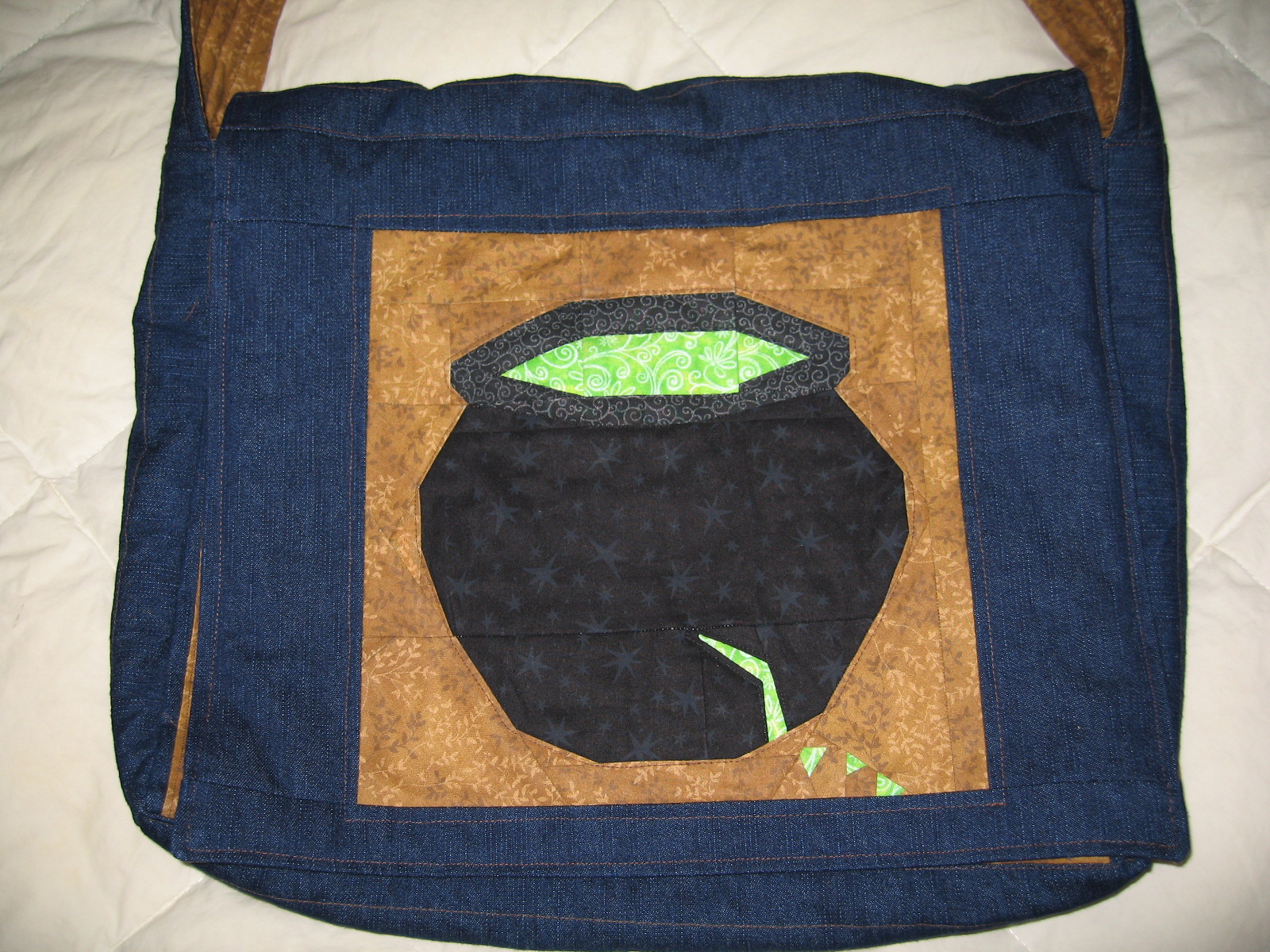
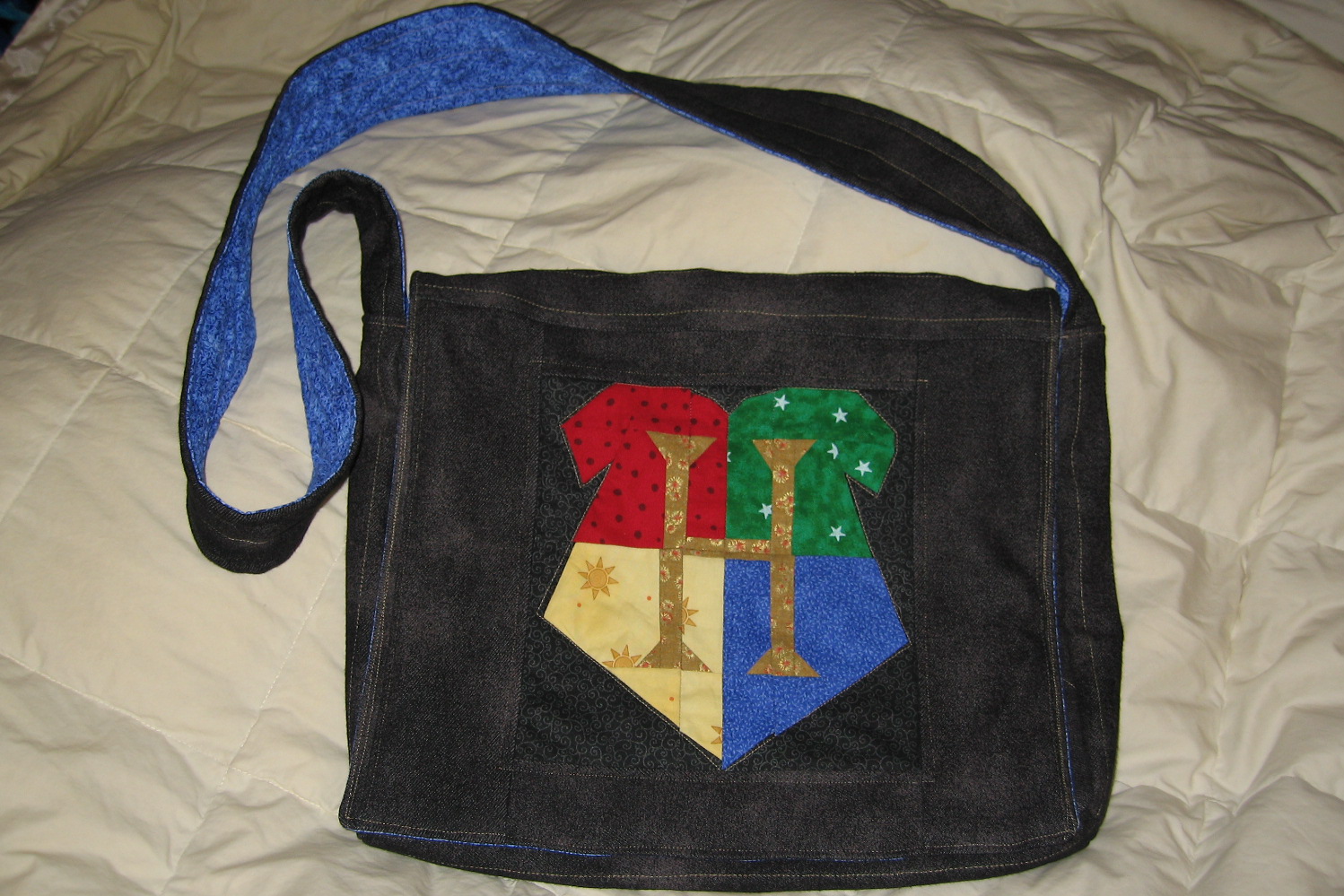
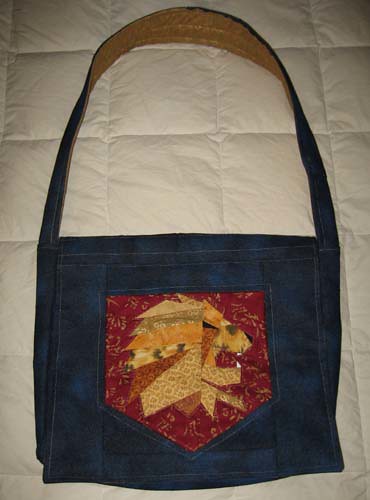
The story behind the bag is actually kind of cool. My eldest kiddo (10 years old back then, aged 16 at the time of this writing) wanted a Gryffindor bag for fifth grade. I was given a basic sketch, and I then started thinking! Sometime during all that thinking, I had a dream that I’d made the bag. The dream was very real, and when I woke up, I was disappointed to realize that I hadn’t actually finished the bag.

The cool part of the story? In the dream, I figured out how to make the bag, and it worked.

Perfectly.

Messenger Bag Notes

I sketched out what I’d dreamed and started figuring out the dimensions of the bag. I almost always start with a sketch when working on a new project, but rarely does that sketch start from dreaming the process! Usually, the sketches are pretty rough (note the cute and silly lion above), but they do the job for what I need.

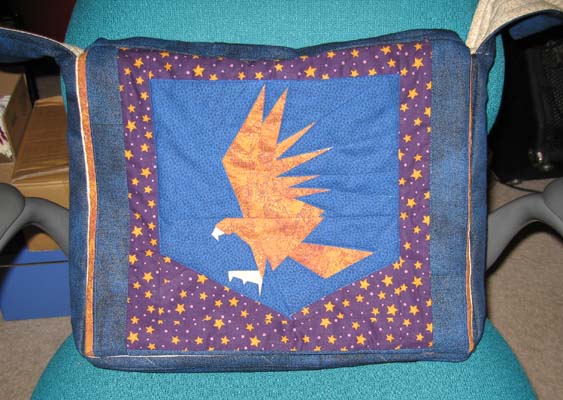
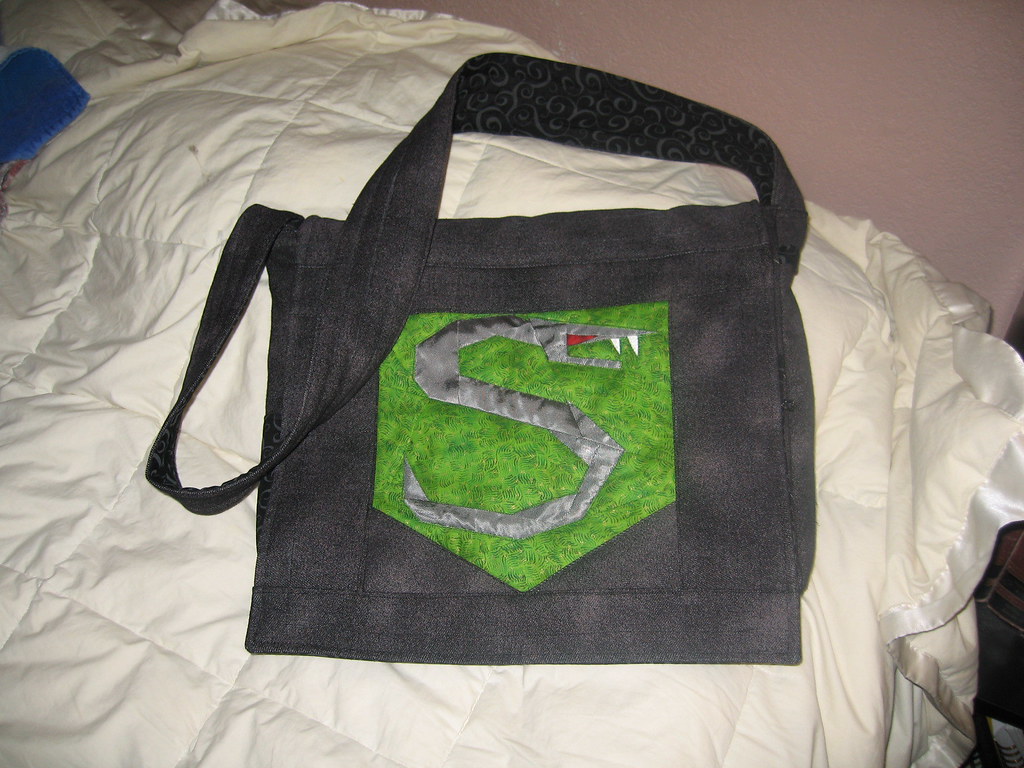
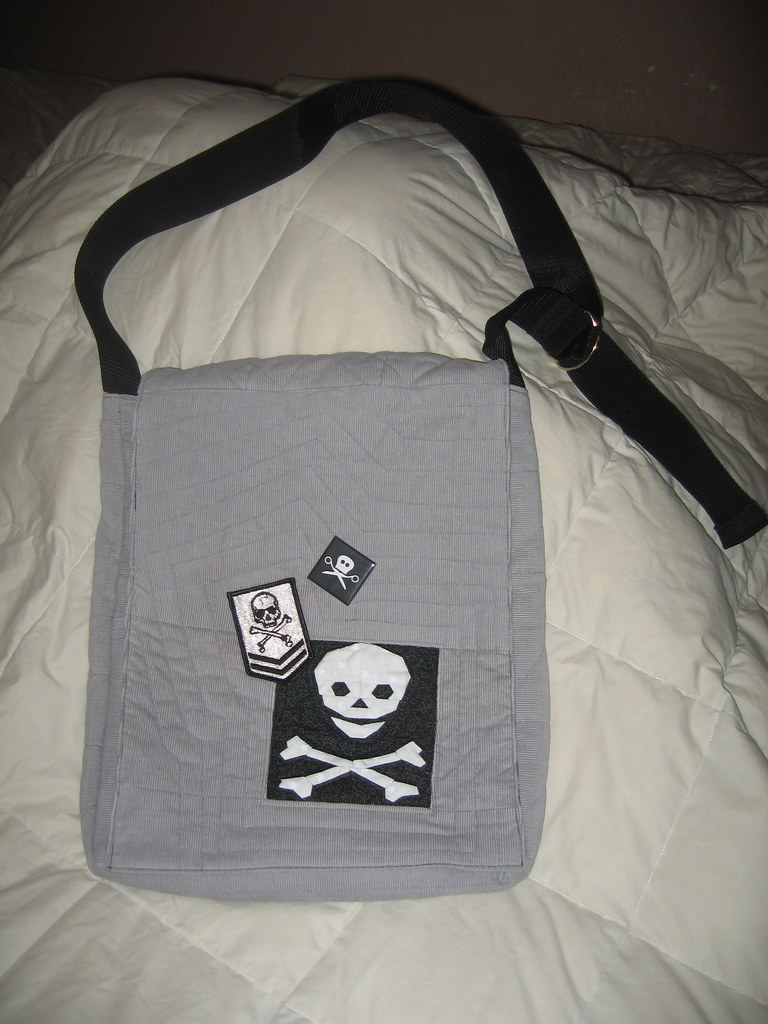
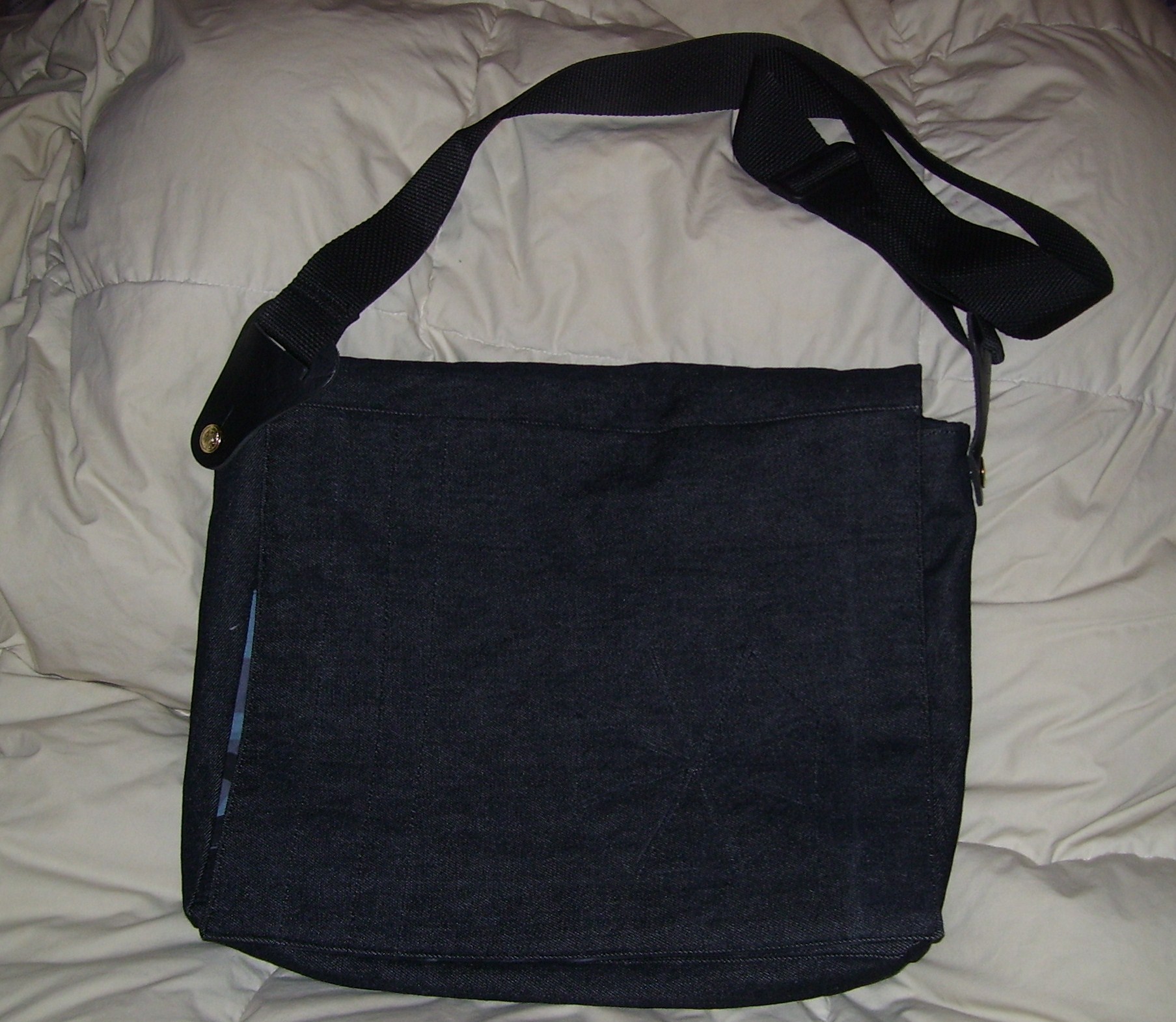
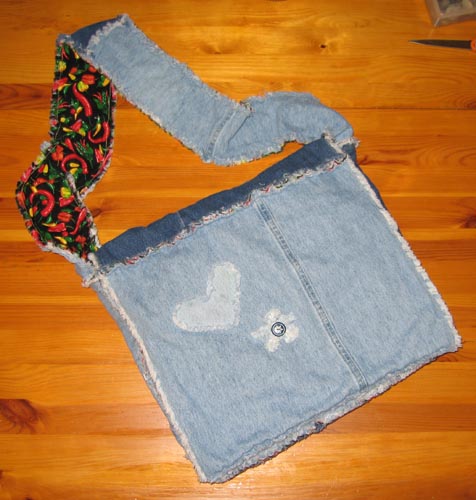
What resulted from my kiddo’s request was not only that first messenger bag, but a slew of others (see below). I made them for friends, family, and myself. I also made many of them to sell between 2006 and 2010.

Originally shared in 20006 as a pdf, this became my most downloaded tutorial for quite a long time.    

A note from 2025 – Many of the photos from this tutorial have been lost to time. I apologize for the inconvenience.

Supplies

  • 1 1/2 yards of outside fabric for bag body (denim or corduroy recommended)
  • 2 yards of lining fabric
  • Approx. 1 yard or scraps of batting or fleece for quilting
  • One quilt square or the fabric panel of your choice for the front center of the bag – (I typically use 5″ quilt squares blown up to approximately 10″)
  • LOTS of matching/coordinating thread
  • Suggested supplies – marking chalk or pencil, rotary cutter and ruler. (You can do it without these, but it will go much faster and your bag will be much more accurate with it.)

Notes

Cut

  • 2 – 16″x13″ from outside fabric (inside & back)
  • 3 – 16″x13″ from lining fabric (flap, inside & back)
  • 4 – 4”x16″ pieces – 2 each from outside & lining fabric (long gussets for top & bottom)
  • 4 – 4”x13″ pieces – 2 each from outside & lining fabric (short gussets for sides)
  • 2 – 4”x 40″ pieces – 1 each from outside fabric & lining fabric (strap)
  • extra lining fabric for pockets & divider (optional)
  • 3 – 15”x12” from scrap batting
  • 2 – 3”x15” from scrap batting
  • 1 – 3” x 38” from scrap batting

Outside Flap

For the outside flap – using your quilt square or fabric panel, border the square with enough outside fabric to bring the piece to 16″ x 13″. This may vary depending on how big your starting piece is. You can make the square centered, as shown, or offset.

Quilting

After all your pieces are cut and your outside flap is made, you will need to quilt the following pieces.

  1. Front Flap
  2. Inside front
  3. Inside back
  4. Bottom and Top Gusset (4×16″)

ONLY the outside fabric is quilted. The lining is not quilted. You can use simple stitching to attach the batting or fleece to the back of the bag, or get fancy with it! Stitch around the design on the front to add detail. For the back and inside, use straight stitching on a 45-degree angle or vary with a wavy/freeform stitch. The strap is the only piece that is quilted after it is made.

STRAP

  1. Baste batting on the wrong side of your OUTSIDE fabric.
  2. Place outside fabric to lining, right sides together. Stitch along long seams, leaving an 8-10″ opening along one side seam. Do not stitch the ends of the strap.
  3. Turn right side out.
  4. Draw chalk quilting lines as shown in gusset photo.
  5. Stitch down chalk lines, top stitch down both sides of strap, carefully closing the open seam used for turning.

Pockets (optional)

  1. If you want pockets, determine the size pockets you’d like to have, for example, big enough to hold a wallet, a cell phone, and sunglasses.
  2. Measure what you want to hold, cut a piece of fabric that when folded in half will be the size you want plus about 1 1/2″. For example, if you want a 3×4 pocket – cut a piece approximately 4 1/2 x 9″.
  3. Stitch together with right sides together, leaving a small space open for turning.

Divider (optional)

  1. The divider is VERY simple. It needs to be cut from liner fabric 16×25. Fold in half, line 16″ edge up, right sides facing with one of the 16″x13″ pieces.
  2. Baste across bottom and sides. This becomes the Bag Front Lining piece.
  3. If a heavier divider is needed, sandwich interfacing or scrap fabric inside before basting.
Messenger Bag Tutorial

Stitching the Body & Lining The body & lining are both stitches in exactly the same way. Please refer to photo, it will help.

  1. Sew seams in this order – Front Flap to Long Gusset to Bag Back to Long Gusset to Bag Front.
  2. This part can be tricky! Make sure your pieces are in the right order so that when folded, each piece will be in the proper places, pockets with openings up, etc.
  3. If you have made a divider for the lining, you need to make sure you’re catching the bottom in the seam and not the top.
  4. When you are done, you will have two long pieces.
  5. After your pieces are assembled, top stitch, making sure that your gusset pieces are pressed towards the bag pieces.

IMPORTANT NOTE – leave the center section of one side of the lining open between the gusset & bag bottom for turning right side out after the bag is assembled. Side Gussets Now that your body & lining are stitched, you will need to add the side gussets to each. Pin each side gusset to the bottom gussets as shown.

Messenger Bag Tutorial
  1. Start 1/2″ away from the edge of the fabric and stitch to within 1/2″ of the other seam, marking this measurement if necessary. This is VERY important for the next step to work properly.
  2. After sewing each end, you will line the long side of the gusset up along the side, making sure it is smooth, The 1/2″ you left open will help you do this without bunching up the fabric at the bottom. Start stitching 1/2″ in from the corner, right where you left off, making sure there is no gap between the thread.
  3. Sew all the side gusset pieces this way.

Finishing the Bag

  1. After the gussets are all sewn, you will have One Bag Outside and One Bag Lining.
  2. Turn the lining right side out. As mentioned earlier, make sure you left a partial seam open for turning.
  3. Pin the strap, right sides together to the long gusset on the bag. Baste with 1/4″ seam.
  4. Place lining inside of bag – right sides facing.
  5. Line up all edges carefully, making sure the seams and points all meet.
  6. Pin well!
  7. Stitch all the way around, being careful not to fold in gusset seam allowances. Backstitch on corners.
  8. After stitching, trim corners, being careful not to clip the threads.
  9. Turn bag right side out.
  10. Press, making sure all your seams are smooth. If they are not, now is the time to fix them! It may take a couple of minutes to align everything to your liking. Once you’re happy, you can close the open seam in the lining by either hand or machine stitching.
  11. Last, top stitch for extra strength & durability for your bag. If you have a walking foot, it’s a really useful tool to use for this part while you are sewing through all the thicknesses of the bag.
  12. Pin well, making sure everything is smooth. Top stitch around opening and flap of bag about 1/4″ away from edge. Stitch over the straps two or three times for extra strength.
  13. Yay, you’re done! Whew! That was a lot of work… time for a butterbeer!

Find my free patterns on Sewhooked & Fandom in Stitches.

♥ Jennifer O

Posts on this blog may contain affiliate links to help cover the cost of my website. I thank you for your generous support. ♥