Category Archives: Quilts & Quilting

Guest Designer Spotlight: Connie Tessier


Patterns designed by Connie Tessier
click on the image for the pattern


This week in the Guest Designer Spotlight is Connie Tessier.  I met Connie through the Livejournal group hp_paperpiecing.  Connie started out as member of the group and pattern tester.  It wasn’t long before she was sharing photos of her own block designs.  It’s my great pleasure that she agreed to be included on the Guest Designer page of sewhooked.

Photobucket
Connie and her husband, Paul, at a Cape Cod beach


First name and where you’re from: Connie, Manchester, NH

Website/blog/online store or other place where your patterns or photos of your work can be found? Website is not set up yet. Another work in progress…….

How long have you been paper piecing and/or quilting? Sewing since childhood, Quilting since the late 70s, I’m 54 now, so it’s been a LONG time.

I tried paper-piecing in the early 90s once for a bunch of log cabin blocks for a quilt and I didn’t care for it, too much repetition.  I tried paper-piecing again last year for a quilt for a friend.

What do you use own your blocks for? I’m hoping to make a quilt. I’m more into a “less fancy, more useful” type of quilt. My stuff is more for comfort than show. I’ve only make one wallhanging, everything else is quilts of various sizes including king-size.

When did you start designing? I designed some gelato cups for a quilt for my best friend in October 2006 to remind us our favorite dessert place (which is now unfortunately gone…). The quilt design got put on hold, and I didn’t sew the quilt until December 2007.

The second foundation block I designed was in February 2008. It was my Philosopher’s Stone, using the cover from the Adult book cover.

Was there a particular inspiration to draw your first pattern? I found some teacup, teapot, and spoon blocks that were foundation pieced and wanted to use them in a quilt I making for my best friend. She used to collect teddy bears, we usually go out to lunch and both have tea, and then we used to go out for gelato. So I wanted to make a quilt with those elements in it. I hadn’t liked my first experience with paper-piecing but decided to give it another try to make this quilt. I couldn’t find a design for a cup of gelato with 2 flavors, so I decided to try to design one in Quilt Pro since that’s what I was using to make the quilt design. I struggled to learn how to get the teapot and cups into Quilt Pro and then worked on designing the gelato cups.

Photobucket
Gelato Blocks designed by Connie

Do you remember what your first design was? My first design of a paper-piece pattern was in Quilt Pro of the gelato cup for my friend’s quilt.  That was the only foundation pattern I had designed before I found your site.

When I found your site with Harry Potter patterns, I decided to try paper-piecing with smaller pieces and blocks.  I was really leary of trying such small blocks with such tiny pieces, but I had to have a Hedwig. I have a thing for owls, and when I saw your quilt it really inspired me.

After finding your site and making a few blocks, I wanted to try my hand at it and make my own Harry Potter blocks.  I decided to try making a block from each book and started with the Philosopher’s Stone for Book 1. This was my 2nd paper-pieced design and 1st Harry Potter design.  Then I did the Whomping Willow for Book 2.

I also wanted to try my hand at some of the ones you had already done to practice designing from scratch.

I figured I could see what kind of pattern I ended up with compared to one that was “piece-able”. I learned that my patterns of the same subject have a tendency to be too complex for 5″ blocks! I have lots of trouble simplifying the designs for piecing. I tried the House Crests (I used the illustration in the books), and Bertie Botts (I froze a frame from the movie).

I had a really hard time with Quilt Pro, and then I found Quilt Assistant which made it much easier to trace designs and break them up into pieces.

It really amazes me that you can come up with so many designs so quickly.

Do you have a favorite among your own designs? The Whomping Willow from Book 2. I used the Chapter art.

How has the online community changed the way you craft/quilt/design, etc.? I’ve learned a lot from using the designs on your website. The most important thing is to let go of some details or the pieces end up too teeny-tiny and too difficult to sew. That’s hardest thing for me.

What do you use to design your patterns? Paper and pencil, a specific software, etc. First I get an idea or a picture. I can’t draw to save my life. I don’t have Photoshop, so I used Quilt Assistant to trace the design. Quilt Assistant will save the pattern to an Electric Quilt project. Then I export it as an EQ project. Then in EQ I export it to a metafile. (I wish Quilt Assistant could export to a metafile!) The metafile is imported into Quilt Pro where I touch it up, and check that the sections are correct and numbered. Then I add text to the print preview screen, after mirroring it for the pattern, and save it as a JPG. Needless to say I’m looking for an easier way. Quilt Pro shows me what doesn’t line up or make proper sections, so I can fix the lines to make it right. I also like the precision of the pattern in Quilt Pro, but I’ve had a hard time tracing designs directly into Quilt Pro.  I really like Quilt Assistant for tracing, but I don’t like the way it makes templates instead of a foundation.

I’ve used Quilt Pro to layout quilts for years, since version 2. I also own Electric Quilt but haven’t really put it through its paces yet. Their interfaces are completely different and it’s tough to get used to one when you’re used to the other.

Anything else you’d like to add?

I haven’t had any time to paper-piece lately. Mom moved in with us after dad passed this year and she had to sell her house after breaking her hip. I really love the creative process, then seeing a completed block in fabric. I’m hoping for more creative time soon, I’ve got lots of blocks to catch up on, and I’d like to design some new ones as well. I’m really impressed by all the blocks you and the other guest designers have come up with, it’s just amazing!

Photobucket

find more of Connie’s free patterns on the sewhooked Guest Designer page

Happy Crafting!

Guest Designer Spotlight: Cat Magraith


blocks designed by Cat Magraith
click on image for pattern


This week in the Guest Designer Spotlight is Catherine (Cat) Magraith.

I met Cat through the Harry Potter Crafts Yahoo group and then we briefly volunteered together for The Leaky Cauldron in the craft department.

We’ve known each other for over two years now and have become fast friends.  Her amazing engineer’s brain is a natural for dissecting images and creating (and editing!) paper pieced patterns.

Photobucket

First name and where you’re from:
Cat from Adelaide, South Australia

Website/blog/online store or other place where your patterns or photos of your work can be found?
I have my ETSY store and then there’s my LJ.

How long have you been paper piecing and/or quilting?
How long have i known you?*  I’m trying to think. Is it 2 years or longer? I have been doing other quilting though since primary school so about 25 years.

*Note from Jennifer:  it’s been two years!

What do you use own your blocks for?
Cushion covers, totes and never quite finished quilts (lets just say quilt tops).

When did you start designing?
Pretty well much almost straight away after i started Paper Piecing.

Was there a particular inspiration to draw your first pattern?
I was inspired by hp_paperpiecing and your patterns and a desire to create my own custom patterns.

Do you remember what your first design was?
First design was my Dumbledore pattern.

Do you have a favorite among your own designs?
Dumbledore is my favourite still.

How has the online community changed the way you craft/quilt/design, etc.?
I had never seen the US style of PP method before i joined the online quilting community. It is not very common in Australia with most references to PP being the paper hexagons used in a lot of British quilting books and are all hand stitched. US PP has changed the way i design my patterns and has given it a new edge.

Find more of Cat’s free patterns on the Guest Designer Page on sewhooked

Happy Crafting!


Don’t Go Breaking My Heart


The Linus Connection Heart My Scrappy Heart

My Scrappy Heart II Broken Heart

Linus Heart, My Scrappy Heart,
My Scrappy Heart II, Broken Heart
click on image for pattern

What is it about hearts?

I doodle them on the edges of notes and the back of envelopes and just as often as not, they show up in my artwork and my quilts.

When I sign my name, I sign with a heart.  It’s “with love, from Jennifer.”

For a not-very-girly-girl, it’s certainly a very girly thing to do.  I don’t care, I like it.  It shares a little of me, a little of my heart.

My paper piecing adventure began some years ago with Carol Doak’s Show Me How To Paper Piece.   I read through the book, then tried the heart pattern.  It took several tries and several more reads through the instructions before I got the hang of the technique.

That light bulb moment was the brightest I’ve ever had.

I decided that first effort would end in being a gift for my friend Alison.  I searched out other blocks that represented our friendship.  That was my first experience of not being able to find exactly what I wanted, but I used what I could find and my very next project, I started designing my own patterns.

alison's wall hanging

Alison’s Wall Hanging

It was not long after this that The Linus Connection was looking to give thank you gifts to the sponsors of our first Annual Challenge.  I was on the Board of Directors at the time and was closely involved with organizing that first challenge.  Being the webmistress for Linus, as well as for Sewhooked, I see the Linus heart regularly.  It’s on every page of the website and every paper label we attach to the quilts before giving them to the children.

It occurred to me then what a wonderful gift the Linus Heart in fabric would be, and what better than to use my new favorite technique, paper piecing?  While it was not my very first pattern, it was one of the first, designed within a couple of months of my learning to paper piece.  It’s still one of my favorites.

PhotobucketLinus Heart

The Linus Connection Heart &  it’s doppelganger in fabric
click on image for pattern

That same pattern eventually became part of my design for The Linus Connection banner, a project that I designed and organized in early 2006 with the blessing of the Board of Directors and help from many Linus volunteers.

April 2006

The Linus Connection banner can be seen hanging by the sign-in table at every monthly meeting.
alphabet blocks from Carol Doak’s 300 Paper Pieced Quilt Blocks


In 2007, I was asked to demonstrate paper piecing for The Linus Connection’s volunteers during one of the monthly demos.  This was my second paper piecing demonstration for Linus and I was really excited to have another opportunity to share my favorite quilting technique and some of the short cuts I’ve discovered.

I had not yet written my own paper piecing tutorial but I did have many patterns available on Sewhooked.  What I did not have were many beginner’s patterns.  A friend suggested the Hearts For Linus pattern as a starting place.  It was a good suggestion and I designed two new hearts, each of increased difficulty, based on the original.

The demo was a success and from that came the writing of my paper piecing tutorial.

Paper Pieced Hearts

Heart Block Demo Quilt – November 2007
donated to The Linus Connection, January 2008


Where there are hearts, there will also be hearts that are broken.  Though I am not sure why I decided to draw a broken heart, I do believe it had something to do with my love of Stephenie Meyer’s Twilight Saga, my favorite of which is New Moon.  I’d previously designed a wolf and a lamb, both inspired by Twilight, for my friend Alison to use in a wall hanging, which you can see here.

The broken heart represents the state that the main character, Bella, finds herself in for the majority of New Moon.

Howling Wolf Lamb Broken Heart
sample Lamb block pieced by Shae
click on image for pattern


Whatever the block is that I have designed, it’s part of my story. They remind me of where I was and what I was thinking when I made the original sketch.  I know what prompted the design of every single one, and I think that is a very special gift.

Add your Sewhooked-related photos to my flickr group and you might be featured in a future post.

Photobucket


Sewhooked Shop | FB | SHFB | Flickr | Twitter | Bloglovin

Paper Piecing: Seeing Stars

click on the image for the pattern, except Rising Sun, bottom right, which has 4 pattern pieces:
1, 2, 3, 4

I have been drawing a lot of stars lately. Some, like the Tone Tone Star and the Chubby Star, were for a quilt block swap I recently participated in. The Arkansas Snowflake, a very common and popular block, was drawn as a replica replacement for a quilt top that was a thrift store find.

After reworking and rearranging some of the patterns over on the sewhooked Paper Pieced Patterns page, I realized my count of star (or, in some cases, star-ish) patterns online was up to six and thought it would be a nice to present them all together.

As for the changes in organization over on sewhooked, you will find the “Miscellaneous” category has been broken up into two new sections:  People, Places and Things & Shapes.  As I create more varieties of patterns, I try to arrange them as logically as possible to make them easier to find.  I hope this will help visitors to sewhooked to find what they’re looking for more easily.

If you make these or any sewhooked crafts, I’d love to see a photo!  Email me or add it to the Friends of sewhooked flickr group.

Happy crafting!

Guest Designer Spotlight: Michelle Thompson

blocks designed by Michelle Thompson
click on the image for the pattern

The next up in the Guest Designer Spotlight is Michelle Thompson.

I met Michelle through hp_paperpiecing, where she has shared many photos of her finished blocks as well as her own beautiful Harry Potter inspired patterns.

Photobucket

First name and where you’re from: Michelle, Sydney Australia

Website/blog/online store or other place where your patterns or photos of your work can be found? just livejournal at the moment and there isn’t much there at the moment although I am working on that.

How long have you been paper piecing and/or quilting? since 1997

What do you use own your blocks for? quilts for my family (extended family included)

When did you start designing? about 2000 I started designing my own quilts using other peoples ideas. The first design of all my own was much more recent last year or the year before.

Was there a particular inspiration to draw your first pattern? usual reason – couldn’t find a pattern for what I wanted.

Do you remember what your first design was? Hagrid

Do you have a favorite among your own designs? my new patterns – the portrait series – i am really excited about them they turned out much better than I thought they would.

How has the online community changed the way you craft/quilt/design, etc.? its great for inspiration, ideas and of course the wonderful support and validation it enables.

What do you use to design your patterns?  Paper and pencil, a specific software, etc. I start off with pen and paper, then i use quilt assistant – very basic.  I probably wouldn’t use any programs if i wasn’t sharing – pencil and paper work just fine.

Anything else you’d like to add? I don’t nearly have enough time for quilting (what a surprise) and it also eats into my other passion cross-stitch, which I lament hasn’t had much of my time lately. I have been trying to finish existing projects – I only have two quilts to go. I have decided I hate quilting and it is not nearly as exciting as making the quilt top so I am looking to outsource the quilting process so I can make more quilts.

I have been sewing all my life. I got my first sewing machine at age 8 and have done dressmaking and pattern making courses in my late teens. Most of my sewing involved making clothes for myself and my children. However my greatest joy now is making quilts and dress up costumes for my children. If anyone is interested I can post some on my journal. I get lots of grief from other mothers. My latest costume was the stay-puft marshmallow man for a ghostbusters band night for my son.

Photobucket


Find more of Michelle’s patterns on the sewhooked Guest Designer Page

Michelle’s LiveJournal

Happy Crafting!

Paper Piecing: Mmmm, power pellets!

The first video game I ever played on a home console was at a friend’s house in third grade.  She’d received an Atari 2600 for her birthday.  Such a huge gift for one person was beyond my eight-year-old comprehension.  My family was on a much different budget and something like that would have been, and eventually was, a gift for the whole family.

We played Pac-Man all night, eating up the dots of light and squealing when we got a Power Pellet.  I remember too much sugar, too much caffeine and absolutely no sleep.

A couple of months back, I dreamed of Pac-Man (yes, I’m that geeky) and in the dream I was drawing the chomping-mouthed fellow.

Not just drawing though, designing…and turning him into a paper pieced pattern.   Silly, probably, but it made me laugh, so I did it.

Pac-Man Paper Pieced Patterns
by Jennifer Ofenstein

click on each image for the pattern

Pacman Pacman Ghost Pacman Sad Ghost

with thanks to Shae, who made the sample blocks

Pacman
Ghost
Sad Ghost

I mentioned that I’m a geek, right?

Now, we can play Pac-Man for free online. The trademark music never fails to remind me of that first sugar-laden all-nighter my friends and I pulled sending a gold chomper around a maze and avoiding the ever present ghosts!

Find more awesome, fandom-themed patterns on my fandom Quilting website, Fandom In Stitches!

If you make these or any Sewhooked crafts (geeky or not!), I’d love to see a photo in the Sewhooked flickr group!

Happy crafting!

Guest Designer Spotlight: Shae Merritt


blocks designed by Shae Merritt
click on the image for the pattern

For the next few weeks, I’ll be putting the spotlight on the sewhooked Guest Designers.  These wonderful women create and share their paper pieced quilting patterns and graciously allow me to post them, free of charge, on sewhooked.

Each of their work can be found on the Guest Designer Page.

I’ll be posting these in the order that I received them, just to save myself from playing favorites!  I am more grateful to each and every designer for sharing her wonderful patterns than I could ever express.   Thank you, thank you, thank you!

First up is Shae Merritt.  I’ve known Shae for a couple of years now.  We met in an online Harry Potter costuming group when I fell in love with her Umbridge costume and we starting chatting back and forth.

She tackles each new craft that grabs her interest with both hands and runs with it.  The same was true for paper piecing.

Shae and I have been lucky enough to meet in real life and the rest, as they say, is history!

Photobucket

Questions were asked by me, all answers are in Shae’s own words.

First name and where you’re from: Shae – Central Florida

Website/blog/online store or other place where your patterns or photos of your work can be found? – patterns/pictures on sewhooked

How long have you been paper piecing and/or quilting?  – I started paper piecing on April 10, 2008, so almost 7 months

What do you use own your blocks for? –
I’ve made one quilted wallhanging and a few other misc. framed crafts, but other than that I’ve been saving them up until an idea comes to me.

When did you start designing? – I designed my first pattern mid-May, almost exactly a month after I started paper piecing.

Was there a particular inspiration to draw your first pattern?
– my brother was patching up a pillow and I had told him about my idea to try to make a Triforce because it could be a really easy block to make, and he asked if I would make him the block to use for his pillow.

Do you remember what your first design was? – Triforce from the Legend of Zelda series

Do you have a favorite among your own designs? I really like the Majora’s Mask pattern, but a favorite design of mine that I haven’t had a chance to piece is the ‘WooHoo’ symbol from The Sims 2.

How has the online community changed the way you craft/quilt/design, etc.? –
I wouldn’t exactly say the online community changed the way I craft, but rather it is the reason I do. I never crafted at all until 2 years ago when I started making crafty friends. If not for the community and seeing all of the awesome things people were making I would have never thought to try paper piecing. Being able to look at other people’s designs and ideas helps my own imagination work. I’m glad that there are such crafty people out there to inspire me.

What do you use to design your patterns?  Paper and pencil, a specific software, etc. – I use Paint Shop Pro 8 to design patterns

find more of Shae’s patterns on the sewhooked Guest Designer Page

Happy crafting!

“Mellocreme” Pumpkin Earrings

Mmmmm, mellowcreme pumpkins, the yummy little sugar bombs that are really just candy corn kicked up a notch!  In homage to these tasty Halloween treats, how about a fun, easy craft that is cheap and makes enough to share with your friends?

I made the cute pumpkin earrings for a Halloween swap I was recently participated in.  You can make one pair or several!

makes 10 -12 pair

  • 1 block orange polymer clay
  • small amount green polymer clay
  • toothpick or skewer
  • hook ear wires (aka French hooks) (2 for each pair)
  • eyepins (2 for each pair)
  • jump rings (size of your choice)
  • jewelry pliers (I used one round nose and one chain nose)
  • Sculpey Glaze (gloss)
  • small, soft paint brush
  • parchment paper
  • baking sheet
  • optional: business cards and decorative bags for gift giving
Pumpkin Earrings

Separate the orange clay into enough pieces for 10 – 12 pairs of earrings.  Roll each piece into a rough ball shape.

Pumpkin Earrings

Using the round nose pliers, twist the eye pins into a curly shape, making sure each is approximately the same length.  Make the same amount as the orange balls in the last step.

Pumpkin Earrings

Squish the curly part of the eye pin into the orange ball.  Cover wire completely with clay, rounding with your fingers as you go.

Pumpkin Earrings

Add a small amount of green clay, gently pressing it around the wire into a stem shape.  Make sure to leave the “eye” in the pin visible.  If necessary, use a toothpick or skewer to clean out the hole.

Pumpkin Earrings

Use the toothpick to gently roll creases into the orange ball.

Pumpkin Earrings

Wallah!  A tiny pumpkin!  Repeat steps for each earring.

Pumpkin Earrings

Place earrings on parchment paper lined tray and bake according to manufacturer’s instructions.

Pumpkin Earrings

Pumpkin charms, all baked.  They look a little dull, so…

Pumpkin Earrings

Place earrings eye pin side down in Styrofoam.  Gently brush on Sculpey Glaze.  Allow to dry upside down.   Once they’re turned over, add a little more Glaze around the top if needed.

Pumpkin Earrings

Attach the ear wire (French hook) with a jump ring and pliers.  (how to open and close a jump ring)

Repeat for each pumpkin charm.

If making enough to share with your friends, poke holes in a business card with a pin, then slide the ear wire through.  Fold the top end of the business card down and place in a cute little bag.

Happy Crafting!

♥ Jennifer O

Posts on this blog may contain affiliate links to help cover the cost of my website. I thank you for your generous support. ♥

Paper Piecing: Step By Step

Basic Paper Piecing Tutorial

I receive a lot of emails about paper piecing each week. While many of them are in reference to my Harry Potter patterns, even more of the messages are from new and experienced quilters alike, with comments about the technique itself. Most commonly, I hear one of two things. Either that the person emailing had never quilted and saw a pattern they really wanted to try and just went for it, then was surprised that it wasn’t as hard as they thought OR that they have wanted to try it for years and it looks too hard to them.

I’m always thrilled to hear from quilters of all skill levels, and any time I can help in whatever small way, it’s my great pleasure to do so.

Paper piecing can be daunting to someone that either hasn’t tried it before or tried a technique that confused them. I myself tried three separate tutorials before it stuck. It was a combination of those different tutorials that helped me understand it better, and while I do have my own How To now, I still recommend checking out several tutorials and deciding on what techniques are right for yourself.

That said, this is how I paper piece. Each pattern is the same. They all have the same basic set up and the same basic rules will always apply. Even thought designers sometimes draw their patterns differently, the technique remains the same.

How To Paper Piece
© Jennifer Ofenstein
click on tutorial images to see larger versions

paper piecing tutorial (1)

Supplies

  • pattern (Jar #3 used in this tutorial or similar pattern – NOTE: Jar #3 was updated in 2014 and looks a little different than the photos, but the lines are all in the same place)
  • quilting fabric
  • neutral thread
  • paper scissors
  • fabric scissor OR Add-A-Quarter Ruler.
  • postcard or thin straight edge
  • flathead pins
  • rotary cutter*
  • rotary ruler
  • wallpaper seam roller (available at home improvement stores)

*note – I keep two rotary cutters, one for traditional piecing and one for trimming paper pieced blocks. The “just fabric” cutter gets the new blade, and when it begins to dull, I transfer it to the “paper” rotary cutter.

Not shown above:

  • cutting mat
  • dry iron
  • sewing machine
  • open toe foot
  • light source

Start by making a copy or print out of the pattern you want to make. Use lightweight paper for your patterns, as it tears off easier. Recycled printer paper works well, as does tracing paper and some drawing papers. There are also a number of commercially available products just for paper piecing, such as Carol Doak’s Foundation Piecing Paper.

Choose fabrics you think will compliment the pattern. Always use good quality 100% cotton quilting fabric.

paper piecing tutorial (5)

Use paper scissors to trim outside the gray seam allowance of individual pieces of the pattern.

paper piecing tutorial (3).JPG

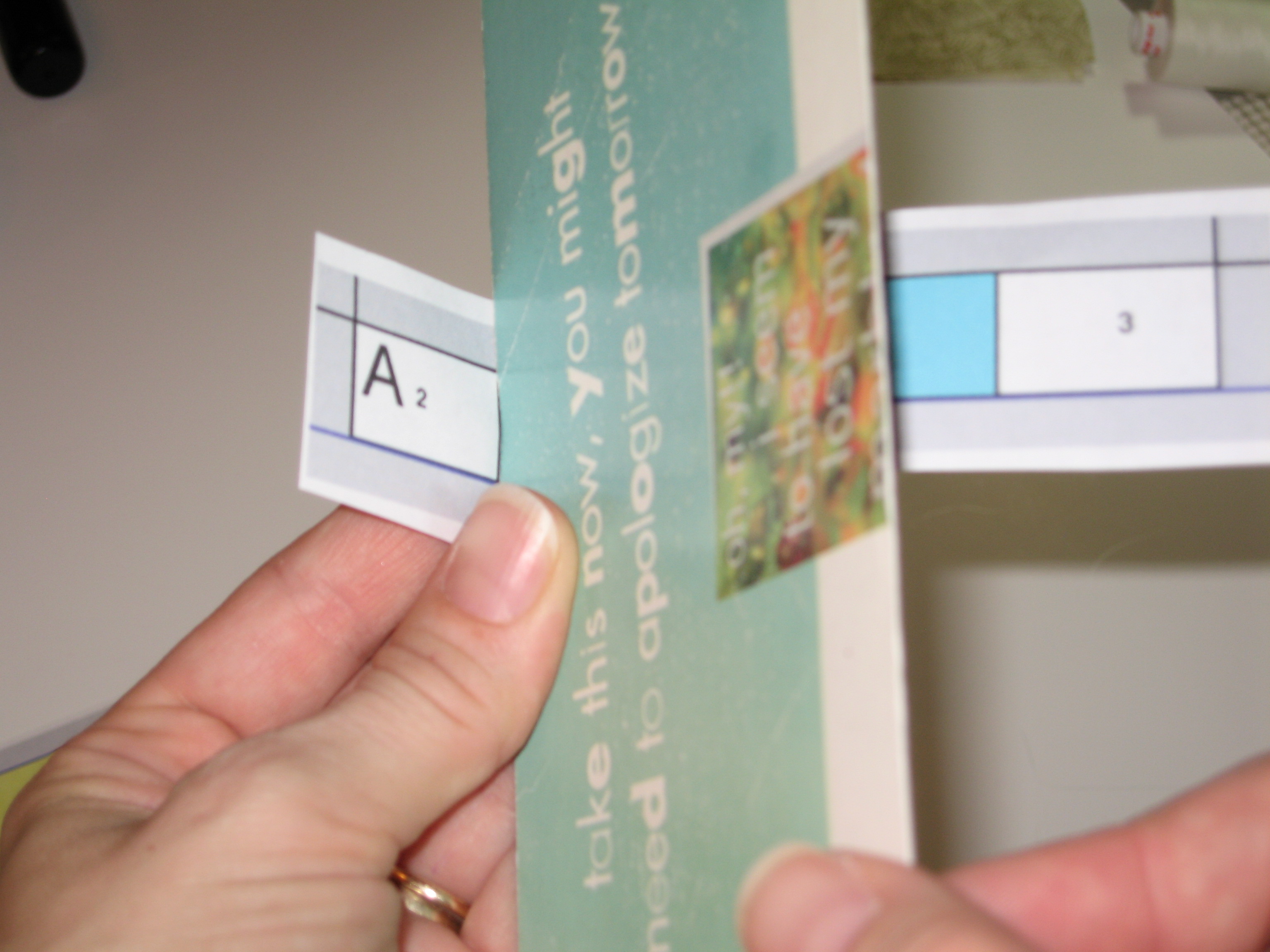
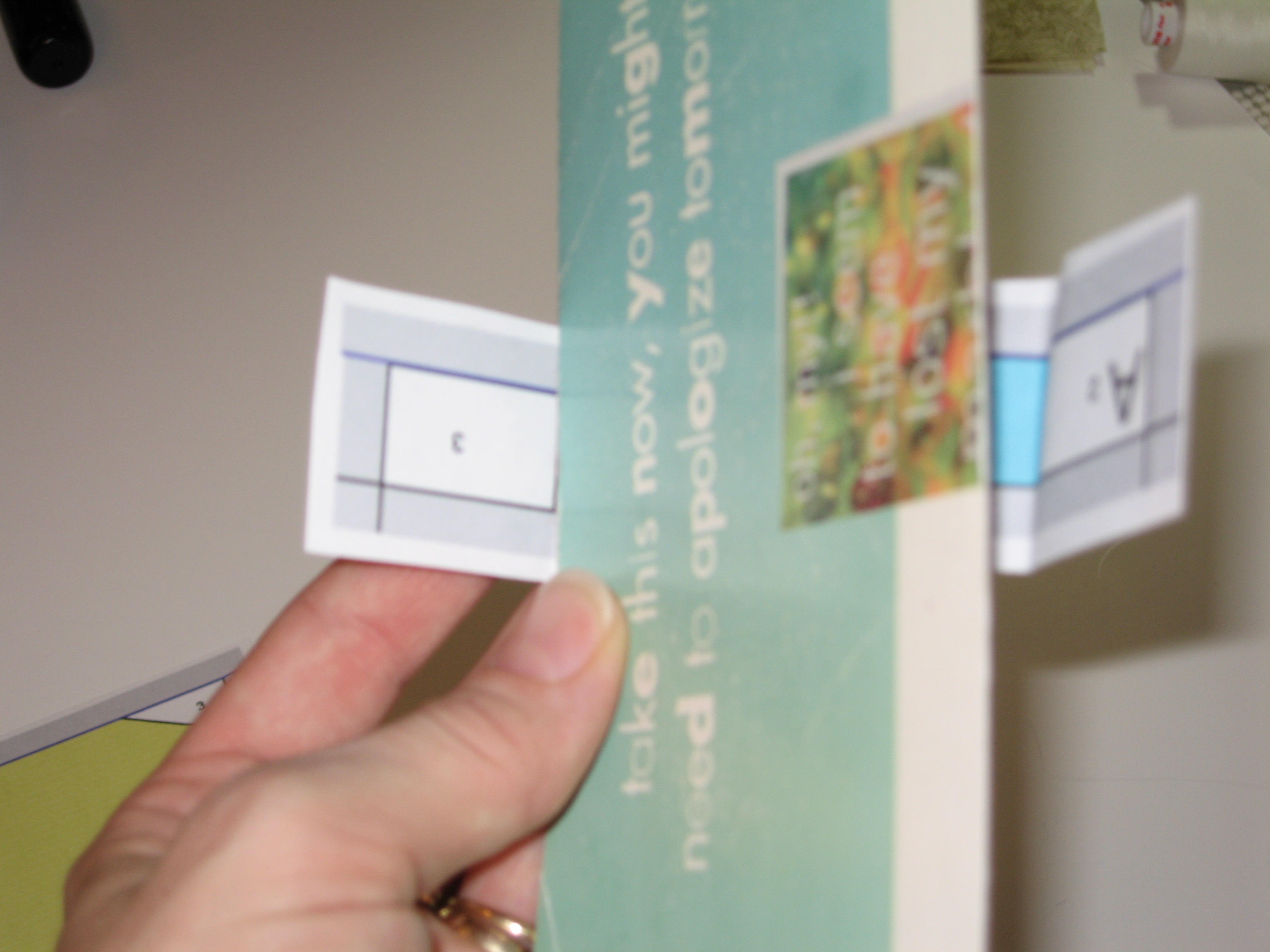
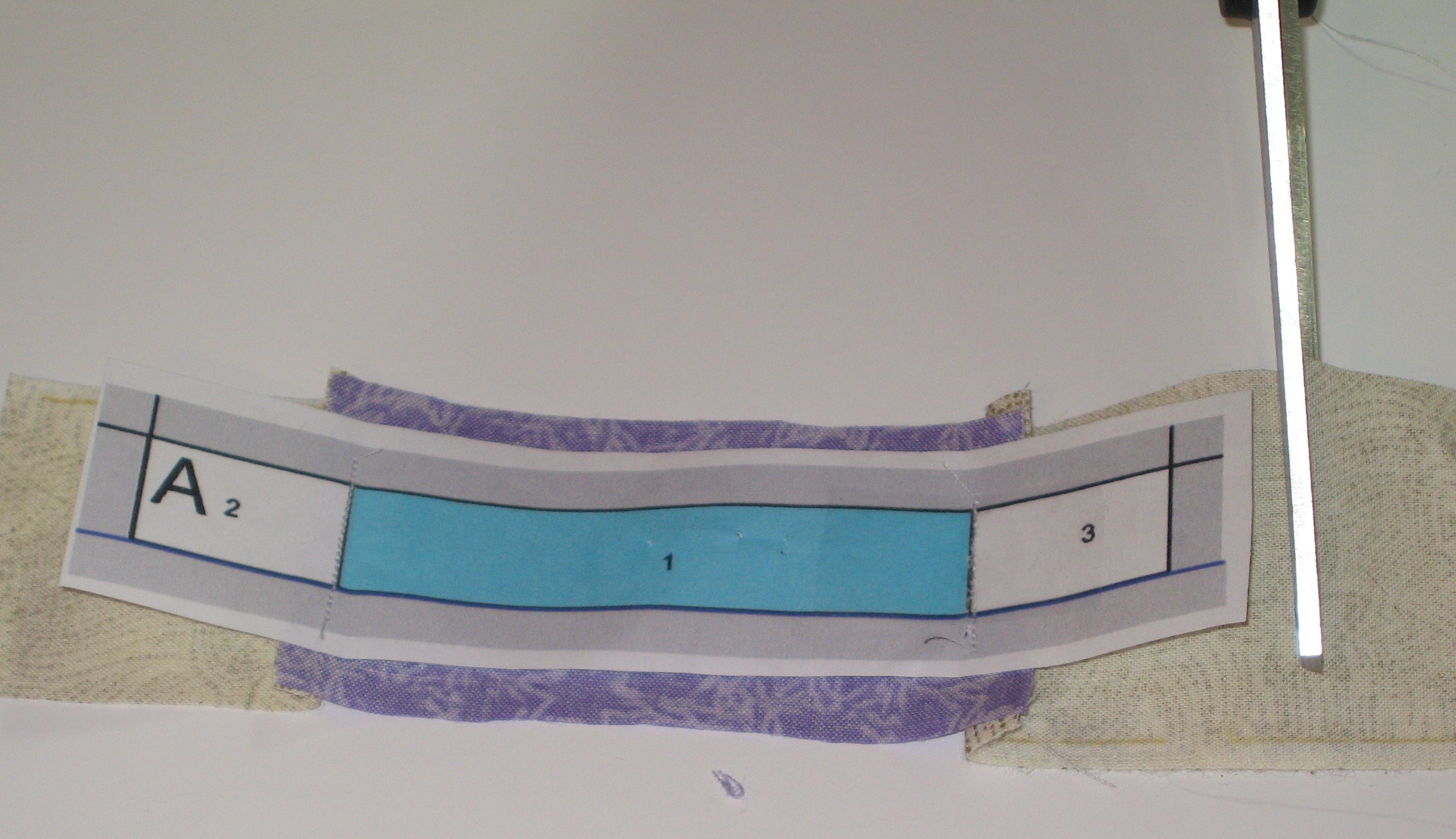
Starting with pattern piece “A,” use the postcard as a straight edge, fold the pattern piece on the line between 1 and 2. This is your stitching line.

paper piecing tutorial (4).JPG
Repeat for the line between 1 and 3.

paper piecing tutorial (6)

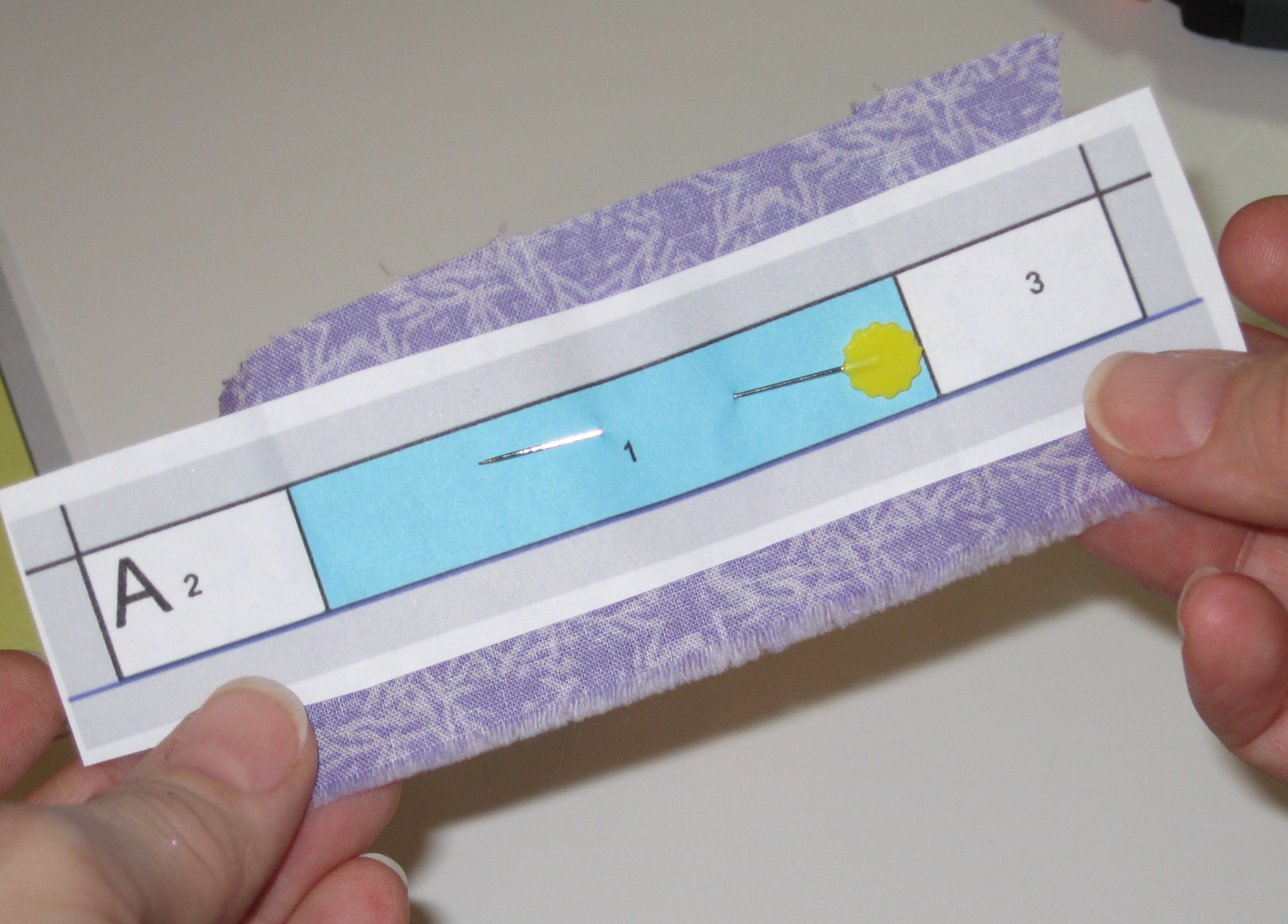
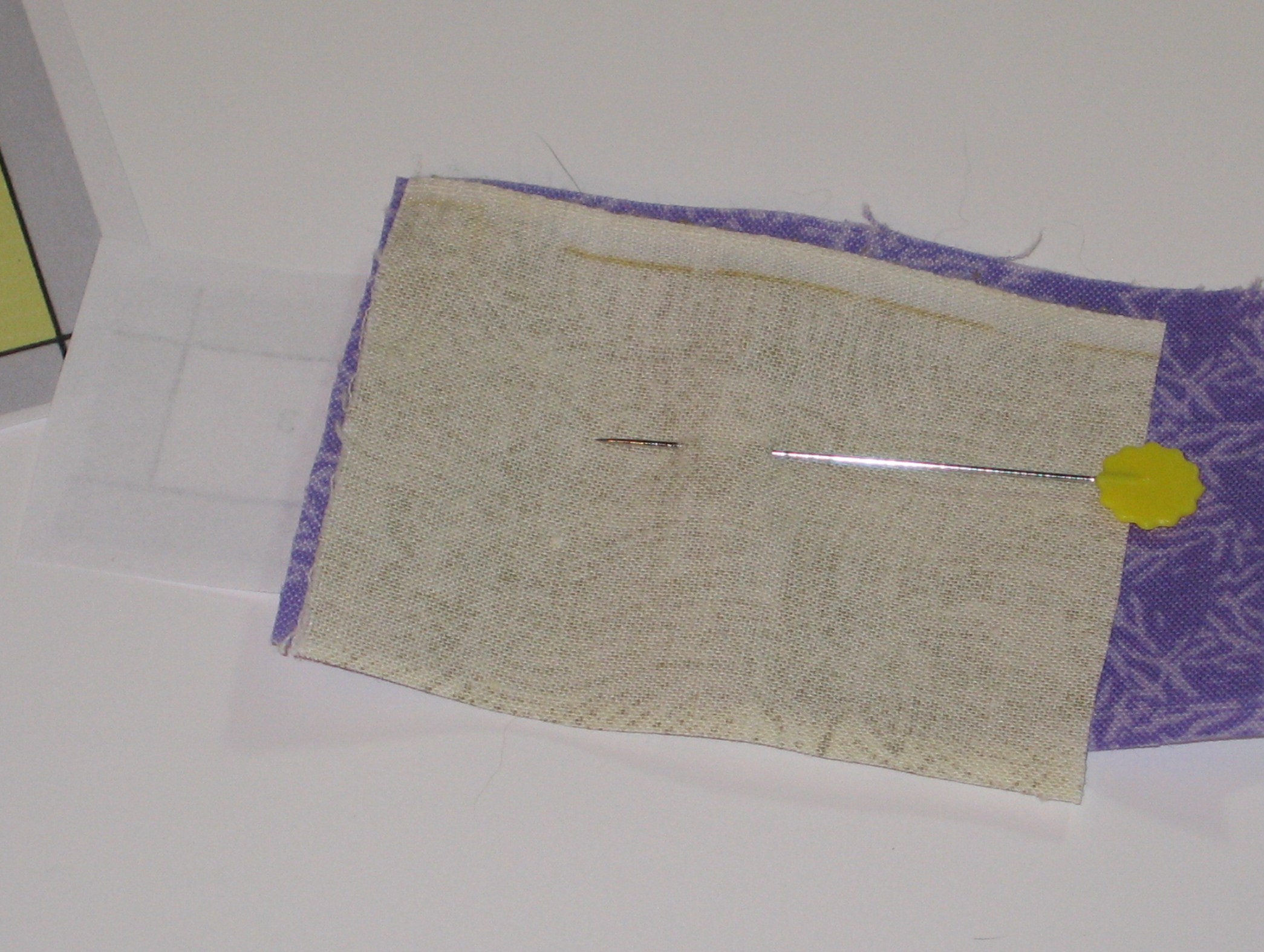
Place fabric 1 right side up on the back of the paper opposite piece 1.

Make sure you have a generous seam allowance (approximately 1/2″) all around.

Use a light source behind the pattern if you need it to make sure the fabric is big enough.

paper piecing tutorial (7)

Trim seam allowance to 1/4″. This can be done with fabric scissors or a rotary cutter.

paper piecing tutorial (9)

Place fabric 2 wrong side up on fabric 1. Make sure to slide both pieces of fabric 1/4” past the stitching line.

paper piecing tutorial (10)

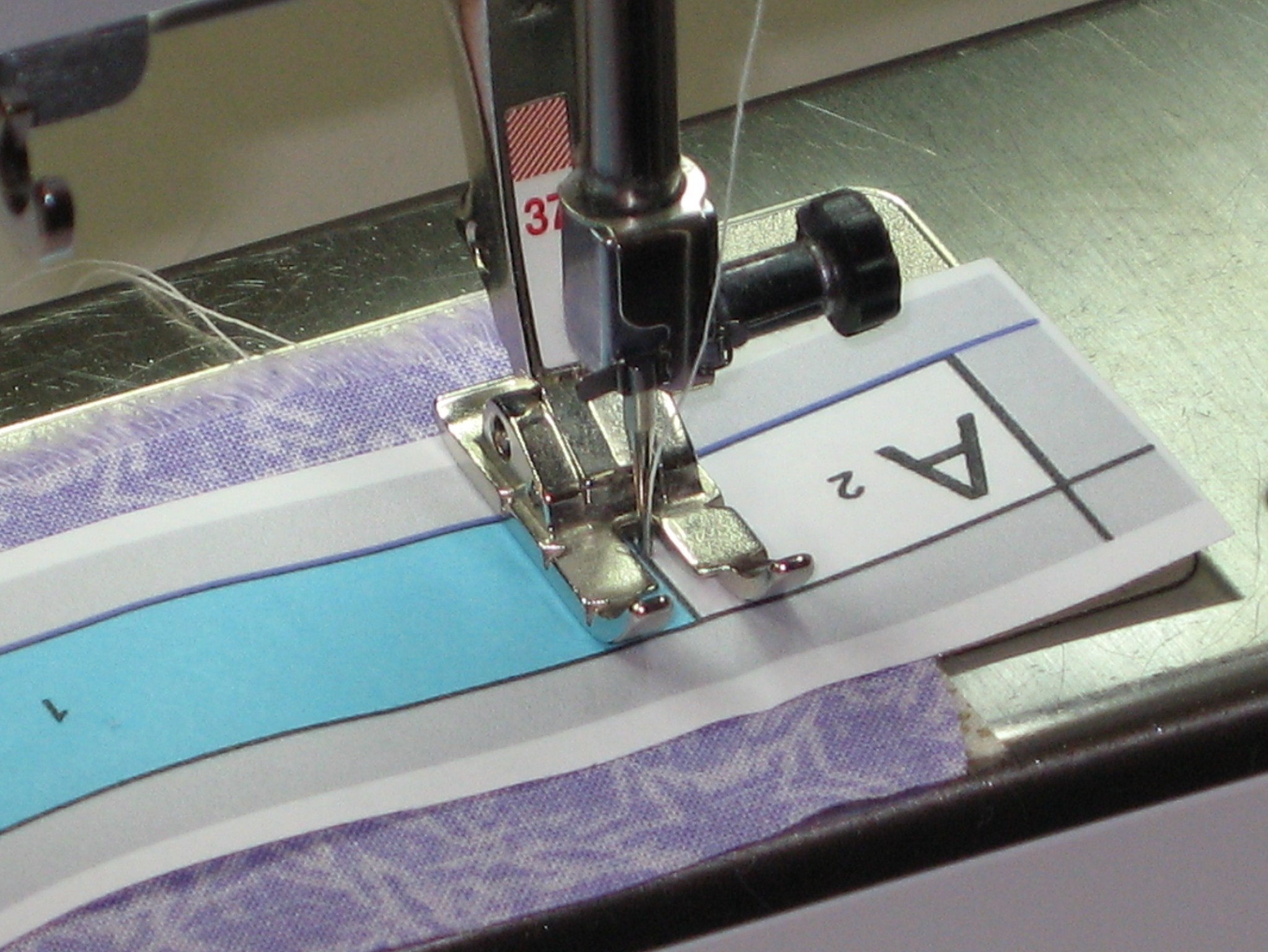
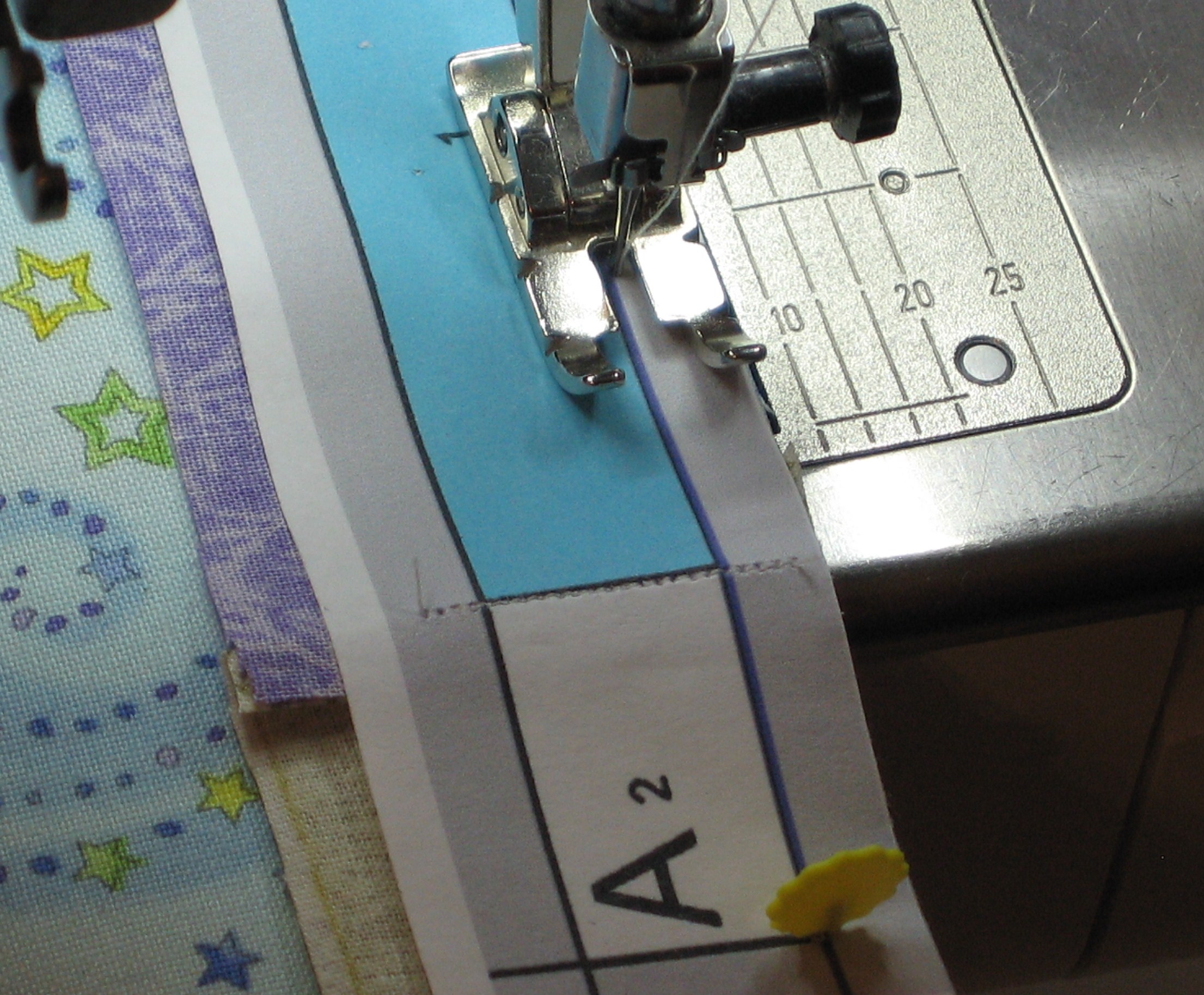
Using a small stitch (10-12 stitches per inch, a 1.5 on most domestic sewing machines), start two stitches before the stitching line, stitch along the line and take two stitches after the end. By stitching slightly pass the line, it is less likely that the ends the stitches will pull out when the paper is removed.

paper piecing tutorial (14)

Trim thread to paper.

paper piecing tutorial (11)

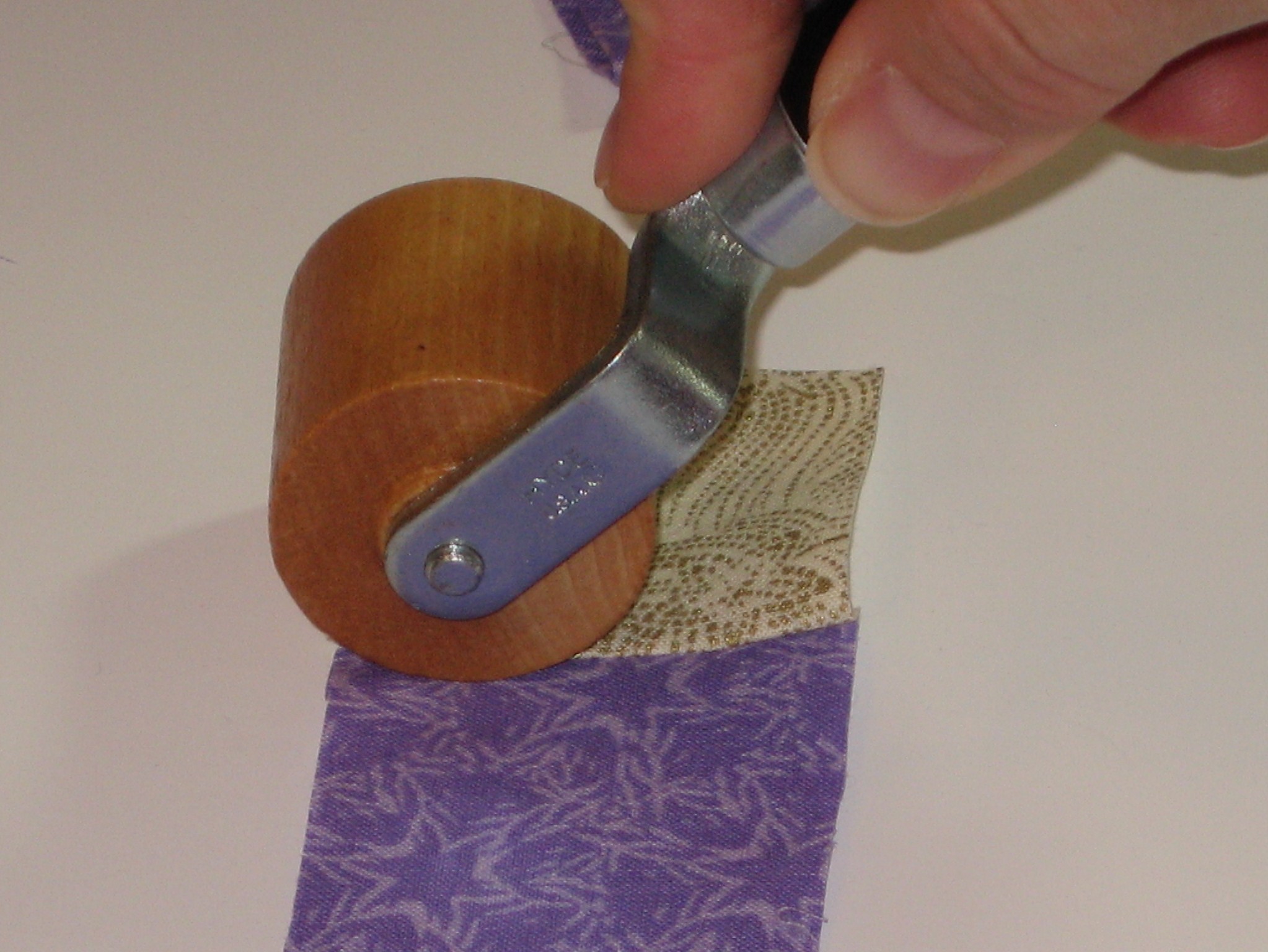
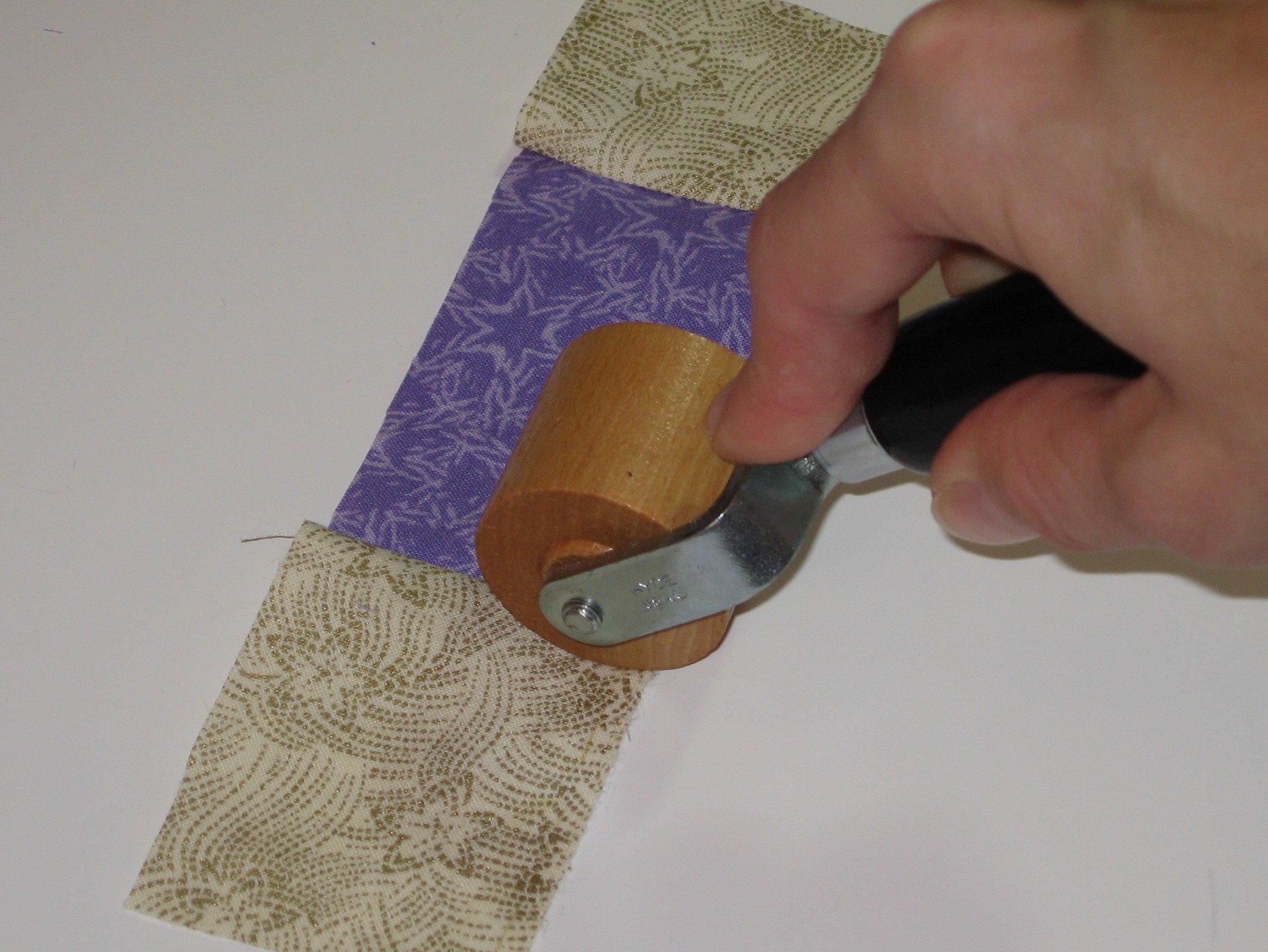
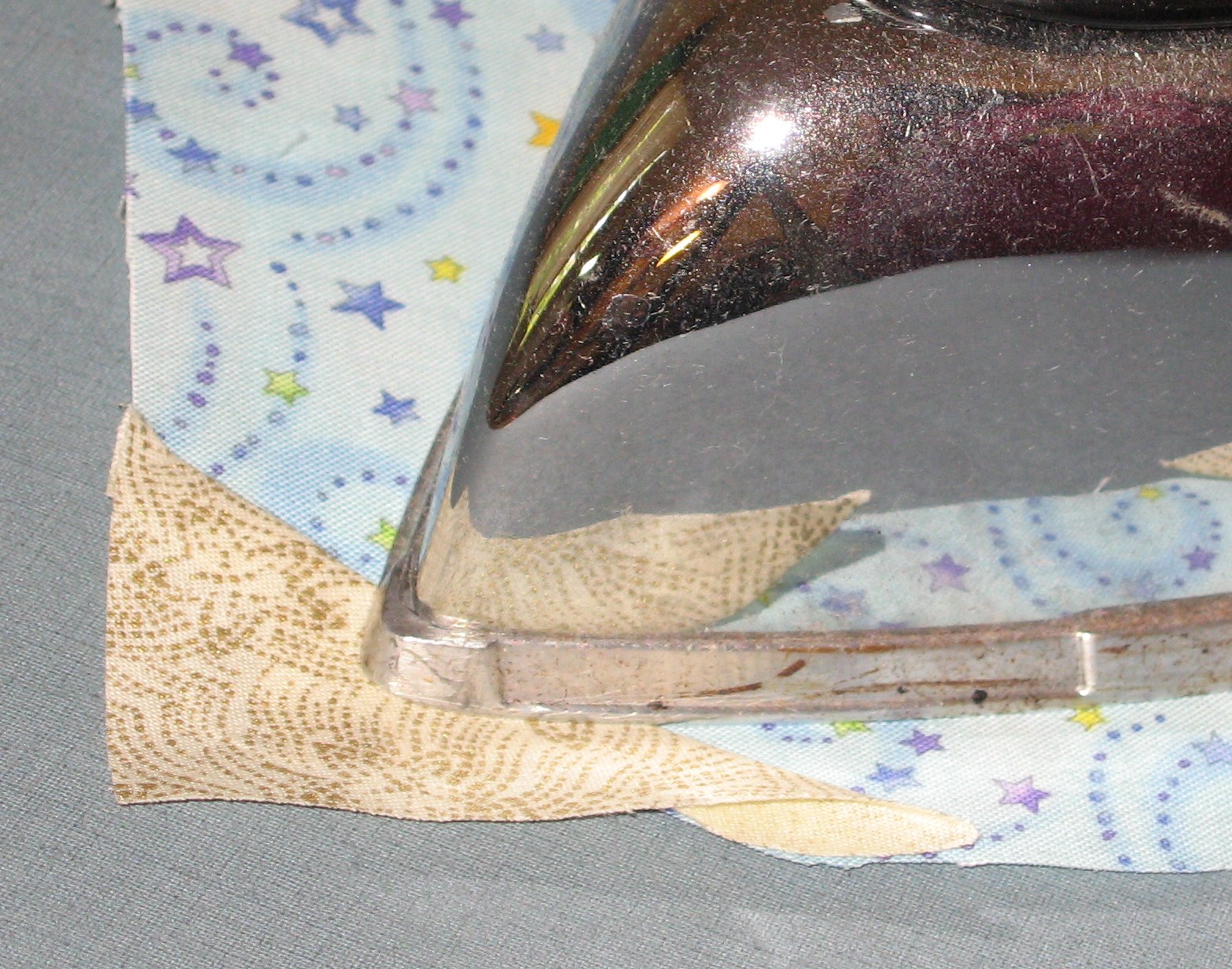
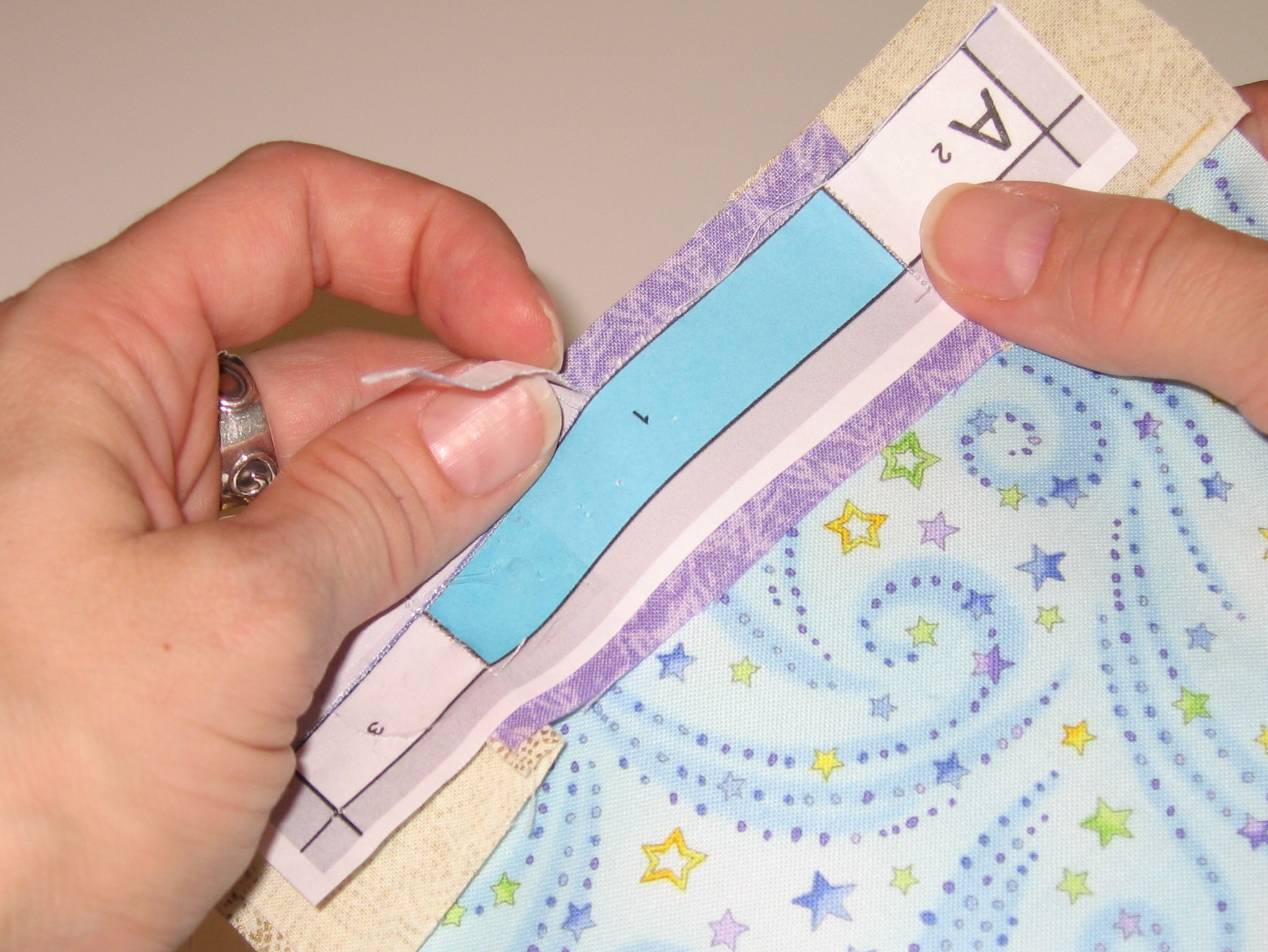
Fold fabric two out. Gently dry press with an iron OR use the wallpaper seam roller (shown) to press out the seam. Be careful not to pull or tug on the fabric.

paper piecing tutorial (12)

Fold on the 1 > 3 line. Keep the paper folded then flip the pattern over. Trim a generous 1/4″ from piece 1 either with scissors or with your Add-A-Quarter Ruler.

Unfold the paper. Place fabric 3 wrong side up on fabric 1, matching the edges, which will be 1/4″ past the stitching line after being trimmed in the previous step.

paper piecing tutorial (13)

Repeat stitching as for line 1 > 2.

paper piecing tutorial (15)
Press as before.

paper piecing tutorial (16).JPG

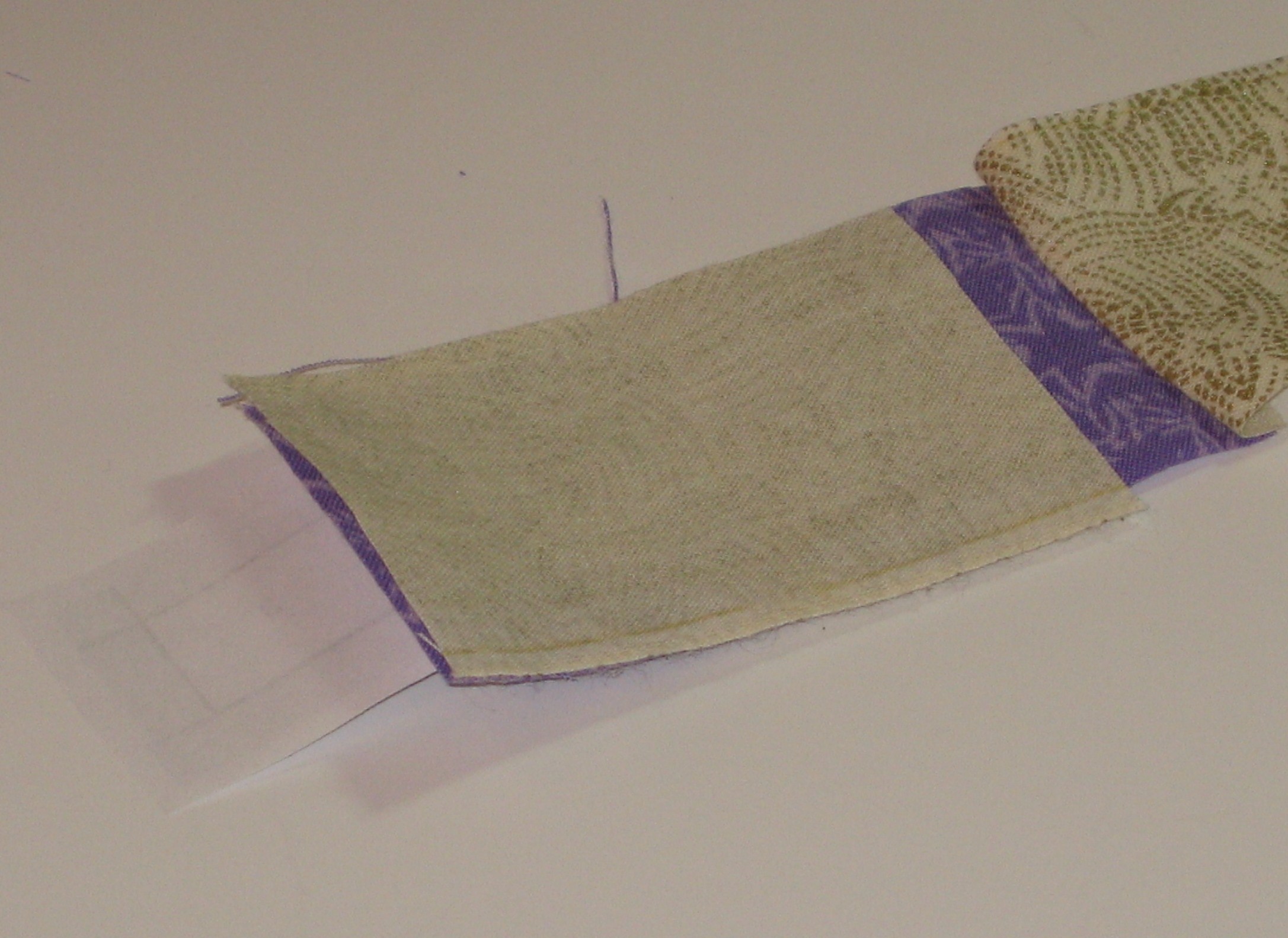
Trim fabric around pattern piece, leaving a generous amount for squaring up later.

paper piecing tutorial (17).JPG

Press pattern piece “A” with a gentle up and down motion using a dry iron. Do not pull or tug the fabric.

paper piecing tutorial (19)

Now for pattern piece “B.”

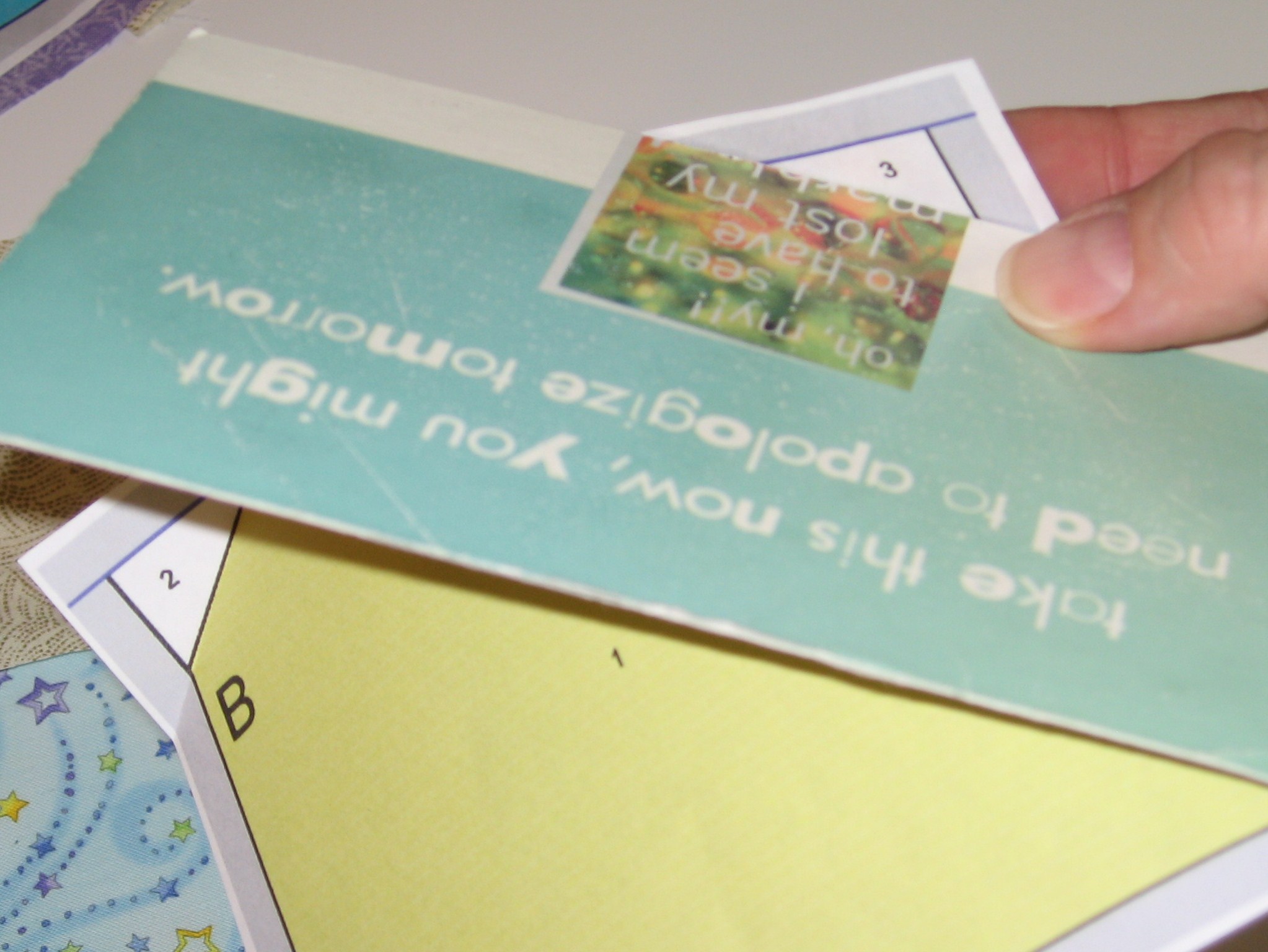
paper piecing tutorial (20)

Using the postcard or straight edge, fold down the lines between section 1 > 2 and 1 > 3.

paper piecing tutorial (21)

Trim a generous 1/4″ seam allowance (with scissors or Add-A-Quarter ruler) for piece 1 >2. Repeat for 1 > 3.

paper piecing tutorial (23).JPG

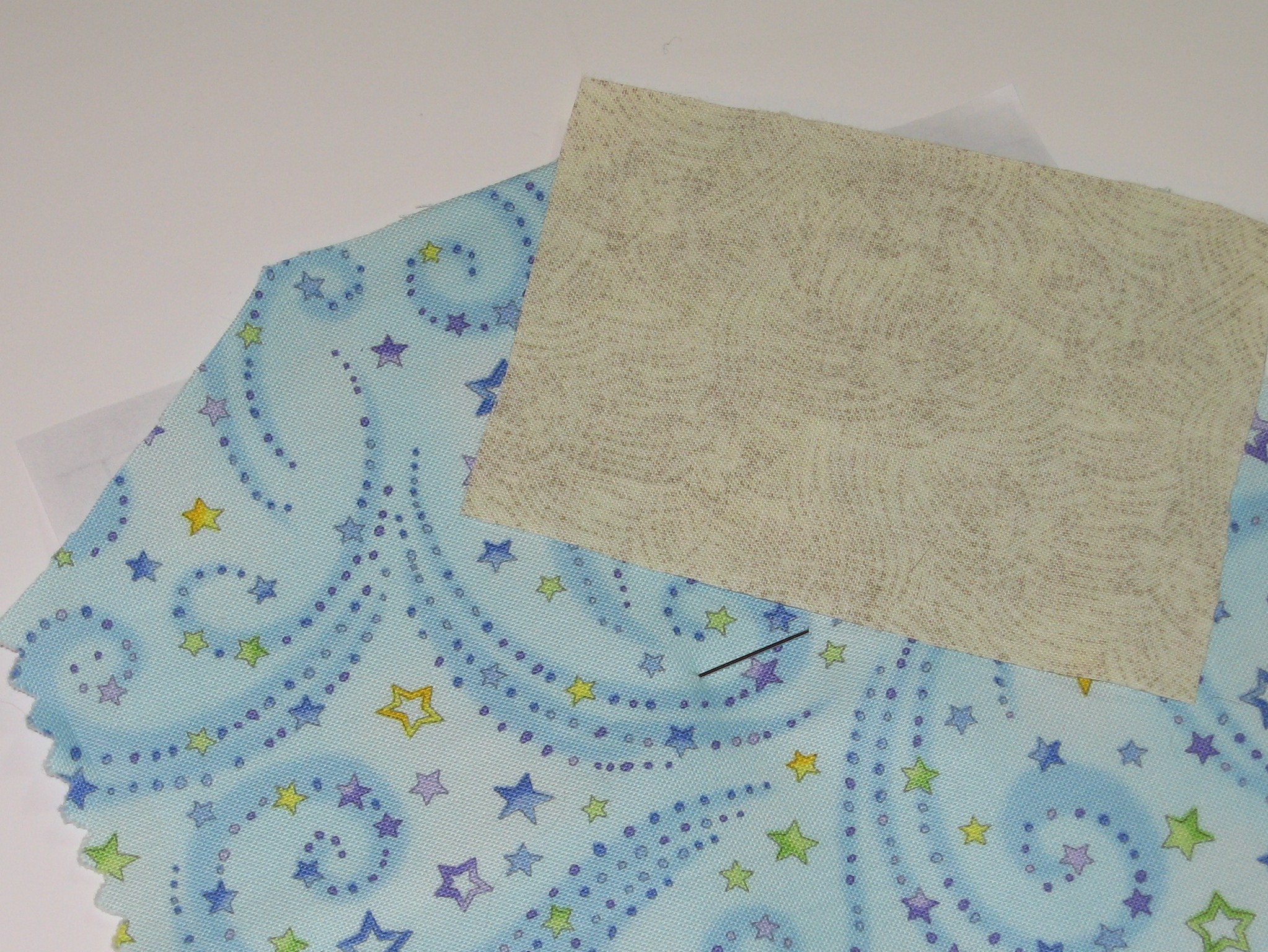
Just as for pattern piece “A,” place fabric 1 right side up on the back of the paper opposite piece 1. Make sure you have a generous seam allowance (approximately 1/2″) all around.

paper piecing tutorial (24)

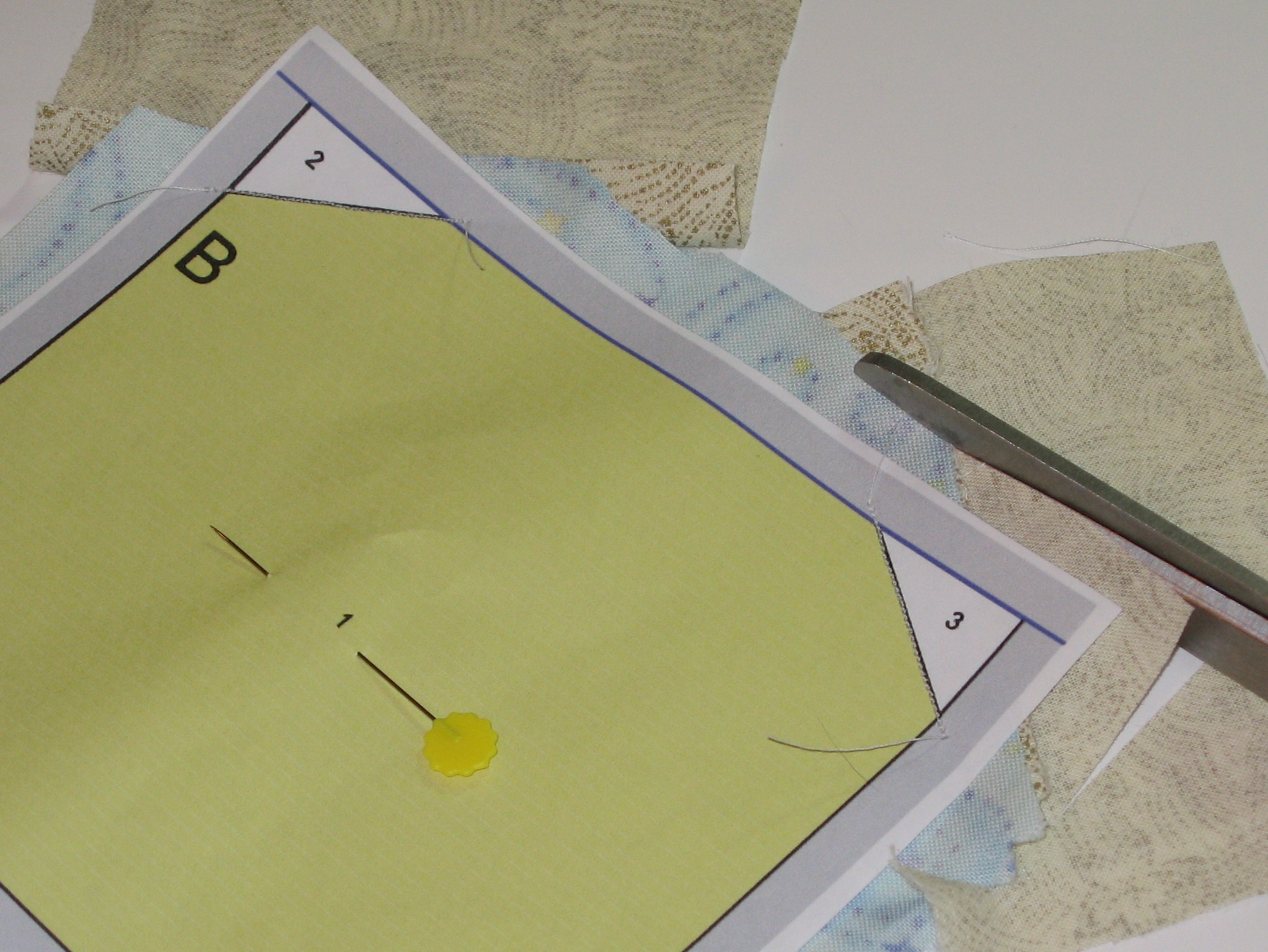
Stitch on the line between piece 1 > 2 as in previous steps.

Repeat for pieces 1 > 3.

paper piecing tutorial (26).JPG

Press seams as before.

paper piecing tutorial (28)

Trim fabric, leaving a generous seam allowance around the outside edges for squaring up later.

paper piecing tutorial (29).JPG

Press as before.

paper piecing tutorial (30).JPG

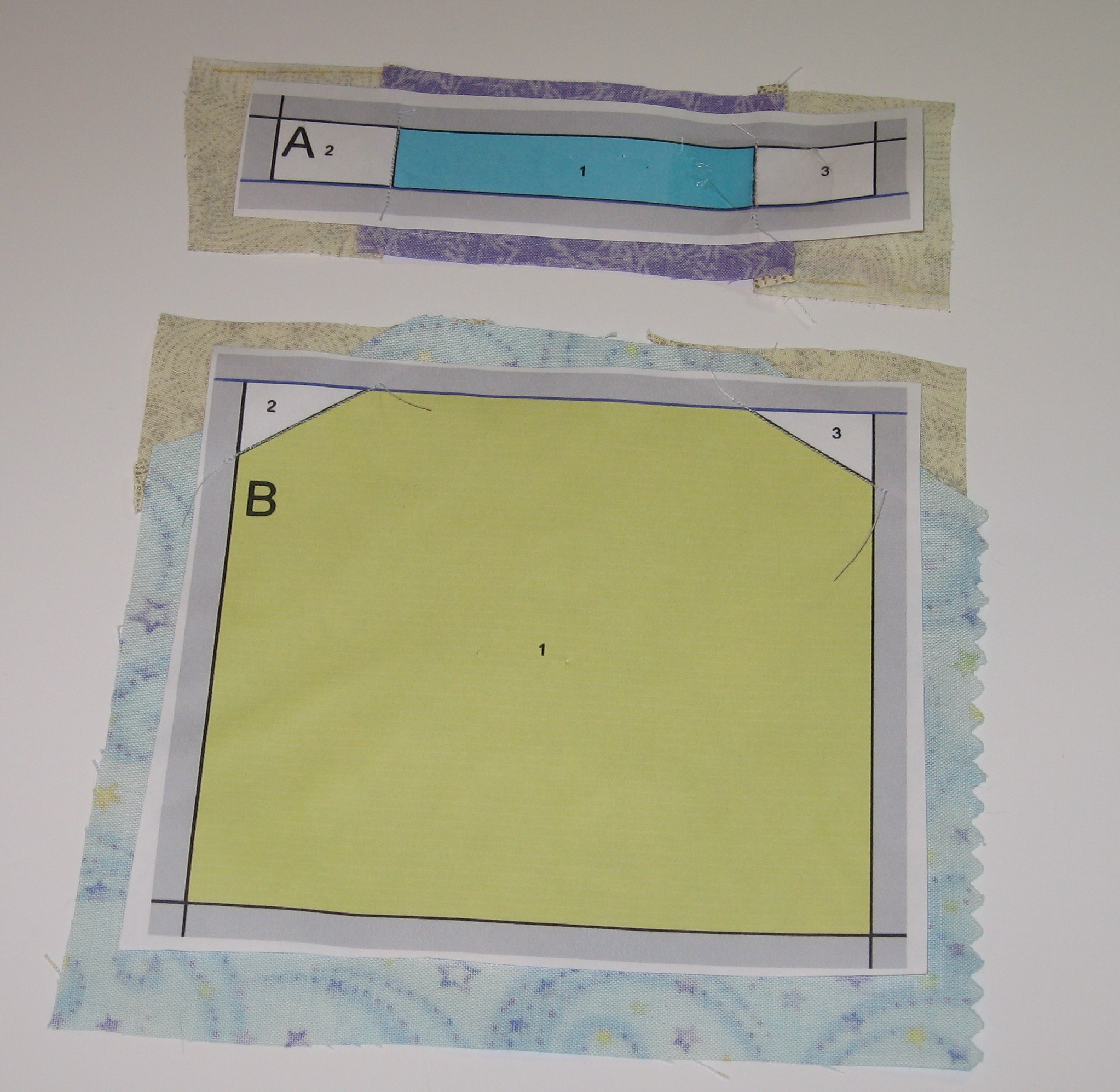
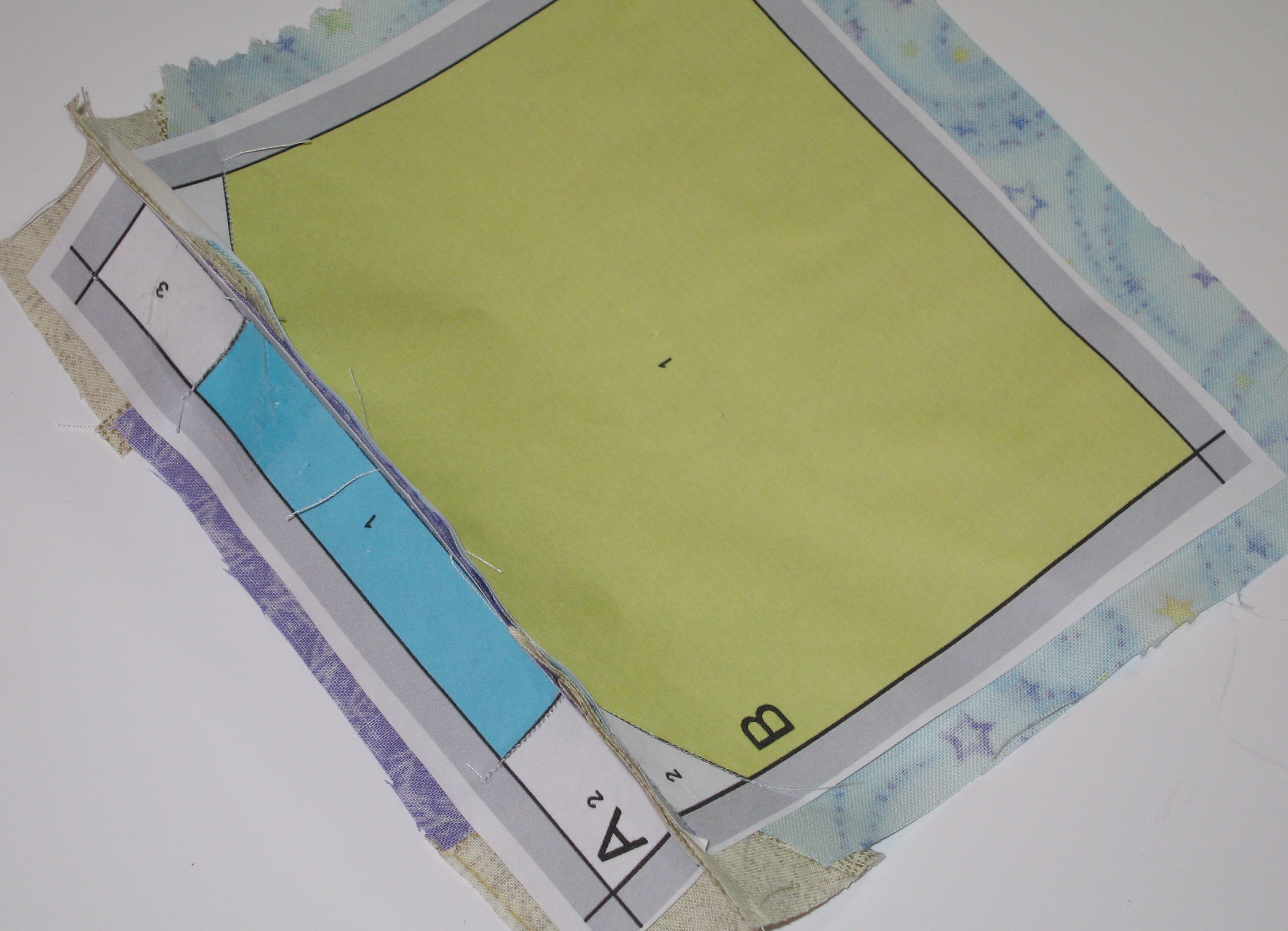
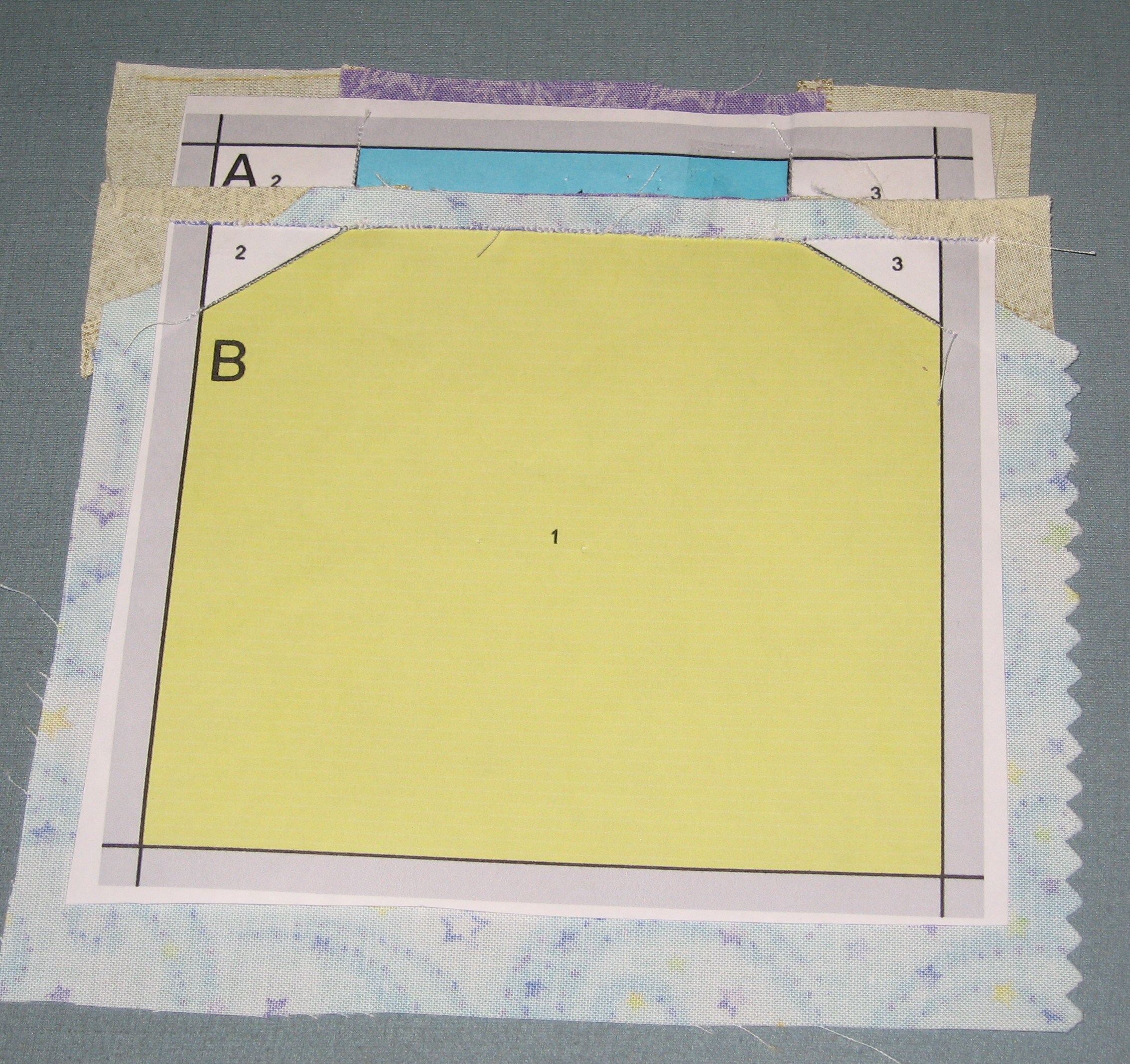
This is what you should have so far.

paper piecing tutorial (31).JPG

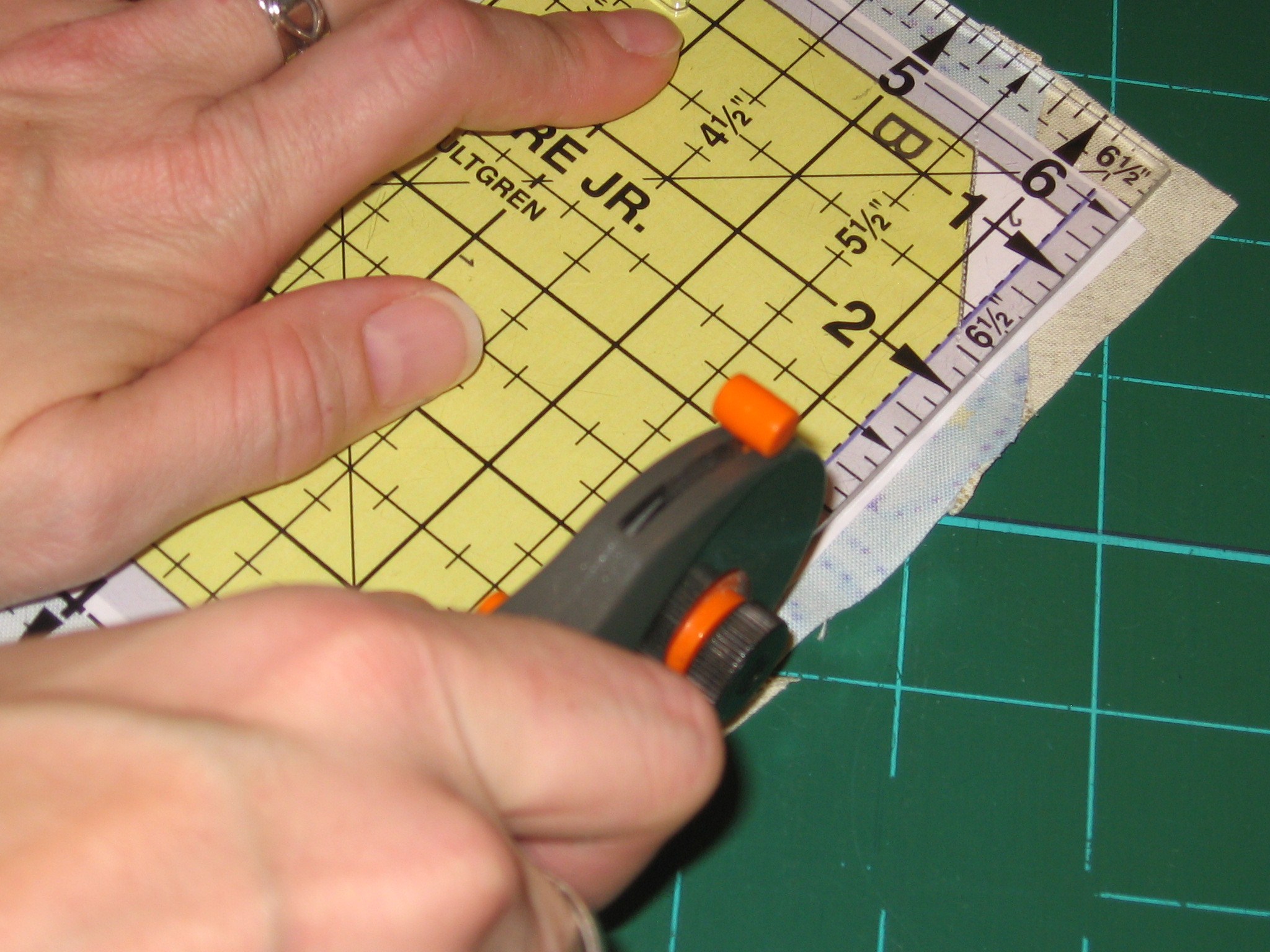
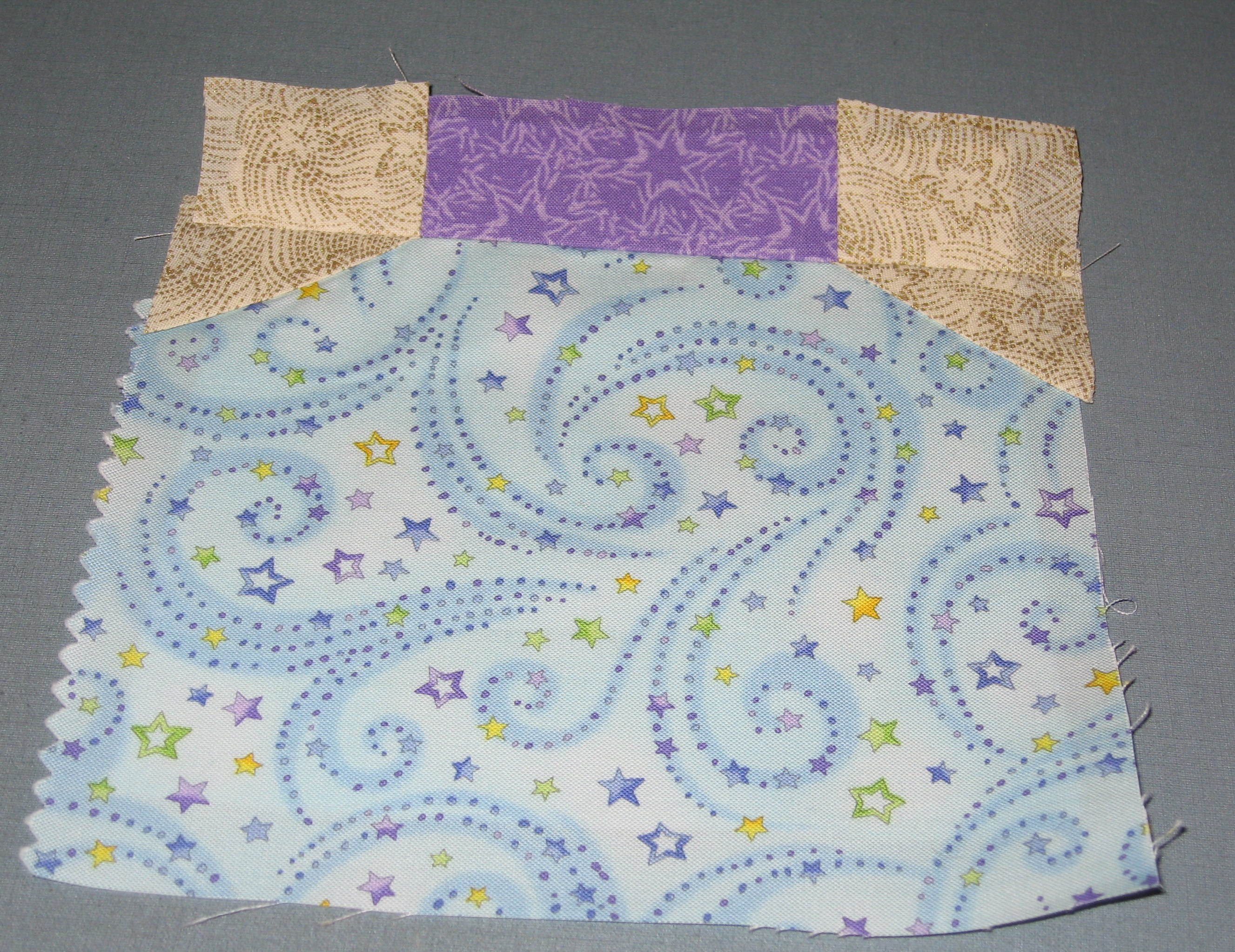
On your cutting mat and with your ruler, find the inside line at the top of unit “B”, where the jar will be stitched to the lid.

paper piecing tutorial (32).JPG

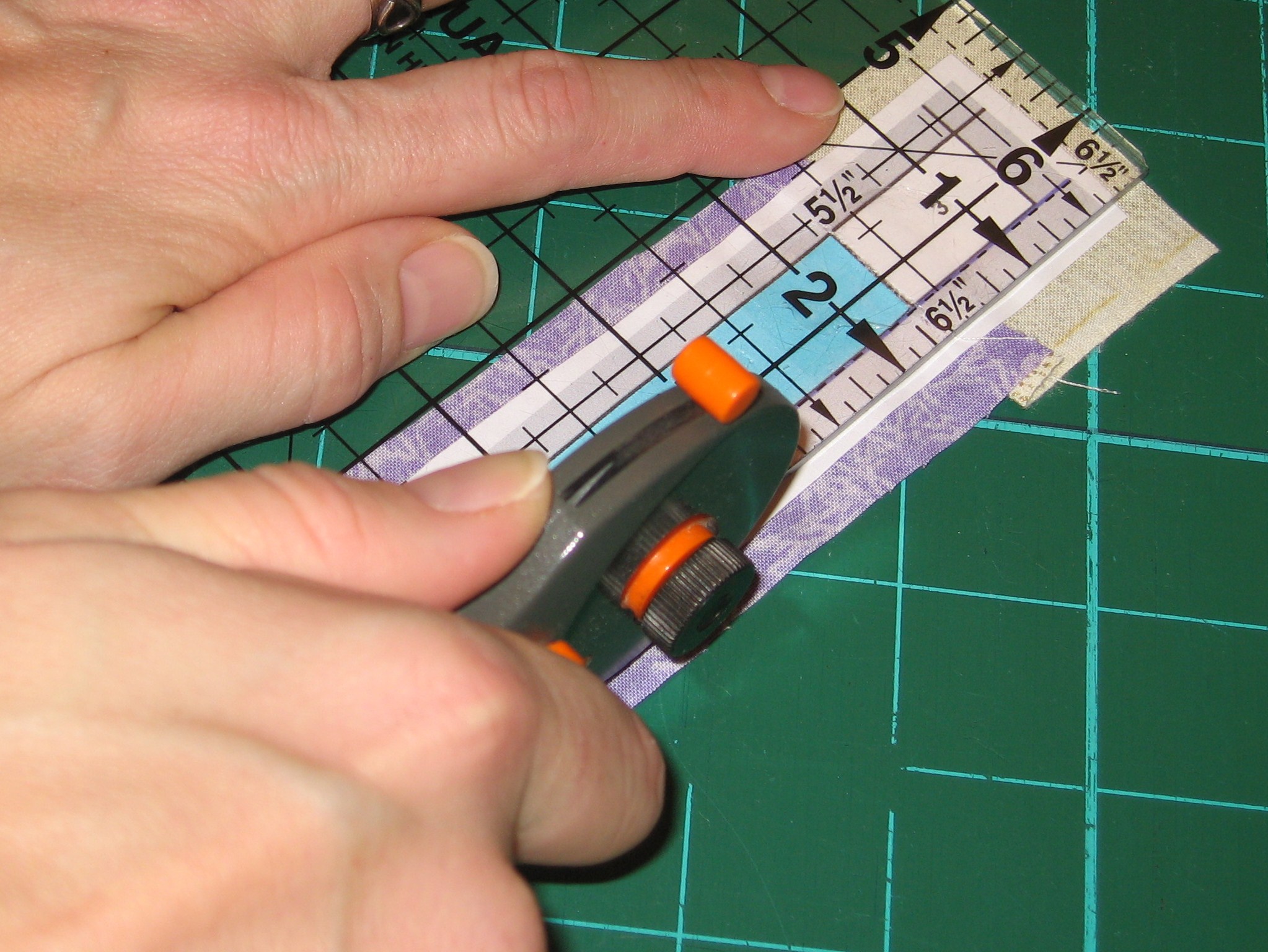
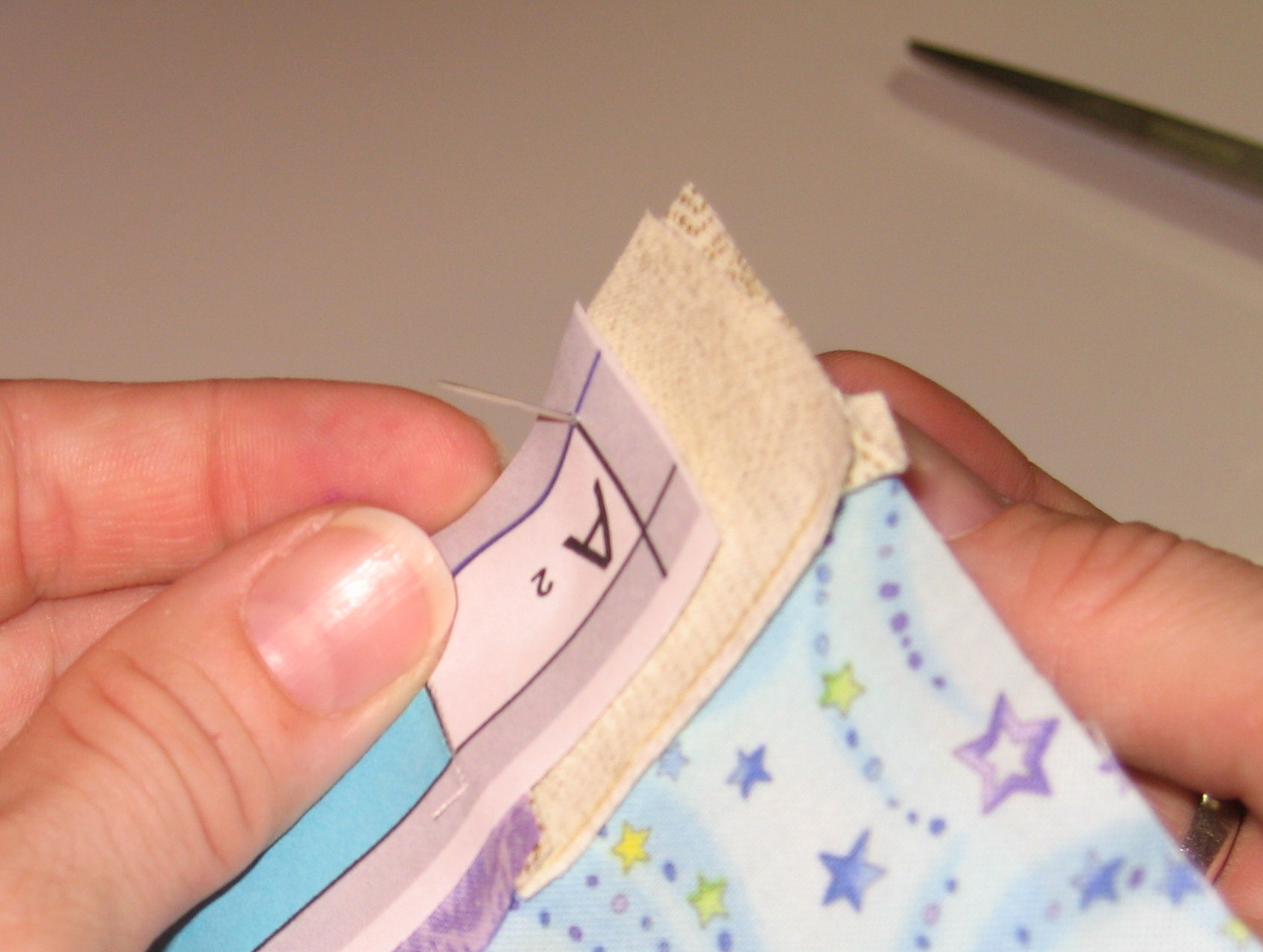
Using the pattern’s seam allowance as a guide, trim. (note: Not all paper pieced patterns include seam allowance. All of my patterns do, but if you’re ever working on a pattern without seam allowance, you can add it using this simple tutorial.)

paper piecing tutorial (34)

Find the corresponding seam on unit “A” and repeat the process.

paper piecing tutorial (36)

Now the “A” pattern piece is ready to join to the “B” pattern piece.

paper piecing tutorial (37)

Use a pin to find the outside corner. Push the pin through this point.

paper piecing tutorial (38)

Find the corresponding point on the other pattern piece. Push the pin through.

paper piecing tutorial (39)

Push the pin all the way through to line up the pattern pieces. This will assure that your pattern pieces align correctly when stitching.

paper piecing tutorial (40)

Using the pin keep the pattern aligned, stitch along the seam line.

Tip: Use Wonder Clips to hold the seam in place. (Not shown…Wonder Clips are awesome, but they came out after I originally wrote this tutorial!)

paper piecing tutorial (41)

This is what you have now.

paper piecing tutorial (42)

Remove the paper seam allowance that was just stitched on the “A” piece.

paper piecing tutorial (43)

Repeat for the “B” piece.

paper piecing tutorial (44)

Open the block and press. The seam can be pressed to one side or pressed open. I usually let the fabric decide for me.

paper piecing tutorial (45).JPG

Now you have this from the front.

paper piecing tutorial (46).JPG

And you have this from the back.

paper piecing tutorial (48)

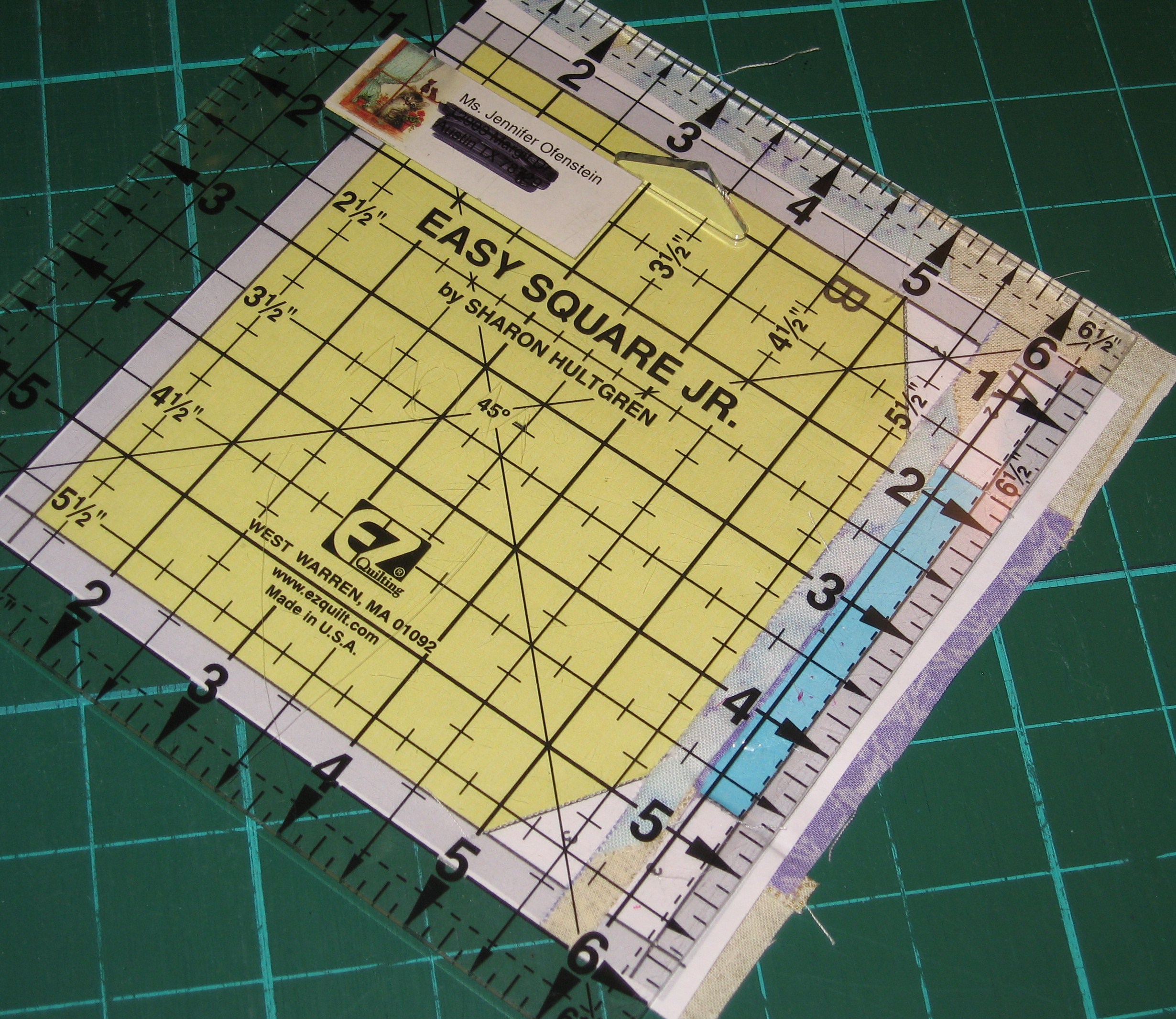
Time to square up the block! Align the ruler with the bottom edge with the seam allowance inside. Trim to 1/4″.

paper piecing tutorial (49).JPG

Using the first cut, square up the block to 5 1/2″. If the pattern is a little off, go with the ruler’s measurement and not the seam allowance on the pattern. Printers vary widely, as do patterns. You can make minor corrections by squaring up the block.

paper piecing tutorial (50).JPG

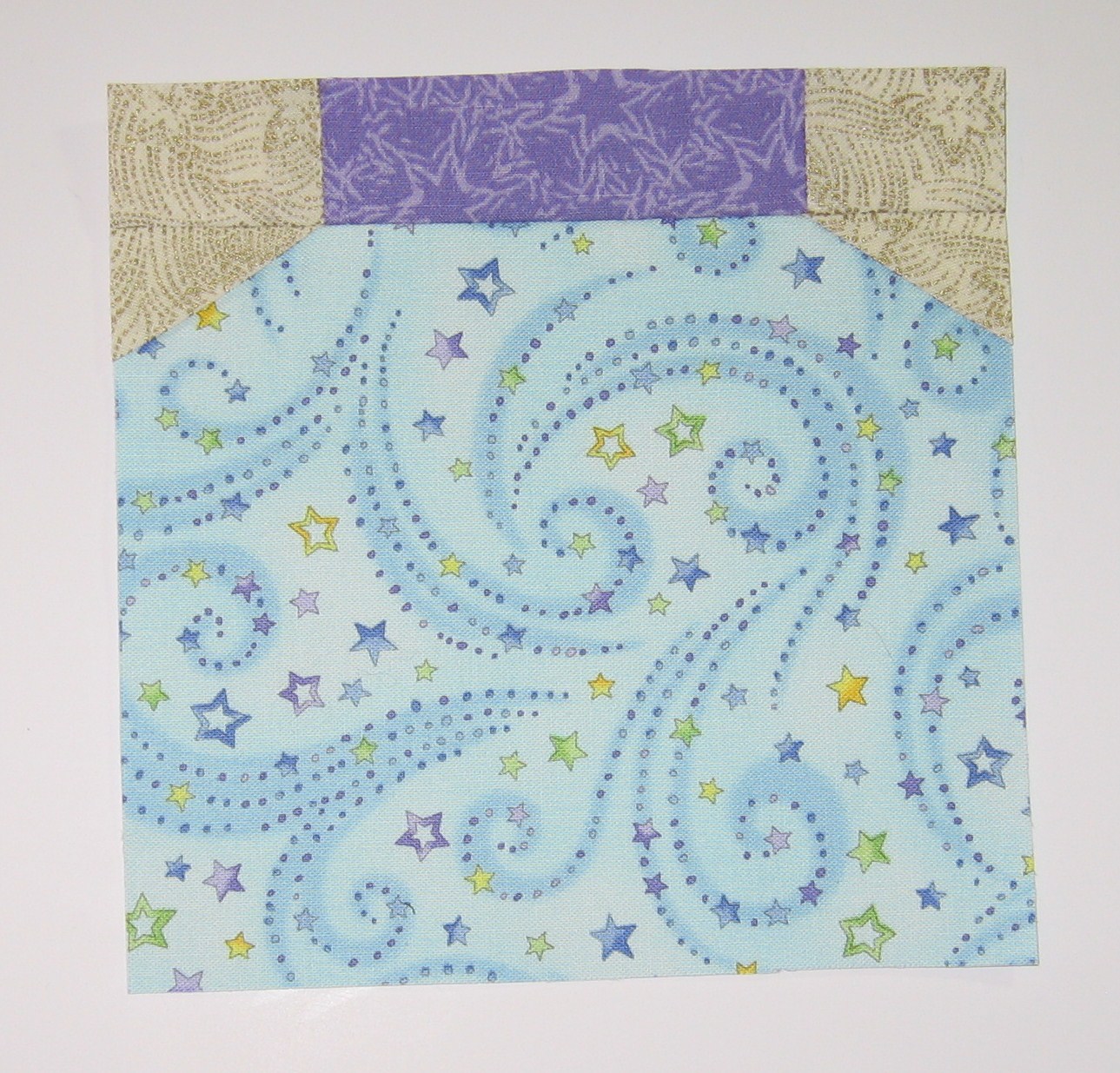
Now you have this…all squared up! Leave the paper attached until the block is in it’s final location. That will keep the bias seams from stretching.

paper piecing tutorial (51)

From the front!

Use this block for quilts, pillows, bags, pot holders, wall hangings or anywhere else you’d use a square of fabric or a quilt block!

You can find lots of free patterns right here on Sewhooked!

Join the Sewhooked Facebook Group for community, support, & prizes!

signature-2016

Facebook ♥ Instagram 

Posts on this blog may contain affiliate links but I have no control over “sponsored posts” which are the price I pay for a less expensive website. Thank you for your understanding & support. ♥

Way Back Craft: Paper Piecing Evolution

Livejournal user lady_whitehaven turned on the Way Back Machine for me today when I found this post over at the Livejournal community quilting.

The dragon is an old design that I came up with way back in 2006 for a project that never quite made it to fruition.  That was probably a year after I started designing.  When I look at the original pattern, I can really see how much my design skill has evolved.

Sometime in 2007, when I had finally tested the dragon and realized how complicated it was, I pulled it off of sewhooked to be redesigned and then (apparently!) forgot about it.  I have since tried to be more careful about what patterns I post untested.  If I’m even a little unsure of the pattern design, I’ll hold onto it until I’ve had the chance to test it myself.

New, cleaned up and simplified version:


“Green Dragon” Pattern

The original version looks okay, but the pattern is scary, messy & has too many pieces!

First scary dragon pattern

When I woke up this morning, I had no intention of redrawing or reworking a pattern. I had kids to get to school (done!), a hubby to drop off at the airport (done!) and groceries to buy (um…not so done!).  Thank you, lady_whitehaven, for inspiring me to have a second look and give the “Green Dragon” a second life.

“Green Dragon” is now housed on the Paper Pieced Pattern page at sewhooked. If you give it a try, or any of my other patterns or projects a try, I’d love to see a photo. Email me or add it to the Friends of Sewhooked flickr group.

Have a happy weekend!

coming soon – Guest Designer profiles!

This is part of my “Way Back Craft” series’; patterns, crafts, tutorials and general crafty memories before the days of this craft blog.