Tag Archives: how to

Paper Piecing: It Seams To Me

Occasionally, someone will tell me they don’t like to have seam allowances on paper pieced patterns.

Everyone’s got their own preferences, so it doesn’t bother me.   If you don’t like them, they’re easy enough to cut off patterns that have them.

My personal preference is definitely for seam allowance.  A related question I’m regularly asked is if there is an easy way to add seam allowance to a pattern that doesn’t include it.

Yes, absolutely there is!

You need access to a copier, but beyond that, no special tools and only a few minutes of your time are needed.

If you don’t own a copy machine or scanner, you can trace the pattern with tracing paper, adding the seam allowance as you go.  That will work best with simple patterns, but if you’re really patient, it will work for any pattern.

Also included are suggestions for labeling and recording sewing order for later piecing.

You’ll need:

  • the pattern of your choice (the example is an unfinished pattern of mine)
  • a copy machine or printer/scanner with copy function
  • graph paper, any grid size
  • a ruler
  • rotary cutter with a blade for cutting paper (optional, but it’s much easier than using scissors)
  • a red or colored pen or map color
  • fabric safe markers or pens (crayons are shown, but those are riskier and I no longer recommend them)

Print the pattern of your choice.

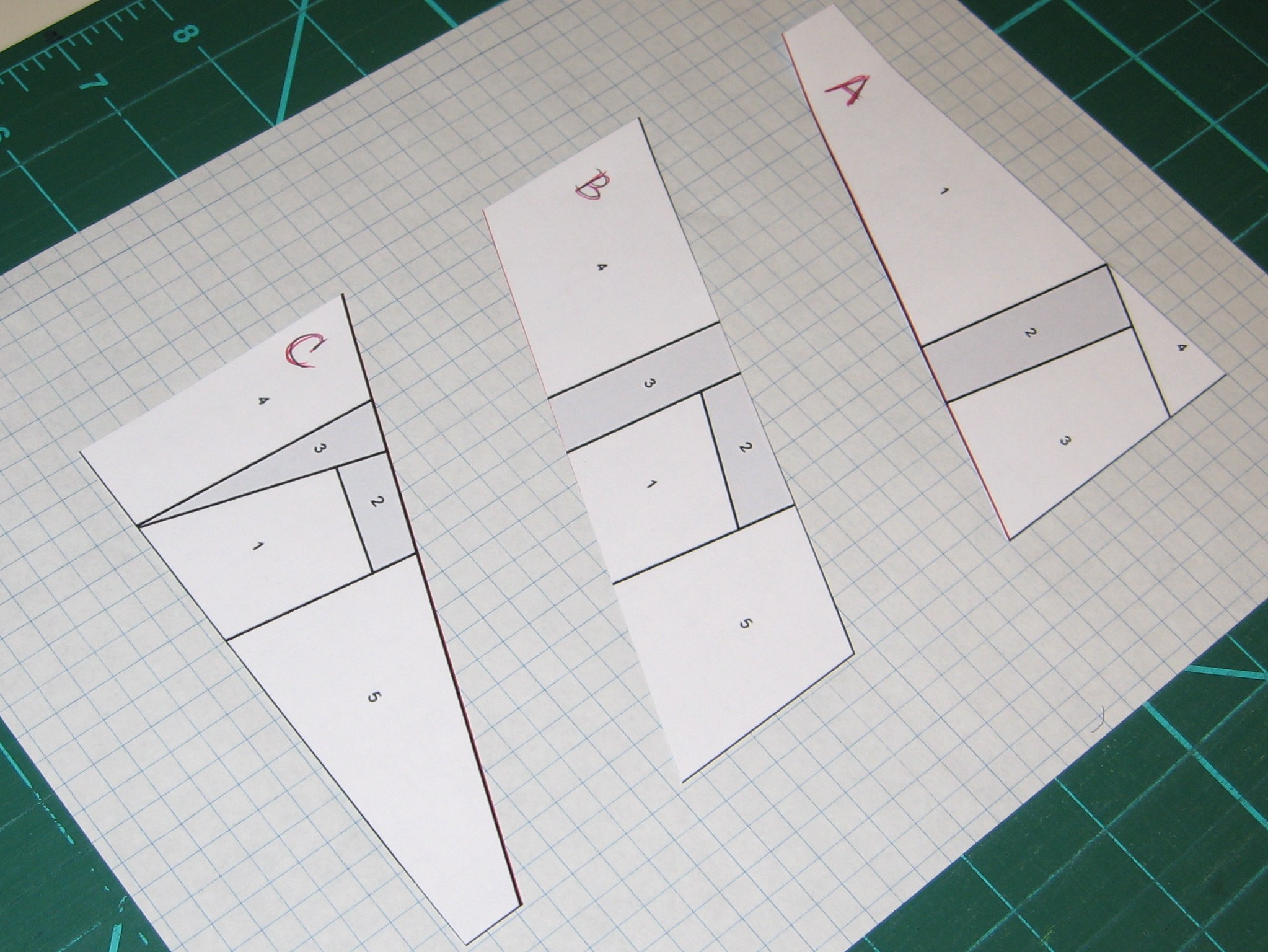
Using your ruler, draw over the lines where the pattern pieces separate (the seam lines), making sure you go past the outside edges of the pattern.  Red is used here because it’s easy to see.

If the pattern does not have a line indicating where the outside edge is, I recommend adding one with your ruler.

If the individual pieces aren’t labeled and you think you might need it later, label them now.  This is especially useful in more complicated patterns.  I like to use letters (A, B, C), but you can mark them any way you like.  If you need to, make a notation of how the pieces will go back together, for example:  A>B>C.


Use the rotary cutter to neatly trim the pattern to the seam lines, cutting through those that go across the pattern.  You can use scissors here, but you need to be extremely precise.

Place the pattern pieces face up on a piece of graph paper, using a dot of glue or piece of tape to hold them in place.

Any size grid will do.  The grid will make the seam allowance distinctive without using up too much ink. You can also use a lightly colored copy paper.

Place the grid paper face down on your copy machine or scanner and make a copy.

A colored copy (L) and a black & white copy (R).  Either works fine.

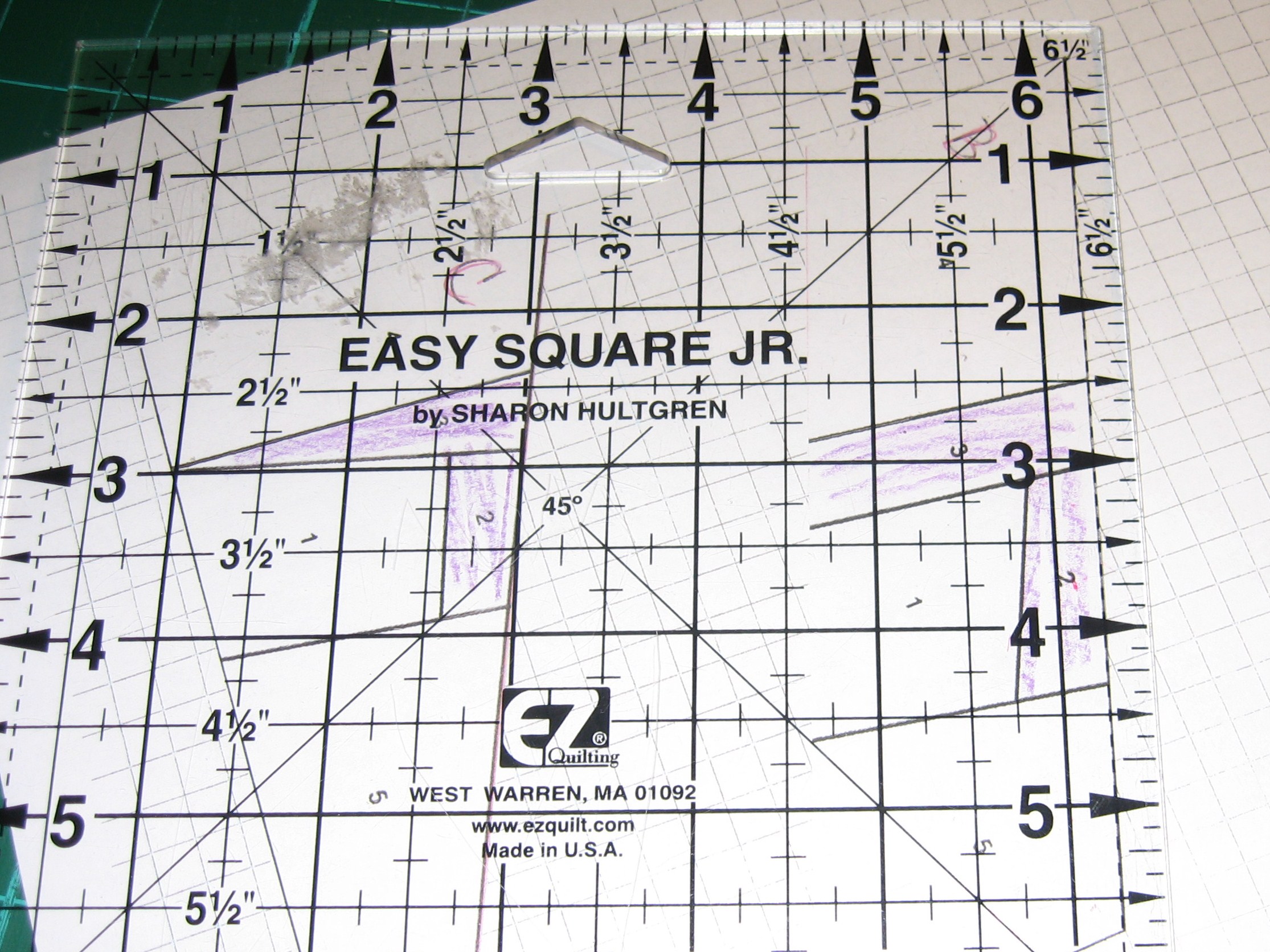
Using your ruler and red pen or map pencil, draw lines along the inside seams.  This will give you a reference point for lining up your pieces later. 

See:  Paper Piecing:  Step By Step for instructions.

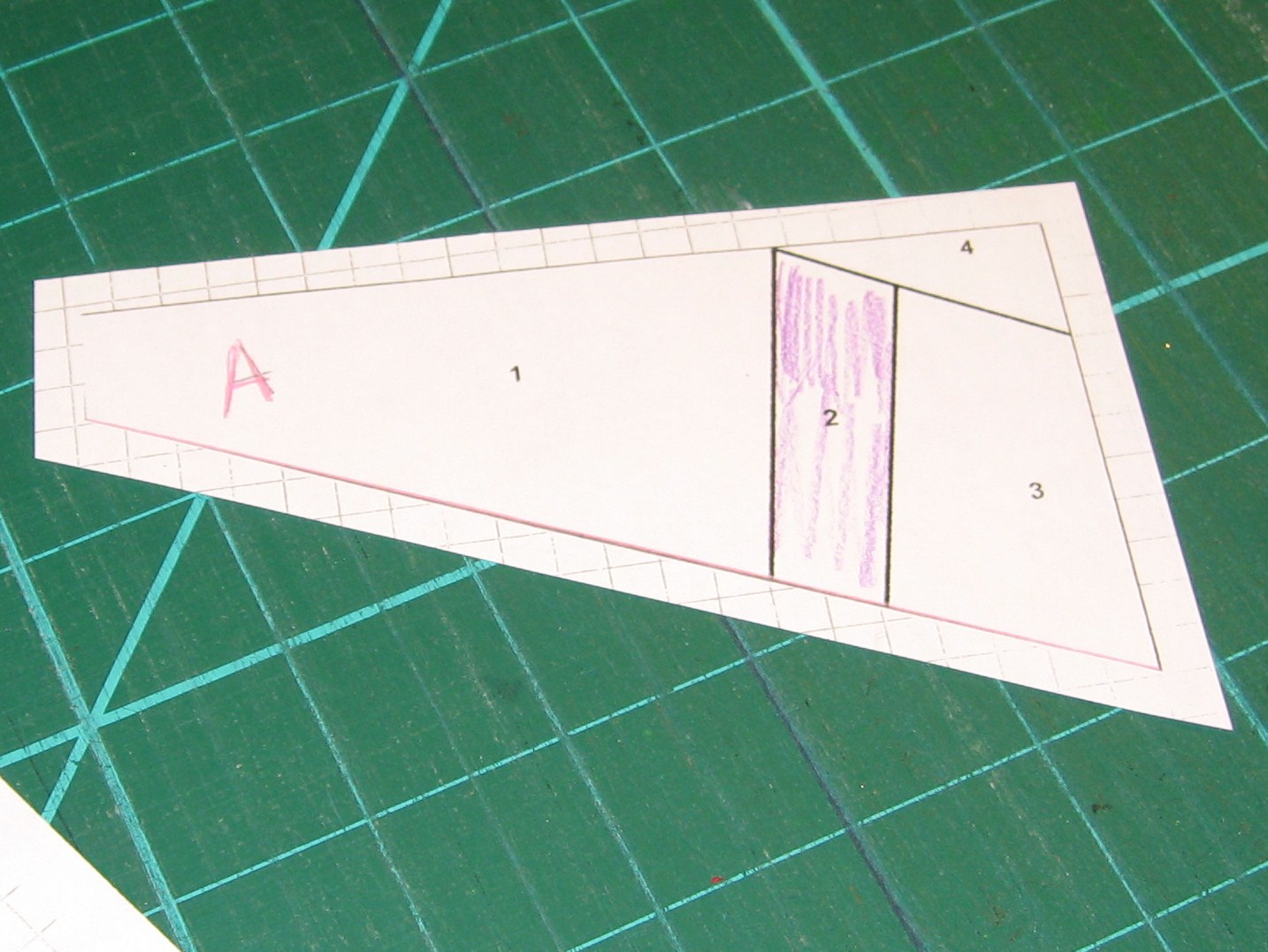
If you’d like the pieces of your pattern colored for easy reference while you’re piecing, now is a great time for that.  Grab a fabric safe marker or pen and color away!  This is a great trick to use if you’re piecing with more than two colors so you don’t accidentally mis-piece any fabrics. Note from future me: don’t use crayons, they melt. 😐

Using your rotary cutter and dull or paper-designated blade, trim the pattern pieces, leaving a 1/4″ seam allowance.  It’s easy to see the grid left from photocopying.


Repeat on all pattern pieces and you’re done!  The pattern has seam allowance and you’re ready to piece.

Also check out:  Paper Piecing:  Step By Step

Happy crafting!

Find my free patterns on Sewhooked & Fandom in Stitches.

♥ Jennifer O

Posts on this blog may contain affiliate links to help cover the cost of my website. I thank you for your generous support. ♥

Sewing: Reduce, Reuse, Recycle a Thrift Store Sweater into a fun bag!

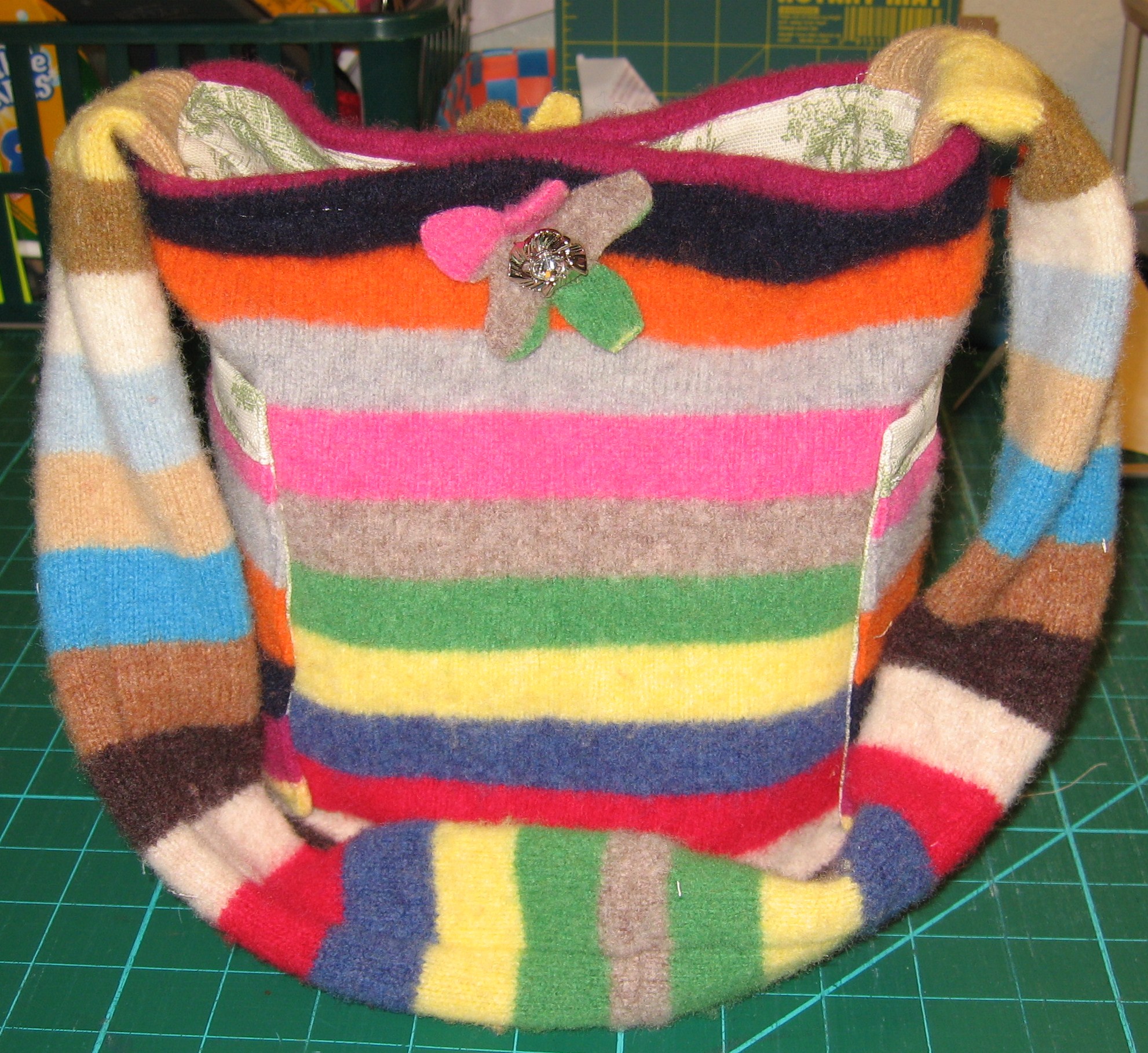
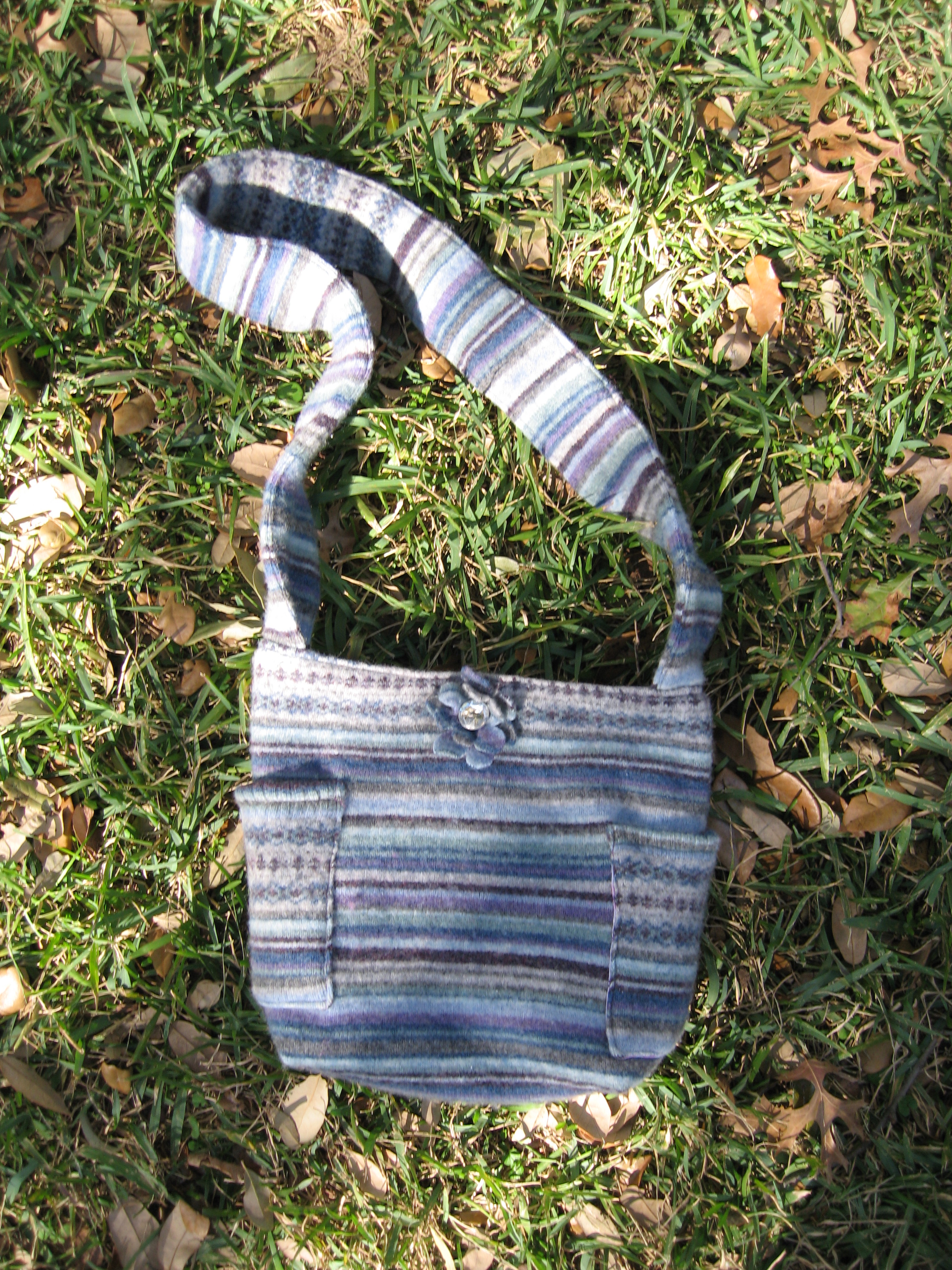
Recycled Sweater Bag 2008

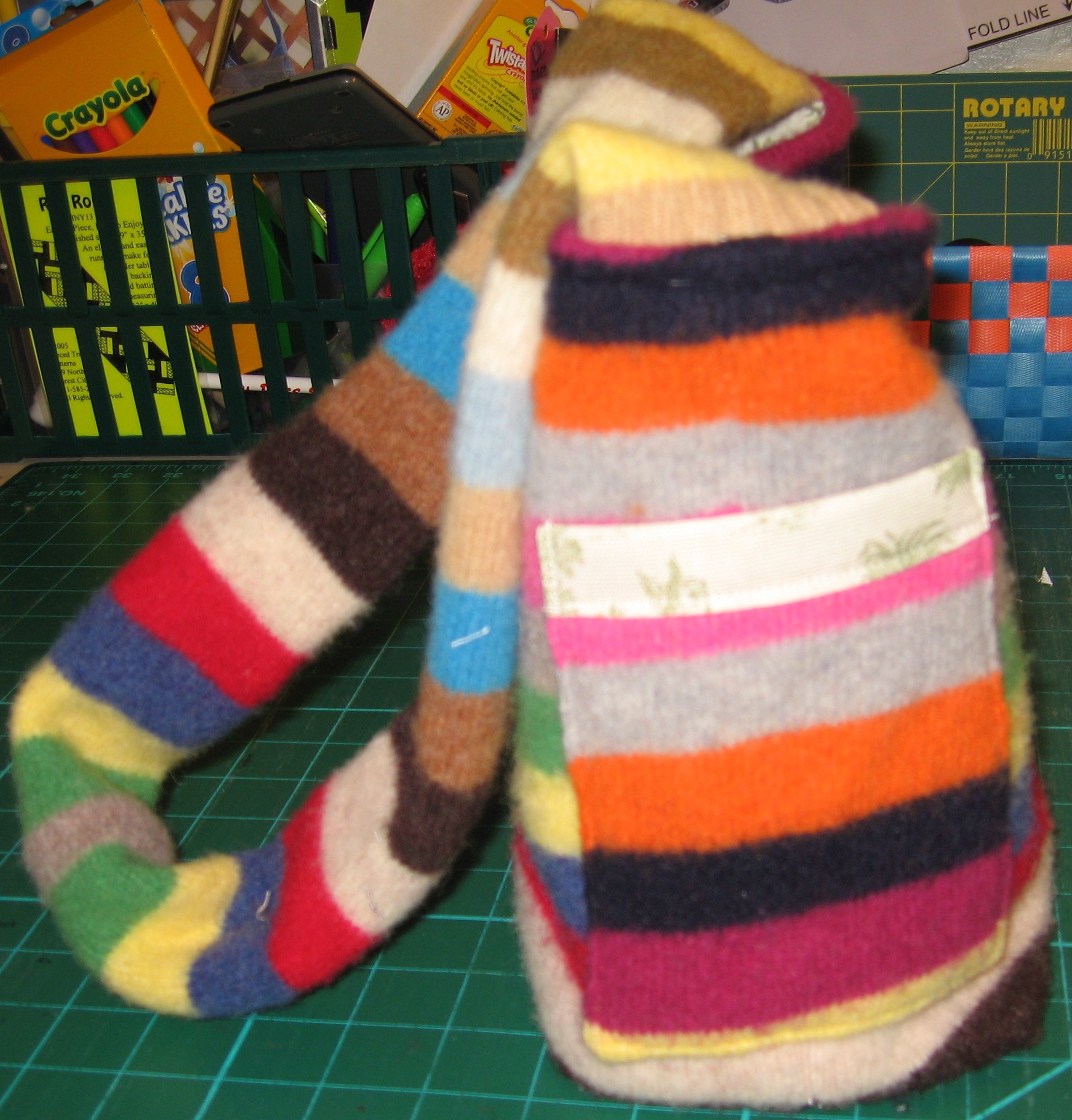
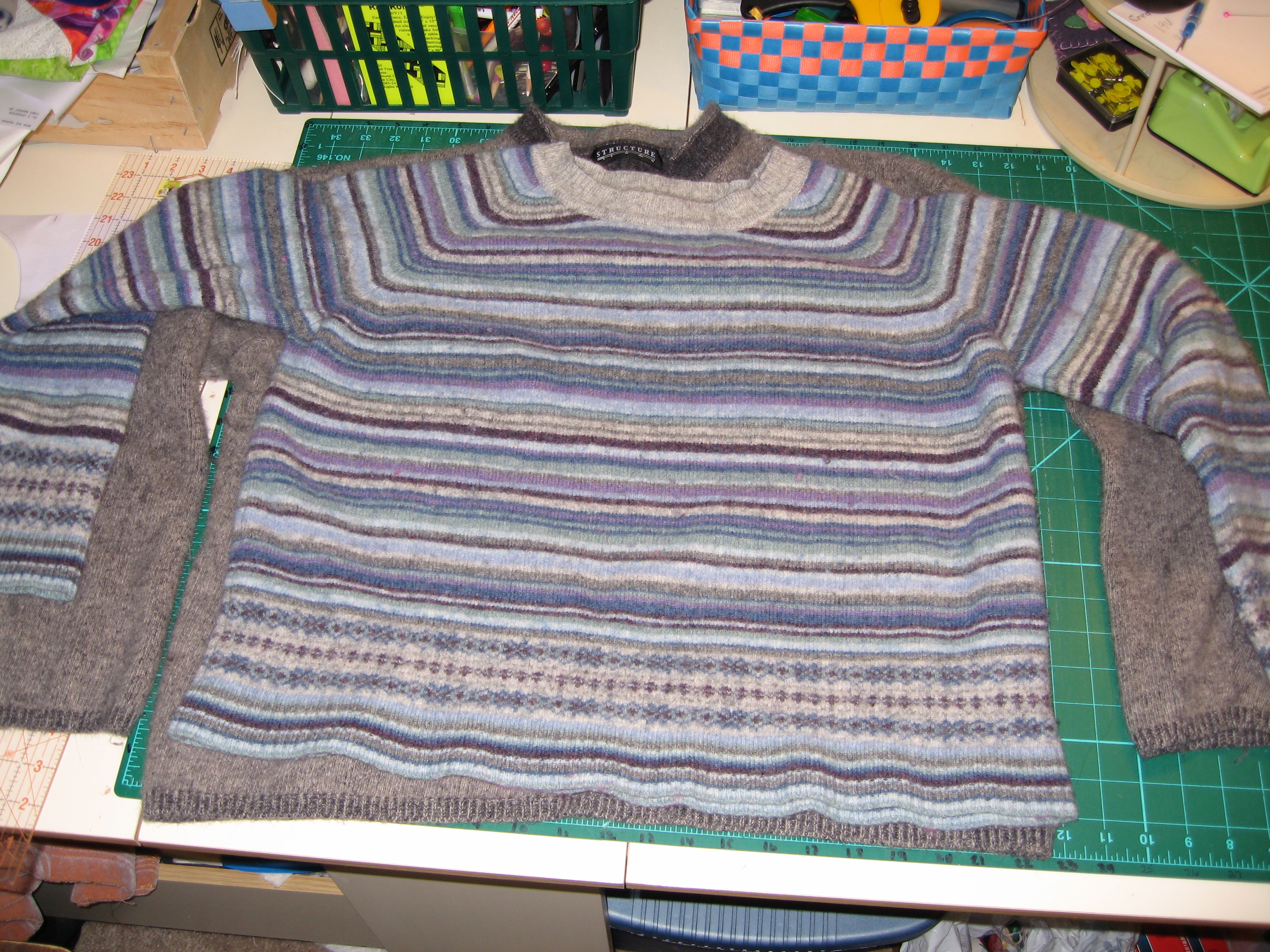
The Recycled Sweater Bag isn’t quite old enough to be considered a Way Back Craft.  I first started making this bag last year.  It works great with a felted thrift store sweater, but you can also make this bag out of denim, upholstery fabric, or just about any other heavy duty material.

The bag size will vary based on the size of your sweater.

Do I need a reason to make a new bag?  Not really, but recycling is a darn good incentive!

Use the written instructions below or watch the video. (Please note this video tutorial was posted in 2008, and the quality reflects that).

You will need:

  • 1 old (or thrift store) 100% wool sweater – felted
  • fabric for lining & pockets
  • magnet purse snap
  • 2 buttons
  • sewing machine
  • thread
  • scissors
  • chalk
  • pins
  • rotary cutter (optional)
  • walking foot (optional)

I used a 1/2″ seam allowance throughout. If your sweater is bulkier, go a little wider or use what works for you.

First up – let’s prep our fabrics!

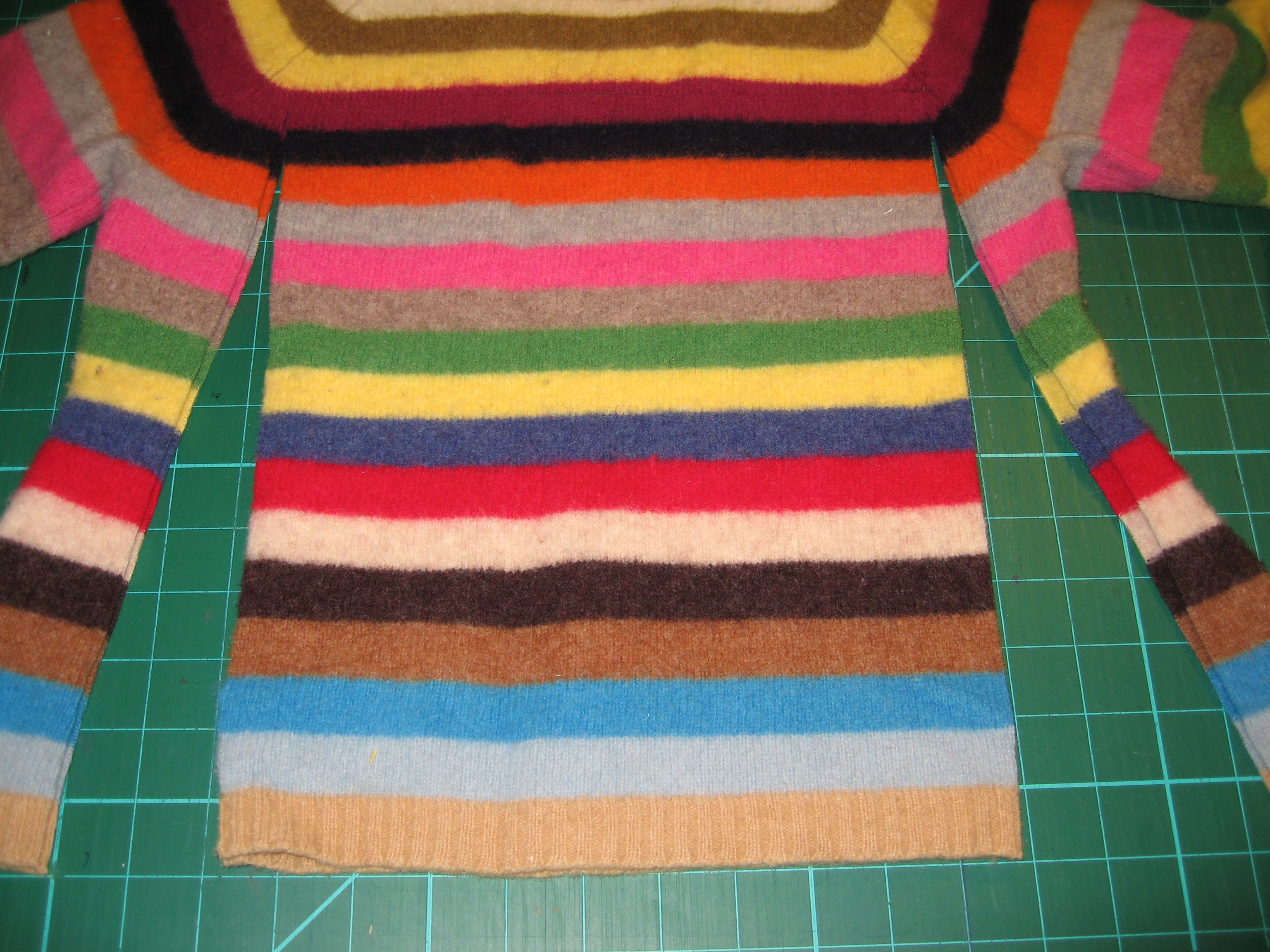
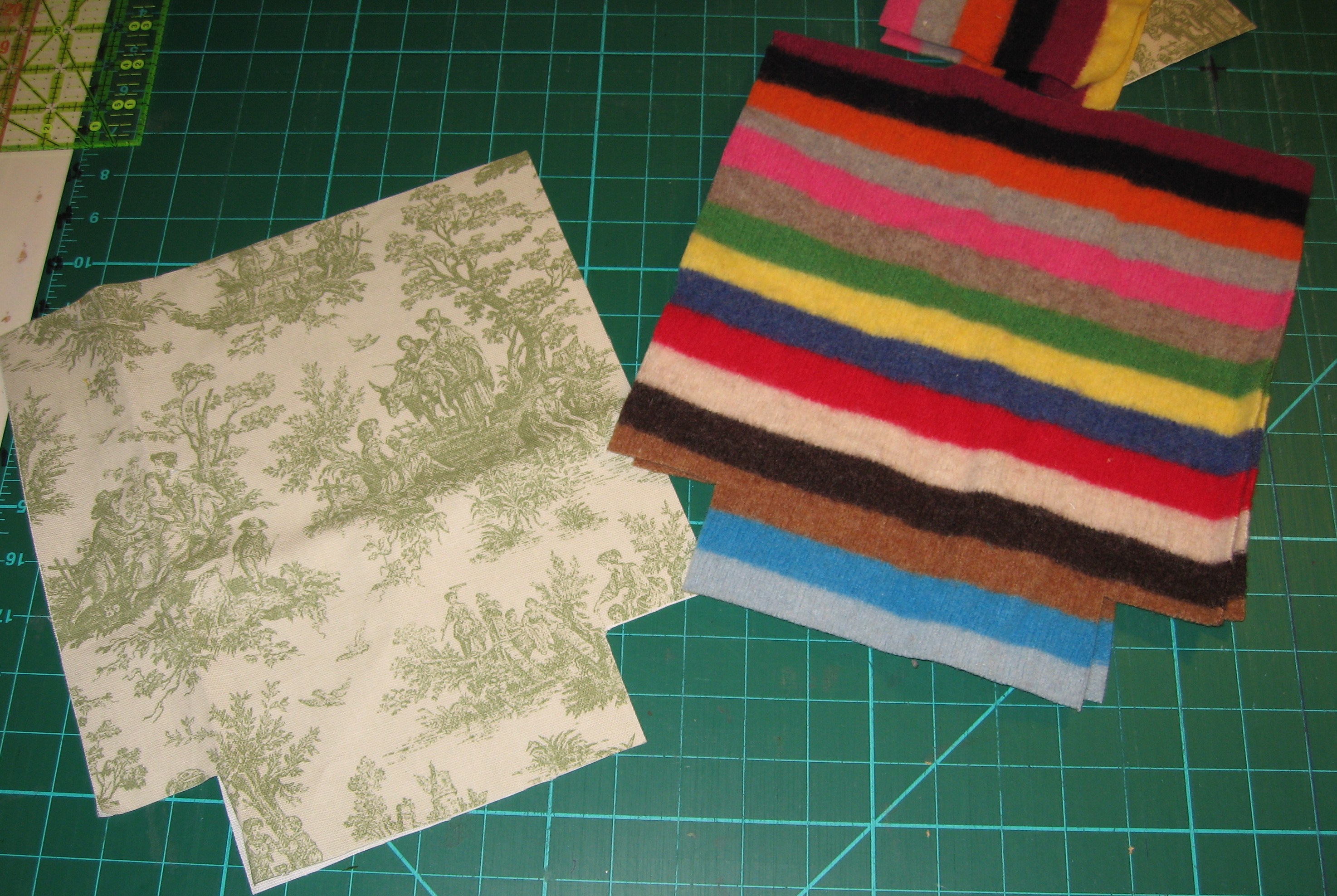
Cut a square or rectangle out of the body of the sweater, cut the same dimensions from lining fabric, remove sweater arms.

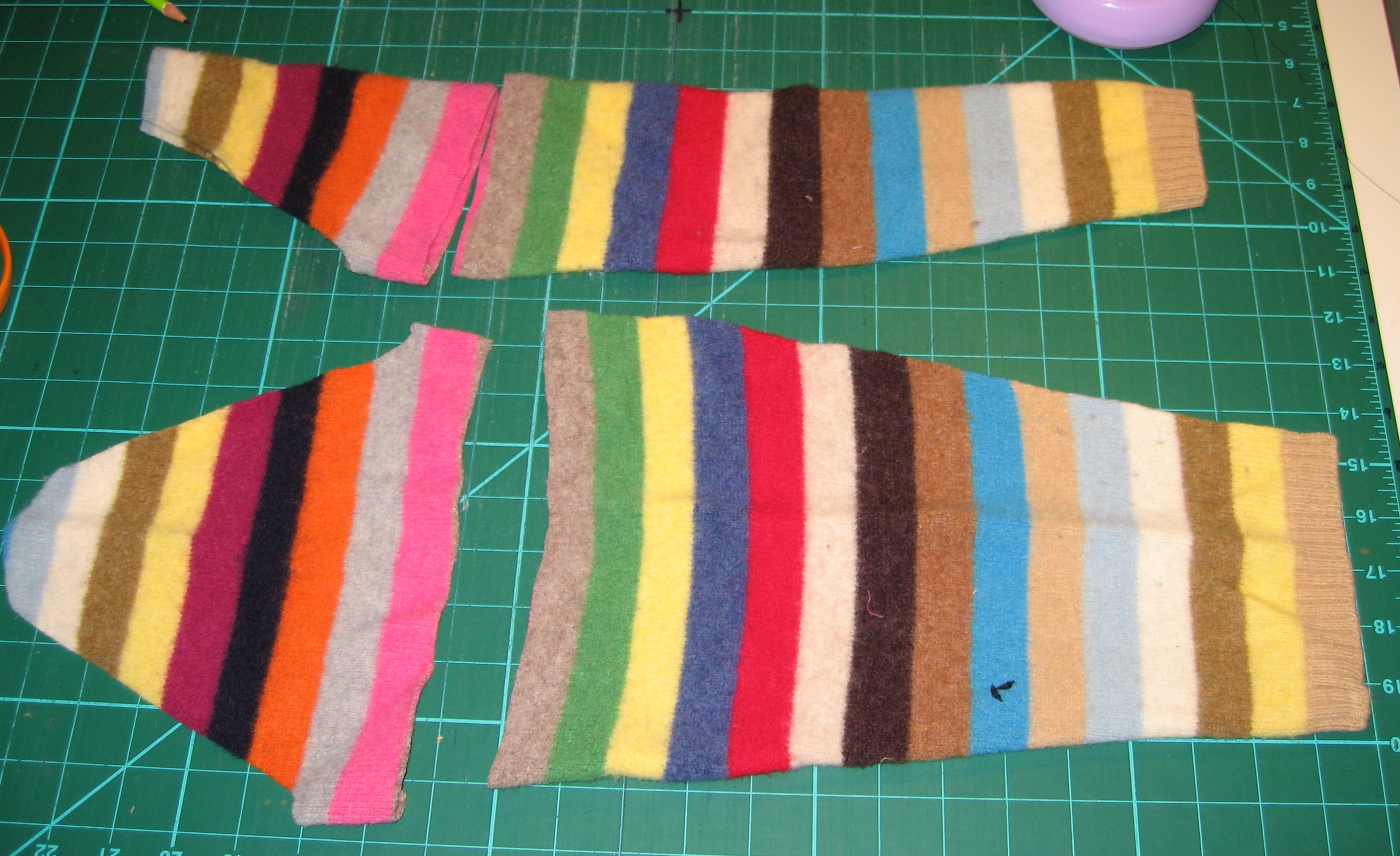
Split sleeves up seam and cut off the tops for pockets.

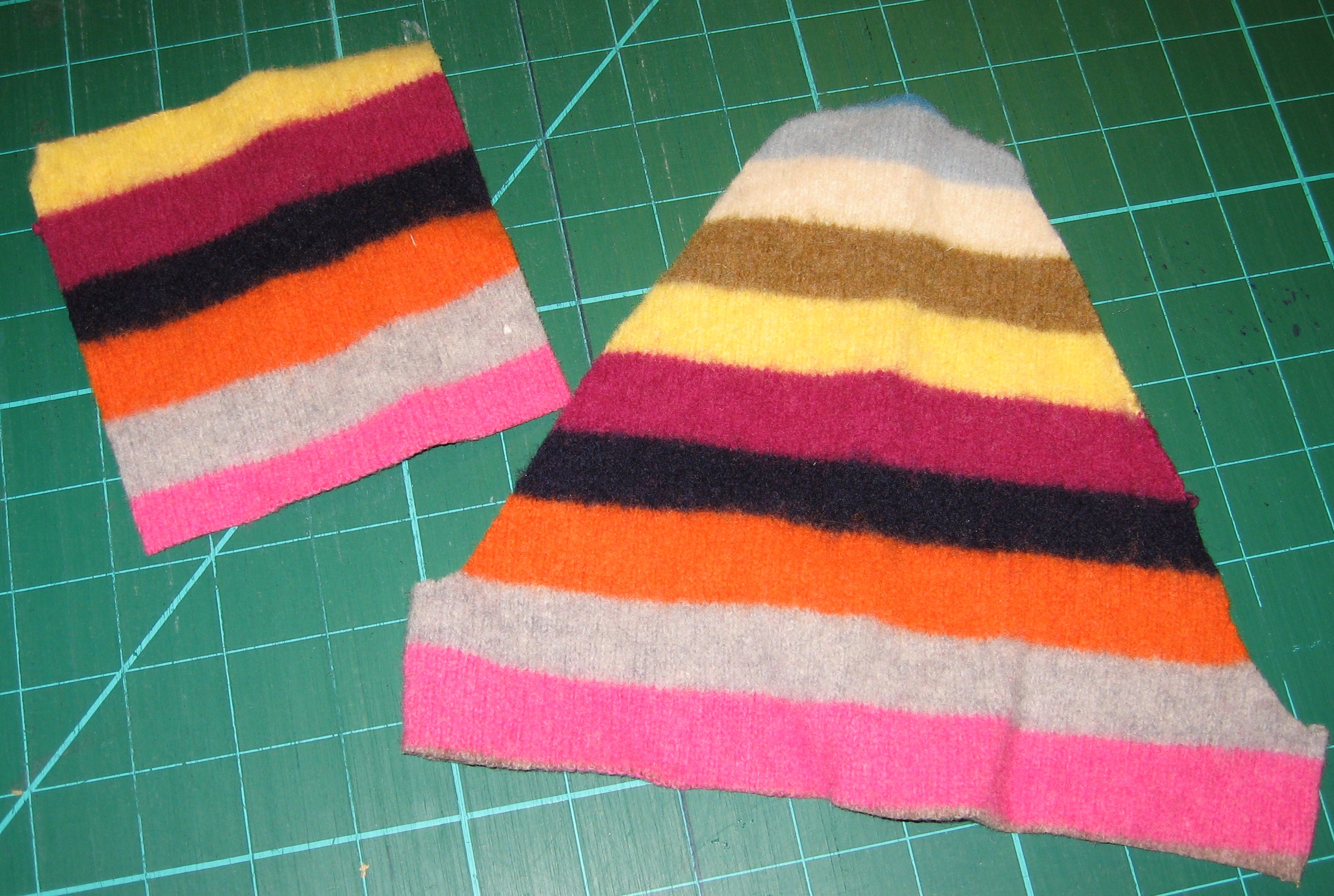
Cut rectangles out of the sleeve tops, cut same dimensions +1.5″ in length for lining.

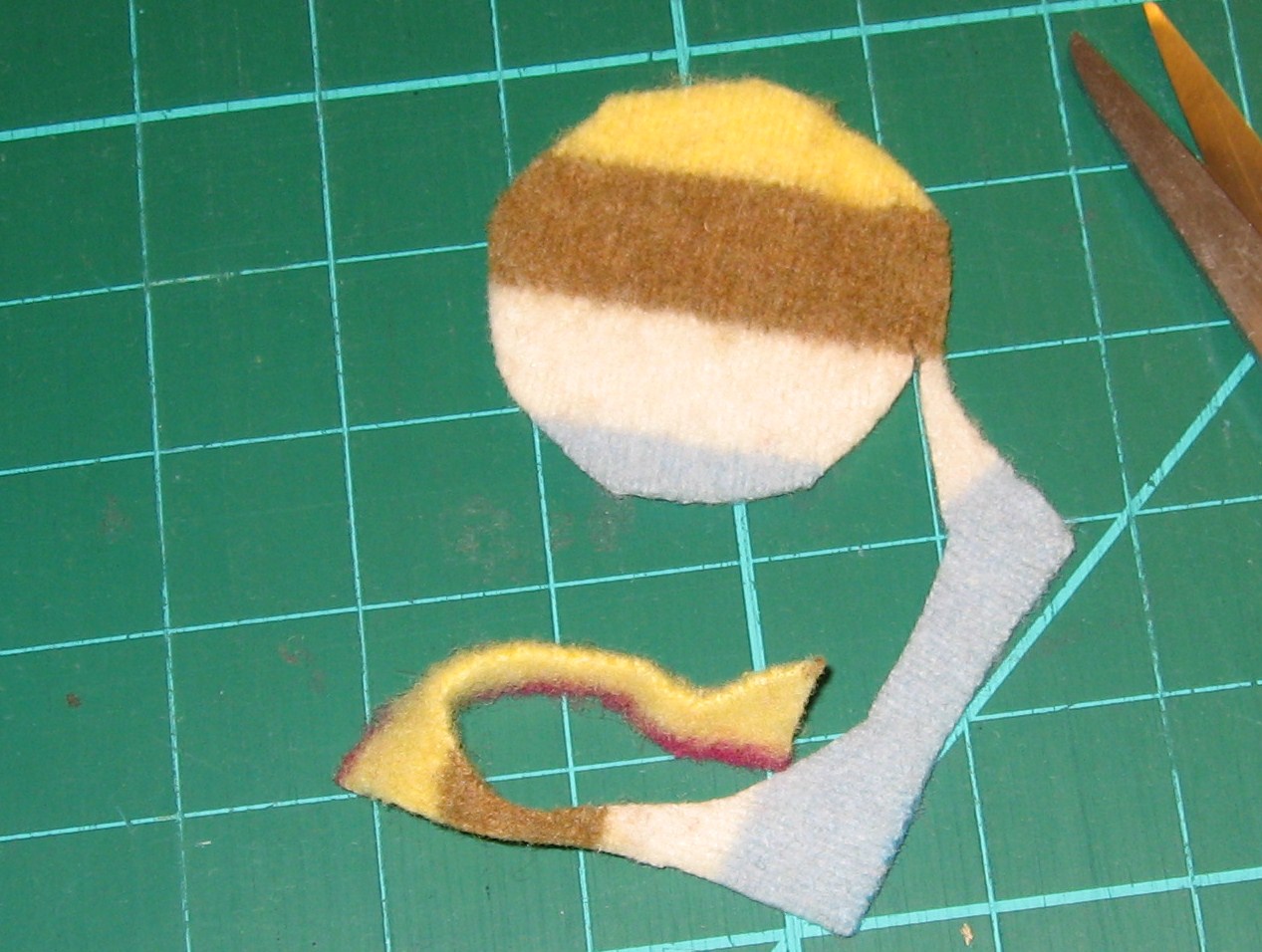
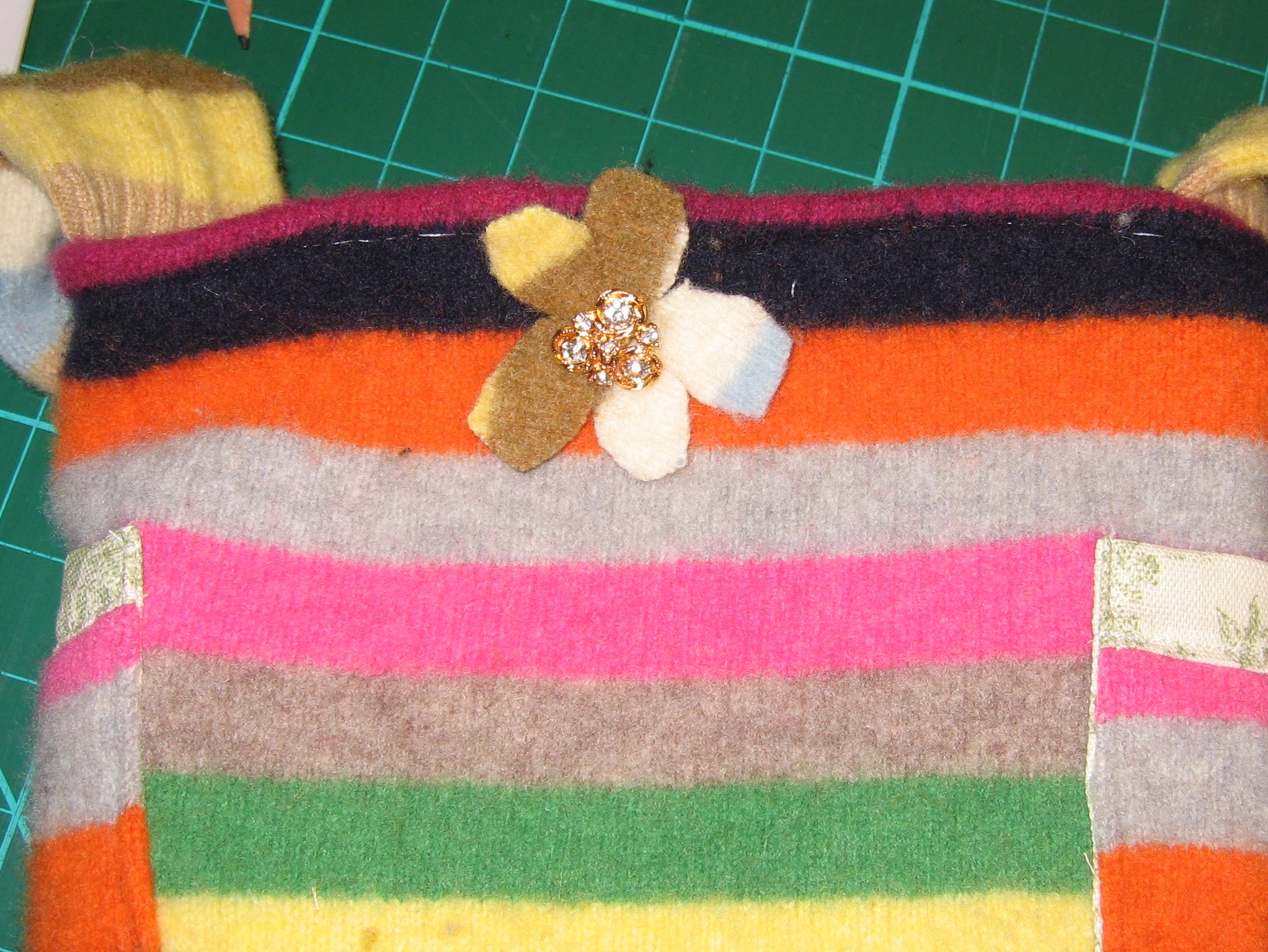
Using the remaining scraps, cut out 2 circles and trim the circles into free-form flowers.

Cut 2″ squares out of the bottom left and right, repeat for lining fabric.

Now, let’s make the lining!

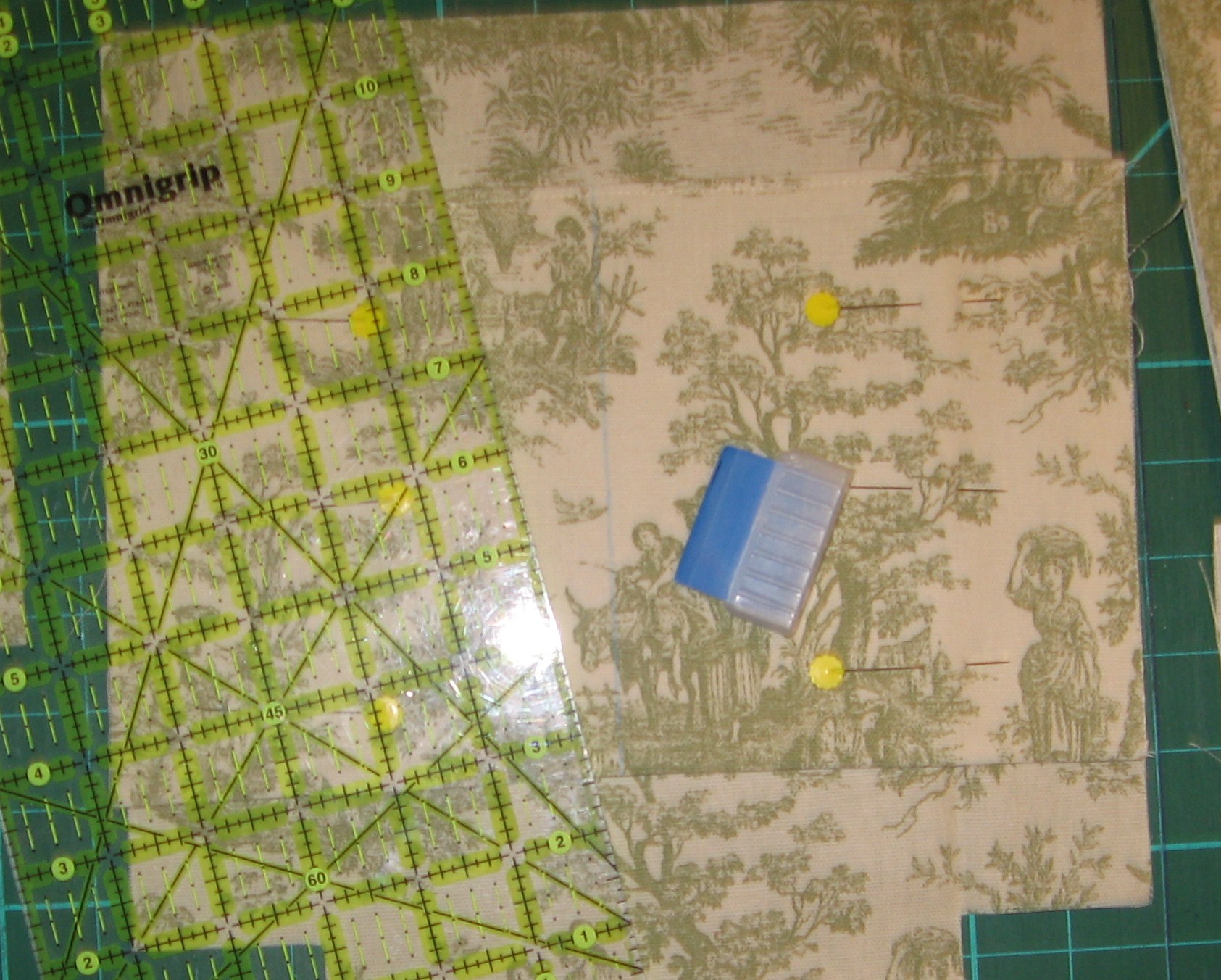
Cut a square the same width and length from lining fabric for inside pockets. Fold in half and stitch along the fold.

Pin pocket to inside and mark center with chalk for stitching line.

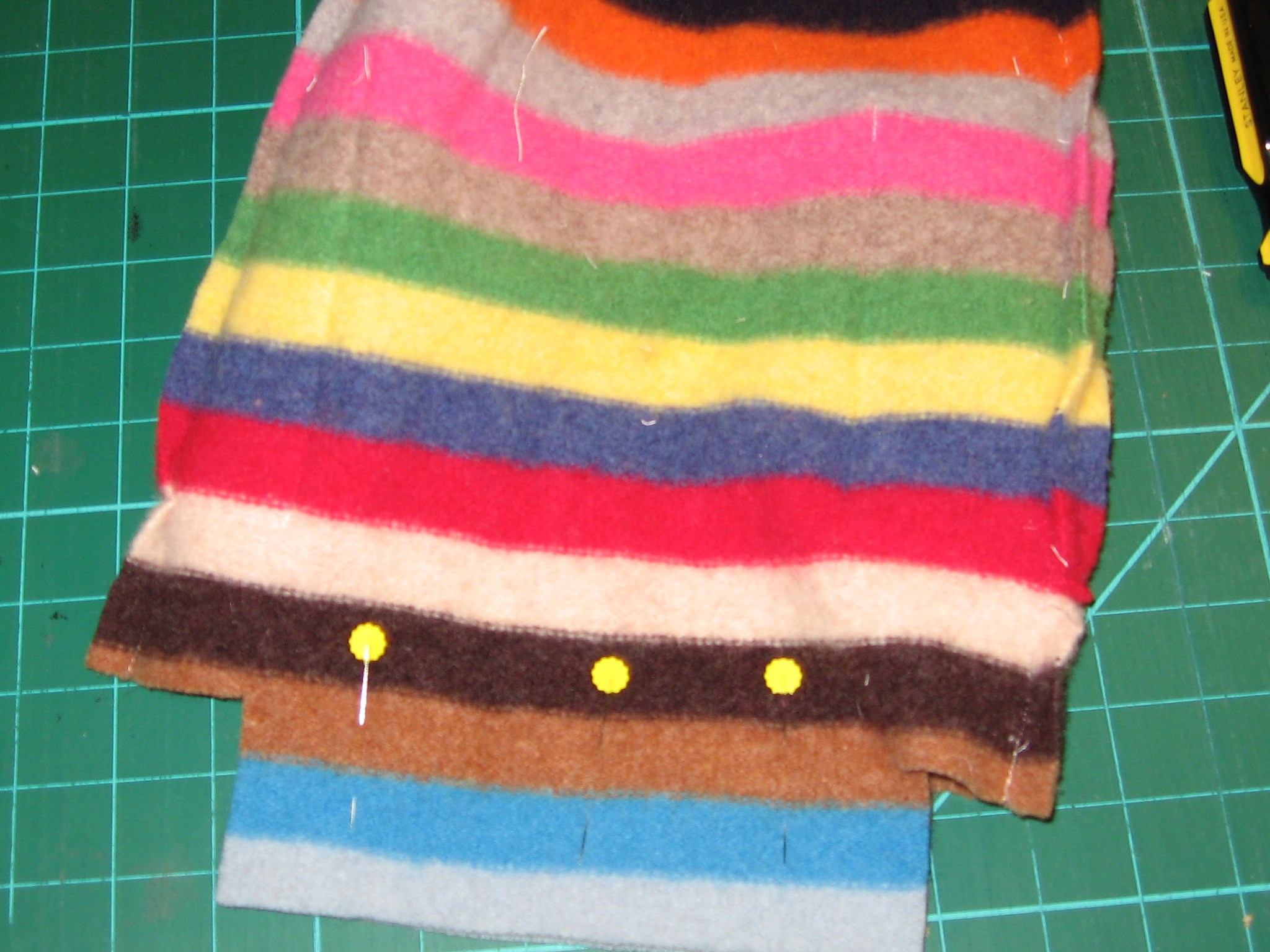
Pin sides and bottom of lining, stitch, leave 2″ corners open, leave opening in the side or bottom for turning.

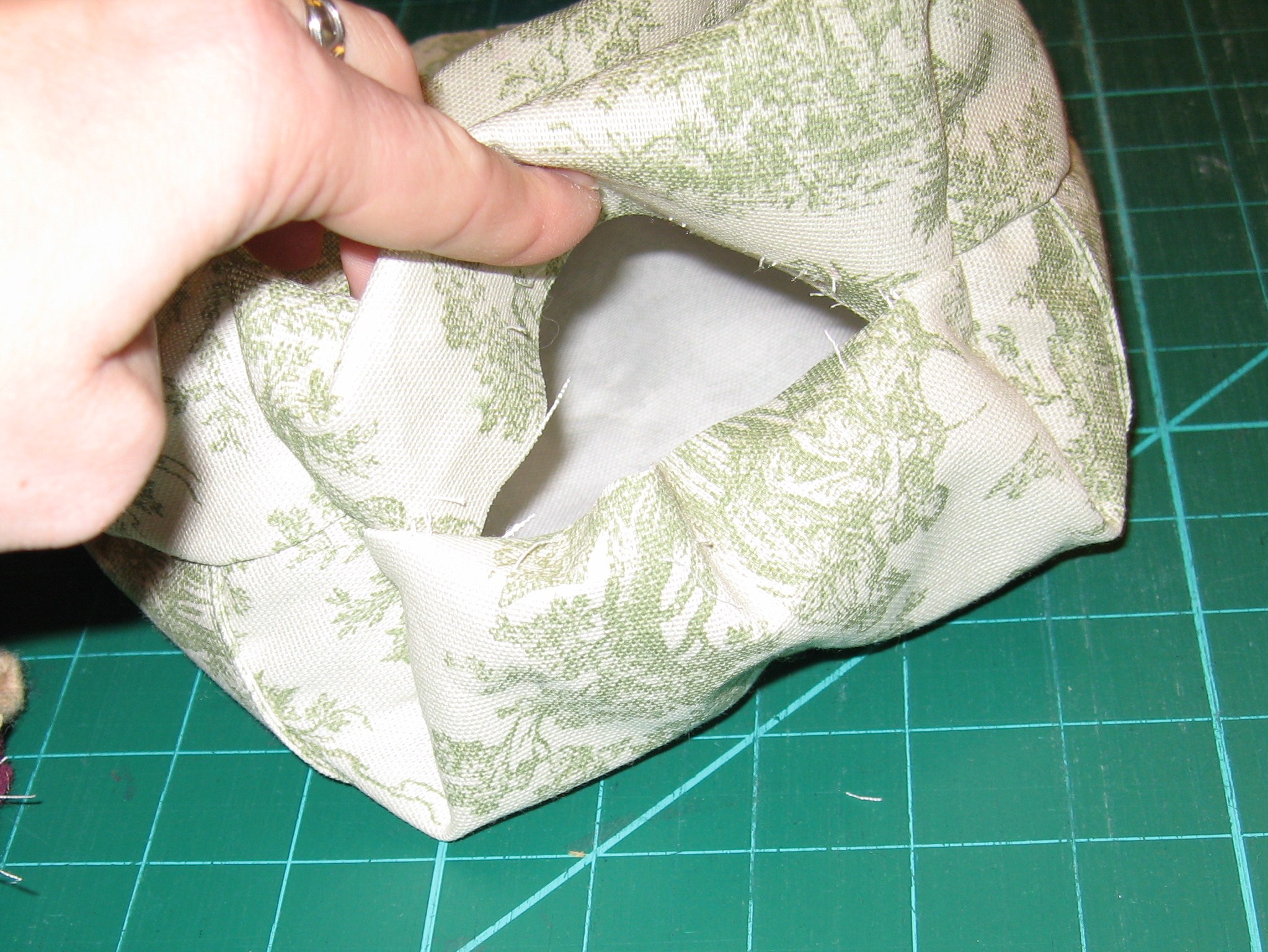
Match boxed corners (the notches in the bottom of the bag), pin & stitch.

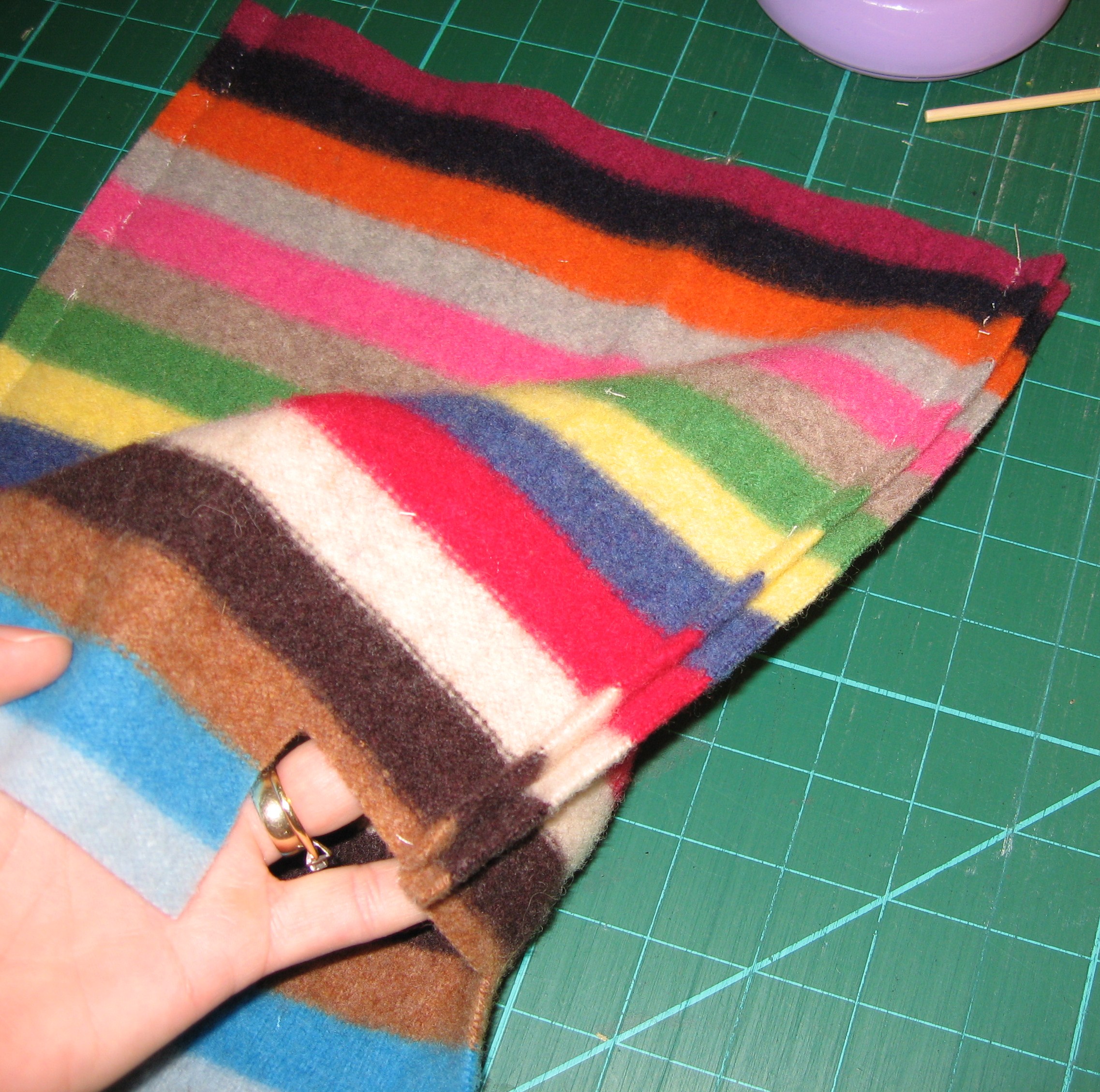
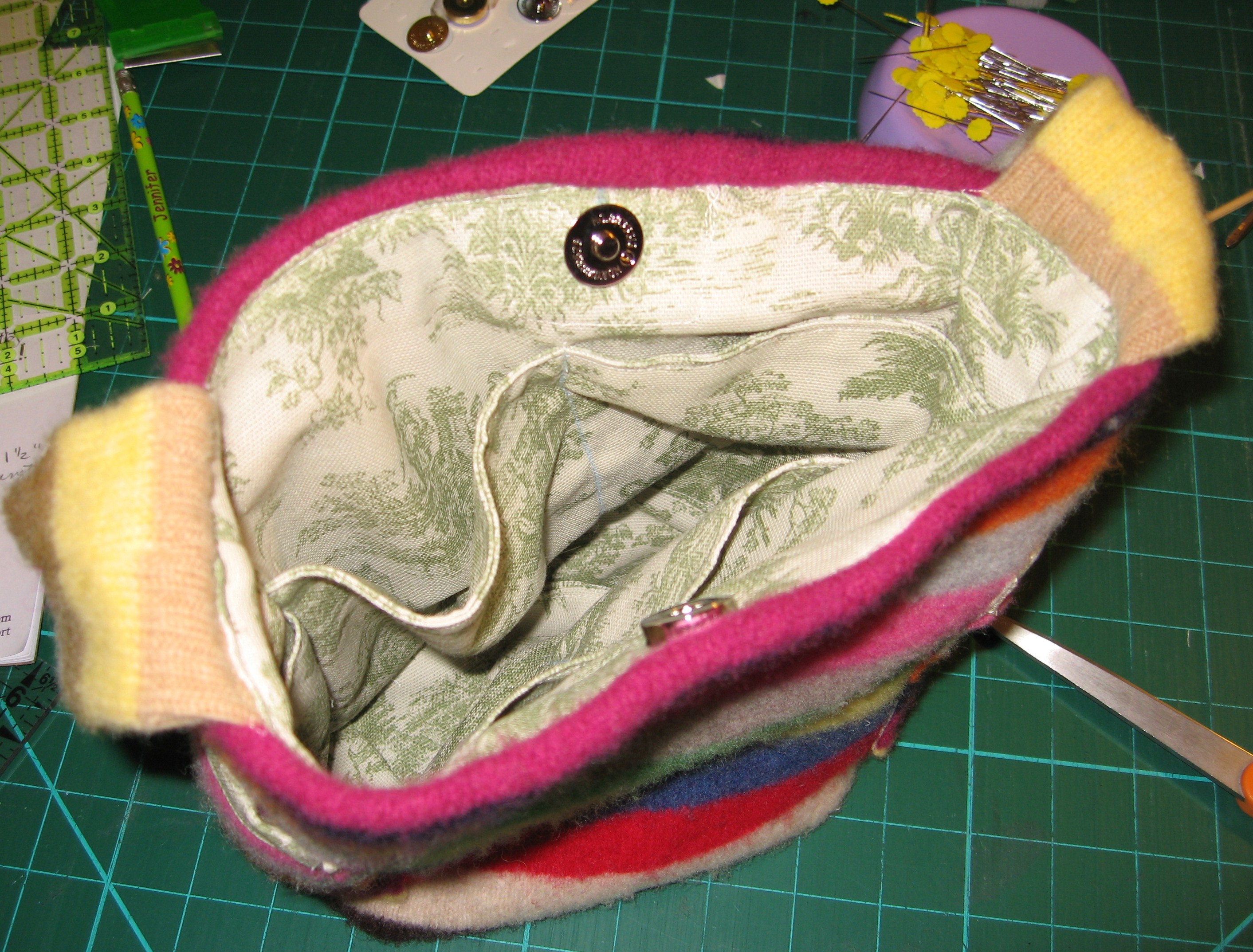
Press seams then turn right side out. The bottom and pockets of your lining should now look like this.

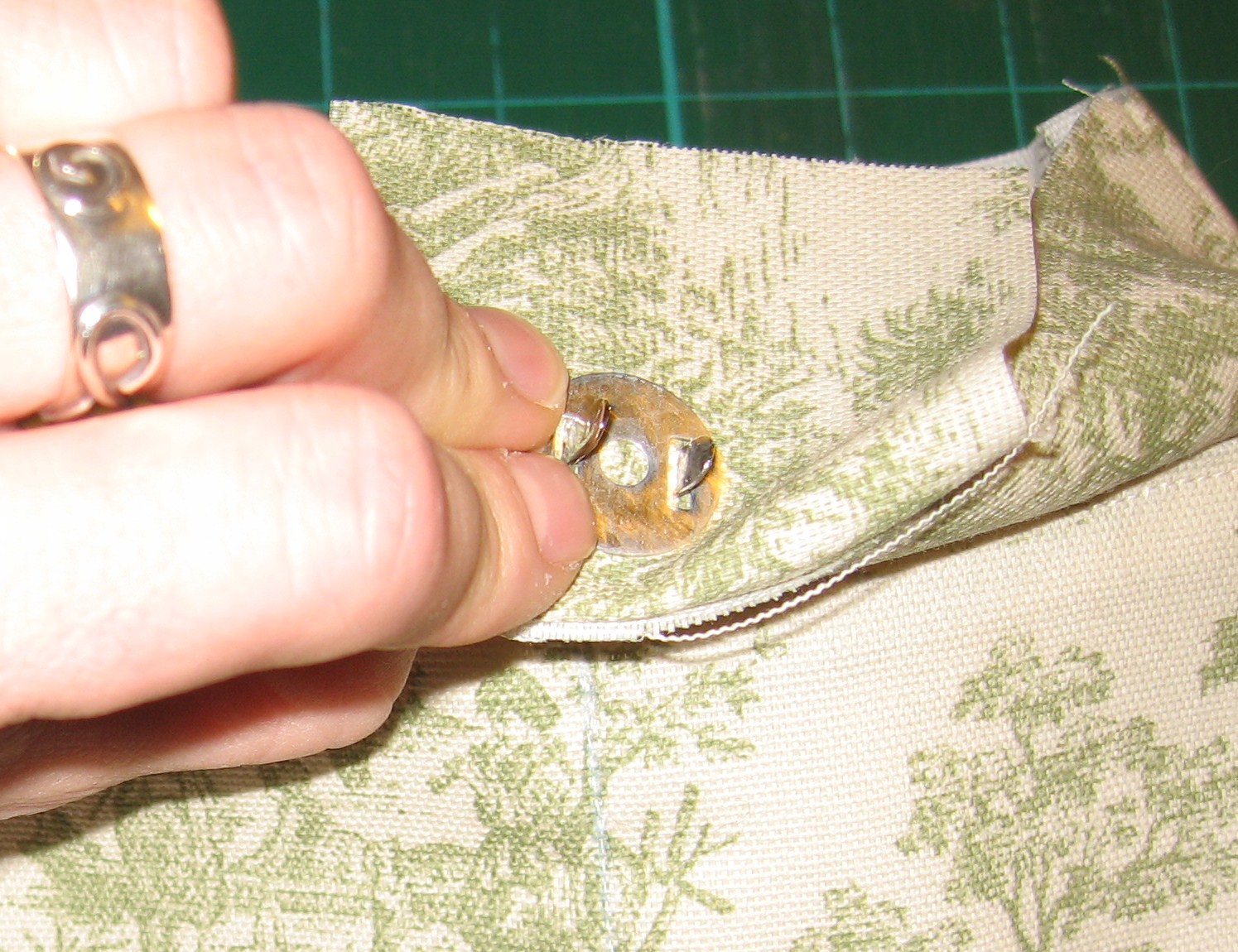
Add magnetic snaps to your lining following the manufacturer’s directions. Leave enough seam allowance at the top for stitching around. I recommend 1″ or more of space. Add a folded piece of scrap fabric to the back to reinforce the snap. Stitch around the snap to reinforce extra fabric.

Time to work on the outside sweater pieces!

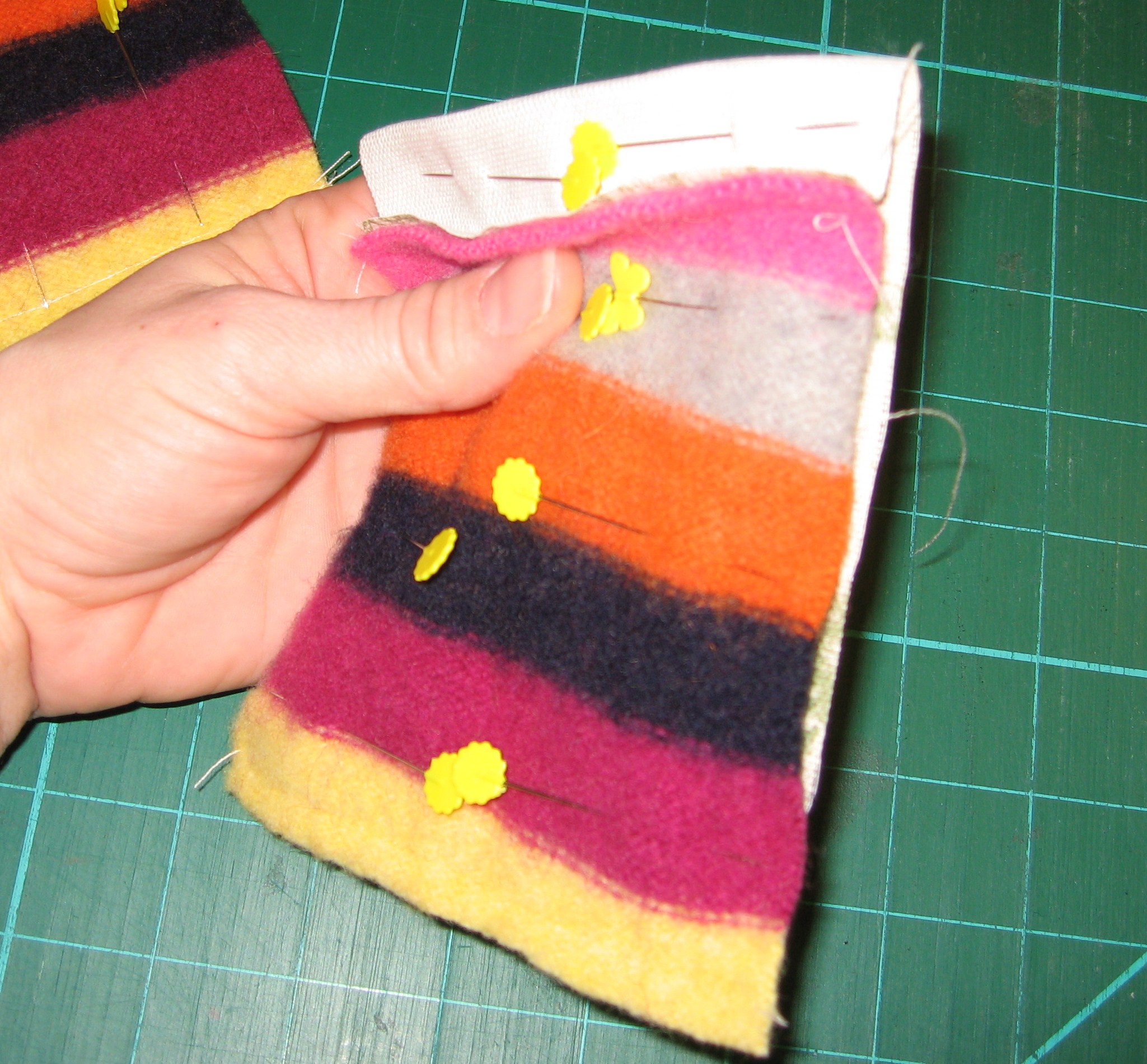
Pin sweater pocket piece to lining pocket piece, right sides together (lining should be 1.5″ longer), stitch ends.

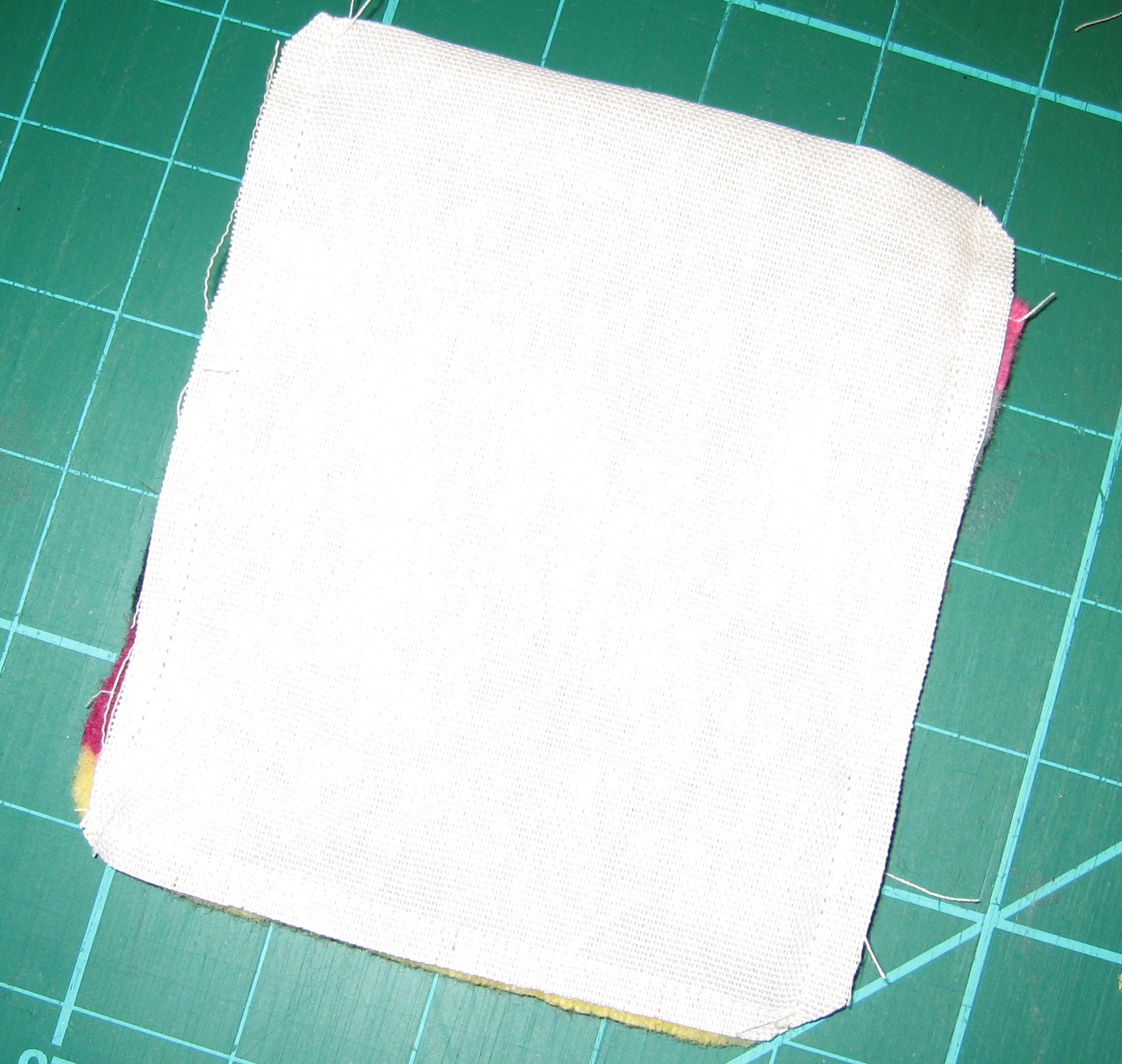
Line up bottom of pocket, pin, then stitch sides. Leave an opening for turning.

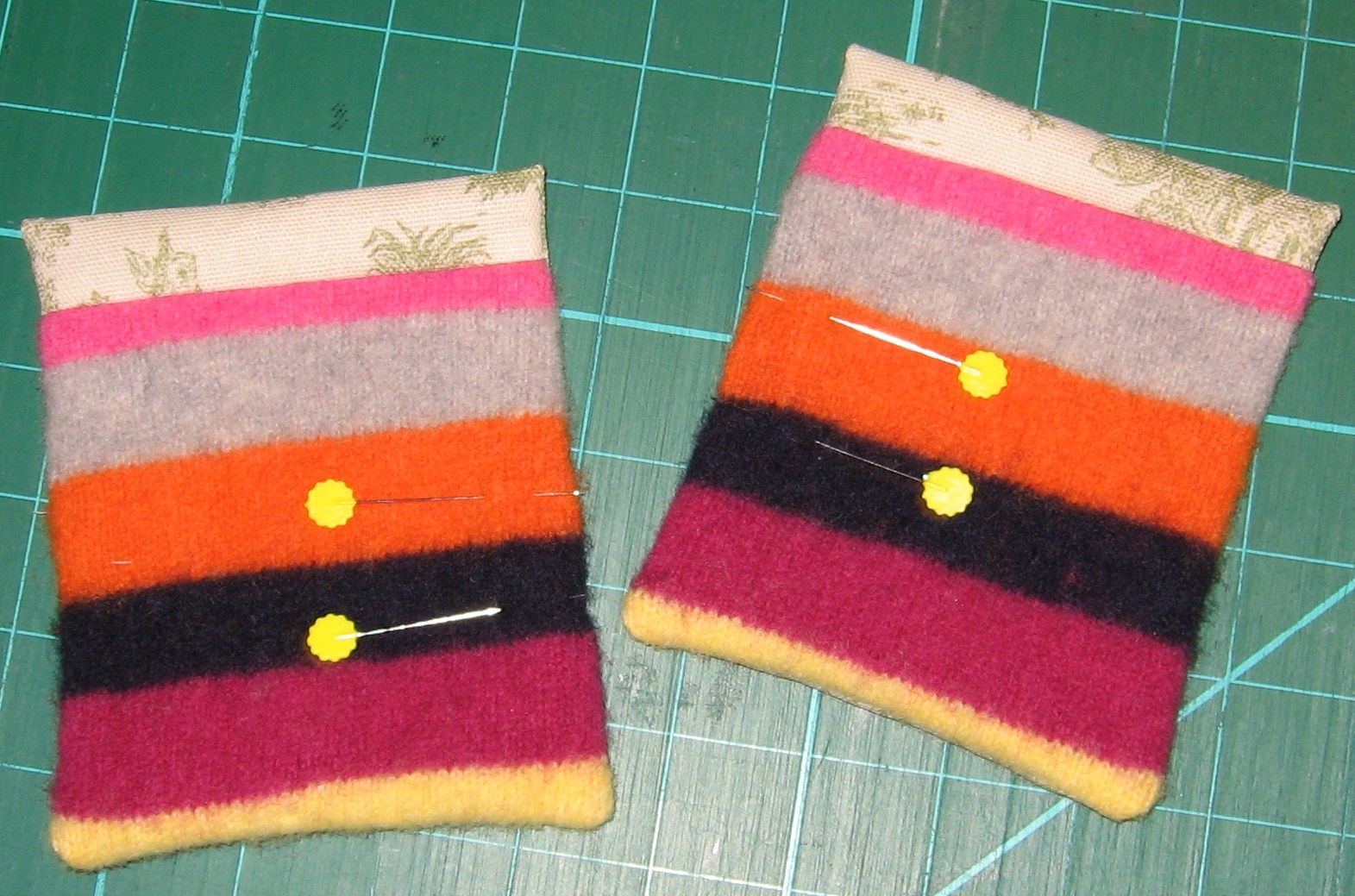
Trim corners, turn pocket and pin openings.

Stitch side seams of bag, leaving bottom open.

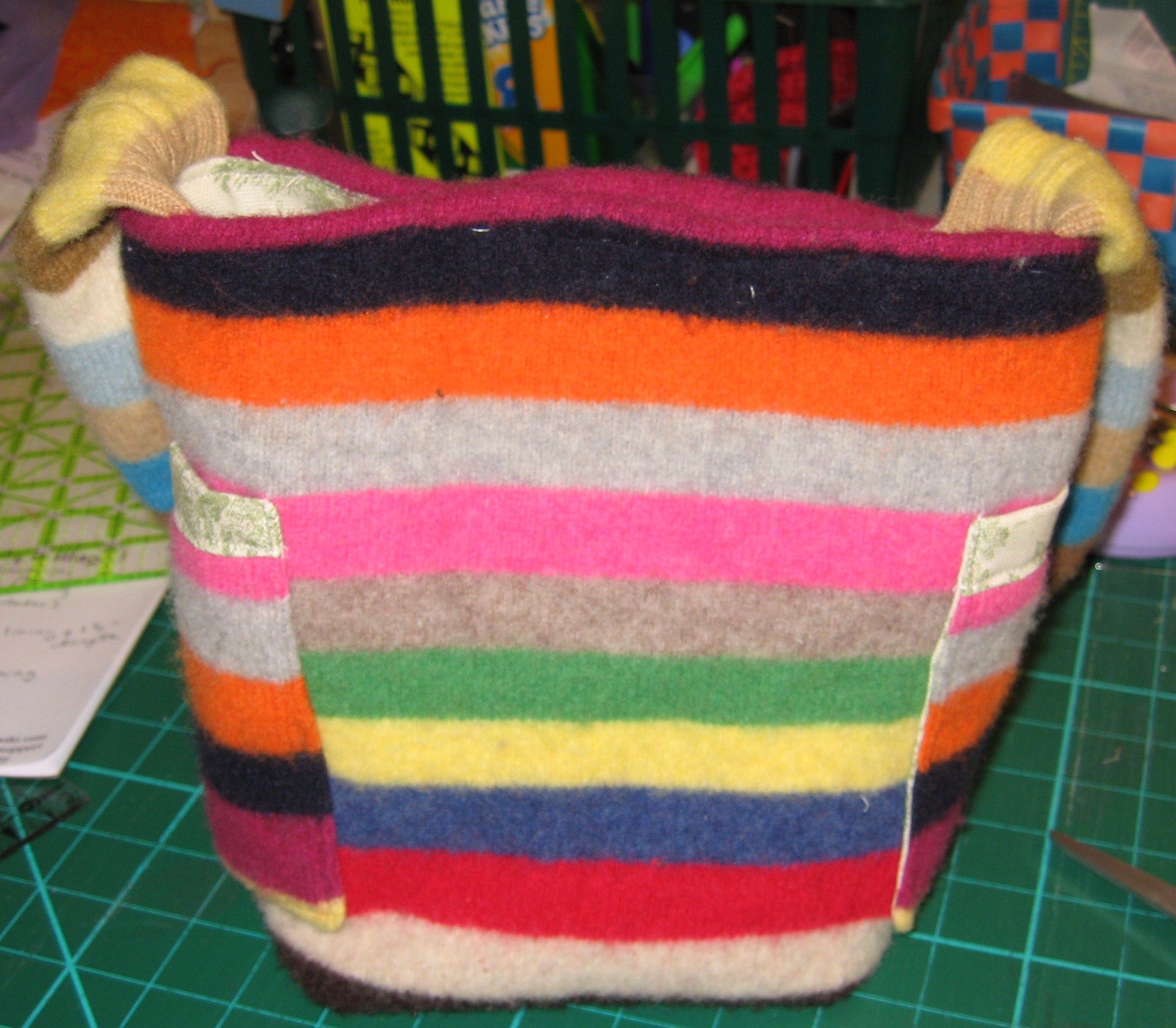
Turn the sweater bag body right side out, matching seams. Pin pockets over the side seams, then stitch to attach.

With right sides together, stitch across sweater bag bottom.

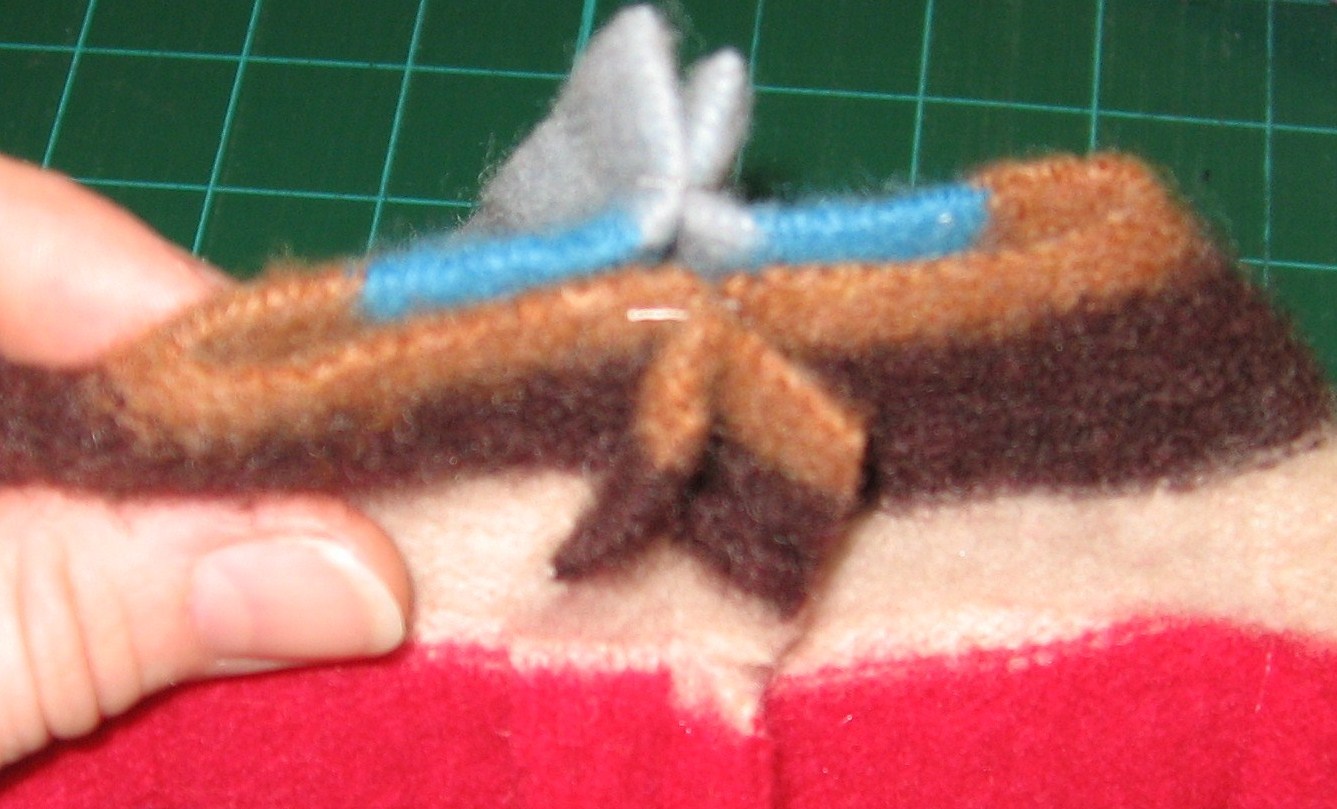
Fold in boxed corners, matching side & bottom seams, pin & stitch.

The inside bottom should look like this.

Time for Sleeves!

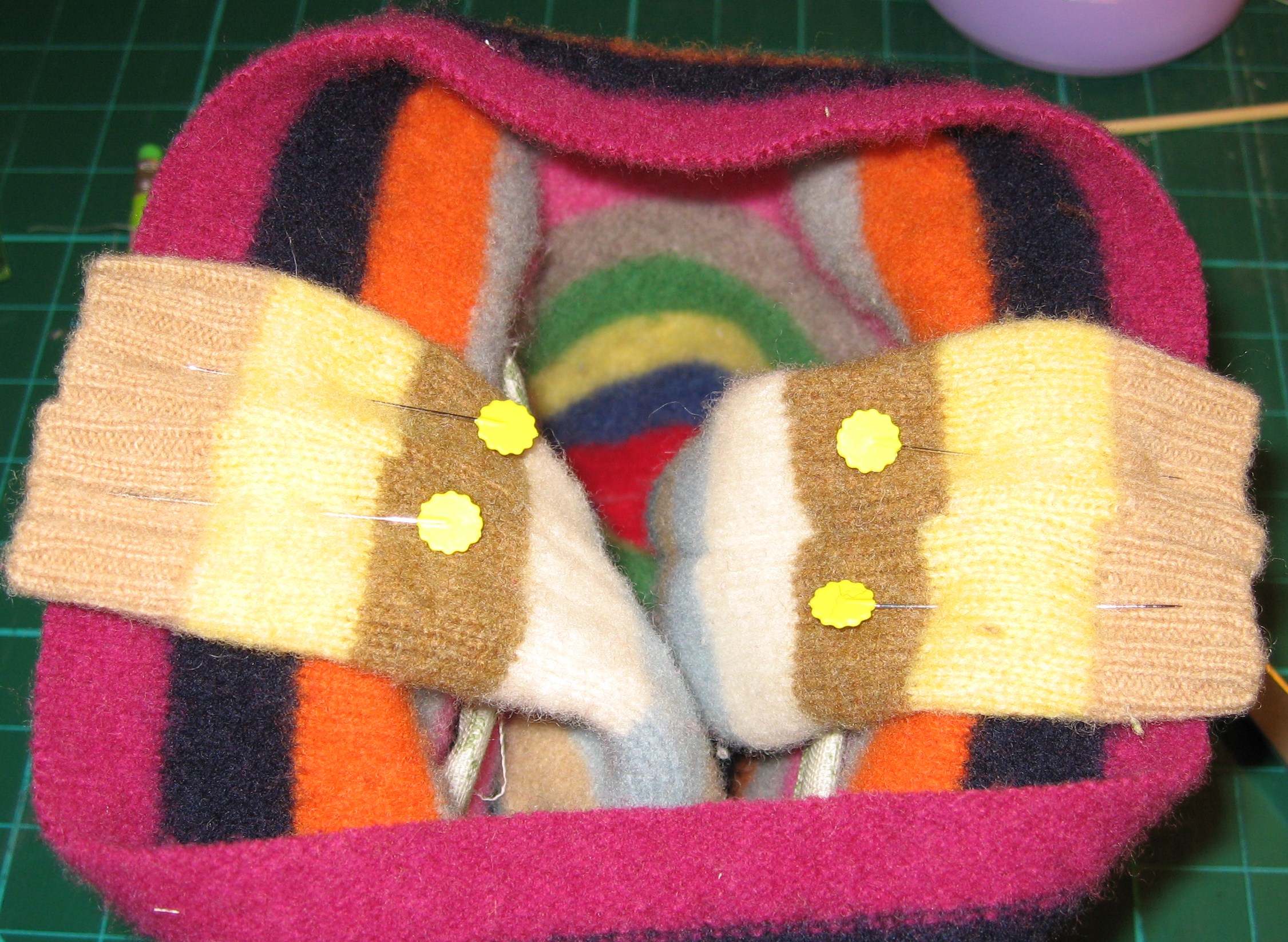
Trim sleeves to desired width for strap, I like a wider strip so tend to cut about 5″. This includes seam allowance. Remember, this is your bag, and this width will vary based on your sweater, so the dimensions are all yours!

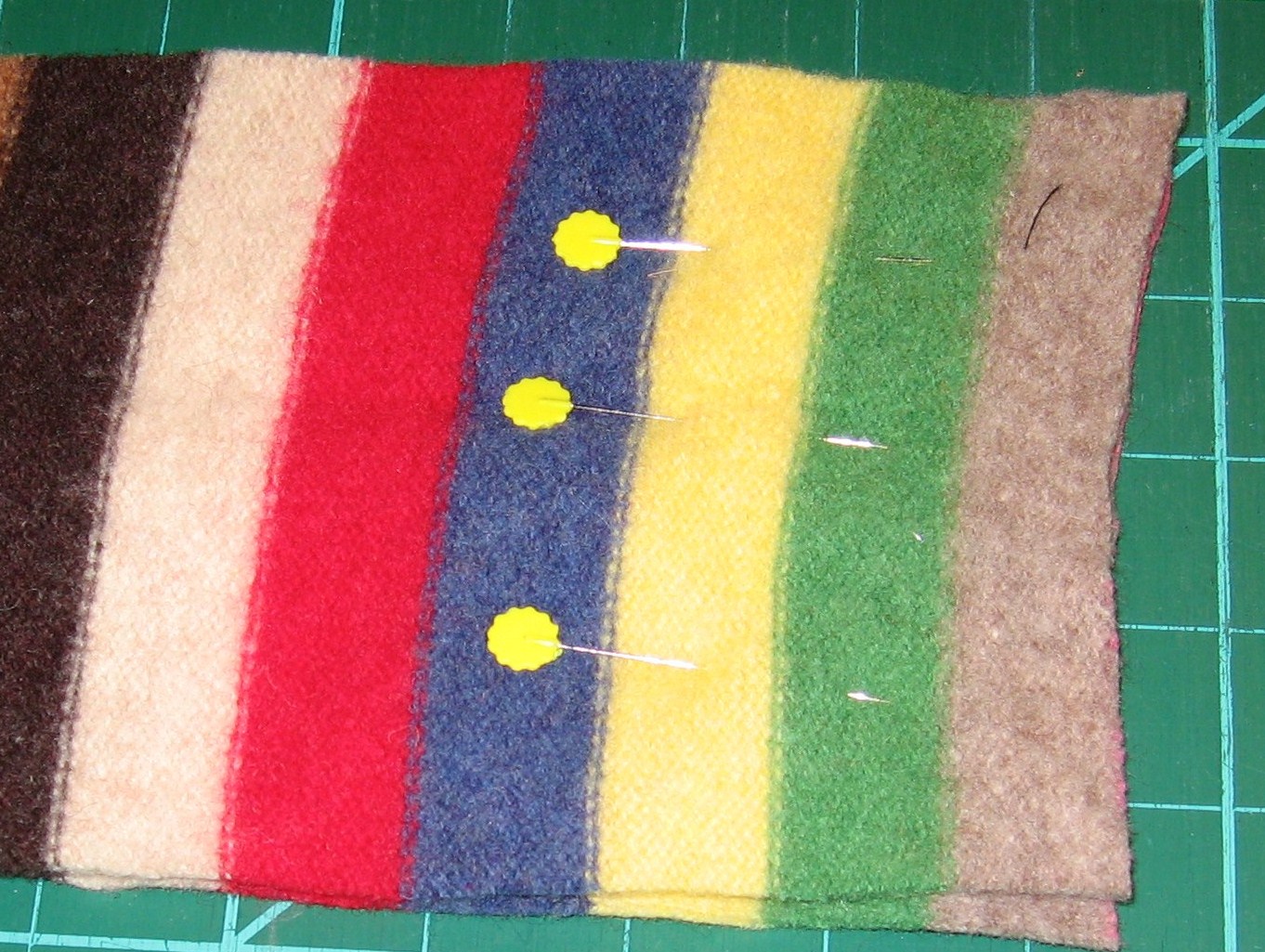
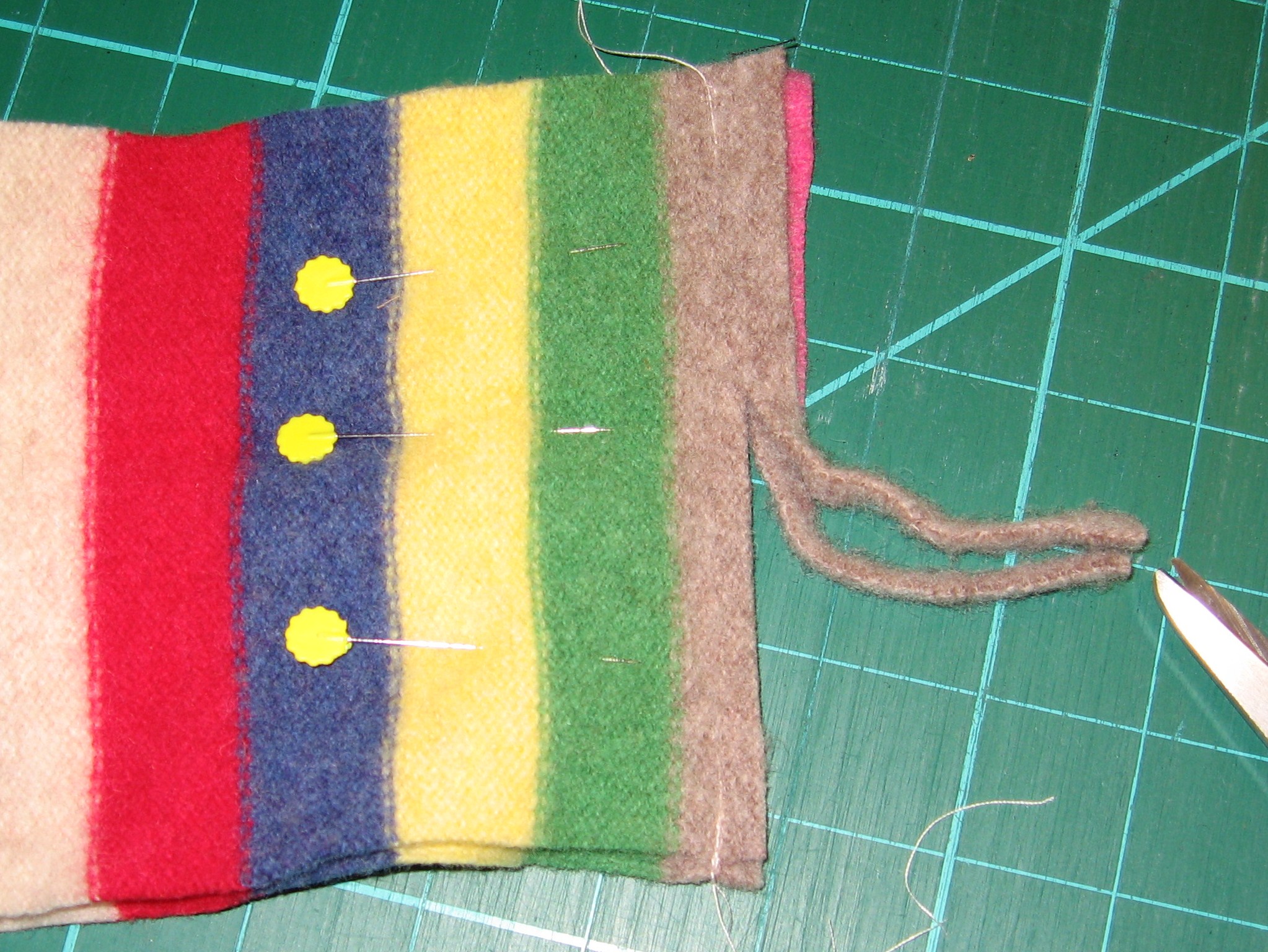
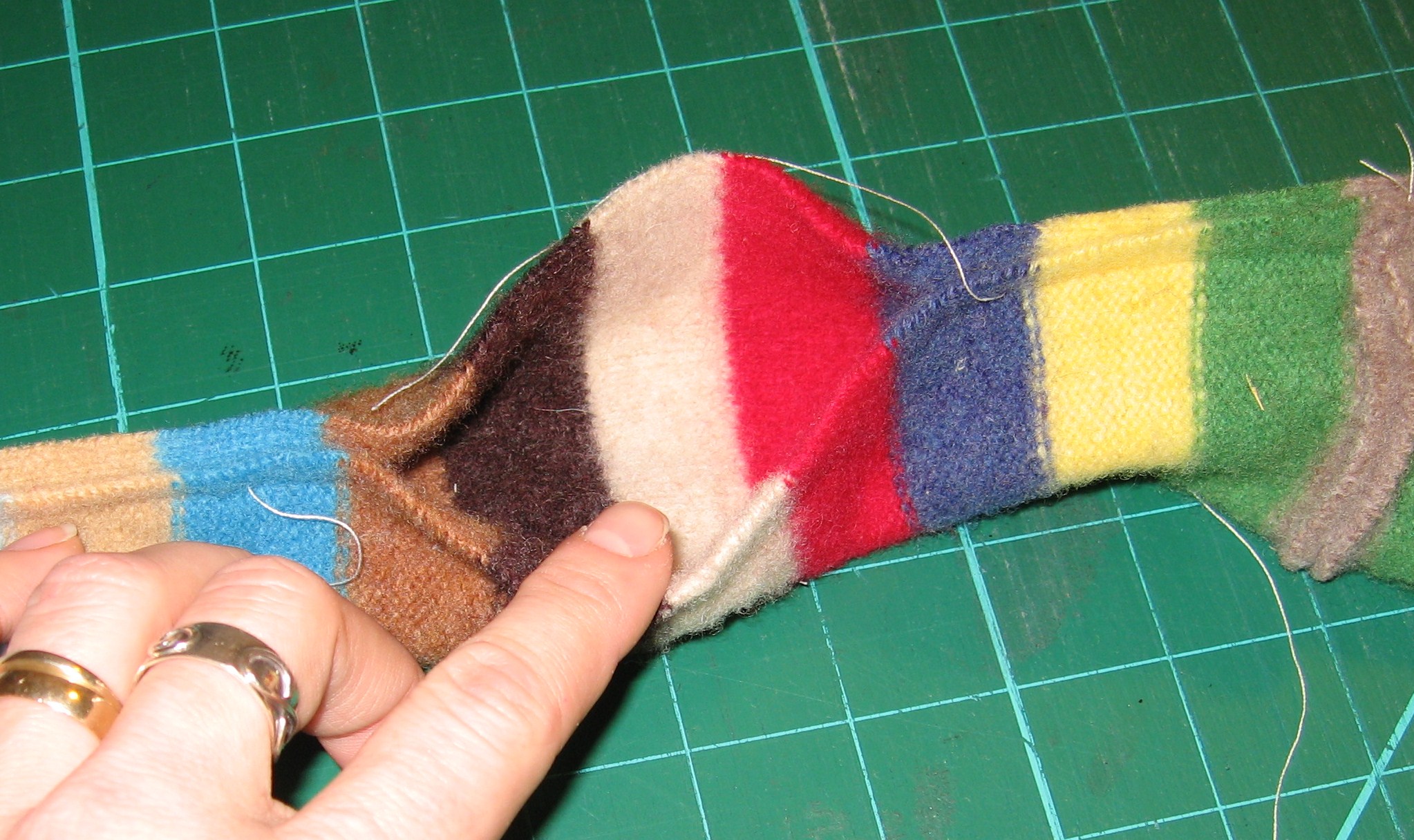
Pin ends of two sleeves together, stitch and trim seam.

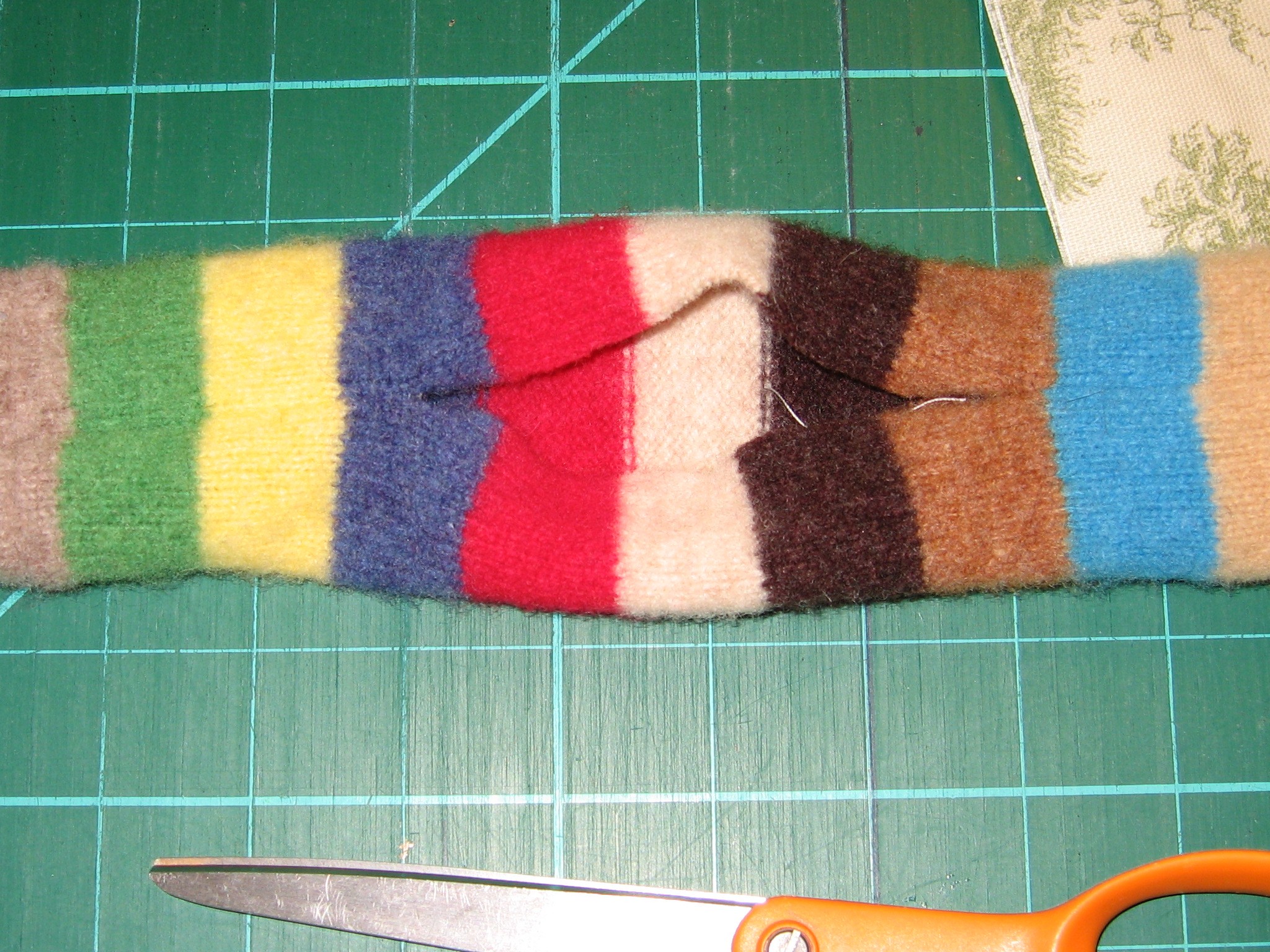
Fold lengthwise, stitch, leaving approx. 6″ open for turning

Turn right side out and smooth opening.


Stitch closed with a tight whip stitch.

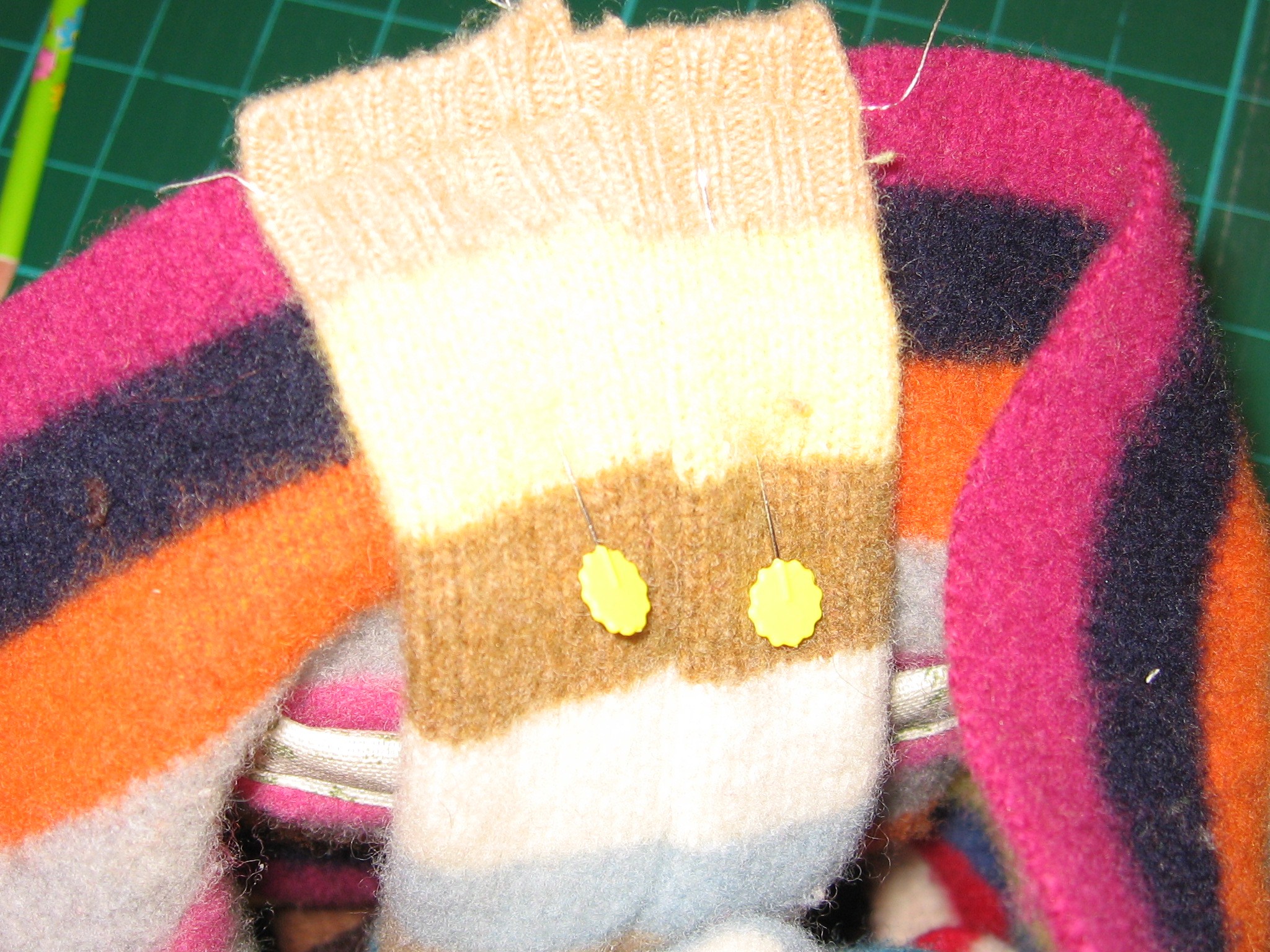
Center and pin straps to side seams, being sure to match right sides. Stitch in place.

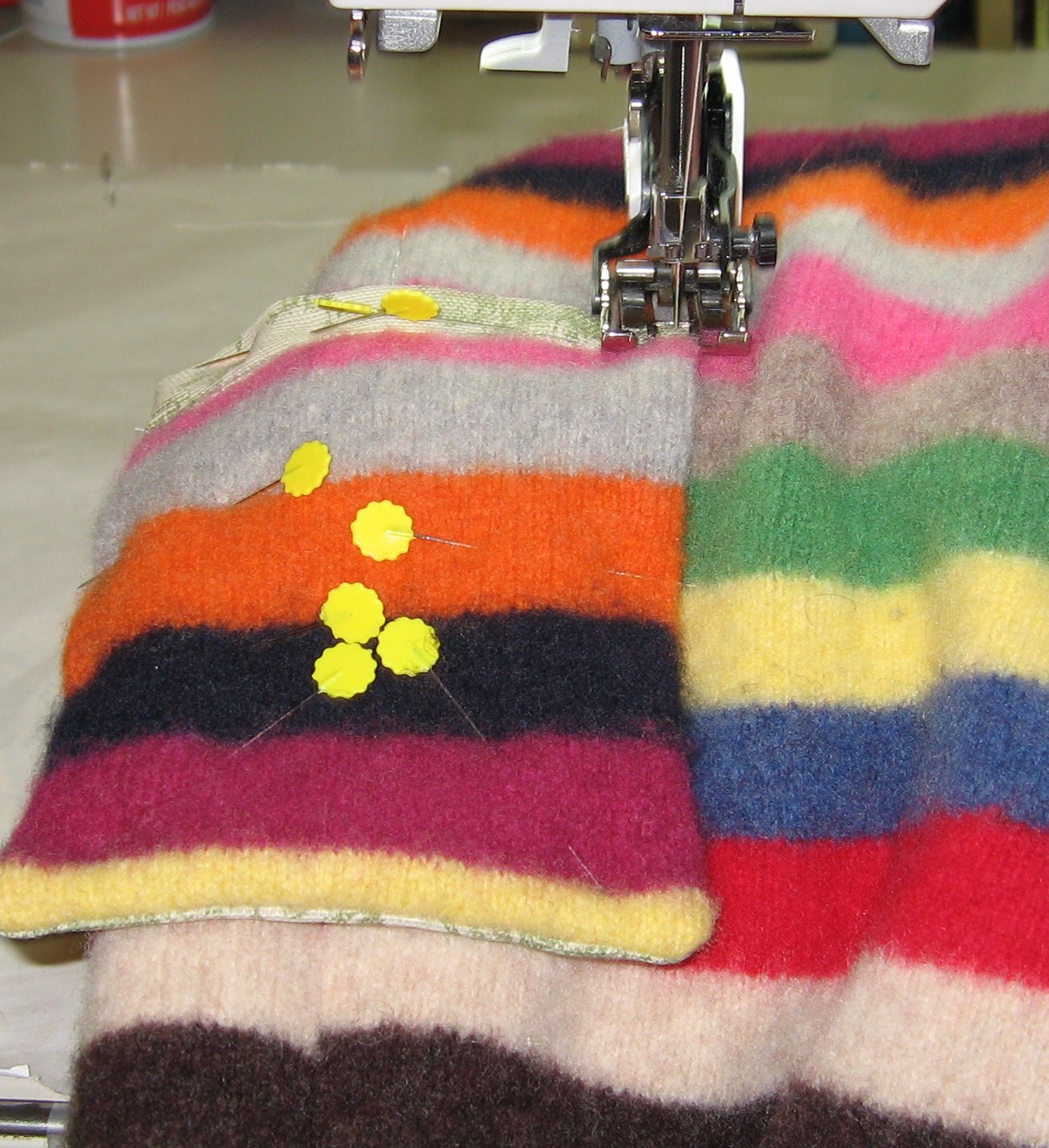
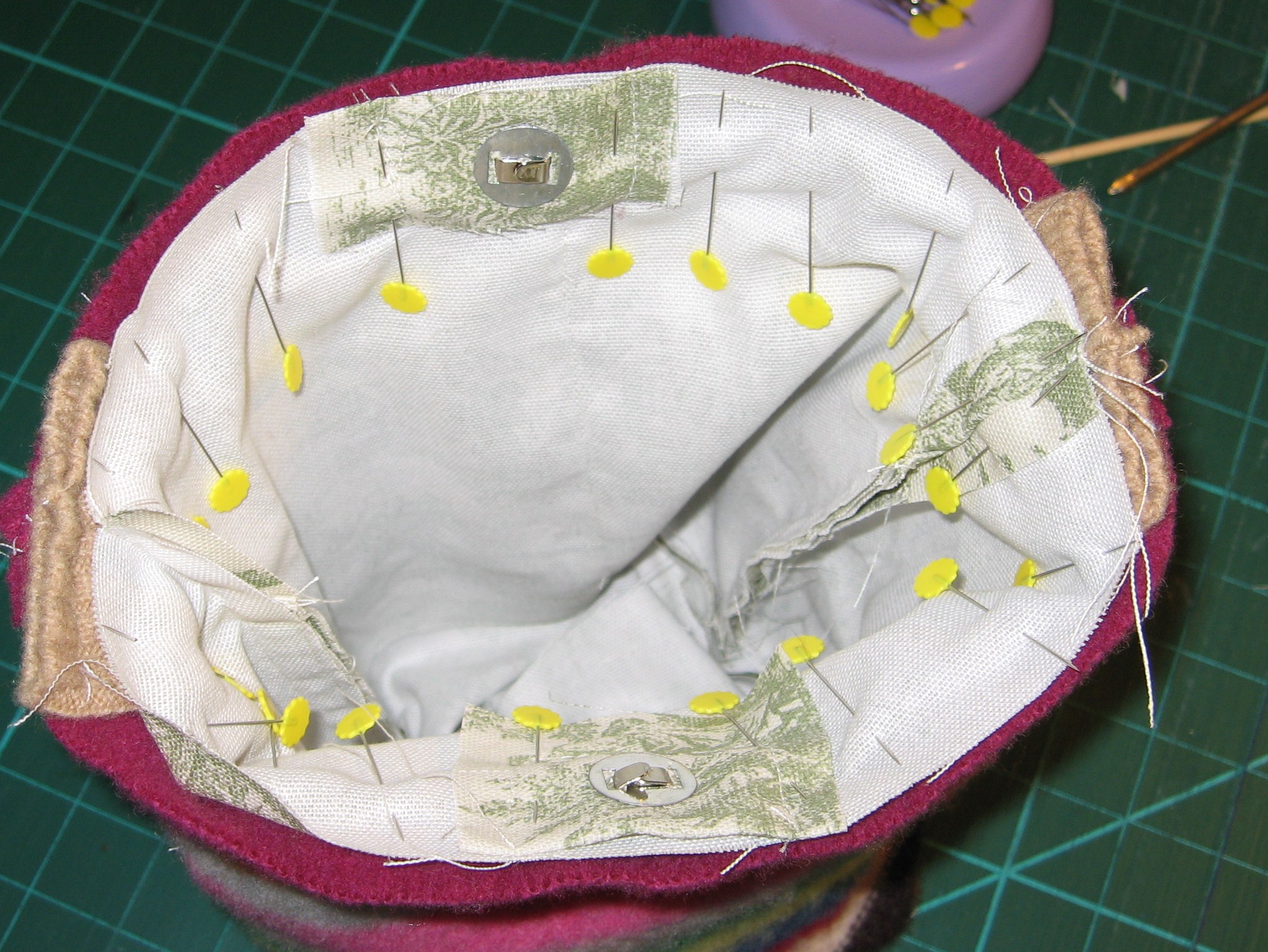
Ensure the straps are inside and pin the lining to the sweater (outside of the bag), right sides together. Stitch around the top.

Turn the bag right side out through the opening in the lining.

Pin opening in lining. Stitch closed.

Turn lining inside, smooth and pin. Top stitch.

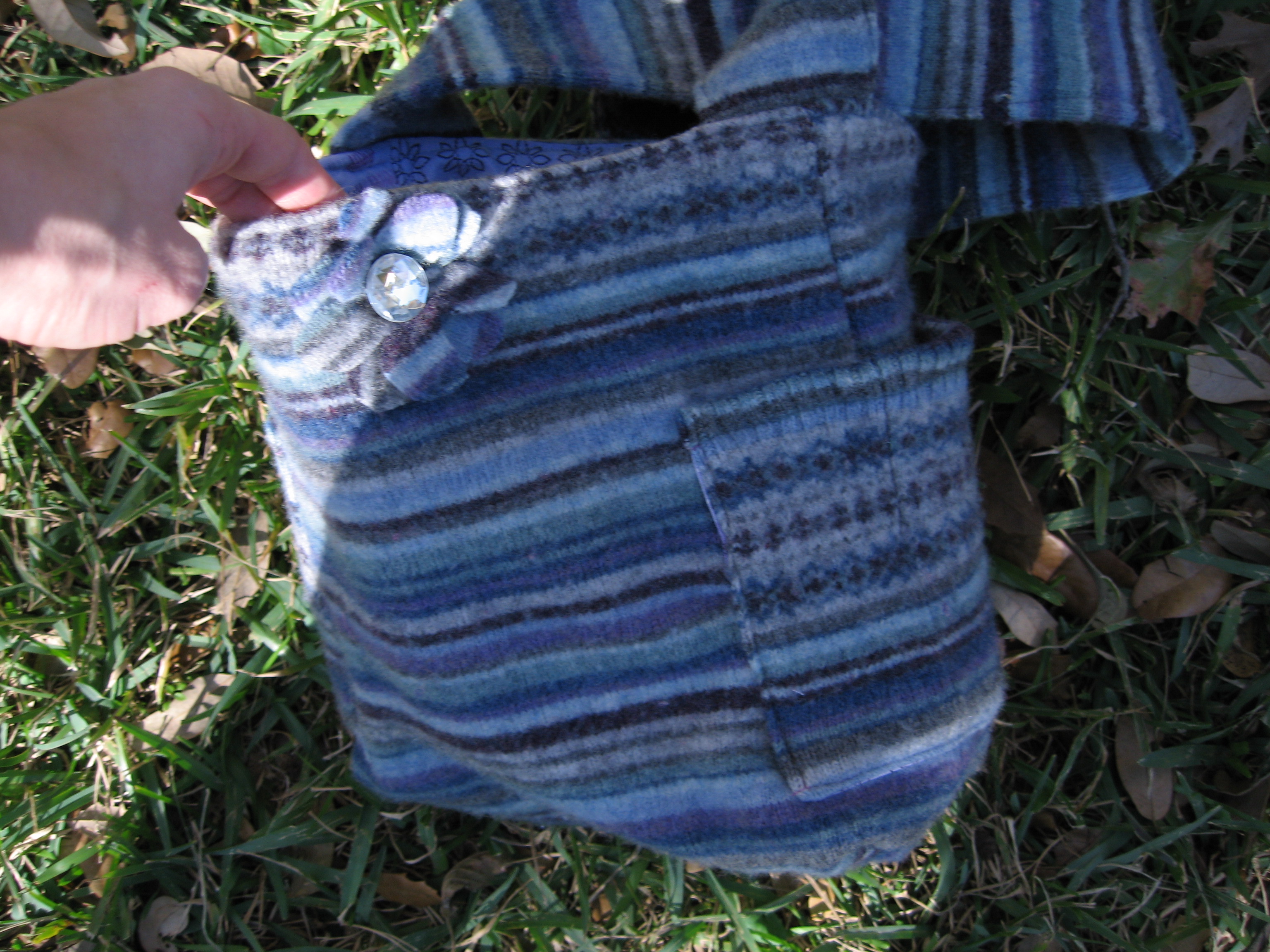
Stitch flower to center of each side over snap, stitch button on top. We are DONE!

What a fun way to recycle an old sweater!

Here’s a fun one I made with a cute purple sweater!

Happy Crafting!

Find my free patterns on Sewhooked & Fandom in Stitches.

♥ Jennifer O

Posts on this blog may contain affiliate links to help cover the cost of my website. I thank you for your generous support. ♥

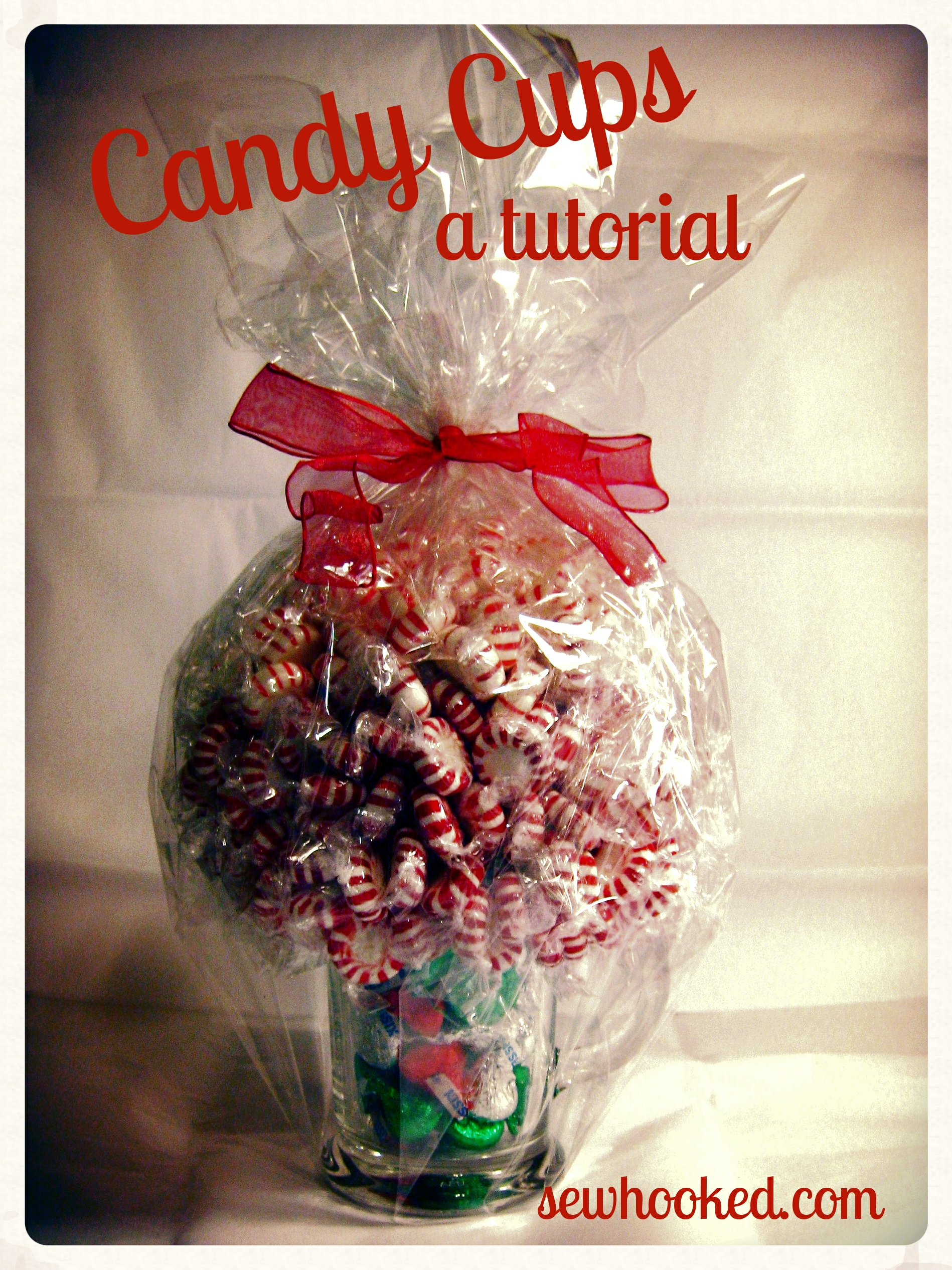
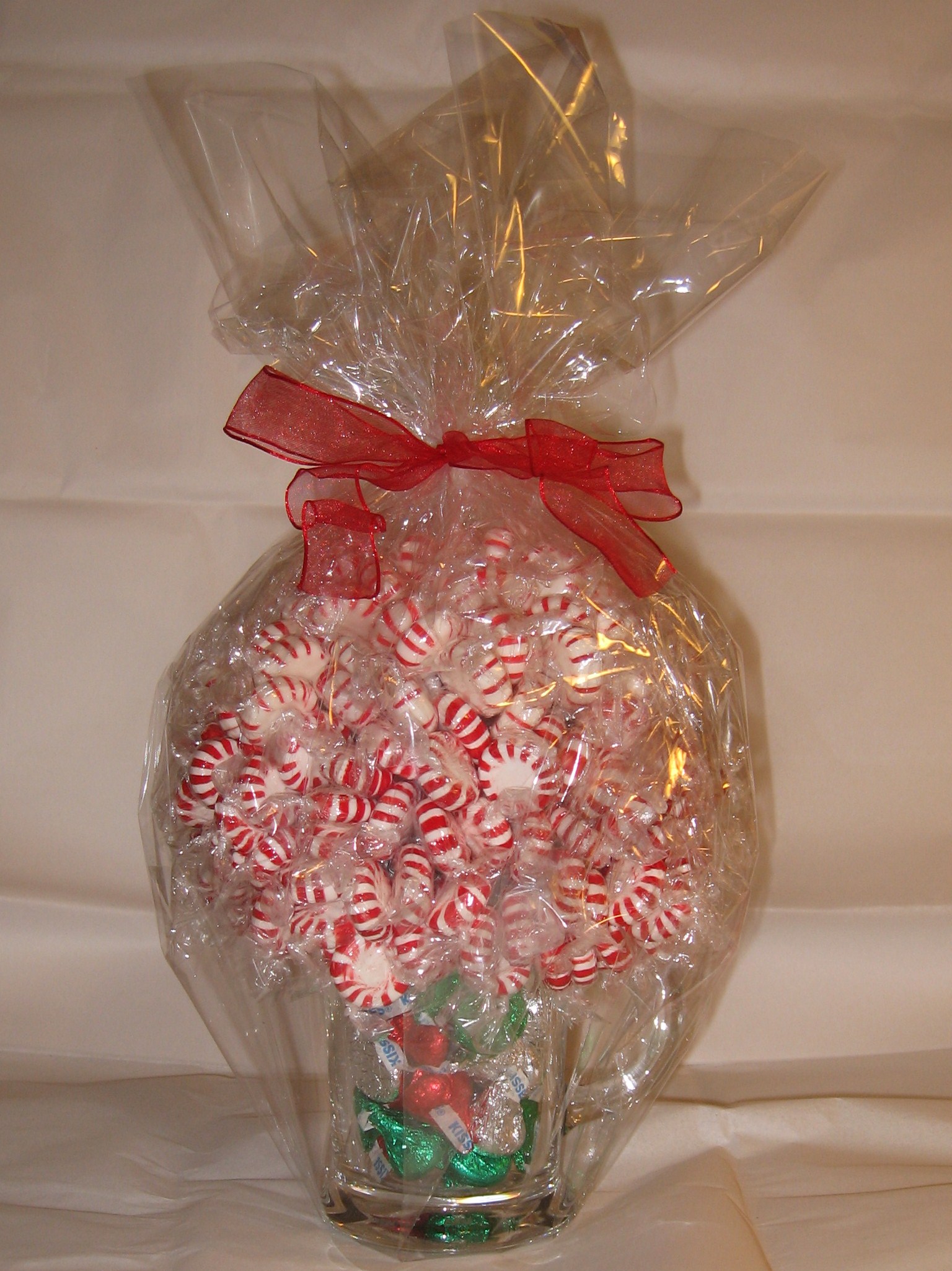
Candy Cups for Giving

Candy Cups for Giving

Shared by my aunt, Amy, several years ago, Candy Cups have become a gift-giving standard for me.  I’ve made them for Christmas and birthdays and with all sorts of candy.

They’re easy, inexpensive, and make gorgeous gifts for the hard-to-shop for.  Think teachers, friend,s and anyone who likes candy.  Sugar-free candy works, too!

Once all your supplies are gathered, it’ll take you about an hour to make one candy cup.

You’ll need:

  • Glass or Mug (I prefer clear, but any kind will work, the heavier the better!)
  • Candy with loose or twisted wrappers (example used approximately 40 oz. of peppermints)
  • Styrofoam ball (size depends on your glass or mug)
  • Filler for the cup – recycled paper or candy
  • Bamboo Skewer
  • Scissors
  • Hot Melt Glue
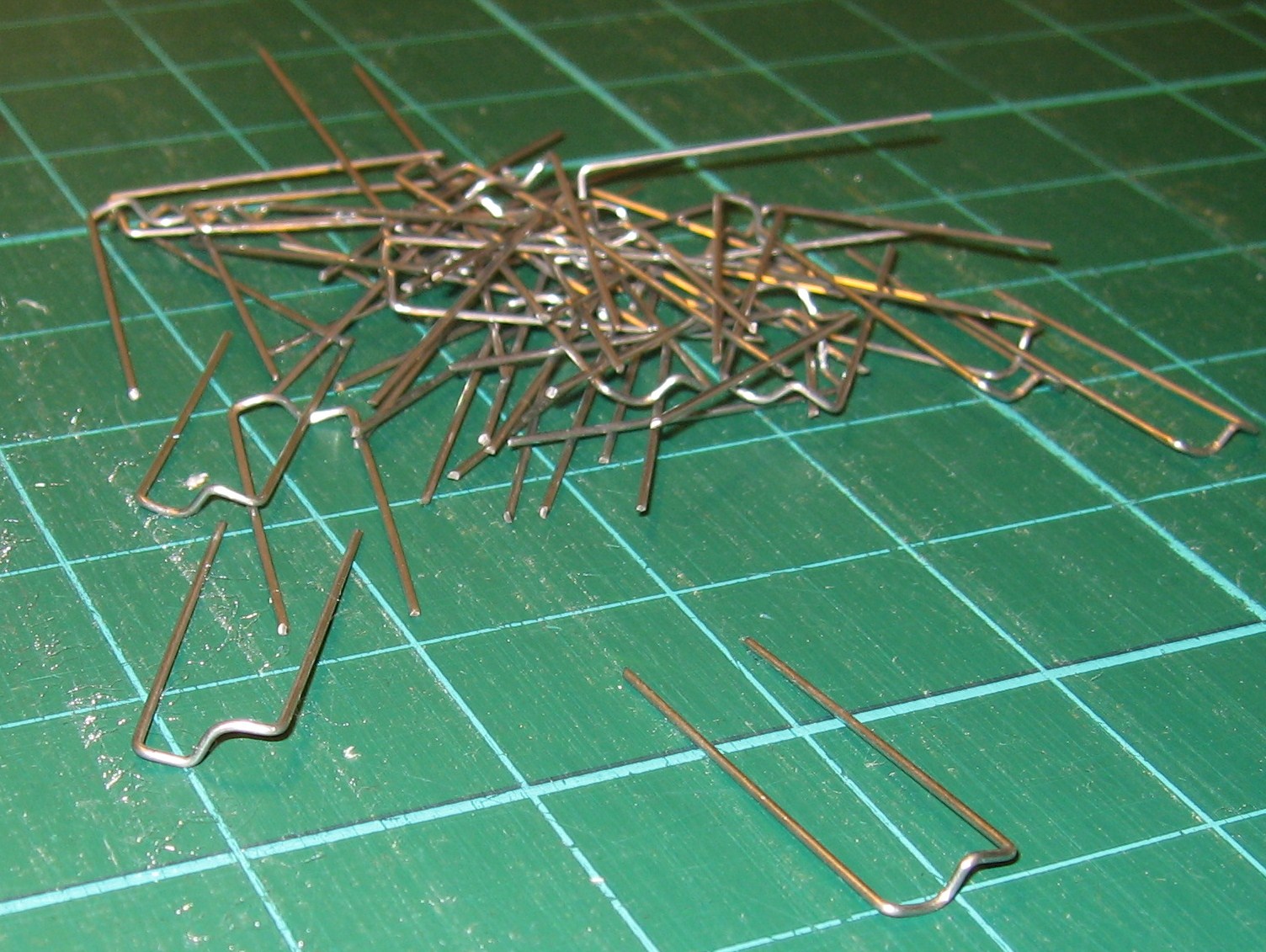
  • Greening Pins (also available at the hobby store with the floral accessories)
  • Ribbon
  • Cellophane

Push the bamboo skewer into the Styrofoam ball, all the way through the top. Put it in the glass to and push down until the ball is snug in the glass.

Snip off the excess skewer with your scissors. You can also use large fingernail clippers, a utility knife, or pruning shears.

With the skewer still in the glass, fill the bottom with candy. Ideas are like M&Ms, Hershey’s Kisses, or Peppermints (though you could really use any candy). Another option is shredded paper, but the candy on the ball will make the cup top-heavy, so having a heavier filler keeps it from tipping over and gives the gifted a sweet bonus.

Place a small dot of hot melt glue on either side of the rim of the cup.  Gently press the styrofoam ball onto glue, holding in place until it sets. You don’t need much, just a touch for stability.

candies in twisted wrappers

greening pins

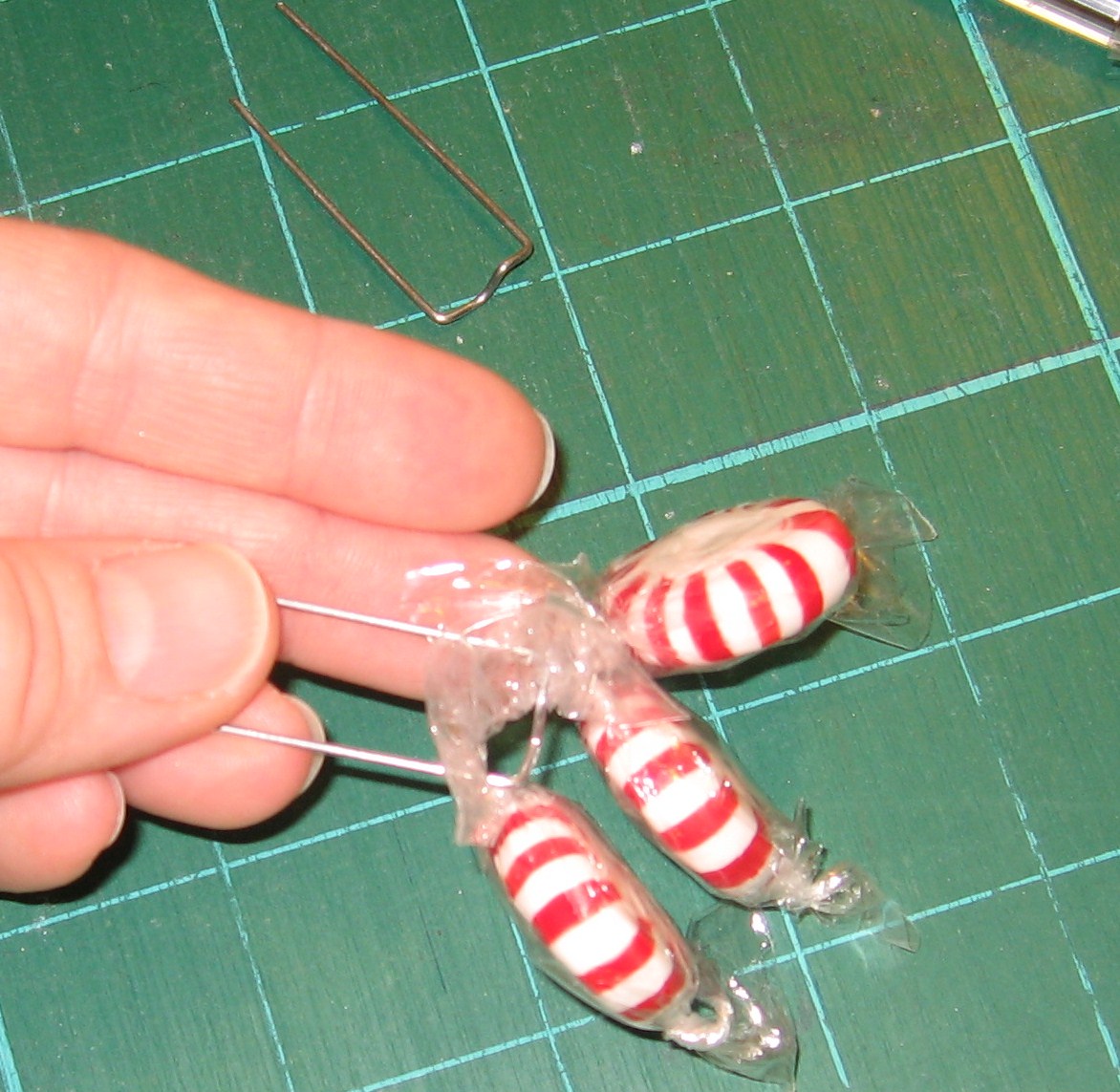
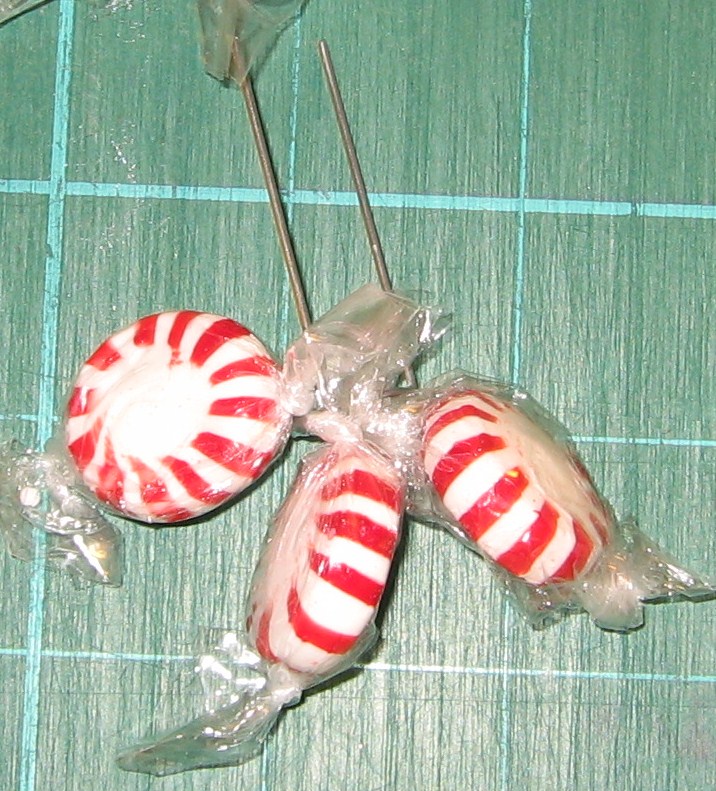
Use greening pins to add candy to ball by poking pins through the loose end near the twist of the candy wrapper.  Depending on the candy, you can get two or three on each pin.

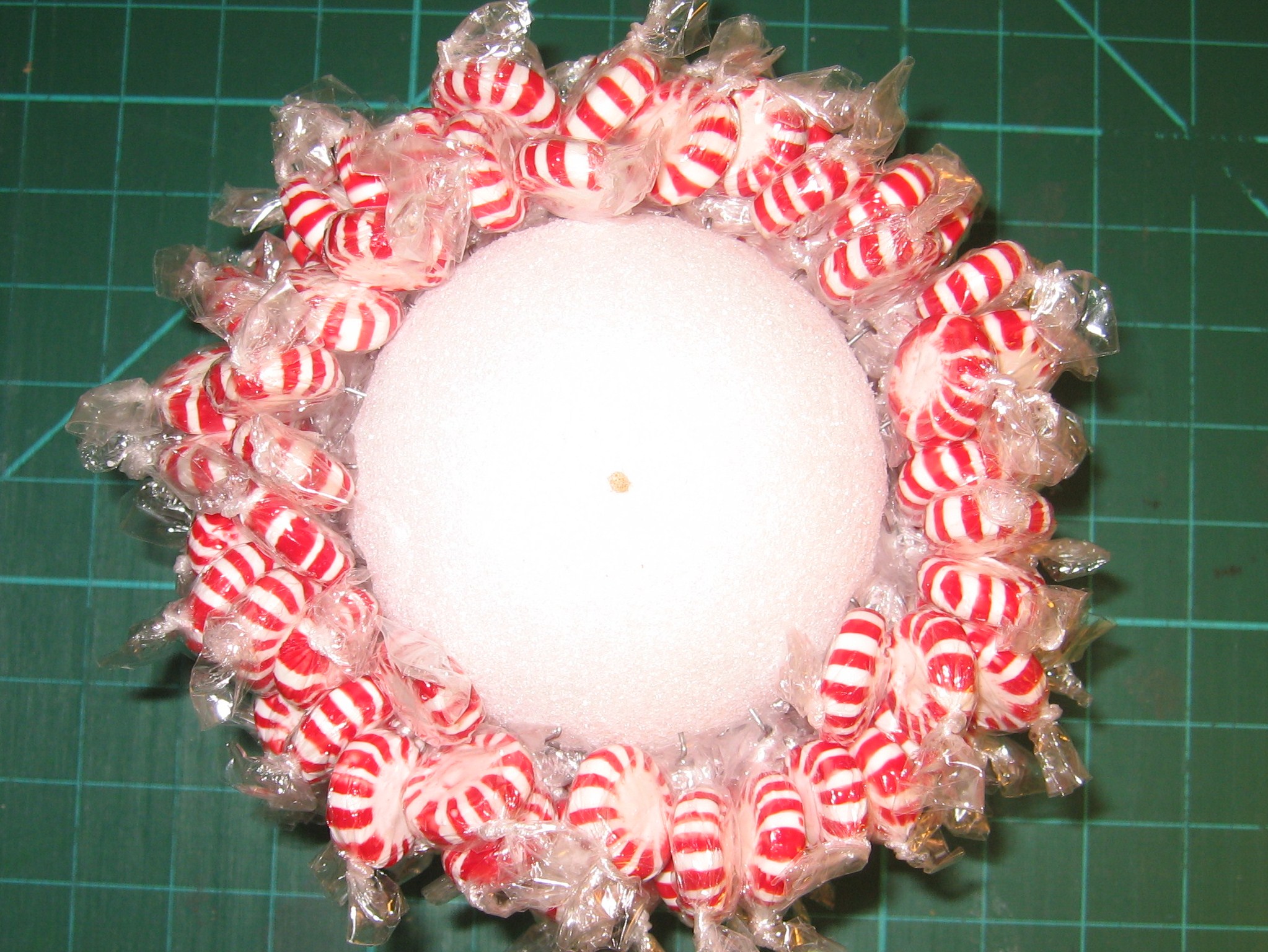
Start at the bottom and work your way up to the top, moving in a circular pattern.

First Round complete.

Second Round.

Third Round.

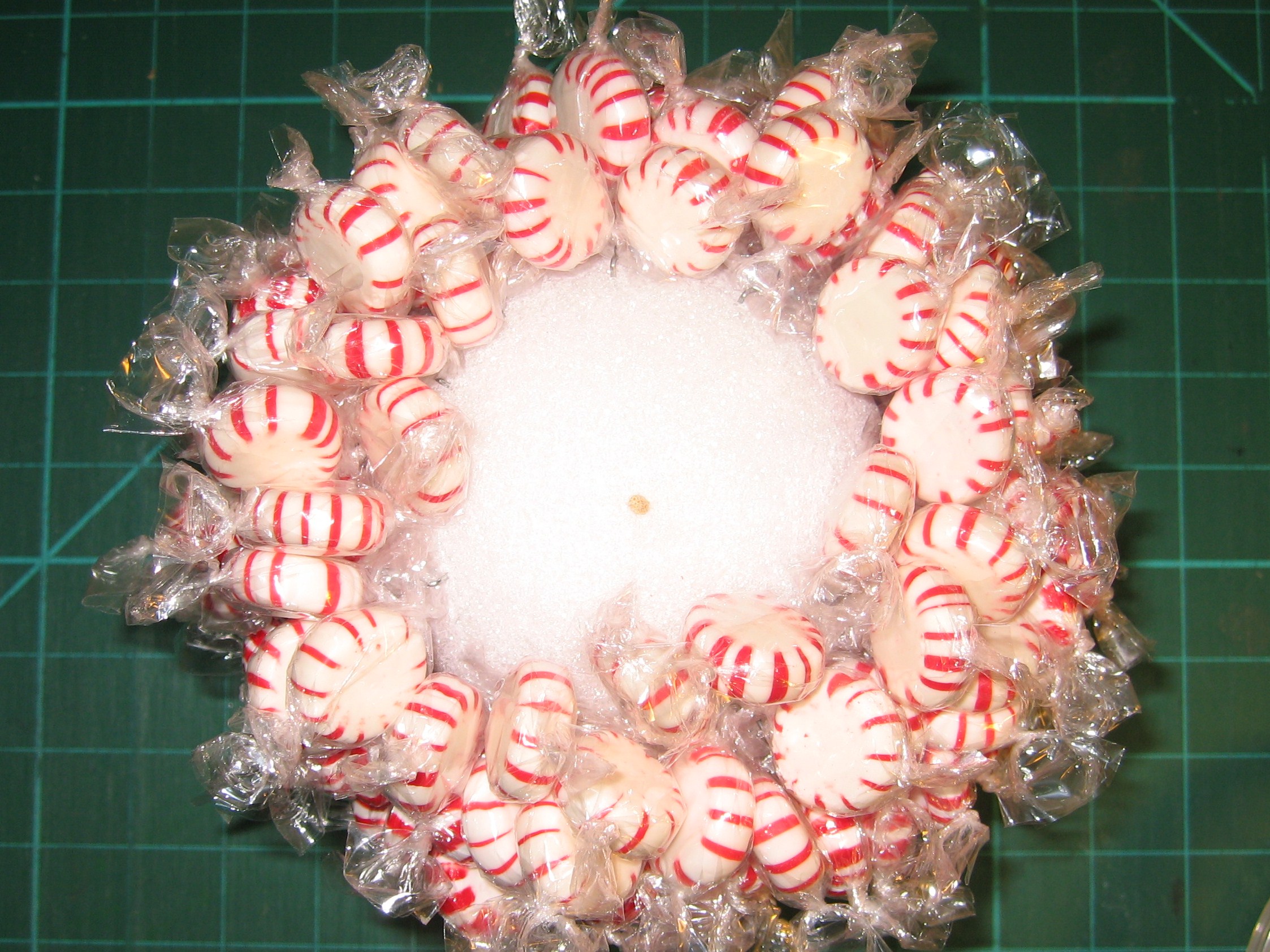
Fill in any holes with more candy & greening pins.

Final round complete, all the holes filled in.

Wrap in cellophane and embellish with a bow or ribbon.  The cellophane is optional, but it provides insurance that your candy will get from point “A” to point “B” intact.

Gift it!

Variation with M&Ms and Coca-Cola glasses

Variations by Amy Maxey – toffee coffee & bubble gum soda glass.

Find my free patterns on Sewhooked & Fandom in Stitches.

♥ Jennifer O

Posts on this blog may contain affiliate links to help cover the cost of my website. I thank you for your generous support. ♥

Crafts: Cullen Crest Stenciled Tee

Cullen Crest T-shirt

I made this little gem of a shirt over the summer while waiting for Breaking Dawn to arrive. It’s based on the Cullen Family Crest, as shown by MTV over the summer.

I did take some artistic license to make this a stencil. It’s a complicated bit of cutting, but well worth the patience!

Note:  Cutting with an Exacto Knife is dangerous.  Please be very careful!

Supplies:

In lieu of individual photos of the process, take a look at my how-to video for stenciling, which you may remember from this post. There are lots of ways to create a stencil. This is how I do it. I did not include glitter on the Cullen Crest T-shirt.

Text Directions:

  1. Pre-wash t-shirt without fabric softener.
  2. Print stencil onto freezer paper (matte side).
  3. Carefully cut out with an exact-o knife. There are loads of fiddly bits, so take your time and be careful.
  4. Set iron to medium.
  5. Place cardboard or newspaper inside t-shirt.
  6. Place stencil on t-shirt with a piece of blank paper on top (that keeps the tiny pieces in place) then carefully press with the iron.
  7. Use the foam brush to gently paint on the fabric paint.
  8. Allow a few minutes to dry, then carefully remove the stencil. For the tiny pieces, use a straight pin to help get them started for easier removal.
  9. Finish drying according to manufacturer’s directions.

Add your Sewhooked-related photos to my flickr group and you might be featured in a future post!

Photobucket

also posted on craftster and cut out + keep

Paper Piecing: Step By Step

Basic Paper Piecing Tutorial

I receive a lot of emails about paper piecing each week. While many of them are in reference to my Harry Potter patterns, even more of the messages are from new and experienced quilters alike, with comments about the technique itself. Most commonly, I hear one of two things. Either that the person emailing had never quilted and saw a pattern they really wanted to try and just went for it, then was surprised that it wasn’t as hard as they thought OR that they have wanted to try it for years and it looks too hard to them.

I’m always thrilled to hear from quilters of all skill levels, and any time I can help in whatever small way, it’s my great pleasure to do so.

Paper piecing can be daunting to someone that either hasn’t tried it before or tried a technique that confused them. I myself tried three separate tutorials before it stuck. It was a combination of those different tutorials that helped me understand it better, and while I do have my own How To now, I still recommend checking out several tutorials and deciding on what techniques are right for yourself.

That said, this is how I paper piece. Each pattern is the same. They all have the same basic set up and the same basic rules will always apply. Even thought designers sometimes draw their patterns differently, the technique remains the same.

How To Paper Piece
© Jennifer Ofenstein
click on tutorial images to see larger versions

paper piecing tutorial (1)

Supplies

  • pattern (Jar #3 used in this tutorial or similar pattern – NOTE: Jar #3 was updated in 2014 and looks a little different than the photos, but the lines are all in the same place)
  • quilting fabric
  • neutral thread
  • paper scissors
  • fabric scissor OR Add-A-Quarter Ruler.
  • postcard or thin straight edge
  • flathead pins
  • rotary cutter*
  • rotary ruler
  • wallpaper seam roller (available at home improvement stores)

*note – I keep two rotary cutters, one for traditional piecing and one for trimming paper pieced blocks. The “just fabric” cutter gets the new blade, and when it begins to dull, I transfer it to the “paper” rotary cutter.

Not shown above:

  • cutting mat
  • dry iron
  • sewing machine
  • open toe foot
  • light source

Start by making a copy or print out of the pattern you want to make. Use lightweight paper for your patterns, as it tears off easier. Recycled printer paper works well, as does tracing paper and some drawing papers. There are also a number of commercially available products just for paper piecing, such as Carol Doak’s Foundation Piecing Paper.

Choose fabrics you think will compliment the pattern. Always use good quality 100% cotton quilting fabric.

paper piecing tutorial (5)

Use paper scissors to trim outside the gray seam allowance of individual pieces of the pattern.
paper piecing tutorial (3).JPG

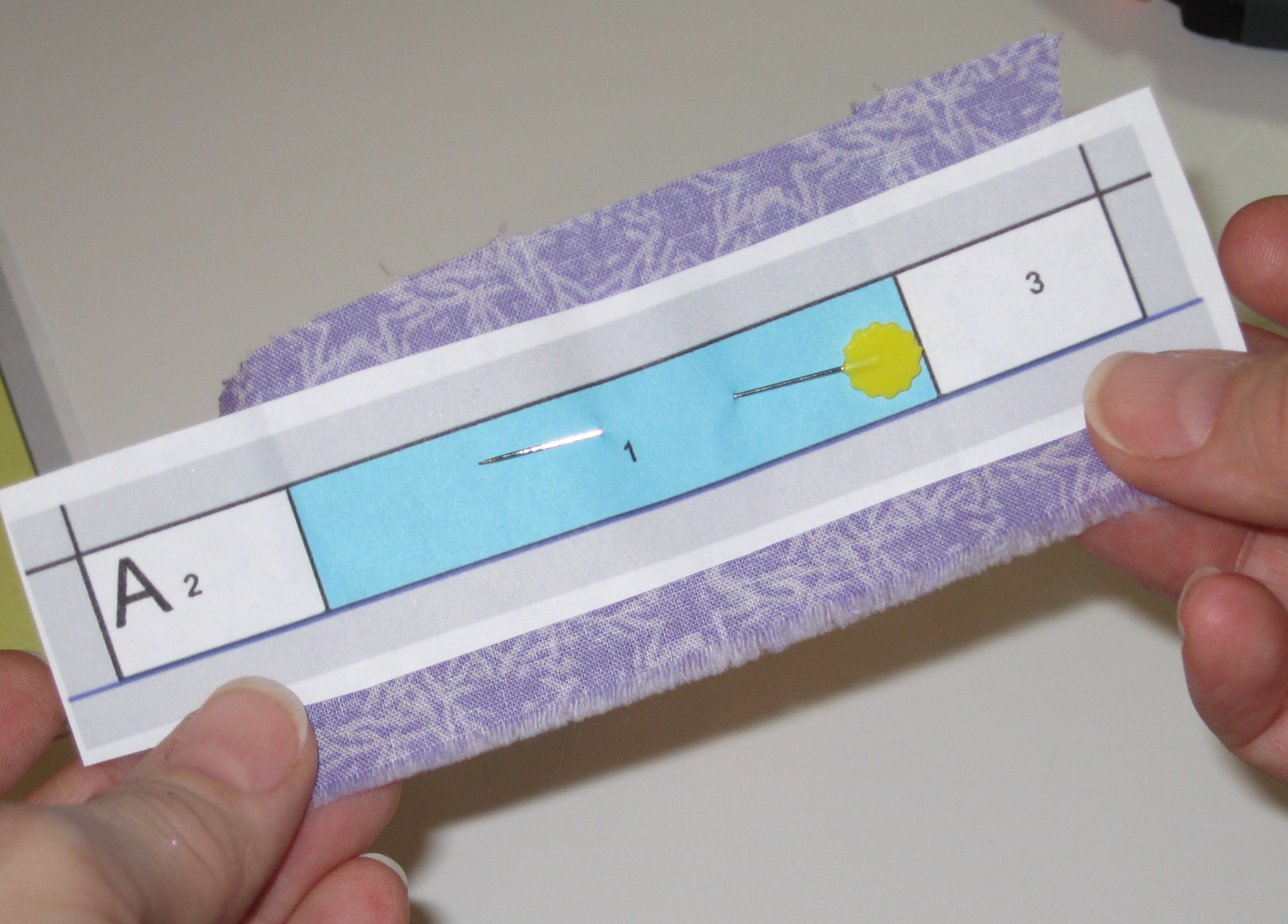
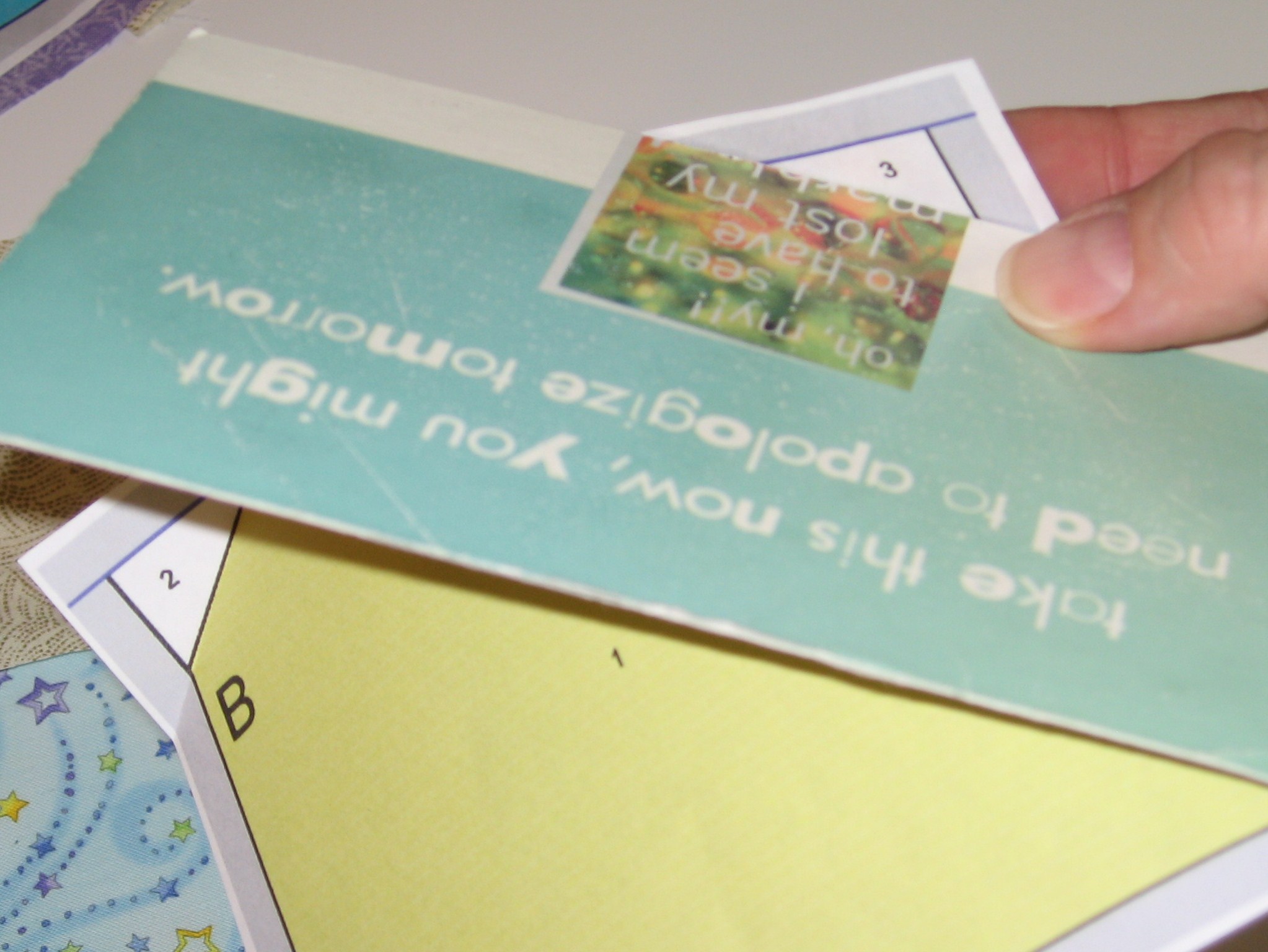
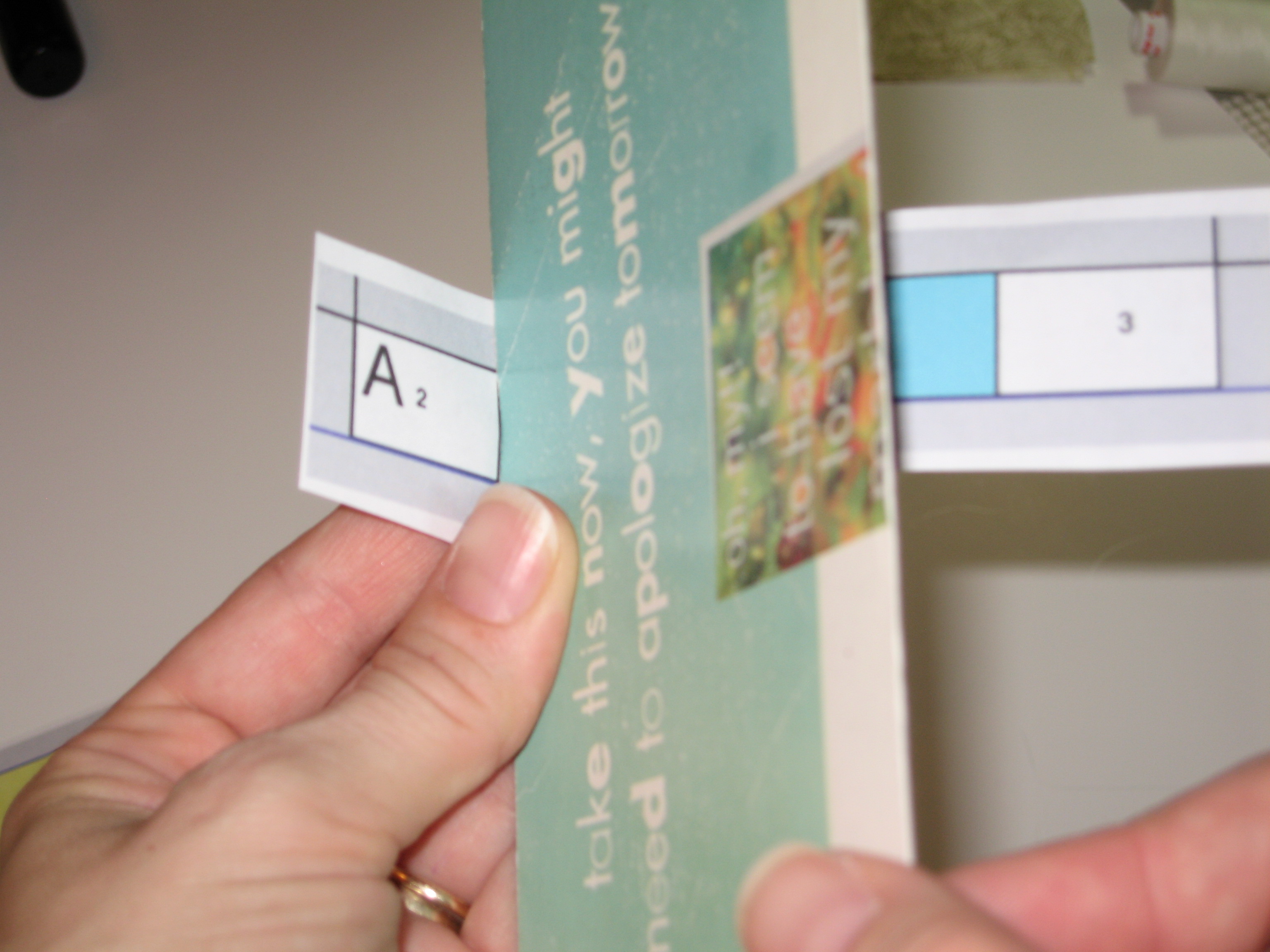
Starting with pattern piece “A,” use the postcard as a straight edge, fold the pattern piece on the line between 1 and 2. This is your stitching line.
paper piecing tutorial (4).JPG
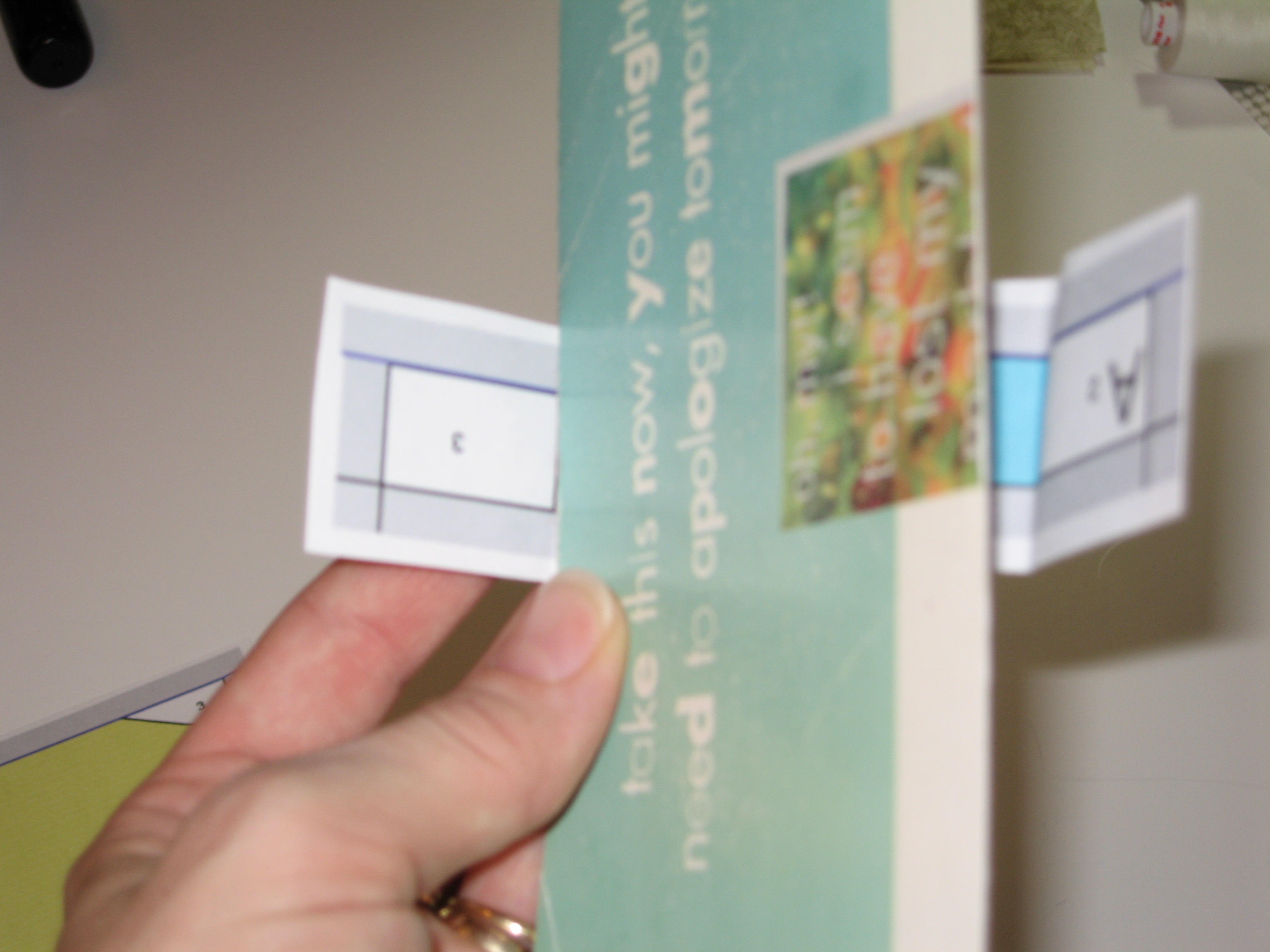
Repeat for the line between 1 and 3.

paper piecing tutorial (6)

Place fabric 1 right side up on the back of the paper opposite piece 1.

Make sure you have a generous seam allowance (approximately 1/2″) all around.

Use a light source behind the pattern if you need it to make sure the fabric is big enough.

paper piecing tutorial (7)

Trim seam allowance to 1/4″. This can be done with fabric scissors or a rotary cutter.
paper piecing tutorial (9)

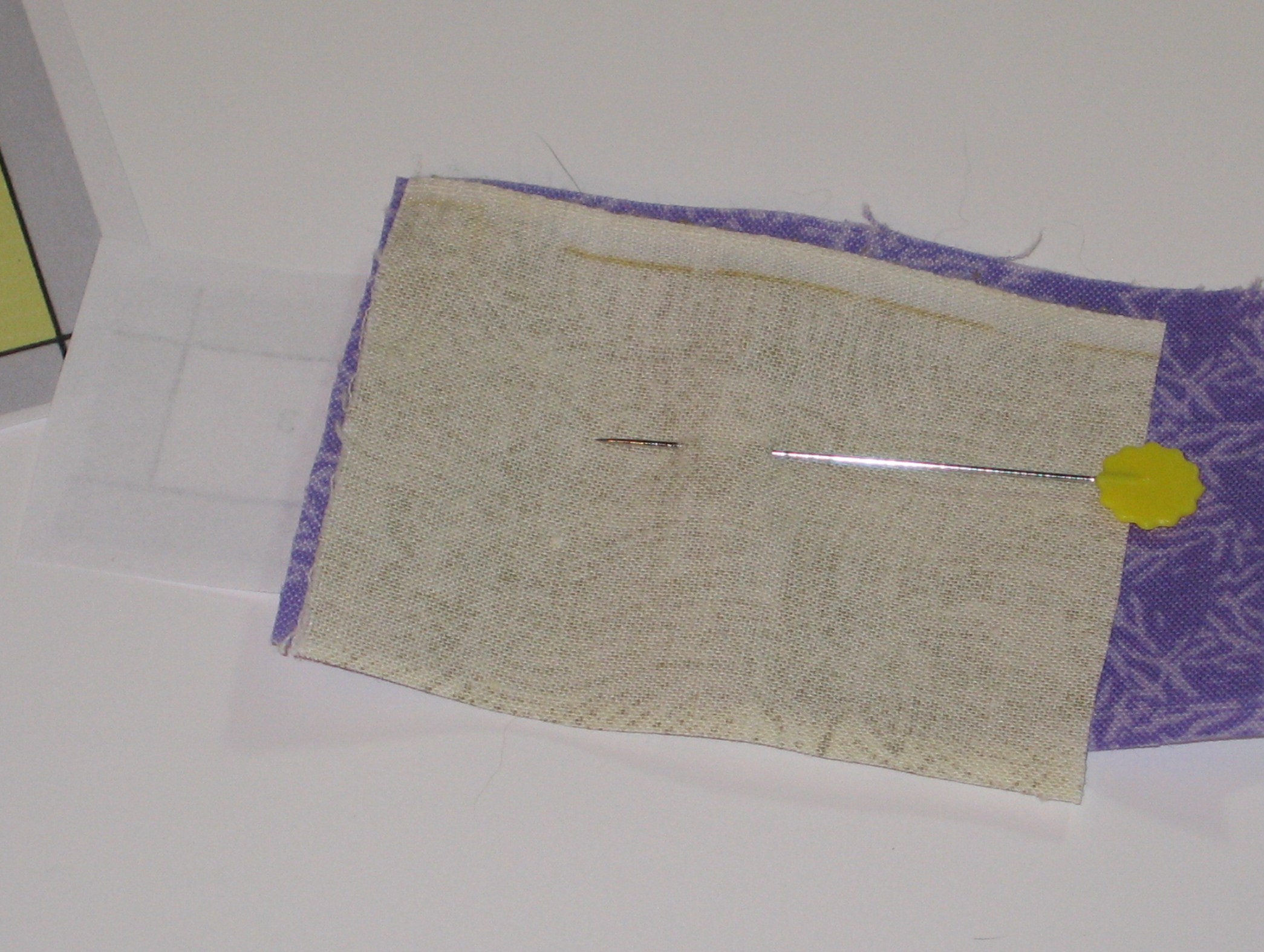
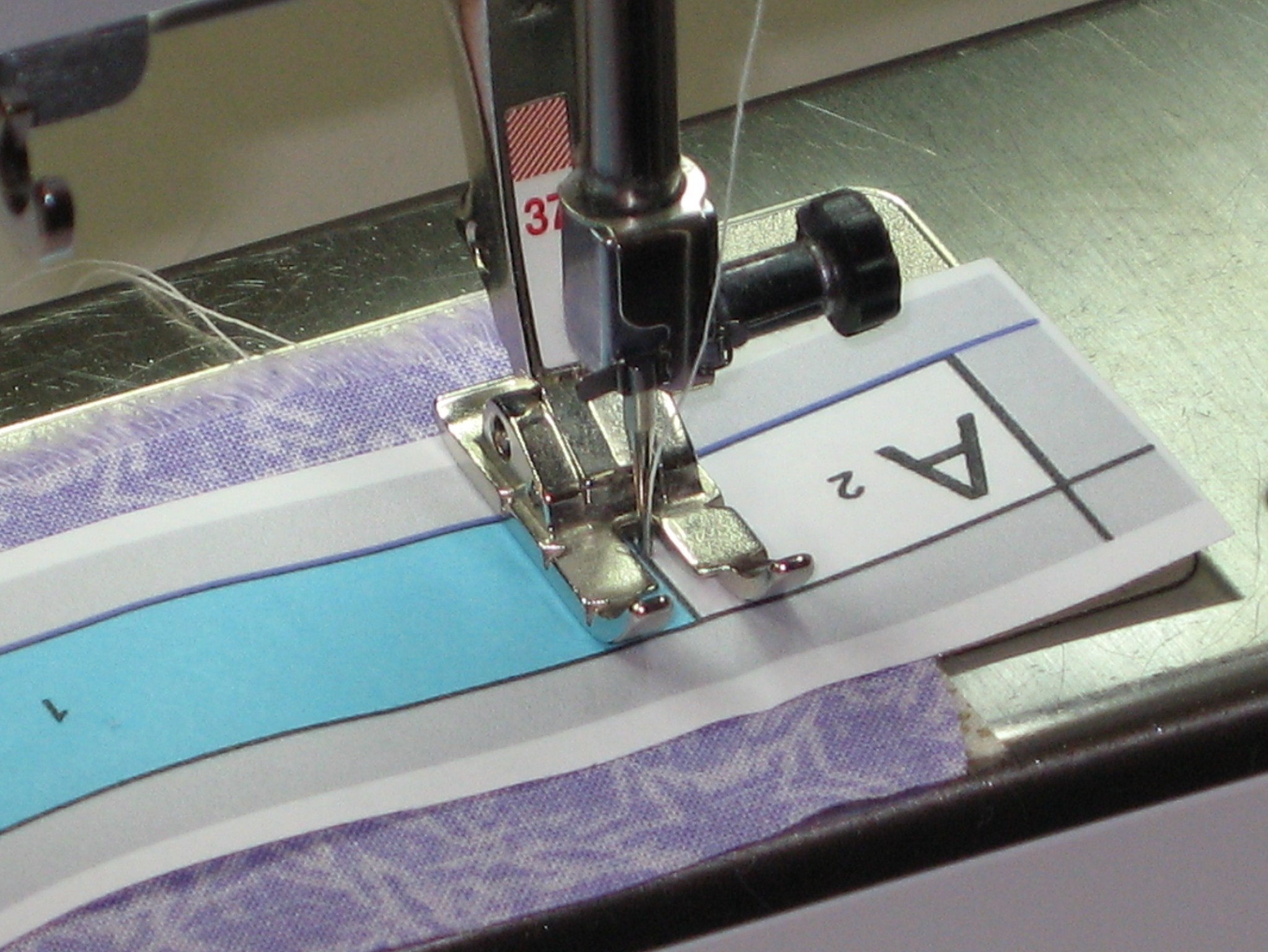
Place fabric 2 wrong side up on fabric 1. Make sure to slide both pieces of fabric 1/4” past the stitching line.
paper piecing tutorial (10)

Using a small stitch (10-12 stitches per inch, a 1.5 on most domestic sewing machines), start two stitches before the stitching line, stitch along the line and take two stitches after the end. By stitching slightly pass the line, it is less likely that the ends the stitches will pull out when the paper is removed.

paper piecing tutorial (14)

Trim thread to paper.

paper piecing tutorial (11)

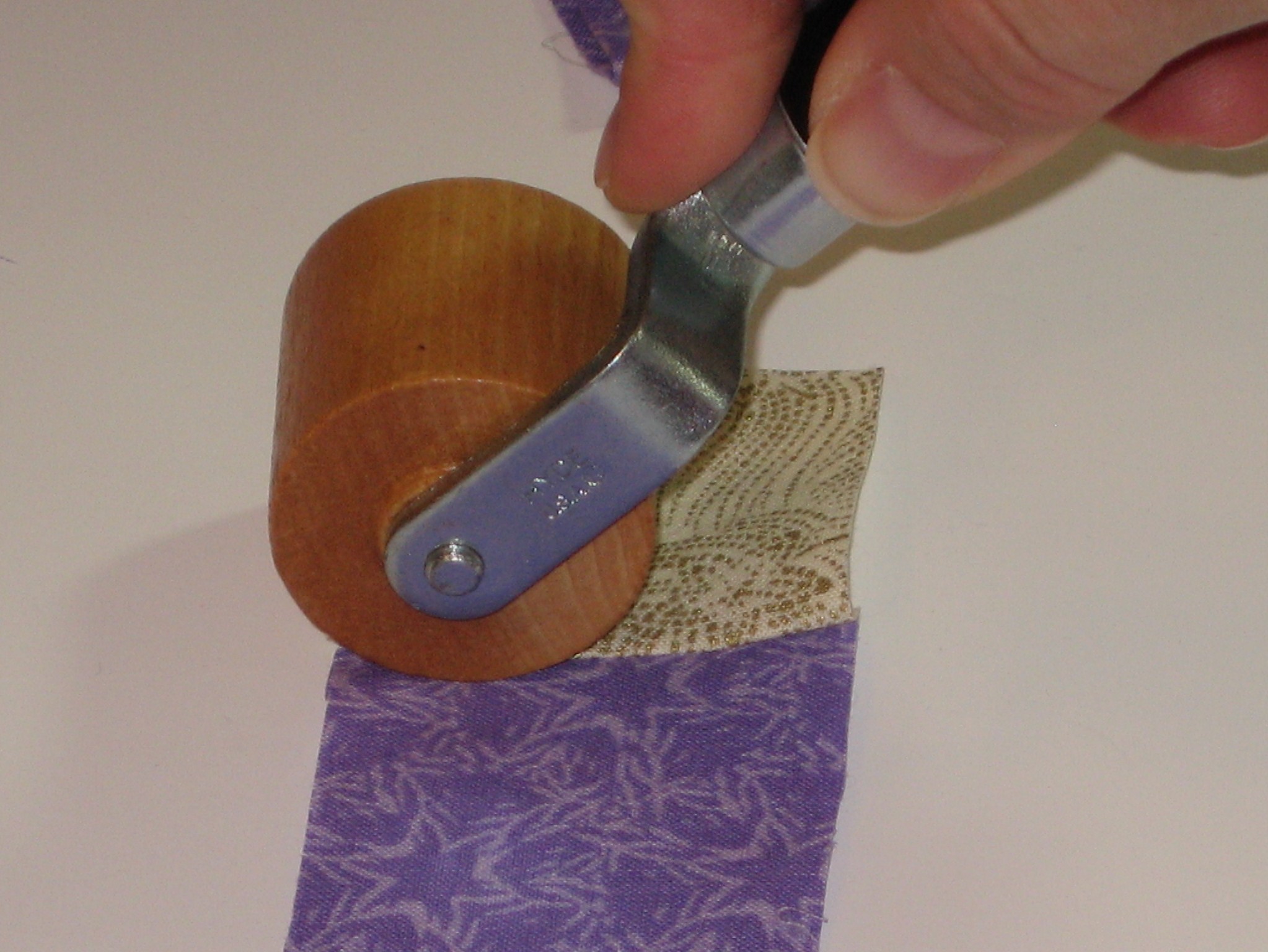
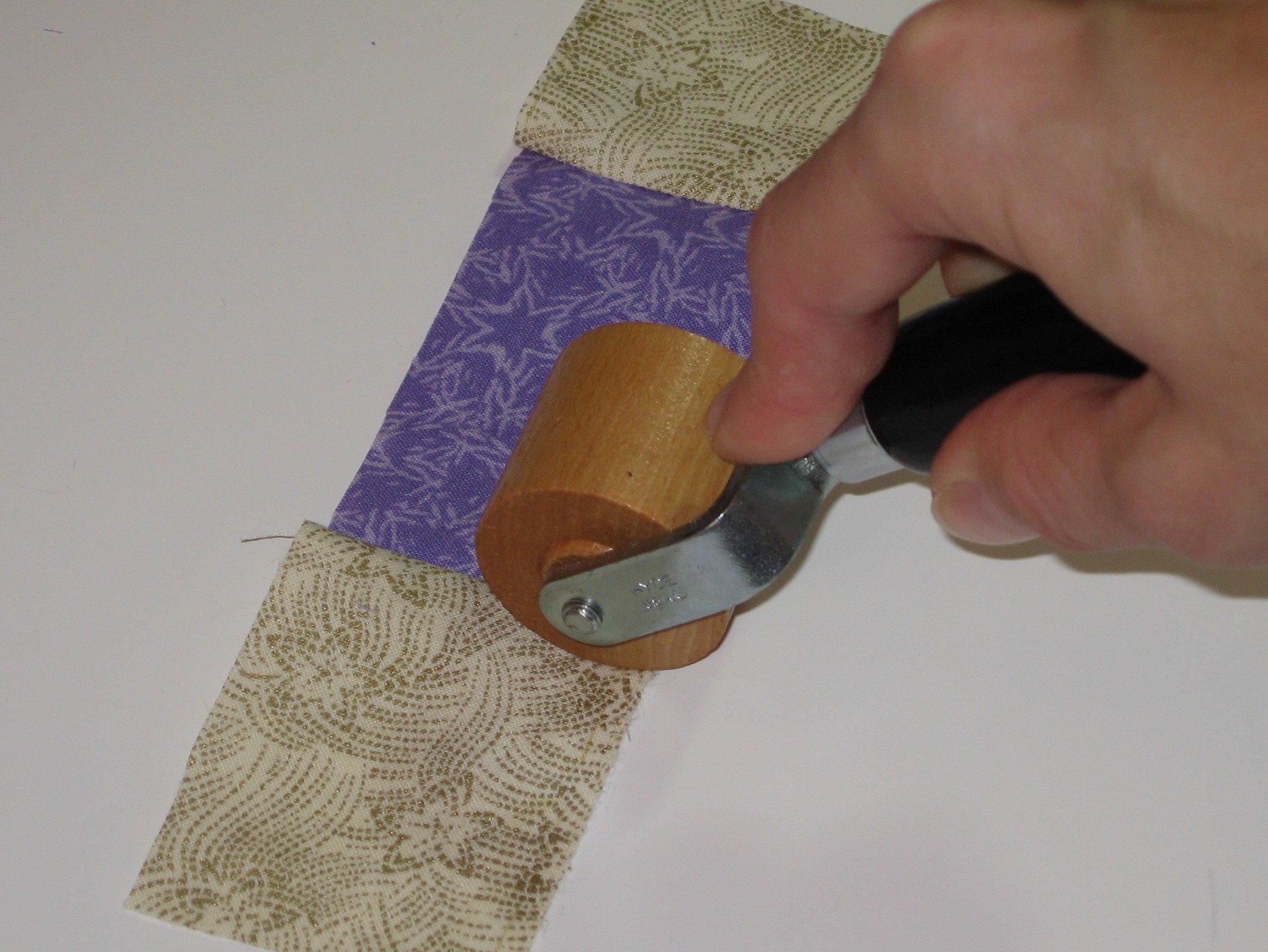
Fold fabric two out. Gently dry press with an iron OR use the wallpaper seam roller (shown) to press out the seam. Be careful not to pull or tug on the fabric.
paper piecing tutorial (12)

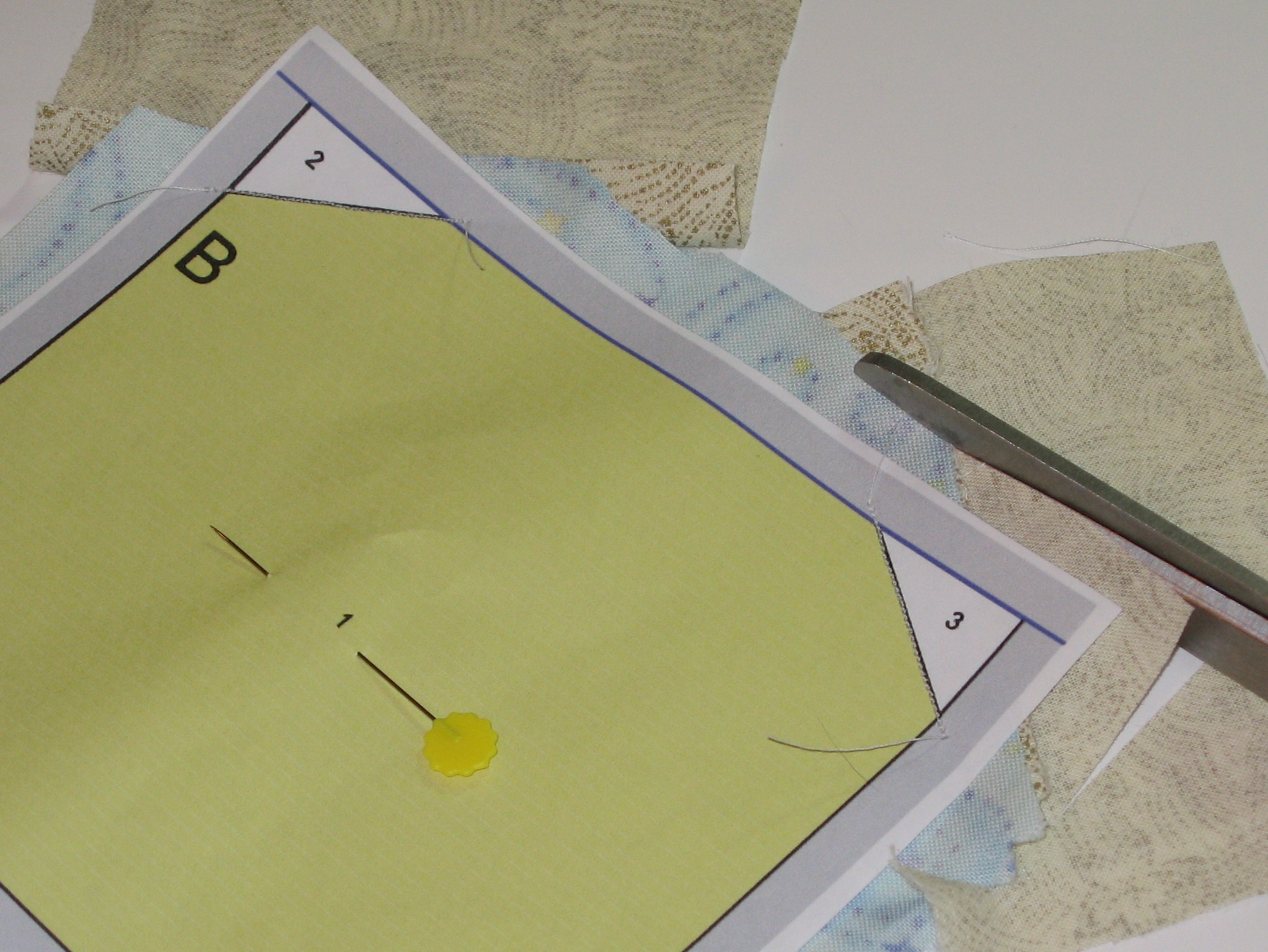
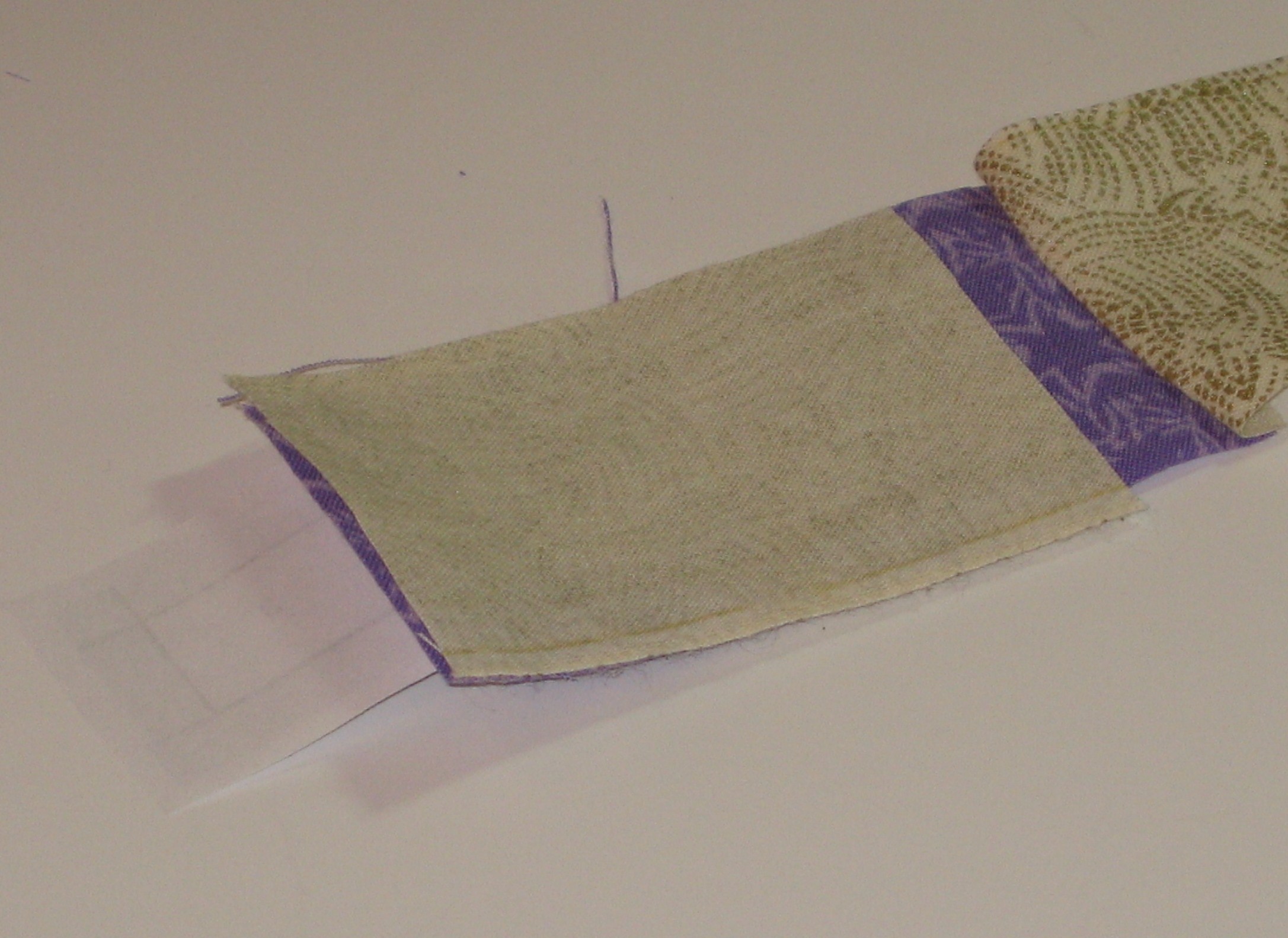
Fold on the 1 > 3 line. Keep the paper folded then flip the pattern over. Trim a generous 1/4″ from piece 1 either with scissors or with your Add-A-Quarter Ruler.

Unfold the paper. Place fabric 3 wrong side up on fabric 1, matching the edges, which will be 1/4″ past the stitching line after being trimmed in the previous step.

paper piecing tutorial (13)

Repeat stitching as for line 1 > 2.

paper piecing tutorial (15)
Press as before.

paper piecing tutorial (16).JPG

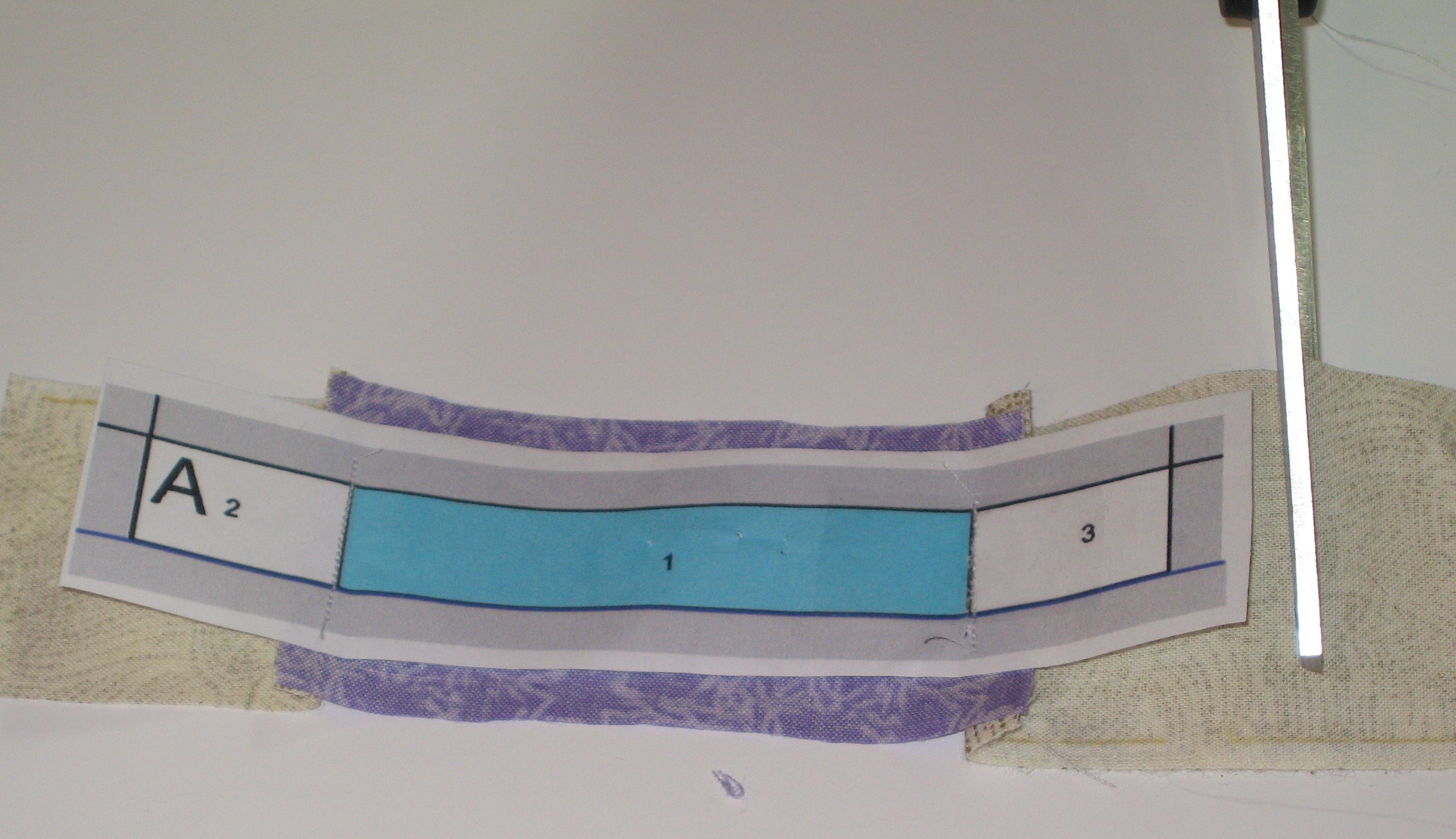
Trim fabric around pattern piece, leaving a generous amount for squaring up later.

paper piecing tutorial (17).JPG

Press pattern piece “A” with a gentle up and down motion using a dry iron. Do not pull or tug the fabric.

paper piecing tutorial (19)

Now for pattern piece “B.”

paper piecing tutorial (20)

Using the postcard or straight edge, fold down the lines between section 1 > 2 and 1 > 3.

paper piecing tutorial (21)

Trim a generous 1/4″ seam allowance (with scissors or Add-A-Quarter ruler) for piece 1 >2. Repeat for 1 > 3.
paper piecing tutorial (23).JPG

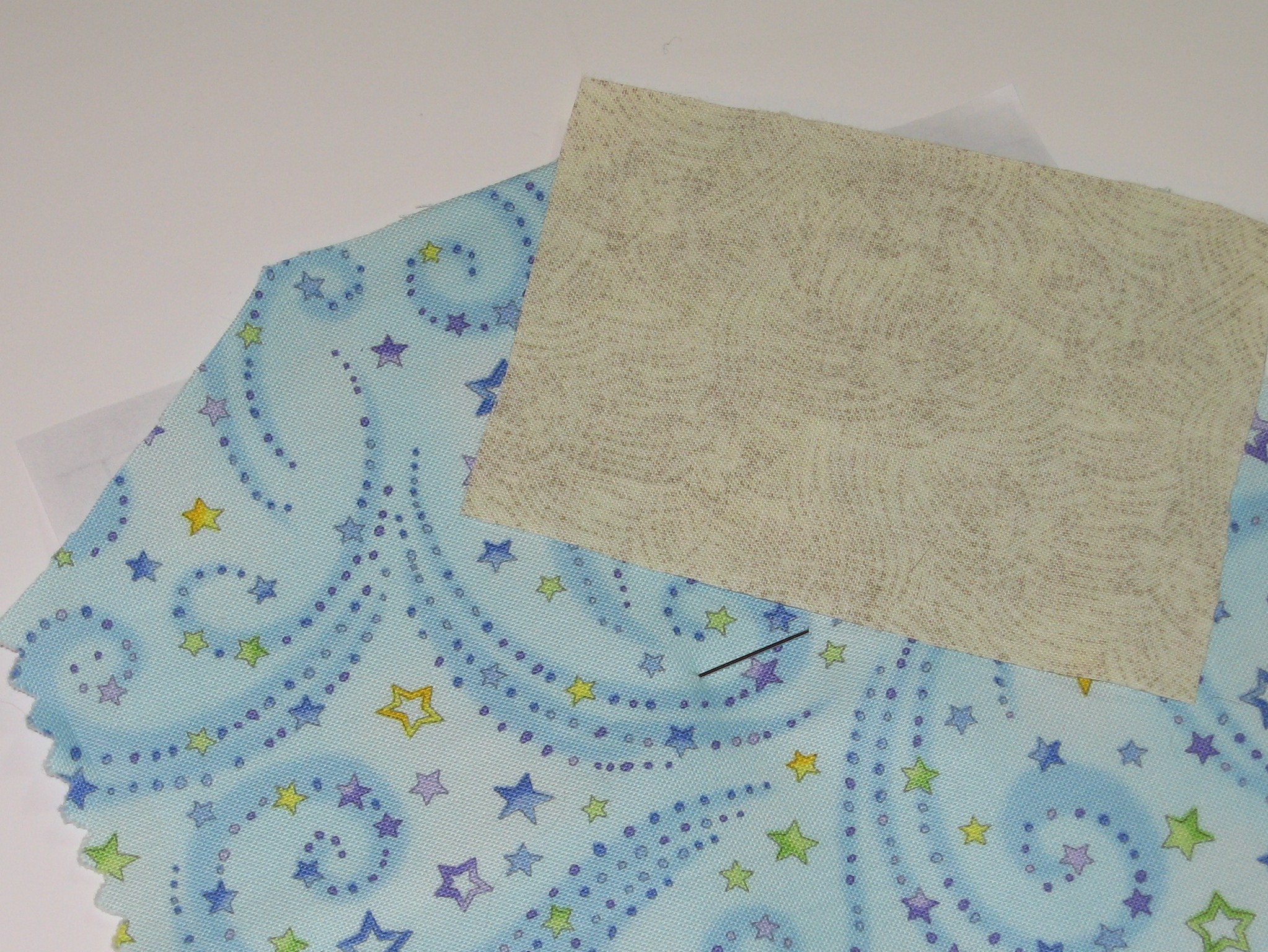
Just as for pattern piece “A,” place fabric 1 right side up on the back of the paper opposite piece 1. Make sure you have a generous seam allowance (approximately 1/2″) all around.

paper piecing tutorial (24)

Stitch on the line between piece 1 > 2 as in previous steps.

Repeat for pieces 1 > 3.

paper piecing tutorial (26).JPG

Press seams as before.

paper piecing tutorial (28)

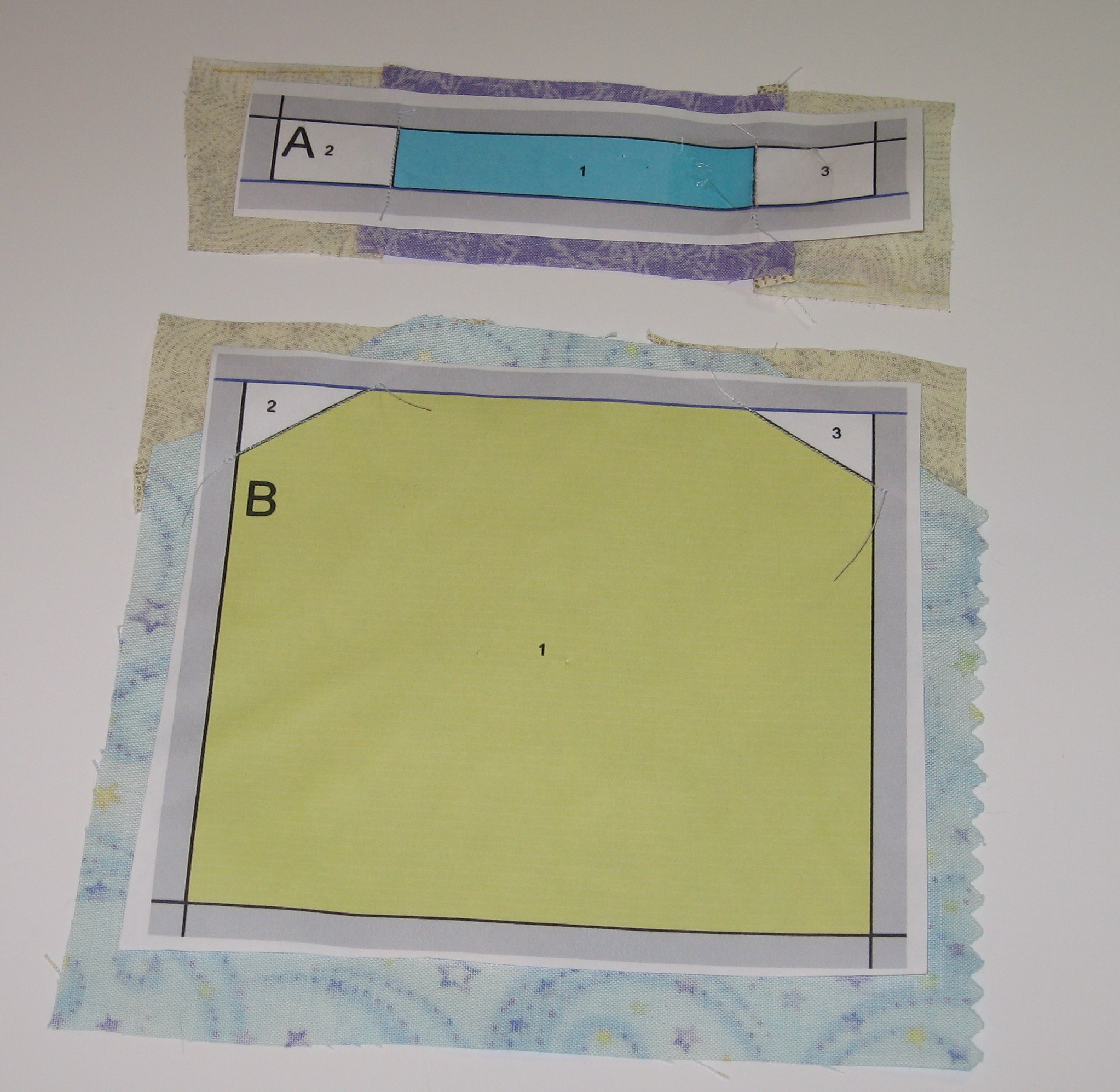
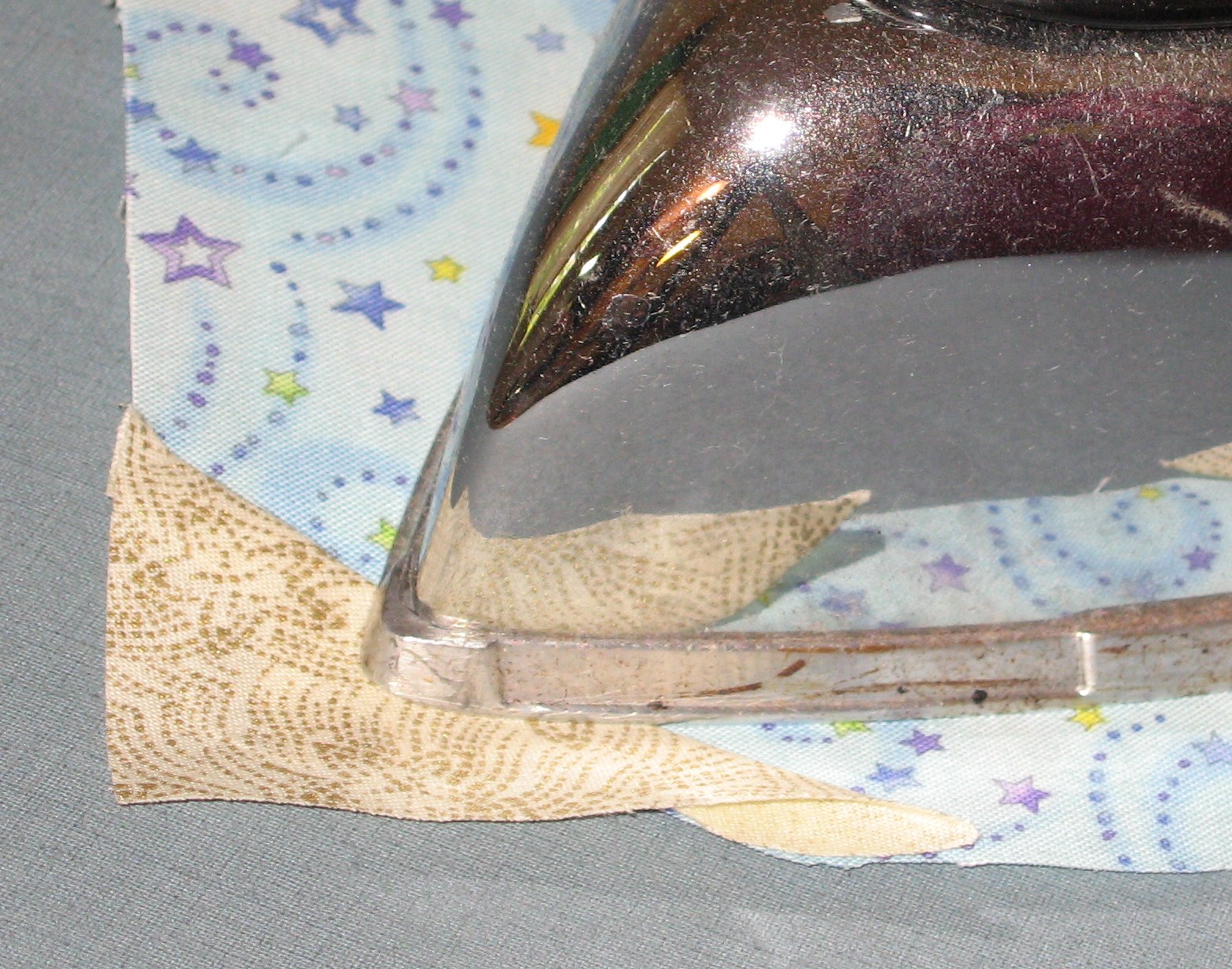
Trim fabric, leaving a generous seam allowance around the outside edges for squaring up later.
paper piecing tutorial (29).JPG

Press as before.

paper piecing tutorial (30).JPG

This is what you should have so far.

paper piecing tutorial (31).JPG

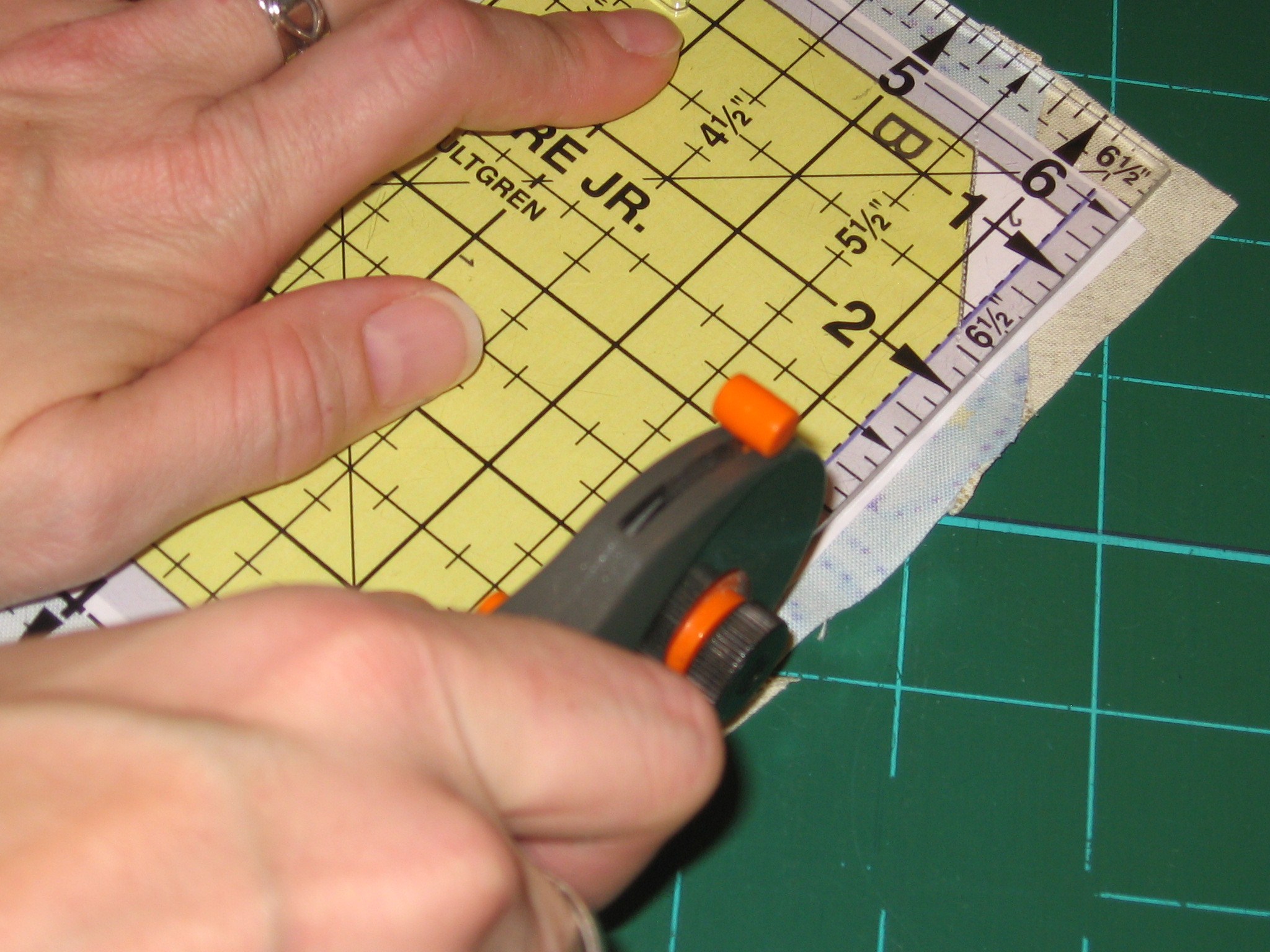
On your cutting mat and with your ruler, find the inside line at the top of unit “B”, where the jar will be stitched to the lid.
paper piecing tutorial (32).JPG

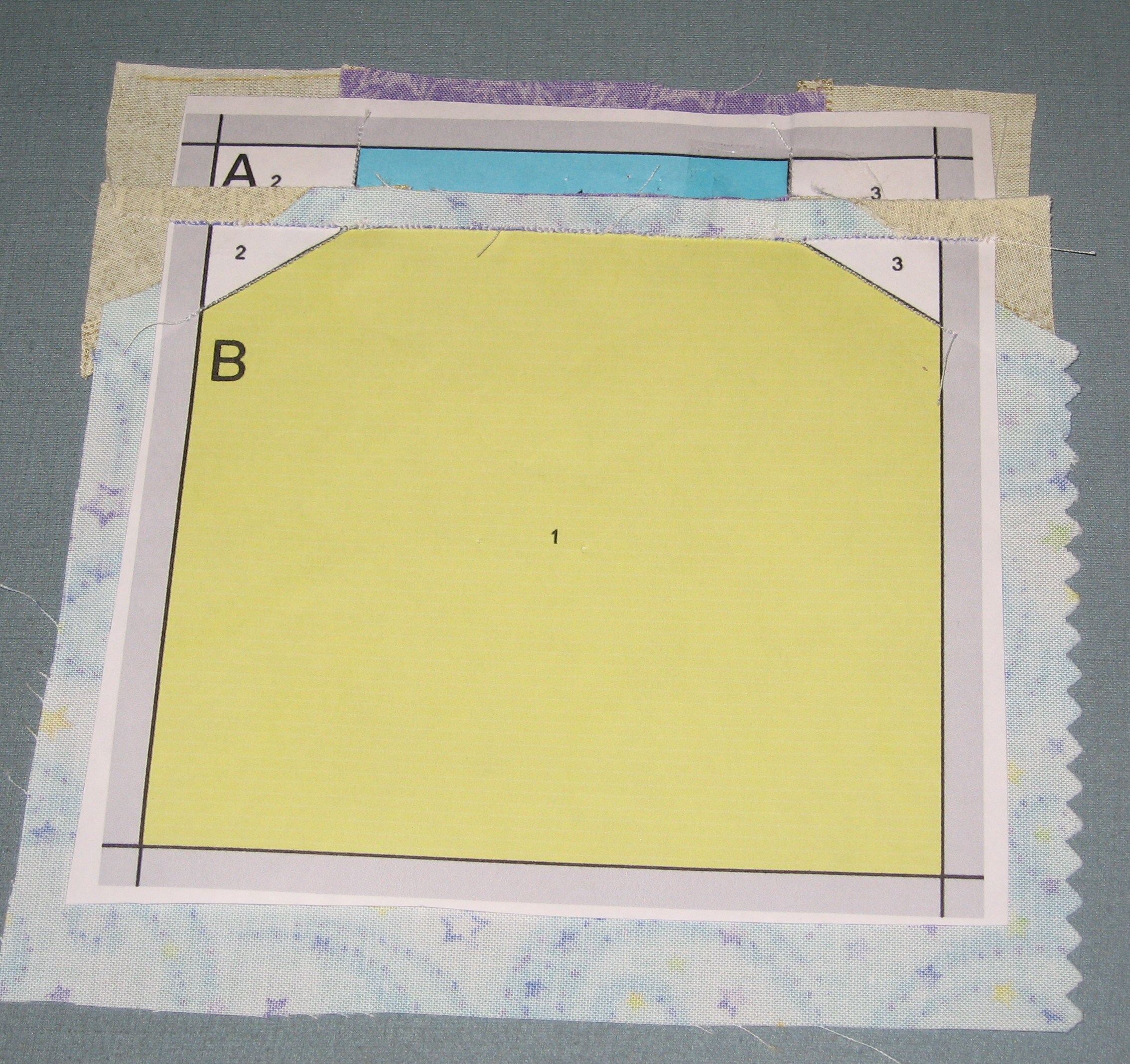
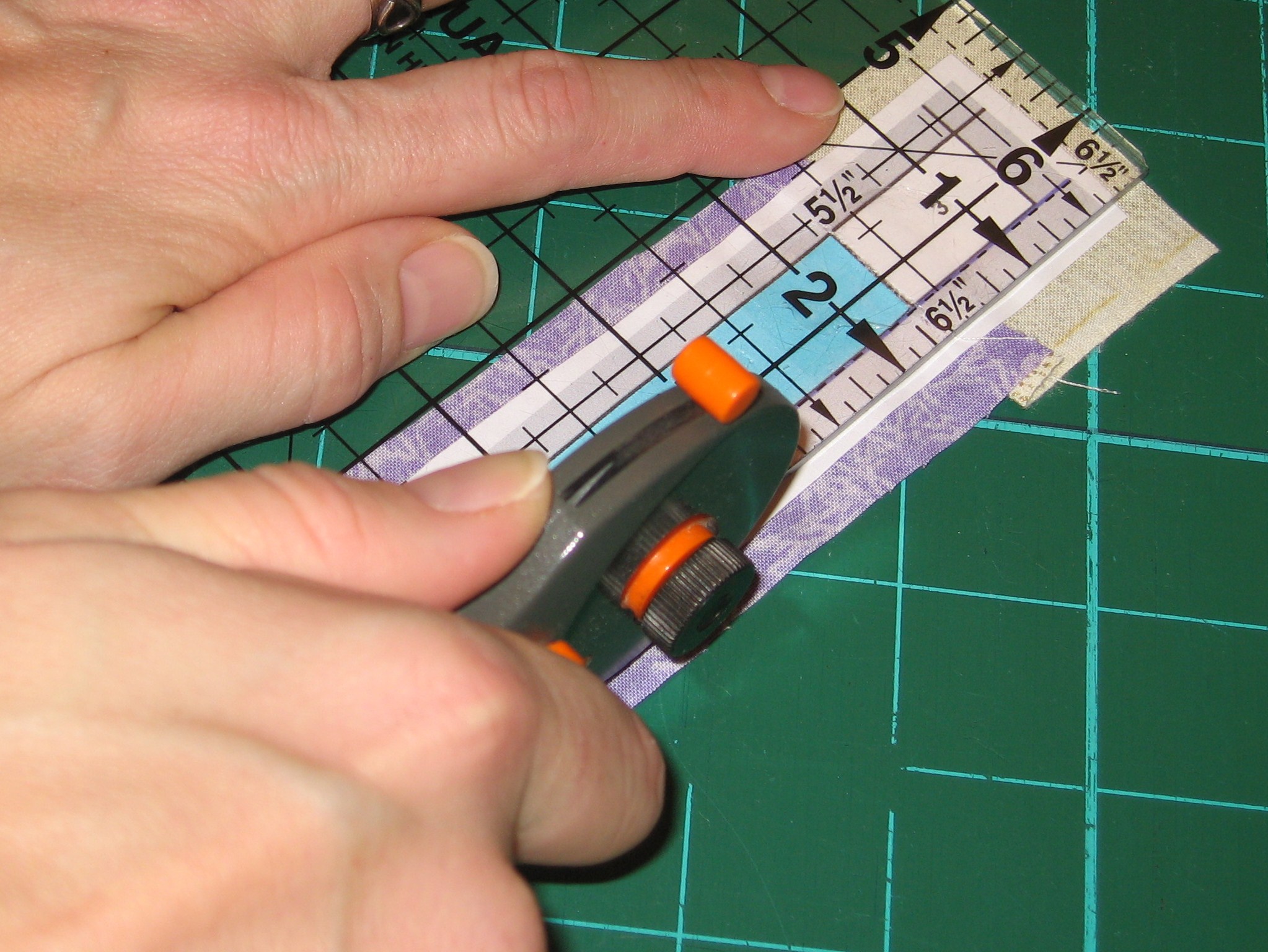
Using the pattern’s seam allowance as a guide, trim. (note: Not all paper pieced patterns include seam allowance. All of my patterns do, but if you’re ever working on a pattern without seam allowance, you can add it using this simple tutorial.)
paper piecing tutorial (34)

Find the corresponding seam on unit “A” and repeat the process.

paper piecing tutorial (36)

Now the “A” pattern piece is ready to join to the “B” pattern piece.

paper piecing tutorial (37)

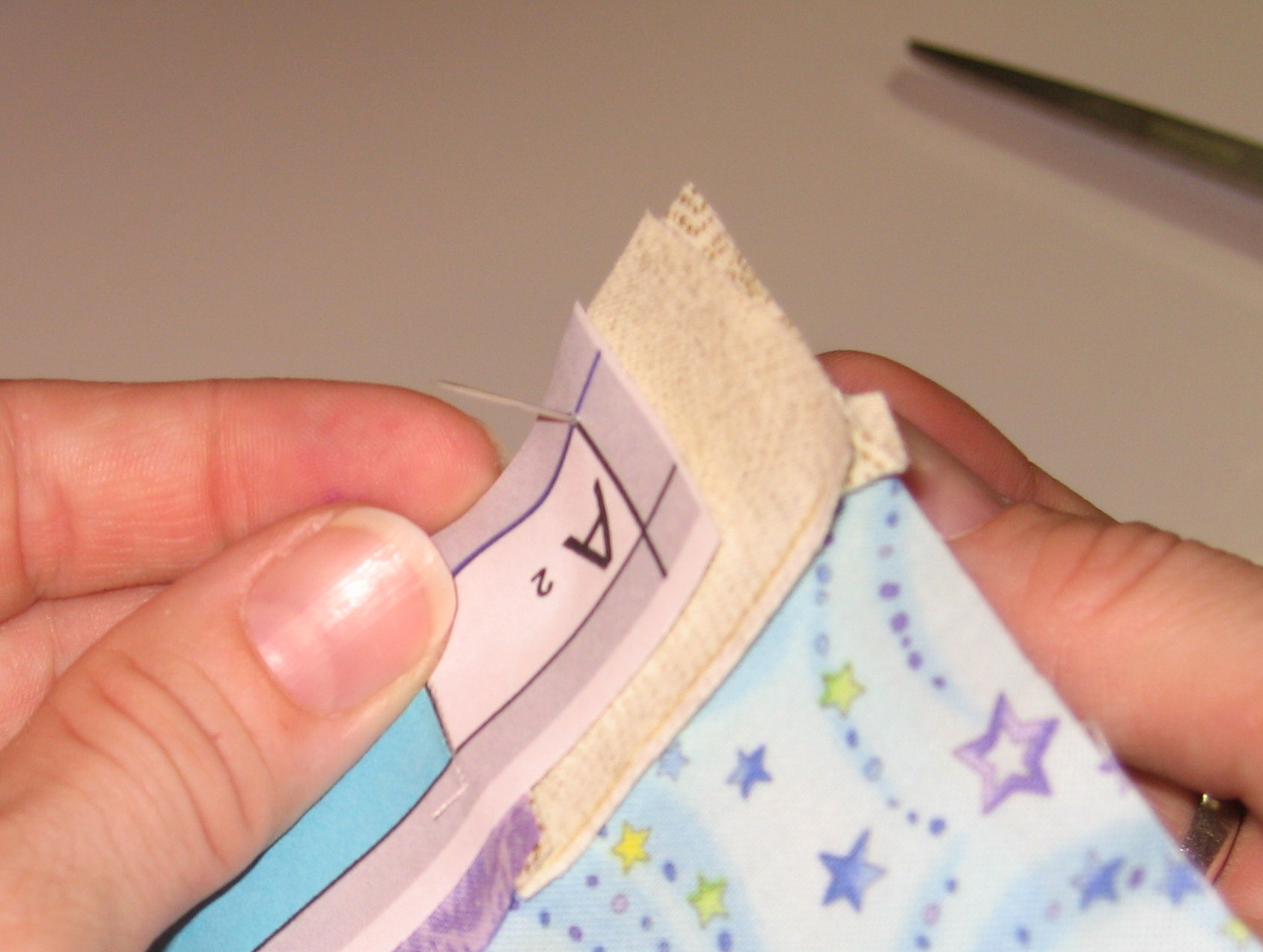
Use a pin to find the outside corner. Push the pin through this point.
paper piecing tutorial (38)

Find the corresponding point on the other pattern piece. Push the pin through.

paper piecing tutorial (39)

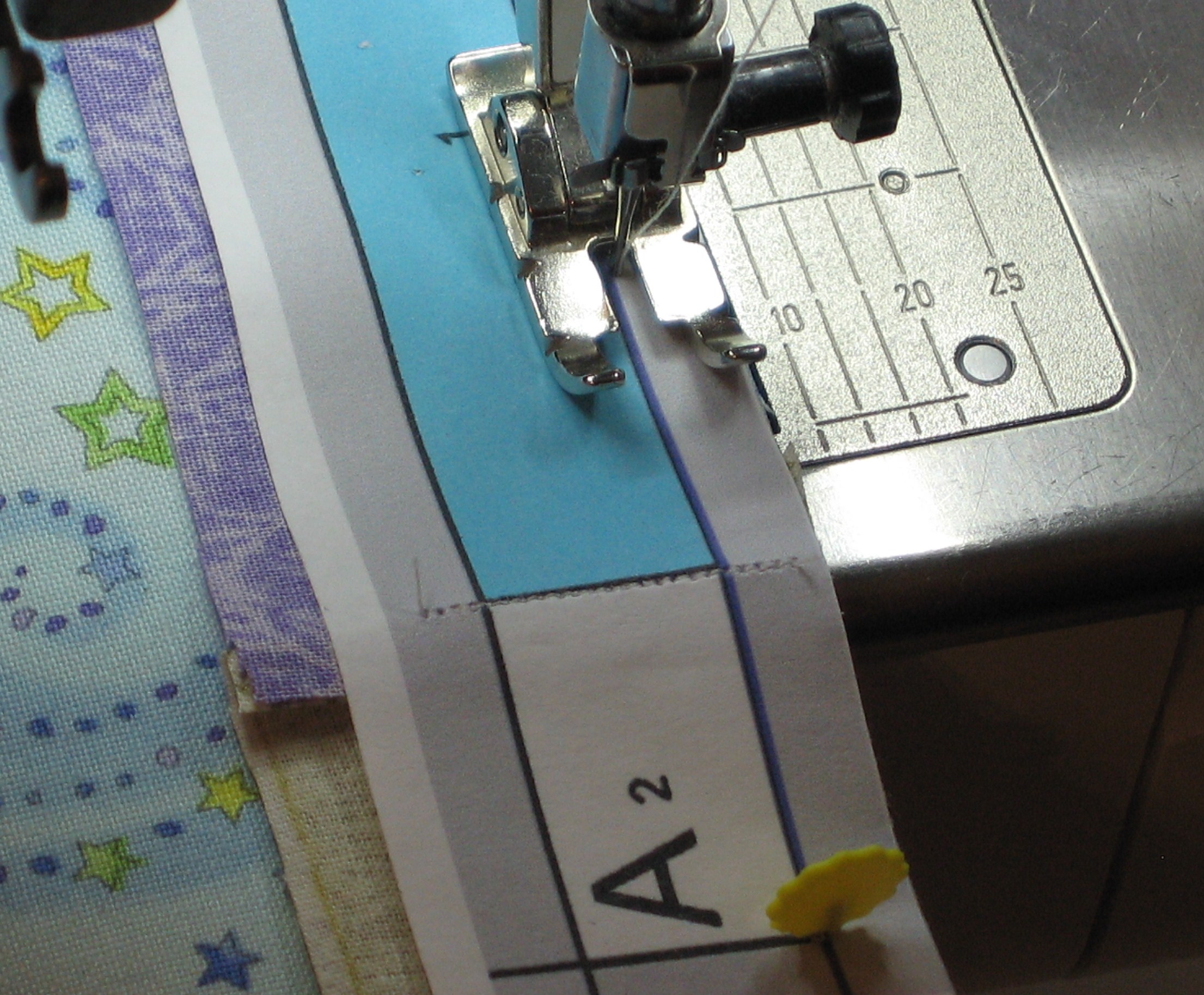
Push the pin all the way through to line up the pattern pieces. This will assure that your pattern pieces align correctly when stitching.
paper piecing tutorial (40)

Using the pin keep the pattern aligned, stitch along the seam line.

Tip: Use Wonder Clips to hold the seam in place. (Not shown…Wonder Clips are awesome, but they came out after I originally wrote this tutorial!)
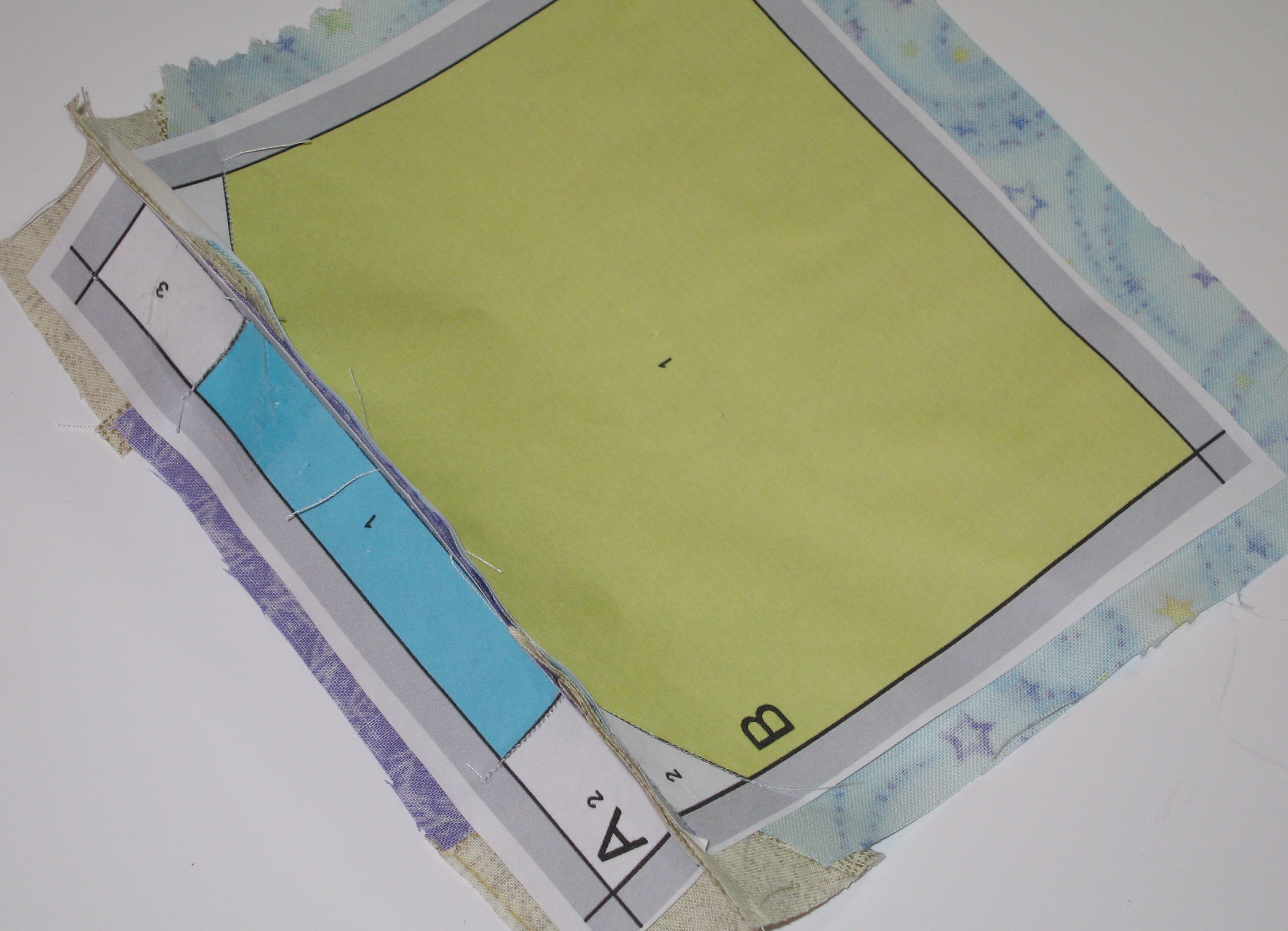
paper piecing tutorial (41)

This is what you have now.

paper piecing tutorial (42)

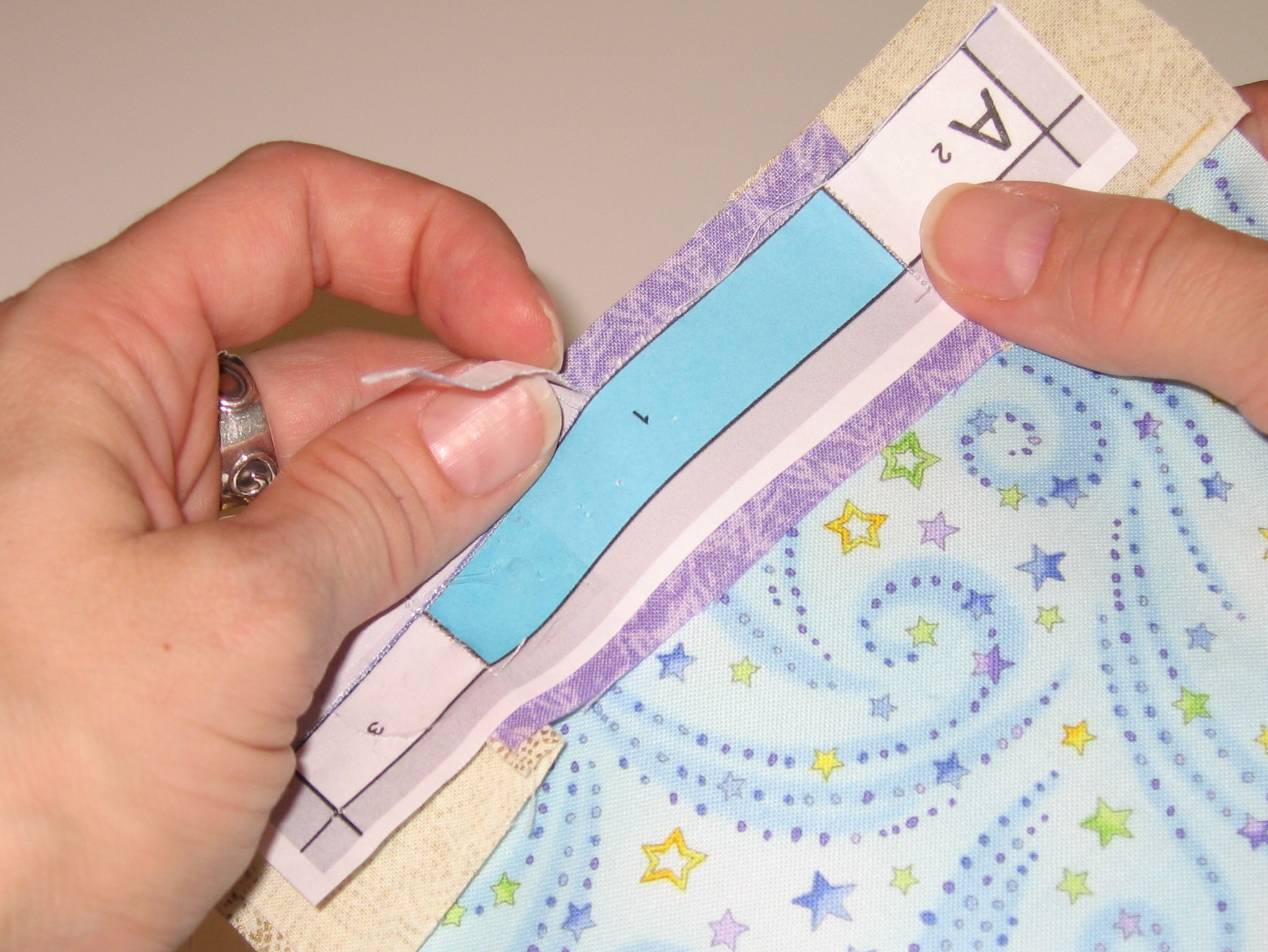
Remove the paper seam allowance that was just stitched on the “A” piece.

paper piecing tutorial (43)

Repeat for the “B” piece.

paper piecing tutorial (44)

Open the block and press. The seam can be pressed to one side or pressed open. I usually let the fabric decide for me.
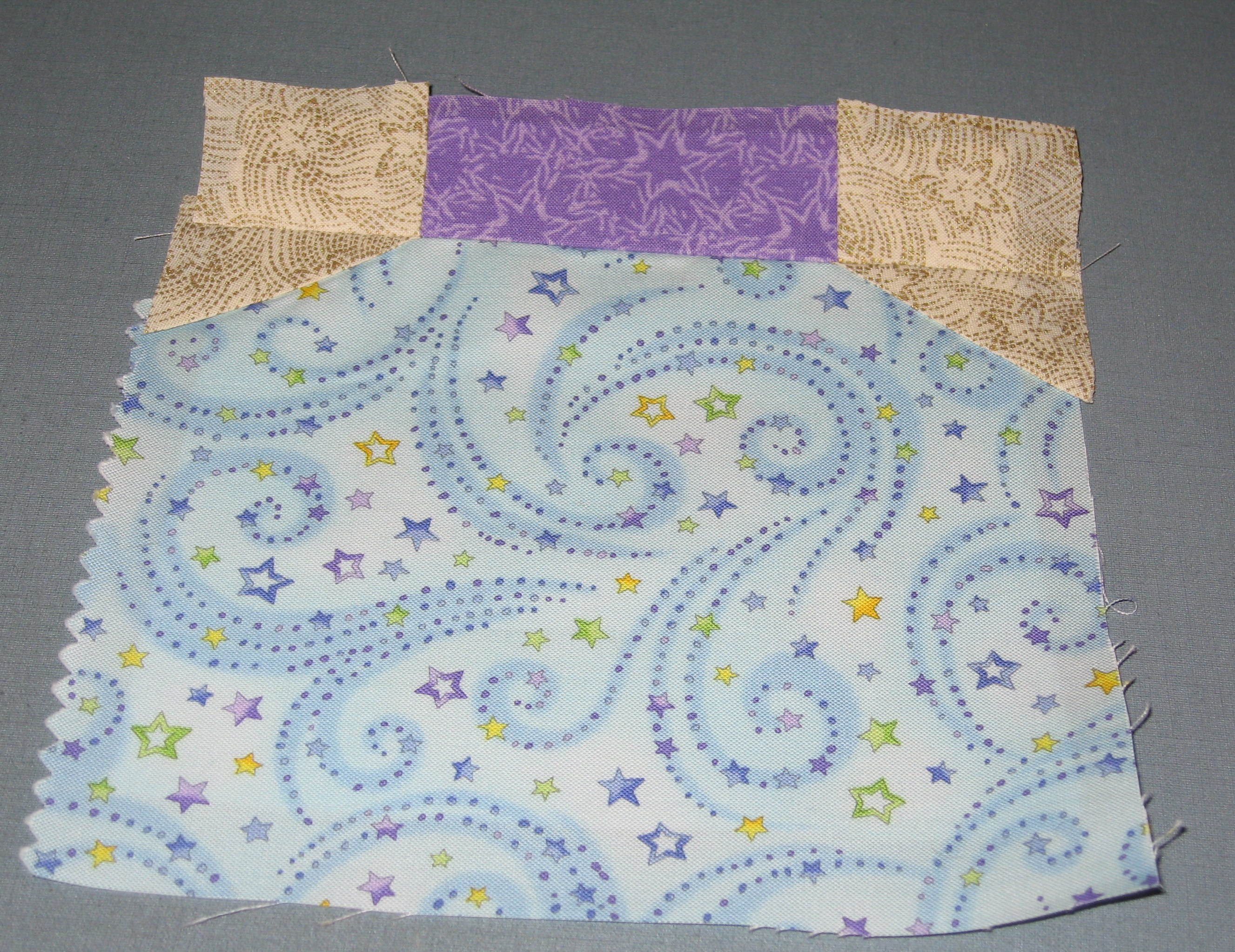
paper piecing tutorial (45).JPG

Now you have this from the front.

paper piecing tutorial (46).JPG

And you have this from the back.

paper piecing tutorial (48)

Time to square up the block! Align the ruler with the bottom edge with the seam allowance inside. Trim to 1/4″.
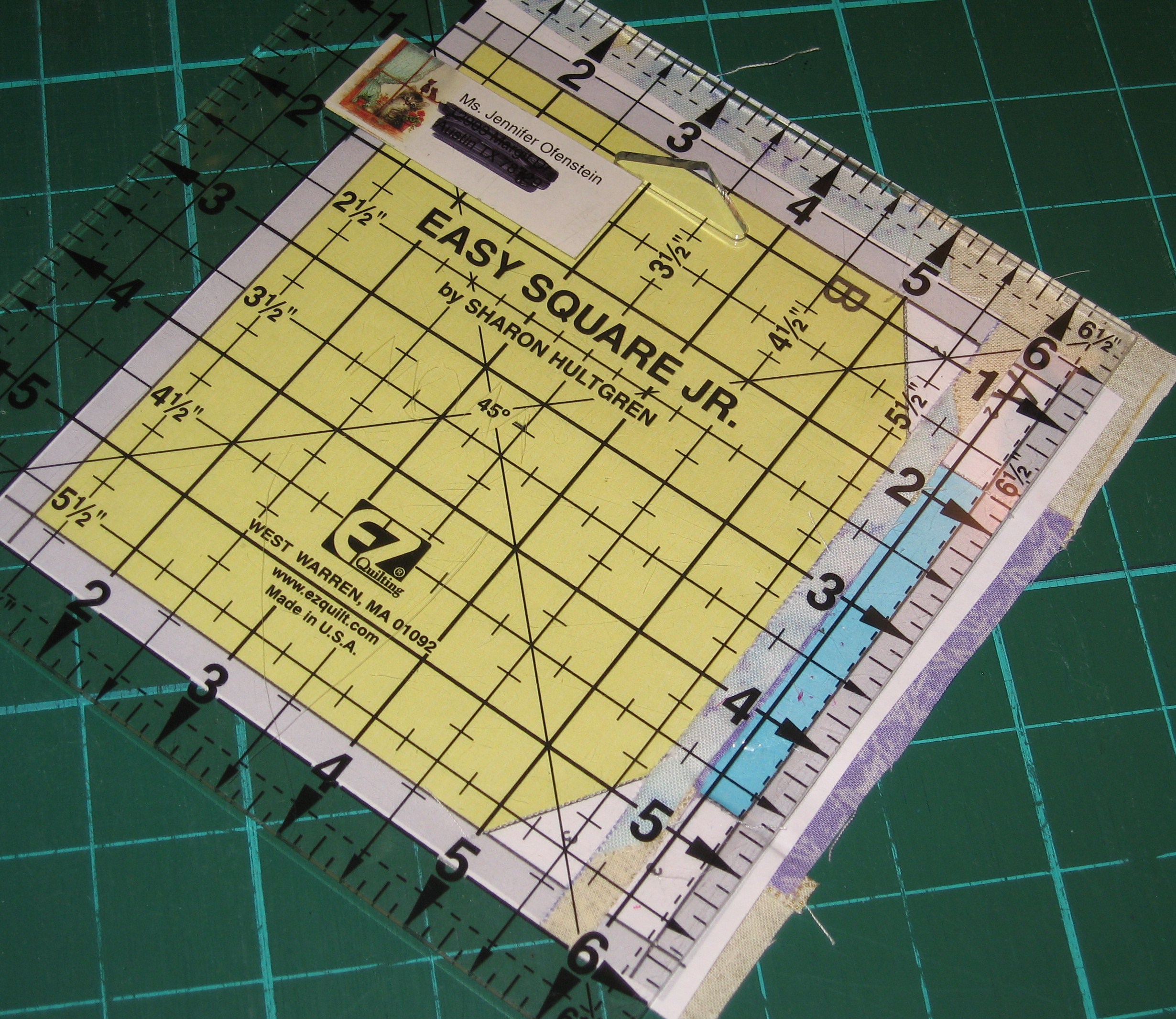
paper piecing tutorial (49).JPG

Using the first cut, square up the block to 5 1/2″. If the pattern is a little off, go with the ruler’s measurement and not the seam allowance on the pattern. Printers vary widely, as do patterns. You can make minor corrections by squaring up the block.

paper piecing tutorial (50).JPG

Now you have this…all squared up! Leave the paper attached until the block is in it’s final location. That will keep the bias seams from stretching.
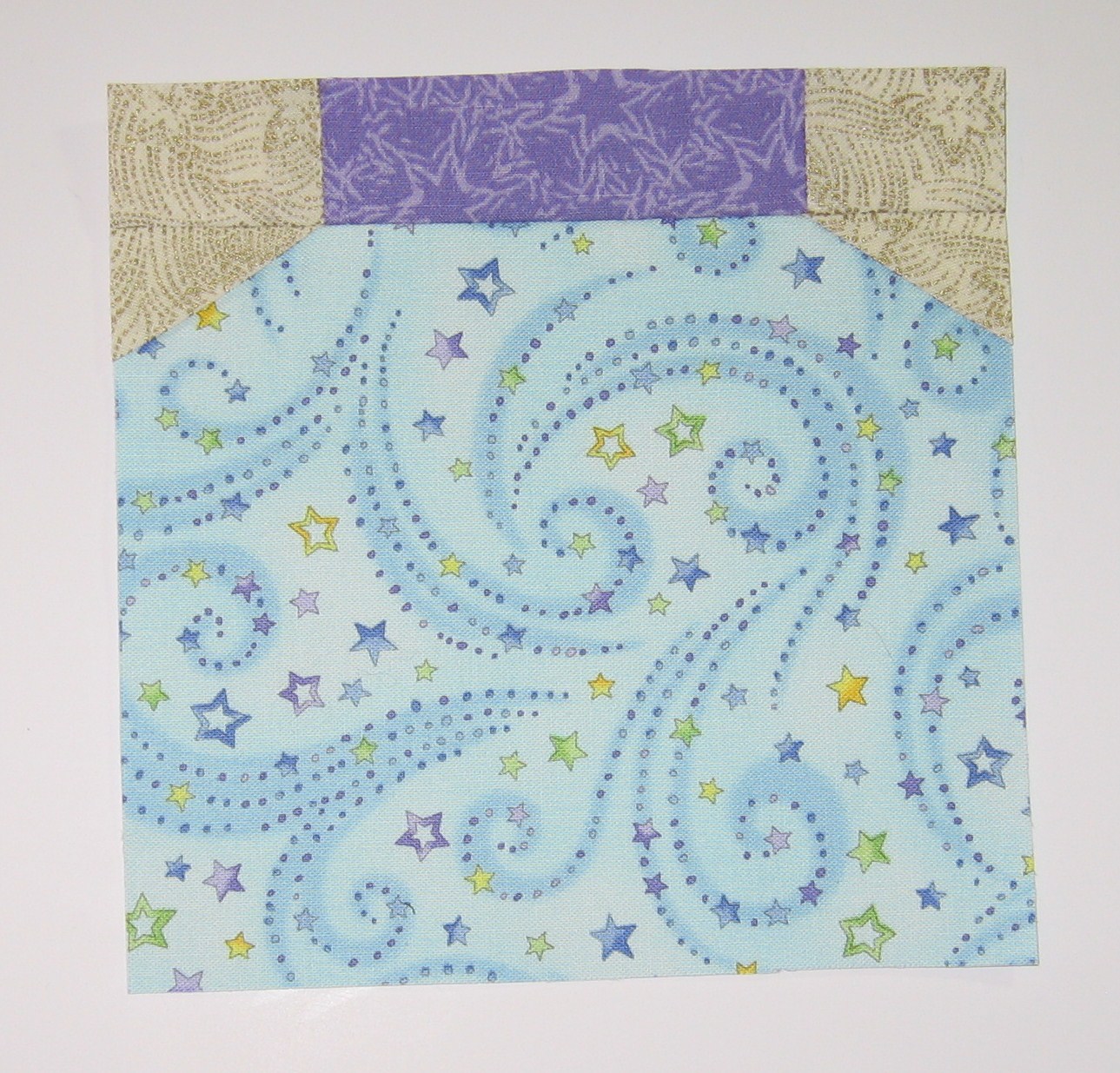
paper piecing tutorial (51)

From the front!

Use this block for quilts, pillows, bags, pot holders, wall hangings or anywhere else you’d use a square of fabric or a quilt block!

You can find lots of free patterns right here on Sewhooked!

Join the Sewhooked Facebook Group for community, support, & prizes!

signature-2016

Facebook ♥ Instagram 

Posts on this blog may contain affiliate links but I have no control over “sponsored posts” which are the price I pay for a less expensive website. Thank you for your understanding & support. ♥