Tag Archives: tutorial

Craft: Earring Hanger/Organizer

Earring Hanger/Organizer V1

I don’t make many New Year’s Resolutions, but I do start each year trying to be more organized.  I’m starting with my personal spaces this year; my jewelry, make-up, and the like.

I love big, swishy earrings, handmade, hand-beaded, felted, you name it.  I have loads that were made by friends and a few made by myself, and those are definitely my favorites.

Storage has gotten a bit precarious, and I’m usually trying to disentangle the mess and find a missing earring.

For quite a long time, I’ve used a small earring organizer to keep my studs and other small earrings that have a stem and a back.  It was time for a new, bigger version so I could finally find all of my fabulous earrings!

You need:

  • a picture frame with no glass (recycled or raw wood)
  • plastic canvas
  • hot melt glue
  • scissors
  • ribbon
  • stapler (a staple gun works great if you have one) or thumb tacks
  • optional:  paint & glitter


Cut the plastic canvas to fit inside your frame.

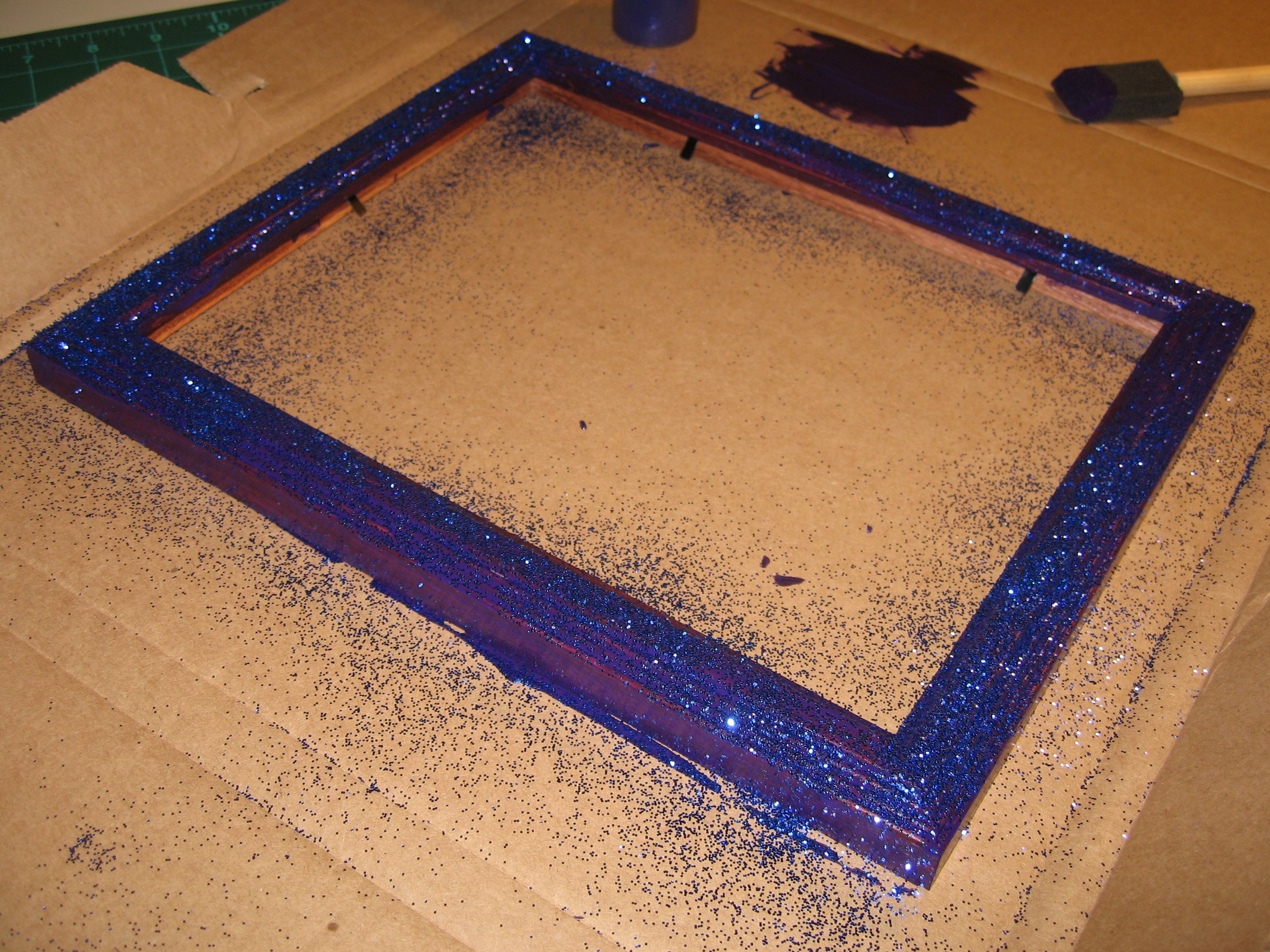
Optional:  Paint the frame the color of your choice.  If the frame is recycled and has a finish, you’ll need to give it a light sanding before painting.

I’m particularly fond of glitter…so I sprinkled some on my frame while it was still wet.

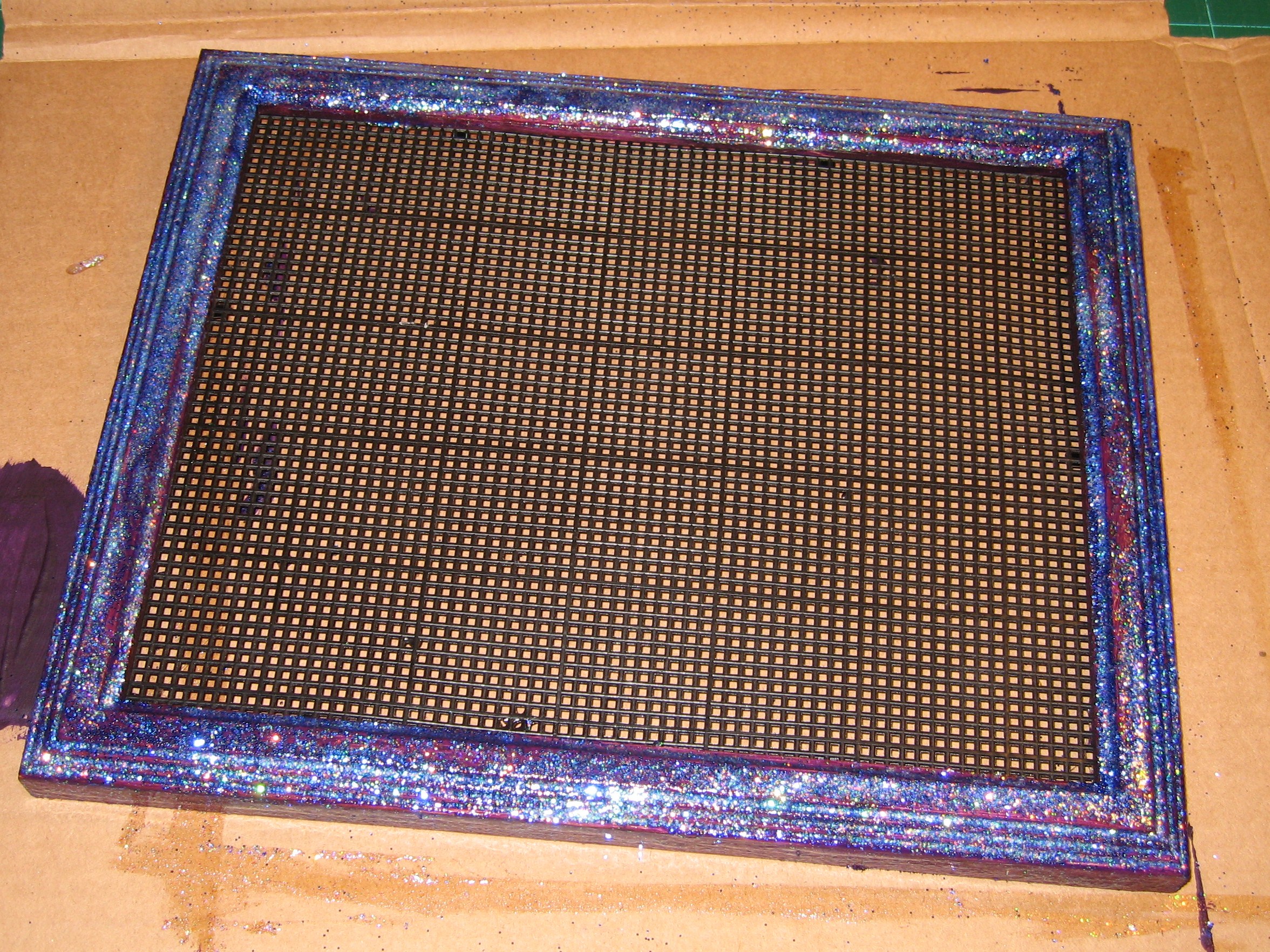
Once the paint and glitter are dry, place the plastic canvas inside the back of the frame.  Go around all four sides with hot melt glue.

Cut a piece of ribbon long enough to reach from one corner of the frame to the other, plus a little for turning under on the ends.  The length here depends on how you want your final product to look and how much of the ribbon you’d like to show.  Turn the ends under and staple or tack in place.

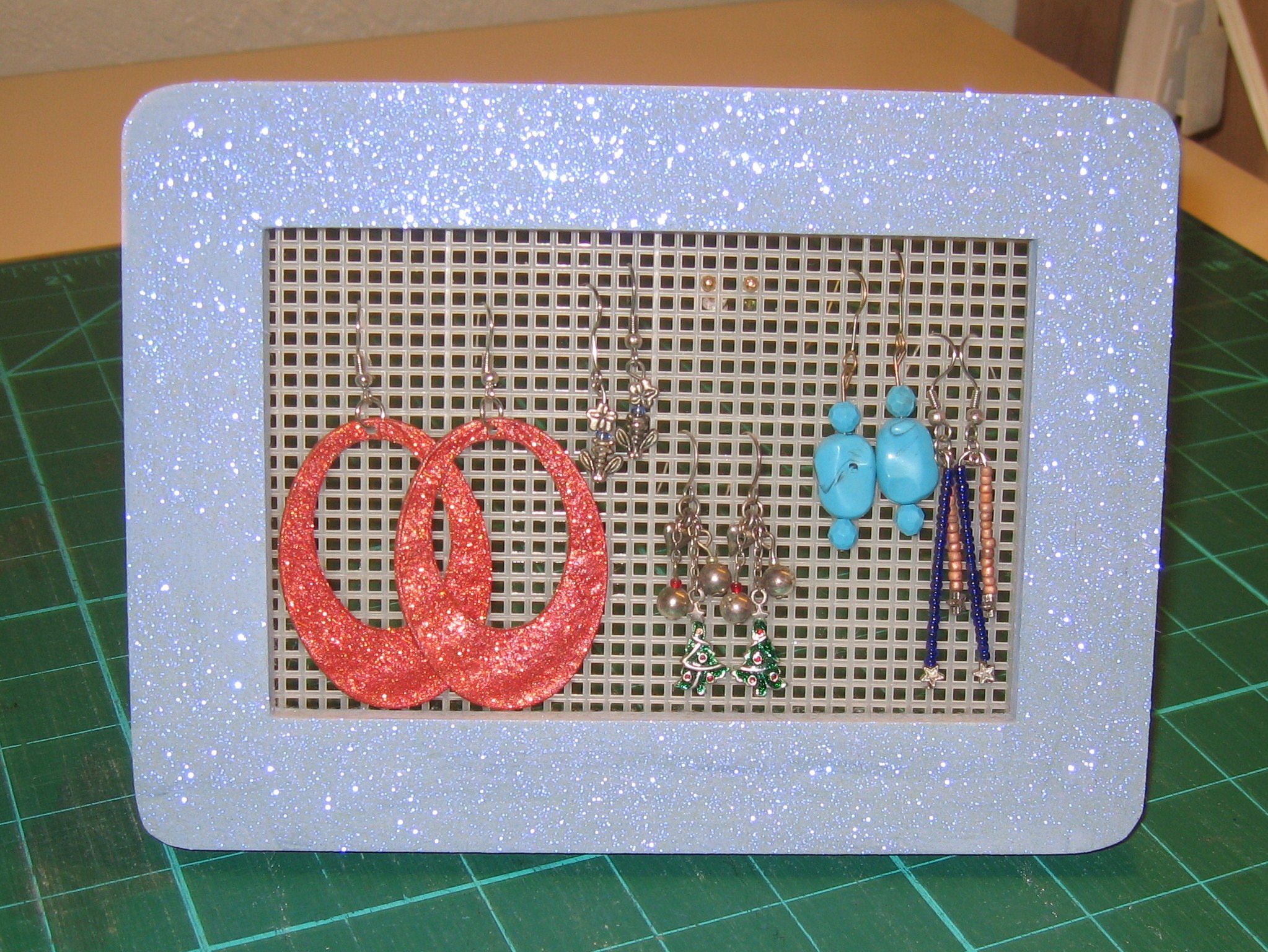
Hang on the wall and add all of your lovely dangly earrings!  Works best with French hook earrings.

Smaller, desk version


Find my free patterns on Sewhooked & Fandom in Stitches.

♥ Jennifer O

Posts on this blog may contain affiliate links to help cover the cost of my website. I thank you for your generous support. ♥

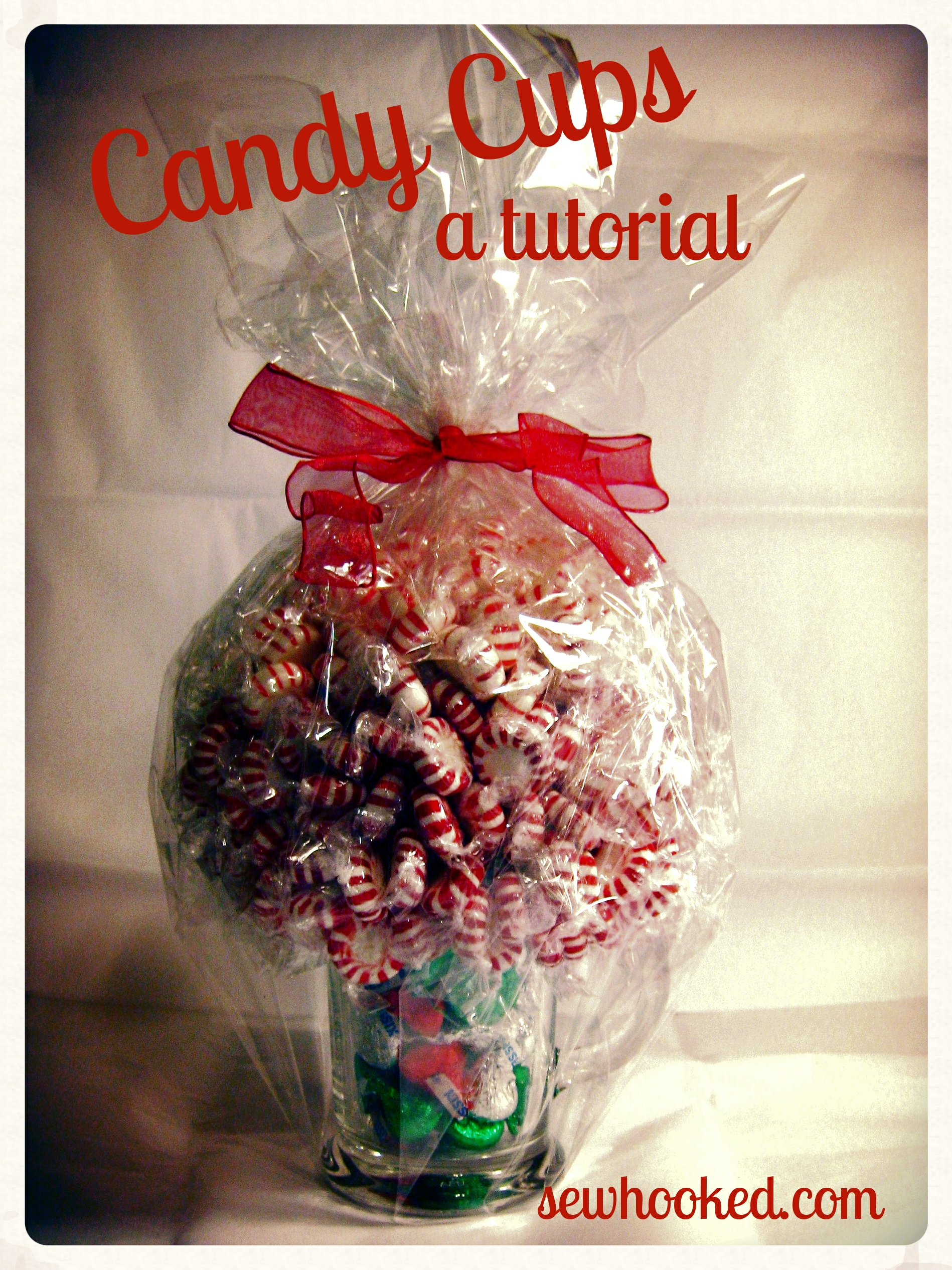
Candy Cups for Giving

Candy Cups for Giving

Shared by my aunt, Amy, several years ago, Candy Cups have become a gift-giving standard for me.  I’ve made them for Christmas and birthdays and with all sorts of candy.

They’re easy, inexpensive, and make gorgeous gifts for the hard-to-shop for.  Think teachers, friend,s and anyone who likes candy.  Sugar-free candy works, too!

Once all your supplies are gathered, it’ll take you about an hour to make one candy cup.

You’ll need:

  • Glass or Mug (I prefer clear, but any kind will work, the heavier the better!)
  • Candy with loose or twisted wrappers (example used approximately 40 oz. of peppermints)
  • Styrofoam ball (size depends on your glass or mug)
  • Filler for the cup – recycled paper or candy
  • Bamboo Skewer
  • Scissors
  • Hot Melt Glue
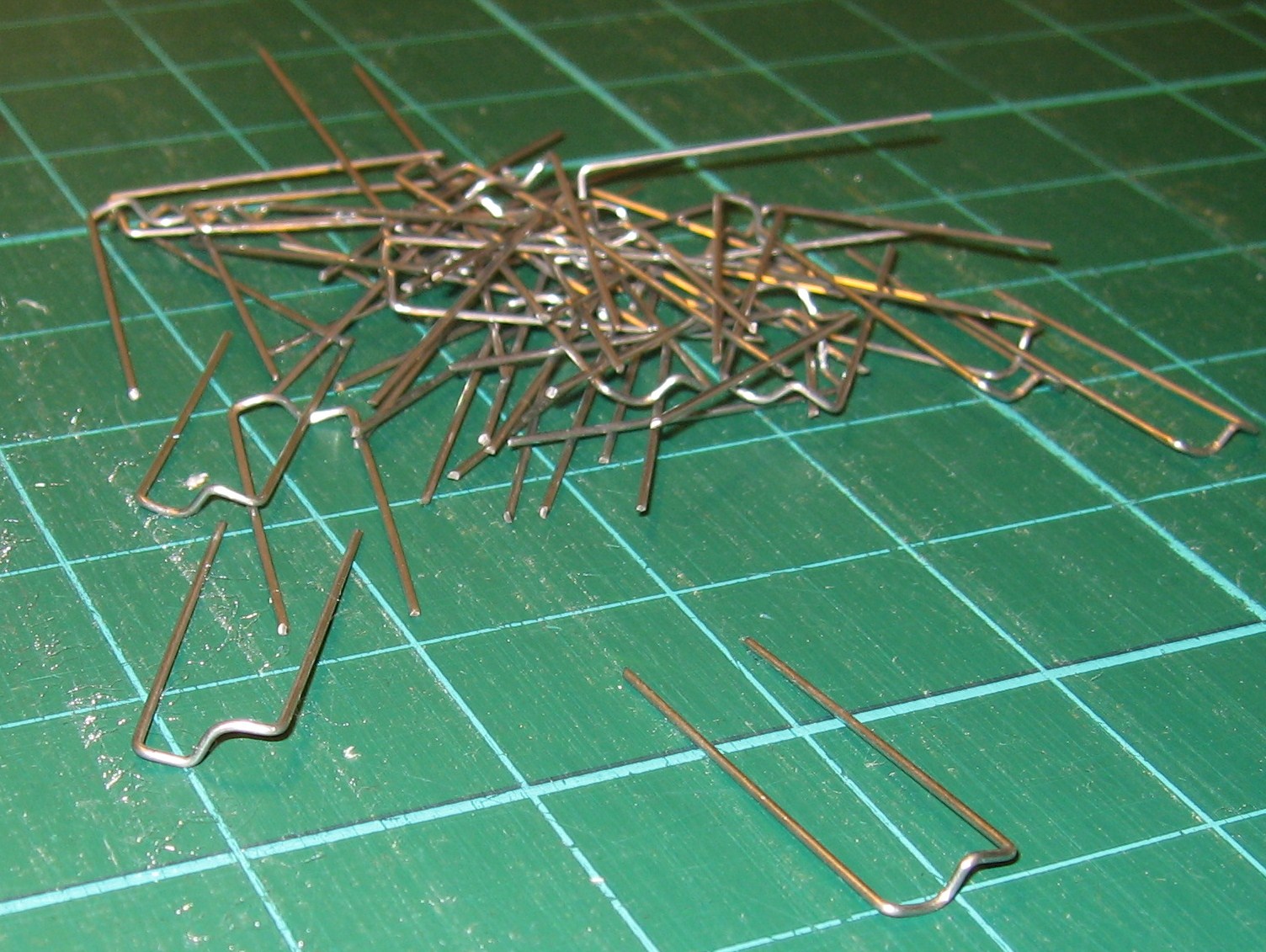
  • Greening Pins (also available at the hobby store with the floral accessories)
  • Ribbon
  • Cellophane

Push the bamboo skewer into the Styrofoam ball, all the way through the top. Put it in the glass to and push down until the ball is snug in the glass.

Snip off the excess skewer with your scissors. You can also use large fingernail clippers, a utility knife, or pruning shears.

With the skewer still in the glass, fill the bottom with candy. Ideas are like M&Ms, Hershey’s Kisses, or Peppermints (though you could really use any candy). Another option is shredded paper, but the candy on the ball will make the cup top-heavy, so having a heavier filler keeps it from tipping over and gives the gifted a sweet bonus.

Place a small dot of hot melt glue on either side of the rim of the cup.  Gently press the styrofoam ball onto glue, holding in place until it sets. You don’t need much, just a touch for stability.

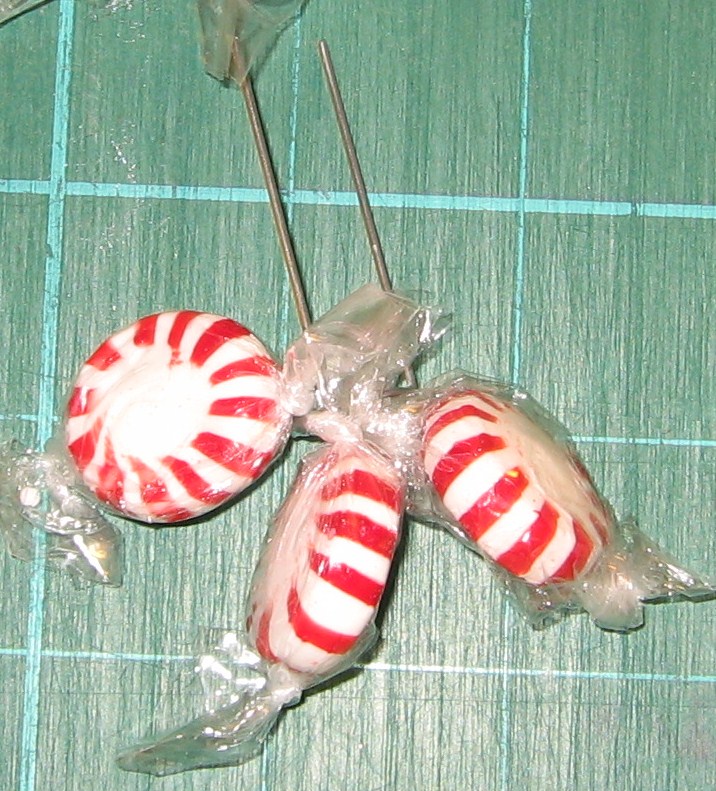
candies in twisted wrappers

greening pins

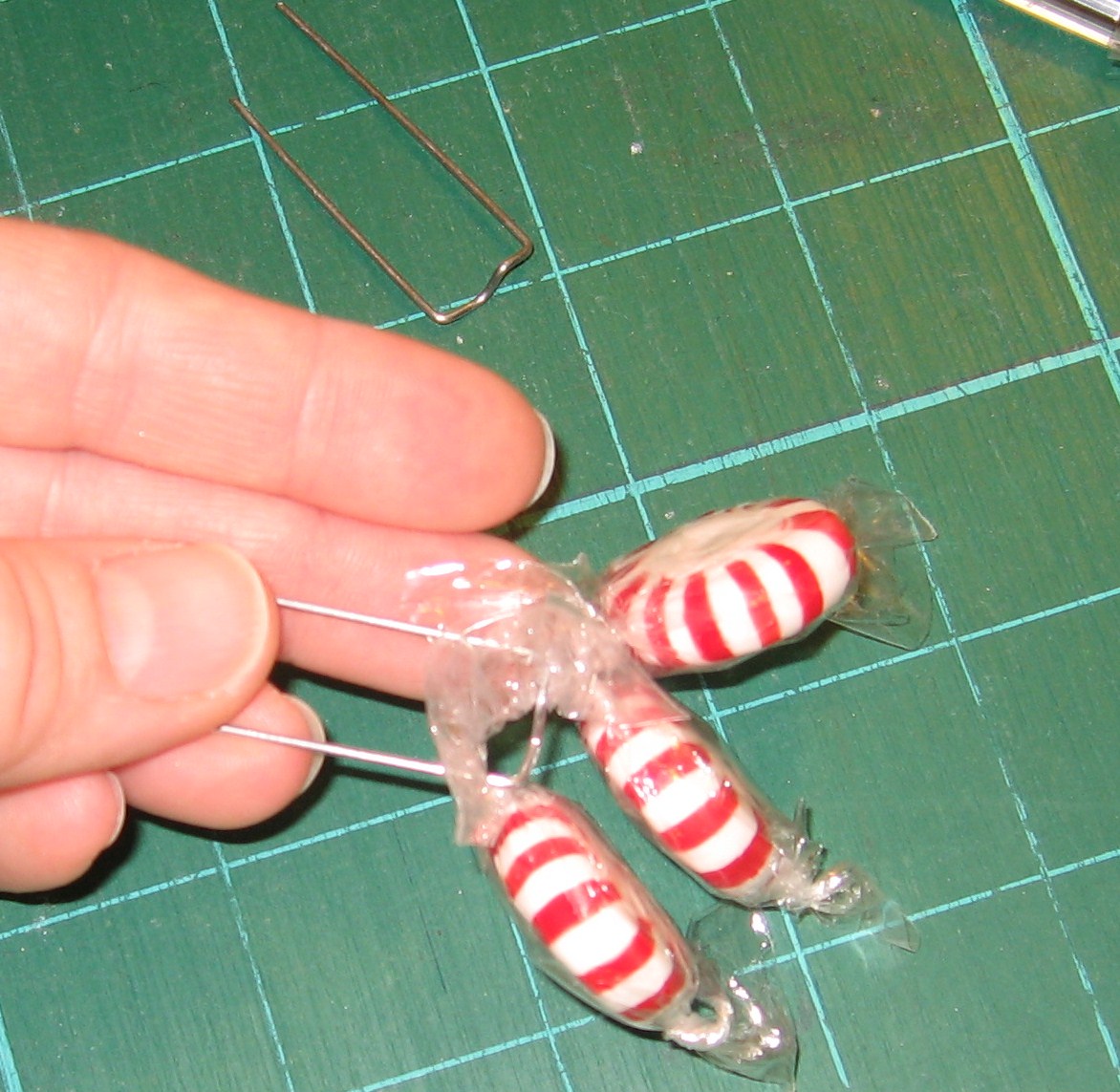
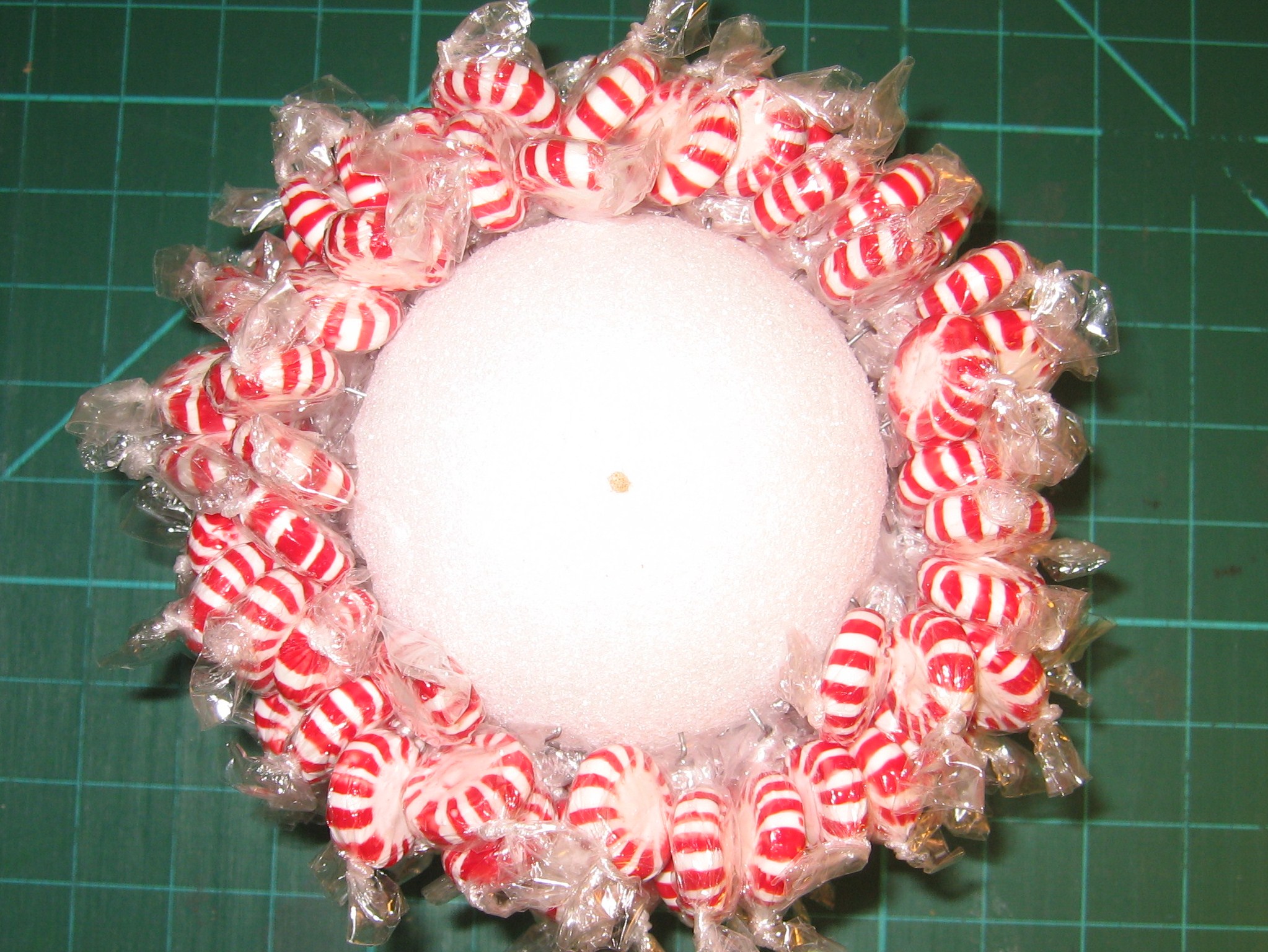
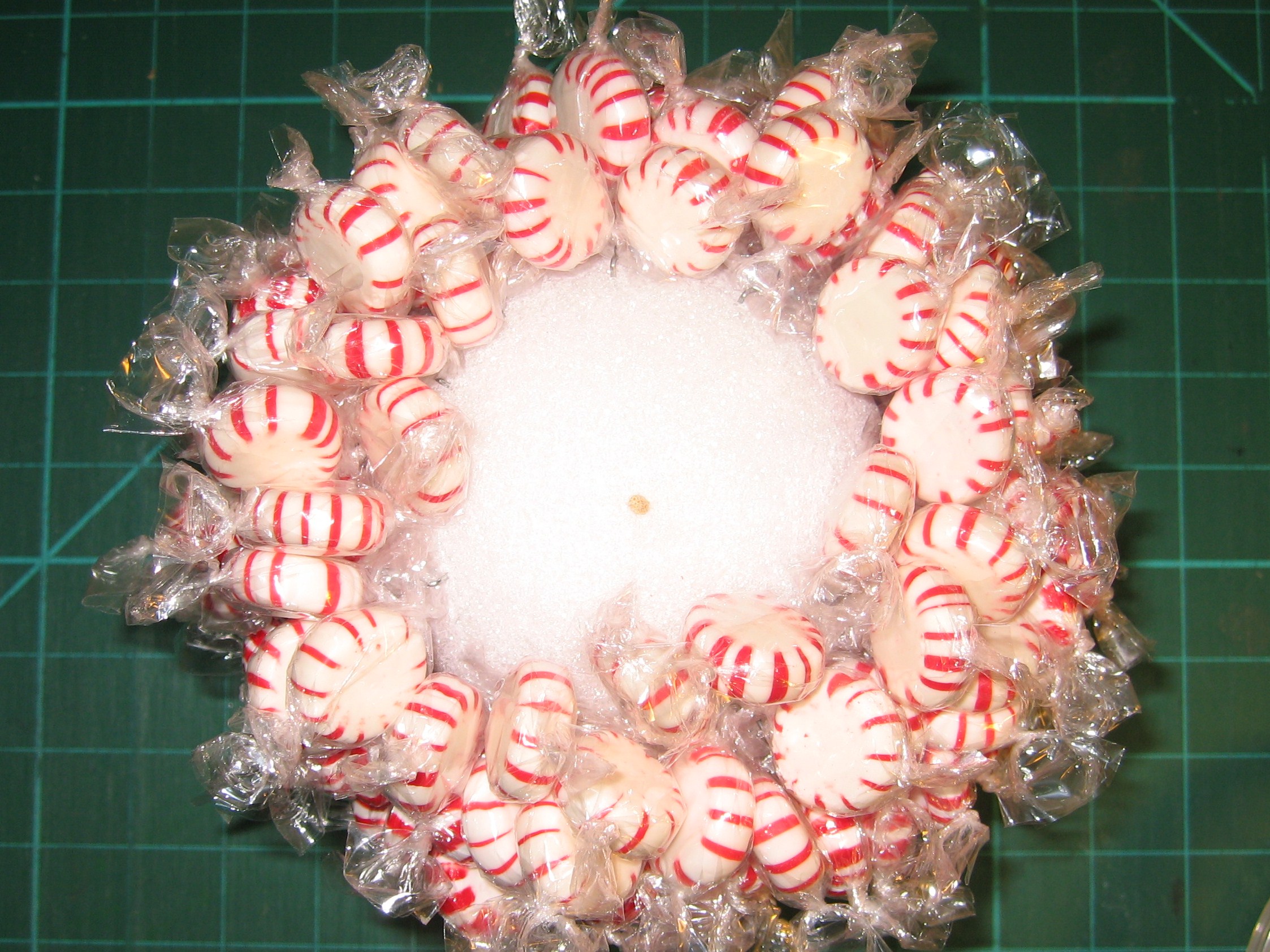
Use greening pins to add candy to ball by poking pins through the loose end near the twist of the candy wrapper.  Depending on the candy, you can get two or three on each pin.

Start at the bottom and work your way up to the top, moving in a circular pattern.

First Round complete.

Second Round.

Third Round.

Fill in any holes with more candy & greening pins.

Final round complete, all the holes filled in.

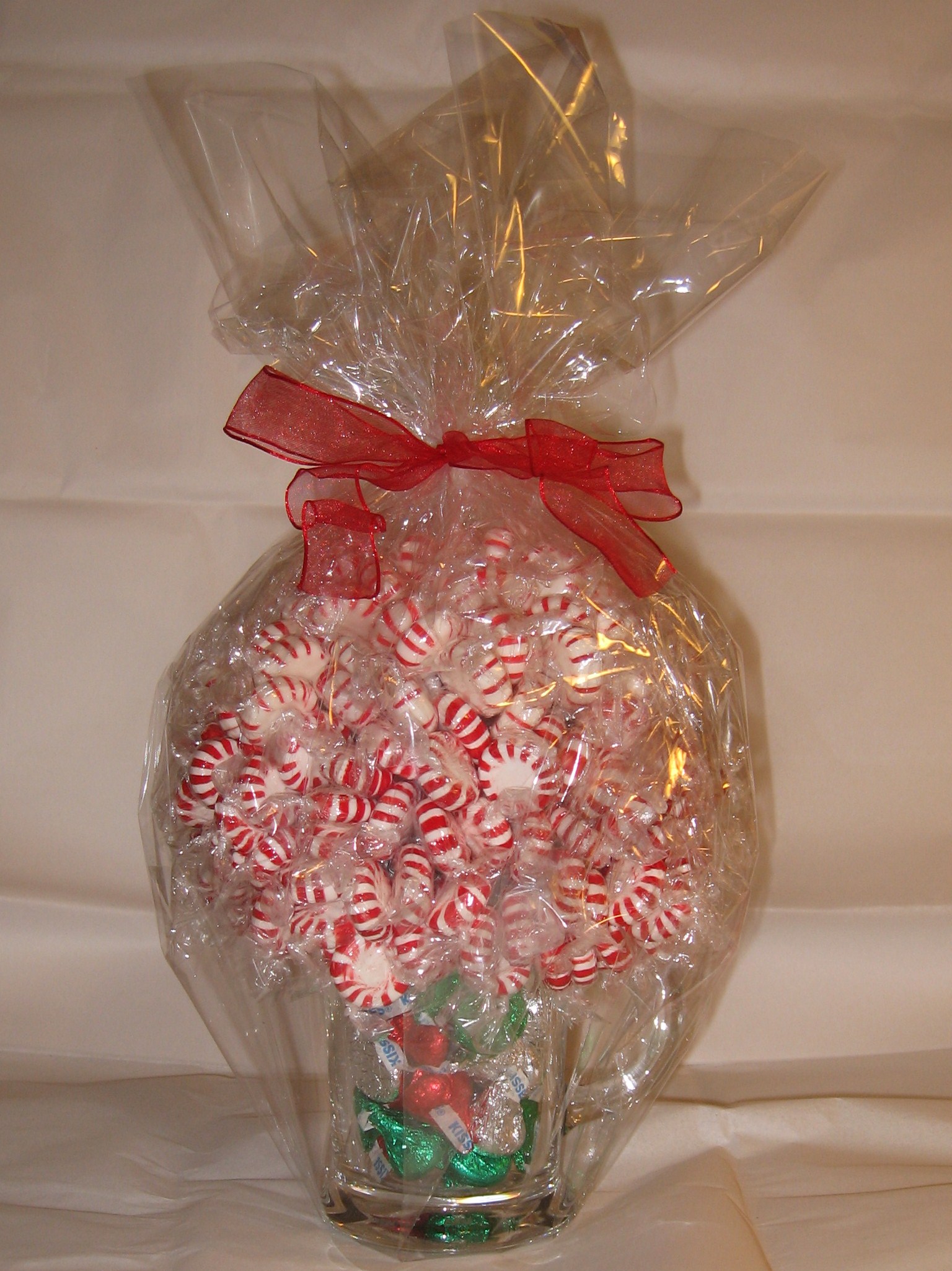
Wrap in cellophane and embellish with a bow or ribbon.  The cellophane is optional, but it provides insurance that your candy will get from point “A” to point “B” intact.

Gift it!

Variation with M&Ms and Coca-Cola glasses

Variations by Amy Maxey – toffee coffee & bubble gum soda glass.

Find my free patterns on Sewhooked & Fandom in Stitches.

♥ Jennifer O

Posts on this blog may contain affiliate links to help cover the cost of my website. I thank you for your generous support. ♥

Smiling Santa Gift Bag

I’ve been making these Santa bags for a lot of years now, but this is the first time I’ve ever shared a how-to for it.

Other similar bags I’ve made include Rudolph, Christmas kitties and Christmas trees.  Change the basic bag to any color and add polka dots or stars for an easy birthday bag!

Smiling Santa is reusable, giftable, and darn cute.  He’s fast to make with simple embroidered stitches and a button nose.    If hand stitching isn’t your thing, fabric paint will work in a pinch!

You’ll need:

  • Smiling Santa reference
  • 9″ x 12″ acrylic felt – 2 white, 1 red, 1 flesh
  • scissors
  • large needle
  • embroidery floss:  white, red, blue & green
  • red button
  • ruler
  • optional:  sewing machine
  • optional:  rotary cutter

supplies


I use eco-friendly acrylic felt.  It’s easy to find, cheap (20 cents a sheet) and sturdy.

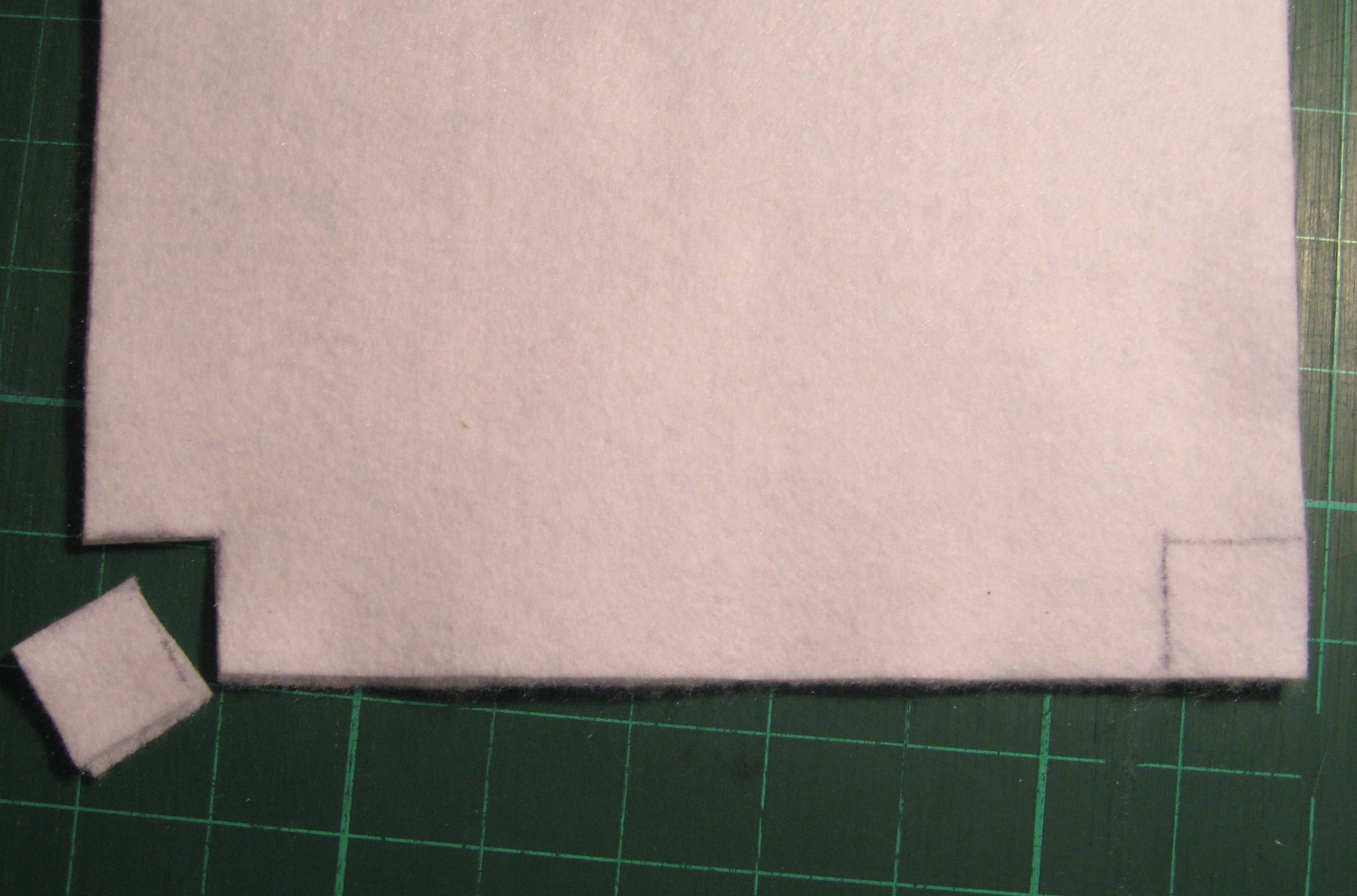
Find the bottom of your bag and cut 1″ squares out of the opposite corners for each white sheet. This will create a faux gusset and allow your gift bag to stand up.

Cut the flesh-colored felt sheet down to 8″ x 5 1/2″.  Fold in half and cut a gentle curve.

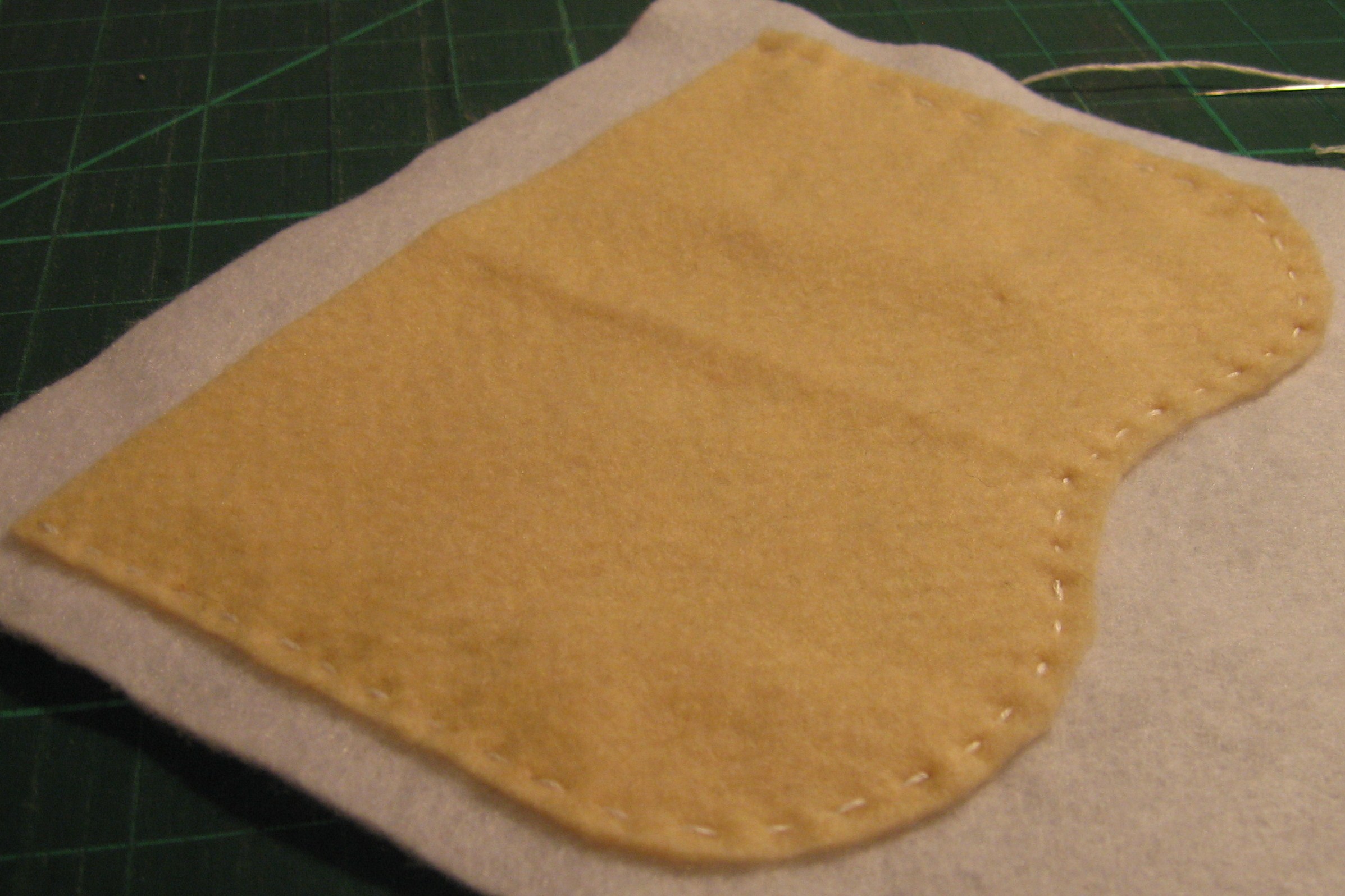
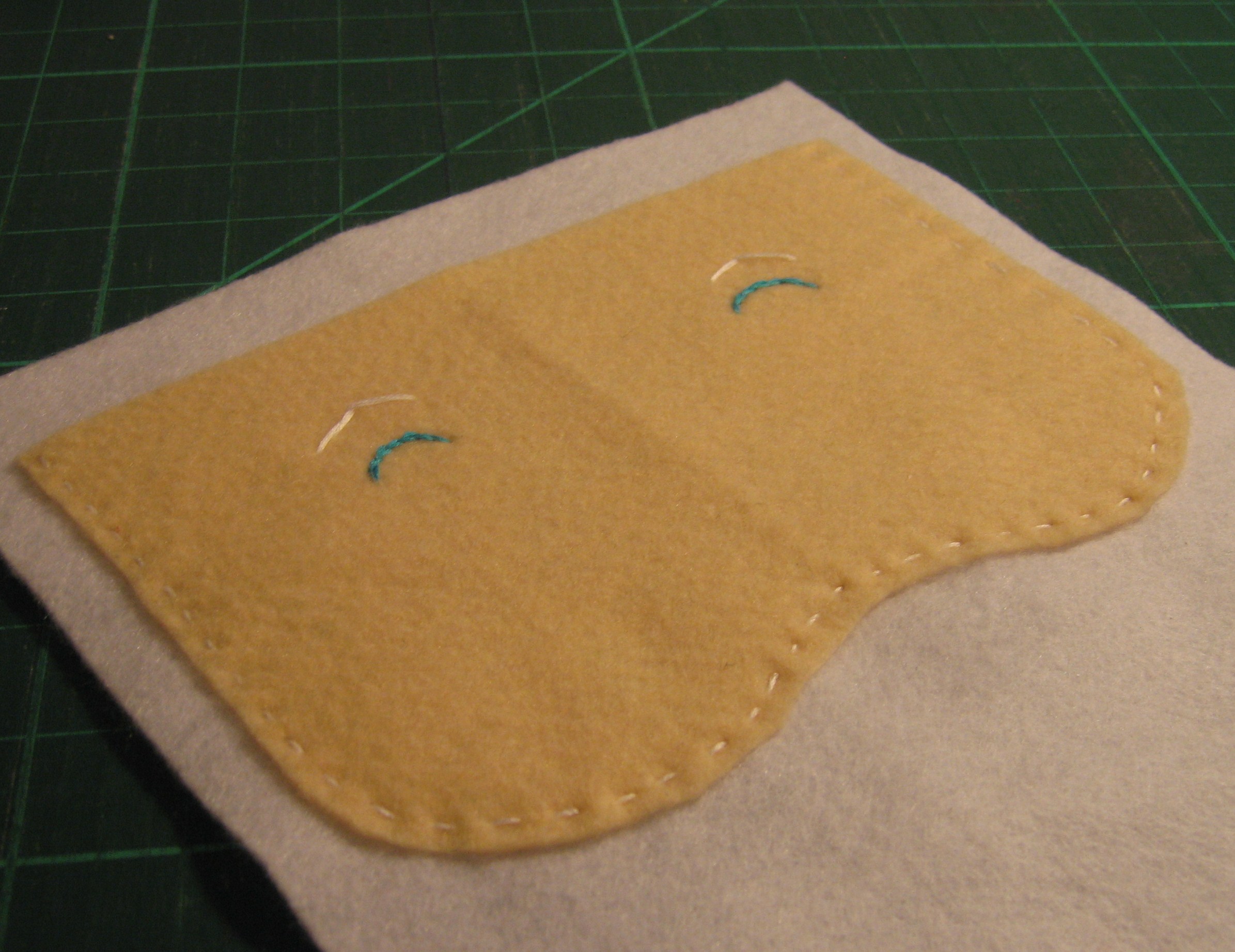
Open flesh-colored felt.  Align 1″ from top of bag, centering so that each side has approximately 1/2″ of white felt showing.

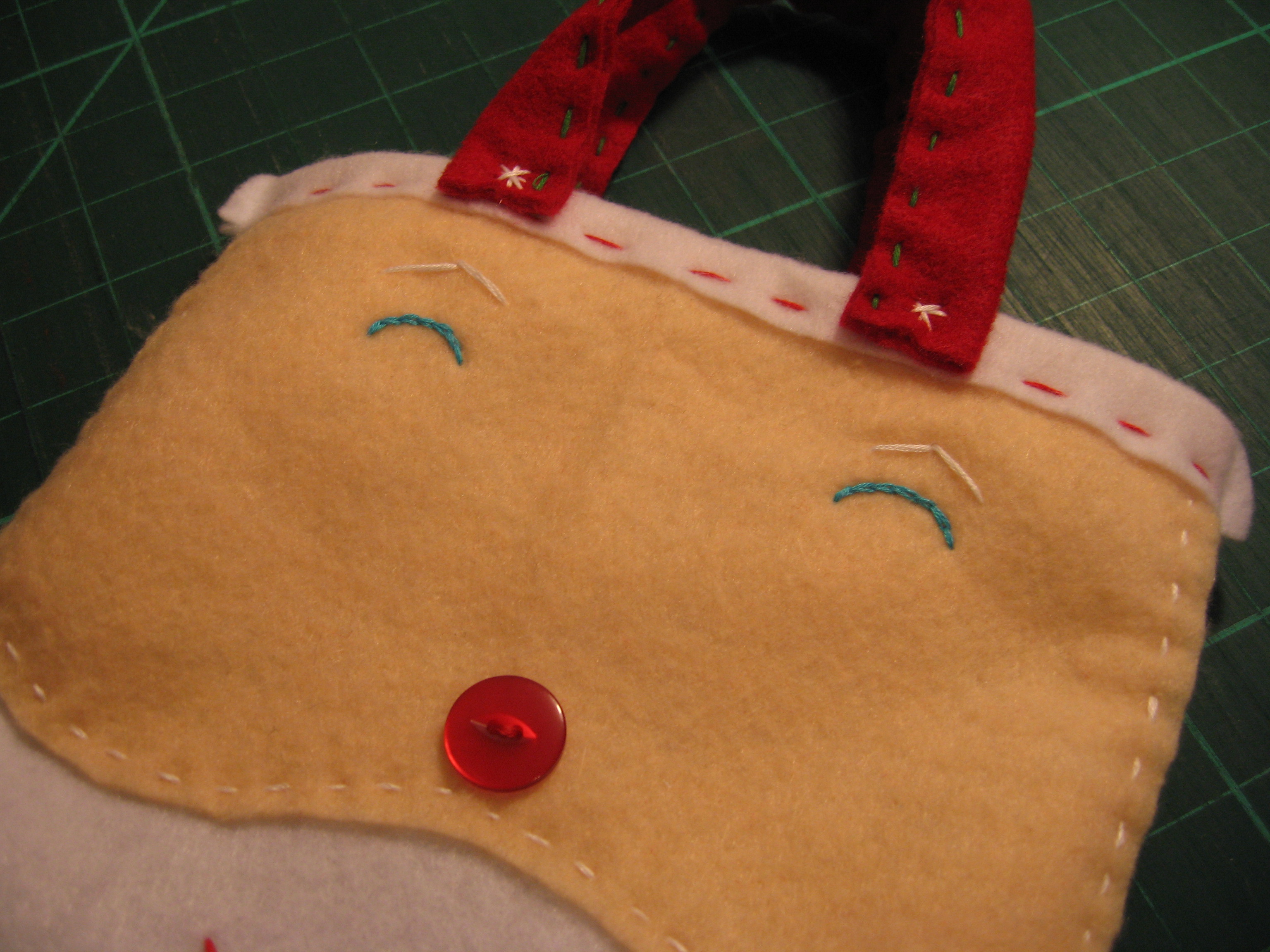
Using the white embroidery floss, hand stitch a running stitch around the two sides and bottom of the face.

Add eye details with a straight stitch (eyebrows) and chain stitch (eyes).

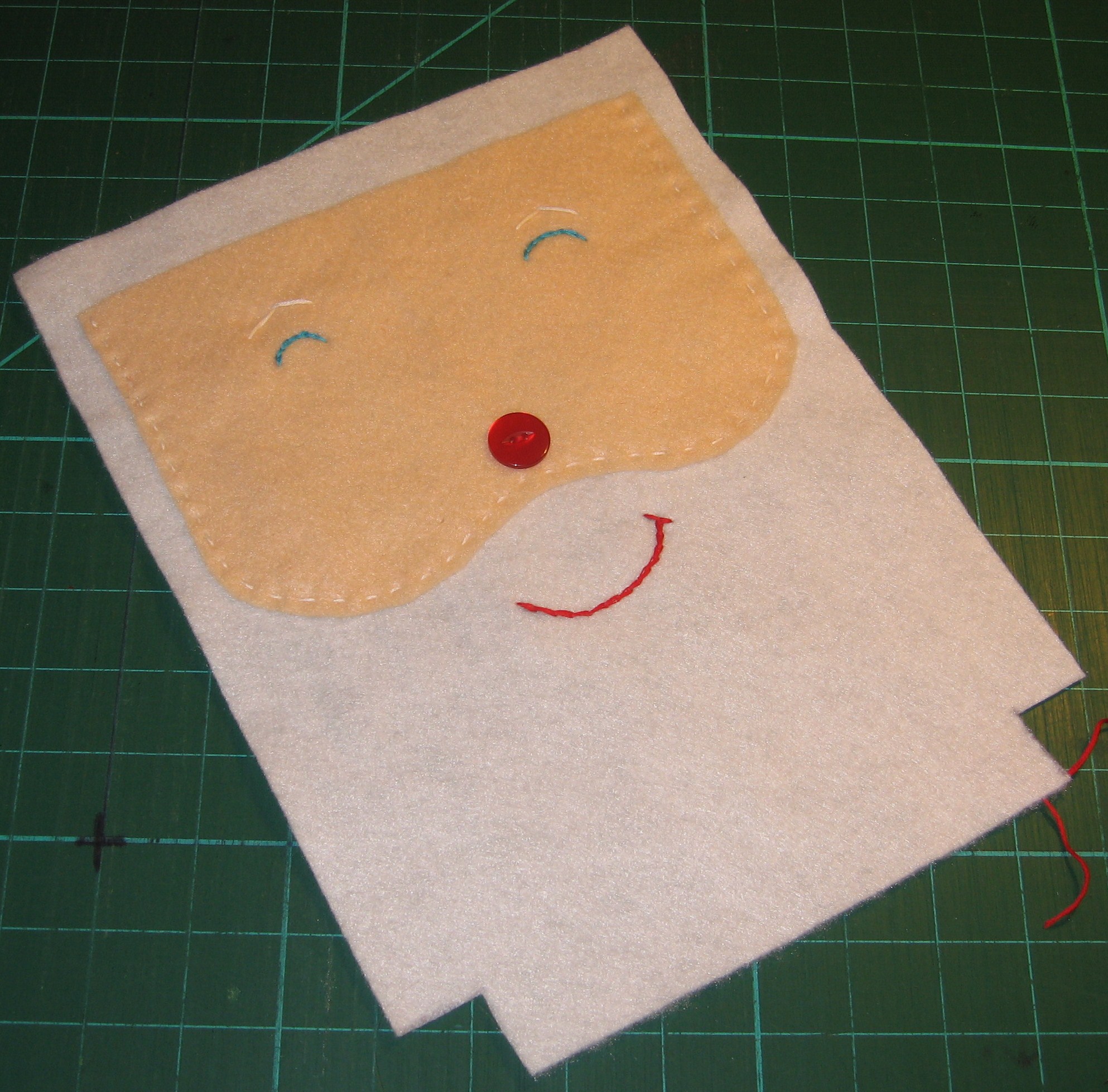
Add button nose with red embroidery floss.  Add mouth, also with red embroidery floss, using the chain stitch.

Pin two pieces of white felt together, face inside.  Machine stitch 1/4″ seam on two sides and across the bottom.

Optional:  hand stitch on the inside OR hand stitch on the outside using red embroidery floss.


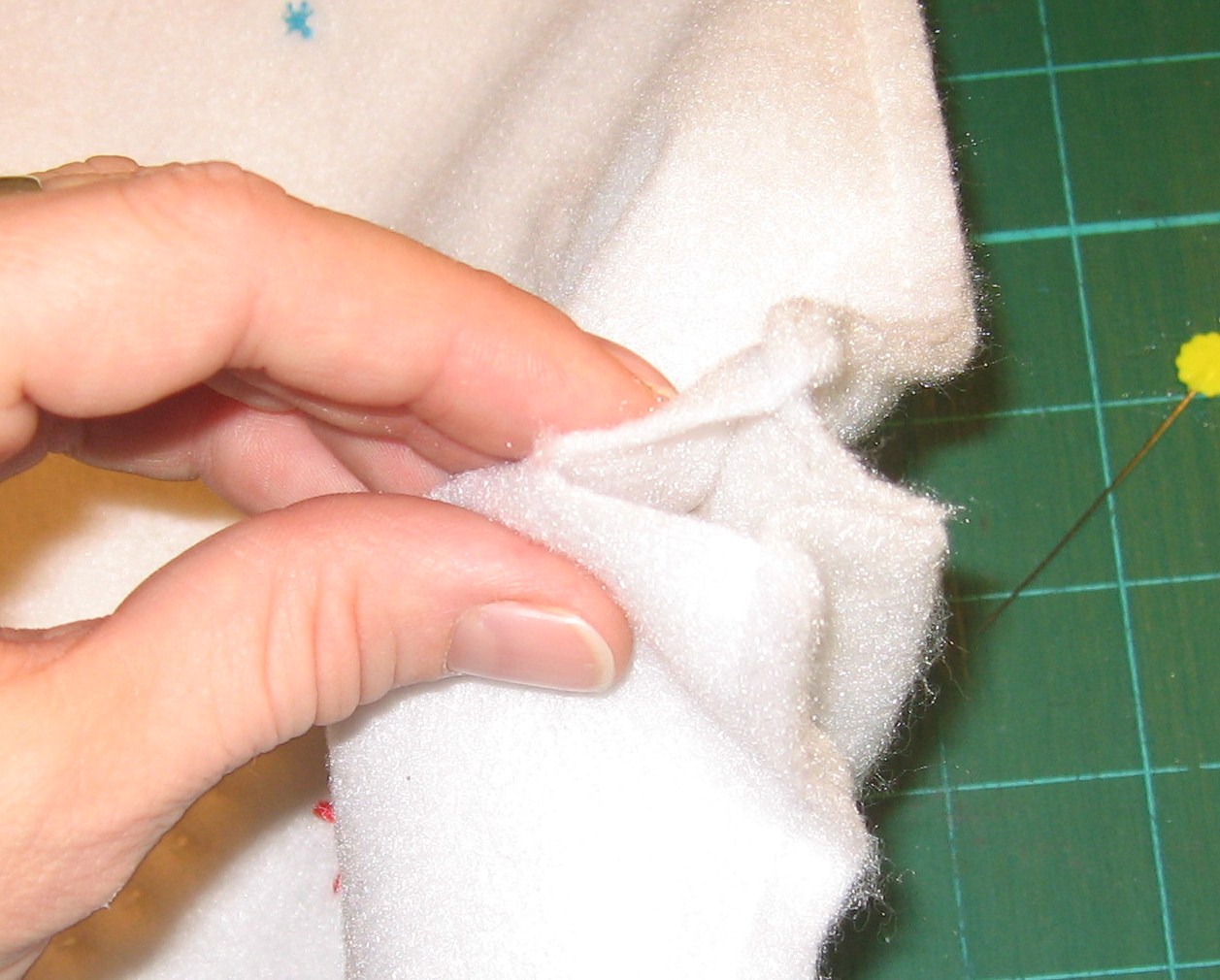
Fold the open corners on the bottom together, matching outside seams.  Fold seams in opposite directions to reduce bulk.  Pin in place.

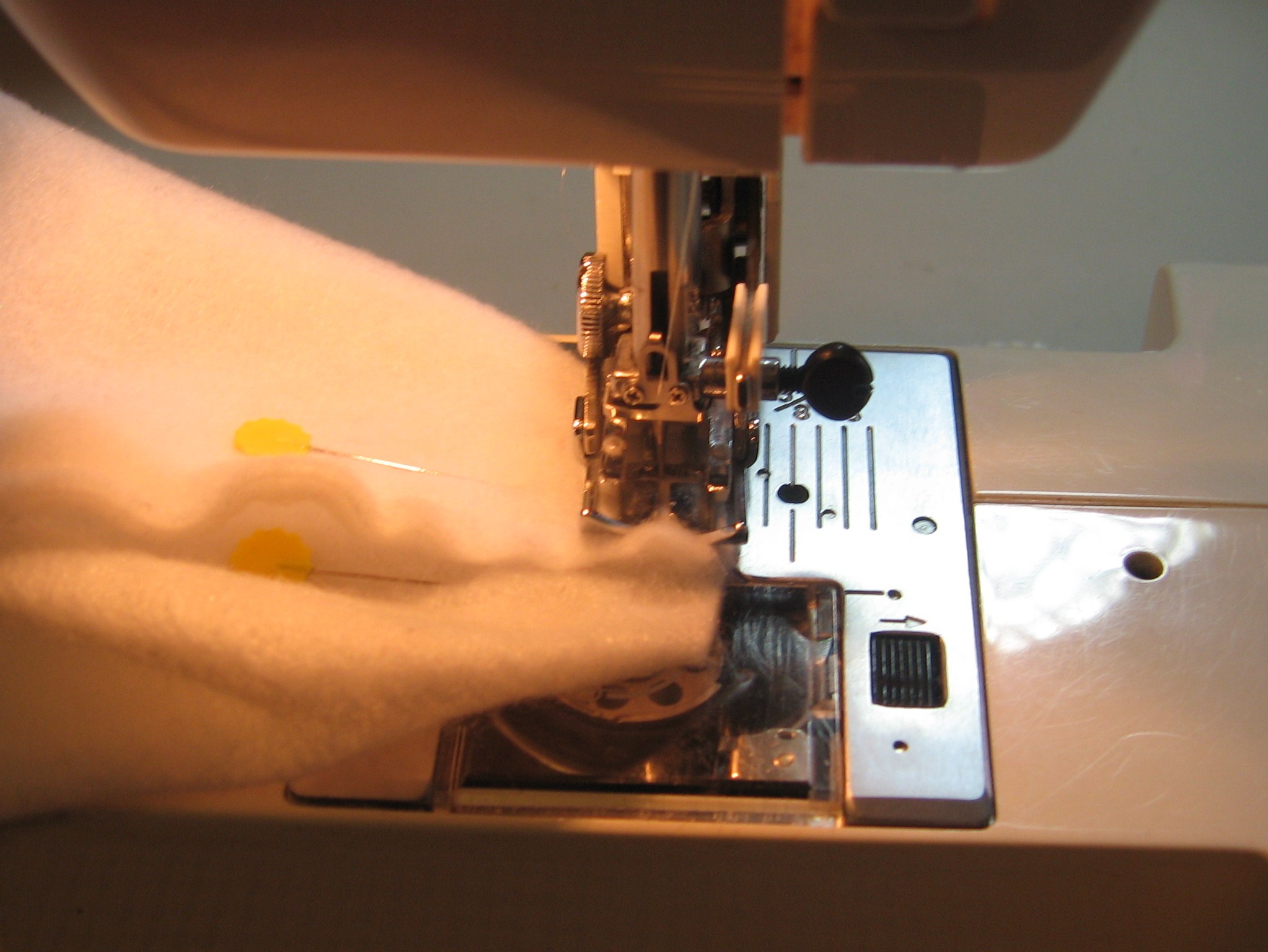
Machine stitch bag corners.

Turn bag right side out.

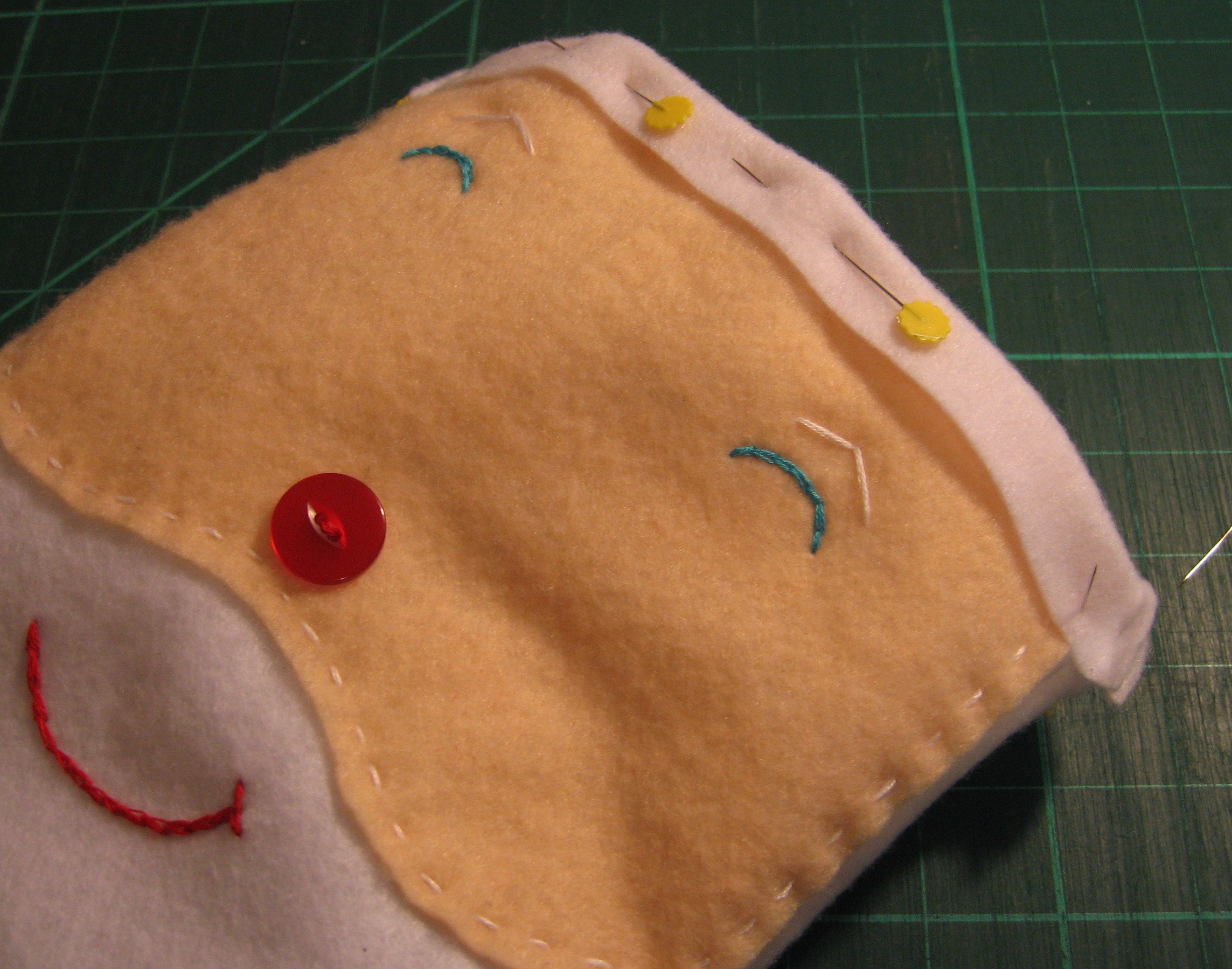
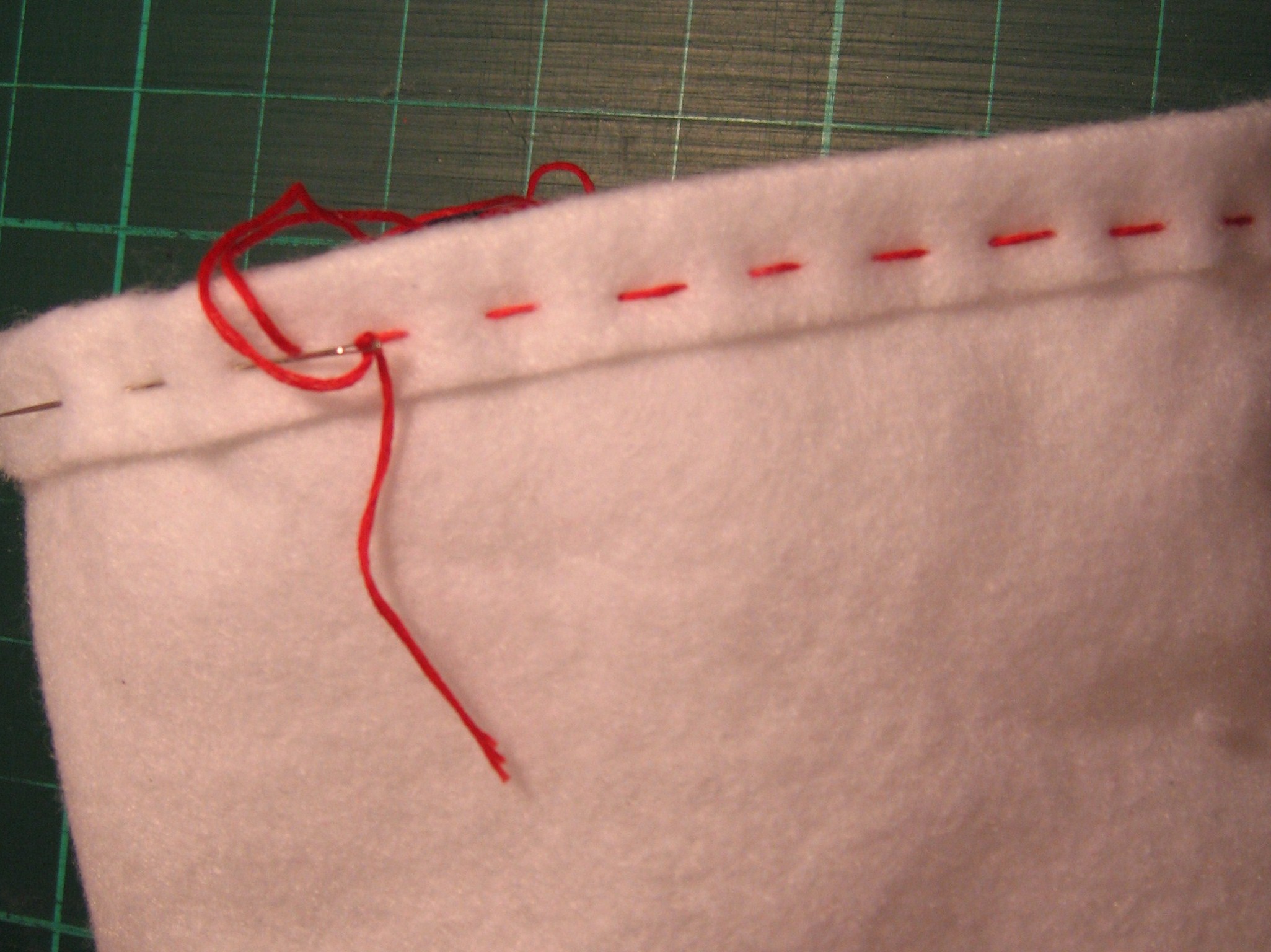
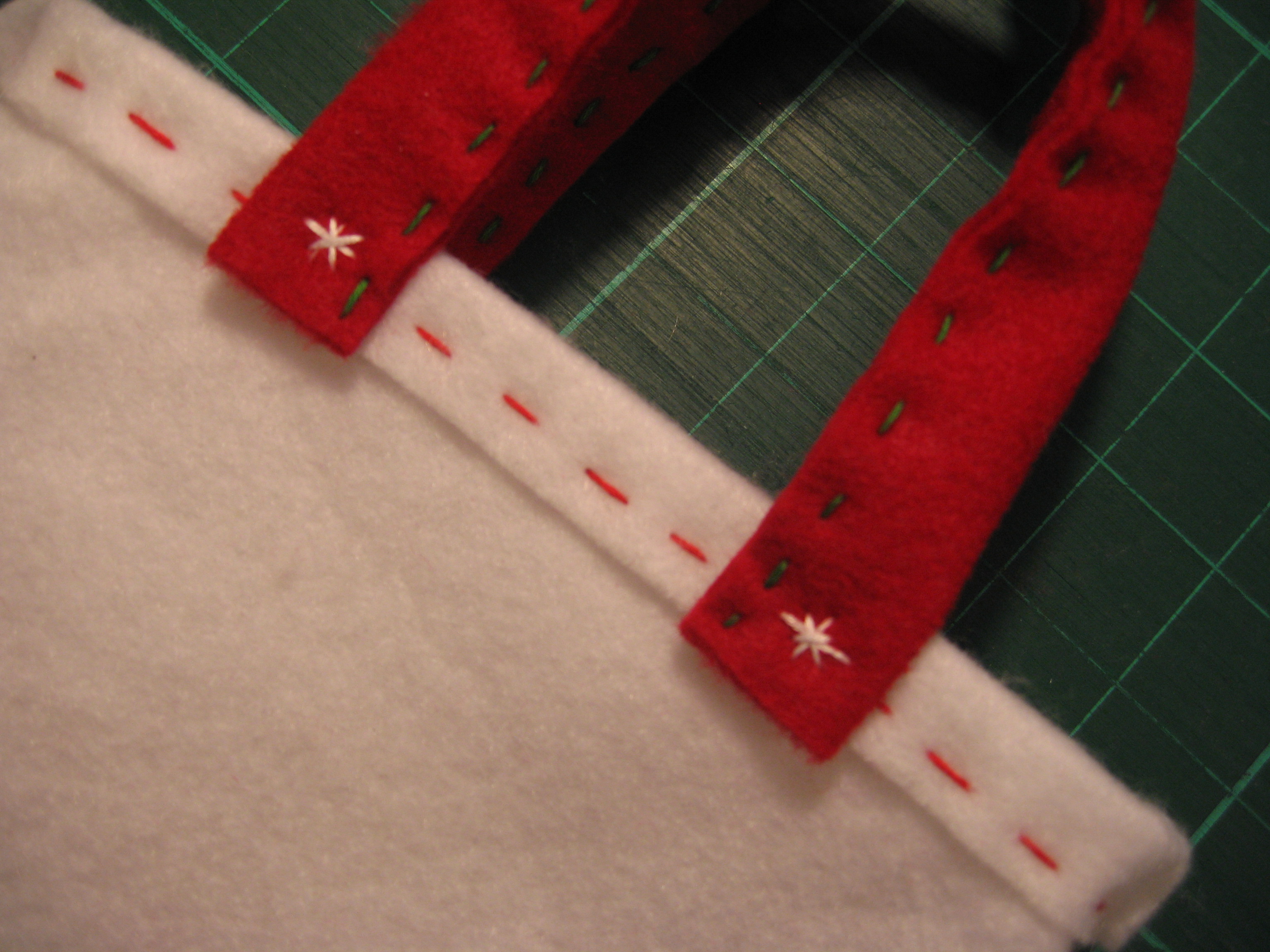
Fold 1″ down on top of bag, overlapping face.  Pin, then straight stitch around.  Stitch under side seam.

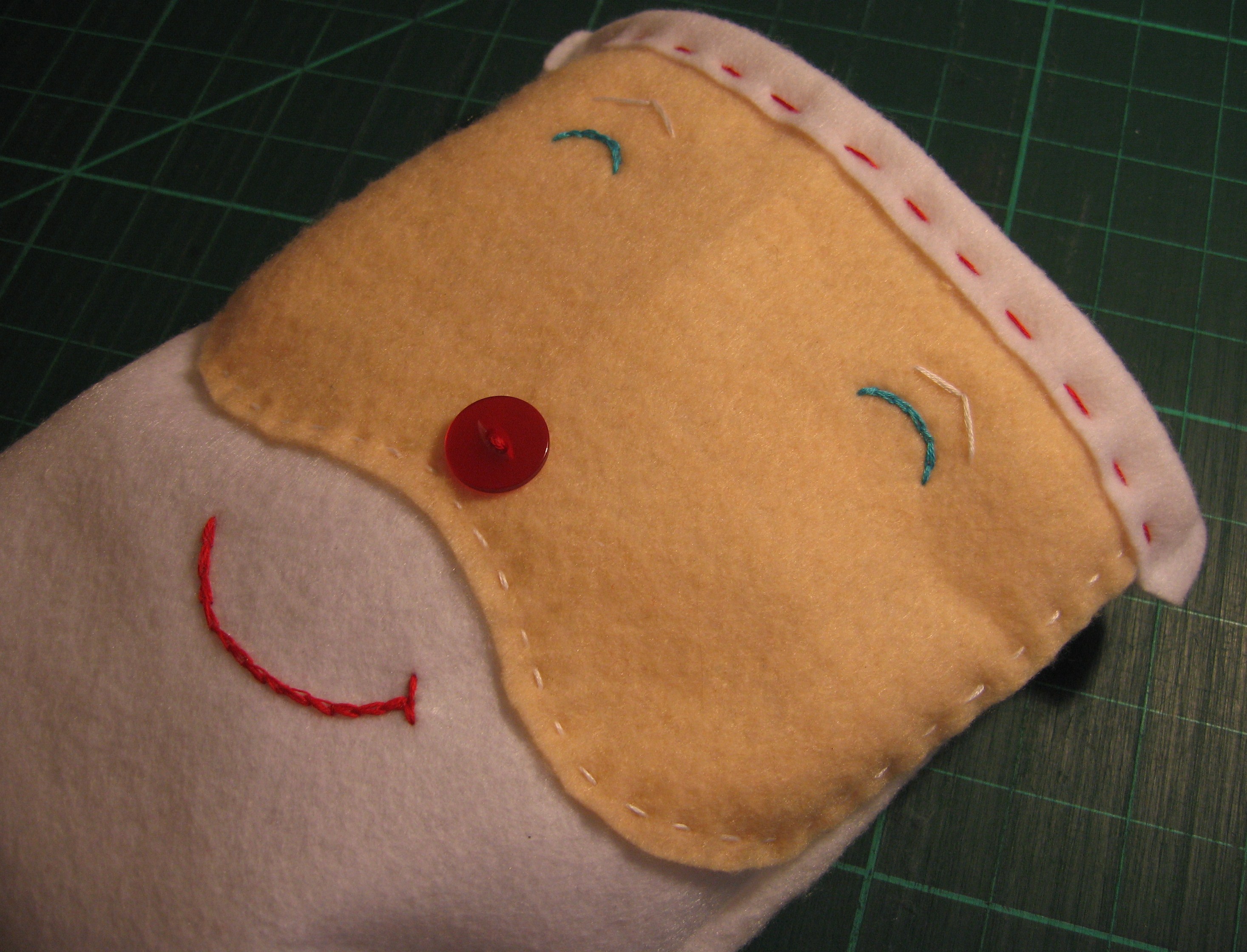
Finished stitching on the top of bag.

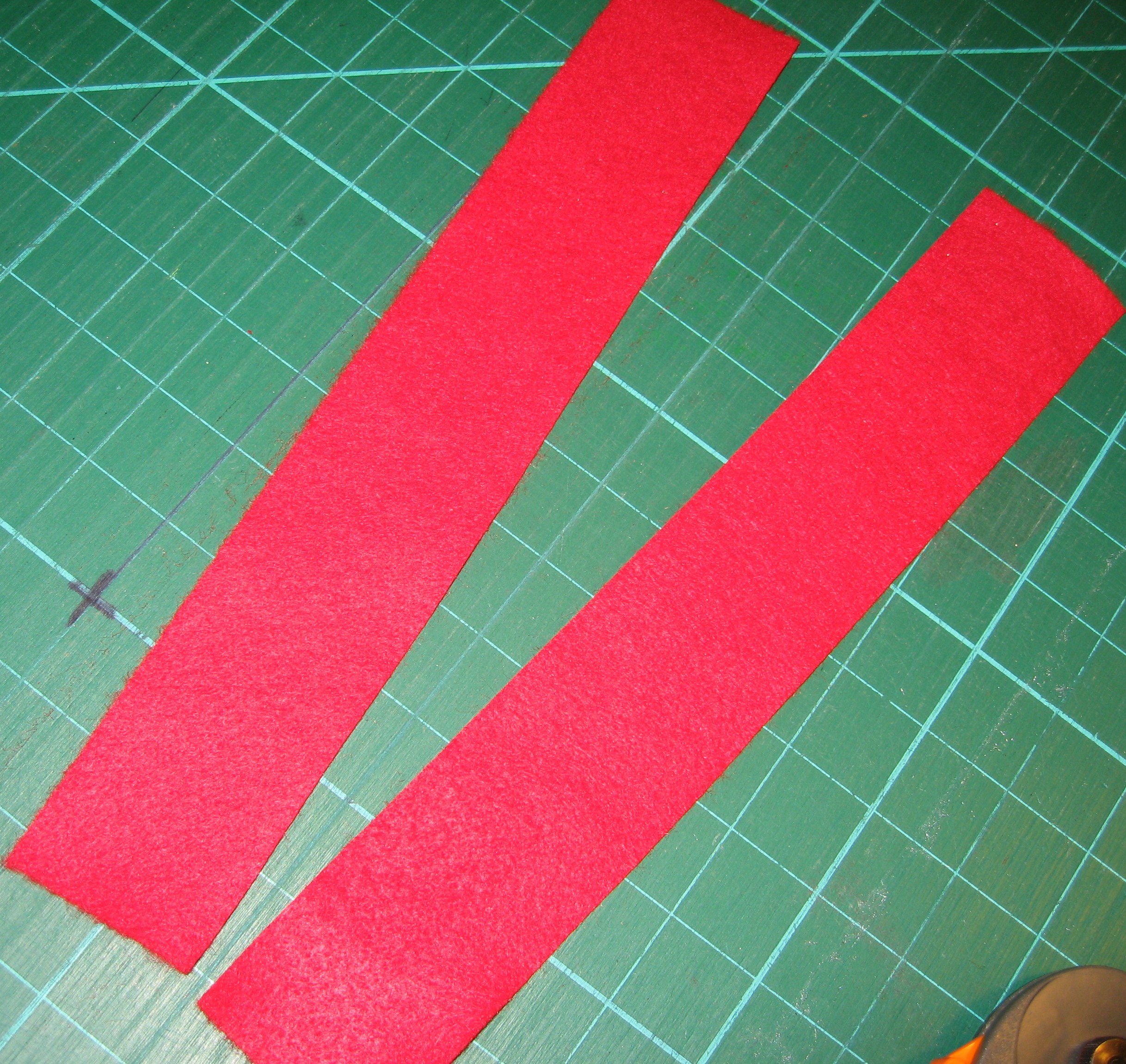
Cut two 12″ x 2″ strips from red felt.

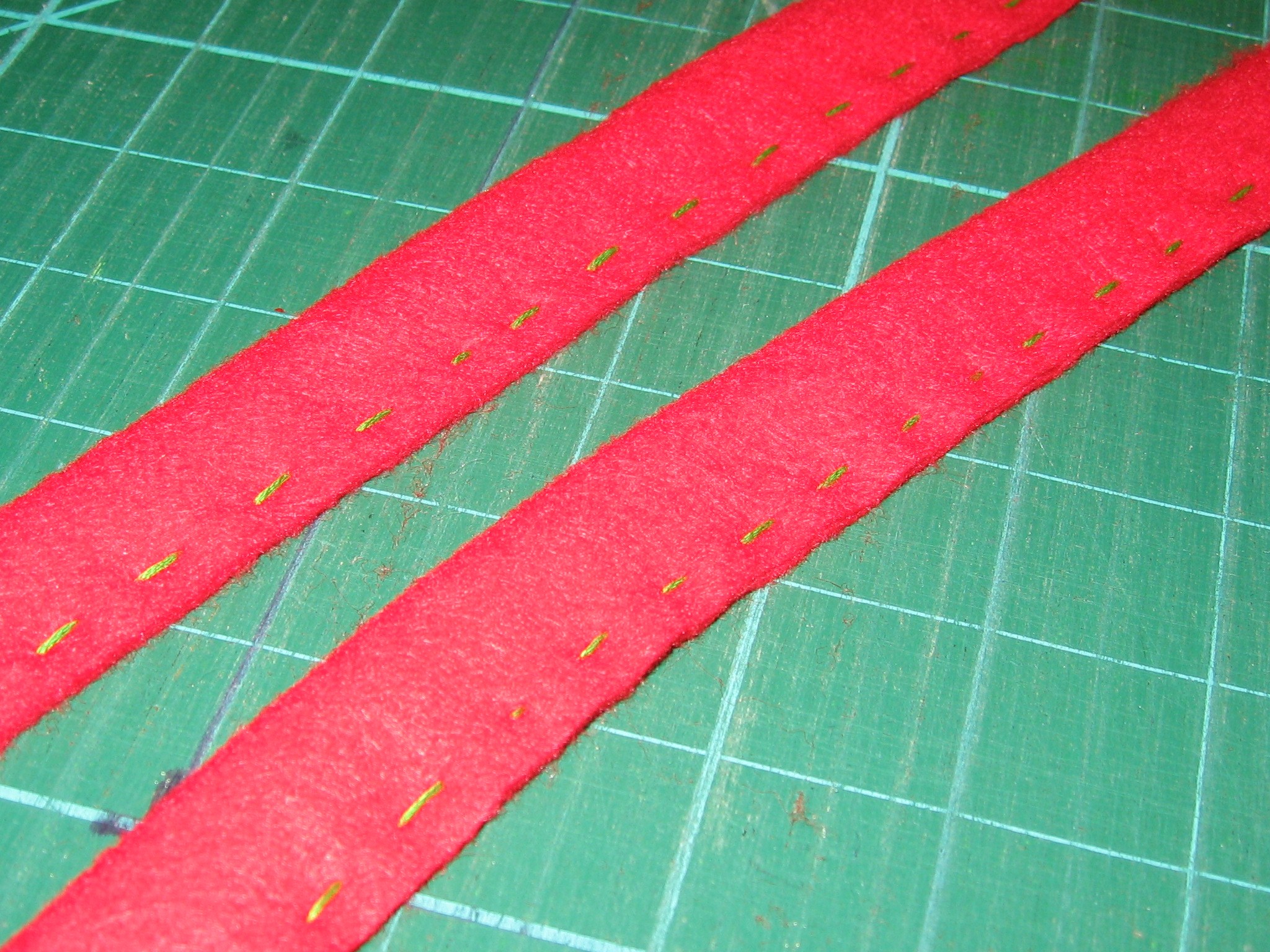
Fold straps lengthwise.  Straight stitch along the length with green embroidery floss.

Pin handle to outside of bag 2″ in from the sides.

Straight stitch snowflake or asterisk to hold handles in place.  Repeat for the back of bag.

Stuff with goodies and gift it!

Feeling creative? Try your hand at a Christmas Tree!

Find my free patterns on Sewhooked & Fandom in Stitches.

♥ Jennifer O

Posts on this blog may contain affiliate links to help cover the cost of my website. I thank you for your generous support. ♥

Blanket Stitched Christmas Stocking Ornament

December is almost here and that means a couple of things for my family. 

We eat too much, get to see family we haven’t seen for ages, and we craft.  While crafting in itself is a daily thing for us, December crafting is different.  We make ornaments for friends, family and ourselves.  Just something about the cold weather, hot chocolate and waiting for Santa makes the crafting a little bit more special.

On that note, today’s craft is an old favorite of mine.  It was originally designed to be an easy ornament to make during my kiddos’ elementary school days.  I wanted something that was inexpensive, took few materials and would be easy to teach kids how to do.

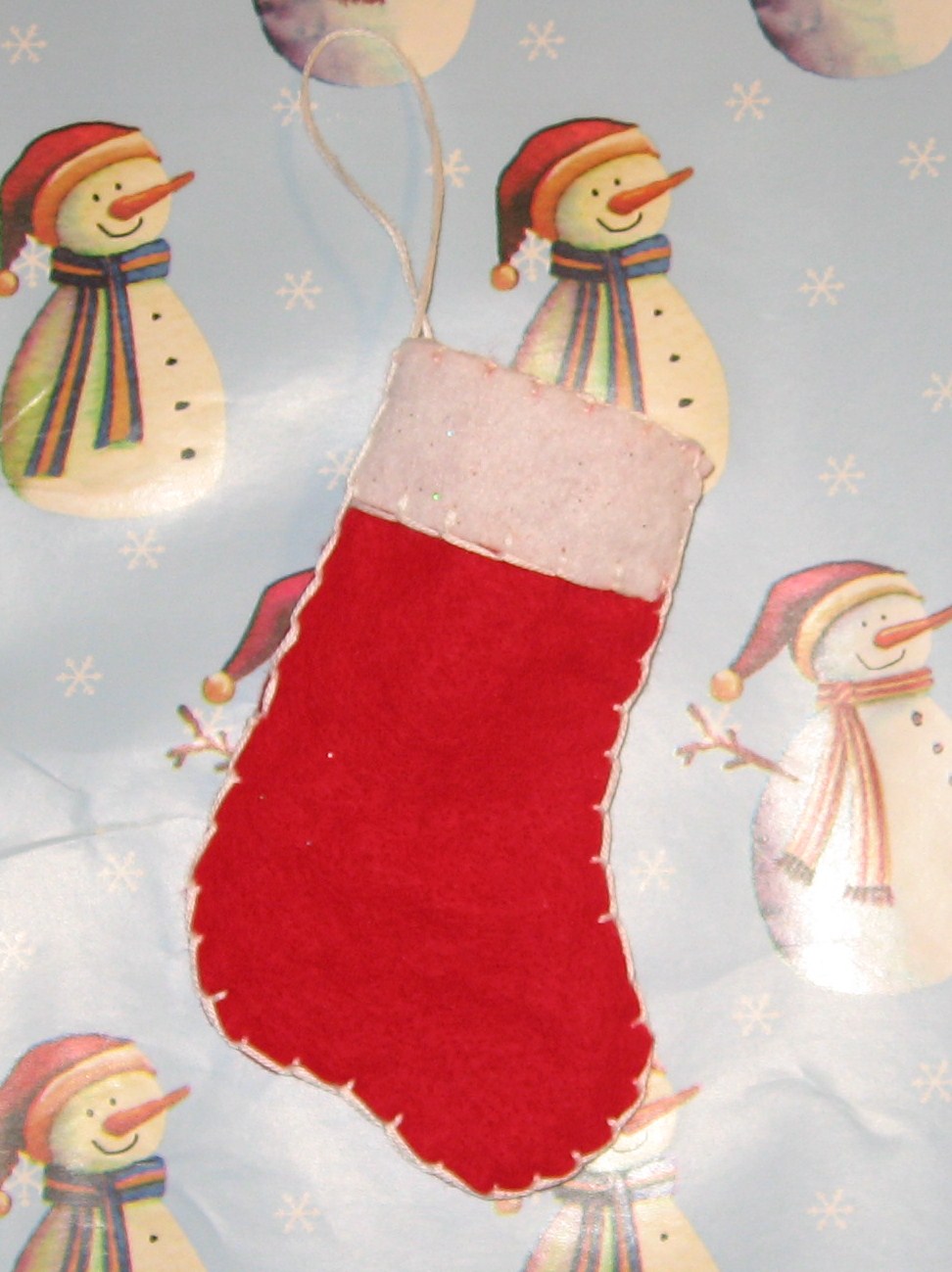
This simple blanket stitched Christmas Stocking is all of these things.  The knots might take a little adult assistance, but other than that, it’s a craft easy enough for anyone old enough to thread a needle!

Make it as is and you’ll have a 4″ stocking ornament.  Enlarge for a larger stocking; personalize, decorate or embellish!

Supplies:

  • felt stocking pattern (free to print or save)
  • felt in two colors (I used red and sparkly white)
  • scissors
  • pattern
  • embroidery floss
  • needle with a large eye
  • ruler or ruler and rotary cutter

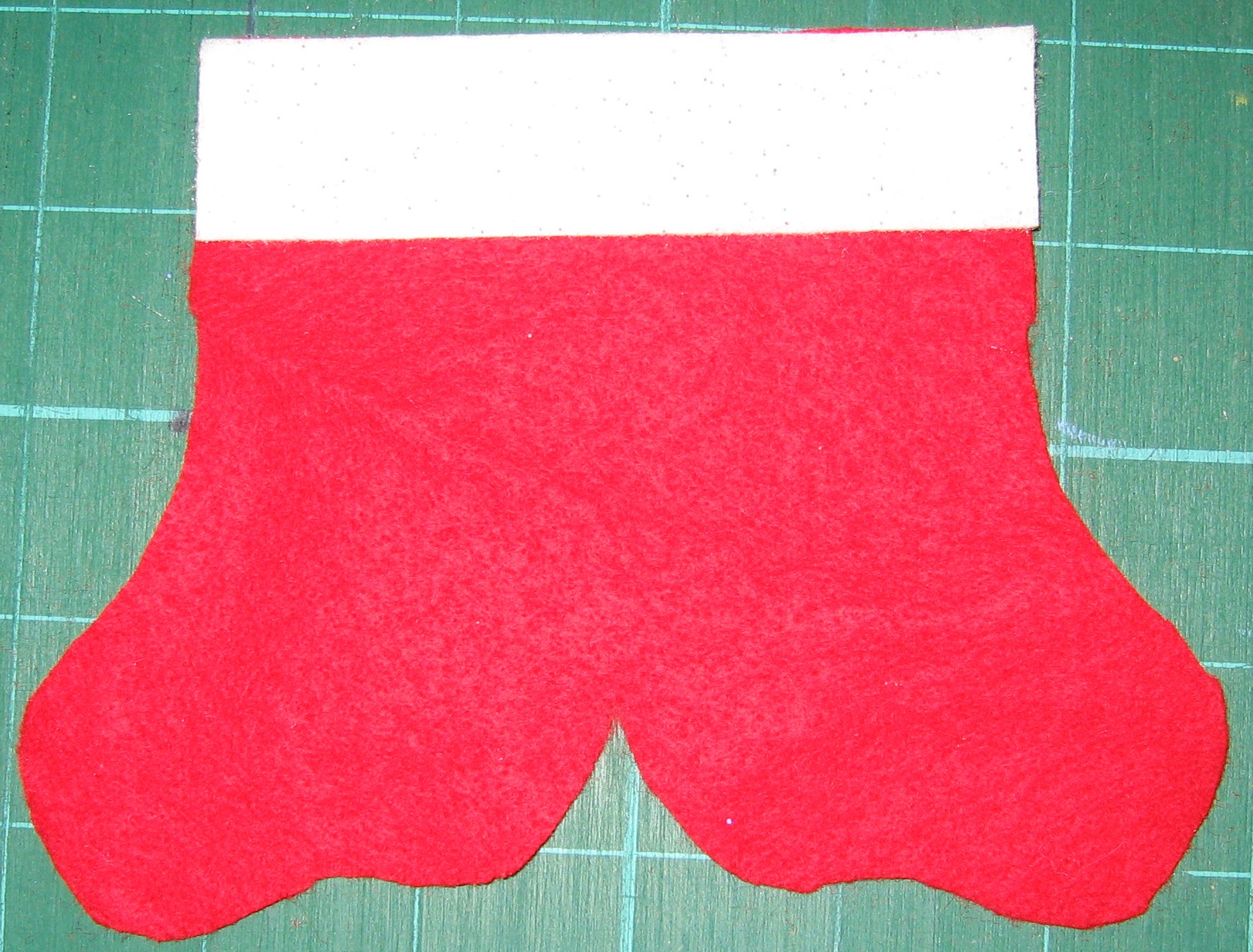
Cut pattern on the fold of red felt.
Cut a strip of white felt 1 ” wide by long enough to go across both sides of stocking (4″ shown).

Align white felt across top of red so that the tops are flush.

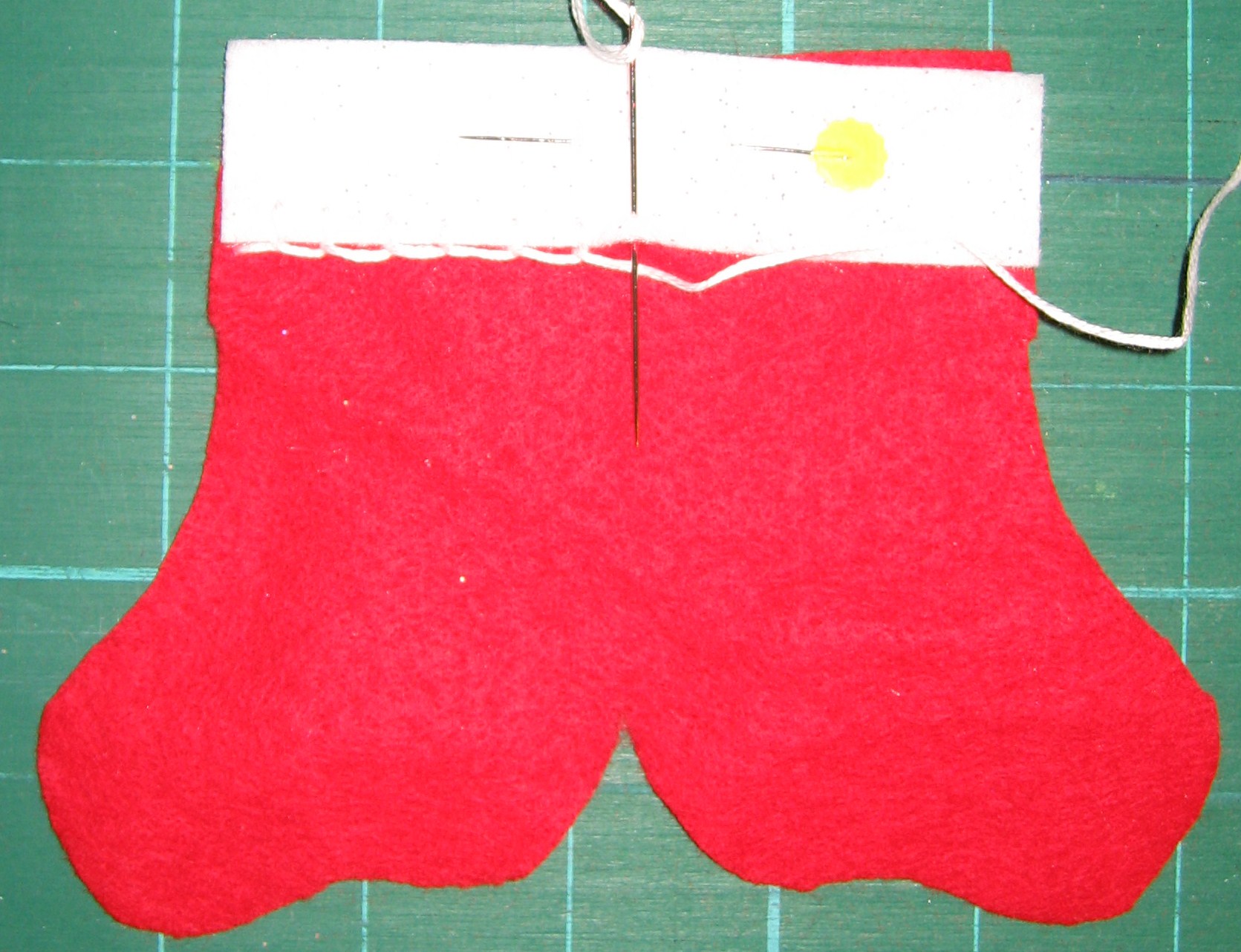
Attach the white felt by stitching across the bottom with a blanket stitch.
(How to blanket stitch from futuregirl.com)

Optional – personalize or decorate while the stocking is still open.  I’ve left this one plain.

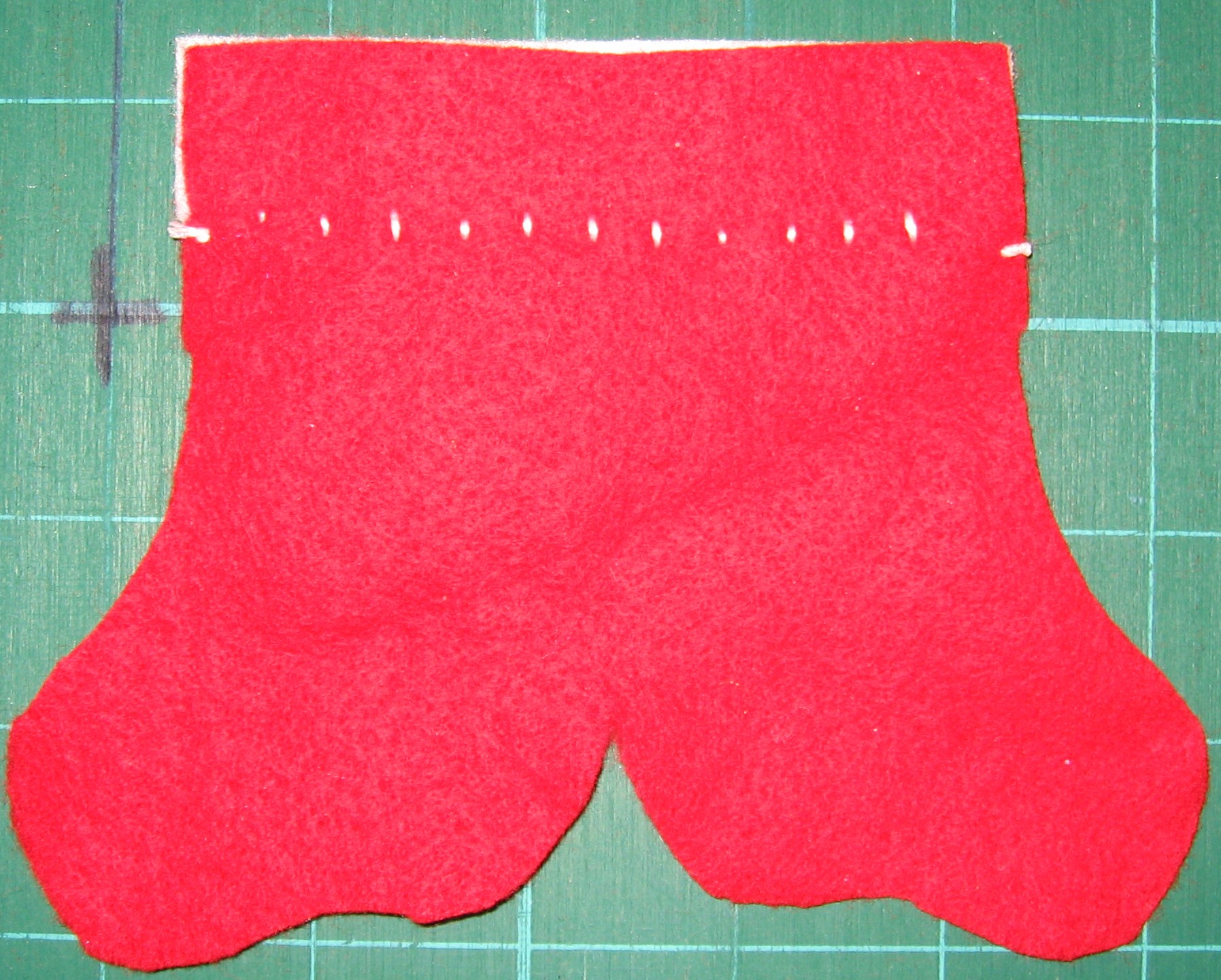
The back should look like this.

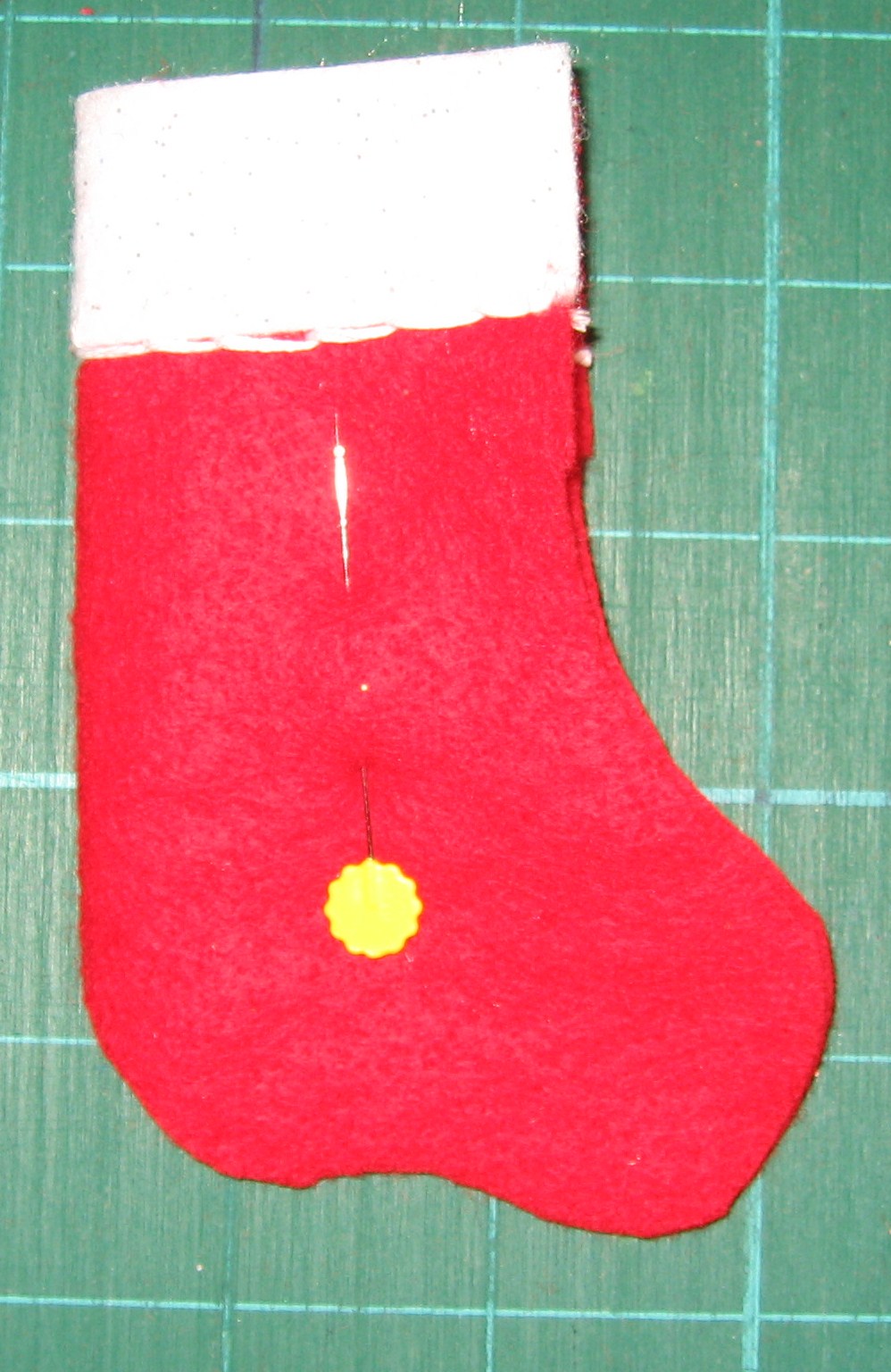
Fold stocking so white felt is outside.  Pin in place.

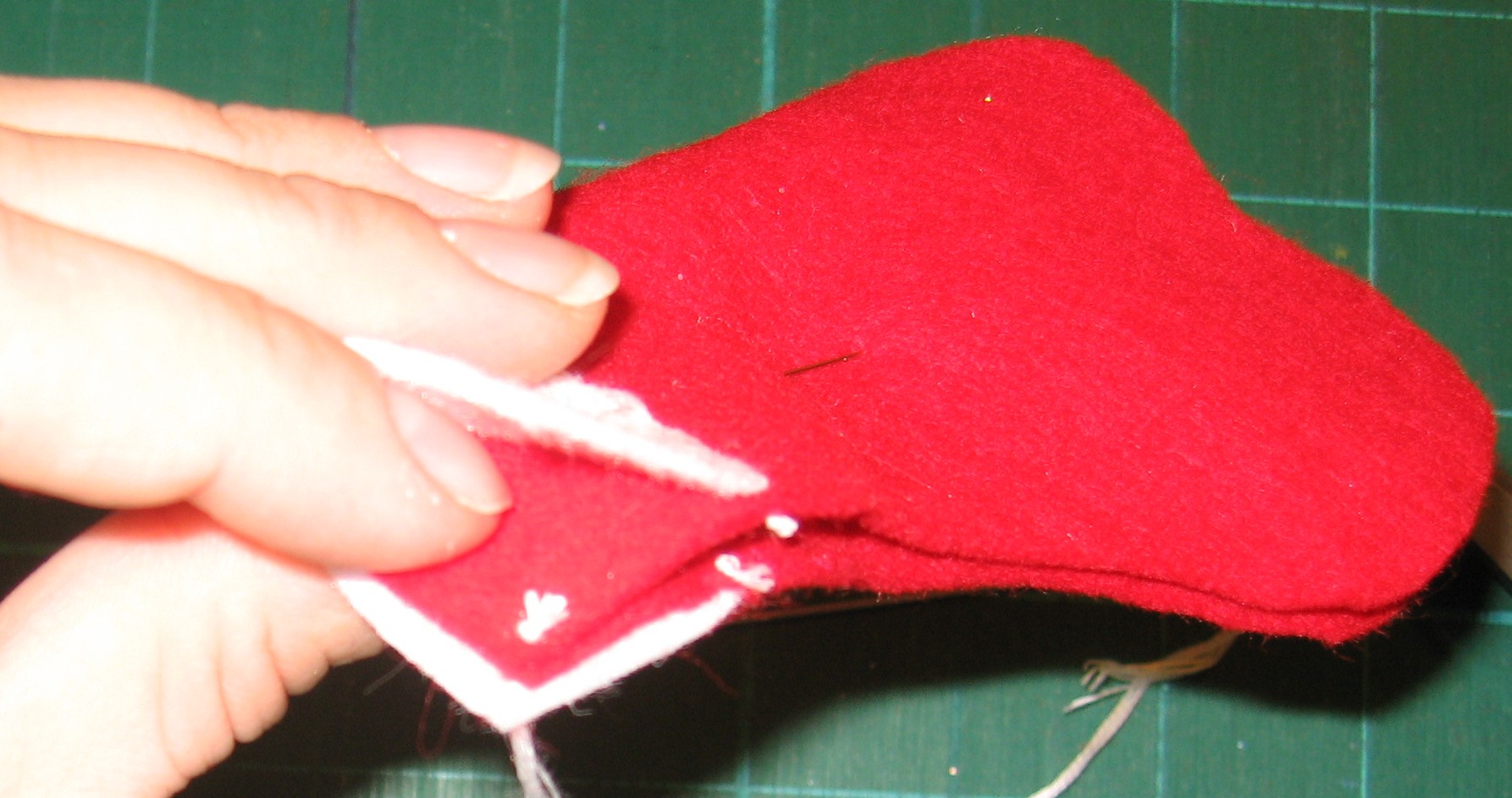
Starting on the open side of stocking, stitch using a blanket stitch.  You can hide the knot by starting under the white felt.  Push the needle through the three layers of felt and then take another stitch through all four layers before beginning the blanket stitch.

Continue around all the way around.

This is what we have so far!

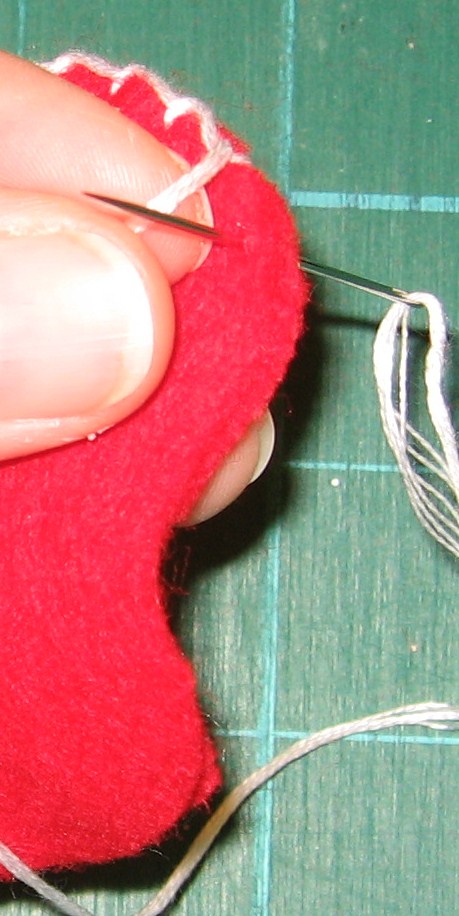
Continue blanket stitching around the top of the stocking, catching both the inside and outside layer in the stitch.  Make sure to leave the stocking itself open.

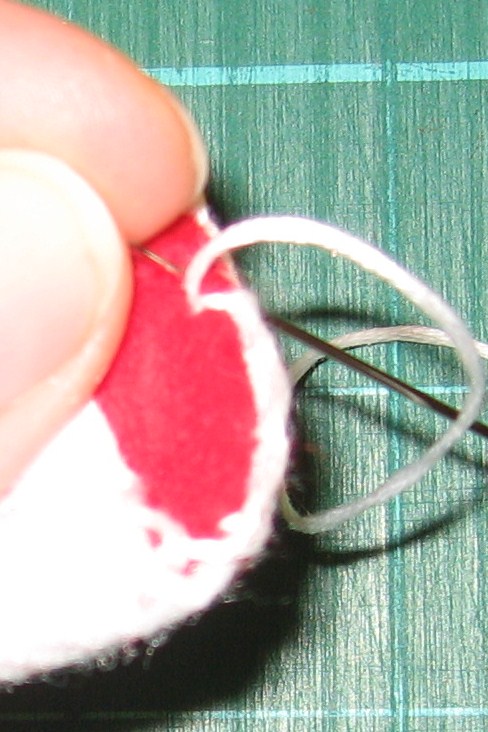
Once you’ve made it all the way around, knot off the embroidery floss then make a loop about 1 1/2″ – 2″ long.   Make a knot inside the stocking.  Take a stitch and knot again.

The pattern is for a 3″ stocking, but it can easily be sized up or down depending on your needs.

Ta-Da!

Happy crafting!

Find my free patterns on Sewhooked & Fandom in Stitches.

♥ Jennifer O

Posts on this blog may contain affiliate links to help cover the cost of my website. I thank you for your generous support. ♥


Paper Piecing: Step By Step

Basic Paper Piecing Tutorial

I receive a lot of emails about paper piecing each week. While many of them are in reference to my Harry Potter patterns, even more of the messages are from new and experienced quilters alike, with comments about the technique itself. Most commonly, I hear one of two things. Either that the person emailing had never quilted and saw a pattern they really wanted to try and just went for it, then was surprised that it wasn’t as hard as they thought OR that they have wanted to try it for years and it looks too hard to them.

I’m always thrilled to hear from quilters of all skill levels, and any time I can help in whatever small way, it’s my great pleasure to do so.

Paper piecing can be daunting to someone that either hasn’t tried it before or tried a technique that confused them. I myself tried three separate tutorials before it stuck. It was a combination of those different tutorials that helped me understand it better, and while I do have my own How To now, I still recommend checking out several tutorials and deciding on what techniques are right for yourself.

That said, this is how I paper piece. Each pattern is the same. They all have the same basic set up and the same basic rules will always apply. Even thought designers sometimes draw their patterns differently, the technique remains the same.

How To Paper Piece
© Jennifer Ofenstein
click on tutorial images to see larger versions

paper piecing tutorial (1)

Supplies

  • pattern (Jar #3 used in this tutorial or similar pattern – NOTE: Jar #3 was updated in 2014 and looks a little different than the photos, but the lines are all in the same place)
  • quilting fabric
  • neutral thread
  • paper scissors
  • fabric scissor OR Add-A-Quarter Ruler.
  • postcard or thin straight edge
  • flathead pins
  • rotary cutter*
  • rotary ruler
  • wallpaper seam roller (available at home improvement stores)

*note – I keep two rotary cutters, one for traditional piecing and one for trimming paper pieced blocks. The “just fabric” cutter gets the new blade, and when it begins to dull, I transfer it to the “paper” rotary cutter.

Not shown above:

  • cutting mat
  • dry iron
  • sewing machine
  • open toe foot
  • light source

Start by making a copy or print out of the pattern you want to make. Use lightweight paper for your patterns, as it tears off easier. Recycled printer paper works well, as does tracing paper and some drawing papers. There are also a number of commercially available products just for paper piecing, such as Carol Doak’s Foundation Piecing Paper.

Choose fabrics you think will compliment the pattern. Always use good quality 100% cotton quilting fabric.

paper piecing tutorial (5)

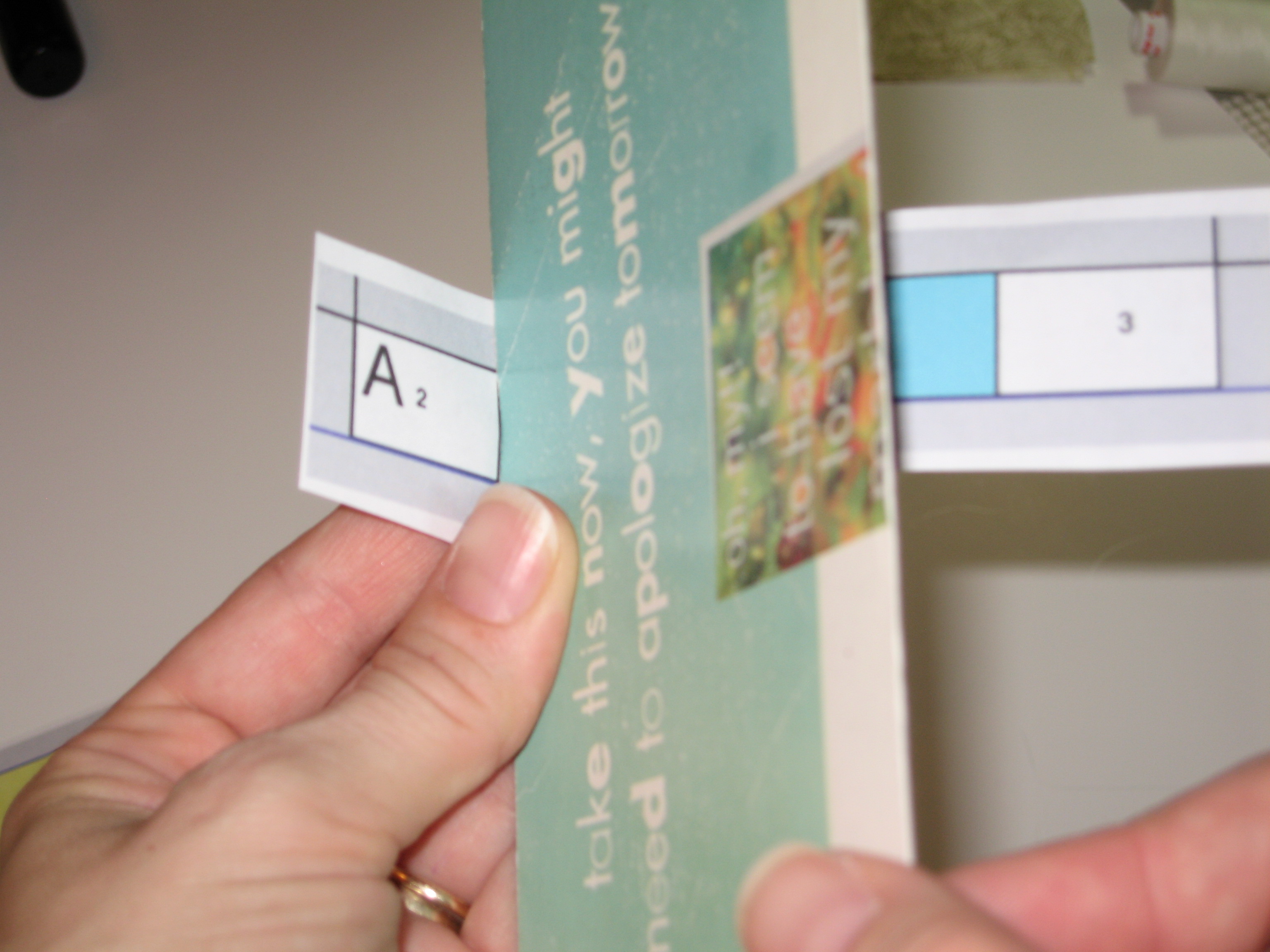
Use paper scissors to trim outside the gray seam allowance of individual pieces of the pattern.
paper piecing tutorial (3).JPG

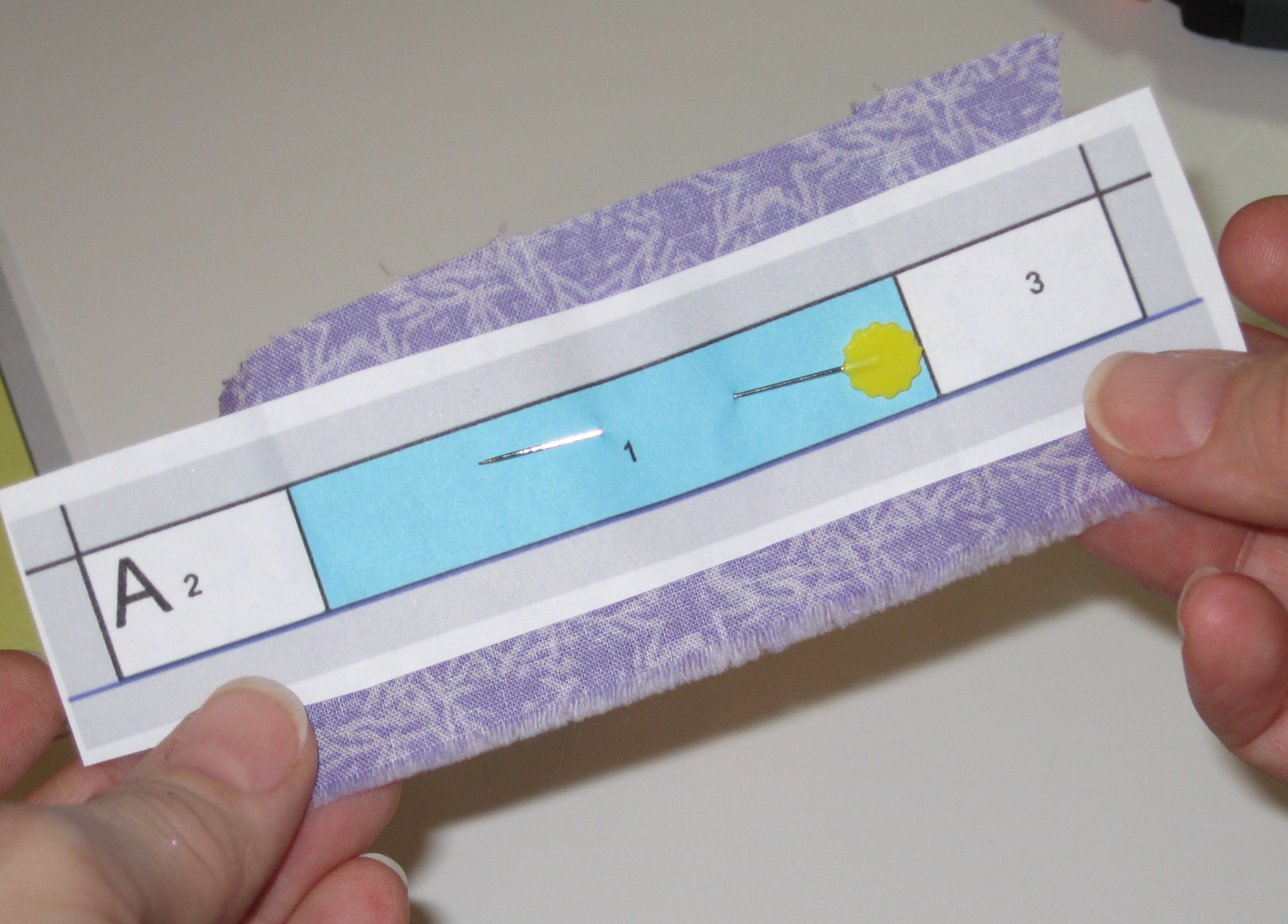
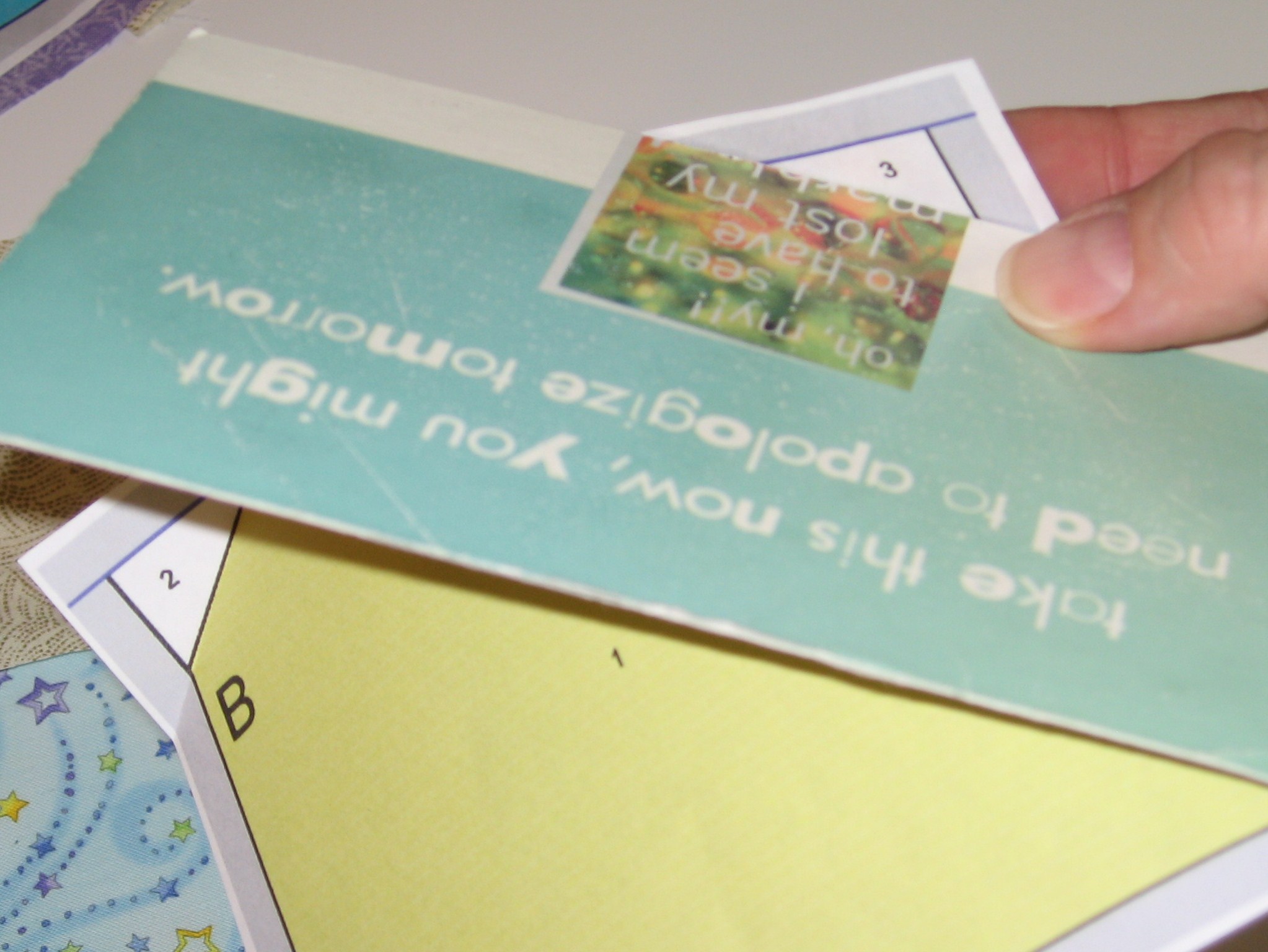
Starting with pattern piece “A,” use the postcard as a straight edge, fold the pattern piece on the line between 1 and 2. This is your stitching line.
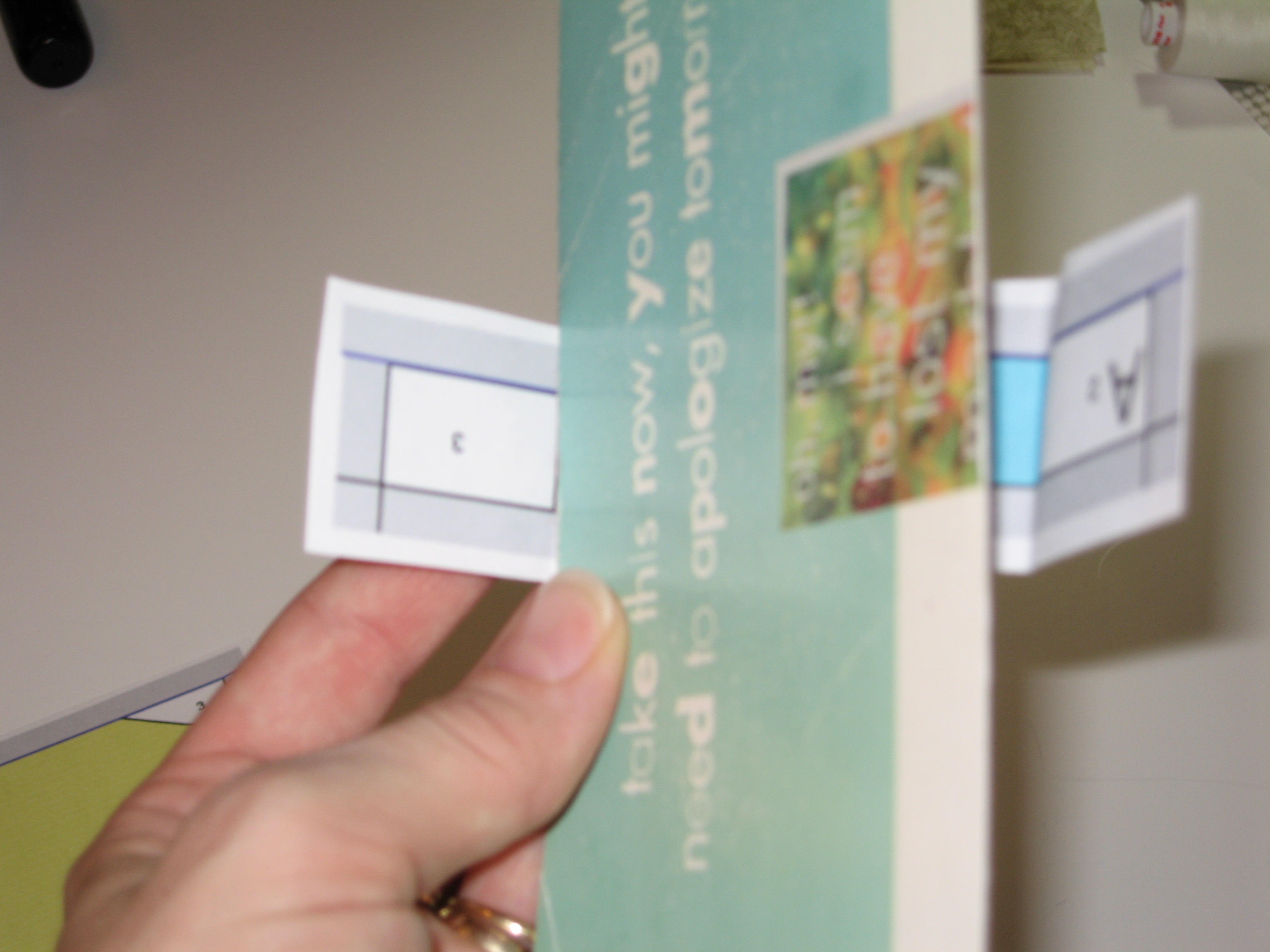
paper piecing tutorial (4).JPG
Repeat for the line between 1 and 3.

paper piecing tutorial (6)

Place fabric 1 right side up on the back of the paper opposite piece 1.

Make sure you have a generous seam allowance (approximately 1/2″) all around.

Use a light source behind the pattern if you need it to make sure the fabric is big enough.

paper piecing tutorial (7)

Trim seam allowance to 1/4″. This can be done with fabric scissors or a rotary cutter.
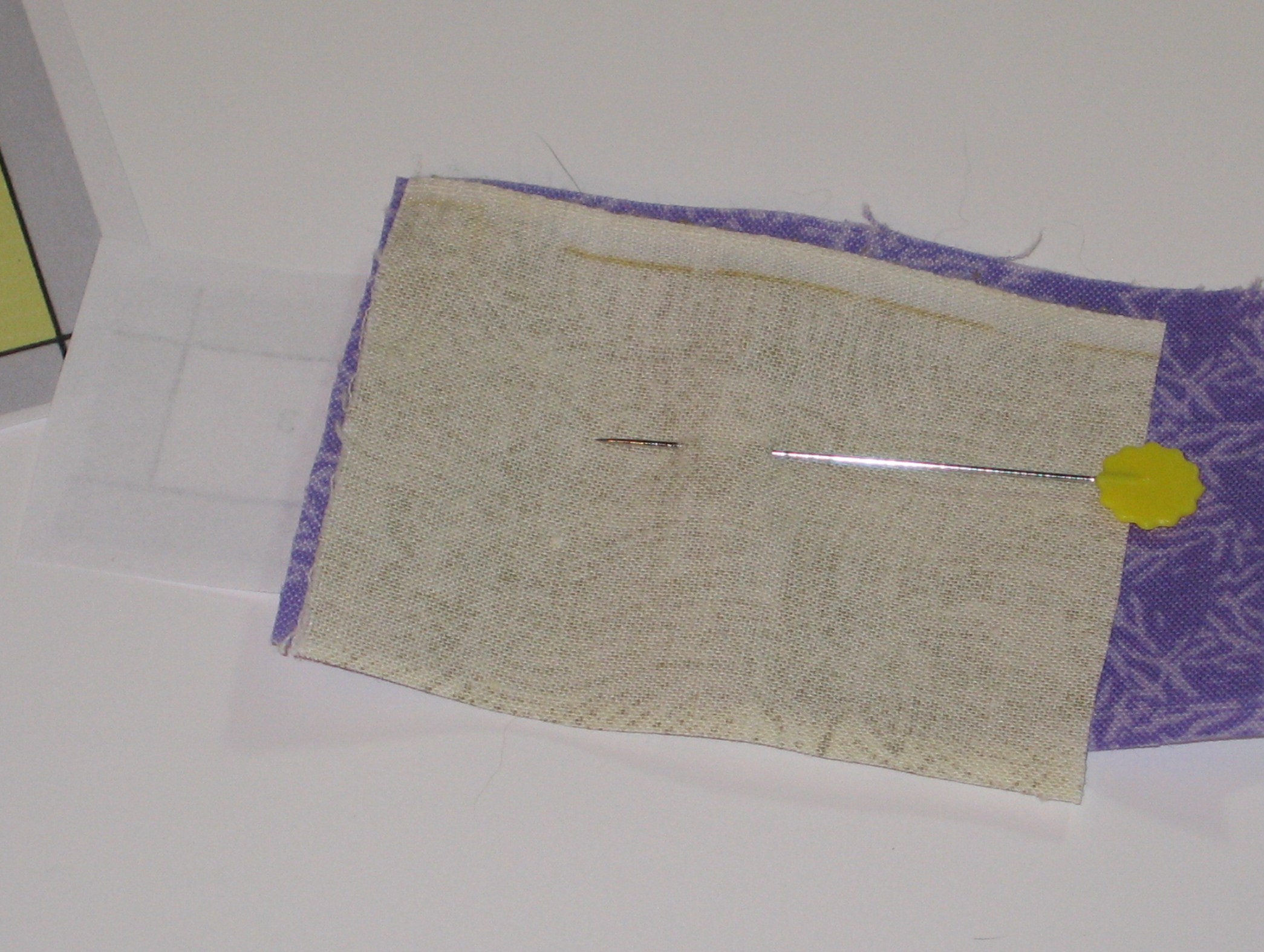
paper piecing tutorial (9)

Place fabric 2 wrong side up on fabric 1. Make sure to slide both pieces of fabric 1/4” past the stitching line.
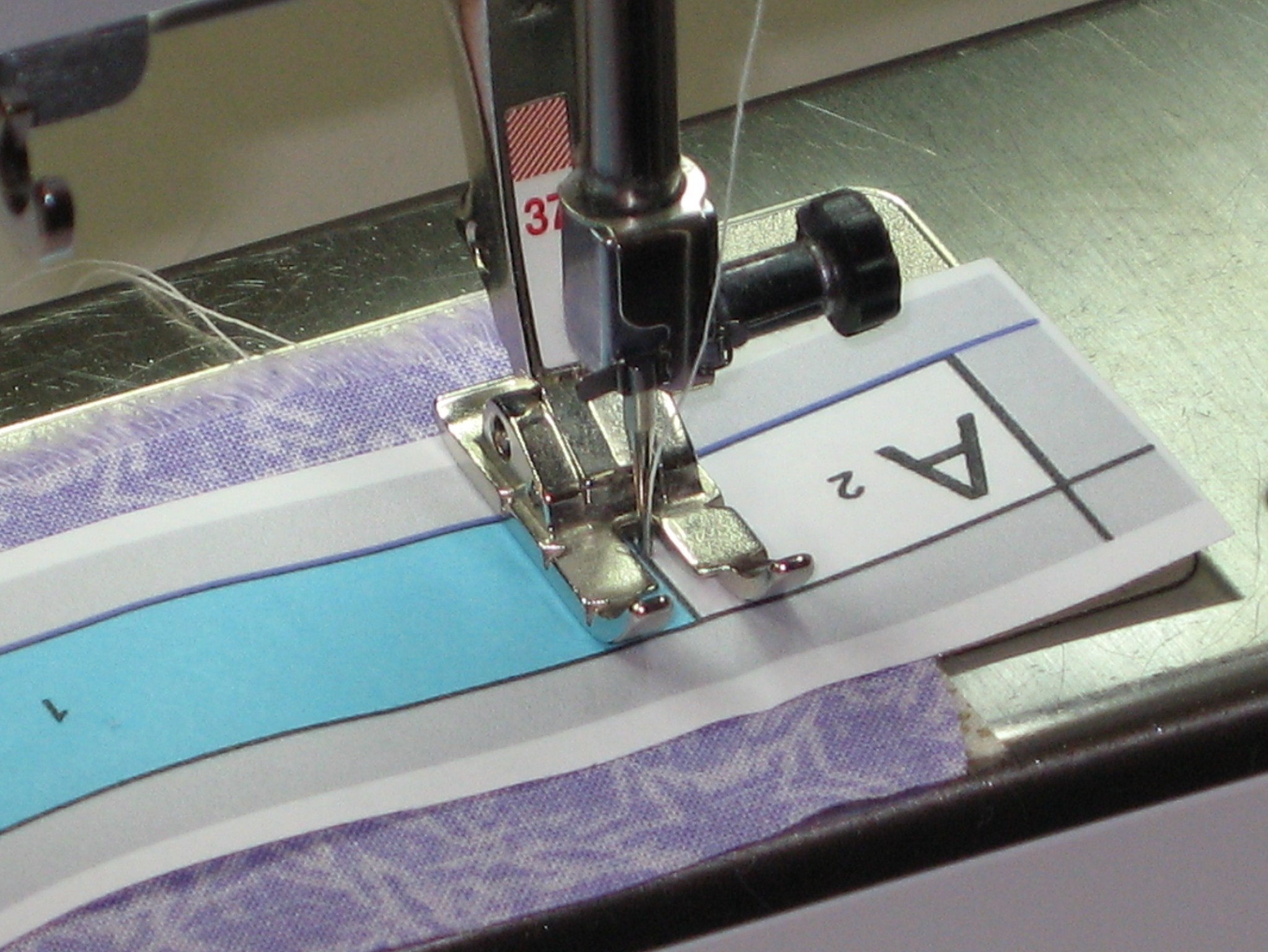
paper piecing tutorial (10)

Using a small stitch (10-12 stitches per inch, a 1.5 on most domestic sewing machines), start two stitches before the stitching line, stitch along the line and take two stitches after the end. By stitching slightly pass the line, it is less likely that the ends the stitches will pull out when the paper is removed.

paper piecing tutorial (14)

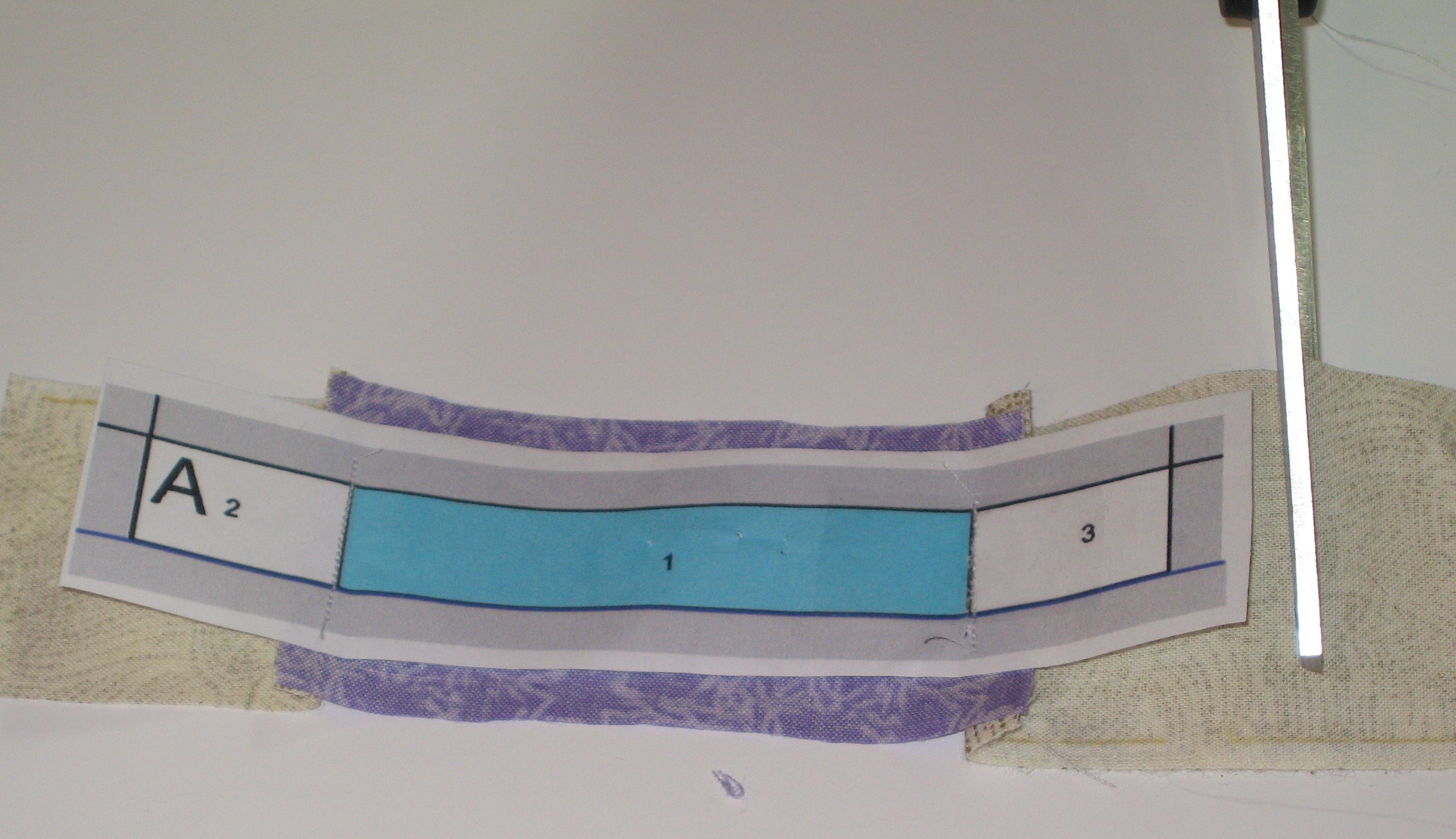
Trim thread to paper.

paper piecing tutorial (11)

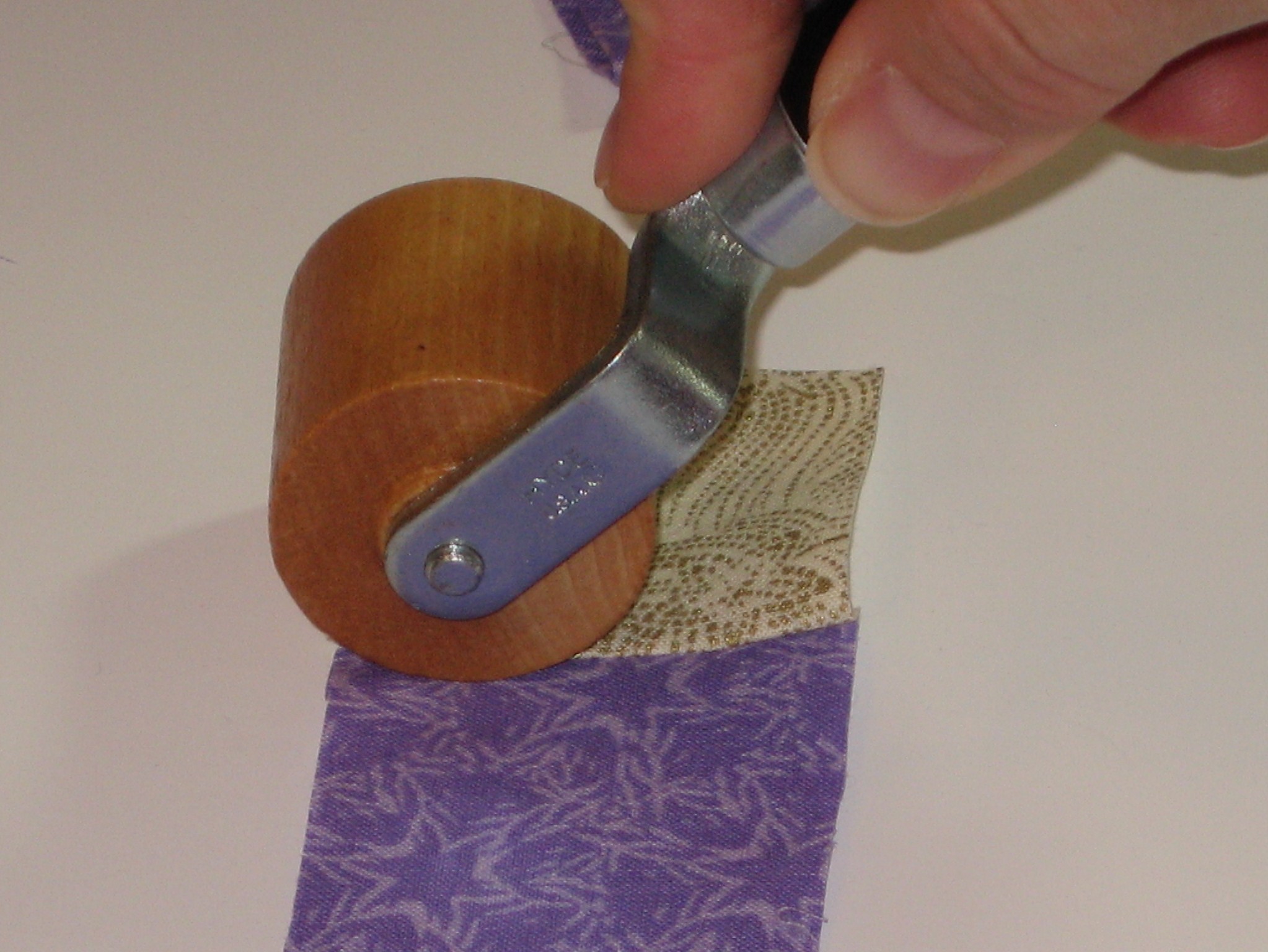
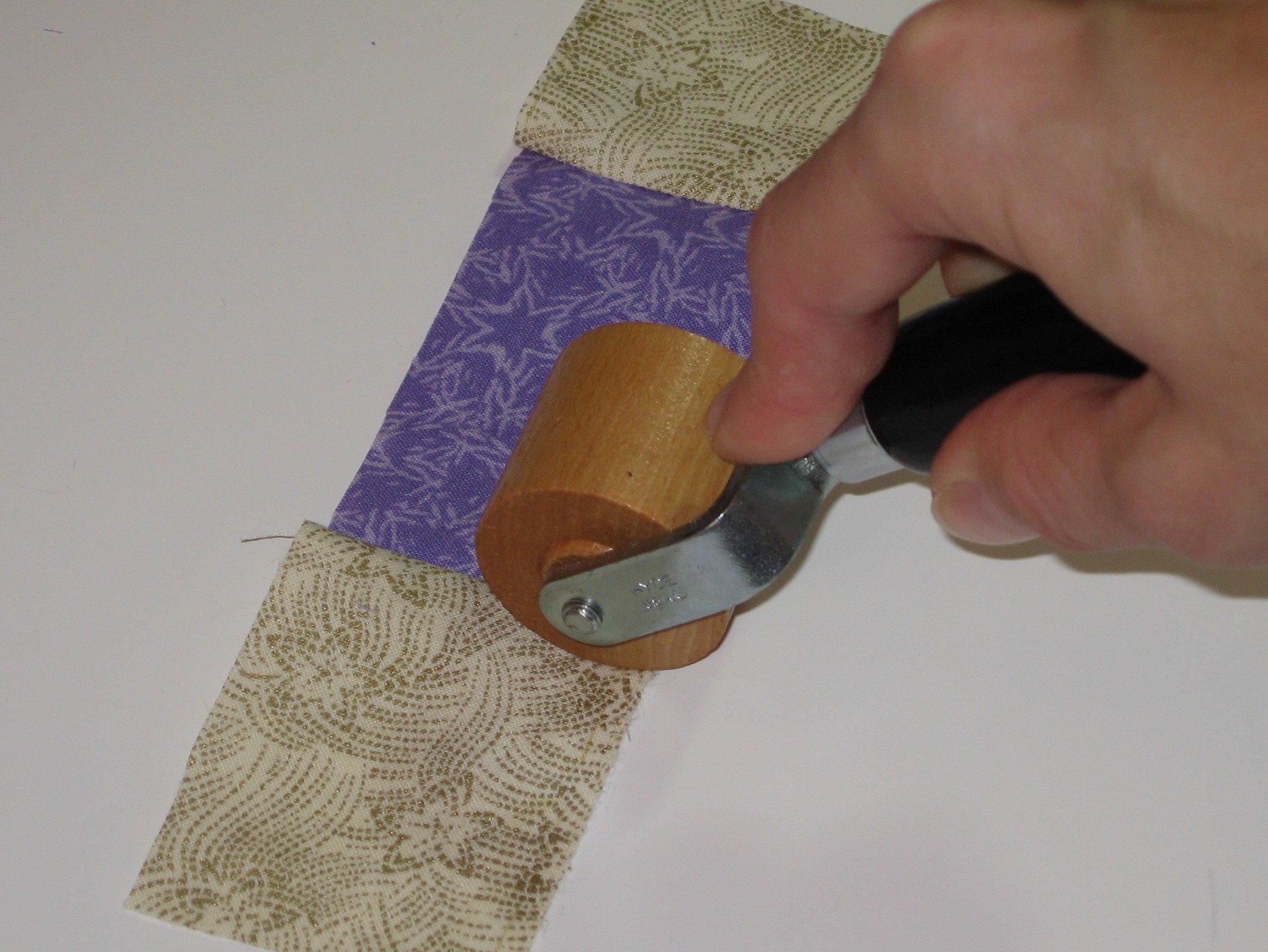
Fold fabric two out. Gently dry press with an iron OR use the wallpaper seam roller (shown) to press out the seam. Be careful not to pull or tug on the fabric.
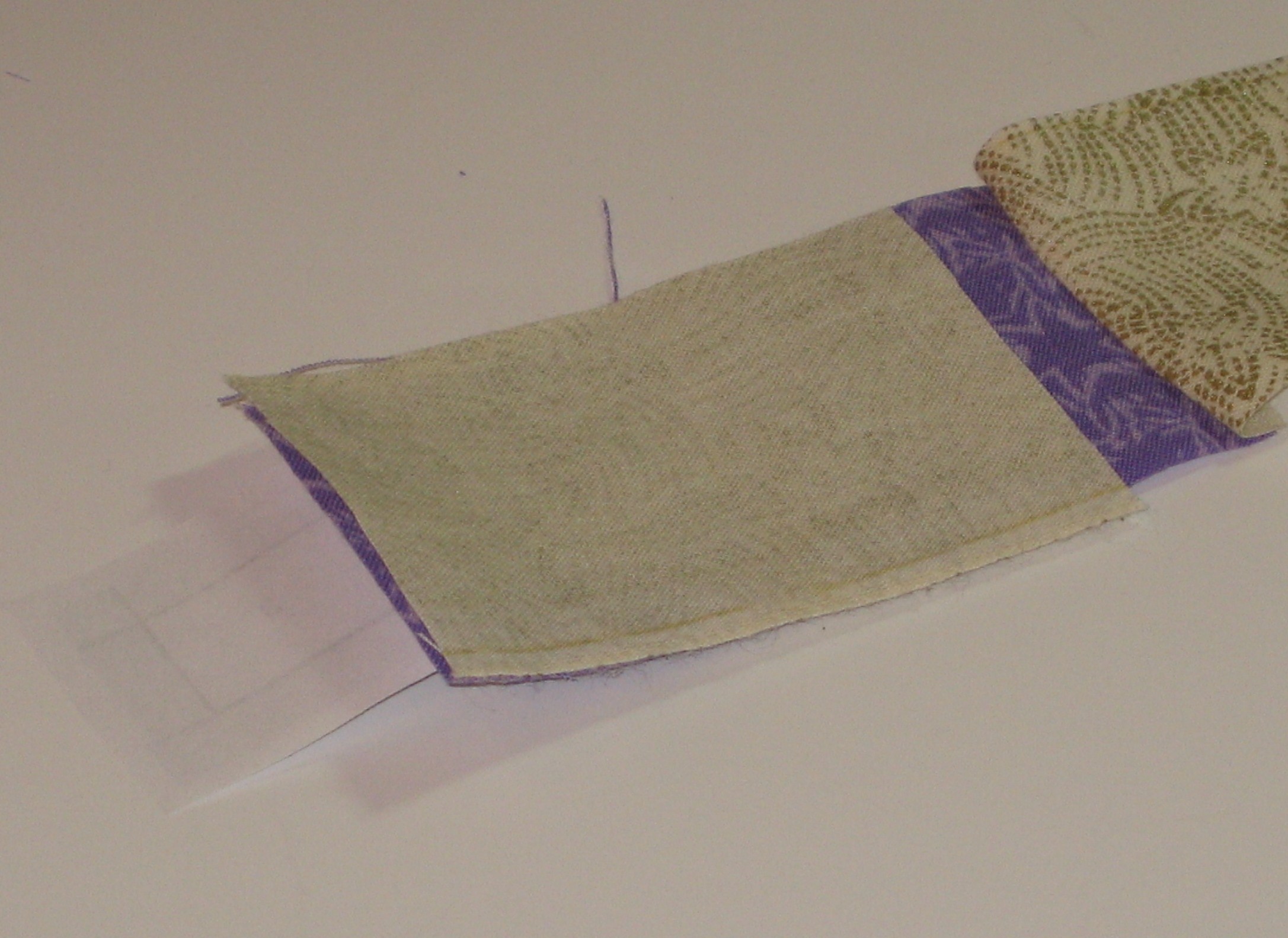
paper piecing tutorial (12)

Fold on the 1 > 3 line. Keep the paper folded then flip the pattern over. Trim a generous 1/4″ from piece 1 either with scissors or with your Add-A-Quarter Ruler.

Unfold the paper. Place fabric 3 wrong side up on fabric 1, matching the edges, which will be 1/4″ past the stitching line after being trimmed in the previous step.

paper piecing tutorial (13)

Repeat stitching as for line 1 > 2.

paper piecing tutorial (15)
Press as before.

paper piecing tutorial (16).JPG

Trim fabric around pattern piece, leaving a generous amount for squaring up later.

paper piecing tutorial (17).JPG

Press pattern piece “A” with a gentle up and down motion using a dry iron. Do not pull or tug the fabric.

paper piecing tutorial (19)

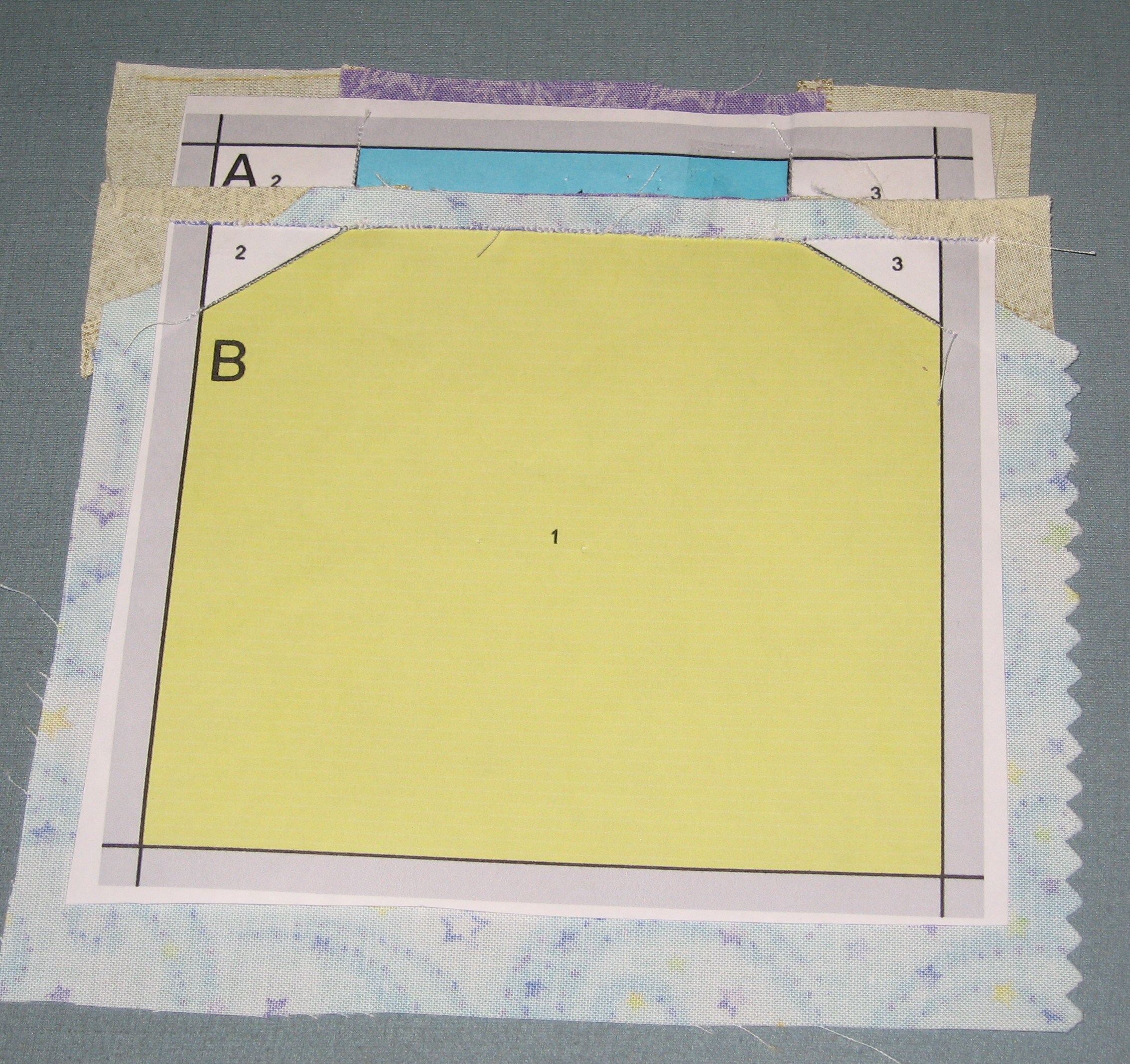
Now for pattern piece “B.”

paper piecing tutorial (20)

Using the postcard or straight edge, fold down the lines between section 1 > 2 and 1 > 3.

paper piecing tutorial (21)

Trim a generous 1/4″ seam allowance (with scissors or Add-A-Quarter ruler) for piece 1 >2. Repeat for 1 > 3.
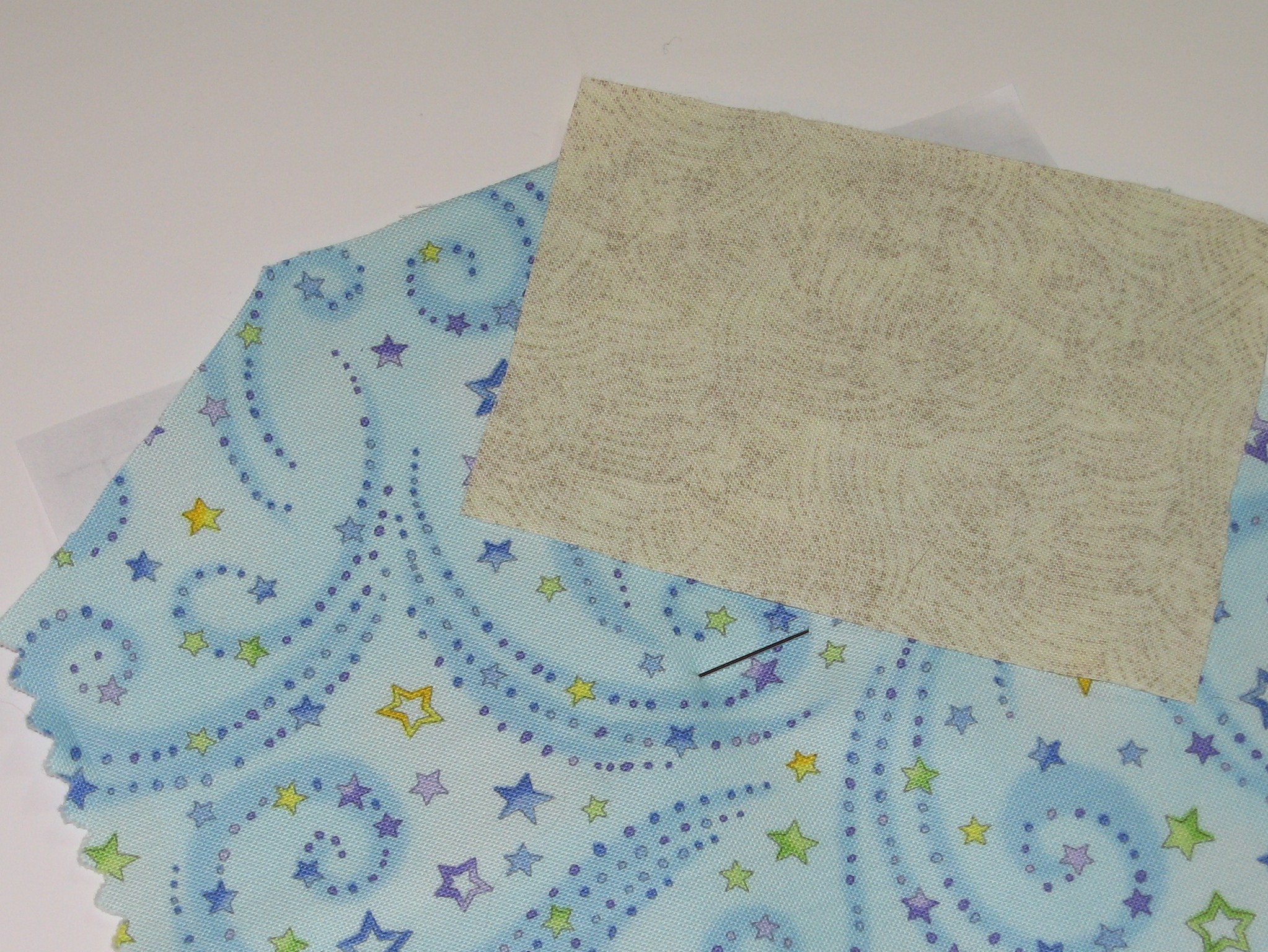
paper piecing tutorial (23).JPG

Just as for pattern piece “A,” place fabric 1 right side up on the back of the paper opposite piece 1. Make sure you have a generous seam allowance (approximately 1/2″) all around.

paper piecing tutorial (24)

Stitch on the line between piece 1 > 2 as in previous steps.

Repeat for pieces 1 > 3.

paper piecing tutorial (26).JPG

Press seams as before.

paper piecing tutorial (28)

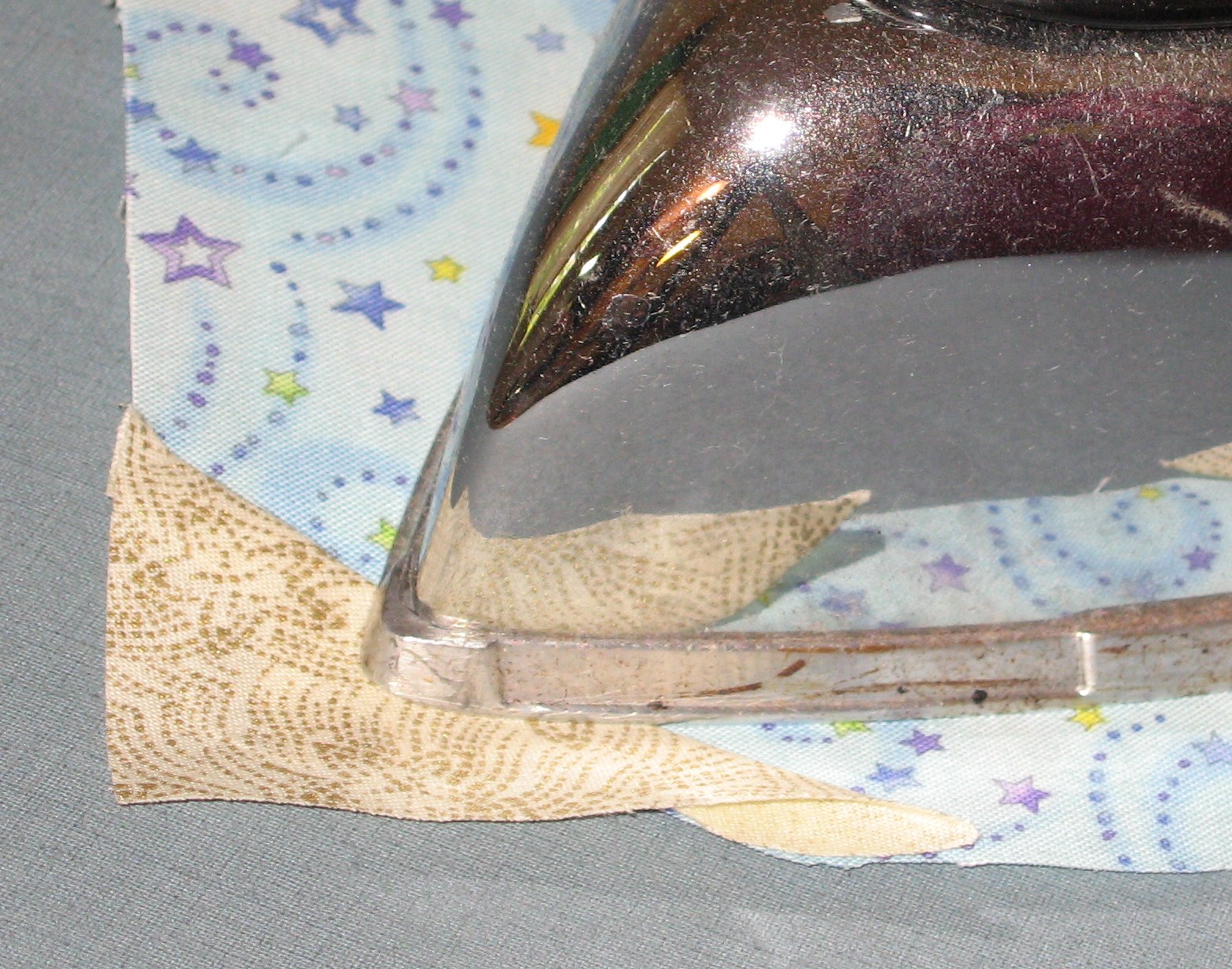
Trim fabric, leaving a generous seam allowance around the outside edges for squaring up later.
paper piecing tutorial (29).JPG

Press as before.

paper piecing tutorial (30).JPG

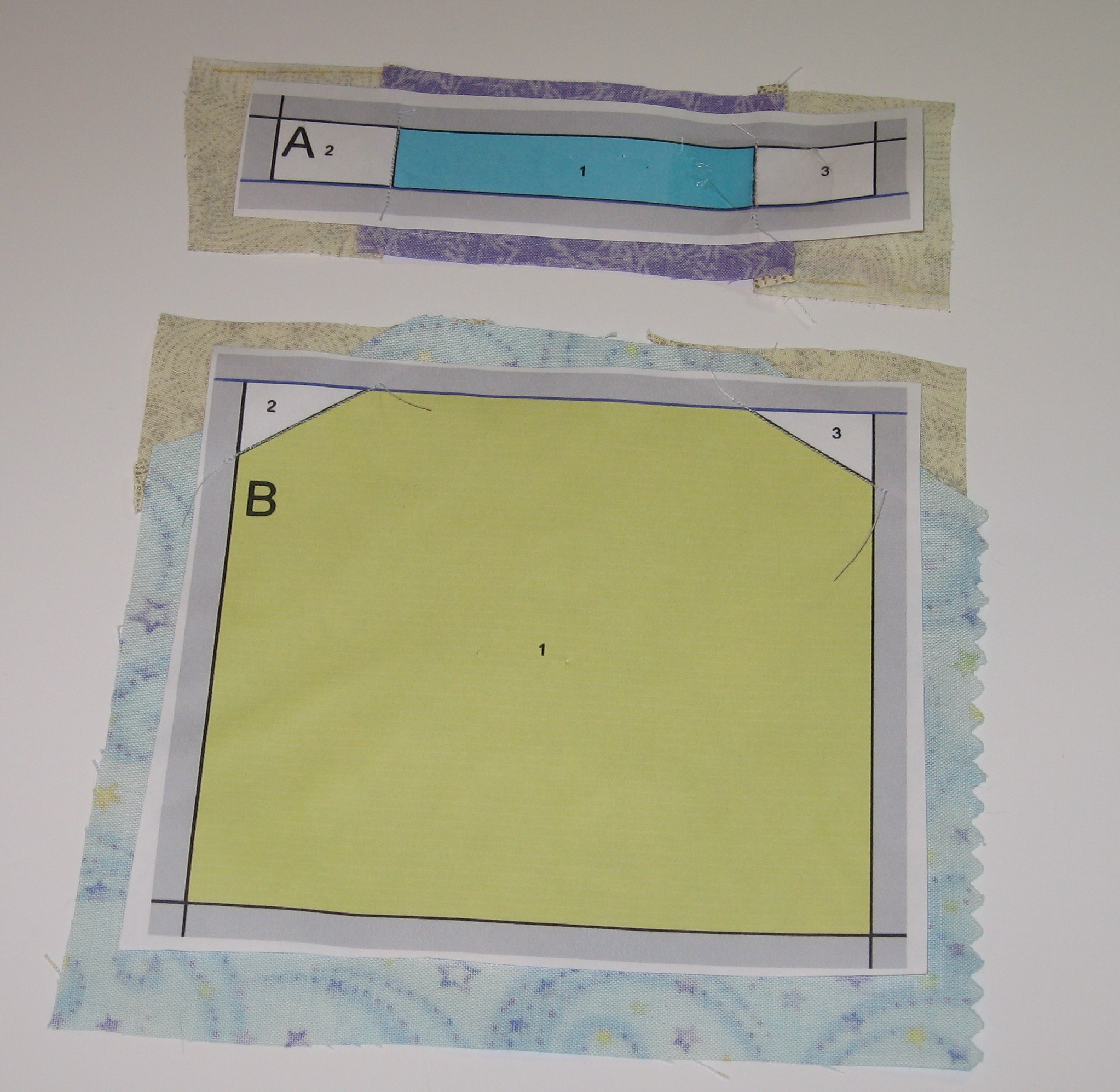
This is what you should have so far.

paper piecing tutorial (31).JPG

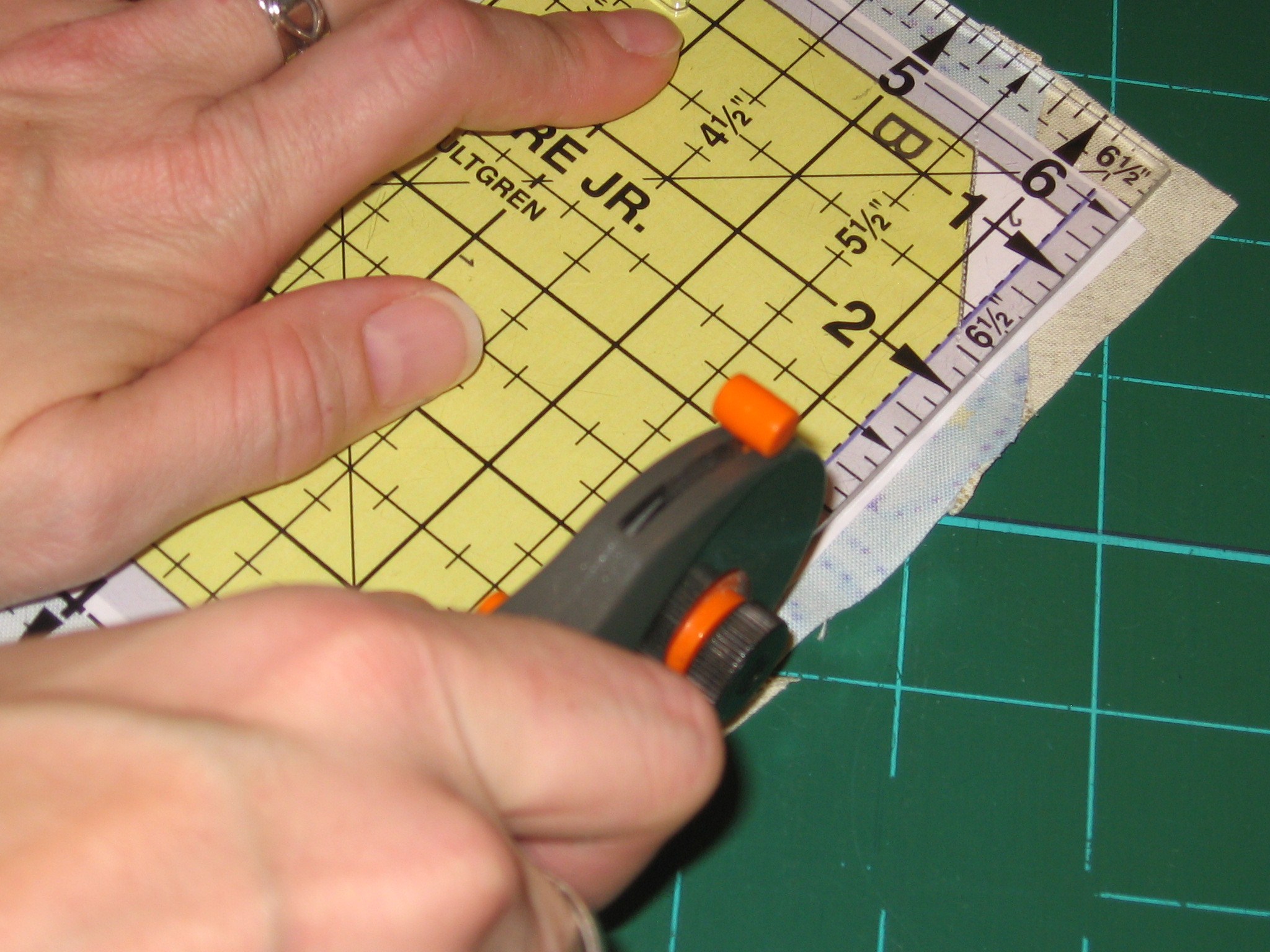
On your cutting mat and with your ruler, find the inside line at the top of unit “B”, where the jar will be stitched to the lid.
paper piecing tutorial (32).JPG

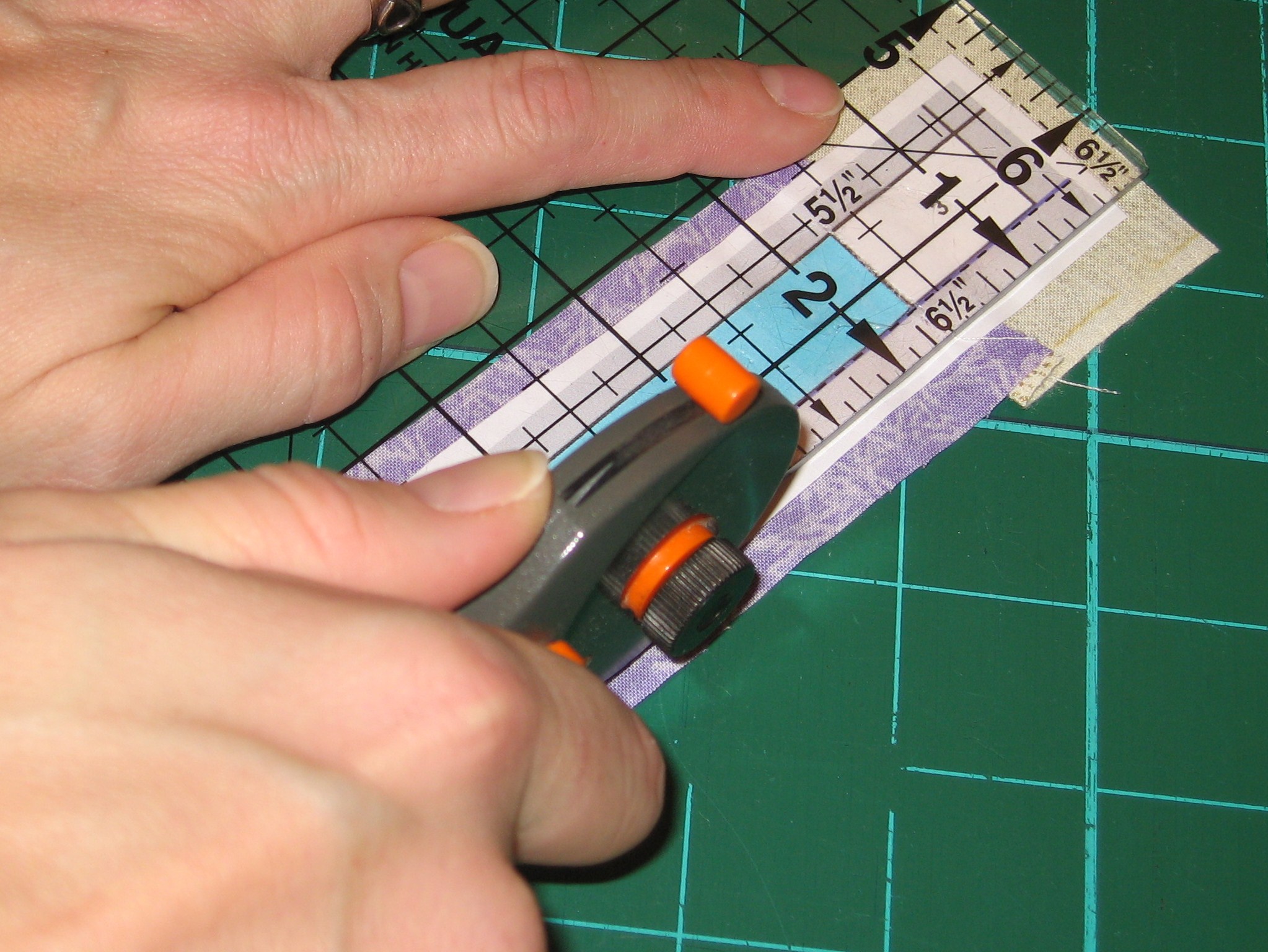
Using the pattern’s seam allowance as a guide, trim. (note: Not all paper pieced patterns include seam allowance. All of my patterns do, but if you’re ever working on a pattern without seam allowance, you can add it using this simple tutorial.)
paper piecing tutorial (34)

Find the corresponding seam on unit “A” and repeat the process.

paper piecing tutorial (36)

Now the “A” pattern piece is ready to join to the “B” pattern piece.

paper piecing tutorial (37)

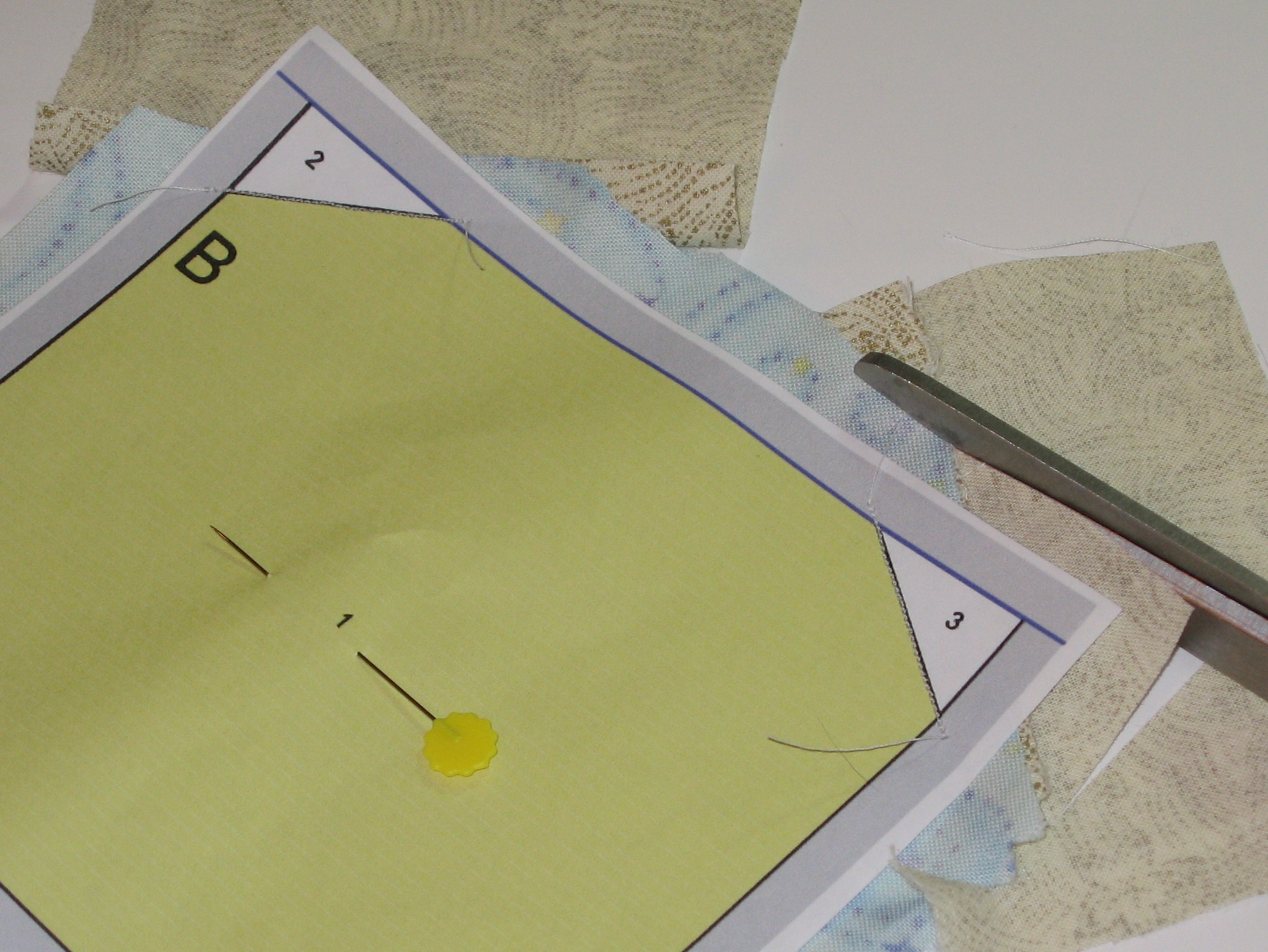
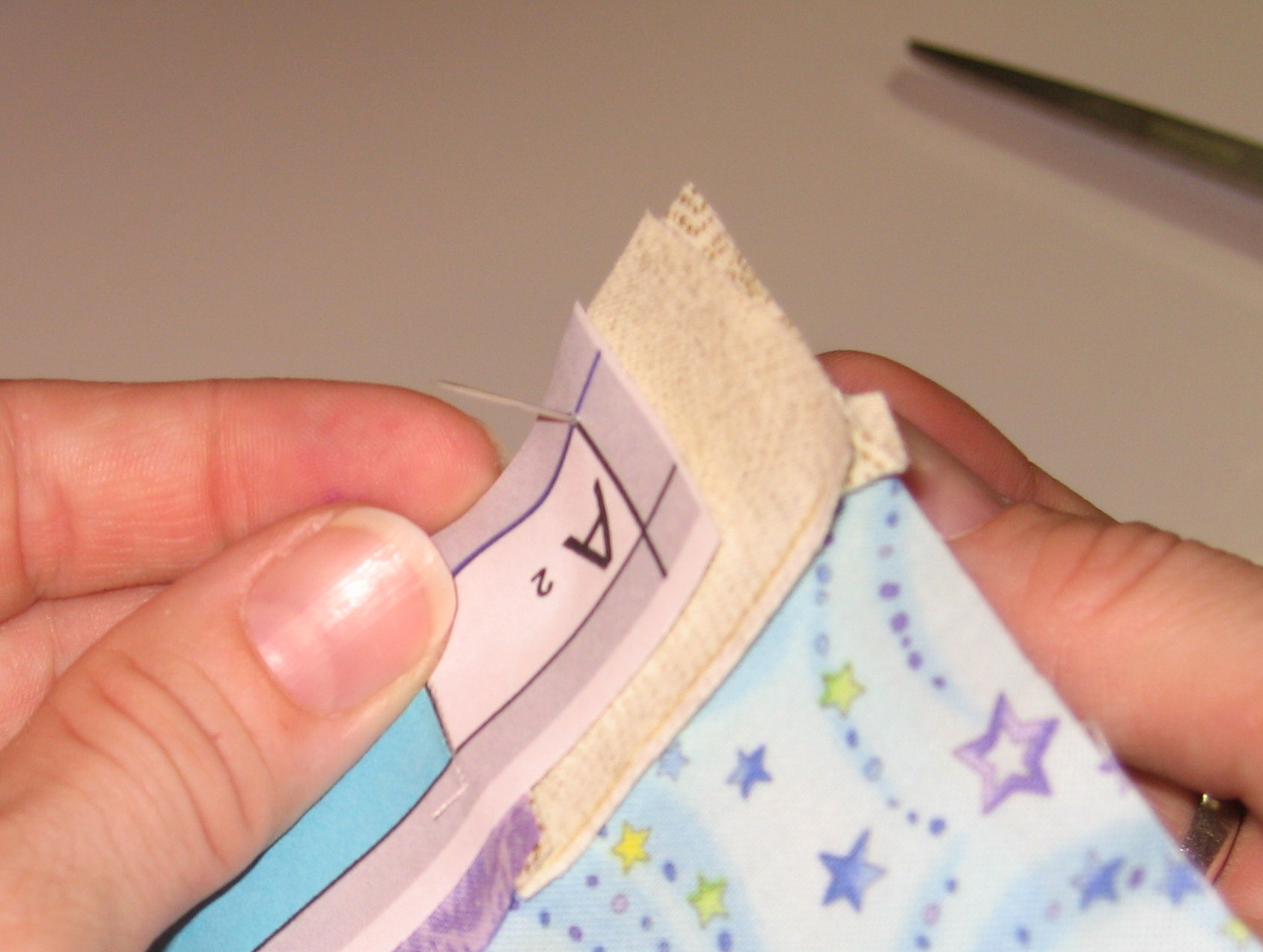
Use a pin to find the outside corner. Push the pin through this point.
paper piecing tutorial (38)

Find the corresponding point on the other pattern piece. Push the pin through.

paper piecing tutorial (39)

Push the pin all the way through to line up the pattern pieces. This will assure that your pattern pieces align correctly when stitching.
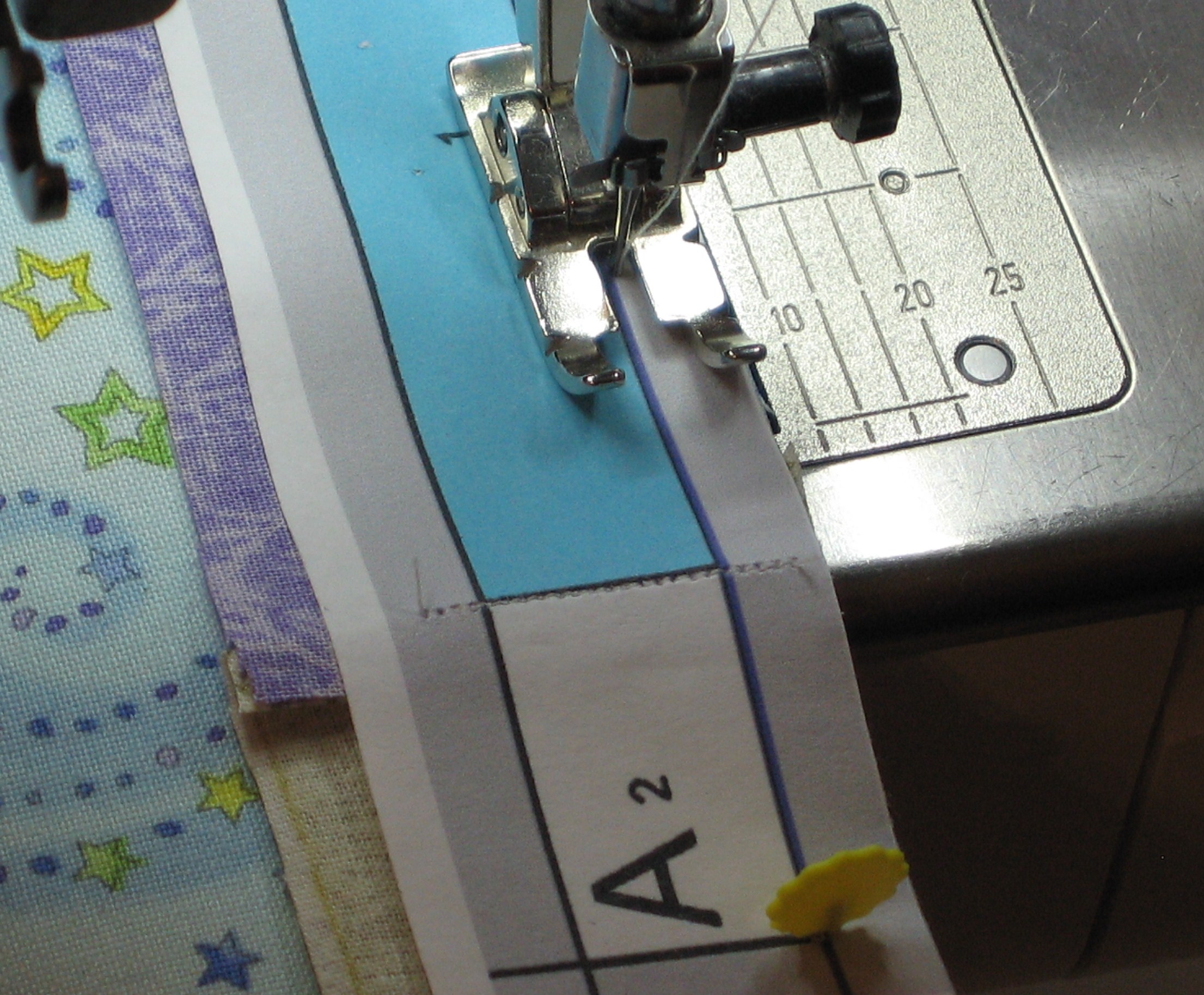
paper piecing tutorial (40)

Using the pin keep the pattern aligned, stitch along the seam line.

Tip: Use Wonder Clips to hold the seam in place. (Not shown…Wonder Clips are awesome, but they came out after I originally wrote this tutorial!)
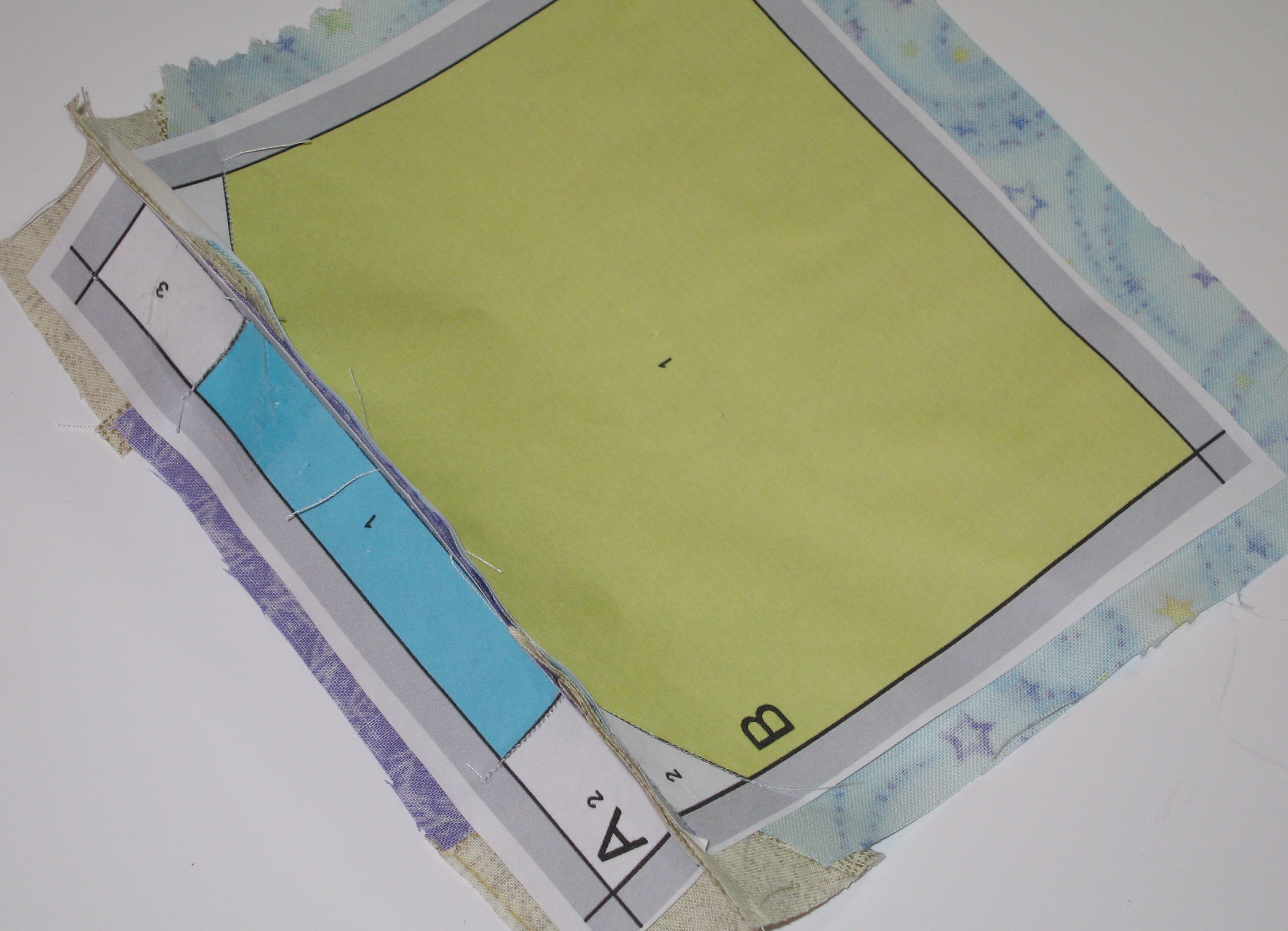
paper piecing tutorial (41)

This is what you have now.

paper piecing tutorial (42)

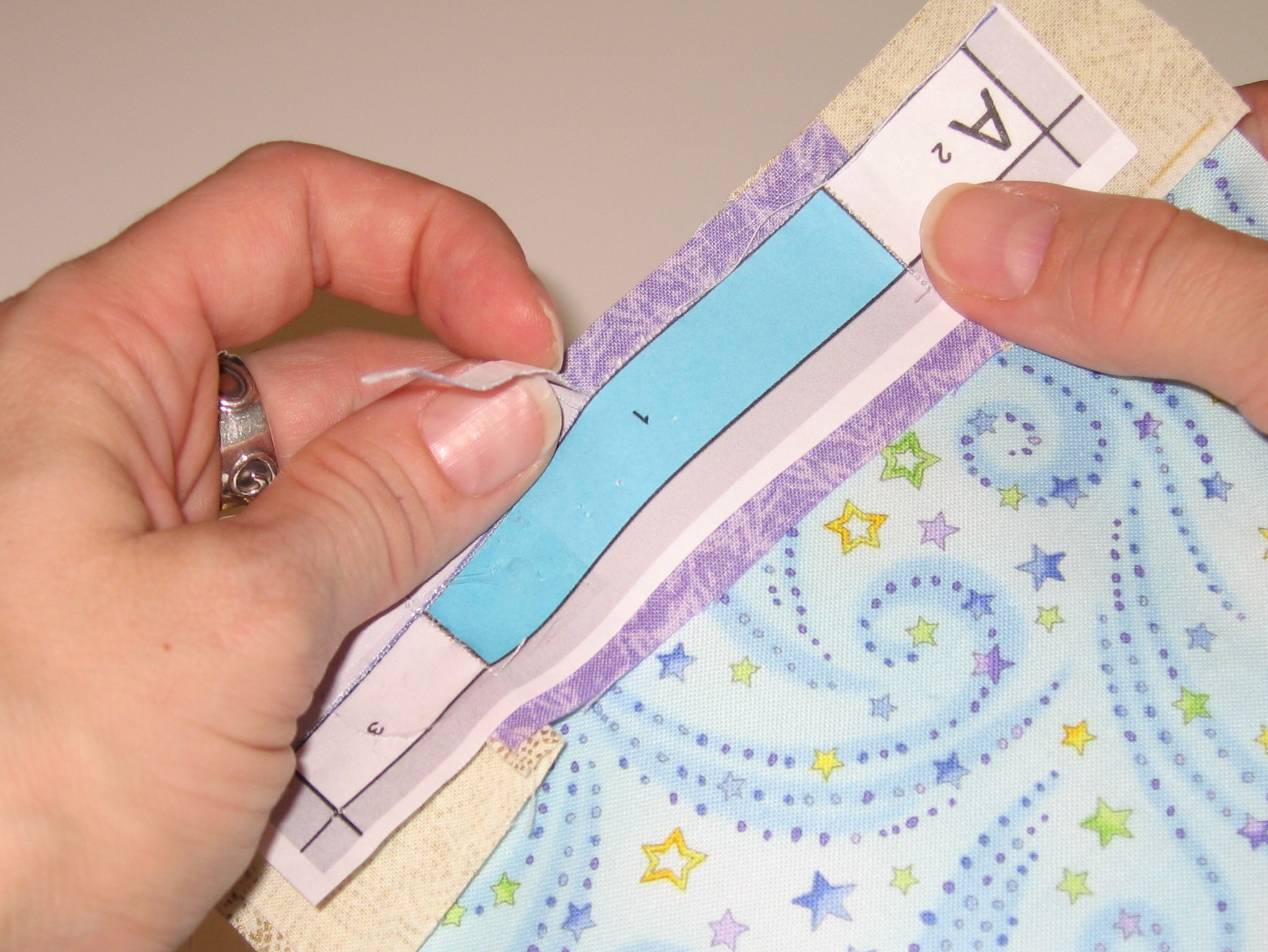
Remove the paper seam allowance that was just stitched on the “A” piece.

paper piecing tutorial (43)

Repeat for the “B” piece.

paper piecing tutorial (44)

Open the block and press. The seam can be pressed to one side or pressed open. I usually let the fabric decide for me.
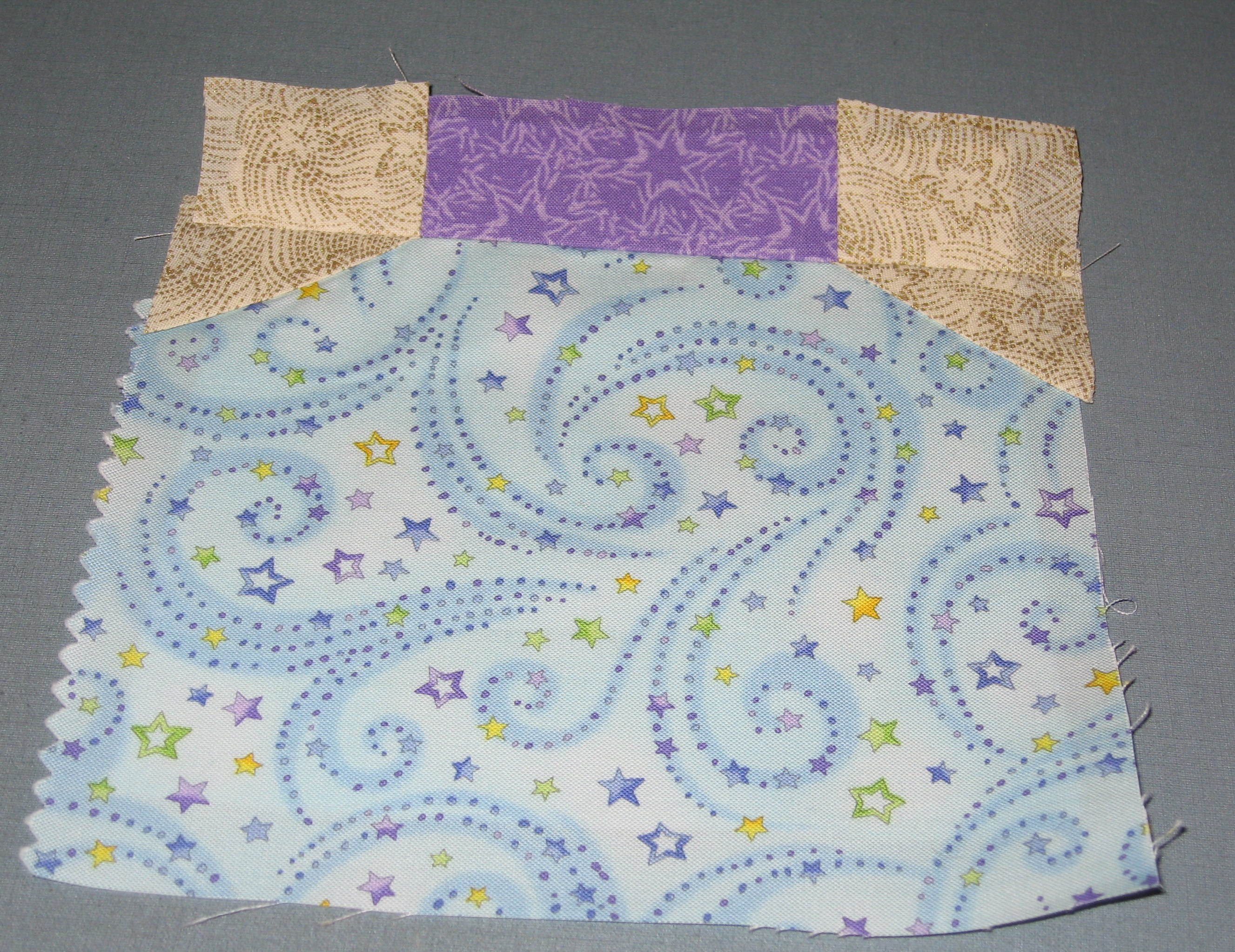
paper piecing tutorial (45).JPG

Now you have this from the front.

paper piecing tutorial (46).JPG

And you have this from the back.

paper piecing tutorial (48)

Time to square up the block! Align the ruler with the bottom edge with the seam allowance inside. Trim to 1/4″.
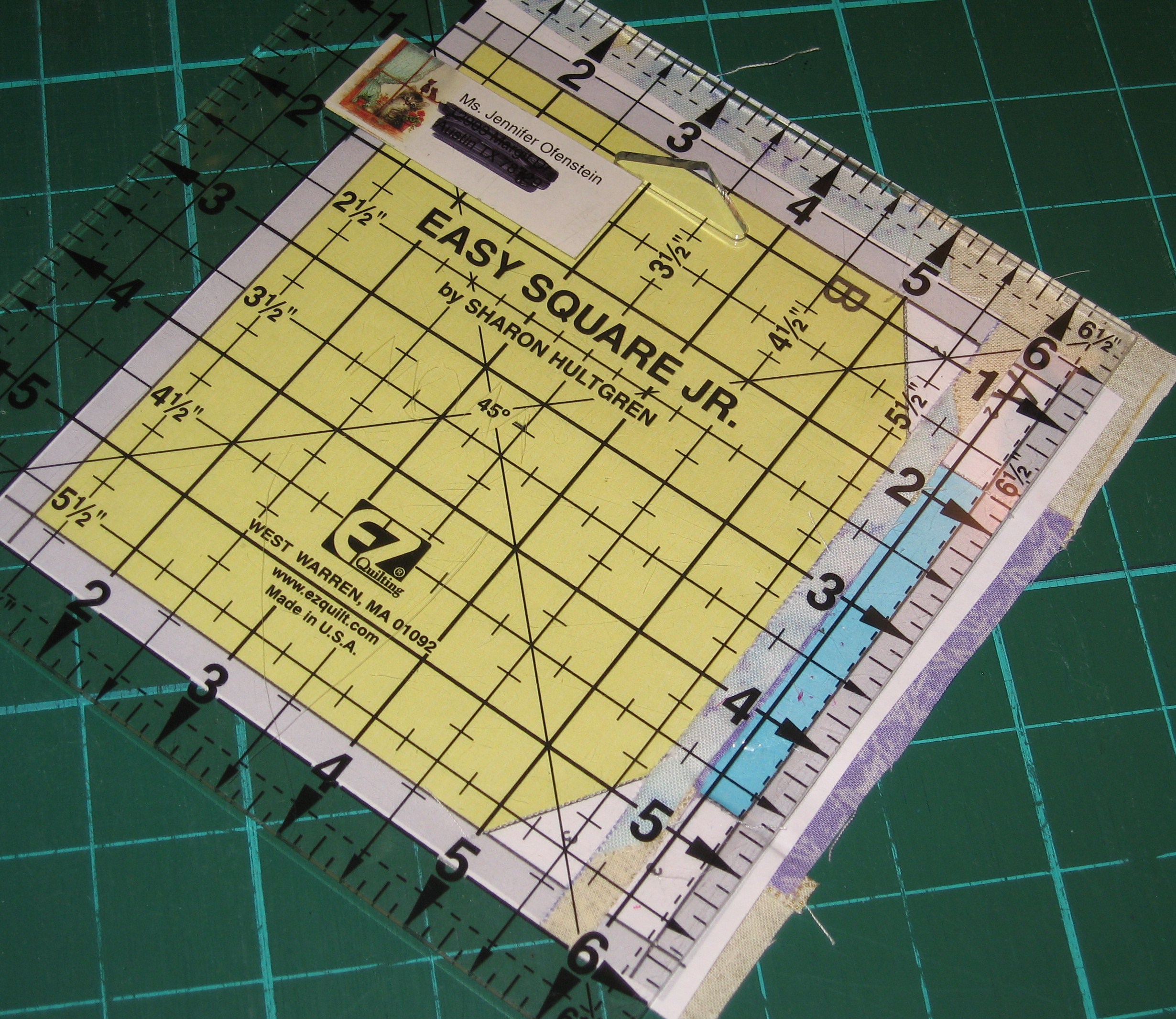
paper piecing tutorial (49).JPG

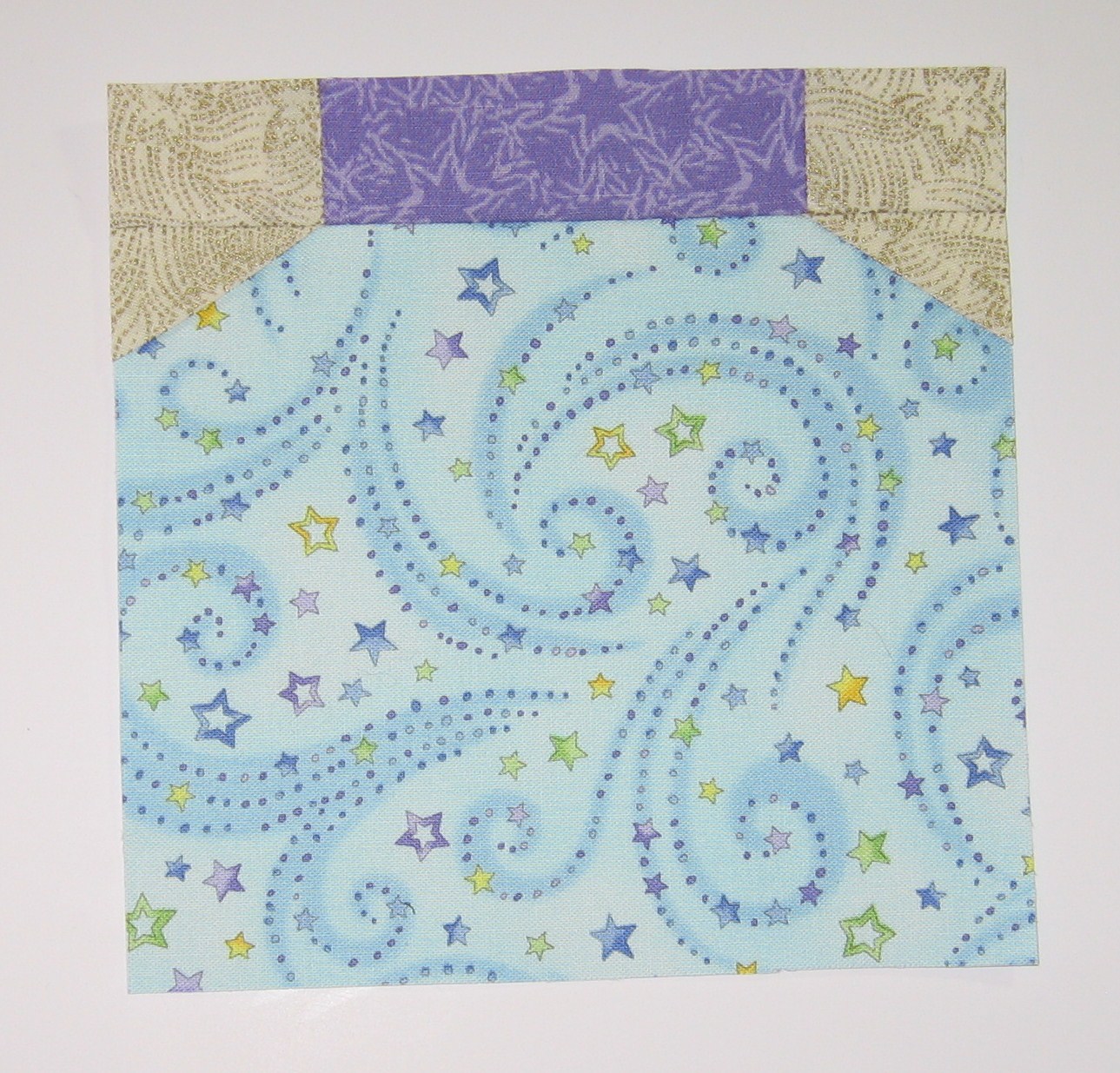
Using the first cut, square up the block to 5 1/2″. If the pattern is a little off, go with the ruler’s measurement and not the seam allowance on the pattern. Printers vary widely, as do patterns. You can make minor corrections by squaring up the block.

paper piecing tutorial (50).JPG

Now you have this…all squared up! Leave the paper attached until the block is in it’s final location. That will keep the bias seams from stretching.
paper piecing tutorial (51)

From the front!

Use this block for quilts, pillows, bags, pot holders, wall hangings or anywhere else you’d use a square of fabric or a quilt block!

You can find lots of free patterns right here on Sewhooked!

Join the Sewhooked Facebook Group for community, support, & prizes!

signature-2016

Facebook ♥ Instagram 

Posts on this blog may contain affiliate links but I have no control over “sponsored posts” which are the price I pay for a less expensive website. Thank you for your understanding & support. ♥

T-Shirt Reconstruction: She-Shirt

The She-Shirt – Resizing a too big shirt to fit

It’s no secret among my friends that I’m a big Eddie Izzard fan. My family and I were lucky enough to get to see a live performance in June. Eddie was amazing, funny & brilliant, just as you might expect!

Also available as a video tutorial:

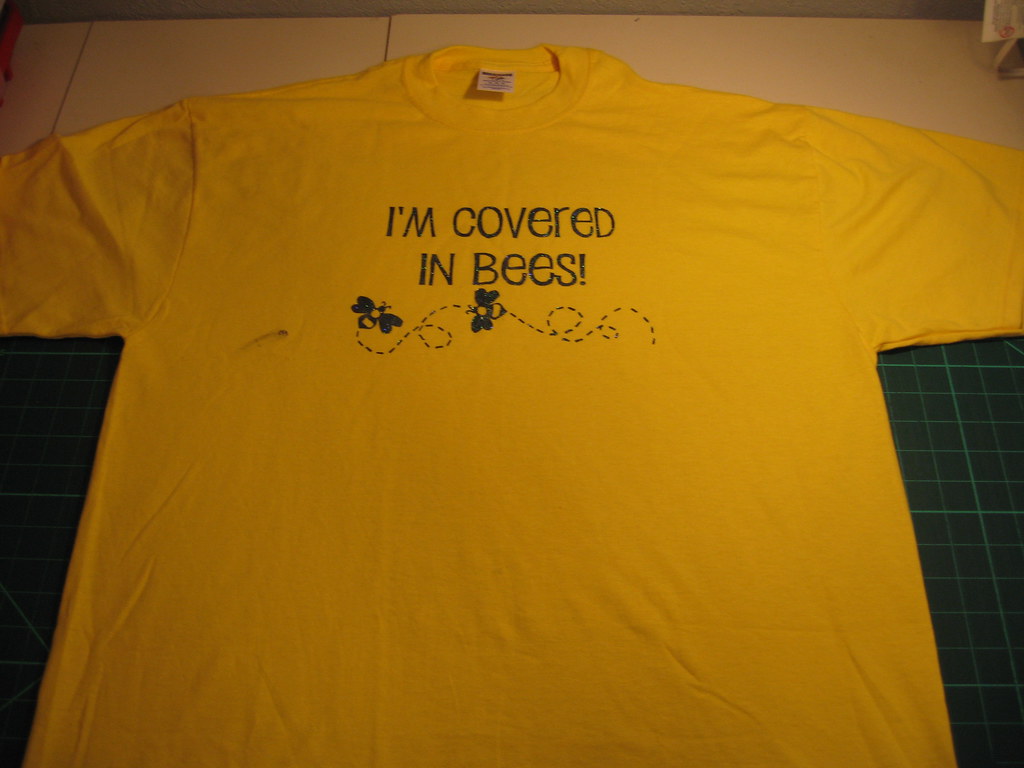
In honor of our shared Eddie-love, my good friend Shae stenciled this fantastic “Covered in Bees” t-shirt for me. She knew it would be too big and sent it with her crafty blessings to be reconstructed however I saw fit.

Resizing tees is the recon I do most often, making my shirts fit me better while still being long (and wide!) enough to go over my hips.

Use a favorite shirt that you already love the fit of and that has similar stretch to the fabric.

This is a fairly easy recon and usually takes about 30 minutes from start to finish.

Supplies:

  • Too Big t-shirt
  • smaller tee (guide)
  • pins
  • scissors
  • thread
  • sewing machine (optional)
  • ball point needle (for jersey fabrics)

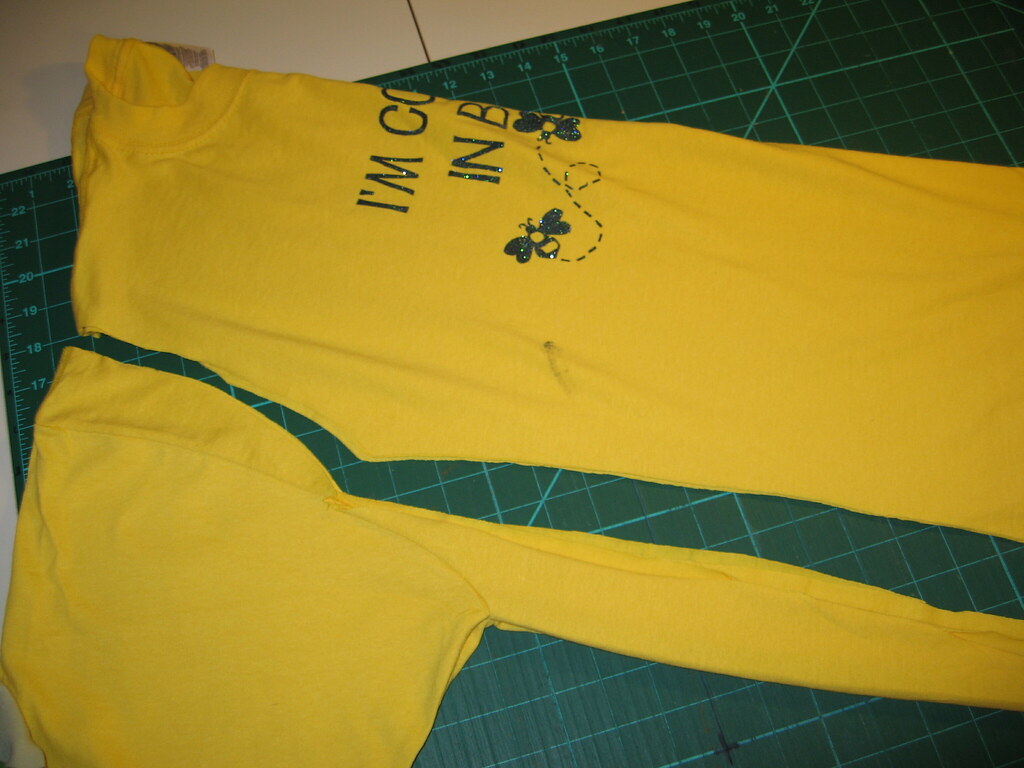
The shirt, before resizing

 
Resizing using a favorite shirt – cut about 1/2″ away from the original shirt so you have seam allowance. You’ll have to do a little guestimating on the sleeves, but if you take it slow and careful, it’ll work out fine.


Use my favorite recon technique and eyeball for the sleeve size, adjusting the sleeve under the body of the t-shirt until it’s the length and shape you want. Pencil a line on the existing sleeve using the cut on the t-shirt, and then added about 1/2″ for seam allowance.


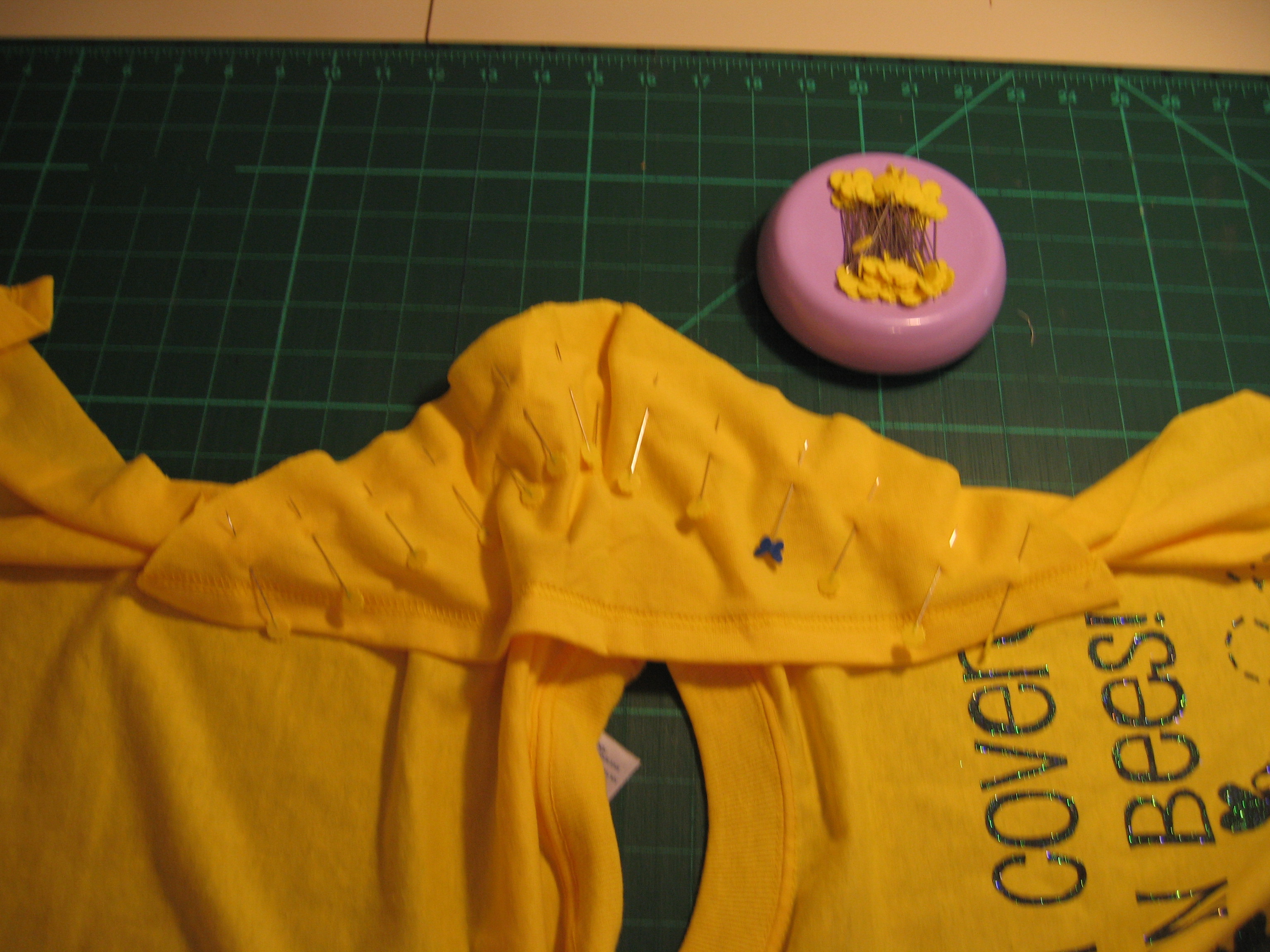
Find the center on the sleeves, pin to the seam allowance on the shirt. Pin along the sleeve, being careful not to pull or tug the fabric. Stitch using a stretch stitch and 1/2″ seam allowance.

(Note from 2025 Jennifer – while updating this tutorial I realized this photo was missing. It appears to be long gone from my files and I do apologize for the inconvenience.)


After stitching the sleeves, fold shirt in half, right sides together, matching the bottom hem. Stitch a 1/2″ seam under the sleeve and all the way down the side. Trim seam allowance, if you wish.

Because you leave the original hems for the sleeves and the shirt in place, the reconstruction is now complete!

Add your Sewhooked-related photos to my flickr group and you might be featured in a future post!

Happy Crafting!

Find my free patterns on Sewhooked & Fandom in Stitches.

♥ Jennifer O

Posts on this blog may contain affiliate links to help cover the cost of my website. I thank you for your generous support. ♥
Video Tutorial: Freezer Paper Stencils

I love t-shirts. I love them in a BIG way. I love to reconstruct, redo and, most of all, stencil my t-shirts!

Some time ago, I was asked by some friends for a stenciling tutorial. What I ended up posting was a video tutorial covering how to make a basic freezer paper stencil. The shirt shown was for my partner in a Twilight swap I participated in on craftster.

I hope you enjoy the video and give stenciling a try if you haven’t already!

Find my free patterns on Sewhooked & Fandom in Stitches.

♥ Jennifer O

Posts on this blog may contain affiliate links to help cover the cost of my website. I thank you for your generous support. ♥

Way Back Craft: Golden Snitch Antennae Ball

snitch 005

I’ve been crafting Harry Potter-themed items since my first reading of the Harry Potter and the Sorcerer’s Stone (Philospher’s Stone for those outside the U.S.).

When I turn back my brain to 1999, I’m quite sure one of the very first things I made was a Golden Snitch. That first Snitch was not an antennae ball, but a soft version with actual feathered wings that my kids played with during their enthusiastic quidditch matches!

You can find many of my Harry Potter craft ideas both on sewhooked and in the Harry Potter Crafts section of The Leaky Cauldron.

Snitch Antenna Ball
by Jennifer Ofenstein
http://www.sewhooked.org

  • 1 ball-shaped antenna ball
  • spay primer
  • gold paint (either spray or oil based in a can)
  • 2 gold brads
  • white craft foam
  • Wing Pattern
  • a skewer or chopstick
  • old box or piece of Styrofoam
  • box cutter or Exacto Knife
  • hot melt glue OR Tacky Glue
***Please Note: When using spray paint work outside or in a well ventilated area***

Place the antenna ball on the skewer.

Poke the skewer into the box or Styrofoam. This will hold the ball in place for painting and give it a place to dry.

Prime the antenna ball. Follow the paint manufacturer’s instructions for drying.

Use gold paint to paint the ball. If using spray, follow manufacturer’s directions.

For brush on, if you have enough, dip the ball in the paint and allow most of the paint to drip back in the can before carefully placing it back in the drying area. Allow to dry overnight.

Cut two wing shapes out of the craft foam.

Using the Exacto knife, cut a small hole in the base of each wing and on either side of the ball where you want to place the wings. Do this by gently pushing the blade into the ball. It does not have to be very deep, just enough to poke the brad in.

Use the tip of the scissors to score the center of the wing (as shown on pattern). Do not cut, just create a gentle groove. This will help with the feathery shape of the wing.

Snip along the wing to create a feather shape (as shown on pattern). Stop 1/4″ from the scoring line.

Poke the brad through the hole in the wing. Place a dab of glue on the cut in the hole cut earlier in the ball and then push the brad into it, positioning the wing how you want it as you do so.

Repeat for the second wing.

Finishing touch – tack the wings together to keep them from drooping while they are on the antenna of your car.


This is part of my “Way Back Craft” series’; patterns, crafts, tutorials and general crafty memories before the days of this craft blog.

Happy Crafting!

this tutorial also available on cut out + keep

T-Shirt Reconstruction: Reverse Applique Window

Reverse Applique Window T-Shirt

My son got this great orange t-shirt at the science fair he participated in last year. Unfortunately, it was way too small and *gasp* not black, which is his favorite t-shirt color. We talked it through and he agreed that if it was part of a black shirt, he’d definitely wear it.

I used one of my favorite “save a t-shirt” recon techniques, a reverse applique window. It’s easy peasy and takes only about 15 minutes to complete. The sewing machine and rotary cutter are totally optional here. This recon could easily be done with just plain old scissors and a needle and thread.

You’ll Need:

  • 2 t-shirts
  • straight pins
  • chalk
  • ruler
  • rotary cutter (optional)
  • scissors
  • sewing machine with ball point needle OR needle & thread

Slit the shirt that will be in the “window” up each side and open out.

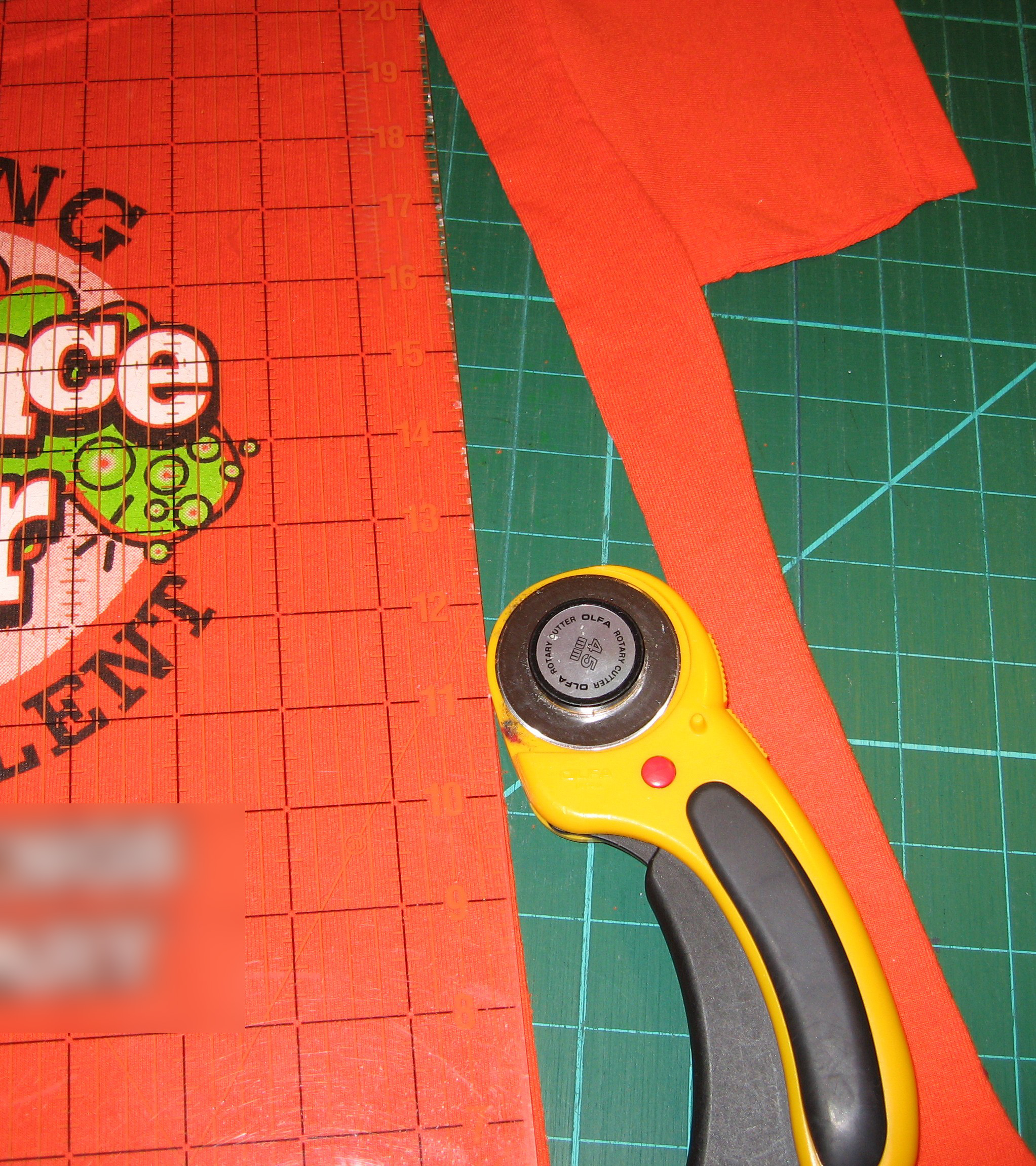
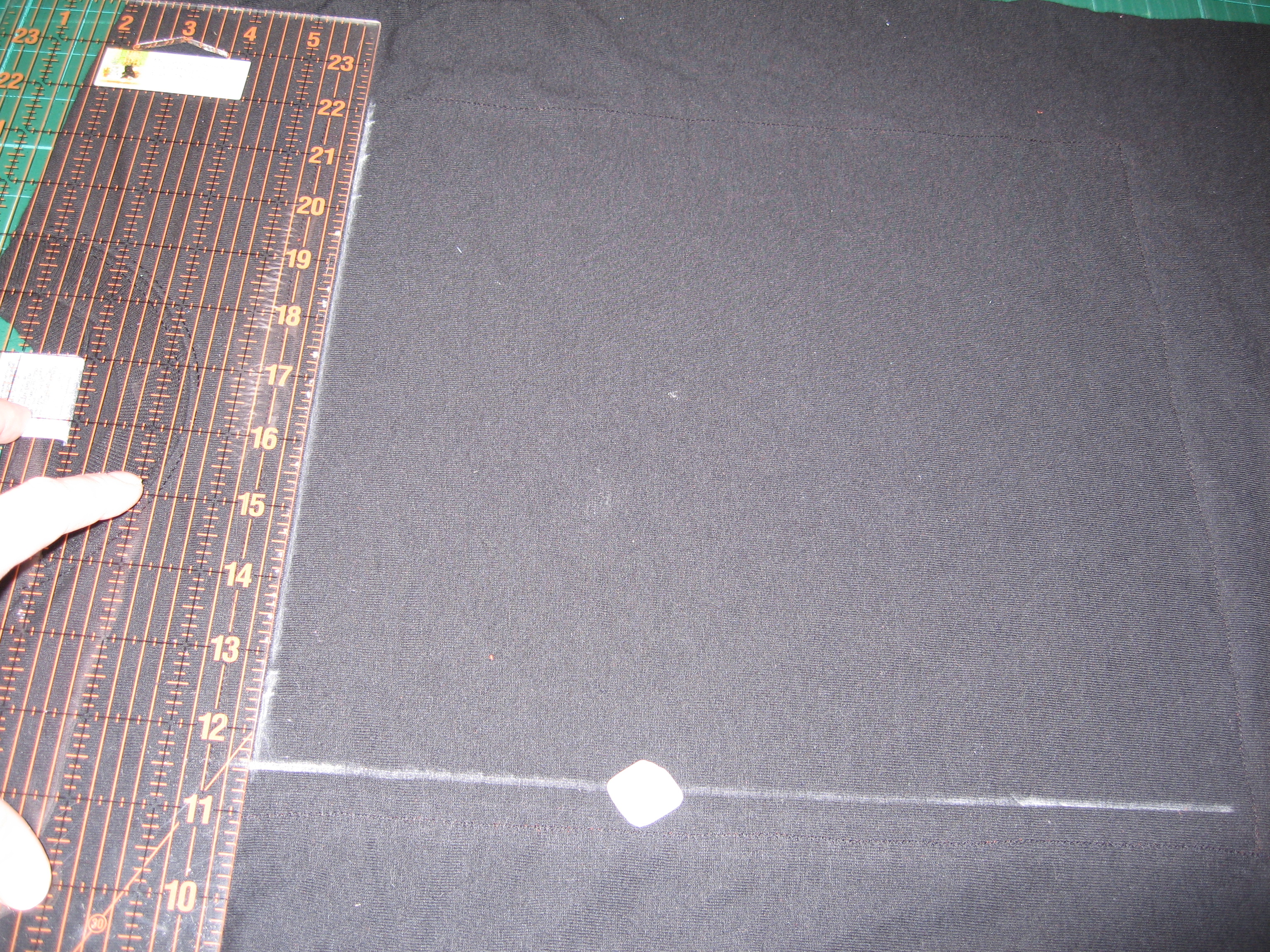
Using a rotary cutter and ruler OR a ruler and chalk with scissors, cut a square out of the front of the window at least 1″ larger than the image on the shirt.

Turn the intact shirt inside out. Center the square with the image on it right side down on the inside front of the intact shirt. Pin clockwise – this makes it easier to remove the pins as you stitch.

Stitch around, removing the pins as you go so as not to stitch over them. If using a sewing machine, choose a stretch stitch.

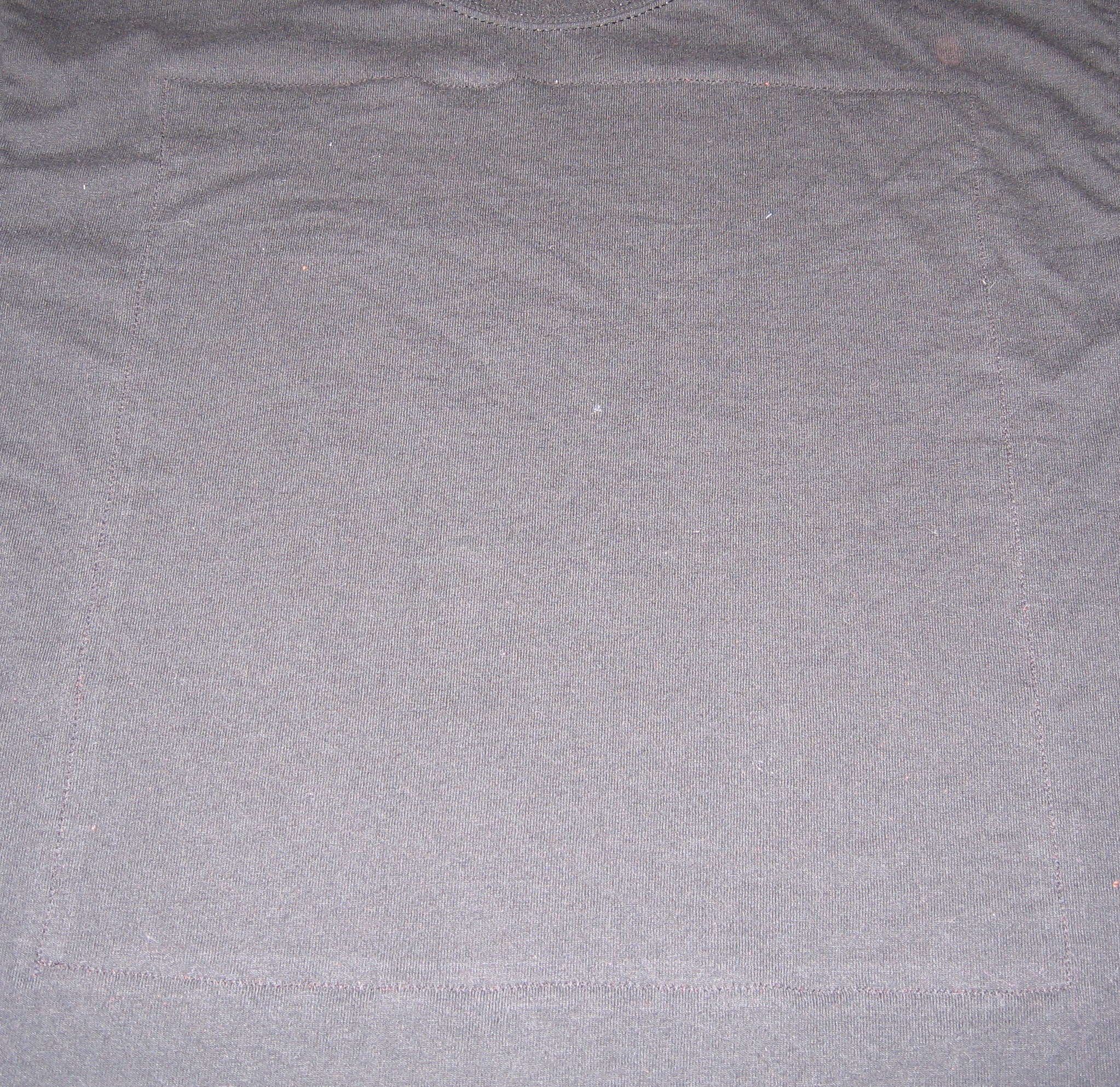
Turn the shirt right side out. You can faintly see the stitching line here.

Draw a chalk line 1/4 – 1/2″ inside of the stitching line. This will be your cutting line. 

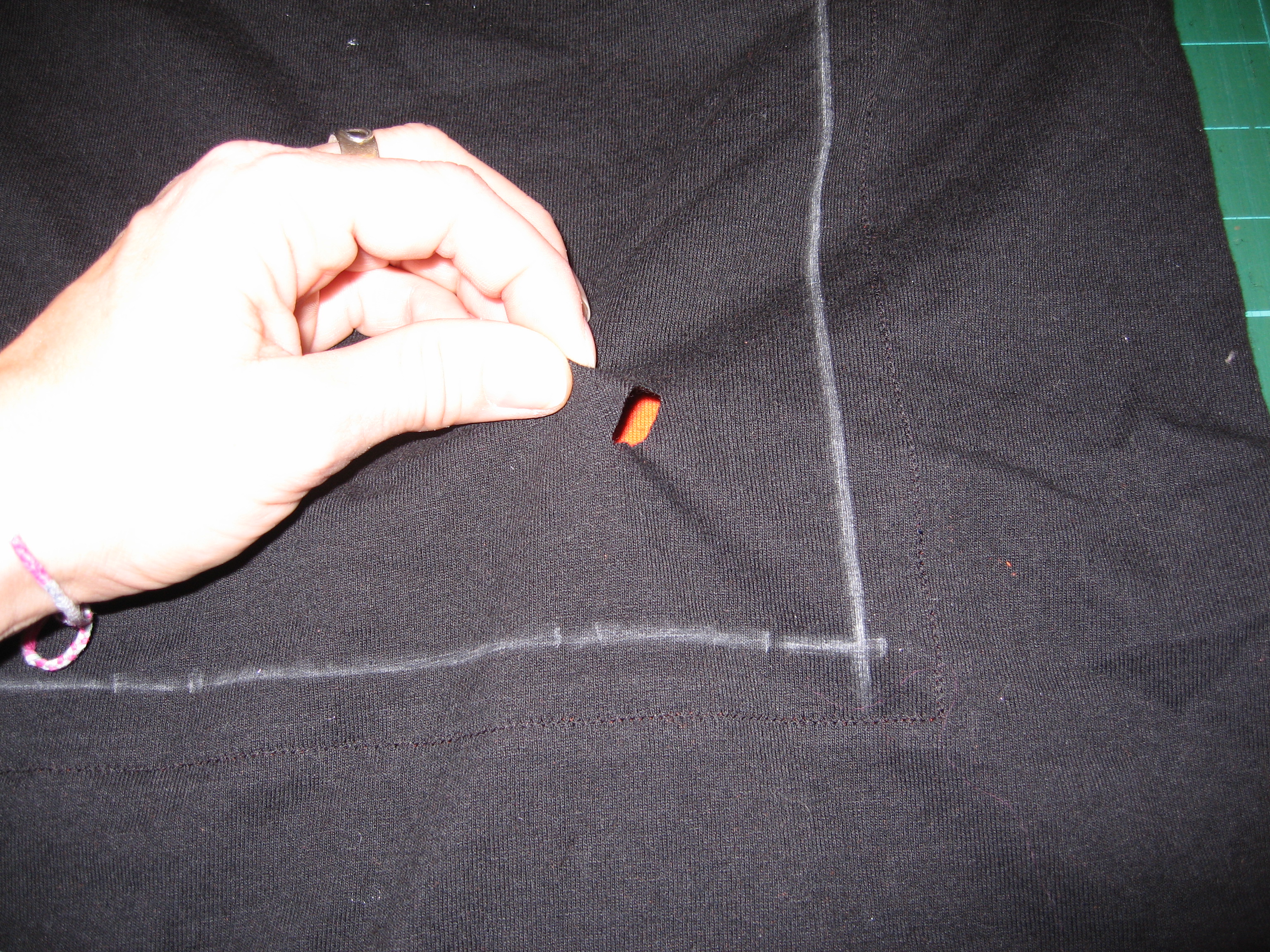
Near one of the corners, pinch the fabric of the intact shirt away from the applique piece on the inside. Make sure you just have one layer of shirt. Cut a small hole with the scissors. Trim carefully towards the chalk line.

Cut around the chalk line and remove the center piece.

Voila! Reverse applique t-shirt!

Happy crafting!

Find my free patterns on Sewhooked & Fandom in Stitches.

♥ Jennifer O

Posts on this blog may contain affiliate links to help cover the cost of my website. I thank you for your generous support. ♥

Recycled Cereal Box Labels

Recycled Cereal Box Labels

I am not a scrapbooker, not even by the grandest stretch of the imagination. There are crafters in my life that are uber-talented scrapbookers and do amazing things with photos, ink and paper.

Even though I don’t scrapbook, I do love stamps. My stamp collection is tiny, but functional and I love to use it whenever I can.

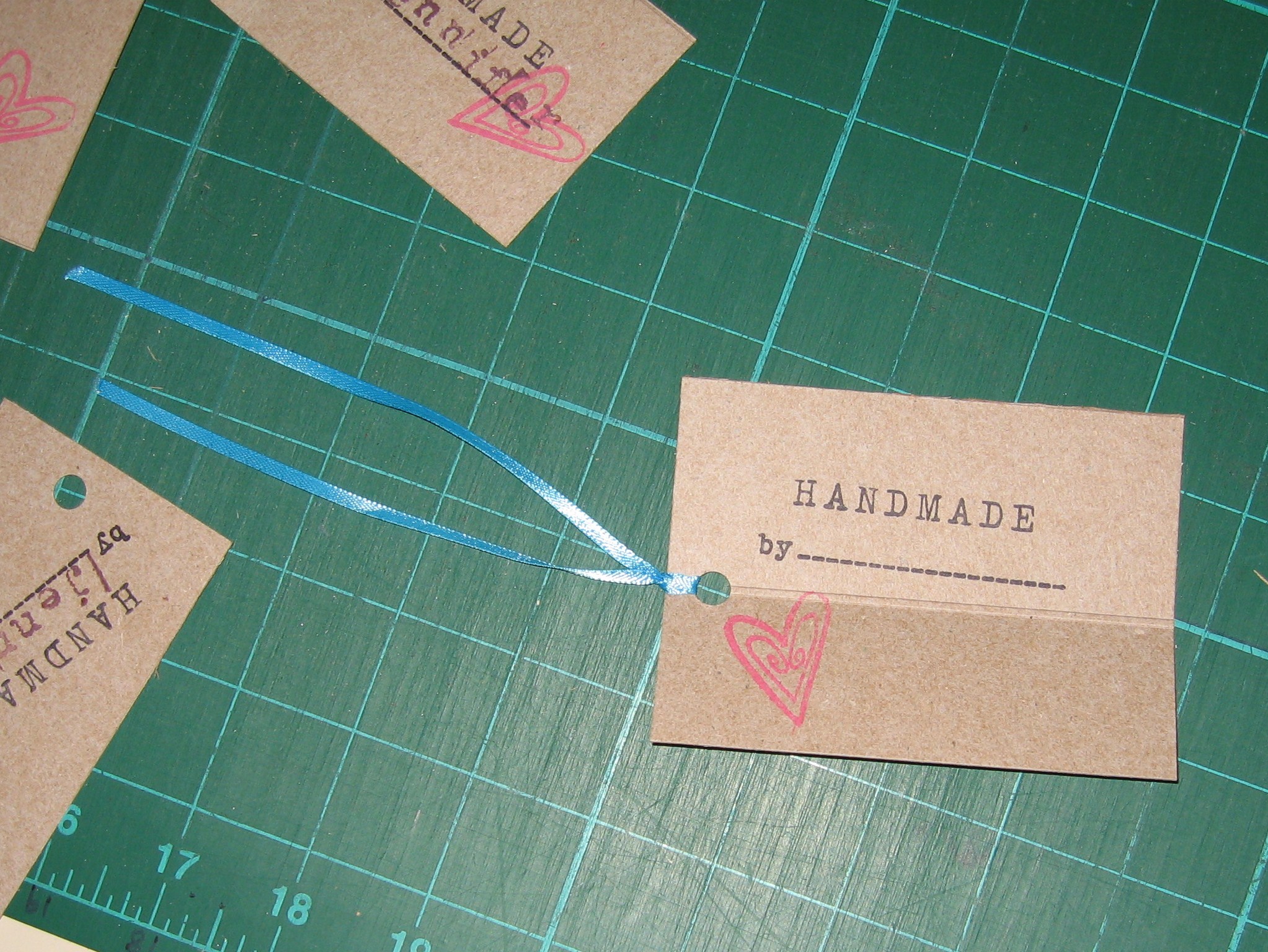
Because I make so many hand crafts, I love to have handmade labels on hand. My new favorite stamp is a “handmade by” I found at Hobby Lobby during a recent sale.

Recycling + new stamps = Cereal Box Labels! One large cereal box makes about 18 3″ x 4″ labels.

  • cereal box
  • stamps
  • ink pads
  • ribbon
  • paper cutter OR ruler & scissors

Open the cereal box along the seam line. Trim off the flaps. Recycle or set aside for another project.

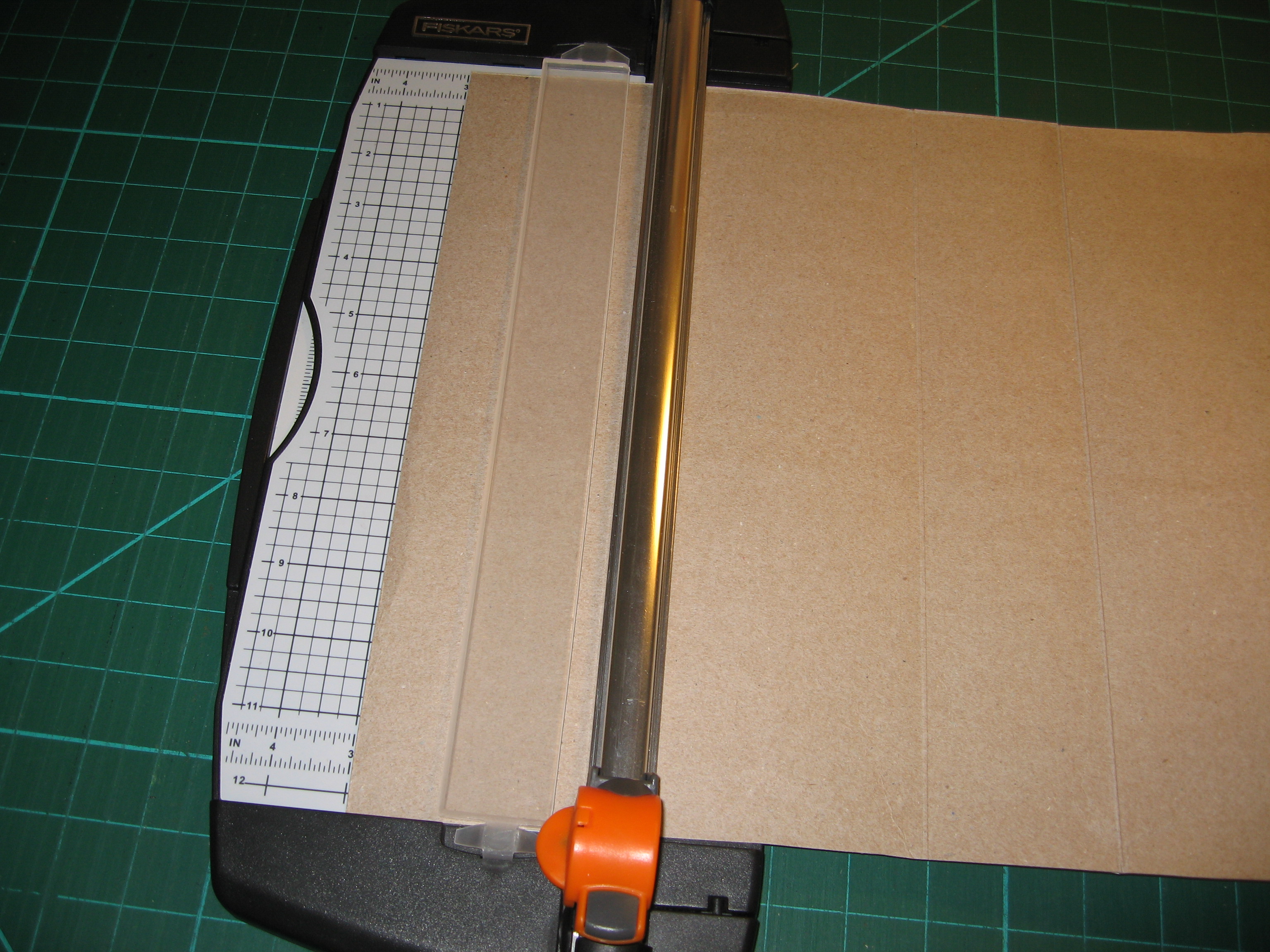
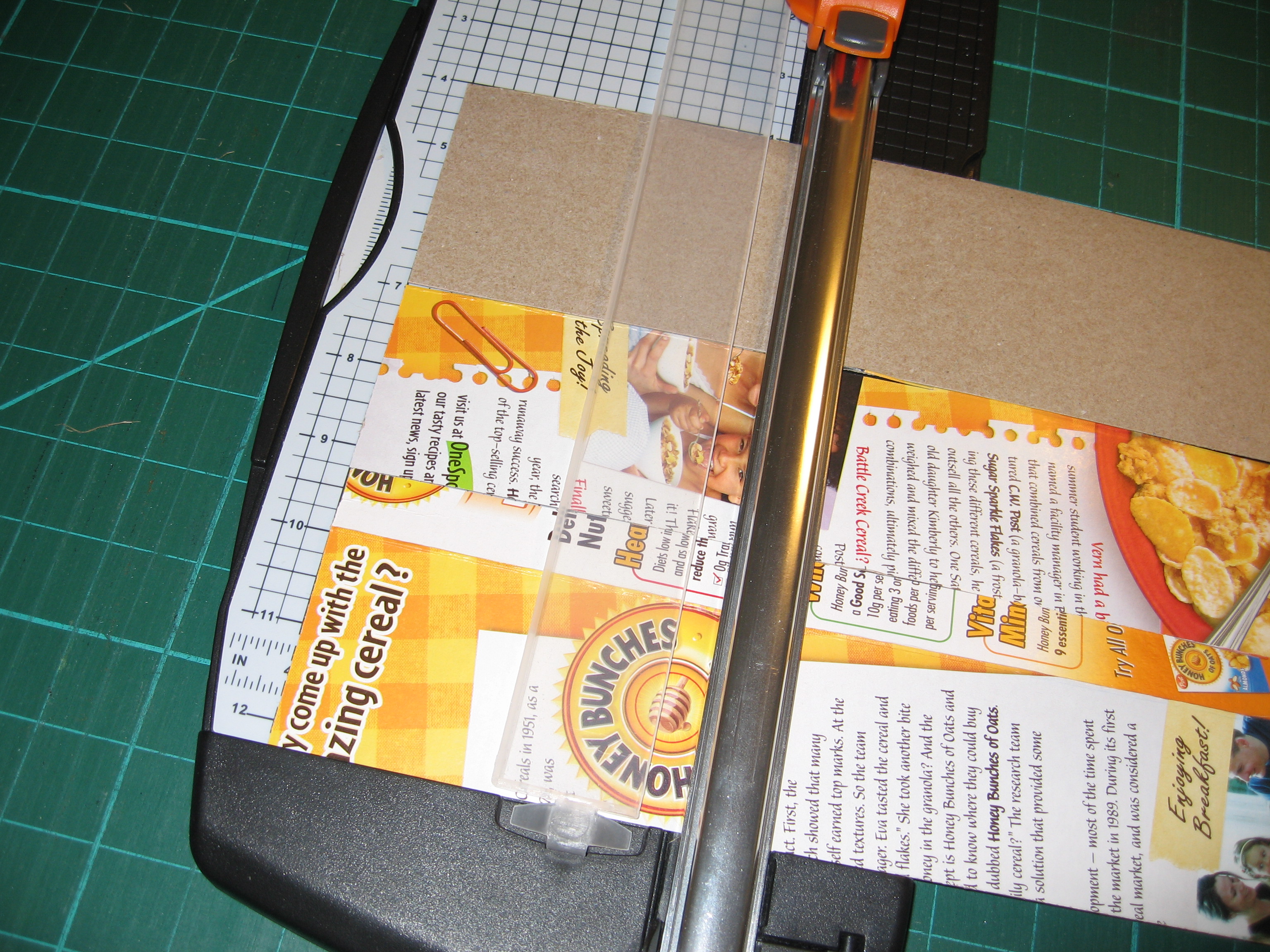
The next two steps can be done either with a paper cutter or with a ruler and scissors.Square up the end of the box. Cut in 4″ strips.


Cut strips into 3″ pieces, giving you 3″ x 4″ cards

Now the fun part! Stamp! Use whatever stamp, color, etc. you like. If you have alphabet stamps, add your name, too!

Punch holes in the side or corners of the labels.

Tie a ribbon or string through the hole in the label. Thread the two ends in first, then bring those through the loop. Pull tight.

Tie, tape, pin, or glue your new recycled labels onto crafty projects.

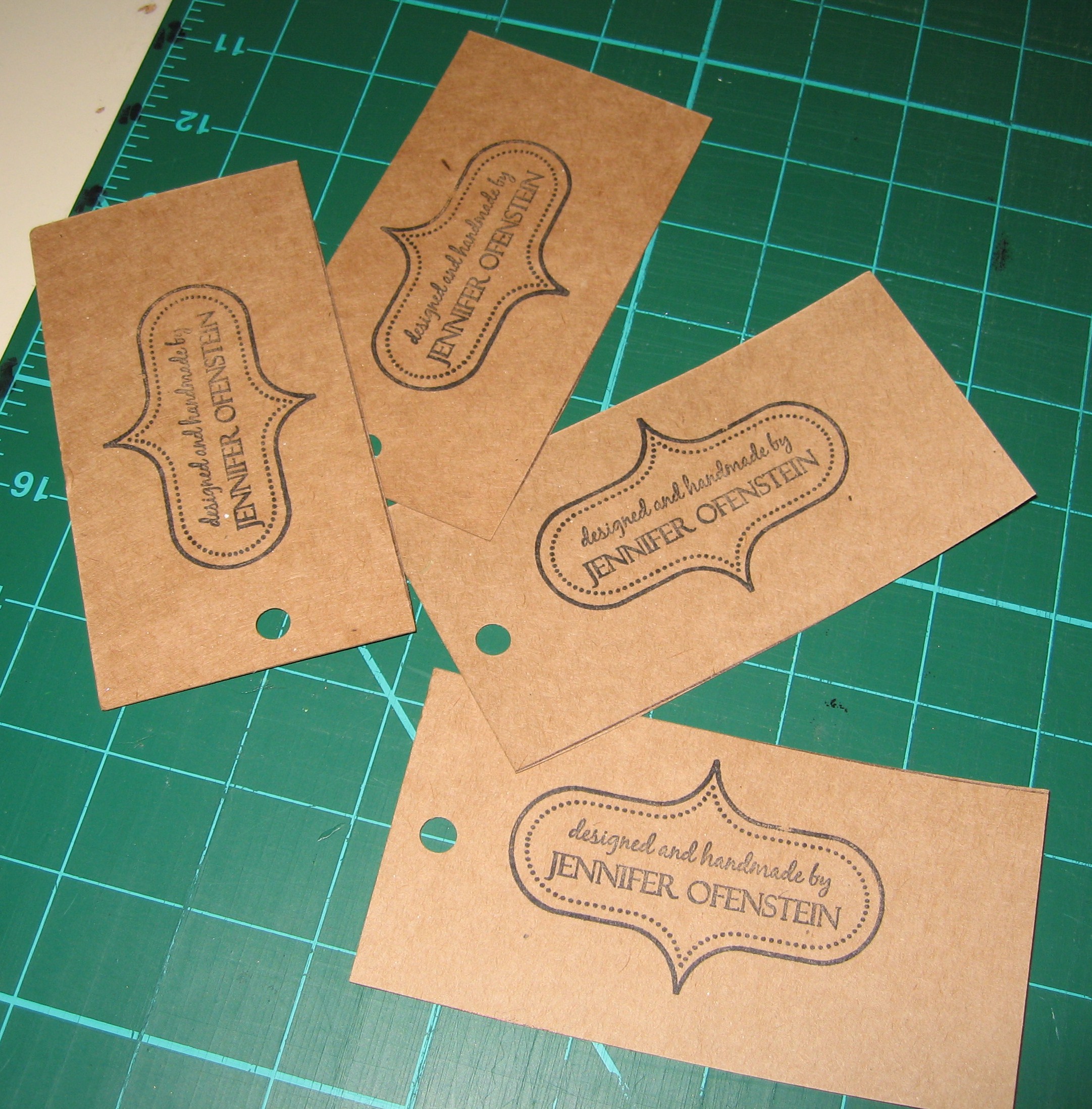
After originally uploading this tutorial, I was gifted my own custom stamp. How fun is that?!

Happy crafting!

Find my free patterns on Sewhooked & Fandom in Stitches.

♥ Jennifer O

Posts on this blog may contain affiliate links to help cover the cost of my website. I thank you for your generous support. ♥