You probably know by now, I’m a big thrift store shopper, especially for clothes.
I found a great pair of Gap jeans that fit perfectly, and only paid $1.25 for them! The only drawback was that they were too short, even for my average-length legs.
This was my easy-peasy solution. It works with or without the extra trim. I just love adding a little flavor to my thrifted goods!
You’ll need:
One pair of too-short jeans
seam ripper or razor (use razor with care, I don’t want anyone losing a finger!)
steam iron set to “cotton”
optional: trim, ribbon, etc.
sewing machine
thread
scissors
What to do:
Rip out the hem using a seam ripper, or, if you have a steady hand, a razor works great to get through the heavy duty stitching.
Press the legs out, removing any bits of thread left from ripping out the seam. You may need steam for this step to get the old hem lines nice and flat.
If the previous location of the bottom edge is a holey or ragged, you can add ribbon, leftover quilt binding, or any other washable trim by pinning around the outside. Tuck the ends under and then top stitch both edges.
For an unfinished edge, zig zag around the edge of each leg or use a decorative stitch. Once they’re washed, they’ll fray nice and even.
I’ve got several pairs of jeans like this, all of them found for super cheap and all of them with their own distinctive look. Love them!
I had a great time writing up the post and collecting quilty photos and would like thank Michele from Quilting Gallery for including me in such an awesome project.
There’s a prize from me for the first five commenters, so be sure and have a look.
My fur babies all stay indoors, but I still feel safest if they’re wearing a name tag with our address and phone number on it in addition to their city tags. They’re sneaky, ya know?
After numerous lost collars, a couple of which turned up years later under a pile of boxes in the garage, I started making replacement tags instead of buying. It’s easy and inexpensive.
The first one I made is about two years old now and is still in perfect shape!
You’ll need:
Polymer clay (like Sculpey or Fimo; also called polyclay)
polymer clay pasta machine OR poly clay rolling pin
**please note: if using a pasta machine, it needs to be used only for polymer clay. DO NOT use the same machine that you’d make pasta with**
parchment paper
1 to 1 1/2″ cookie cutter with a uniform shape (don’t be tempted to make the tag larger, the larger it is, the more likely your pet will be able to get into his or her mouth)
Knead a small amount of clay, then roll out with a clay roller or pass through pasta machine on the next to thickest setting. On my machine, that’s an 8.
For more information about handling polyclay see Working With Polymer Clay on Crafts-For-All-Seasons
Place clay on a small on the parchment paper. Press the cookie cutter straight down, making one blank. If you’re making more than one, now is a great time to cut them all out.
Tag blank.
If you have alphabet stamps, use them to stamp on your pet’s name by gently pushing the stamp straight down and lifting straight up. Shown are jewelers stamps, which need to be cleaned well if used with polymer clay.
If not using alphabet stamps, use the directions for finishing the back of the tag.
Finished front with a fun star stamp added.
Take the lid off the Bic pen. It makes a perfect circle cutter for the jump ring hole.
Press the pen lid down into the clay, removing gently to avoid distorting the tag shape. Remove the plug from the lid with a toothpick.
For the back (and the front if you don’t have stamps), use the toothpick to gently write your address or phone number.
Place parchment paper with tag(s) on cookie sheet and bake according to manufacturer’s directions.
Once the tags are cool, rub a small amount of paint onto the front and backs with a paper towel, wiping away the excess. This will make the letters stand out. Allow that paint to dry for a few minutes (it won’t take long) and then coat with glaze. Allow to dry.
Add jump ring.
Because your pet will be wearing this and safety is always first, let the tag dry at least 24 hours before attaching it to his or her collar.
Ooooo, baking bread! I can’t think of anything that makes a house feel more like a home than the smell of baking bread. My mom is a bread baker and I am always reminded of coming home from school on cold days and smelling her sourdough bread baking. Nomnomnom…nothing better!
This is a favorite recipe of mine originally from a very old community cookbook. I’ve edited and changed it until it’s just the way we like it. If you’ve never made homemade bread before, this is an easy recipe to start with.
Pull-Apart Bread sometimes called Monkey Bread
1 pkg dry yeast
1 c lukewarm water
1 egg
1 tsp. salt
4 Tbs. sugar
1/2 c. (1 stick) melted and cooled butter + another 1/2 cup
3 1/2 – 4 cups flour (AP works just fine)
In a large mixing bowl*, dissolve yeast and lukewarm water. In a small bowl, beat the egg, add salt, sugar and 1/2 cup of melted and cooled butter, beating well. Add to yeast mixture. Mix well.
Slowly mix in flour, about 1 cup at a time, mixing well as you go. Mix until the dough is elastic and pulls away from the edges of the bowl.
*If you have a stand mixer, add ingredients into the mixer bowl, using the standard attachment through the first two cups of flour. Change to the dough hook and mix until dough pulls away from the bowl.
Cover and let rise until double in bulk. Time will vary based on the room temperature. Approximately 2 hours.
Once the dough has doubled, place remaining 1/2 cup of butter in a microwave safe bowl. Microwave 30 seconds at a time until just melted. Stir to help any unmelted bits finish melting.
Prepare two loaf pans by spraying lightly with non-stick cooking spray.
Place dough on a large piece of parchment paper. Roll out to about 1/4″ thickness. Use a pizza cutter or a dough knife and cut into 1 1/2″ to 2″ pieces. Dip each piece in melted butter and place in loaf pan, evenly distributing pieces between the two pans.
Cover with a towel and let rise until double again, approximately 1 hour.
Preheat oven to 400°F. Bake loaves for about 35 minutes or until golden brown. Allow to cool for 10-15 minutes and then turn out on a plate or cooling rack.
A lovely loaf of Pull-Apart Bread
The pieces will just fall apart and are lovely to have with dinner!
When I was in high school, I read The Hobbit and The Lord of the Rings for the very first time.
Tolkien’s world wrapped me up and captured me. I fantasized (and still do!) of taking off for middle earth, walking the road with Bilbo and visiting the elves.
Once a fandom girl, always a fandom girl.
Part of my Hobbit collection
When my hubby and I bought our home ten years ago, I had already been stockpiling paperback copies of the The Hobbit. I’ve been collecting interesting Tolkien covers for years and have a lovely collection. More than one sad, falling-apart copy of The Hobbit came home with me, just to have for that special project I knew I’d be doing some day.
It’s been a good seven or eight years ago that the “The Reading Room” came in to existence. I still remember the wicked happiness I had knowing that I was permanently attaching words from one of my very favorite stories onto a wall in my house. Part of it was the joy of Tolkien, and part of it was rebellion at years in rental places with cream colored walls!
When we have new visitors for the first time, and they ask to use our restroom, it’s always with a bit of glee that I direct them to the proper door. Most people hold on to their calm until they’ve exited the room, but we get the occasional guest that will shout out through the door after they’ve entered. It’s incredibly striking to stand face to face with a wall that is book pages top to bottom!
And hey, we’ve always got something to read in the bathroom!
Decoupaged Wall with pages from two copies of The Hobbit
Note: This is a permanent application. Do not use this technique unless you are absolutely sure you want a permanent change.
Supplies
● books (something you’re willing to recycle paper back books, maps, picture or comics, newspapers or letters) – amount will vary depending on the size of the wall and the materials used to cover it
● High Quality Paintbrush (check finish container for suggested brush)
● parchment paper
● large piece of cardboard
● masking tape
● newspaper or drop cloth
● latex gloves
● mineral oil
● rags
Instructions
Protect floor, baseboards, etc, with newspaper or drop cloth and masking tape.
Gently remove the book cover (I framed mine and hung them in the same room as the deco wall).
Peel apart the individual pages (this works best with paperback books).
Tape a large piece of parchment paper to the cardboard.
Wearing the latex gloves, put place several book pages on the parchment paper.
Using the paintbrush, cover each with Polycrylic.
Start applying pages to the wall. For a neat effect, line pages up side by side, or overlap and vary (as shown) for a more staggered effect.
“Cut in” by placing pages side by side or slightly overlapping to frame your wall then working your way in.
Use the brush to smooth out any air bubbles. You only have a minute or so to work with each page, so make sure you’re happy with it before moving on.
Allow pages to dry and then apply another coat of Polycrylic over the wall.
Use mineral oil and rags for clean up. Be sure to follow all manufacturer’s safety instructions.
Thror’s Map, a reproduction that hangs in “The Reading Room”
drawn by Jennifer Ofenstein, 2003
black inck on tea stained paper
As always, if you make any pattern or craft from Sewhooked, share it with the Sewhooked flickr group for a chance to see it posted right here on sewhooked.com!
In addition to Less Than Three, with the Pink & Red season looming and Cupid stringing his bow for another year, I thought it would be fun to find all the heart patterns online that I could get my hands on and then share them with you!
After searching around for a bit, it’s obvious to me that I’m not the only one obsessed with hearts. It doesn’t surprise me greatly, but I didn’t expect the quantity of patterns I found floating around out there.
The variety ranges from simple hand drawn patterns to chic professionally published ones. There were a few websites that I’m sure haven’t been updated in a decade. The patterns are still fun, cute and just waiting to be made!
Occasionally, someone will tell me they don’t like to have seam allowances on paper pieced patterns.
Everyone’s got their own preferences, so it doesn’t bother me. If you don’t like them, they’re easy enough to cut off patterns that have them.
My personal preference is definitely for seam allowance. A related question I’m regularly asked is if there is an easy way to add seam allowance to a pattern that doesn’t include it.
Yes, absolutely there is!
You need access to a copier, but beyond that, no special tools and only a few minutes of your time are needed.
If you don’t own a copy machine or scanner, you can trace the pattern with tracing paper, adding the seam allowance as you go. That will work best with simple patterns, but if you’re really patient, it will work for any pattern.
Also included are suggestions for labeling and recording sewing order for later piecing.
You’ll need:
the pattern of your choice (the example is an unfinished pattern of mine)
a copy machine or printer/scanner with copy function
graph paper, any grid size
a ruler
rotary cutter with a blade for cutting paper (optional, but it’s much easier than using scissors)
a red or colored pen or map color
fabric safe markers or pens (crayons are shown, but those are riskier and I no longer recommend them)
Print the pattern of your choice.
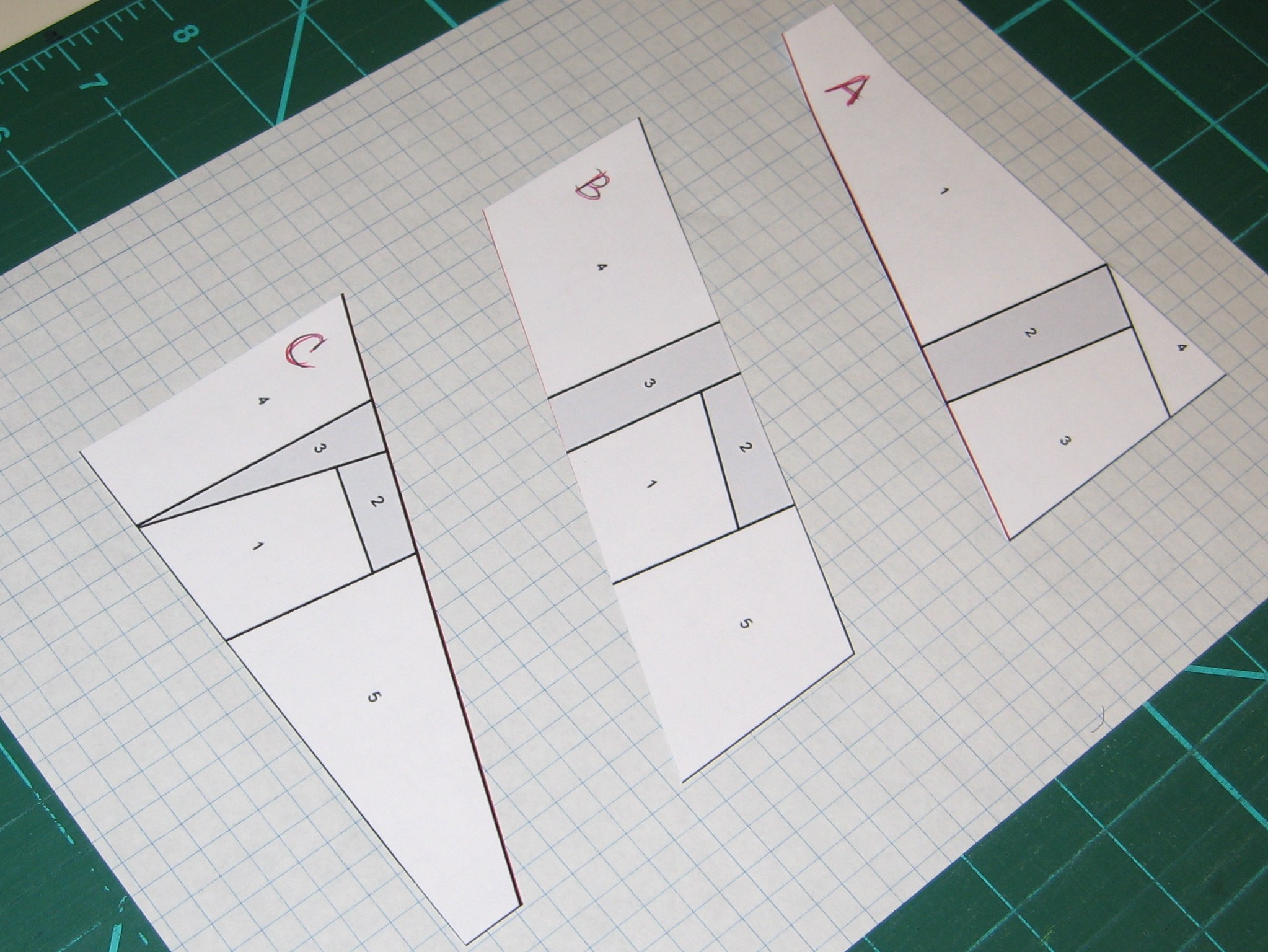
Using your ruler, draw over the lines where the pattern pieces separate (the seam lines), making sure you go past the outside edges of the pattern. Red is used here because it’s easy to see.
If the pattern does not have a line indicating where the outside edge is, I recommend adding one with your ruler.
If the individual pieces aren’t labeled and you think you might need it later, label them now. This is especially useful in more complicated patterns. I like to use letters (A, B, C), but you can mark them any way you like. If you need to, make a notation of how the pieces will go back together, for example: A>B>C.
Use the rotary cutter to neatly trim the pattern to the seam lines, cutting through those that go across the pattern. You can use scissors here, but you need to be extremely precise.
Place the pattern pieces face up on a piece of graph paper, using a dot of glue or piece of tape to hold them in place.
Any size grid will do. The grid will make the seam allowance distinctive without using up too much ink. You can also use a lightly colored copy paper.
Place the grid paper face down on your copy machine or scanner and make a copy.
A colored copy (L) and a black & white copy (R). Either works fine.
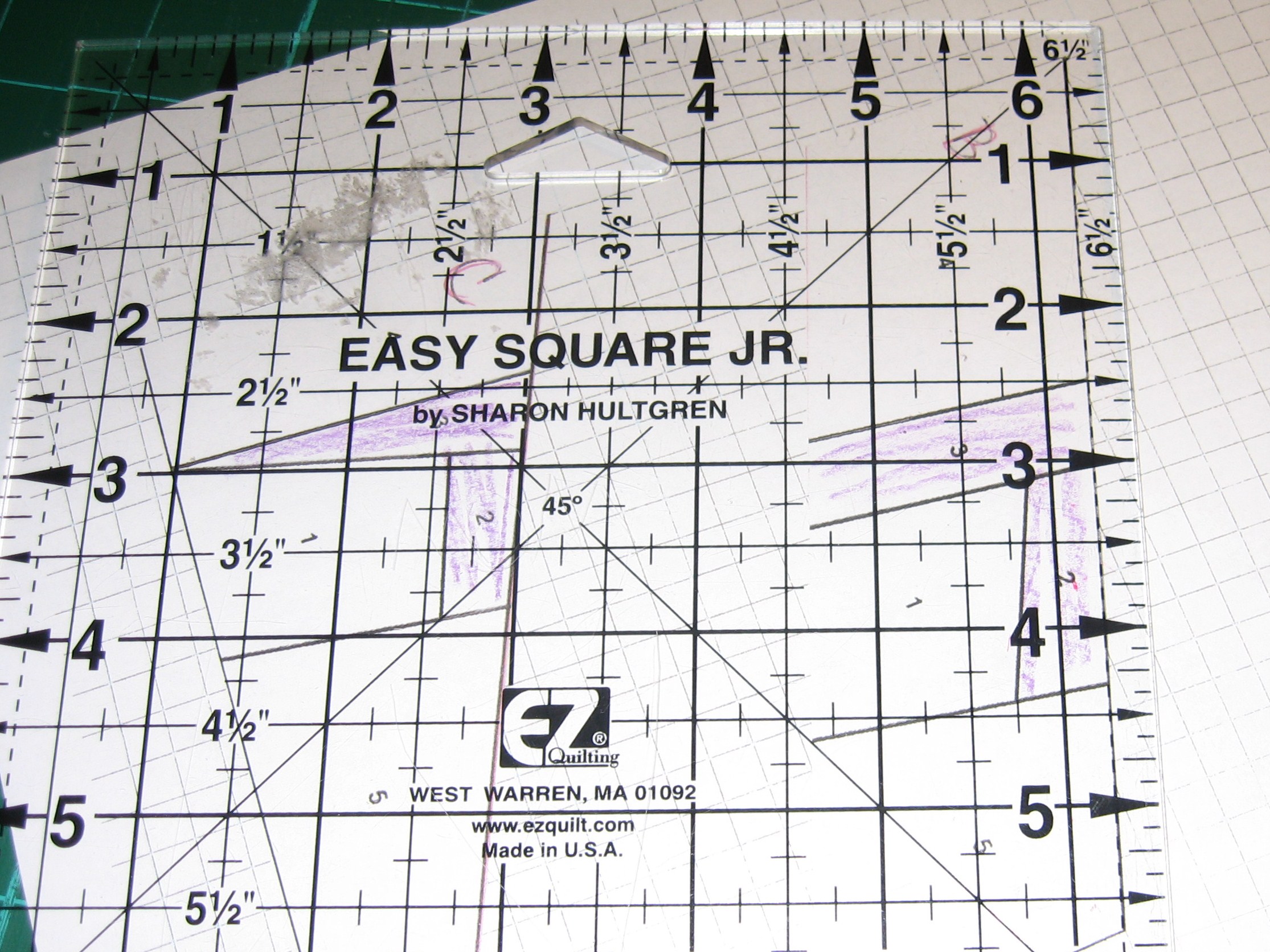
Using your ruler and red pen or map pencil, draw lines along the inside seams. This will give you a reference point for lining up your pieces later.
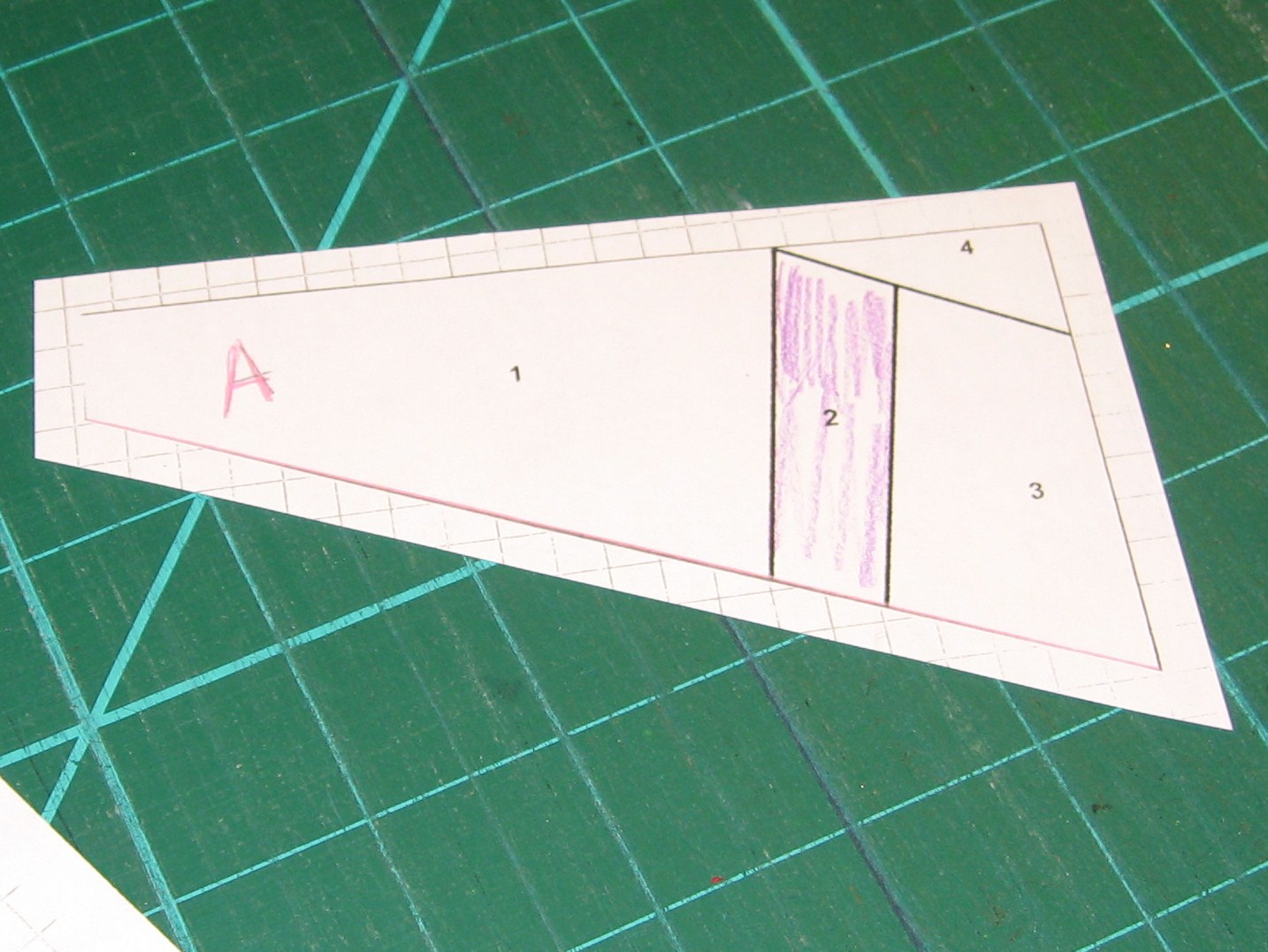
If you’d like the pieces of your pattern colored for easy reference while you’re piecing, now is a great time for that. Grab a fabric safe marker or pen and color away! This is a great trick to use if you’re piecing with more than two colors so you don’t accidentally mis-piece any fabrics. Note from future me: don’t use crayons, they melt. 😐
Using your rotary cutter and dull or paper-designated blade, trim the pattern pieces, leaving a 1/4″ seam allowance. It’s easy to see the grid left from photocopying.
Repeat on all pattern pieces and you’re done! The pattern has seam allowance and you’re ready to piece.
If you know me, then you know I like contests, challenges and drawings. I have a drawing every month on my Livejournal group, hp_paperpiecing, with a Challenge thrown in whenever I can manage it.
It’s about time the love is spread to the rest of my crafty universe! I’m proud to announce the first ever Friends of sewhooked challenge!
If you’re a Friend of sewhooked (which equates to a friend of Jennifer!), all you have to do to participate is to post a photo of something you’ve made from Sewhooked to the Friends of sewhooked flickr pool by Monday, February 16, 2009, 10 am, CST (U.S.).
Follow any pattern or tutorial and then share your photos…that’s it! I’ll draw a name from the pool and notify the winner via pm or email. Please, no cross-posting entries for the hp_paperiecingchallenge. I know you won’t, but I had to say it…just in case!
The winner’s craft will be features on the Sewhooked and that person will receive a hardback copy of Scrap Basket Crafts: Over 50 Quick and Easy Projects to Make from Fabric Scraps.
If this works out, I’ll have another drawing in the future. Fun, fun, fun!
I admit it… I keep everything that I might be able to use or recycle later on.
If it’s pretty, cool, or unique, it’s somewhere in a plastic bin or drawer waiting to be reimagined.
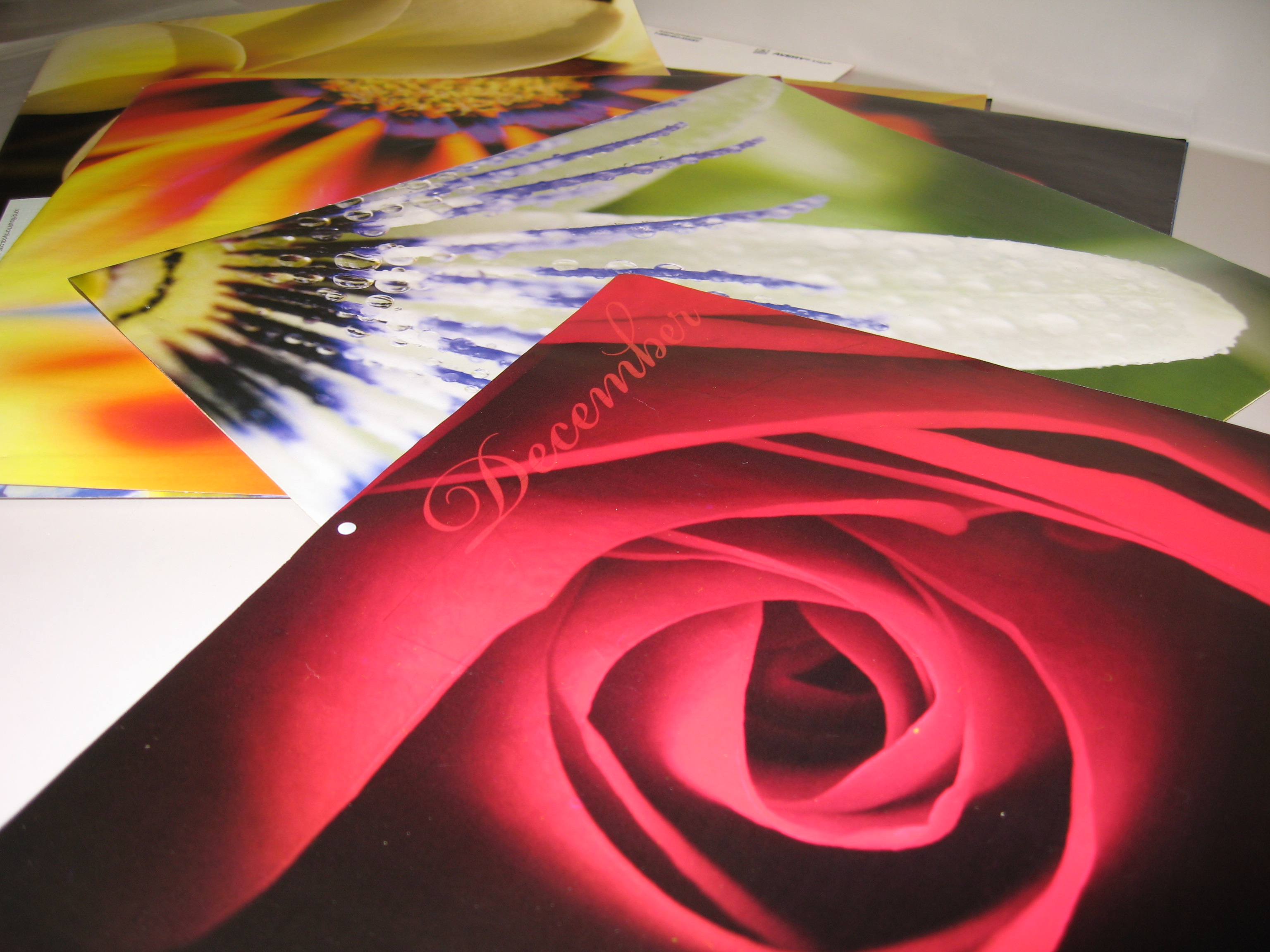
I’ve been recycling my paper calendars as long as I can remember. Each December, I start eyeballing the soon-to-be-obsolete model, wondering what it will be in a month or so.
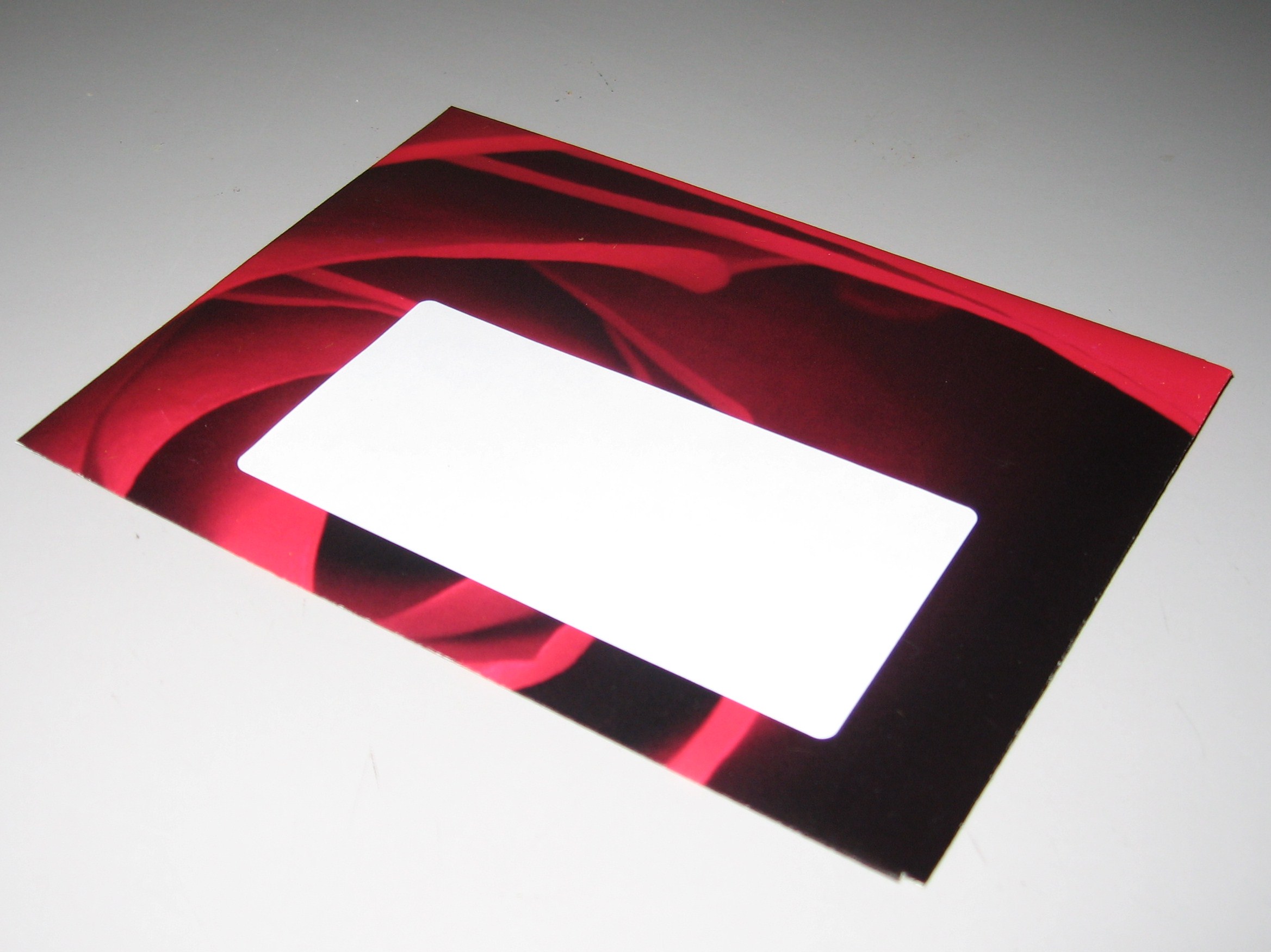
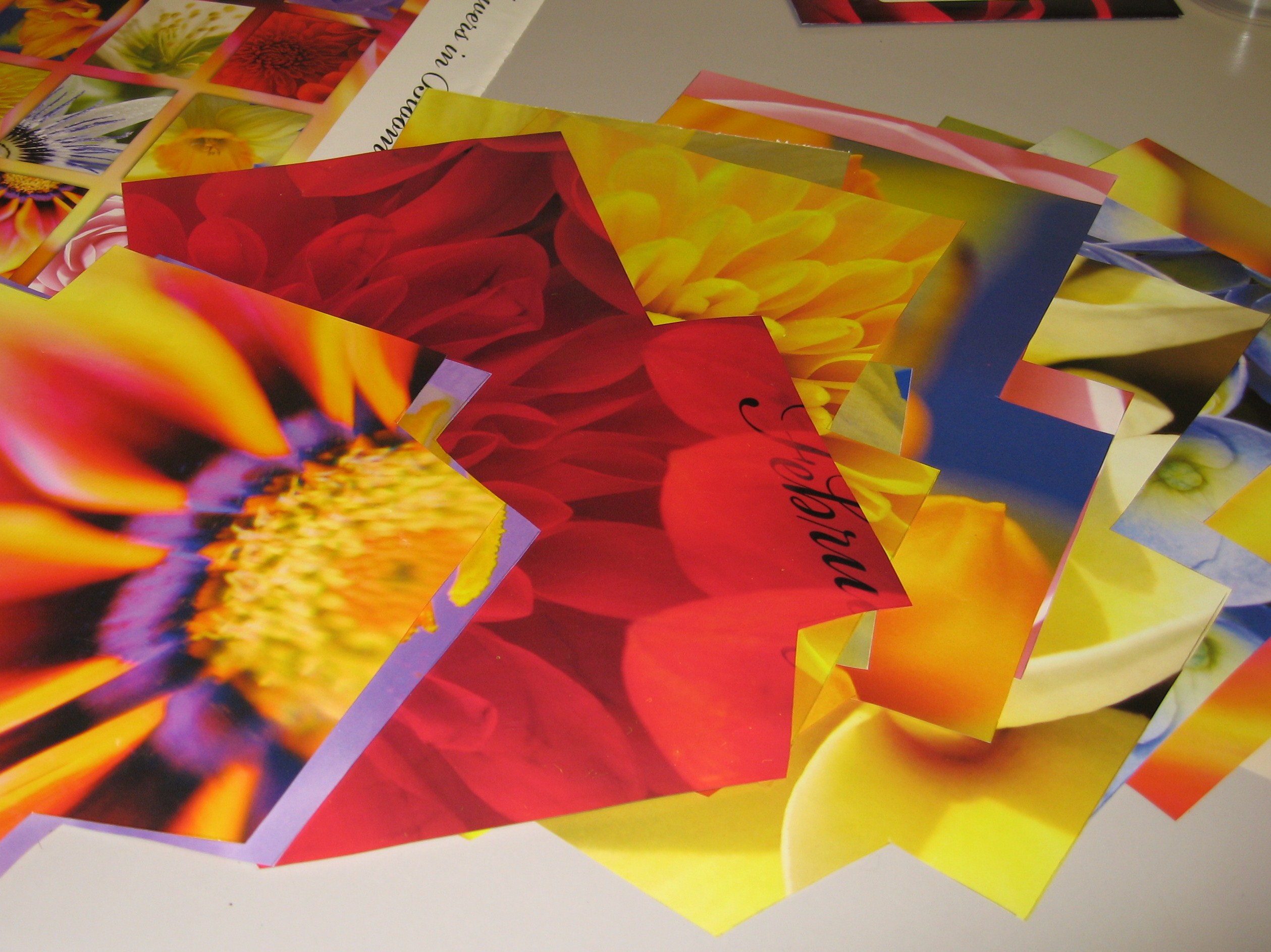
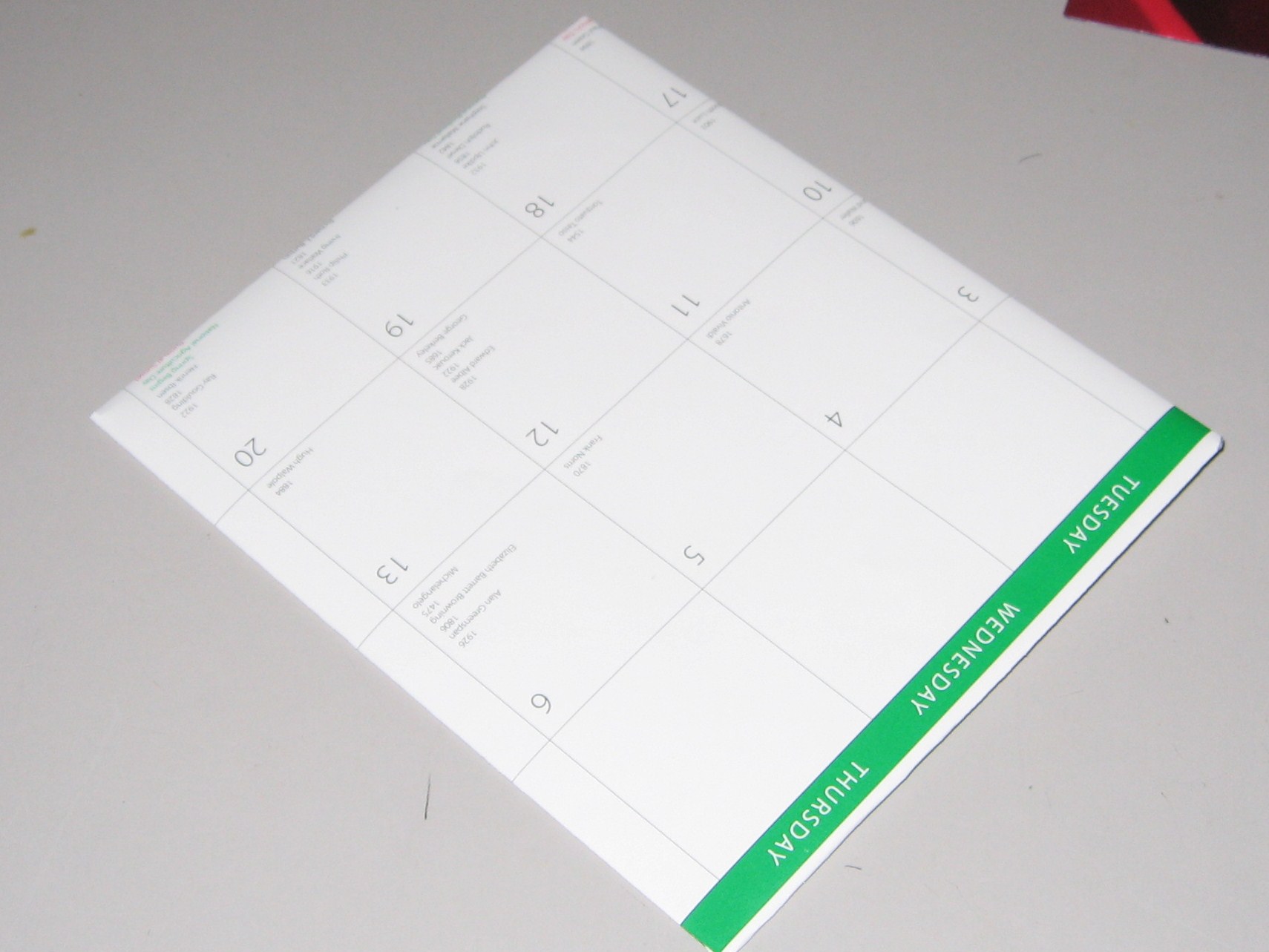
In the past, old calendars have become postcards and gift boxes. My favorite by far is envelopes. Calendar pages, especially really cool calendar pages, make great envelopes!
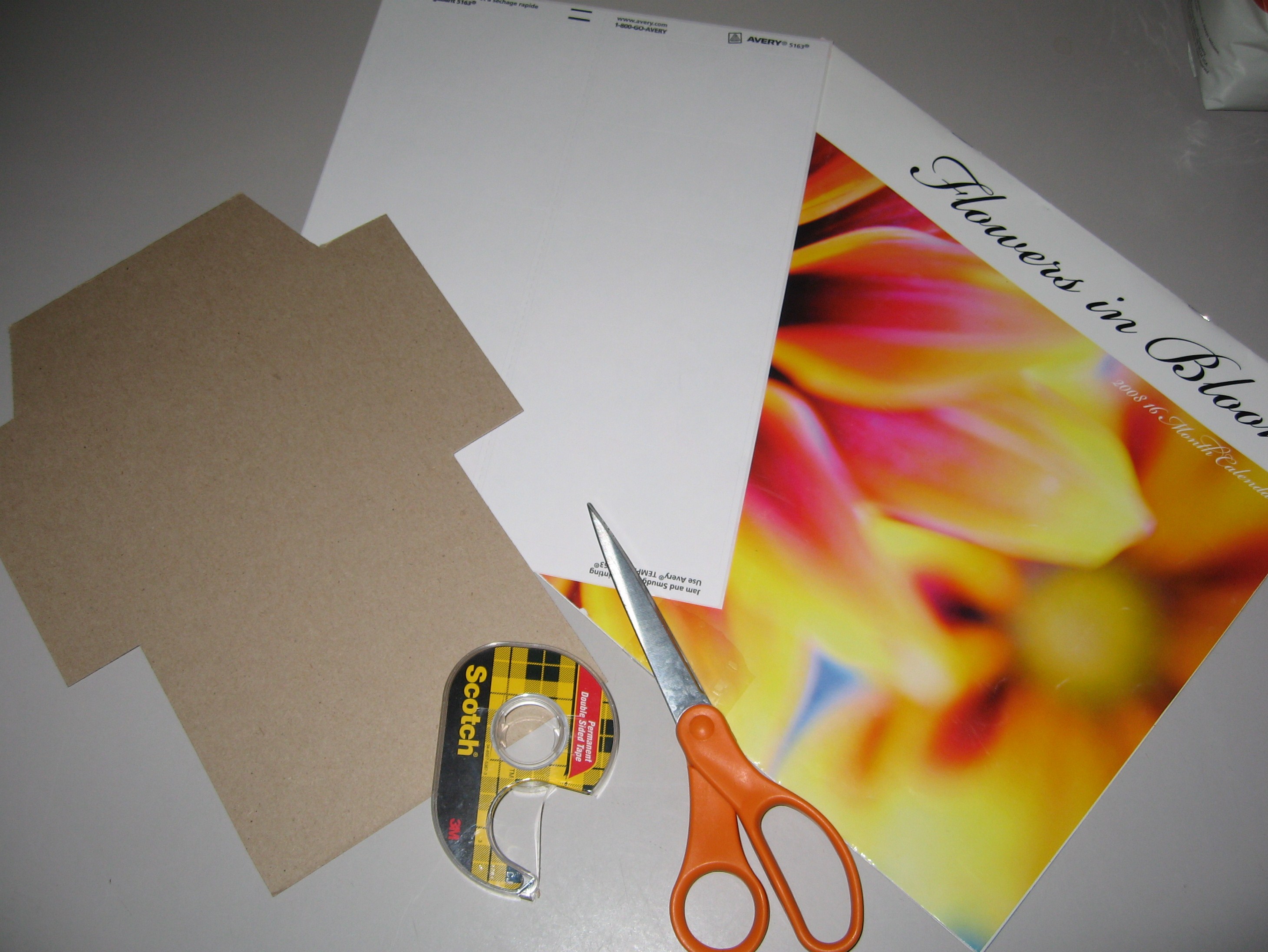
You’ll need:
an old calendar, the bigger, the better!
envelope template – cut out, and transferred to a piece of lightweight card stock or cardboard
staple remover
scissors
pencil
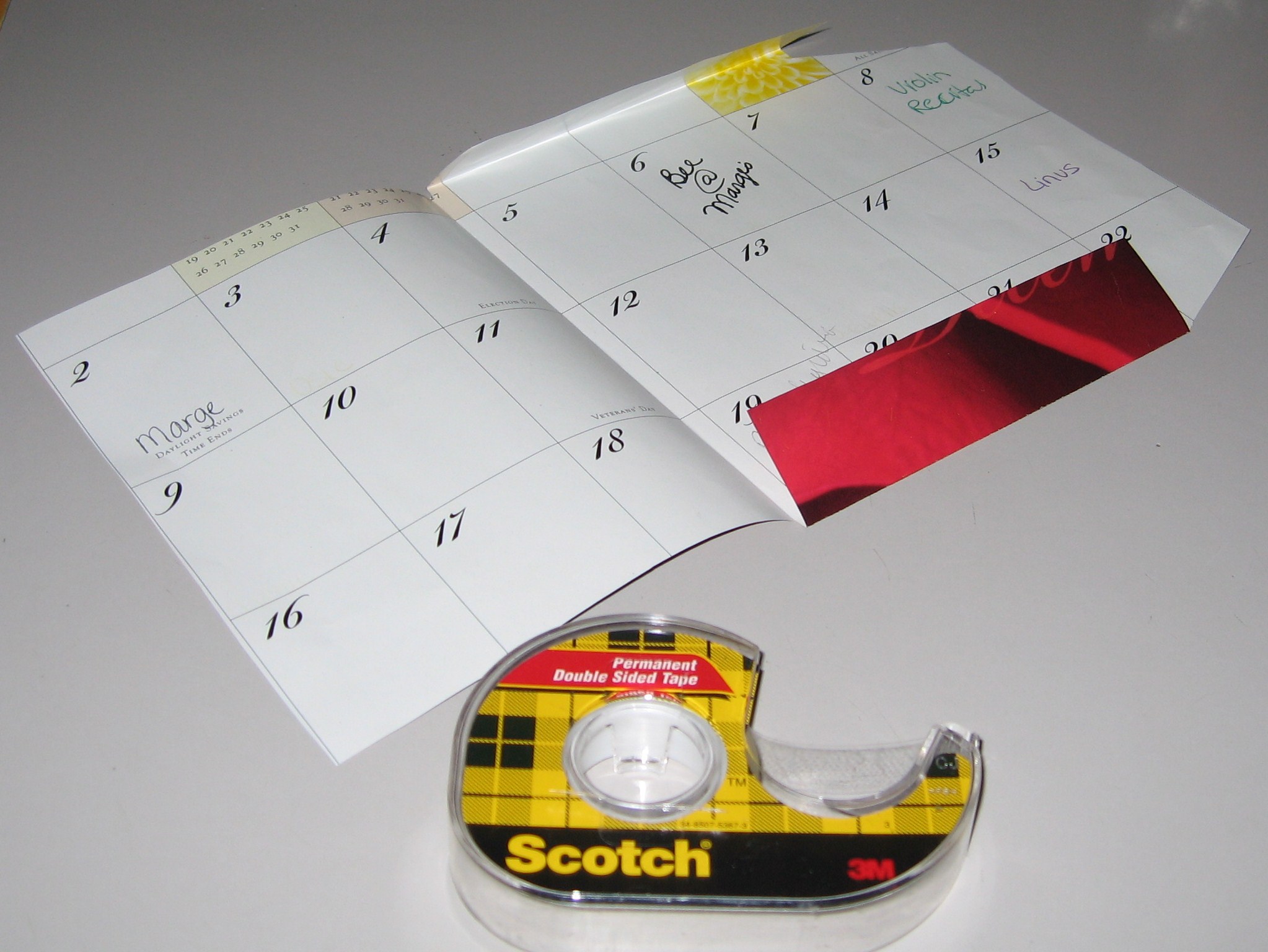
double stick tape OR a glue stick
Blanket mailing labels (optional)
Remove staples from the calendar
Separate pages and tear apart along the crease line
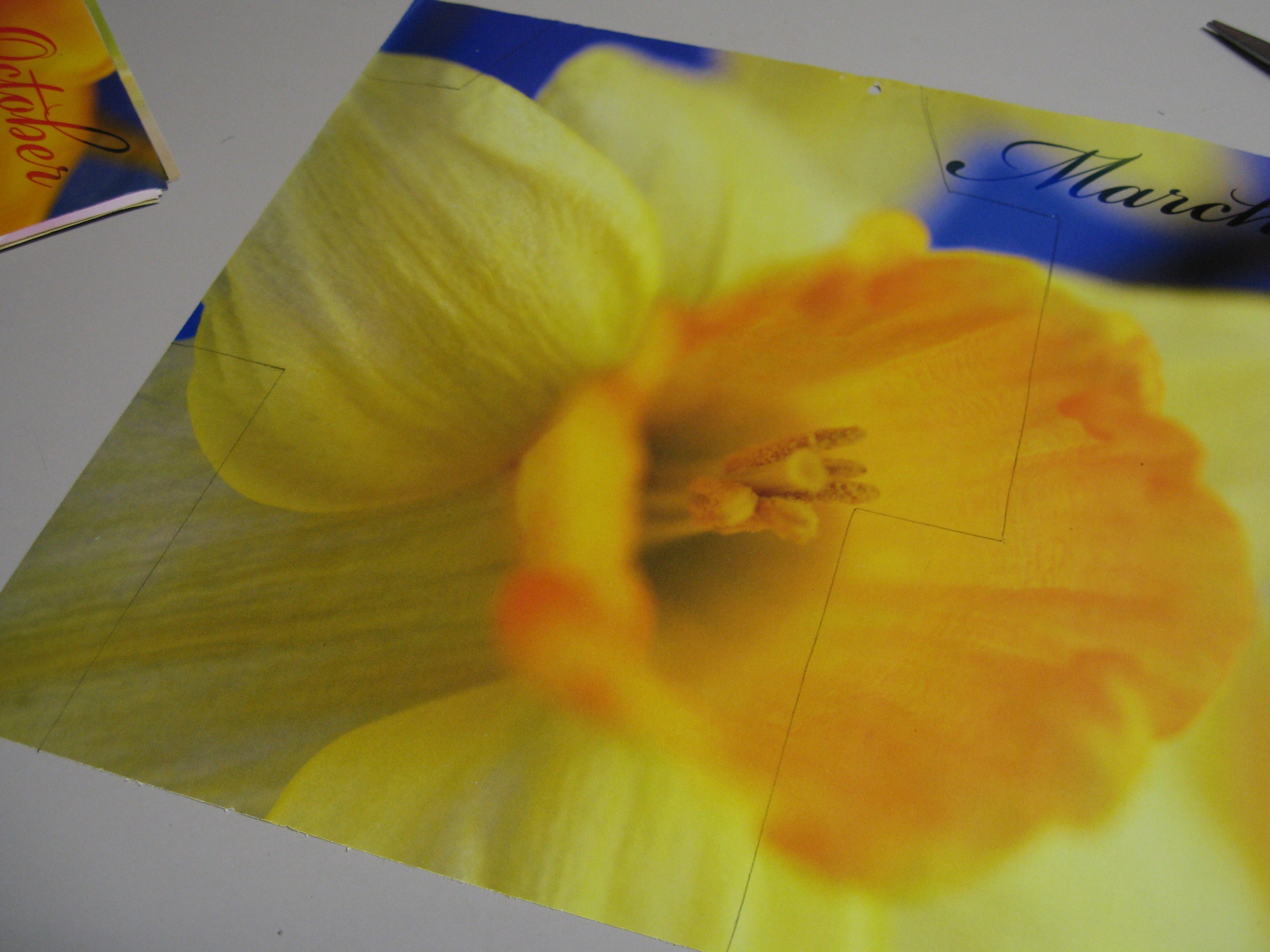
Position the template on a calendar page and trace with a pencil.
You might want to fussy cut here, if part of the page is more interesting than the rest.
Using scissors, cut along pencil lines.
Repeat for all pages.
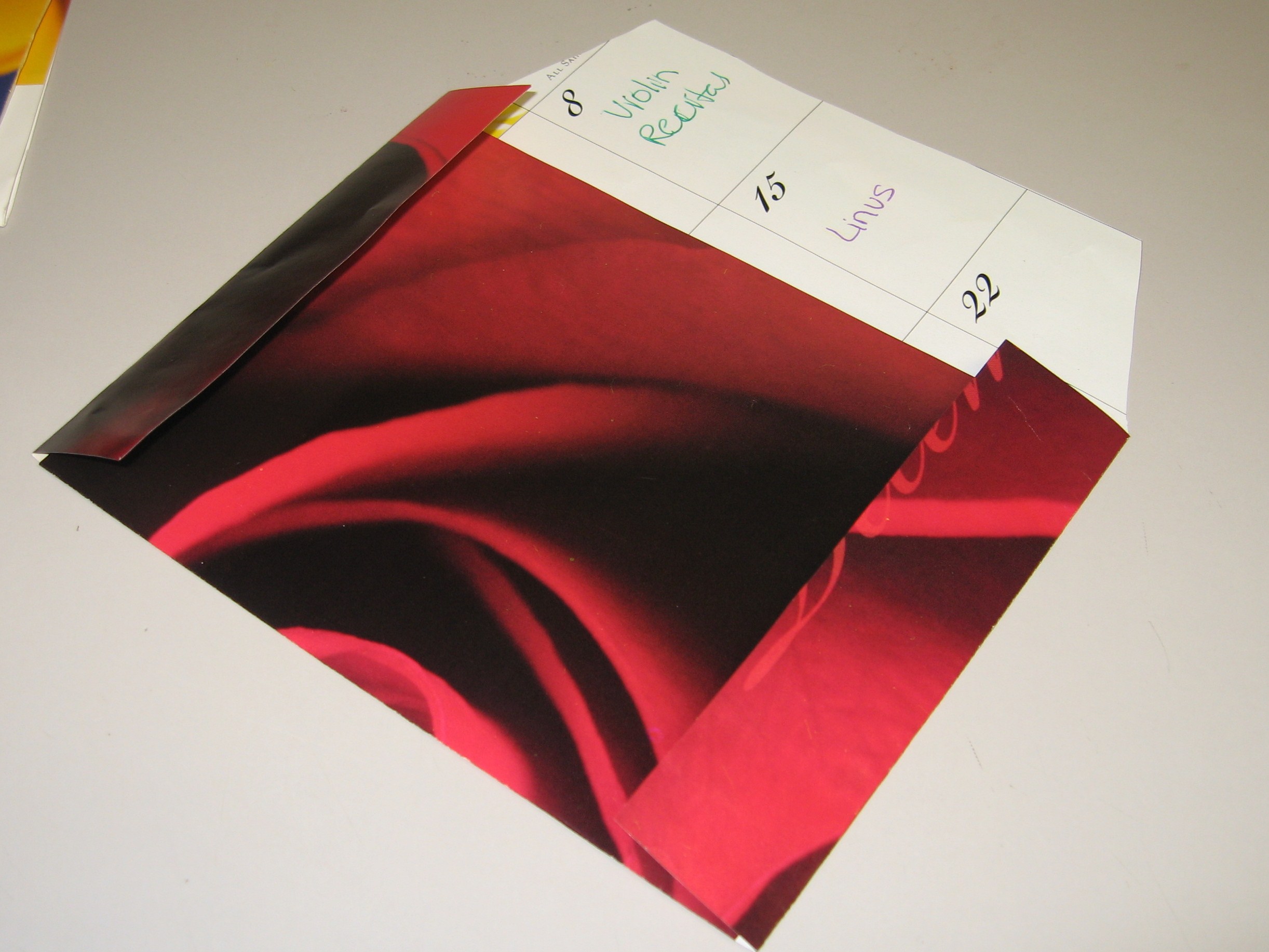
Fold bottom of envelope up towards top, aligning with the bottoms of the side flaps.
For heavier paper, use your template or a ruler to crease. If you have paper-folding tools, this is a great time to use them!
Fold side flaps, making sure they’re even with the top and bottom.
Fold bottom flap out.
Place double stick tape, or use a glue stick, on the side flaps, leaving 1/2″ to 1″ at the top without adhesive.
Fold top flap down.
Finished envelope from the front.
Optional: for darker papers, add a self adhesive mailing label.
Repeat until you have a pile of gorgeous envelopes!
For sealing, use double stick tape, a glue stick or fun stickers.
The same template, different calendar.
Same envelope from the front.
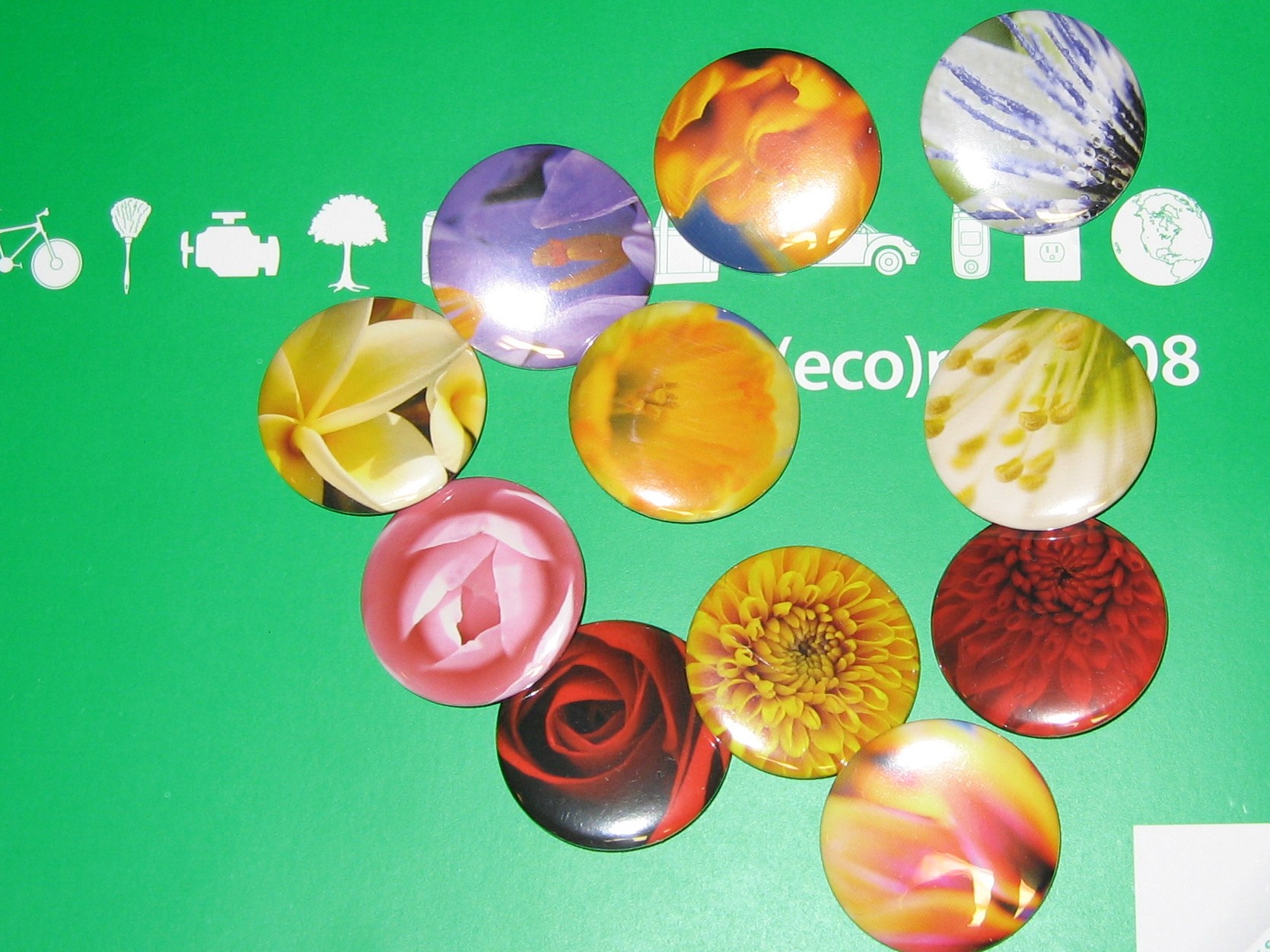
Now, what to do with the gorgeous thumbnails on the back of this calendar?
Monique is one of my favorite blanket patterns to make for The Linus Connection.
It’s easy, relatively fast, works well with just about any yarn and can be adapted to be a smaller or larger size. Make it with all one color or use up your leftovers!
I’m not including yarn amounts here because it really varies on what size you’d like to make and what kind of yarn you choose. The one shown is made with Caron Simply Soft.
You’ll need:
The yarn of your choice, I prefer a soft worsted, like Caron Simply Soft. Please note that the amount will vary
depending on your brand choice
I hook – this is my preference, but it works with any size hook from G up to about a J, depending on yarn weight.
Ch 122 (or any multiple of 3 + 2)
Row 1: 1 hdc into third ch from hook, skip 1 st *(1sc, ch 1, 1 dc) in next st, sk 2 sts*, rep *to*, end of row, 1 sc in last st, ch 2,
turn.
Row 2: 1 hdc in first st, (1 sc, ch 1, 1dc) in ch sp of the previous row. 1 sc in ch 2 space, ch 2, turn.
Rep until blanket is approximately square or slightly rectangular.
For edging, continue pattern in ch sp around remaining 3 sides. Join with sl stitch and finish off.