Tag Archives: tutorial

STITCHED Tutorial Blog Hop – Make An Oven Mitt

stitched-tutorial-blog-hop_6797832948_o

Welcome to my STITCHED Tutorial Blog Hop!

Today, I thought we’d do something both fun and useful…make a cute oven mitt!

This is a project already had on my mind when the opportunity to participate in the STITCHED Tutorial Blog Hop came up. It seemed like the ideal time to make this project a reality!

Read through the post, then leave a comment for a chance to win one of two owl fat quarters! Winners announced Tuesday March 20, 2012!

Making an oven mitt is a great way to bring fun fabrics into your everyday life. I chose fabrics from my stash. You can do that, too, or use this as an excuse to buy a couple of new fat quarters. You can also incorporate quilt blocks or the recycled materials of your choice for a unique and fun oven mitt!
stitched-tutorial-blog-hop_6797781040_o

For each oven mitt you want to make you’ll need the following:

  • 1 fat quarter for the outside, pressed
  • 1 fat quarter for the inside, pressed
  • OR 1/2 yard for both inside and outside, pressed
  • Cotton batting, approximately fat quarter size (18″ x 22″)
  • Hobbs Thermore Batting or another batting made specifically for potholders, etc., approximately fat quarter size (18″ x 22″)
  • 2 1/2″ x 18″ strip of fabric OR a scrap of quilt binding (shown)
  • Fabric Scissors
  • Paper Scissors
  • Fabric Snips (optional)
  • Thread
  • Water Soluble Glue Stick
  • Sewing Machine
  • Size 80 or 90 Sewing Machine Needle
  • Optional: Free-motion foot
  • Also optional, but very useful: Walking Foot for your sewing machine
  • Oven Mitt Pattern; for best results, print with no scaling
  • Dowel Rod, any size

stitched-tutorial-blog-hop_6943895257_o

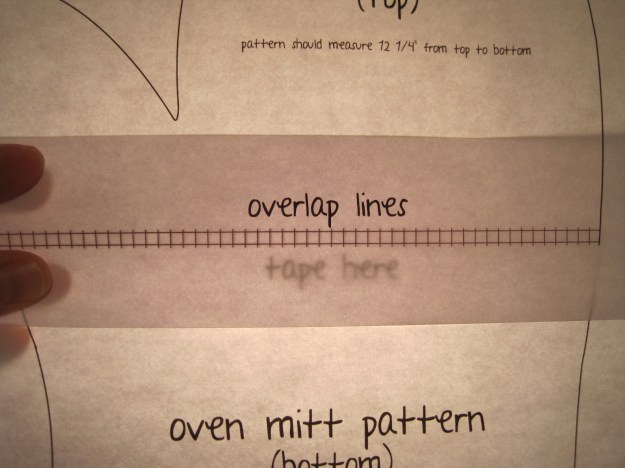
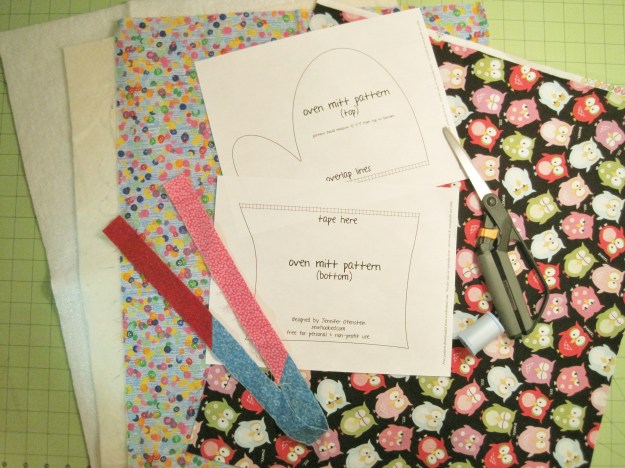
First, we’ll prepare our pattern. Overlap the center lines and tape the pattern together, as shown.

stitched-tutorial-blog-hop_6797782528_oTrim the excess paper from the pattern using your paper scissors.

stitched-tutorial-blog-hop_6943896839_o

Once printed and trimmed, the pattern should measure approximately 12 1/4″ from top to bottom.
stitched-tutorial-blog-hop_6797786088_o

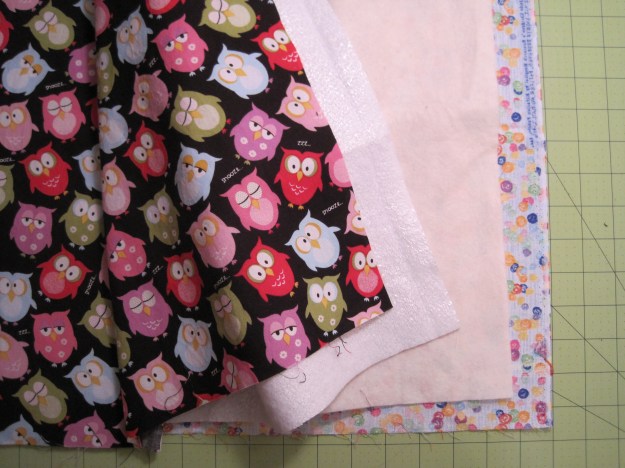
Next, we’ll layer our fabrics. The owl fabric will be my “outside fabric” and the dot fabric will be my “inside fabric.”

These are layered together with the two kinds of batting just like for any quilt sandwich.

The fabrics face right sides out, with the Thermore directly under the “outside fabric.” It is important that the Thermore be directly under the “outside” fabric so that it will be closest to the heat when the oven mitt is in use.

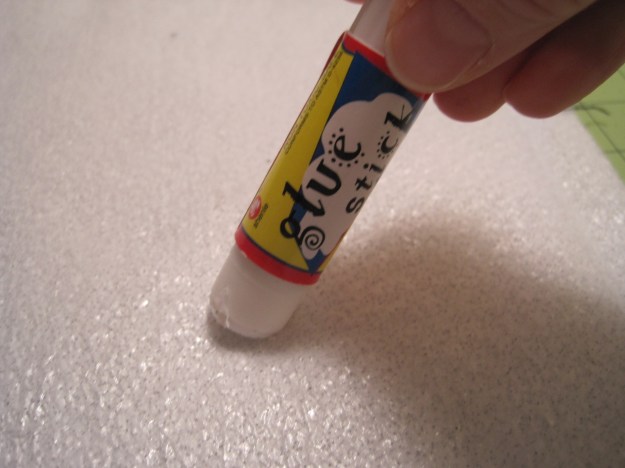
 Since we’re working with such a small area, we will not be pinning, instead, we will glue baste the fabrics to the two layers of batting.
stitched-tutorial-blog-hop_6943900829_o

Place dots of glue 6″ – 8″ apart directly on the batting.

You’ll do this for both the front (“outside”) and back (“inside”).

You do not need to baste the two layers of a batting together. They will grip to each other without glue.

stitched-tutorial-blog-hop_6797785302_o

Smooth the fabric to the batting. Once you’ve smoothed it by hand, take the quilt sandwich to your ironing board and press to remove any bubbles or creases. This will also help set the glue.

stitched-tutorial-blog-hop_6797789262_o

I chose free-motion for my quilt sandwich. How you quilt your sandwich is up to you.

stitched-tutorial-blog-hop_6943903419_o

If you free-motion your quilt sandwich, be sure to drop your feed dogs!

If you’re new to free-motion quilting, check out Leah Day’s blog, The Free Motion Quilting Project
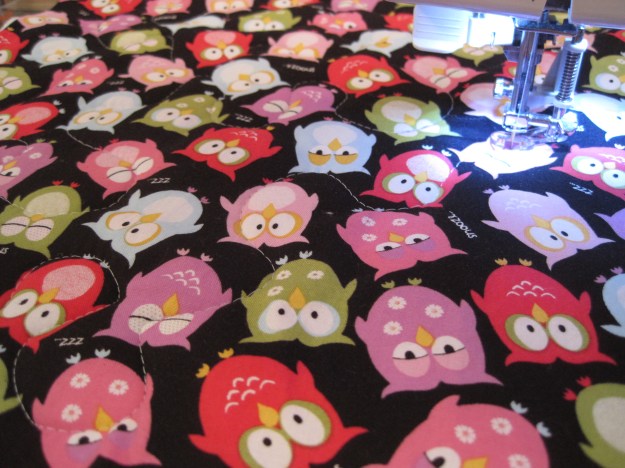
stitched-tutorial-blog-hop_6797790798_o

I decided to keep it simple and created a large meander to quilt the layers together.

For a simpler approach, you can try Straight Line Quilting. Here’s a great tutorial from Tall Grass Prairie Studio.
stitched-tutorial-blog-hop_6943906989_o

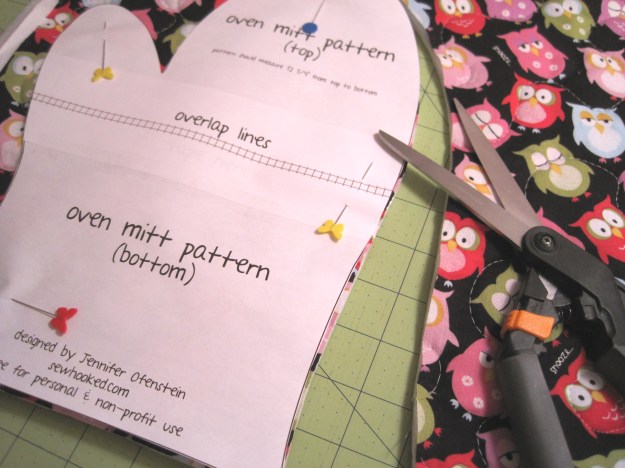
Once your sandwich is quilted, pin the paper pattern to the top or “outside.”

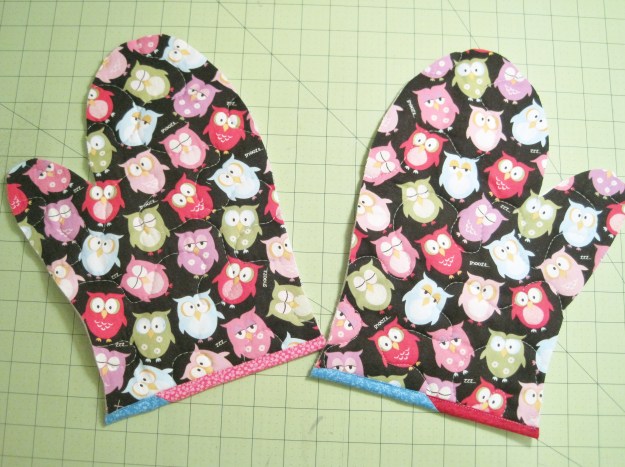
My fabric is directional, so I made sure that the owls would be pointed in the correct direction.

Using your fabric scissors, cut around the paper pattern.

For the second side of the oven mitt, turn the pattern over so you can cut the reverse with your fabric scissors.

stitched-tutorial-blog-hop_6943909105_o

You will have two pieces for your oven mitt. They should be mirror image.
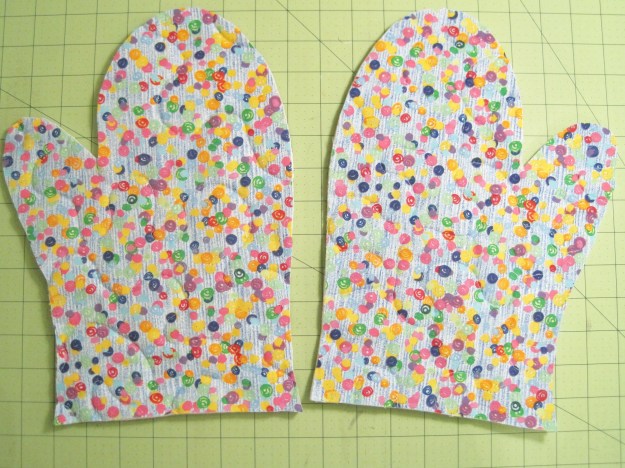
stitched-tutorial-blog-hop_6943910767_o

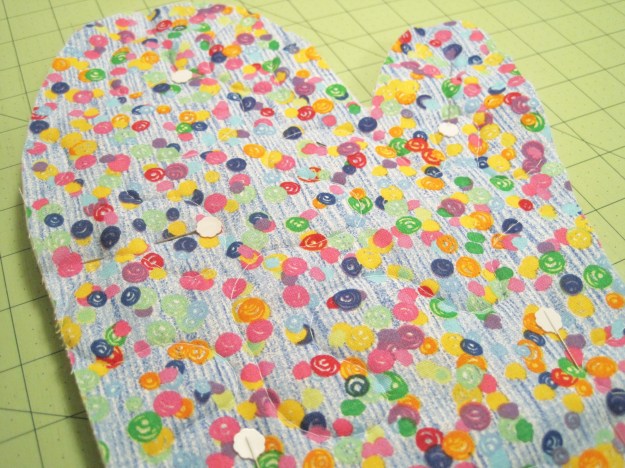
Just for fun, here are the same two pieces from the other side!
stitched-tutorial-blog-hop_6797798928_o

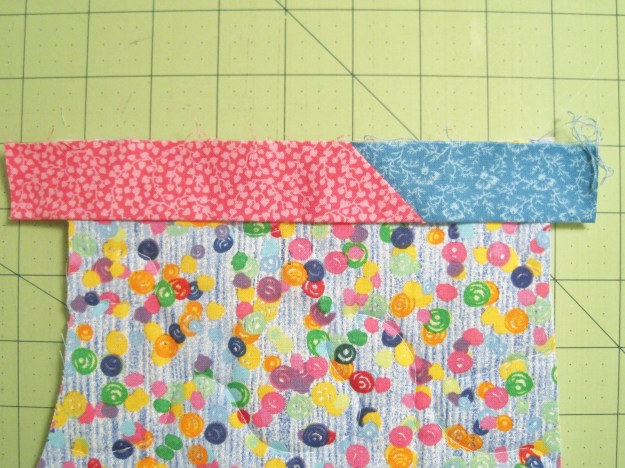
Fold the 2 1/2″ strip in half and press OR use a binding remnant.

Align the raw edges along the “inside” fabric where the mitt opening will be.

If you were free-motion quilting earlier, remember to raise your feed dogs and change your presser foot.
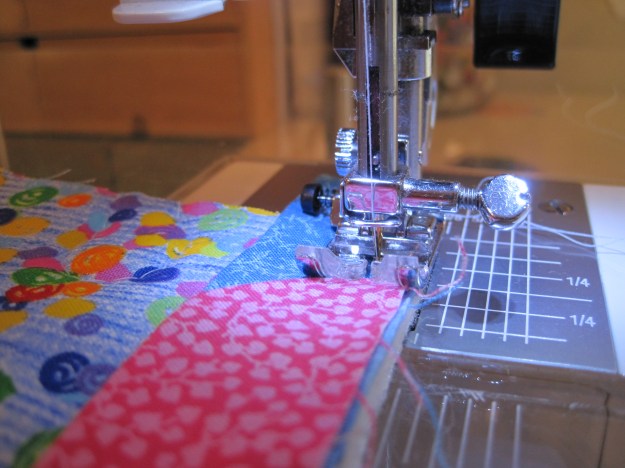
stitched-tutorial-blog-hop_6797800562_o

Straight stitch the binding 1/4″ from the edge of the mitt.

Repeat for the second side.

stitched-tutorial-blog-hop_6797801762_o

When you fold the binding out, it will look like this.
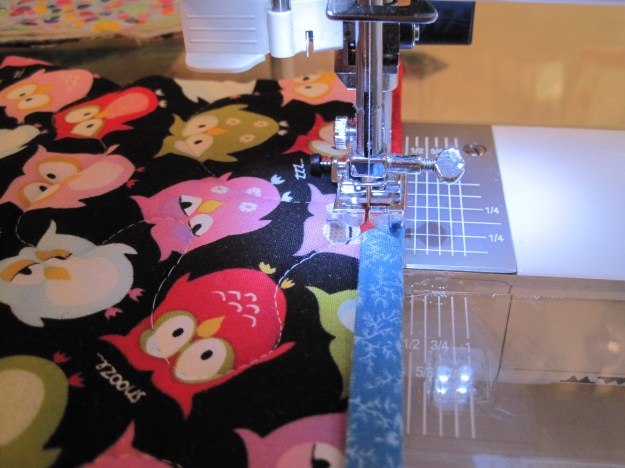
stitched-tutorial-blog-hop_6797802380_o

Roll the binding to the outside. Top stitch near the edge of the binding using a straight or decorative stitch.

Repeat for other side of the mitt.
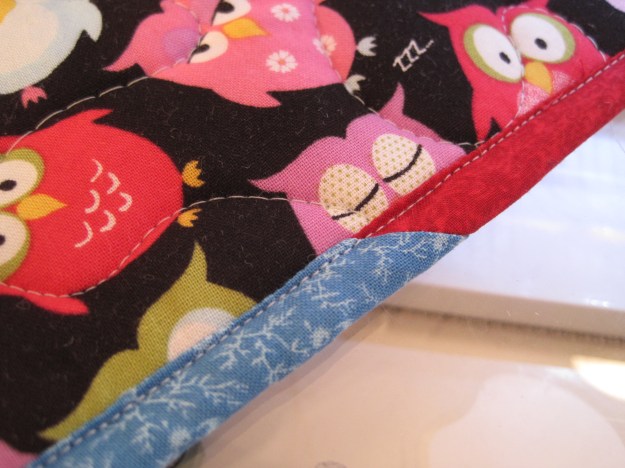
stitched-tutorial-blog-hop_6943916637_o

Your binding will look like this.

stitched-tutorial-blog-hop_6797804250_o

Trim off any excess binding.

stitched-tutorial-blog-hop_6797805786_o

Each side of the mitt is bound individually. You can opt to use continuous binding, but I find this to be a much simpler method.

stitched-tutorial-blog-hop_6943920895_o

Binding, from the other side.

stitched-tutorial-blog-hop_6797809008_o

Now, with right sides together, align the two halves of the oven mitt. This is going to be a thick sandwich!

You’ll be stitching through four layers of fabric and four layers of batting.

stitched-tutorial-blog-hop_6797811036_o

Stitch the oven mitt together using a generous 1/4″ seam.  Back stitch at the beginning.

I was able to use my presser foot for a guide.

stitched-tutorial-blog-hop_6797813712_o

Back stitch on both sides of the thumb.

stitched-tutorial-blog-hop_6943928273_o

Back stitch when you get to the end.

stitched-tutorial-blog-hop_6943931913_o

Once the two sides are stitched together, snip the area between the thumb and fingers.

If you have Fabric Snips, this is a great time to use them.

stitched-tutorial-blog-hop_6797819750_o

Snip the curve for easier turning.

stitched-tutorial-blog-hop_6943938693_o

Snip the binding corners.

stitched-tutorial-blog-hop_6797821104_o

Now comes the hardest part…turning this guy right side out!

With your hand inside the mitt, tuck the end inside and grab on, slowing working the mitt until you have the mitt turned right side out.

stitched-tutorial-blog-hop_6797822352_o

If you need it, use a dowel rod to poke the rest of the mitt into shape.

stitched-tutorial-blog-hop_6797823446_o

The dowel rod is especially useful for the thumb! Be careful when working on the thumb, you don’t want to pop any stitches.
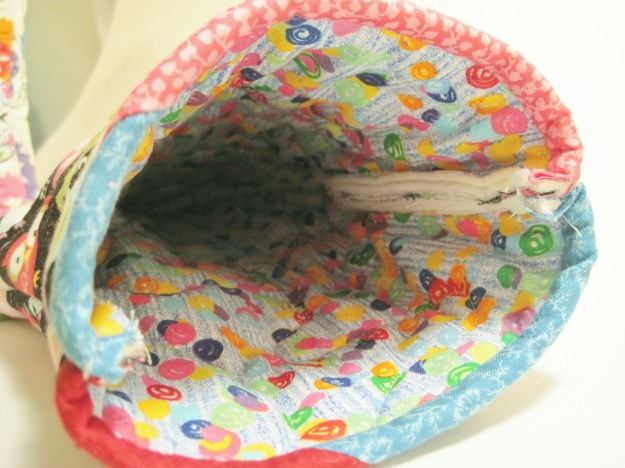
stitched-tutorial-blog-hop_6797829258_o

Here’s what your mitt looks like from the inside. Nice and thick to protect your hands from hot pans!
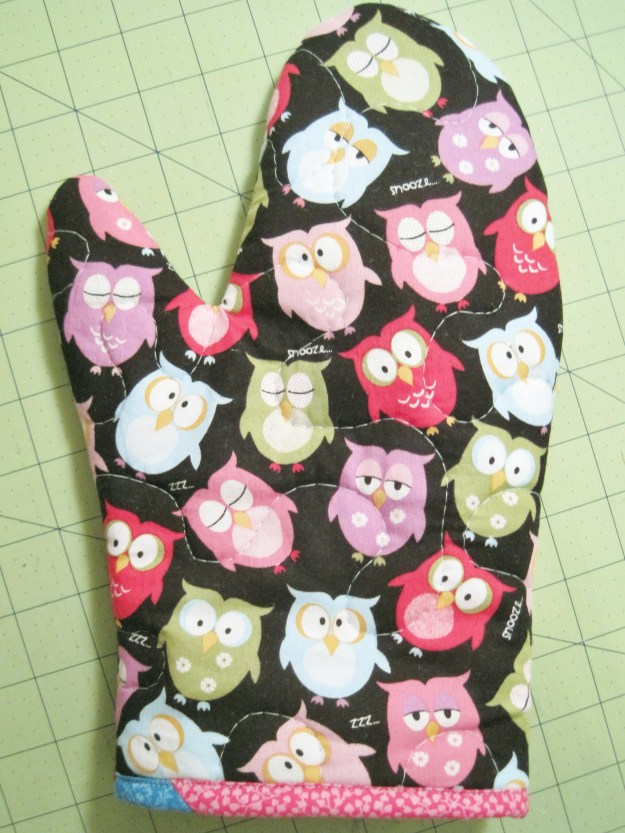
stitched-tutorial-blog-hop_6797826534_o

Ta-Da! We’re done!

stitched-blog-hop-tutorial_6803498278_o

You will have some scrappy bits of quilted material left. I used mine to make hand covers for my cast iron skillets!
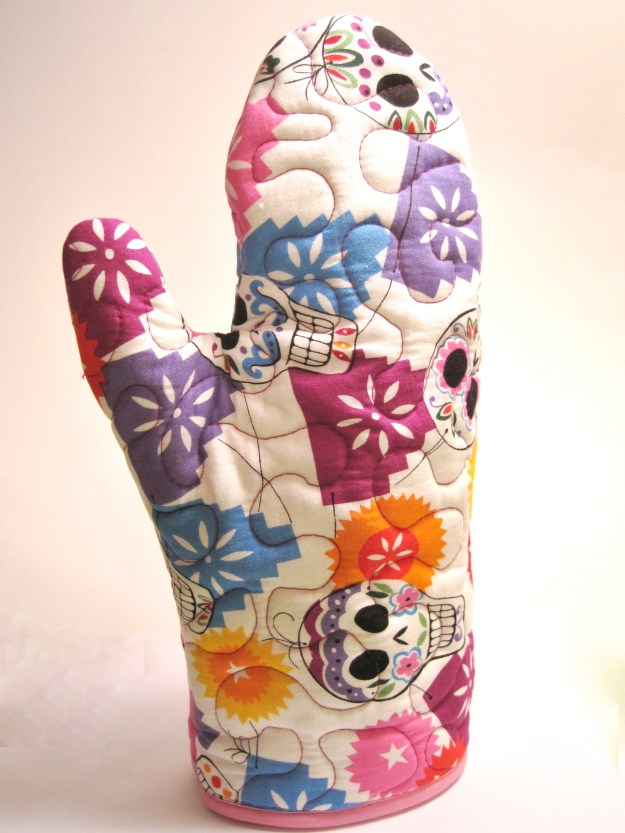
stitched-blog-hop-tutorial_6803498278_o

stitched-tutorial-blog-hop_6943944661_o

And just for fun, this was my prototype. I made this one with a hand-drawn version of the pattern. By making a prototype, I was able to work out the tricker bits and figure out the best way to go about this project.

Visit the rest of the STITCHED Blog Hoppers!

Everybody Hop!
March 1st  – Deborah of Deborah’s Journal
March 5th – Paula  of Paula Joerling Studio
March 6th – Jackie of Stitchworks
March 8th –  Mollie of Wild Olive
March 15th – Jennifer of Sewhooked (oops, I posted a day early!)
March 20th – Kelli of Kelli Nina Perkins
March 22nd – Tracie of Radical Recycks
March 27th – Alma of Alma Stoller
March 29th – Ann Tucker of The Lavendar Tree

Reminders:

In honor of my participation in the STITCHED Tutorial Blog Hop, get 15% off your TOTAL PURCHASE from the Sewhooked Shop during the month of March with coupon code MARCH15. Not valid on etsy or craftsy.
Paper Pieced Pattern-A-Day Garden Party Blog Hop

The Paper Pieced Pattern-A-Day blog hop is coming April 1, 2012! We have a full compliment of designers ready to share awesome Garden Party-themed FREE paper pieced patterns with you!

Don’t forget to comment for a chance to win a fat quarter of the owl fabric used in this tutorial!

Add your Sewhooked-related photos to my flickr group and you might be featured in a future post!

signature-2016

Posts on this blog may contain affiliate links to help cover the cost of my website. I thank you for your generous support. ♥


Register Now for STITCHED!

Posts on this blog may contain affiliate links to help cover the cost of my website. I thank you for your generous support. ♥

TTMT #149 – Paid Forward and a Short Tutorial

Mini Crochet Tutorial for Project Linus Sidways Shell begins at 6:39.

Happy Stitching!

Workshops open through January 2013!

Find my free patterns on Sewhooked & Fandom in Stitches.

♥ Jennifer O

Posts on this blog may contain affiliate links to help cover the cost of my website. I thank you for your generous support. ♥

Quilted Messenger Bag Tutorial

Quilted Messenger Bag
Quilted Messenger Bag Pattern

Quite some time ago, I spent a lot of time making messenger bags. A lot of time.

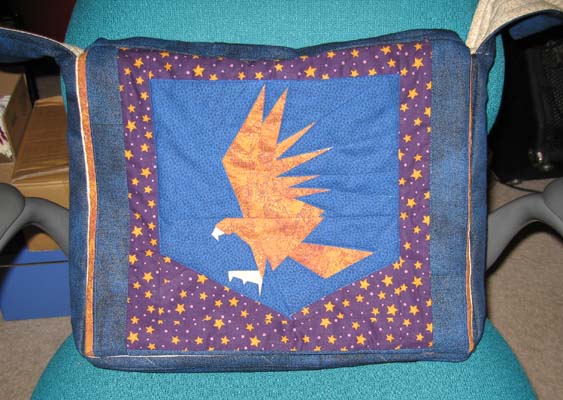
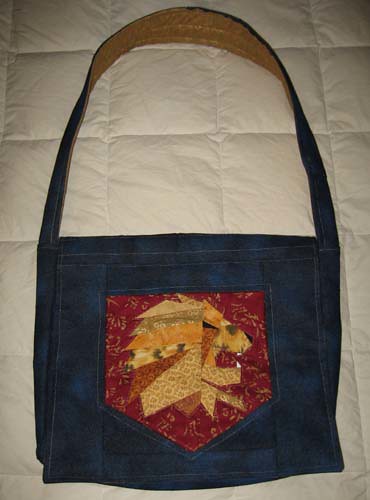
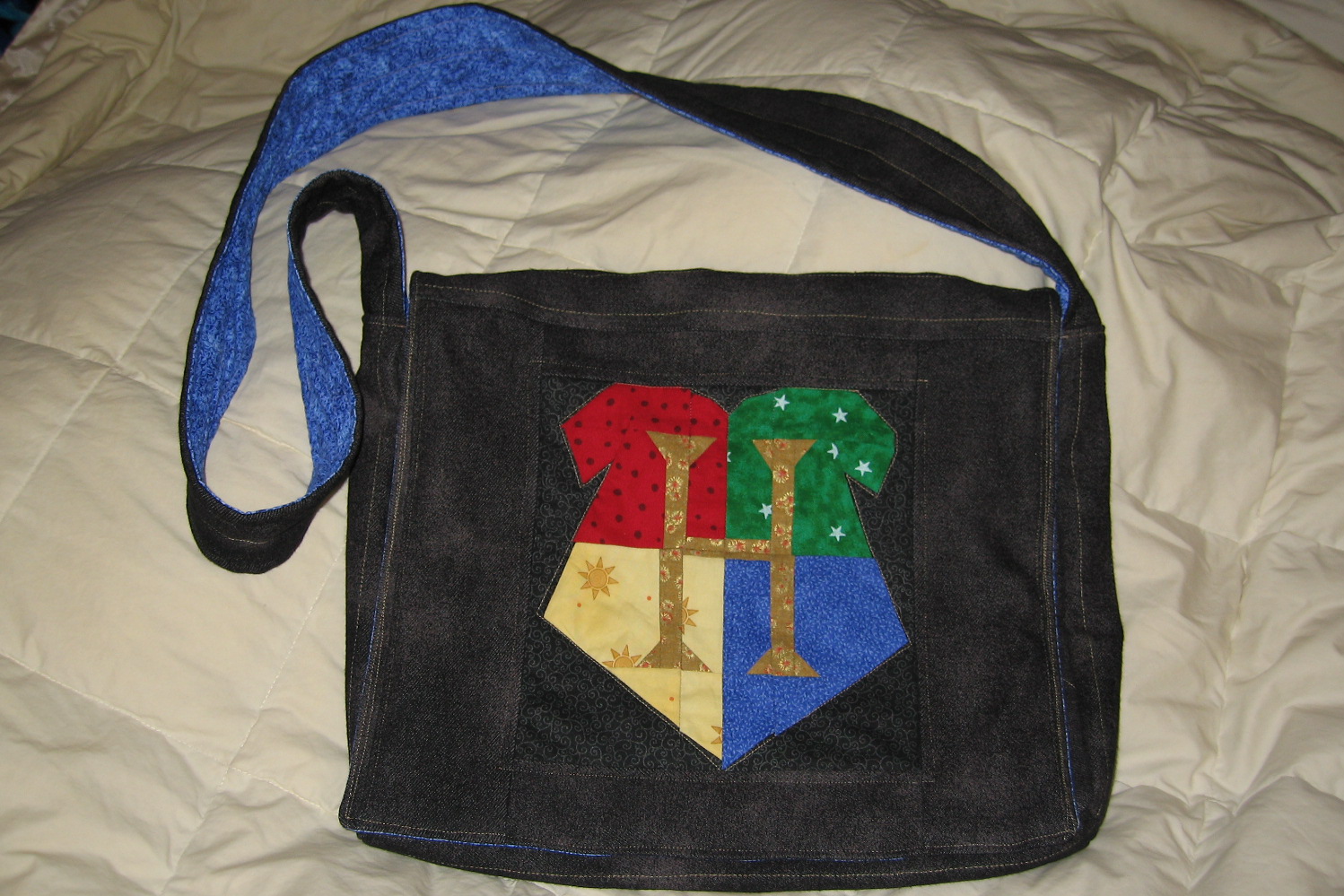
The story behind the bag is actually kind of cool. My eldest kiddo (10 years old back then, aged 16 at the time of this writing) wanted a Gryffindor bag for fifth grade. I was given a basic sketch, and I then started thinking! Sometime during all that thinking, I had a dream that I’d made the bag. The dream was very real, and when I woke up, I was disappointed to realize that I hadn’t actually finished the bag.

The cool part of the story? In the dream, I figured out how to make the bag, and it worked.

Perfectly.

Messenger Bag Notes

I sketched out what I’d dreamed and started figuring out the dimensions of the bag. I almost always start with a sketch when working on a new project, but rarely does that sketch start from dreaming the process! Usually, the sketches are pretty rough (note the cute and silly lion above), but they do the job for what I need.

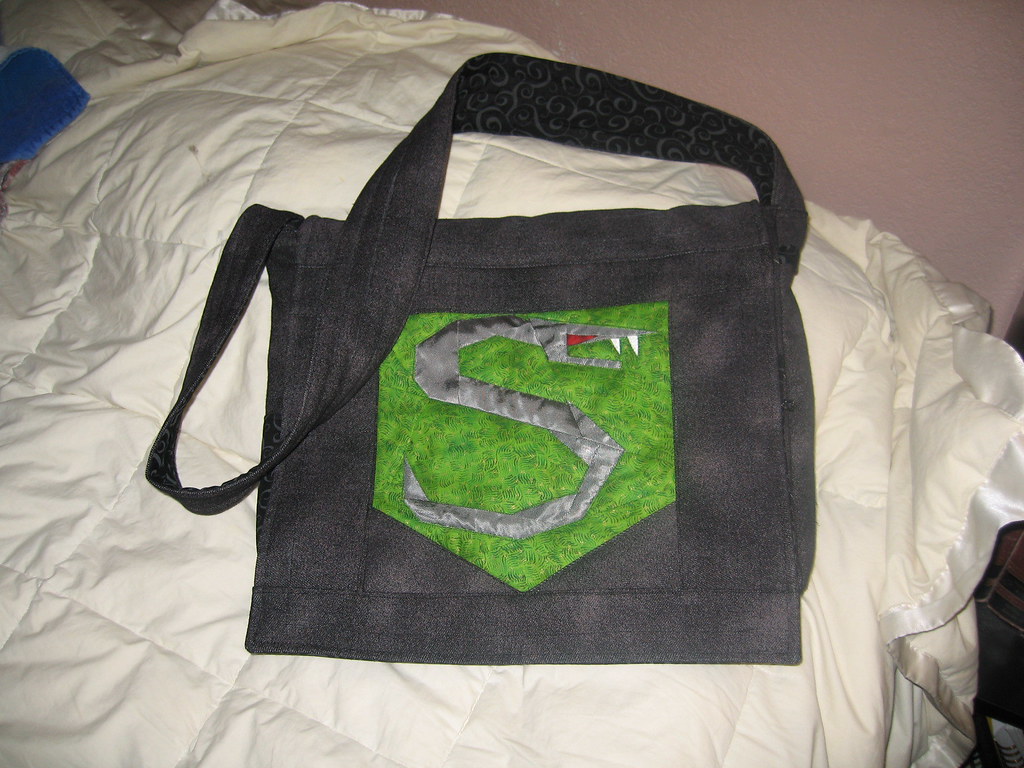
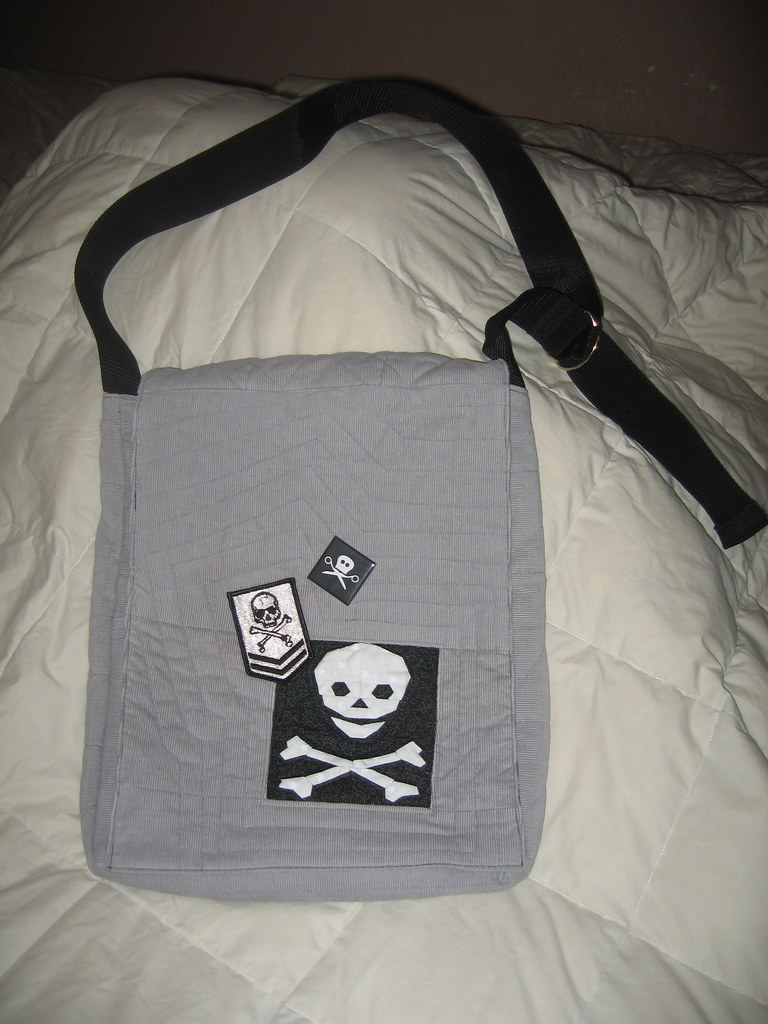
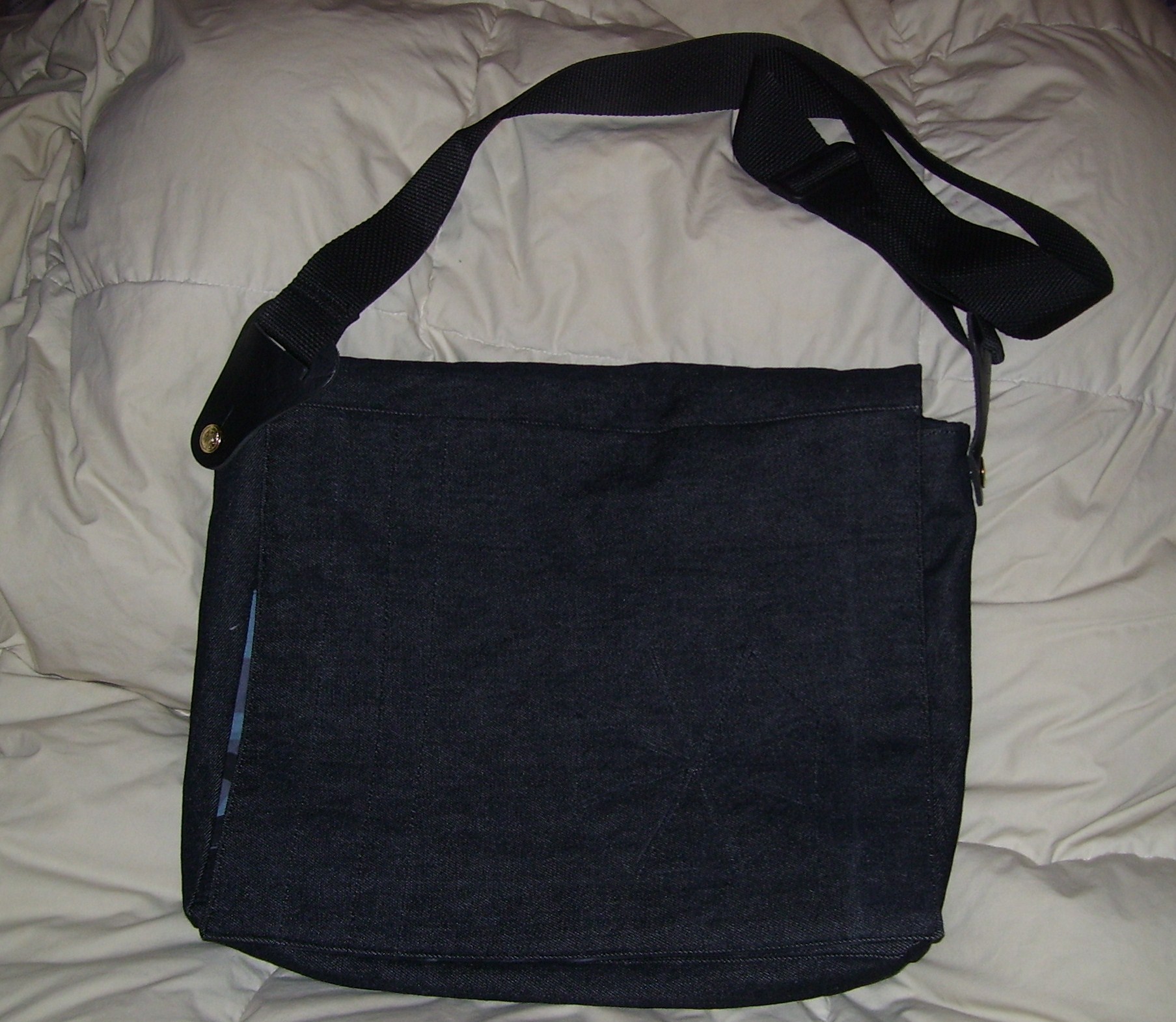
What resulted from my kiddo’s request was not only that first messenger bag, but a slew of others (see below). I made them for friends, family, and myself. I also made many of them to sell between 2006 and 2010.

Originally shared in 20006 as a pdf, this became my most downloaded tutorial for quite a long time.    

A note from 2025 – Many of the photos from this tutorial have been lost to time. I apologize for the inconvenience.

Supplies

  • 1 1/2 yards of outside fabric for bag body (denim or corduroy recommended)
  • 2 yards of lining fabric
  • Approx. 1 yard or scraps of batting or fleece for quilting
  • One quilt square or the fabric panel of your choice for the front center of the bag – (I typically use 5″ quilt squares blown up to approximately 10″)
  • LOTS of matching/coordinating thread
  • Suggested supplies – marking chalk or pencil, rotary cutter and ruler. (You can do it without these, but it will go much faster and your bag will be much more accurate with it.)

Notes

Cut

  • 2 – 16″x13″ from outside fabric (inside & back)
  • 3 – 16″x13″ from lining fabric (flap, inside & back)
  • 4 – 4”x16″ pieces – 2 each from outside & lining fabric (long gussets for top & bottom)
  • 4 – 4”x13″ pieces – 2 each from outside & lining fabric (short gussets for sides)
  • 2 – 4”x 40″ pieces – 1 each from outside fabric & lining fabric (strap)
  • extra lining fabric for pockets & divider (optional)
  • 3 – 15”x12” from scrap batting
  • 2 – 3”x15” from scrap batting
  • 1 – 3” x 38” from scrap batting

Outside Flap

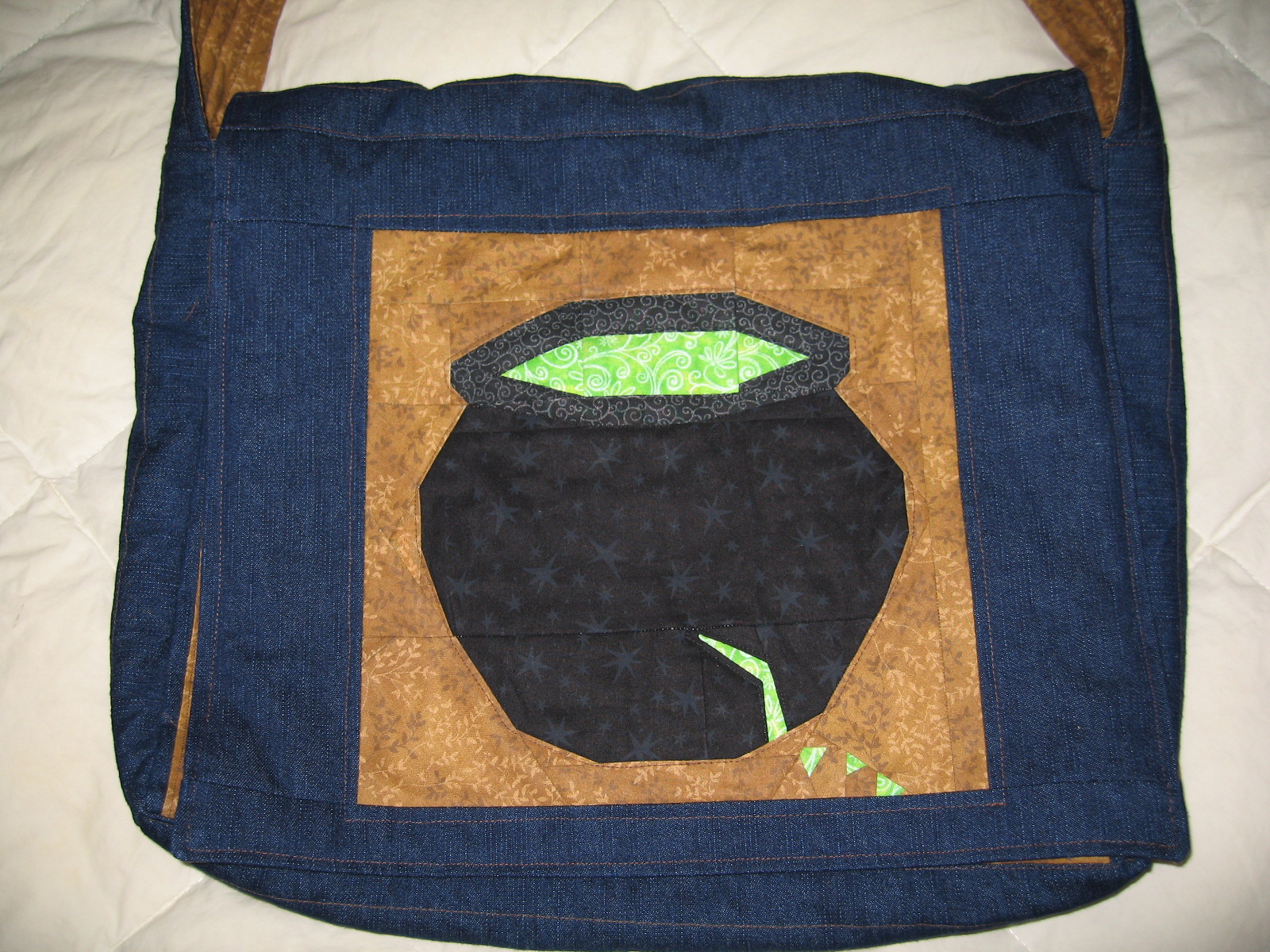
For the outside flap – using your quilt square or fabric panel, border the square with enough outside fabric to bring the piece to 16″ x 13″. This may vary depending on how big your starting piece is. You can make the square centered, as shown, or offset.

Quilting

After all your pieces are cut and your outside flap is made, you will need to quilt the following pieces.

  1. Front Flap
  2. Inside front
  3. Inside back
  4. Bottom and Top Gusset (4×16″)

ONLY the outside fabric is quilted. The lining is not quilted. You can use simple stitching to attach the batting or fleece to the back of the bag, or get fancy with it! Stitch around the design on the front to add detail. For the back and inside, use straight stitching on a 45-degree angle or vary with a wavy/freeform stitch. The strap is the only piece that is quilted after it is made.

STRAP

  1. Baste batting on the wrong side of your OUTSIDE fabric.
  2. Place outside fabric to lining, right sides together. Stitch along long seams, leaving an 8-10″ opening along one side seam. Do not stitch the ends of the strap.
  3. Turn right side out.
  4. Draw chalk quilting lines as shown in gusset photo.
  5. Stitch down chalk lines, top stitch down both sides of strap, carefully closing the open seam used for turning.

Pockets (optional)

  1. If you want pockets, determine the size pockets you’d like to have, for example, big enough to hold a wallet, a cell phone, and sunglasses.
  2. Measure what you want to hold, cut a piece of fabric that when folded in half will be the size you want plus about 1 1/2″. For example, if you want a 3×4 pocket – cut a piece approximately 4 1/2 x 9″.
  3. Stitch together with right sides together, leaving a small space open for turning.

Divider (optional)

  1. The divider is VERY simple. It needs to be cut from liner fabric 16×25. Fold in half, line 16″ edge up, right sides facing with one of the 16″x13″ pieces.
  2. Baste across bottom and sides. This becomes the Bag Front Lining piece.
  3. If a heavier divider is needed, sandwich interfacing or scrap fabric inside before basting.
Messenger Bag Tutorial

Stitching the Body & Lining The body & lining are both stitches in exactly the same way. Please refer to photo, it will help.

  1. Sew seams in this order – Front Flap to Long Gusset to Bag Back to Long Gusset to Bag Front.
  2. This part can be tricky! Make sure your pieces are in the right order so that when folded, each piece will be in the proper places, pockets with openings up, etc.
  3. If you have made a divider for the lining, you need to make sure you’re catching the bottom in the seam and not the top.
  4. When you are done, you will have two long pieces.
  5. After your pieces are assembled, top stitch, making sure that your gusset pieces are pressed towards the bag pieces.

IMPORTANT NOTE – leave the center section of one side of the lining open between the gusset & bag bottom for turning right side out after the bag is assembled. Side Gussets Now that your body & lining are stitched, you will need to add the side gussets to each. Pin each side gusset to the bottom gussets as shown.

Messenger Bag Tutorial
  1. Start 1/2″ away from the edge of the fabric and stitch to within 1/2″ of the other seam, marking this measurement if necessary. This is VERY important for the next step to work properly.
  2. After sewing each end, you will line the long side of the gusset up along the side, making sure it is smooth, The 1/2″ you left open will help you do this without bunching up the fabric at the bottom. Start stitching 1/2″ in from the corner, right where you left off, making sure there is no gap between the thread.
  3. Sew all the side gusset pieces this way.

Finishing the Bag

  1. After the gussets are all sewn, you will have One Bag Outside and One Bag Lining.
  2. Turn the lining right side out. As mentioned earlier, make sure you left a partial seam open for turning.
  3. Pin the strap, right sides together to the long gusset on the bag. Baste with 1/4″ seam.
  4. Place lining inside of bag – right sides facing.
  5. Line up all edges carefully, making sure the seams and points all meet.
  6. Pin well!
  7. Stitch all the way around, being careful not to fold in gusset seam allowances. Backstitch on corners.
  8. After stitching, trim corners, being careful not to clip the threads.
  9. Turn bag right side out.
  10. Press, making sure all your seams are smooth. If they are not, now is the time to fix them! It may take a couple of minutes to align everything to your liking. Once you’re happy, you can close the open seam in the lining by either hand or machine stitching.
  11. Last, top stitch for extra strength & durability for your bag. If you have a walking foot, it’s a really useful tool to use for this part while you are sewing through all the thicknesses of the bag.
  12. Pin well, making sure everything is smooth. Top stitch around opening and flap of bag about 1/4″ away from edge. Stitch over the straps two or three times for extra strength.
  13. Yay, you’re done! Whew! That was a lot of work… time for a butterbeer!

Find my free patterns on Sewhooked & Fandom in Stitches.

♥ Jennifer O

Posts on this blog may contain affiliate links to help cover the cost of my website. I thank you for your generous support. ♥

TARDIS Treat Bag

TARDIS TREAT BAG TUTORIAL

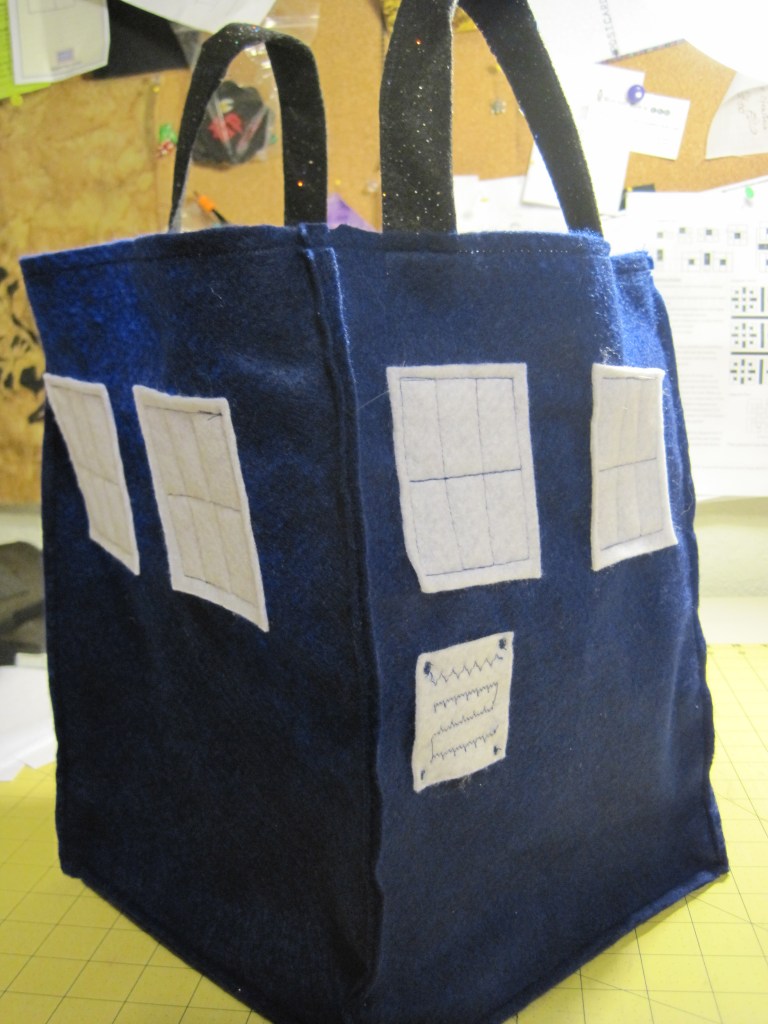
Being the Doctor Who obsessed family that we have become, I suppose it’s no surprise that one of my kids is going as The Doctor for Halloween. My eldest has their Ten costume all ready to go, courtesy of a day of thrifting. Because I can’t not be involved in costume making, I asked if there was anything I could do.

“Mum, can you can you make a TARDIS bag for my treats?”

You better believe I can!

Despite it’s awesomeness, the TARDIS Treat Bag is super simple.

You need:

  • 9″ x 12″ acrylic felt sheets – 5 dark blue, 1 white and 1 glitter black
  • scissors
  • thread (I used navy blue)
  • ruler (rotary, if you’ve got one)
  • rotary cutter (optional)
  • sewing machine (optional)

You can definitely do this project without a rotary cutter and ruler and even without a sewing machine, so those items are optional. If you do hand stitch, make sure you make tight, even stitches and use heavy-duty knots so you don’t lose your candy!

Cutting Instructions:

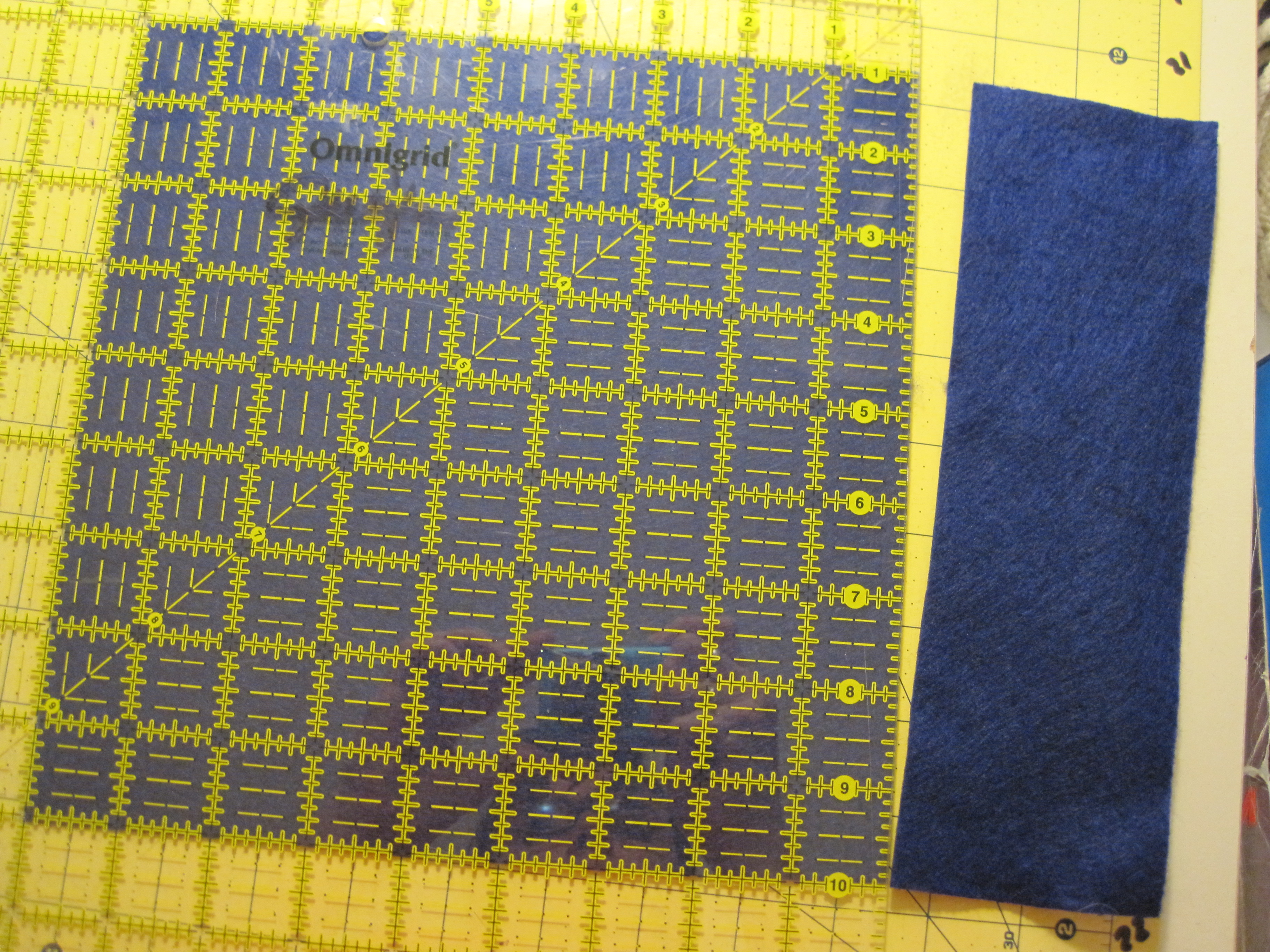
from 1 sheet of blue felt (the other 4 sheets of felt stay 9″ x 12″), cut:

  • 9″ x 9″ square  -bag bottom

from 1 sheet of white felt, cut:

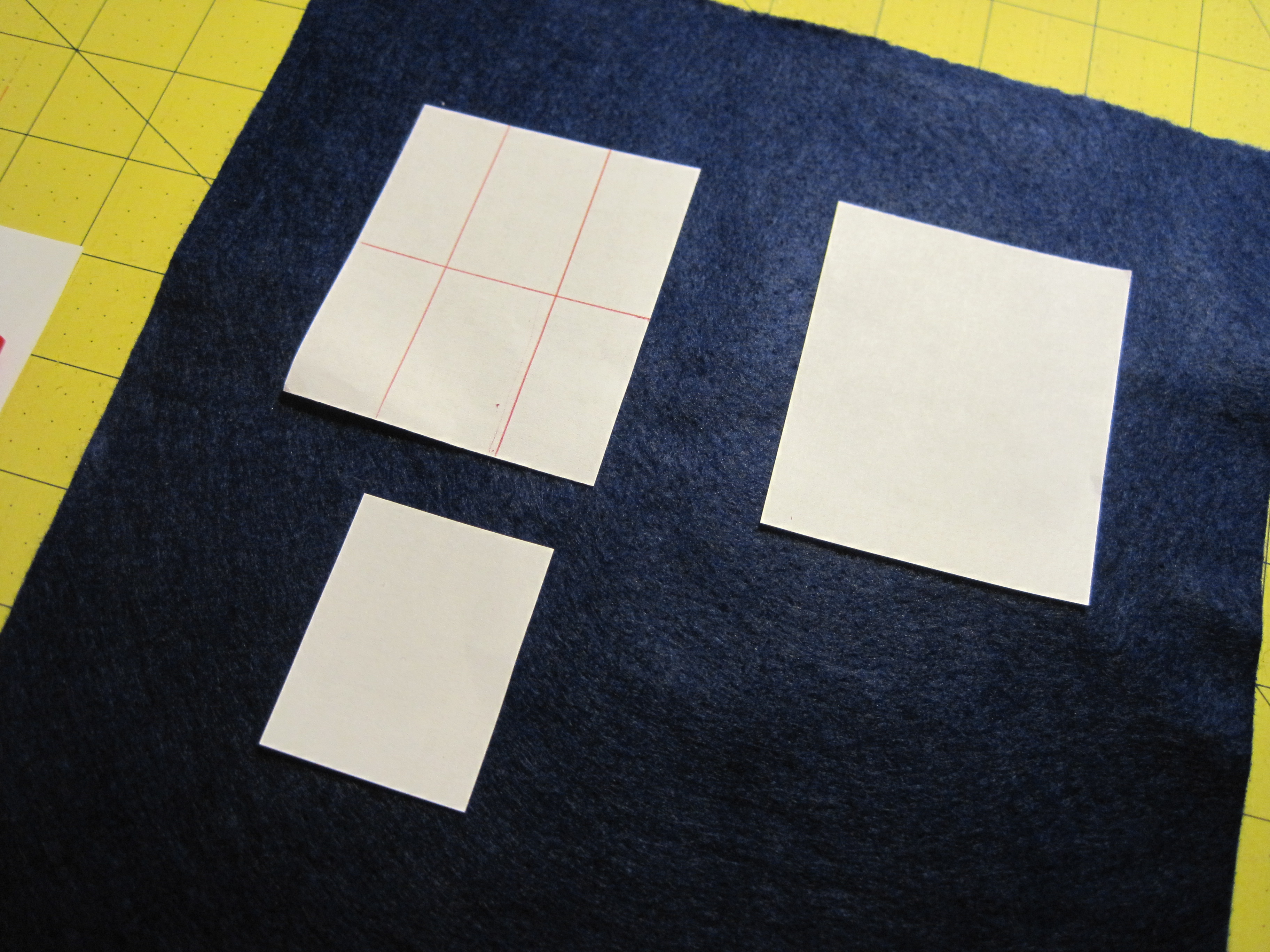
  • 8 – 2 1/2″ x 3″  – Windows
  • 1 – 1/2 x 2″ – Notice
  • (optional) 4″ x 5″ – cell phone pocket

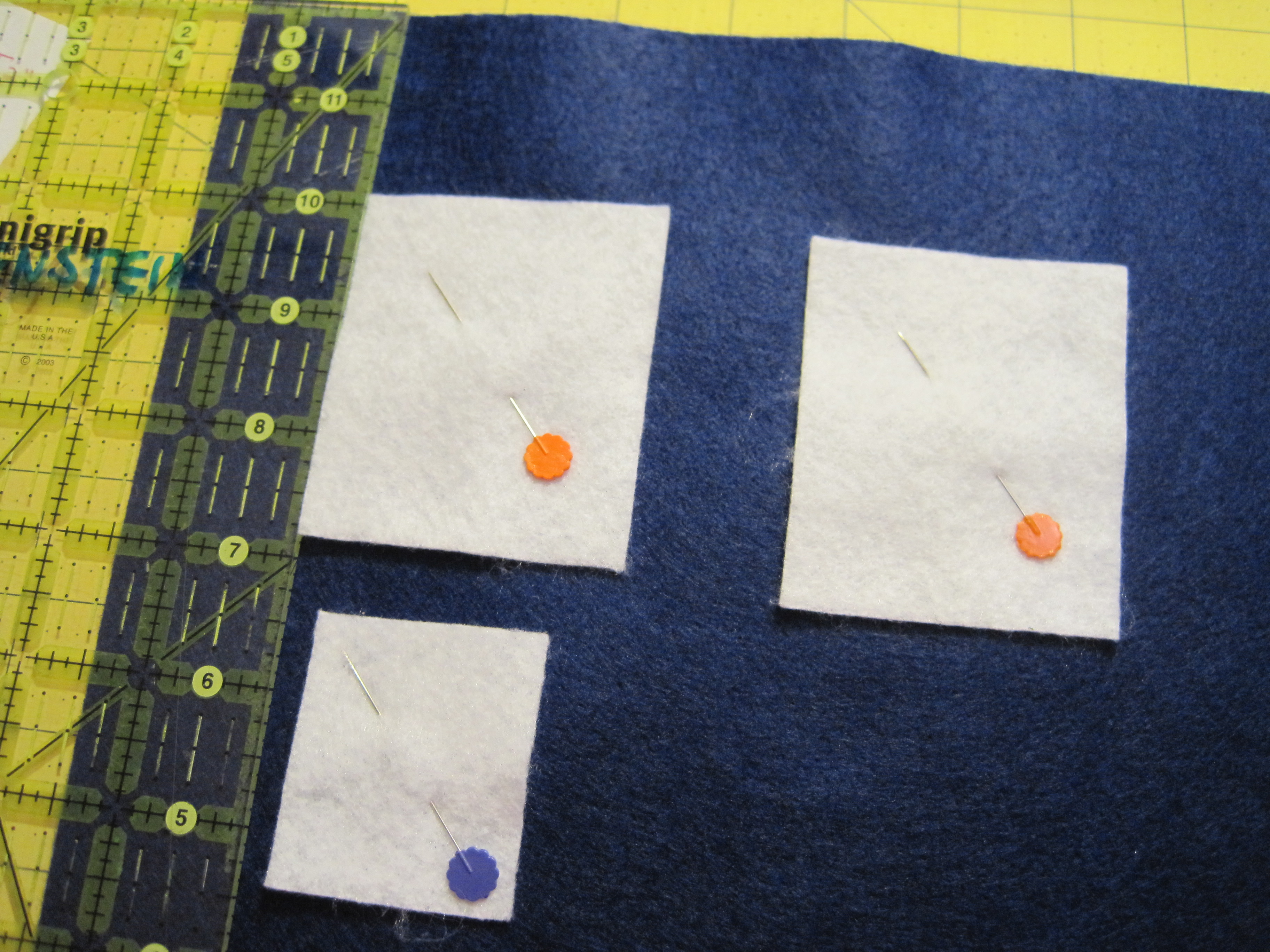
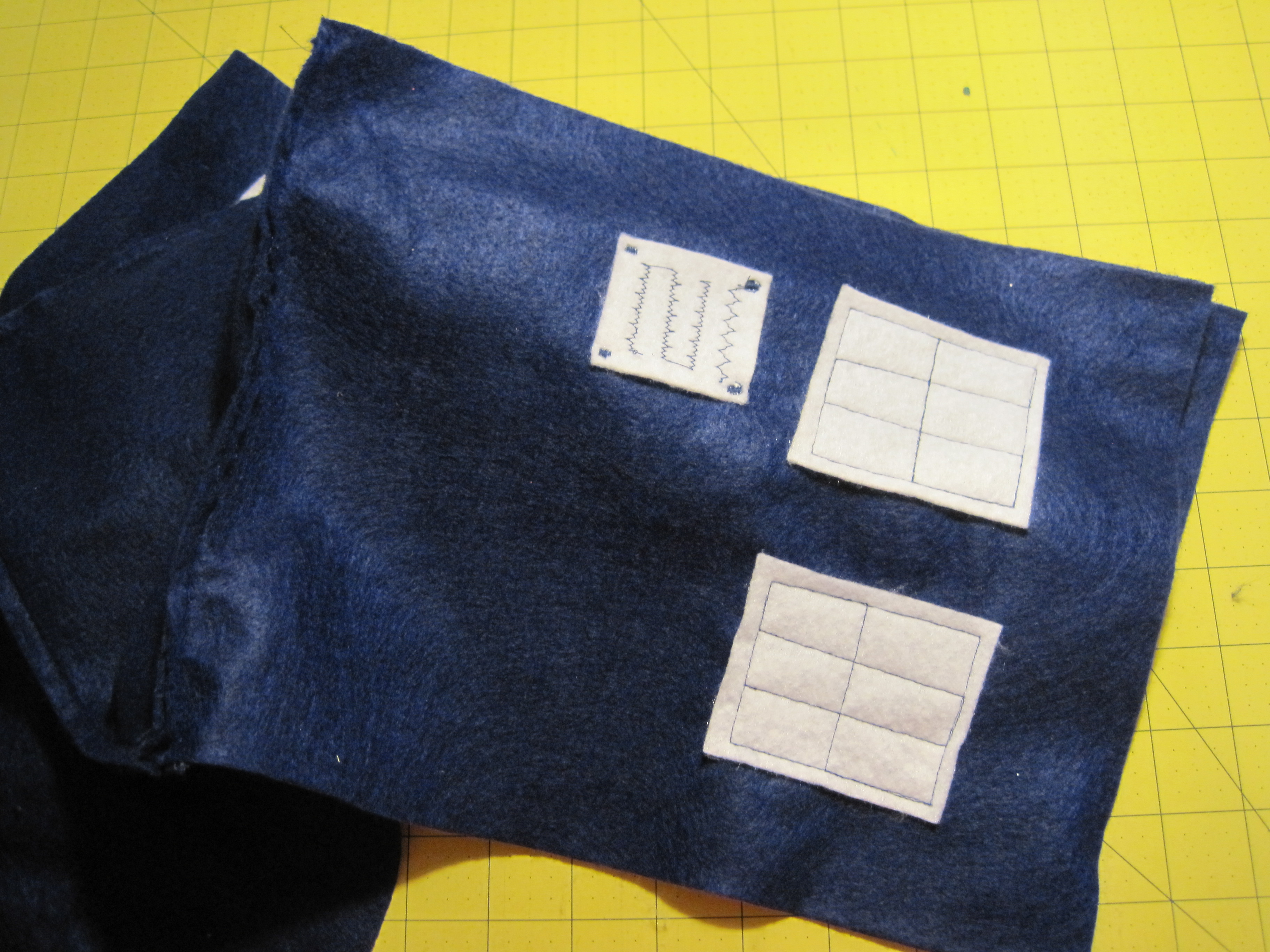
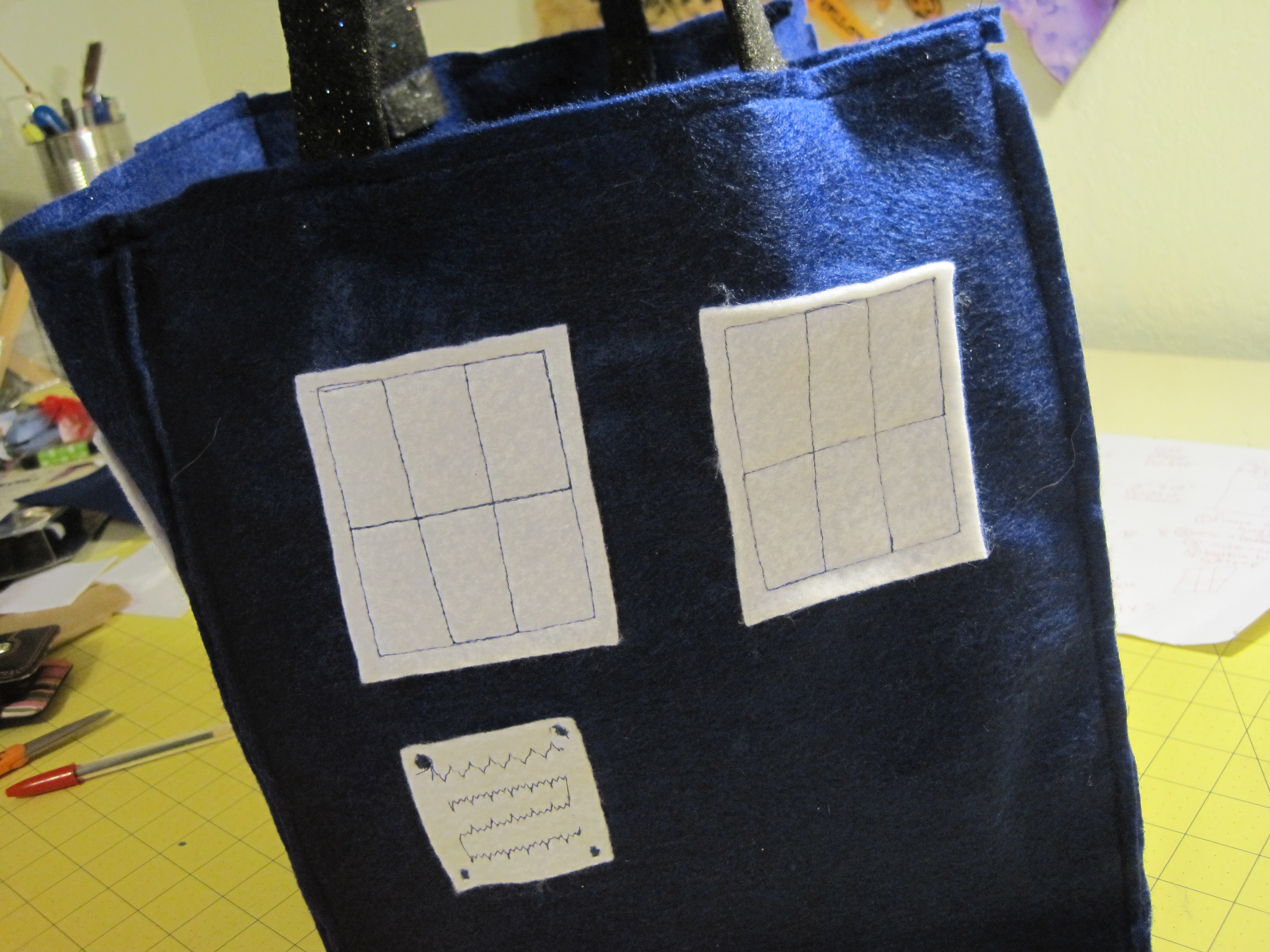
Using your ruler, arrange the window pieces on the 9″ x 12″ sheets of felt so that they are 1 1/2″ in from the sides and 2″ down from the top.  For the TARDIS front, center the notice under the left window, leaving about 1/2″ in between.

Arrange window pieces on remaining three 9″ x 12″ blue felt.

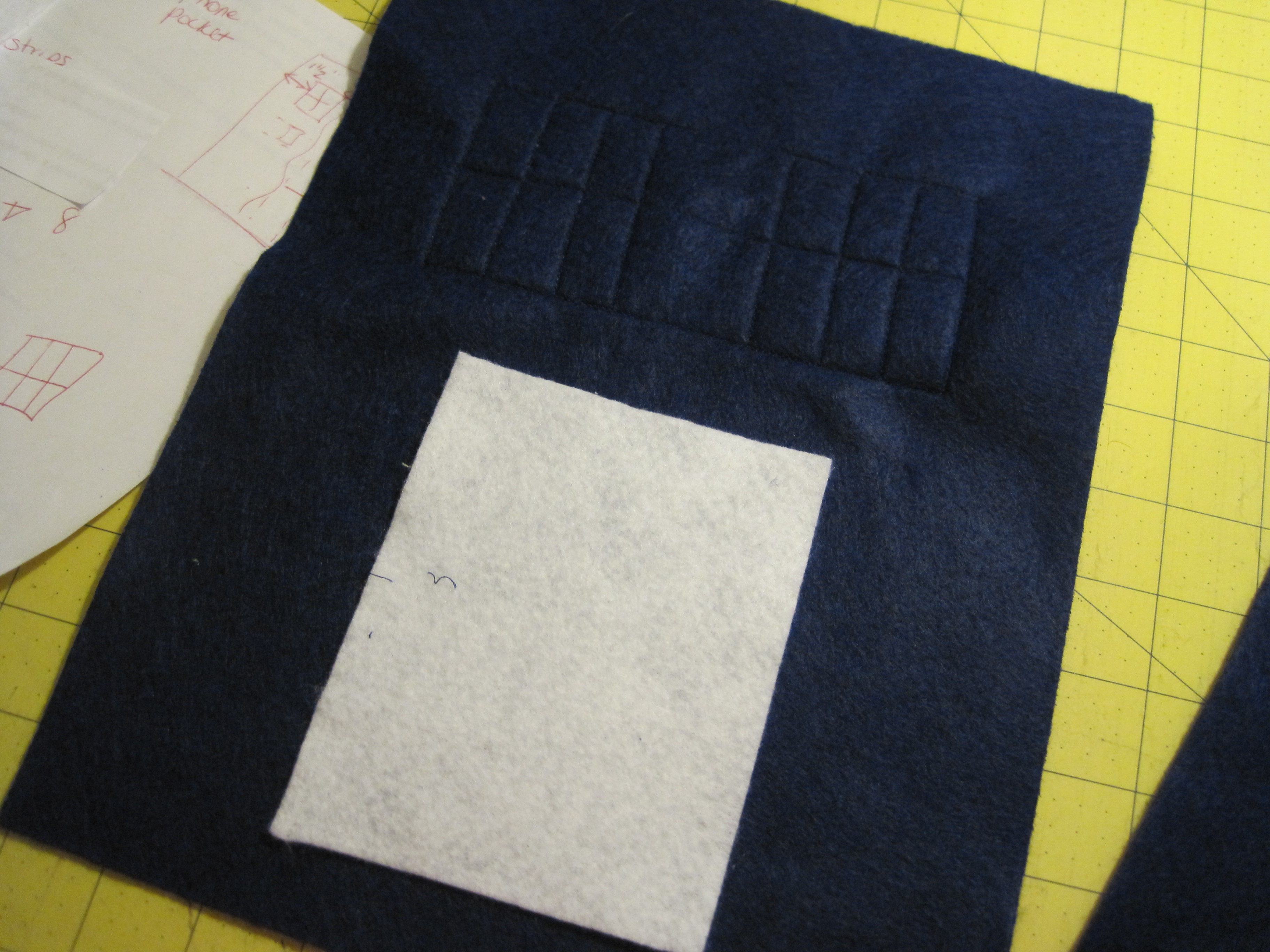
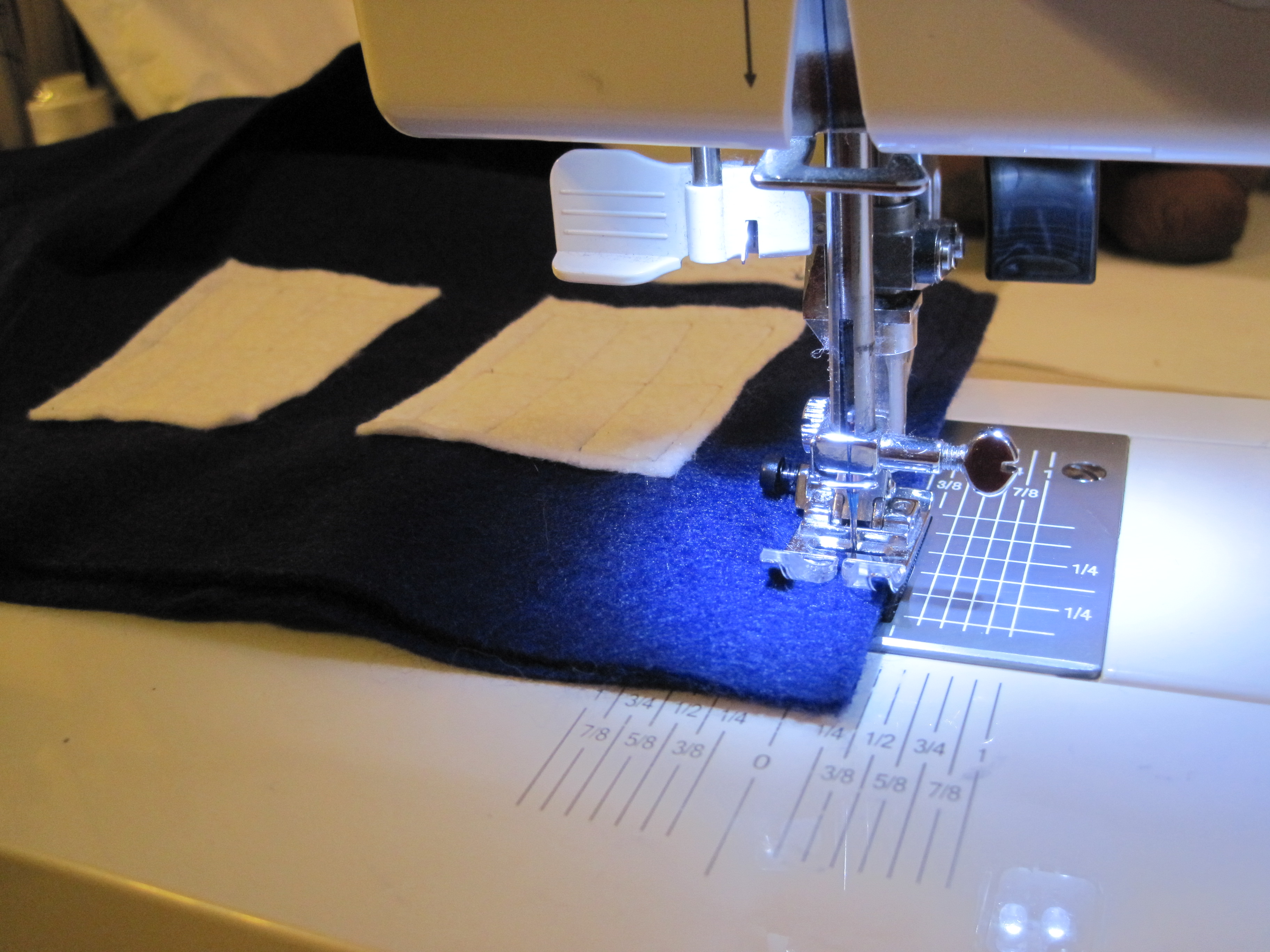
Stitch windows in place, 1/4″ in from outside of white felt. The TARDIS windows have six panes. My windows are estimated, but you can measure and divide your stitching if you choose. Repeat for the two sides that are NOT the front of the TARDIS.

For the Notice on the front, sew some random stitching onto the  1 1/2″ x 2″ piece of felt (as shown). This gives the illusion of writing from a distance. Stitch on each of the four sides with a short zig-zag stitch in each corner (forgot to take a close up…look about three photos down and you can see what I mean!).

Cell Phone Pocket

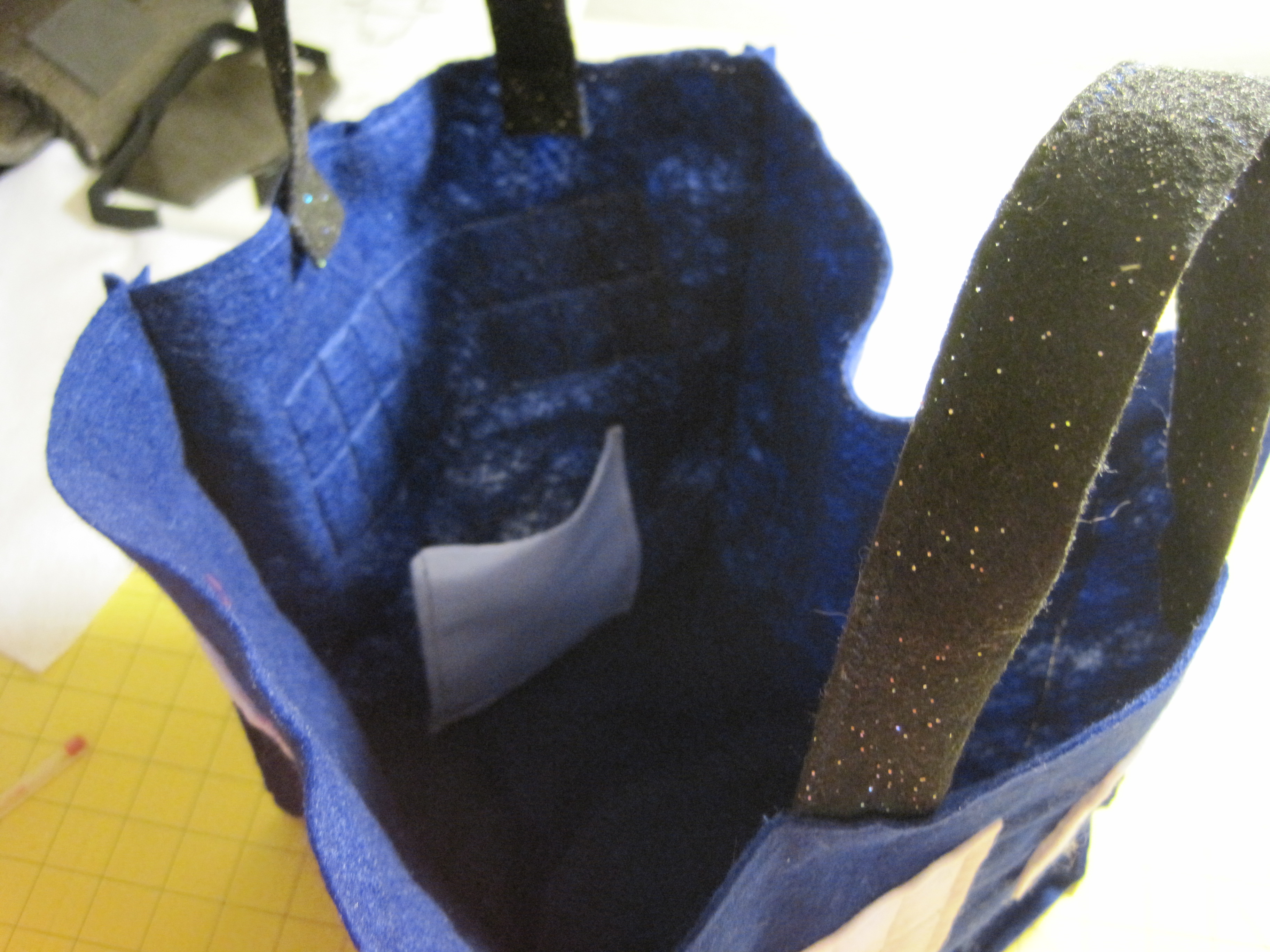
OPTIONAL – After stitching all the windows on, choose a blue side that is NOT the TARDIS front. Align the 4″ x 5″ piece of felt under the window stitching. Straight stitch on the two long sides and across the bottom, making sure to backstitch at the start and stop. This is your cell phone pocket.

For handles – Fold in half lengthwise and zig-zag down the open side.

Your TARDIS is now ready for assembly!

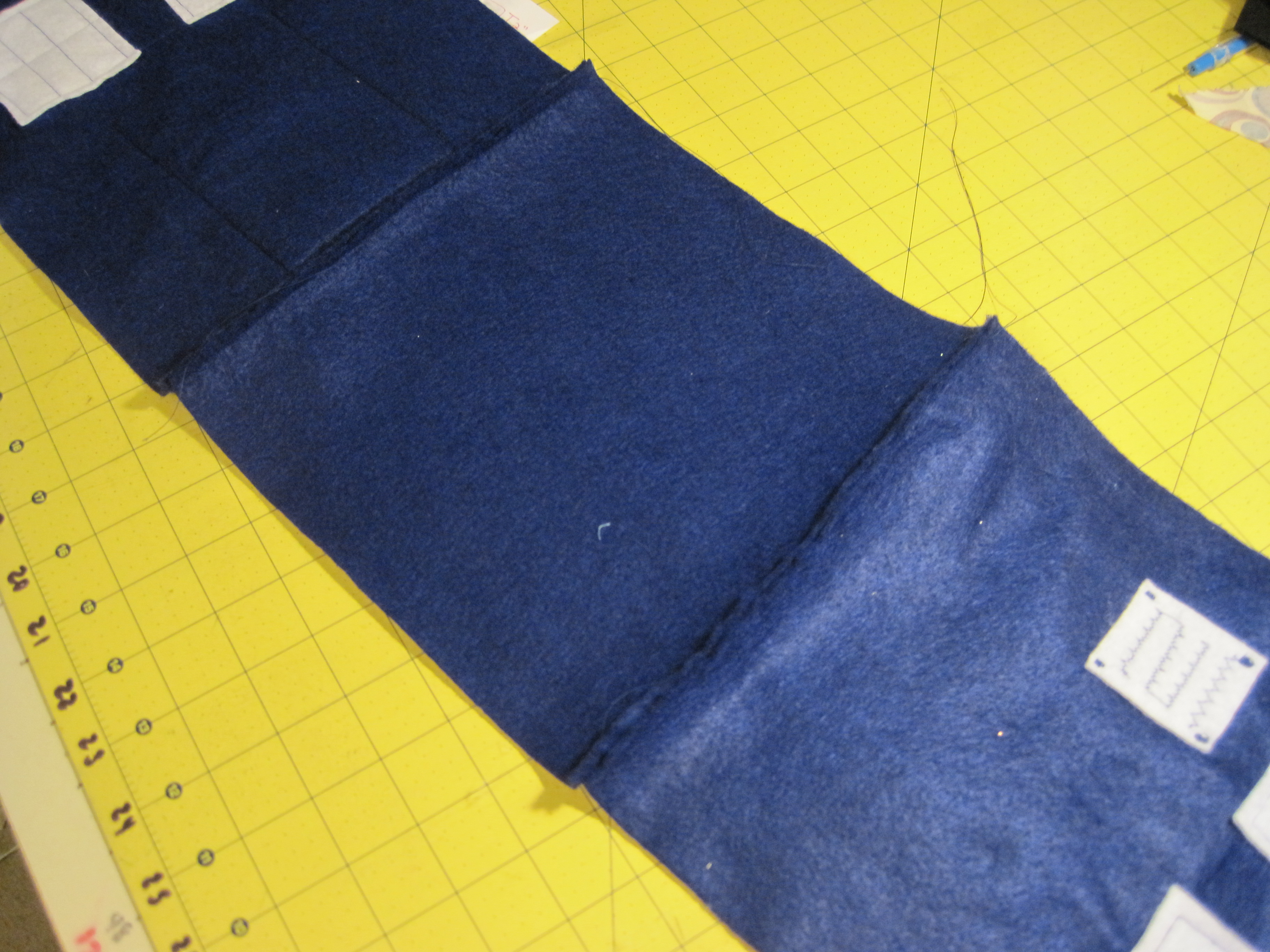
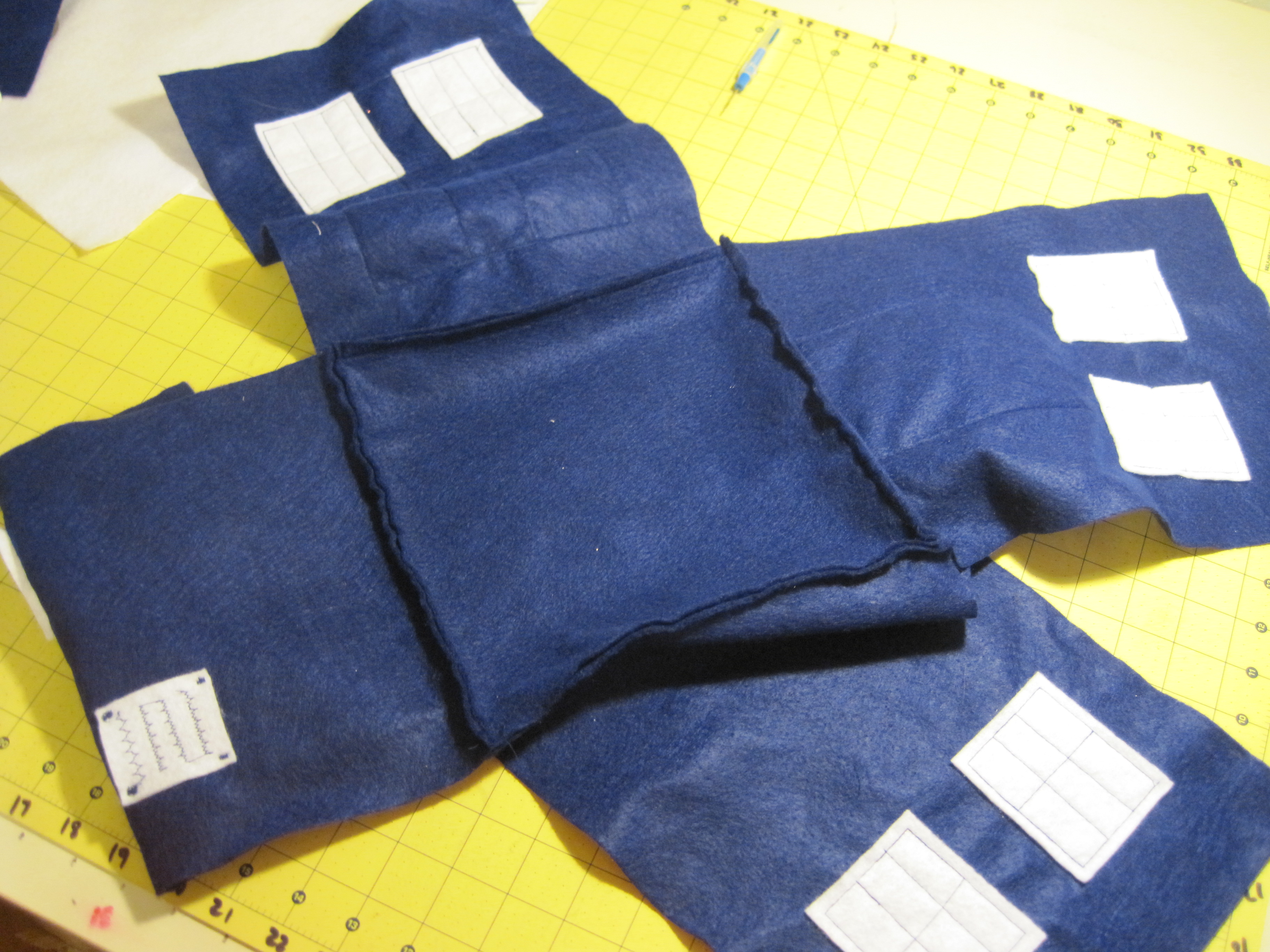
Find the front (windows with notice) and back (cell phone pocket – or without if you didn’t make one) and bag bottom.  With the insides facing/right side out, place the bottom of the front piece along one side of the 9″ x 9″ bottom piece. Stitch across, leaving 1/4″ at the beginning and end of the seam unstitched (see below).

Seam allowance will be on the outside of the bag.

1/4″ unstitched on the end of the seam (both ends).

Repeat stitching for the back side, making sure the bottom of that side meets the bottom of the bag.

Sew the remaining two pieces on opposite sides, continuing to leave 1/4″ open at each end of the seam.

Find the front and the piece immediately to the left. Bring the two long sides (wrong side) together, right side out.

Stitch from corner to corner.

Repeat for the remaining three corners.

You now have a TARDIS with no handles. That’s the last bit and then you’re done!

The handles attach to the front (windows + notice) and back of the bag. Use a ruler to line up the handles 2 1/2″ in from each side of the bag, with about 2/3″ inside. Pin in place.

Starting at a corner seam, stitch all the way across the top of the bag, backstitching when you get to the handles. For added strength, continue stitching all the way around the bag, flattening out the seam allowance with your fingers before you stitch across it.

Handles…and you can see the cell phone pocket, too!

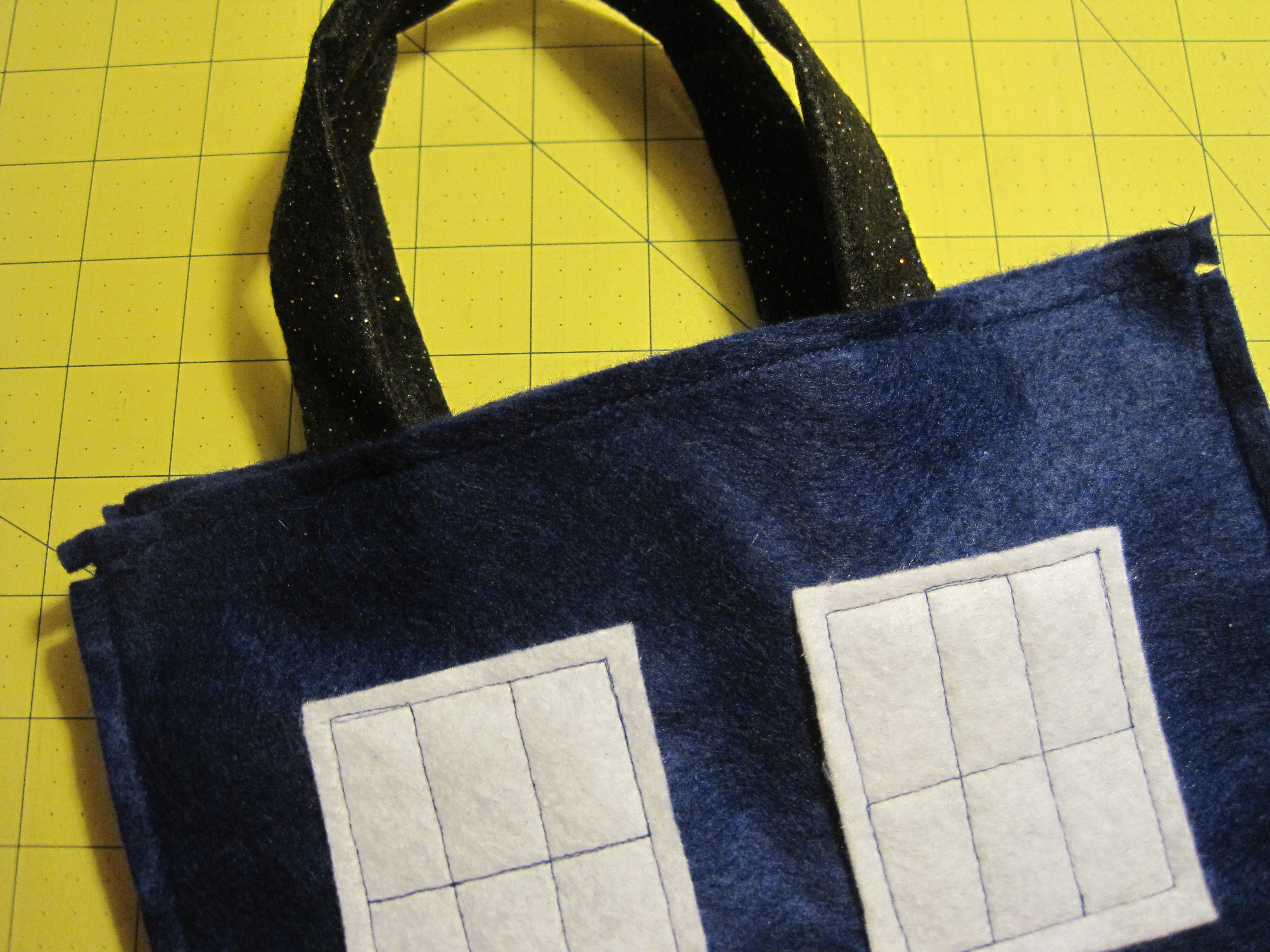
Snip above and below the top stitching to make the little notches (optional).

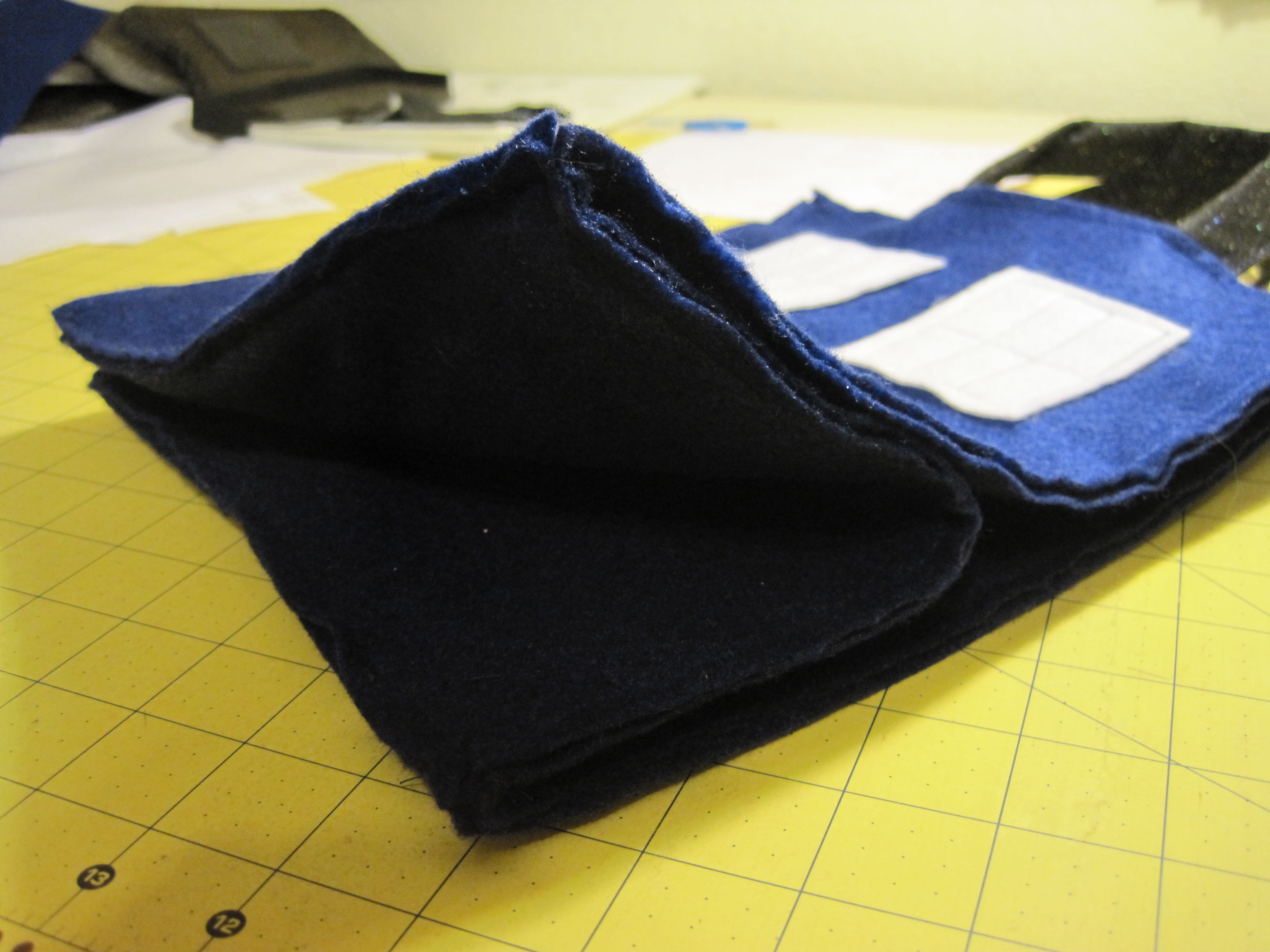
The TARDIS Treat Bag is easy to fold, just fold in the bottom and it will fold in on itself.

And… DONE!

Front detail.

FREE Doctor Who Quilt Patterns!
5" Dalek, paper pieced 20" TARDIS block TARDIS 

Happy crafting!

♥ Jennifer O

Posts on this blog may contain affiliate links to help cover the cost of my website. I thank you for your generous support. ♥
Jewelry: Needle Earrings


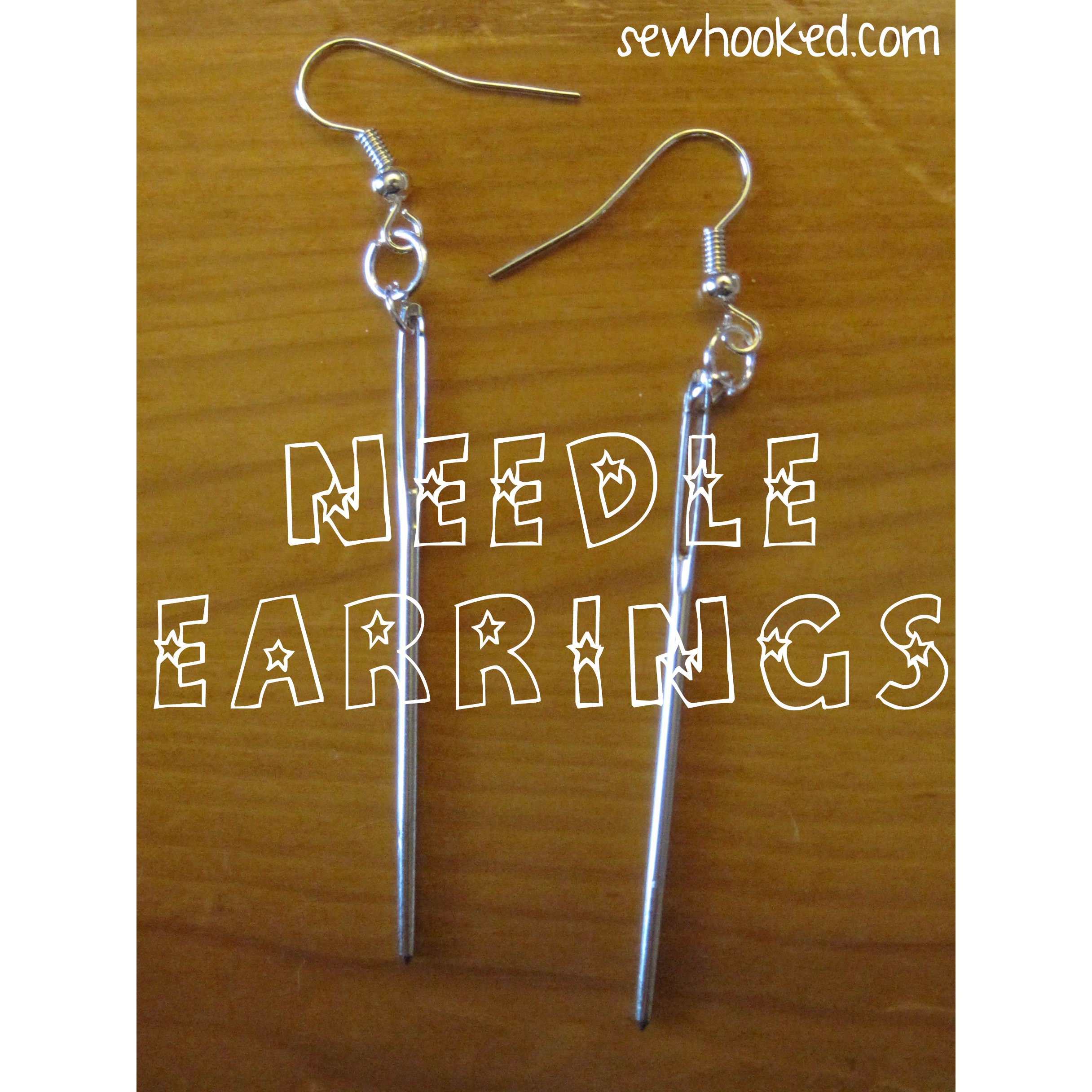
Some days, a girl feels cleverer than others.  Take the day that I was trying to think of something simple and inexpensive to make for each of the members of my sewing circle.  At the time, I was weaving in some ends on my crochet work.  I looked down at the yarn needle in my hand and BOOM… light bulb moment!

That was followed by a bout of Why Didn’t I Think Of This Sooner, which itself was followed by a trip to the craft store.

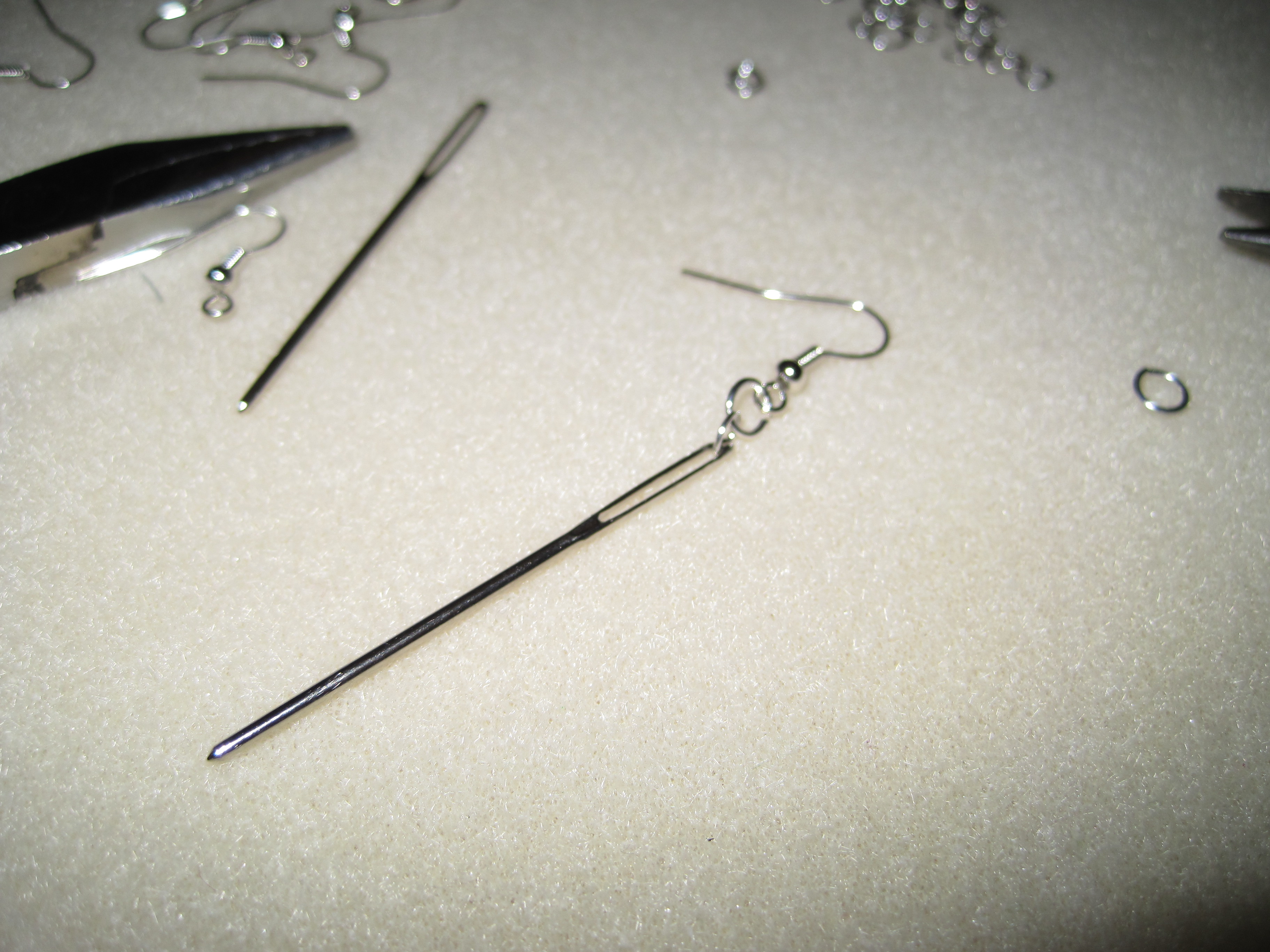
To make an awesome pair of Needle Earrings, you’ll need just a few things:

  • Jewelry Pliers (2 pairs, if you’ve got them)
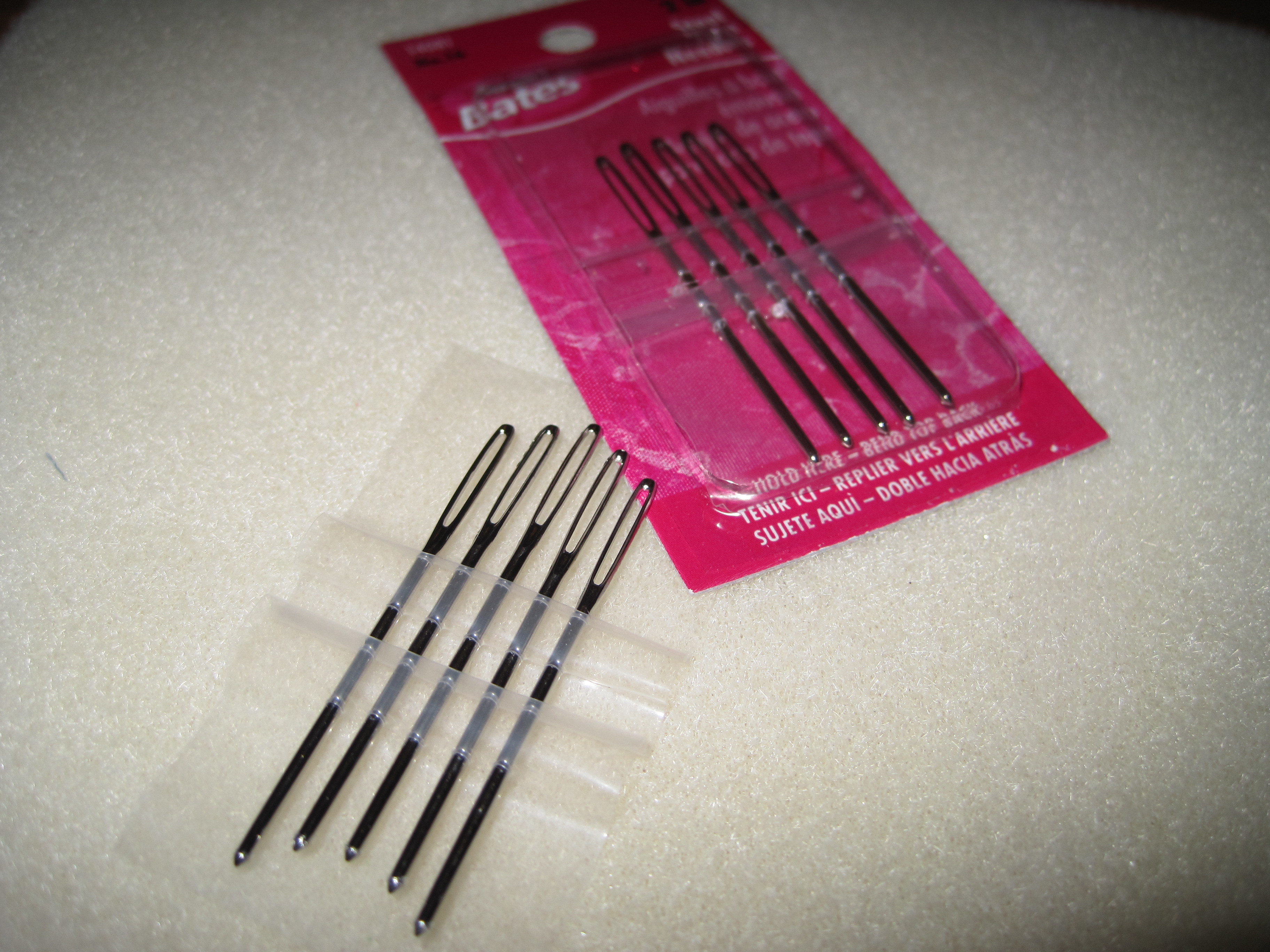
  • A package (or two!) of blunt tip yarn needles (metal or plastic will work)
  • 4 jump rings in the size of your choice per pair of earrings
  • French Hooks or similar

You can find these blunt-tip yarn needles in the needlework section with the crochet hooks and knitting needles.

All the supplies to make a slew of needle earrings!

For one earring, attach needle > jump ring> jump ring > earring.  Two jump rings make them hang nicer so that the eye is turned out when you wear them.

Here’s a great photo tutorial on opening and closing jump rings.

Wash, rinse, repeat.  Wear and share!

Happy crafting!

Find my free patterns on Sewhooked & Fandom in Stitches.

♥ Jennifer O

Posts on this blog may contain affiliate links to help cover the cost of my website. I thank you for your generous support. ♥

Recycled Gift Bags from Paper Bags

The holiday head cold has grabbed me with both hands!  Fortunately, I finished my gift making and wrapping before I could spread cooties along with my Christmas cheer.

I did something I almost never do and *gasp* bought pre-made gift bags for holiday treats.  When I opened the packages, they all had a bottle neck.  After I forced my eyebrows down out of my scalp, I realized the cute little bags were practically useless unless the entirety of my holiday giving included M&Ms.

Without any time to spare, I started digging around in my “keep just in case” drawer and came up with a stack of paper wine bags that I’ve been holding on to forever.  Jackpot!

To make your own holiday gift bags/wrap from recycled wine bags, you’ll need:

  • paper bags (any size)
  • tape or glue
  • hole punch
  • ribbon
  • iron
  • Something to cut the bags (paper cutter, rotary cutter, decorative or plain scissors)
  • stamps, stickers, or other embellishments

If your bags are like mine, they’re likely to be in all different states of crumpled-ness.  So, first things, first, iron those bags if needed.  Medium heat works.  Ironing on a paper bag will also clean your iron, so you might want to start with a sacrificial bag, just in case your iron has any Ghosts of Craft Projects Past lurking around.

Much better!

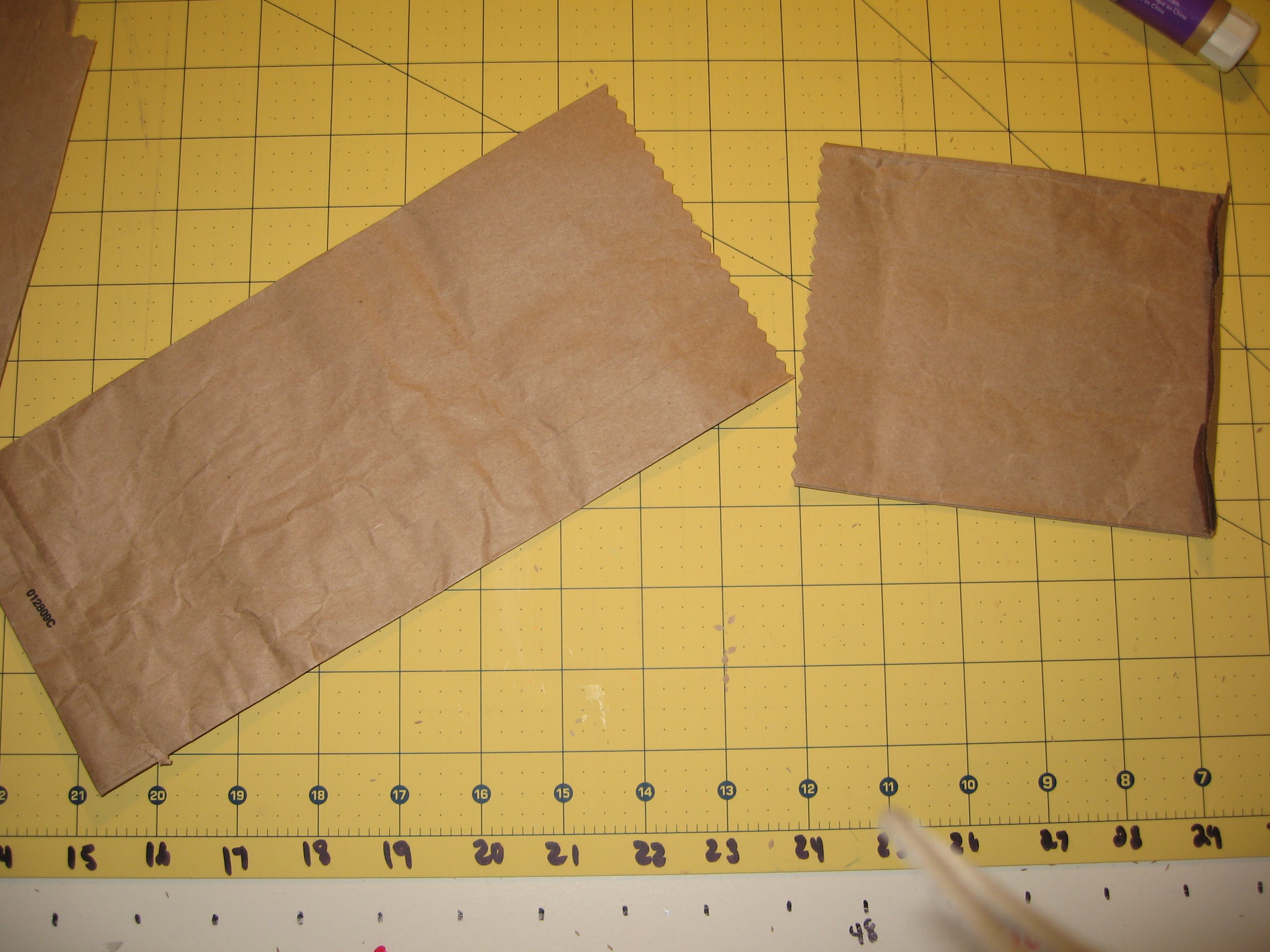
I happen to have a snazzy wavy blade for my rotary cutter. Try scissors, decorative or plain, or fun rotary blades.

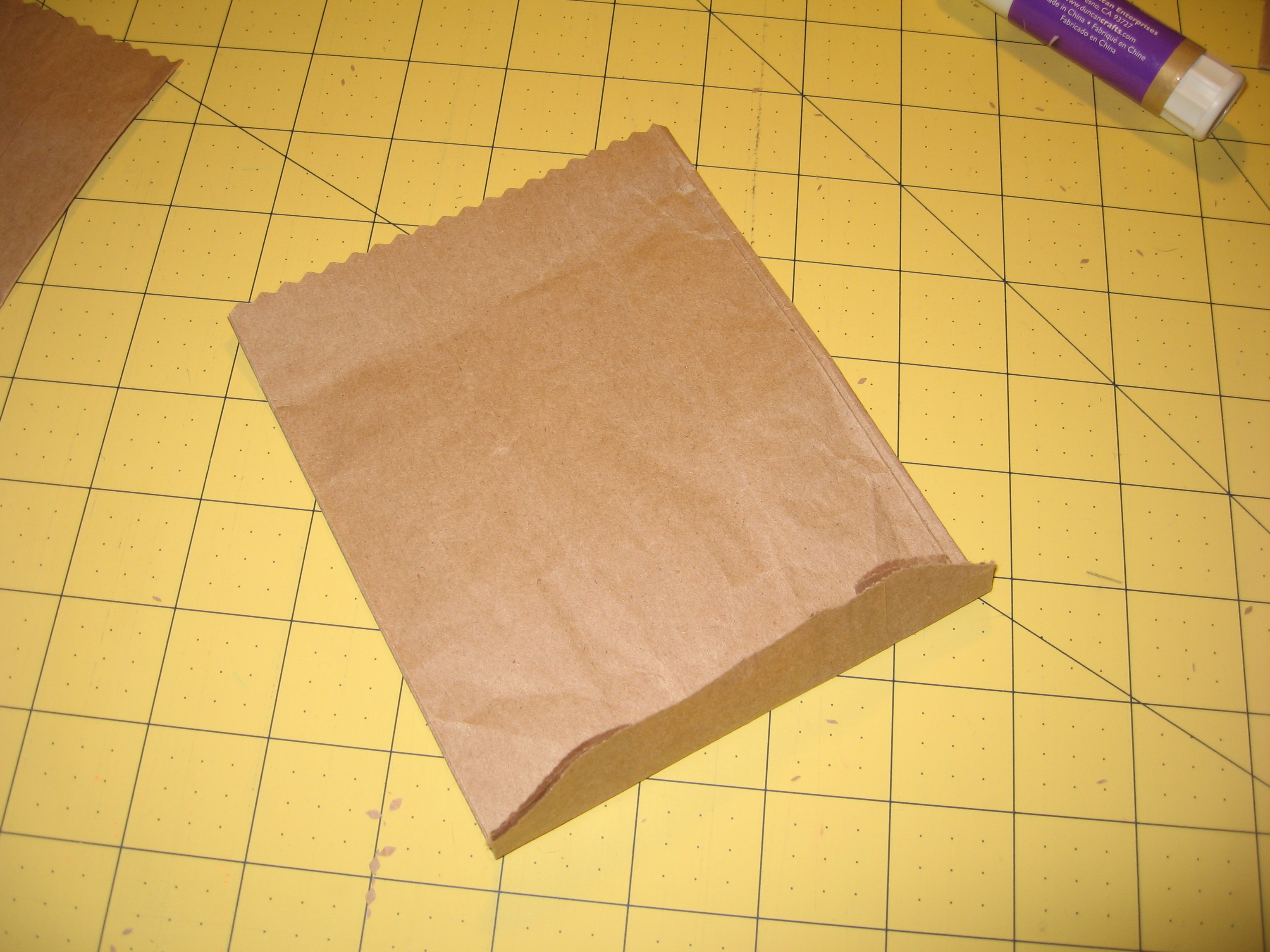
Each wine bag will make 2 gift bags.  Determine how big you want each side to be, leaving about 1″ for folding for each bag.

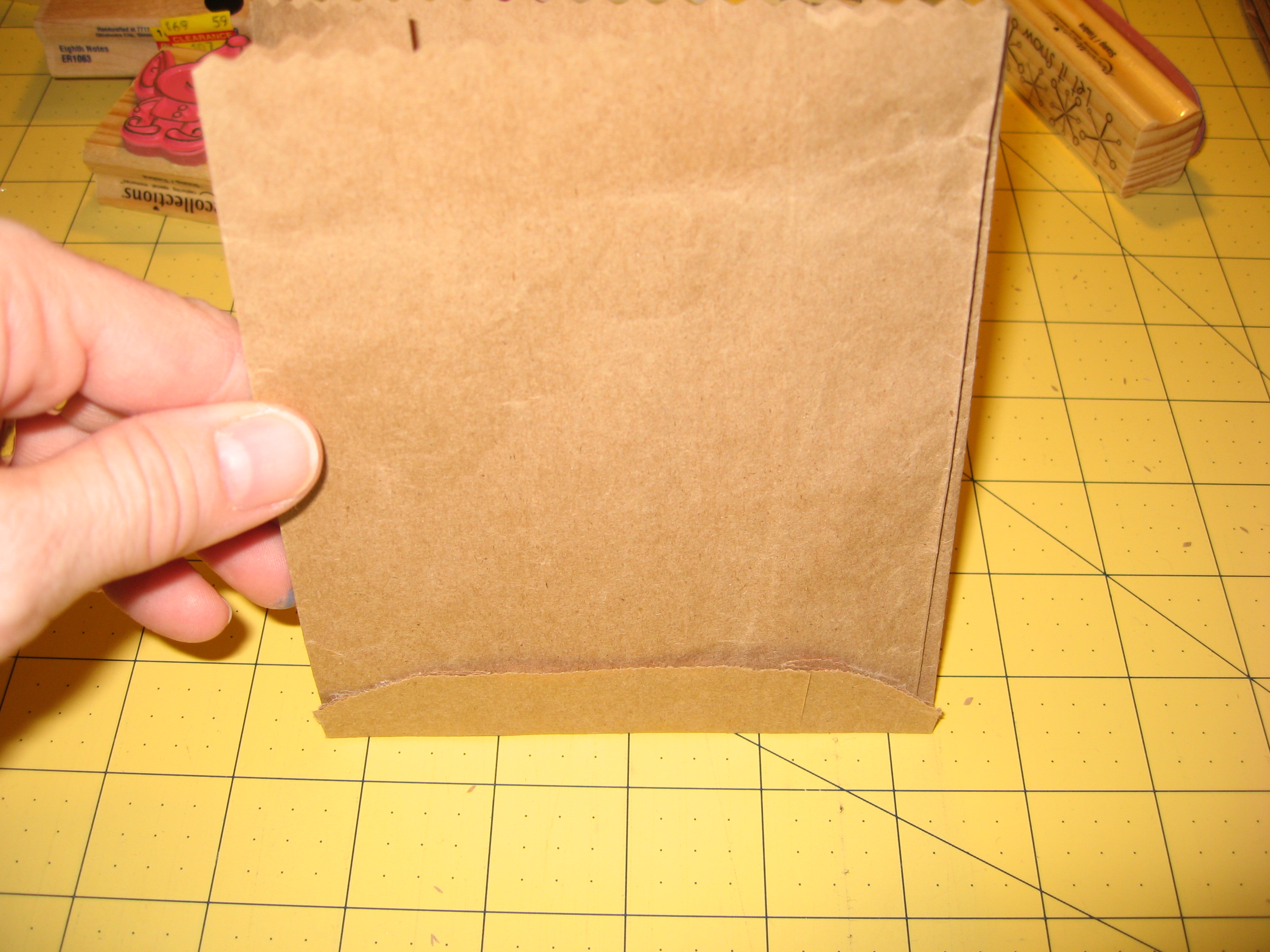
Bottom and top (L-R)

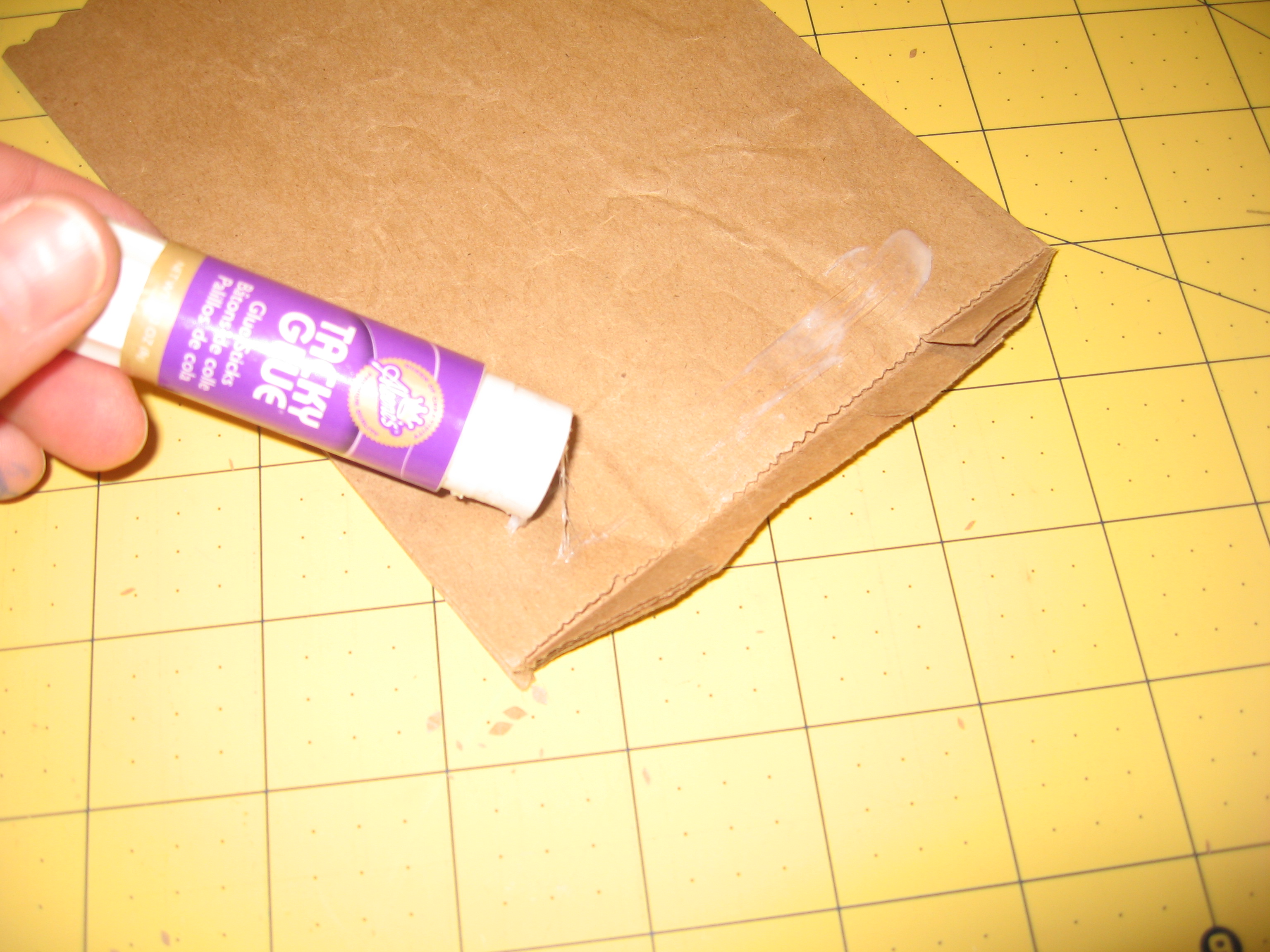
If you’re making more than one gift bag out of your original bag, you may need to seal the bottom. Glue works for this, but so does tape or a cute sticker.

This is also a good time to embellish your gift bag with stickers, stamps, or doodles.

Top finish off, fold the top down and punch two holes through all layers.  Insert your gift and tie a ribbon through to close.

Repeat the steps for all bags.  The bottom half of your recycled gift wrap will only need the tops folded and punched since the bottom is already sealed.  I stamped mine, but you can embellish your bags any way you like. Now, fill with holiday goodness and gift it!  If you’re stuffing your gift bags with edible homemade goodness, I suggest wrapping it in plastic or wax paper before placing it in the bag.

Find my free patterns on Sewhooked & Fandom in Stitches.

♥ Jennifer O

Posts on this blog may contain affiliate links to help cover the cost of my website. I thank you for your generous support. ♥

Recon: No Sew Swim Shirt

No Sew Swim Shirt (80s style!)

My 14 year old heads off for a week of orchestra camp on Saturday. During the week, they get the chance of swimming in the river near the college where the camp takes place. My kiddo is pale and freckled, the worse kind of complexion to spend a day in the sun.

Well, what’s a Gen X mom to do? How about we rock this party 80s style?!

Enter the No Sew Swim Shirt.

This is the second version of this shirt I’ve made, the first having done it’s duty honorably for several summers now.  The sides are nice and open so the water will flow through your shirt and not weigh you down.  A must for any super-sun-sensitive human.

There really is no sewing and you only need a couple of supplies and you’ll have your own No Sew Swim Shirt in about 10 minutes!

You’ll need:

  • 1 t-shirt, at least 2 sizes too big, in a light color to reflect the sun
  • a pair of scissors
  • a large ruler OR yardstick
  • cutting mat OR masking tape with 1″ intervals marked to about 20″

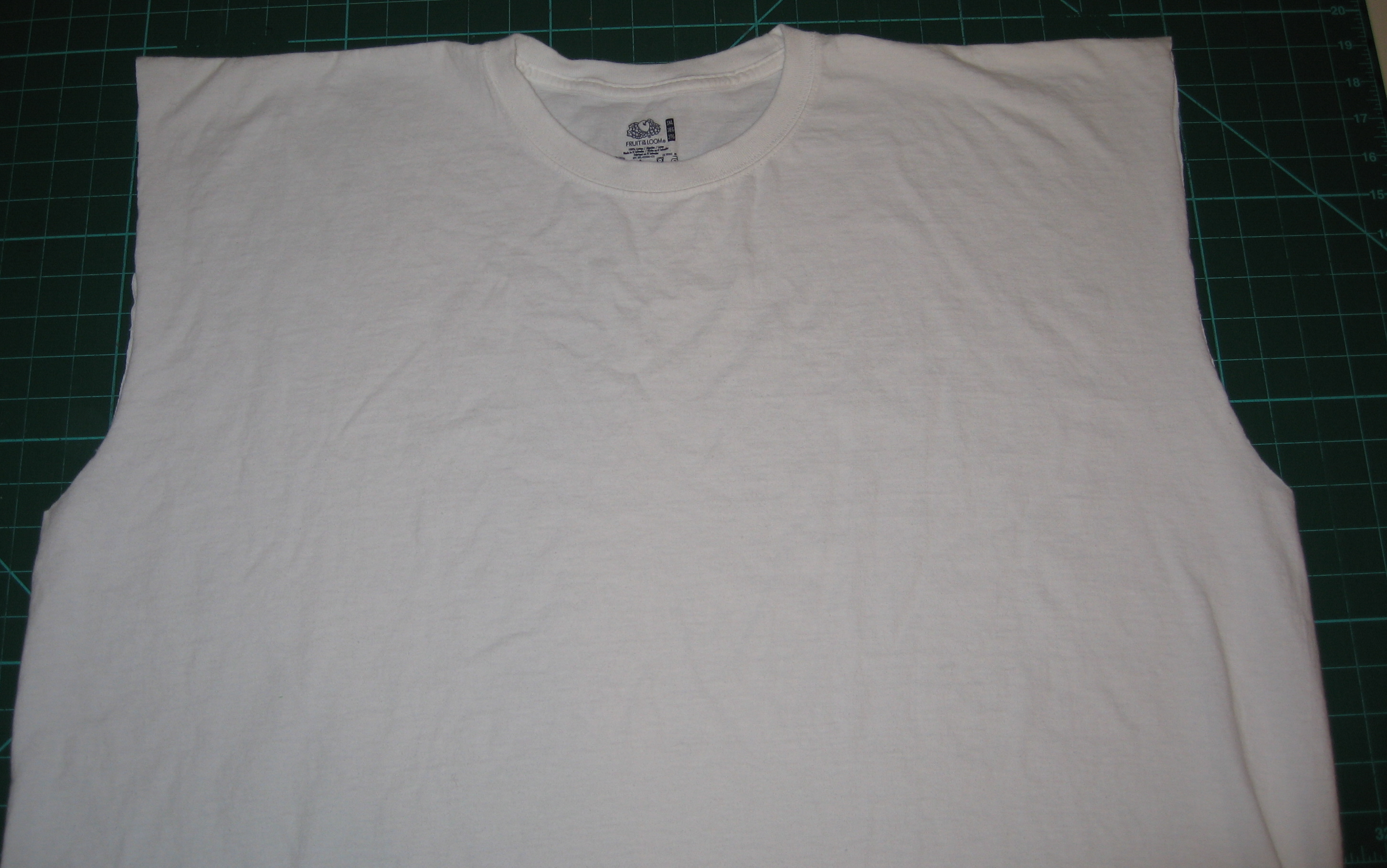
spread the t-shirt out, making sure the top and bottom are nicely aligned

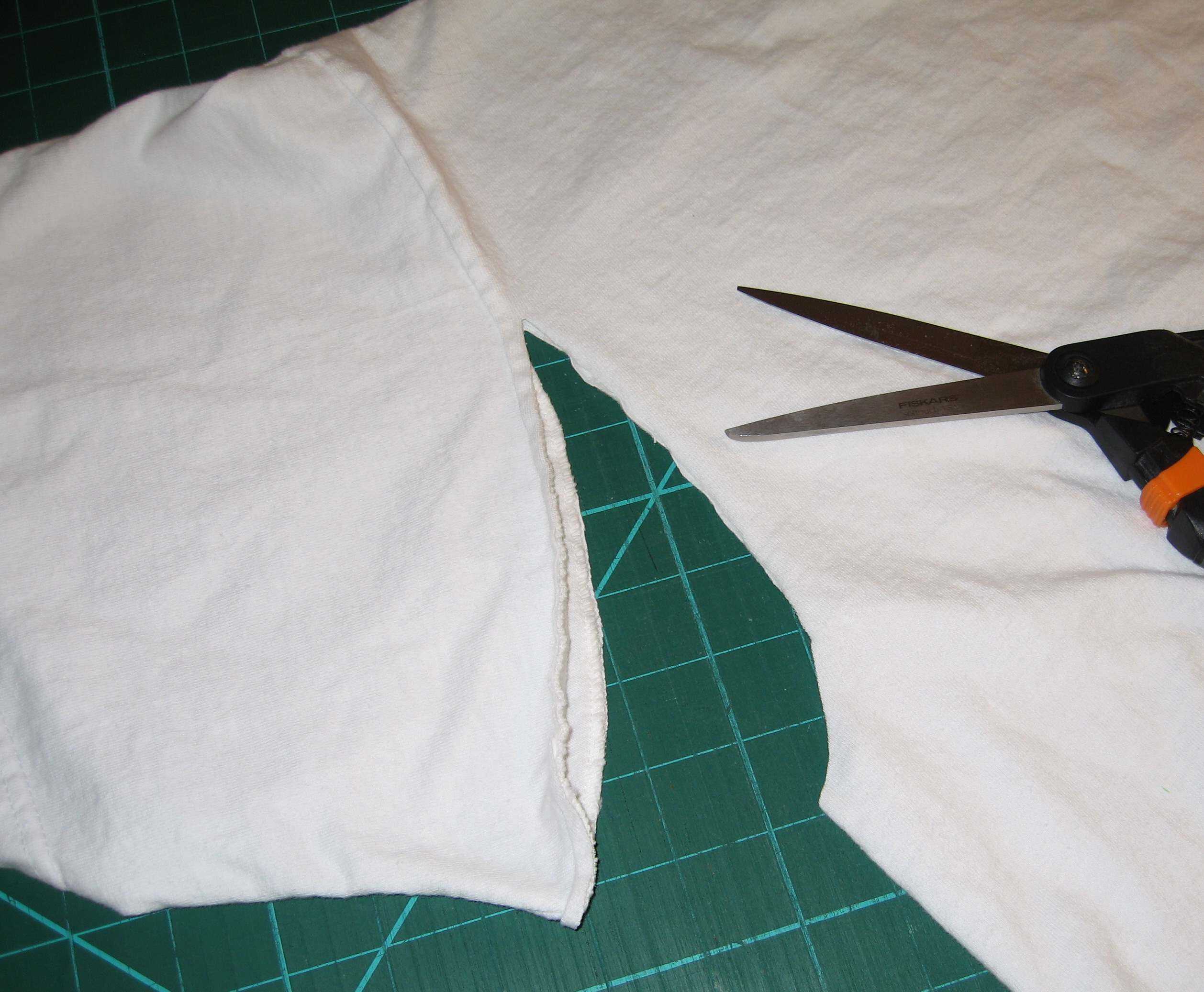
cut off sleeve just inside the seam line, save for another project

repeat for second sleeve

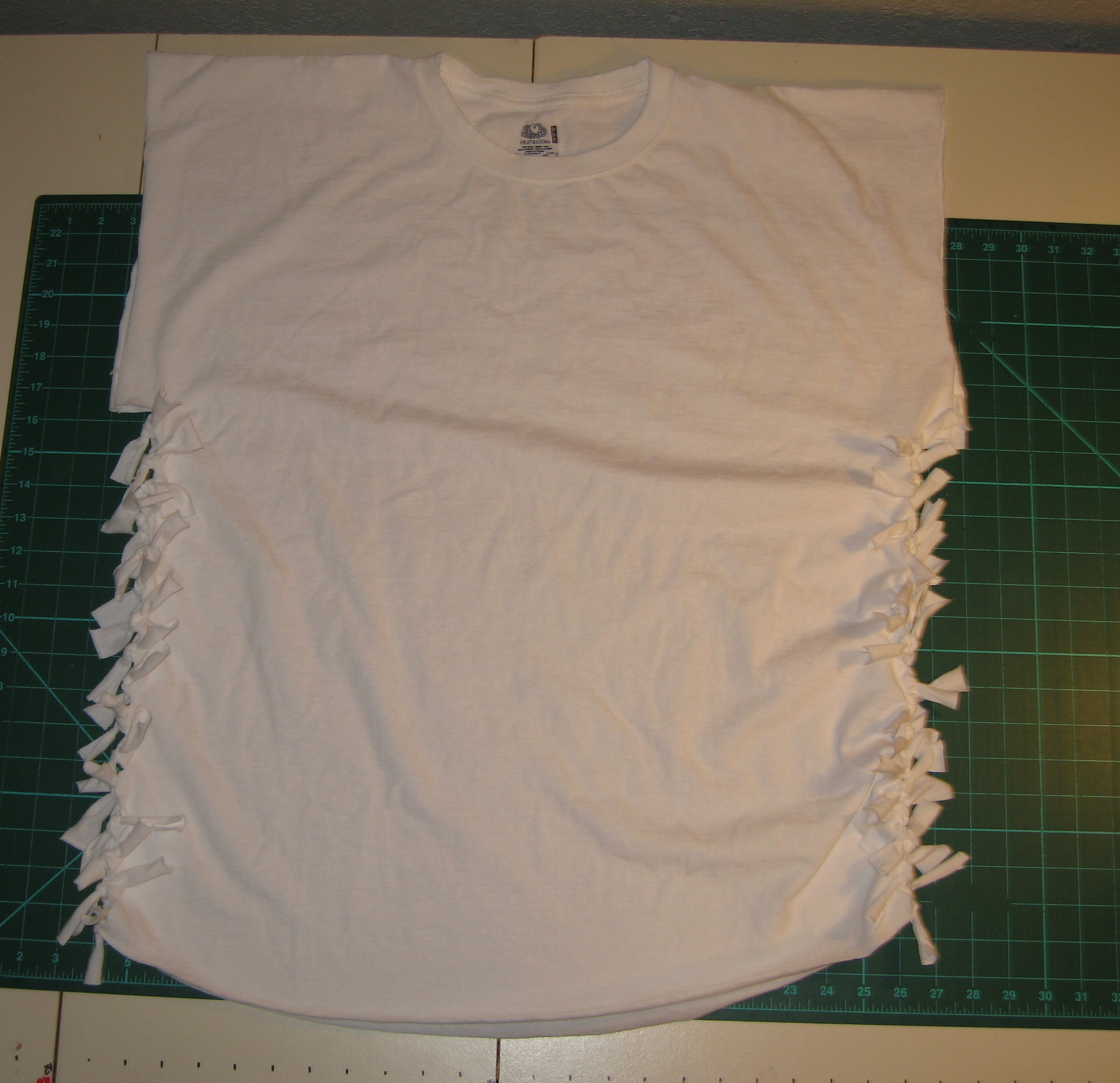
slice up sides of t-shirt

remove bottom hem

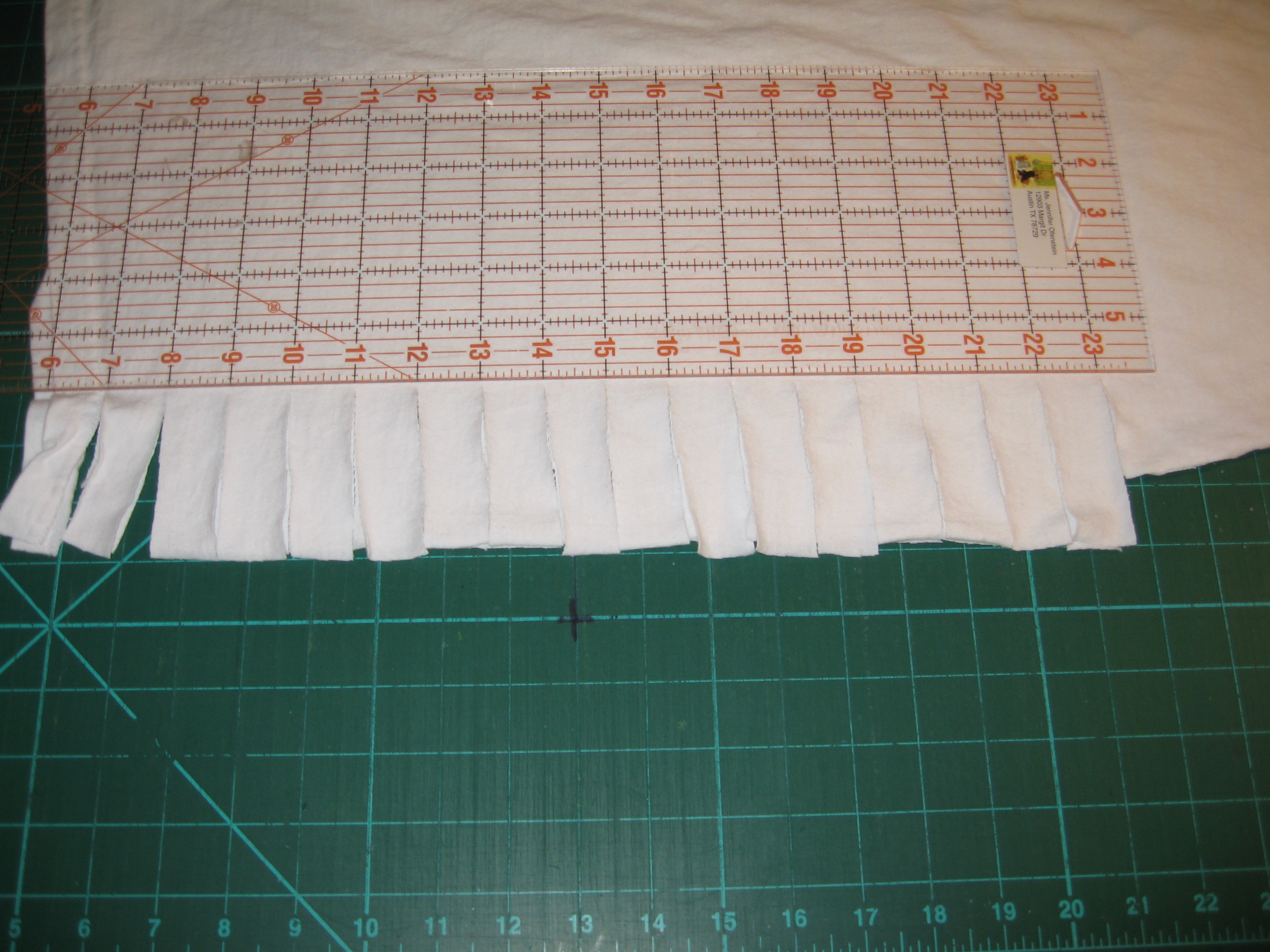
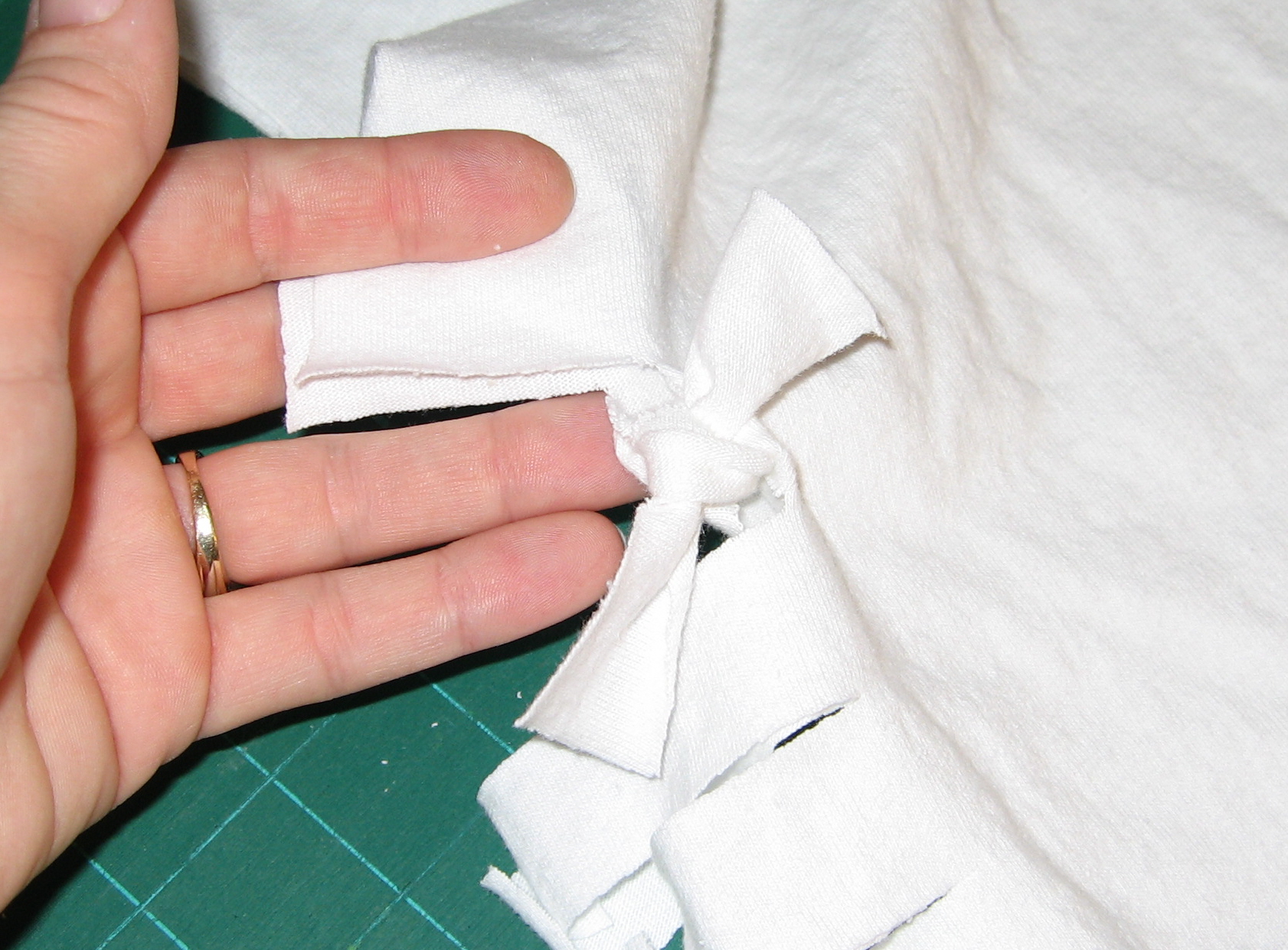
smooth out the side of the t-shirt, using either the cutting mat and a ruler (shown) OR a yardstick and masking tape, measure 3″ from the cut edge along the shirt sides, cutting up those 3″ at 1″ interval

repeat on both sides, stopping before the sleeve area

snip off the bottom curve of the sleeve

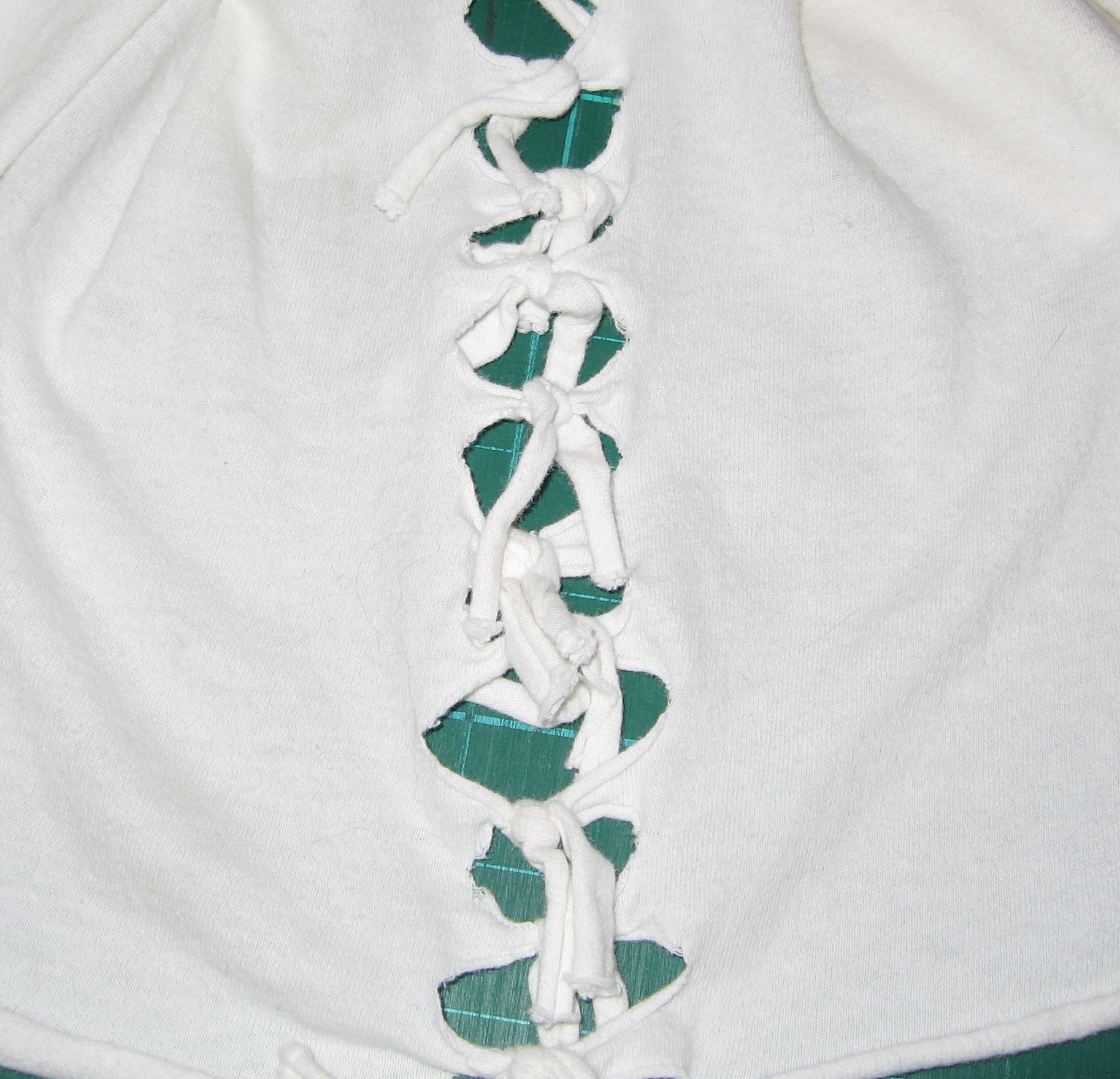
starting at the top of one side, tie together front and back 3″ pieces

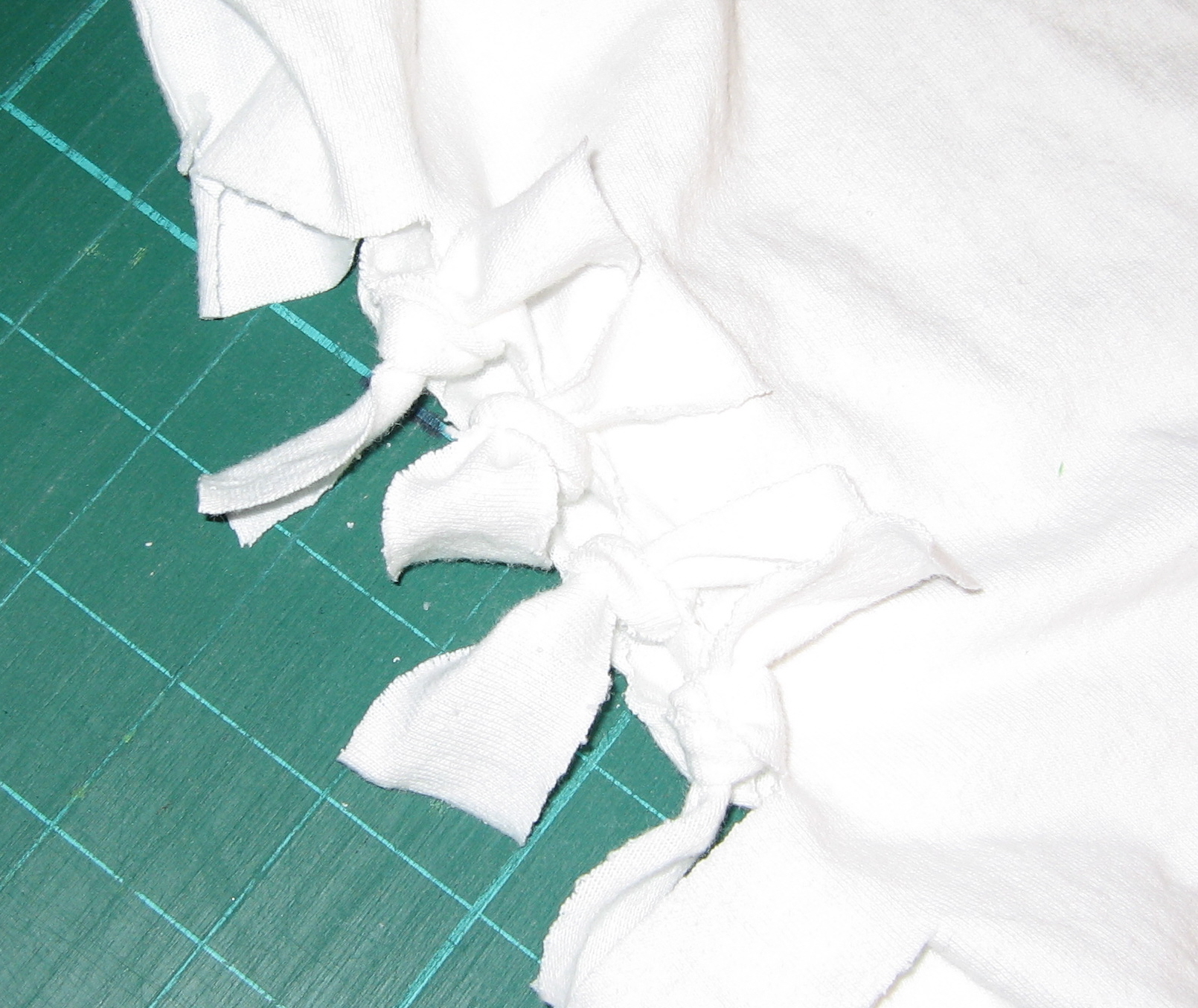
repeat for all 3″ pieces

repeat on the second side of the shirt

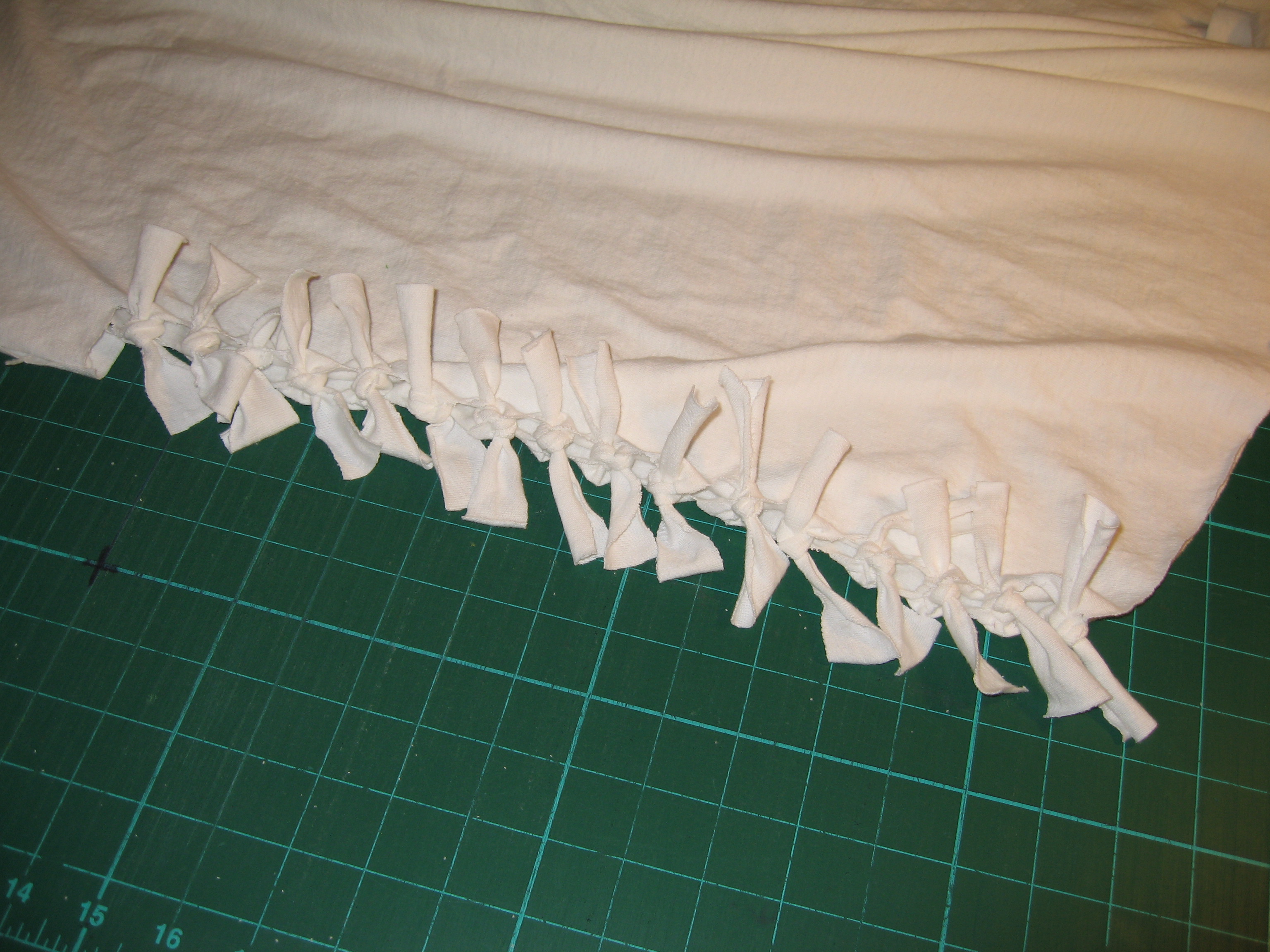
Finished side

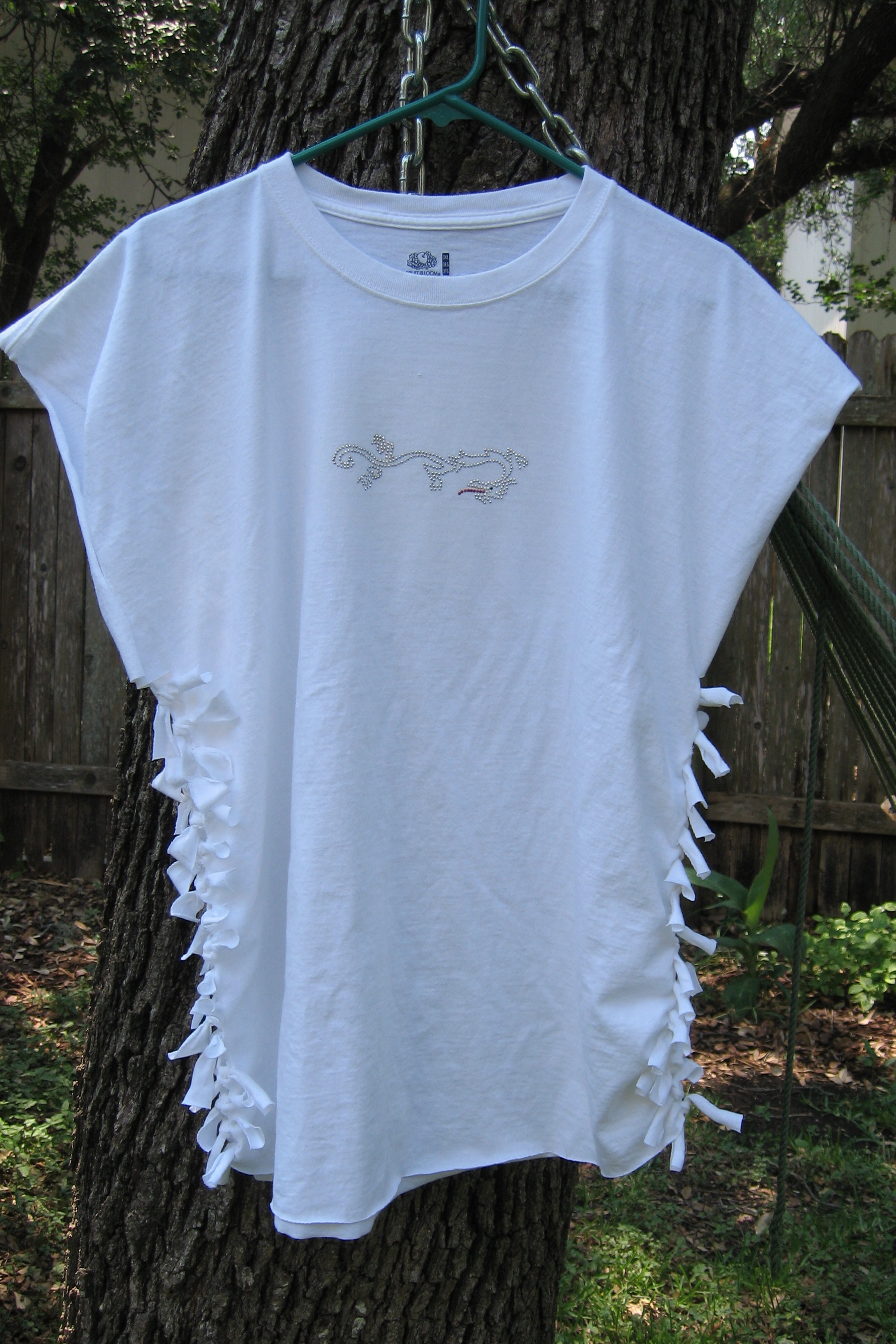
And Done!


Because this was a blank shirt, I added an iron-on dragon to jazz it up a bit.

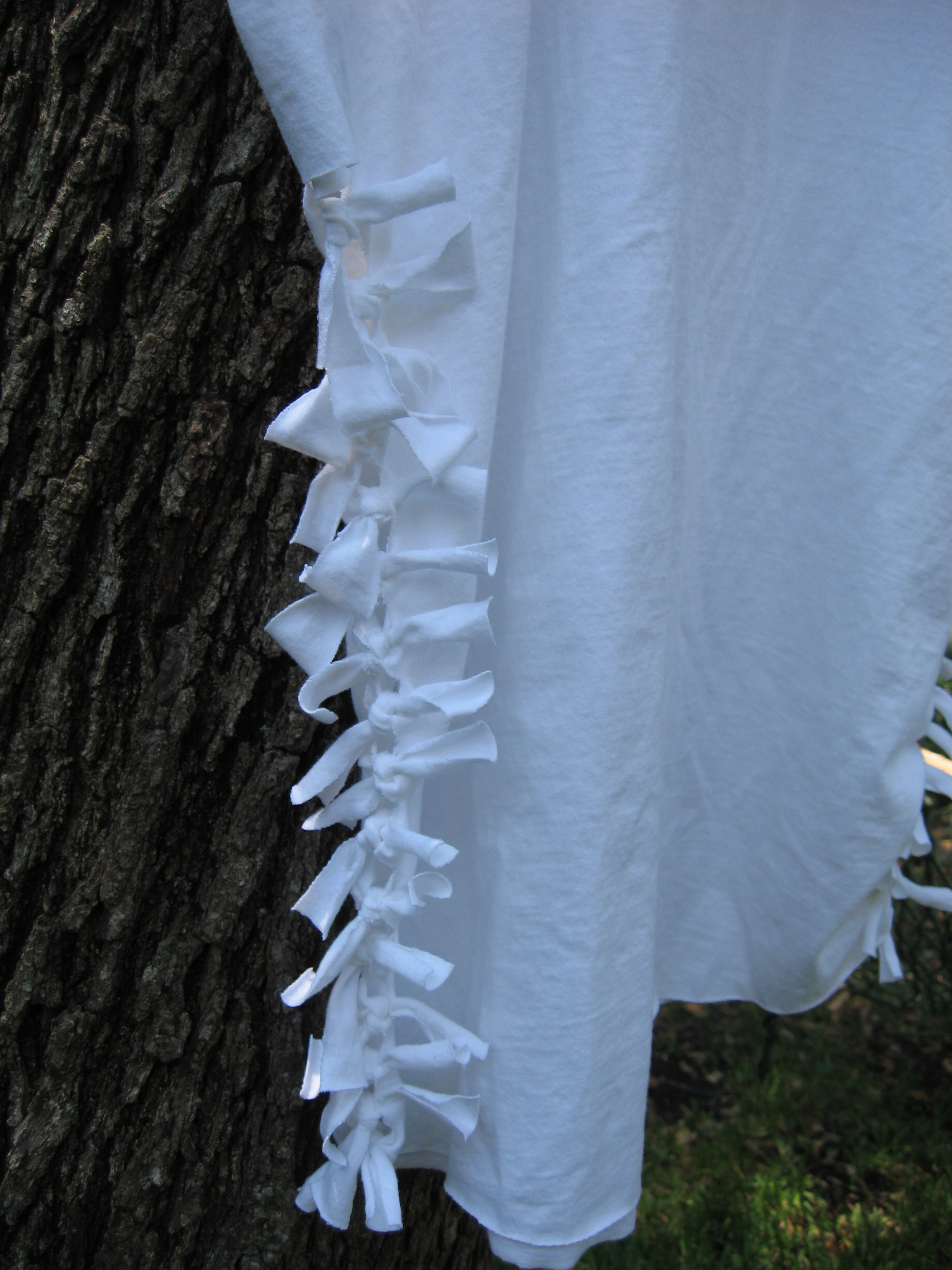
side close up

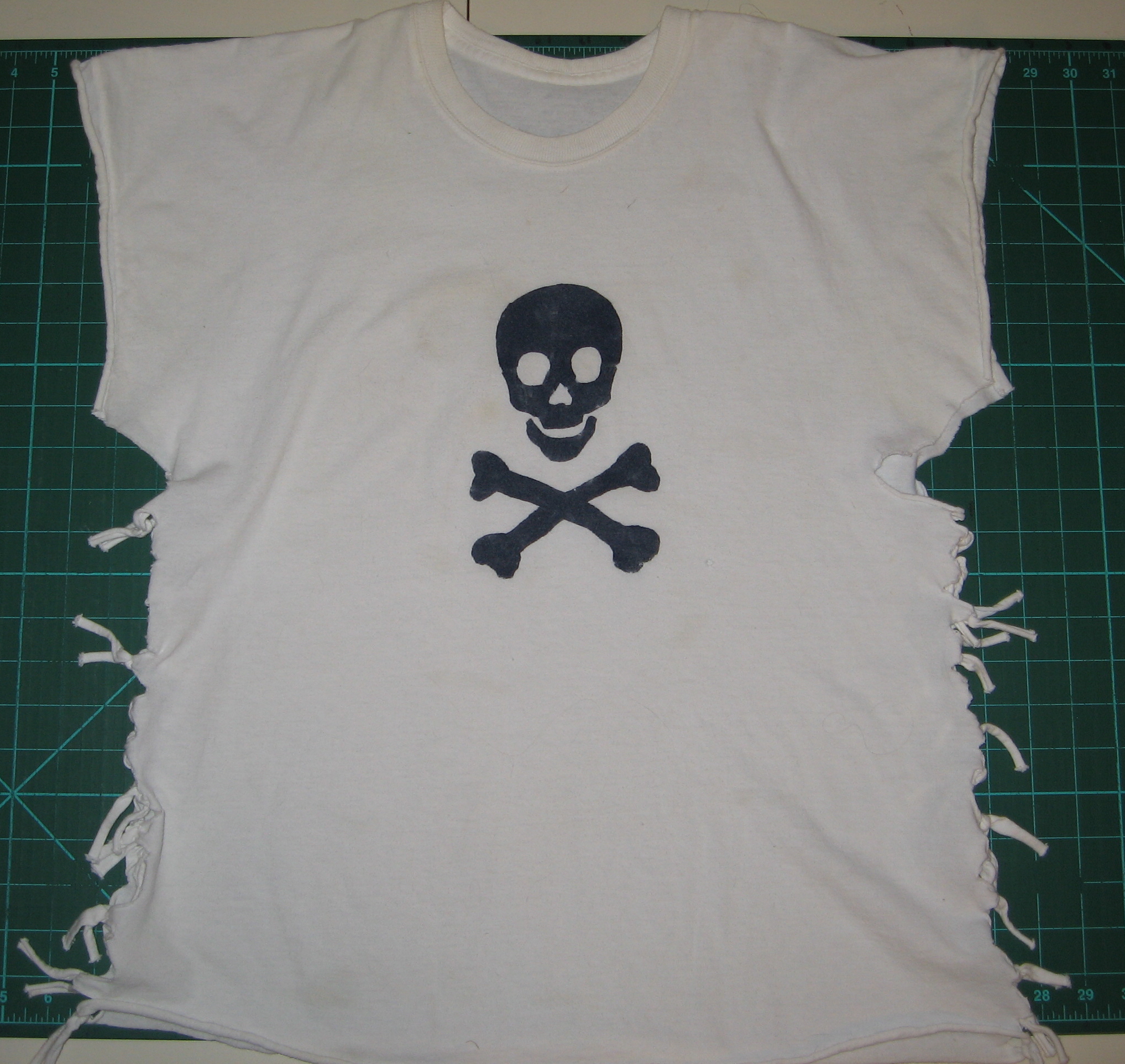
And older tee that was well-loved before being retired! This one was stenciled using acrylic paint and a pirate stencil I made myself.

Find my free patterns on Sewhooked & Fandom in Stitches.

♥ Jennifer O

Posts on this blog may contain affiliate links to help cover the cost of my website. I thank you for your generous support. ♥
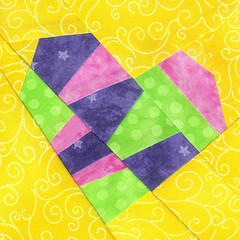
Paper Piecing: Drawing a Patchy Heart

patchy heartPatchy Heart Pattern

One of the most constant requests I’ve had over the years is for a video tutorial showing how I design paper pieced patterns.

Putting together a pattern is a step by step process, but designing is not. It’s artistic and intuitive.  Even so, there are some basic techniques that stay the same every time you start a new pattern.

The absolute best advice I can give you is practice, practice, practice!

This is how I do it. In the next two videos, I’ll walk you through, step-by-step, my own process. Both videos are real time.

Part 1 of 2

Part 2 of 2

If you make any pattern, craft or recipe from sewhooked, I’d love to see a photo. Email me or add it to the sewhooked flickr group.

Happy crafting!

Craft: Recycle Last Year’s Calendar

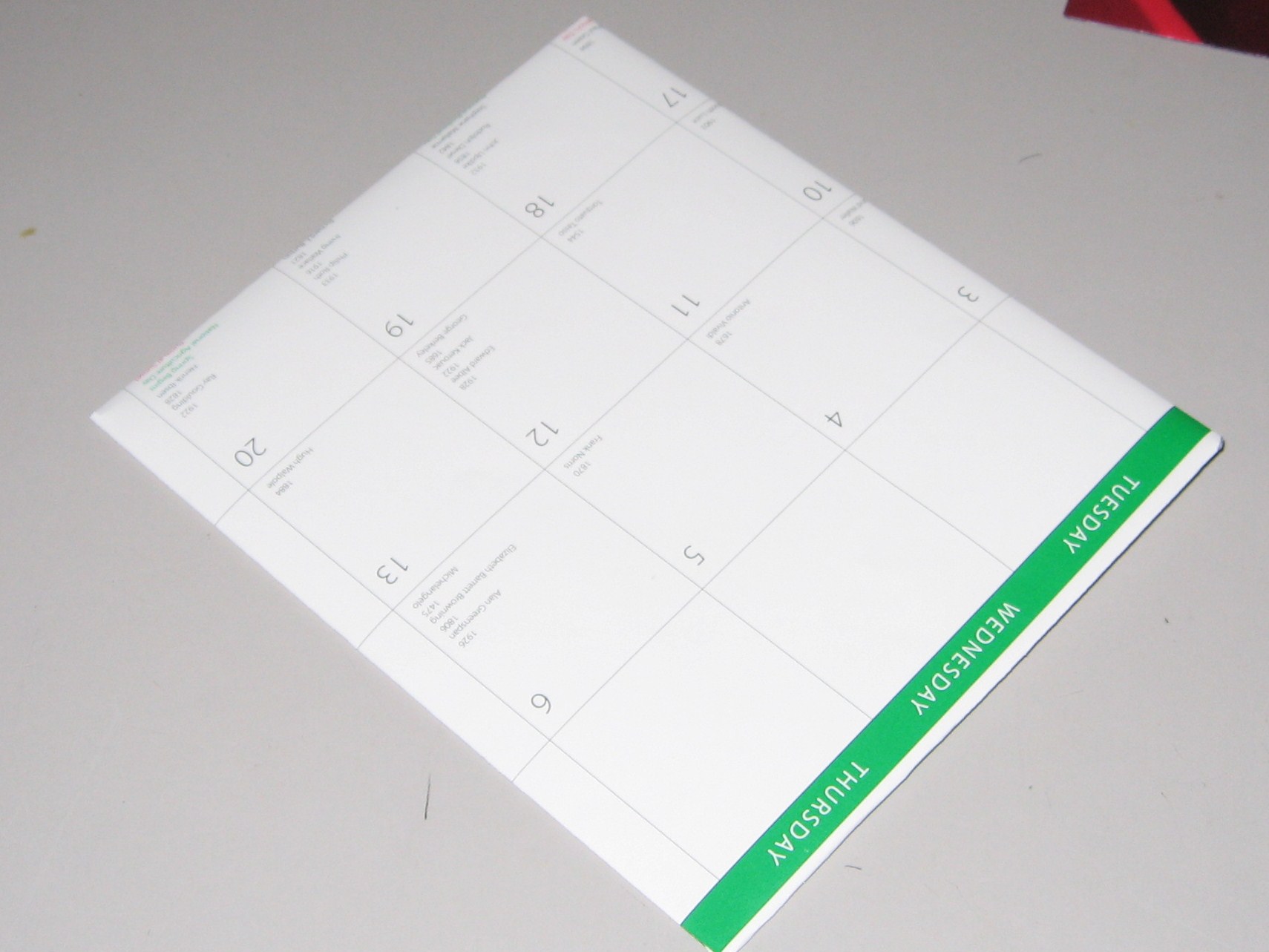
Recycled Envelopes from a Calendar

I admit it…  I keep everything that I might be able to use or recycle later on.

If it’s pretty, cool, or unique, it’s somewhere in a plastic bin or drawer waiting to be reimagined.

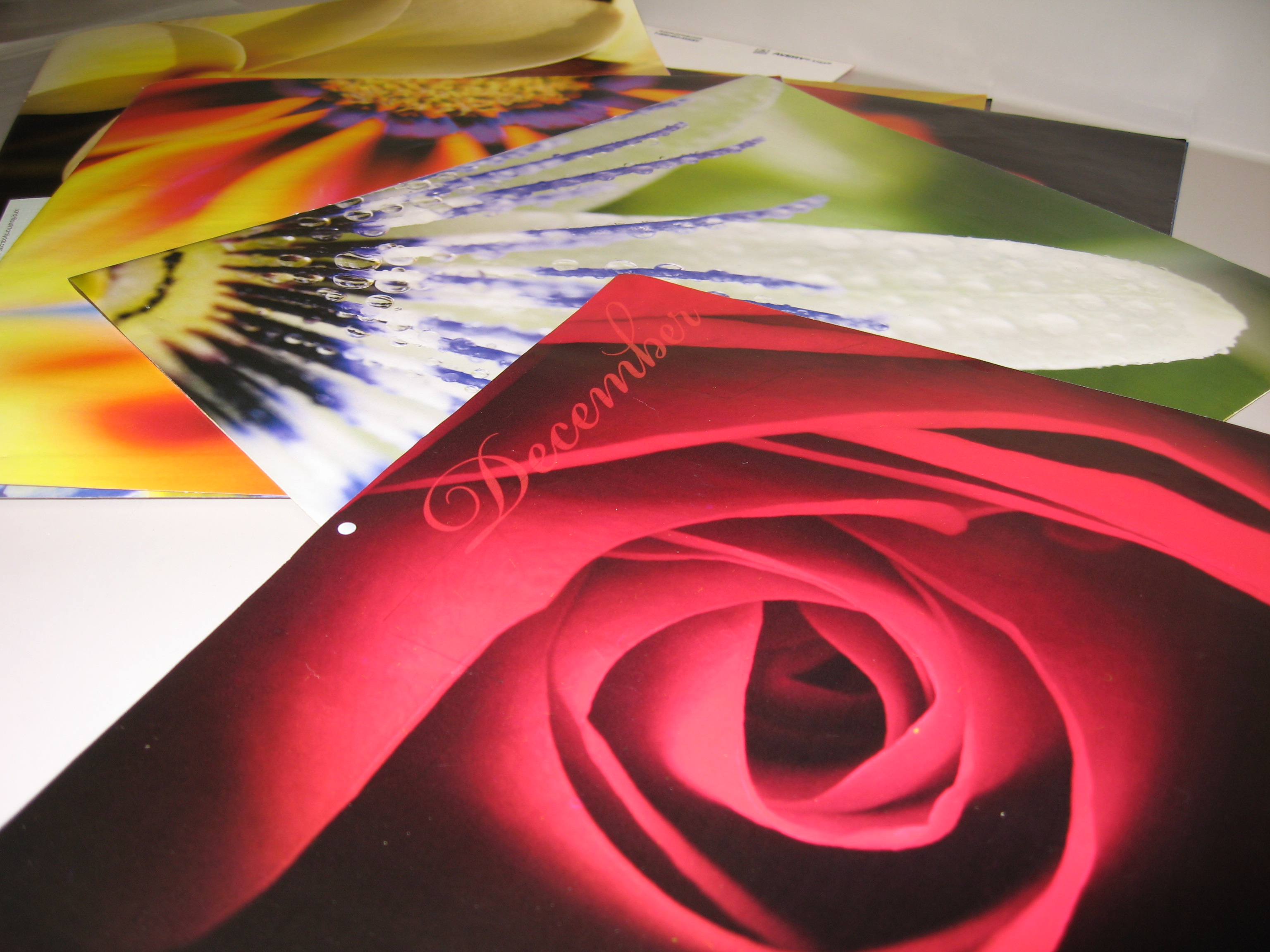
I’ve been recycling my paper calendars as long as I can remember.  Each December, I start eyeballing the soon-to-be-obsolete model, wondering what it will be in a month or so.

In the past, old calendars have become postcards and gift boxes.  My favorite by far is envelopes.  Calendar pages, especially really cool calendar pages, make great envelopes!

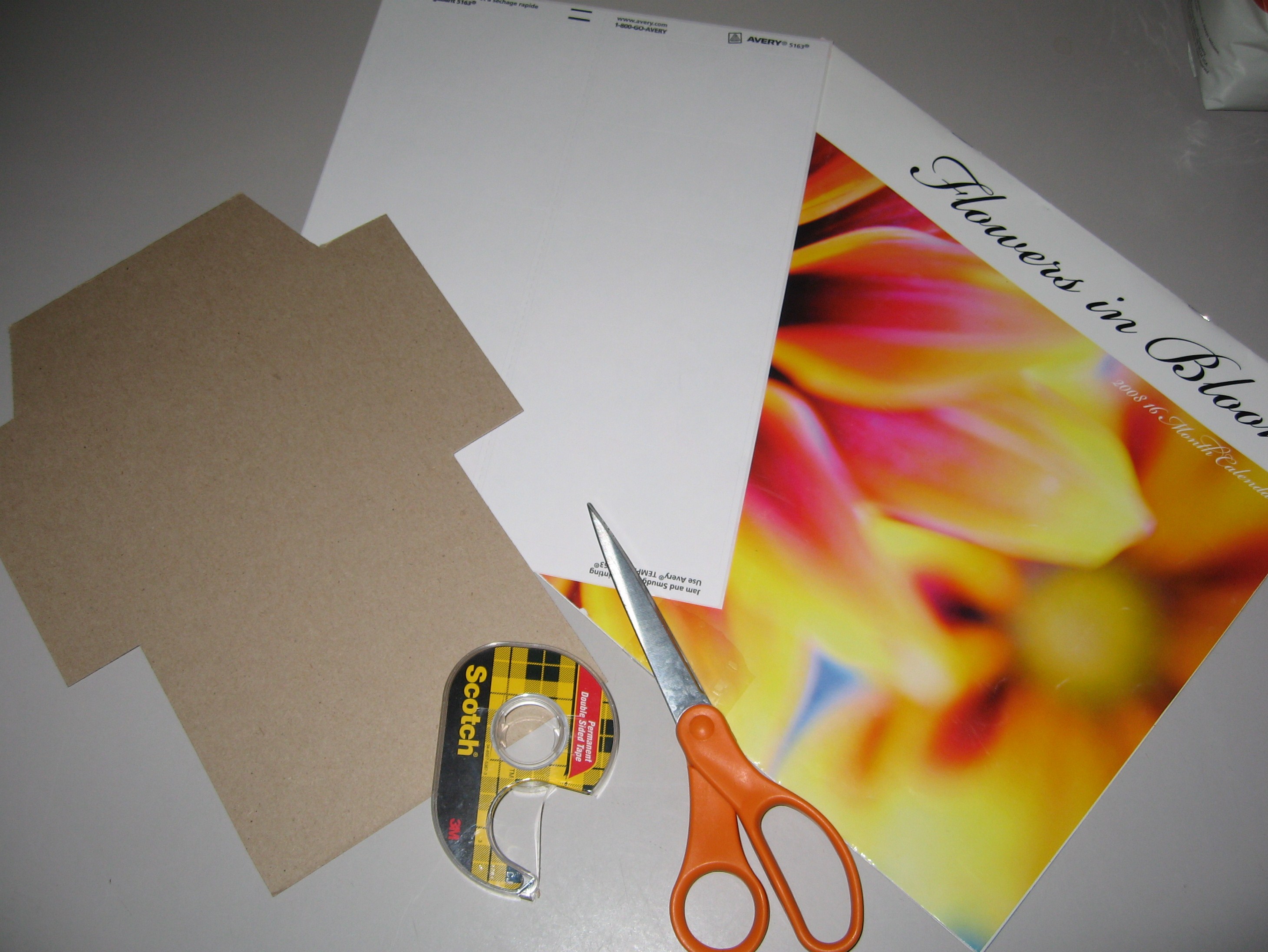
You’ll need:

  • an old calendar, the bigger, the better!
  • envelope template – cut out, and transferred to a piece of lightweight card stock or cardboard
  • staple remover
  • scissors
  • pencil
  • double stick tape OR a glue stick
  • Blanket mailing labels (optional)

Remove staples from the calendar

Separate pages and tear apart along the crease line

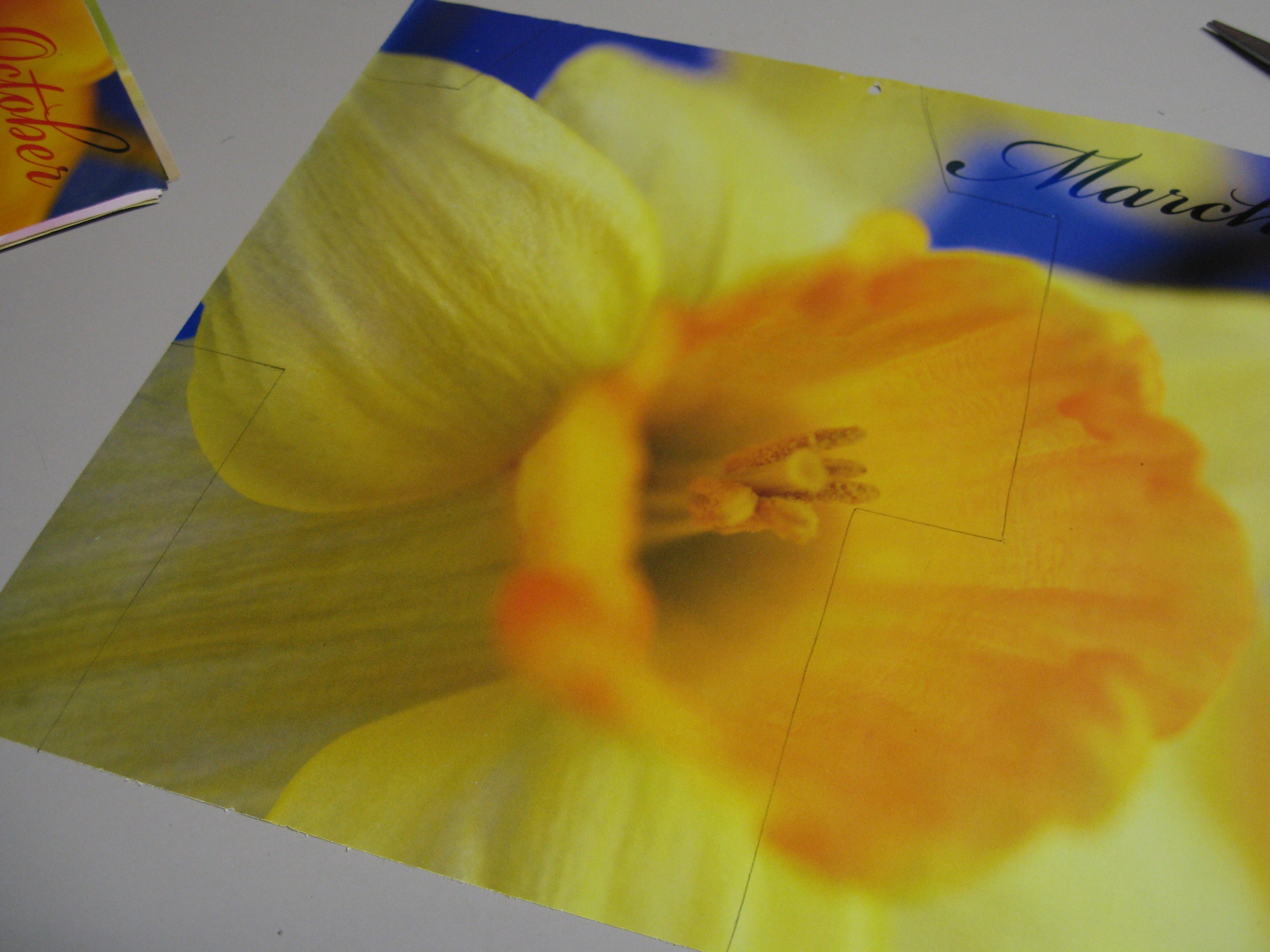
Position the template on a calendar page and trace with a pencil.

You might want to fussy cut here, if part of the page is more interesting than the rest.

Using scissors, cut along pencil lines.

Repeat for all pages.

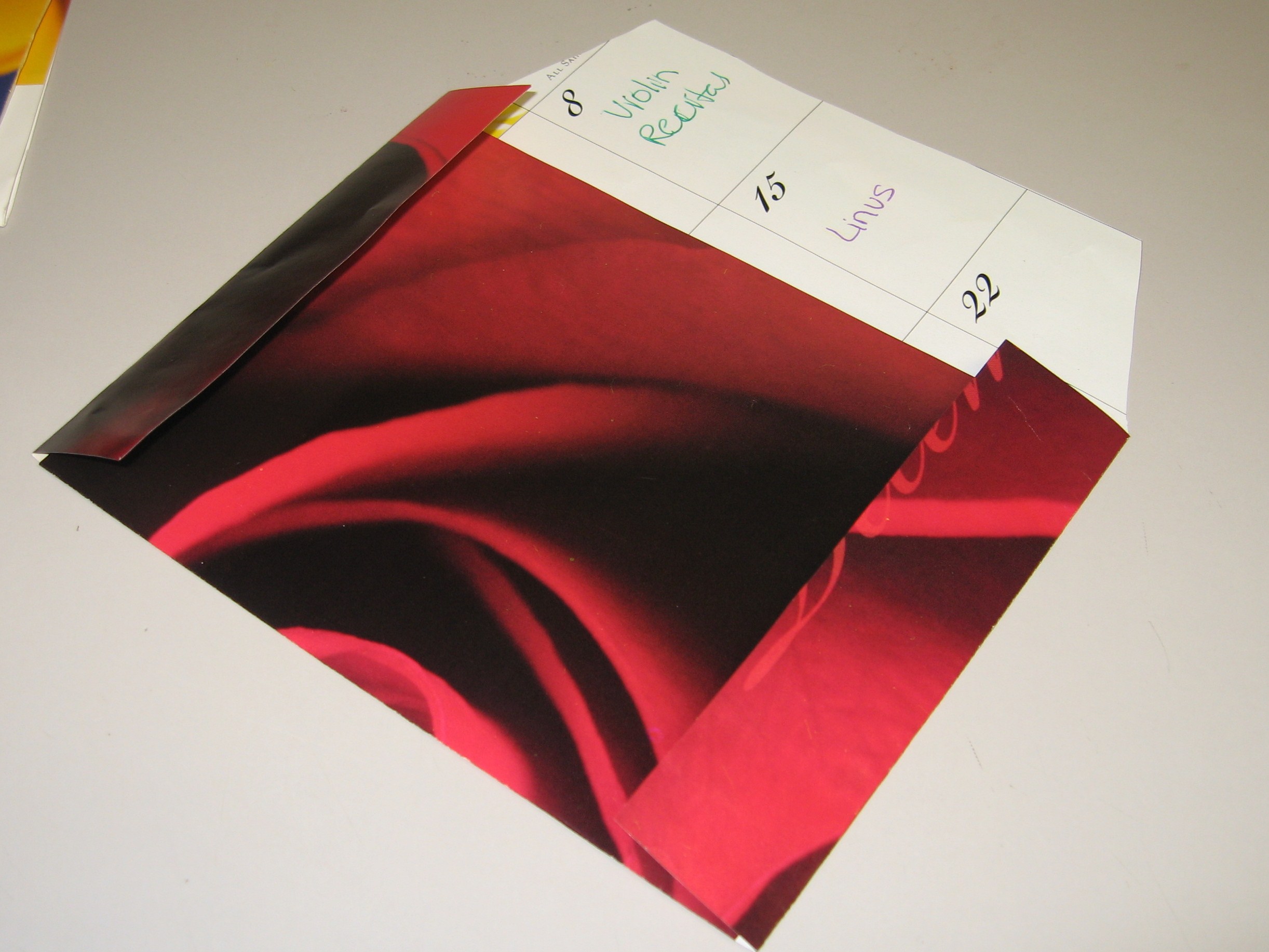
Fold bottom of envelope up towards top, aligning with the bottoms of the side flaps.

For heavier paper, use your template or a ruler to crease. If you have paper-folding tools, this is a great time to use them!

Fold side flaps, making sure they’re even with the top and bottom.

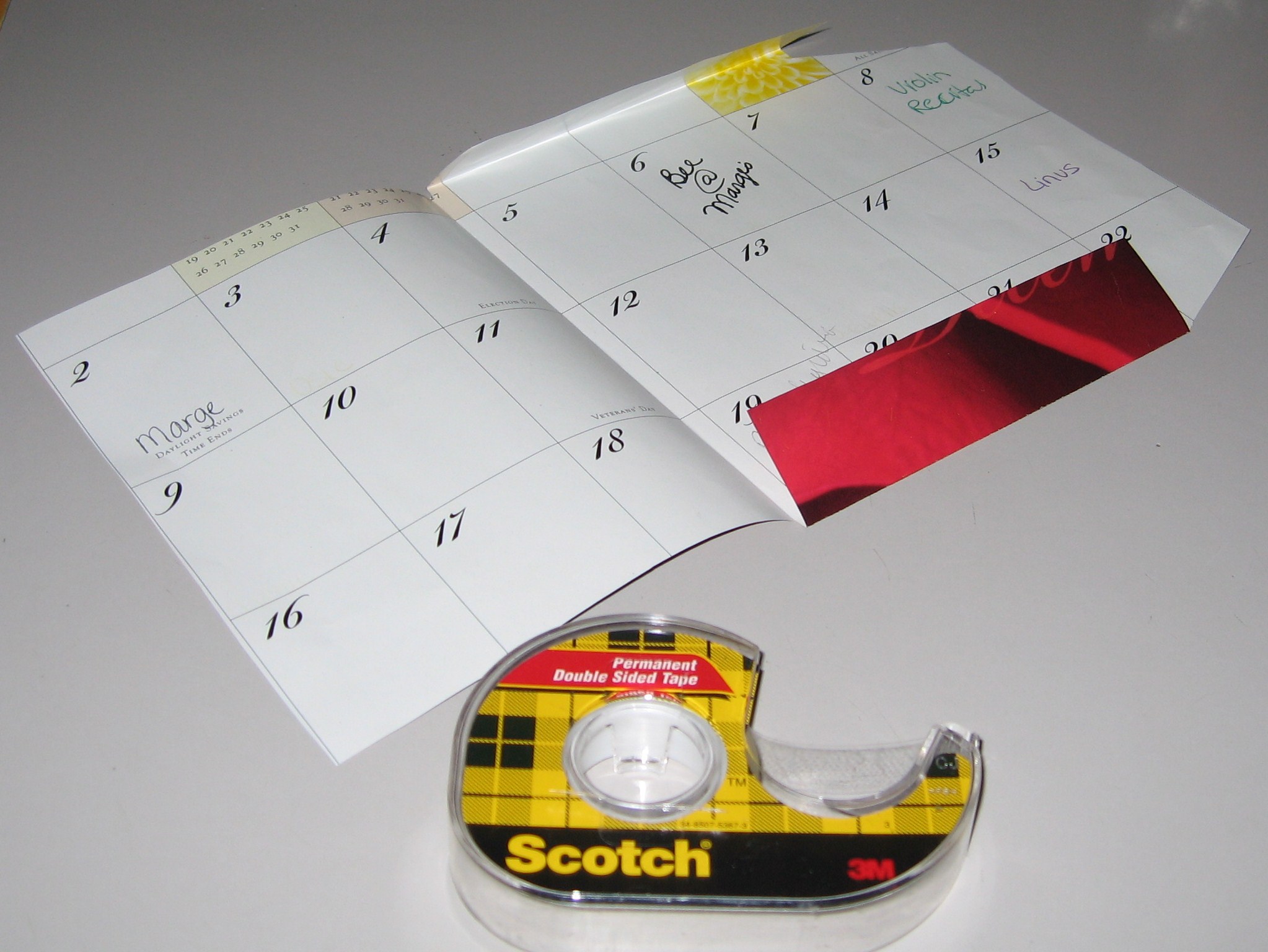
Fold bottom flap out.

Place double stick tape, or use a glue stick, on the side flaps, leaving 1/2″ to 1″ at the top without adhesive.

Fold top flap down.

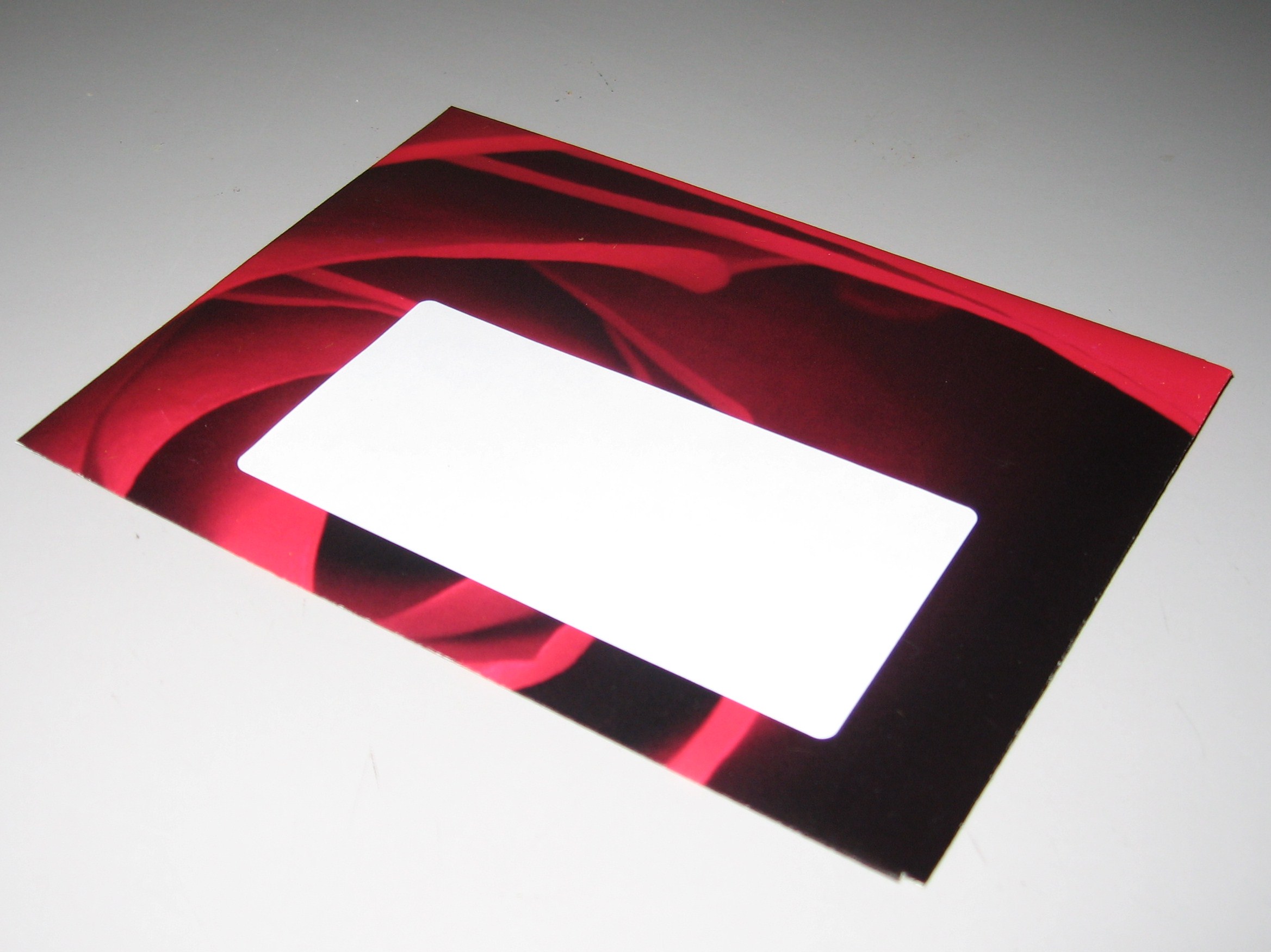
Finished envelope from the front.

Optional:  for darker papers, add a self adhesive mailing label.

Repeat until you have a pile of gorgeous envelopes!

For sealing, use double stick tape, a glue stick or fun stickers.

The same template, different calendar.

Same envelope from the front.

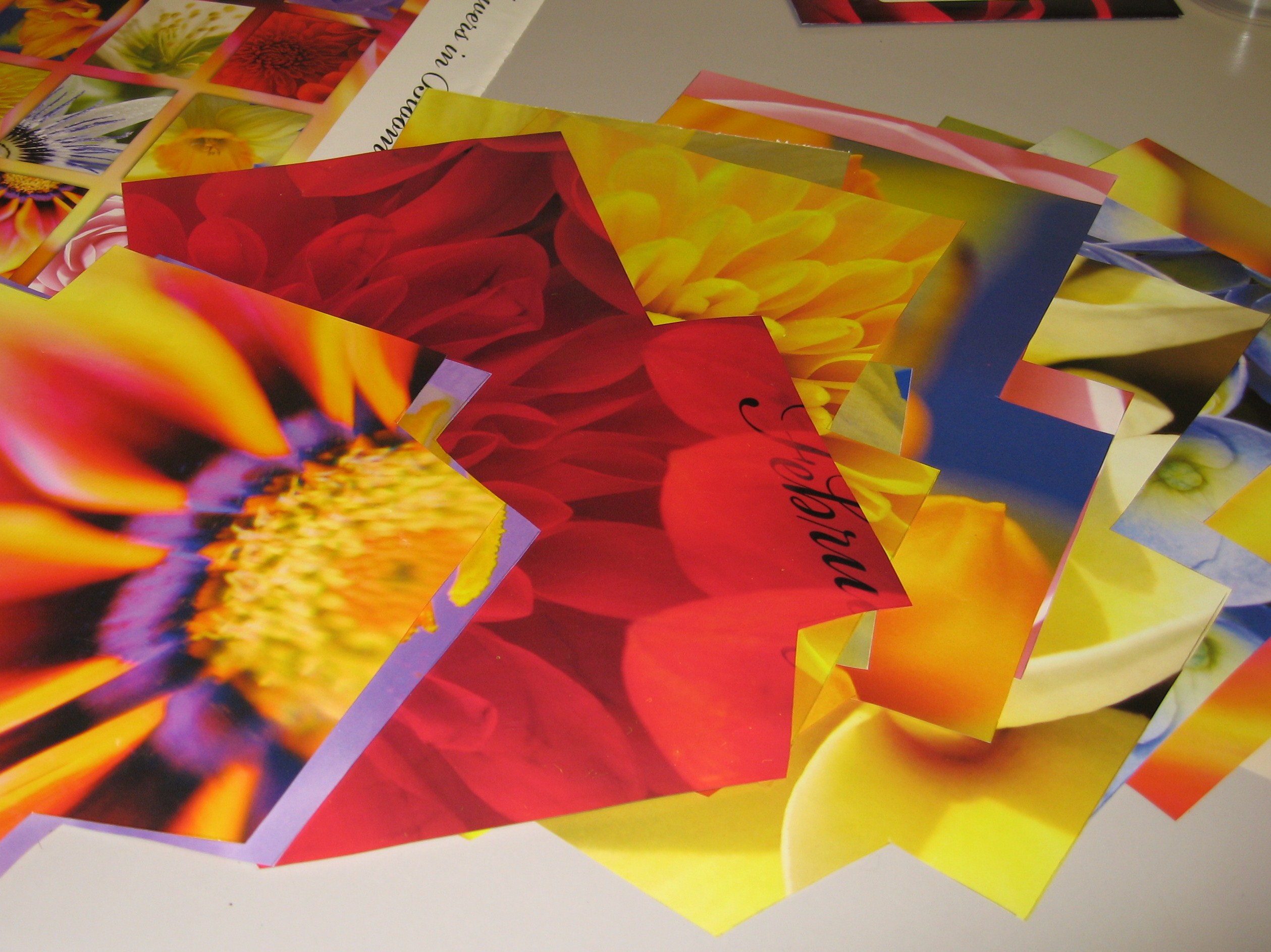
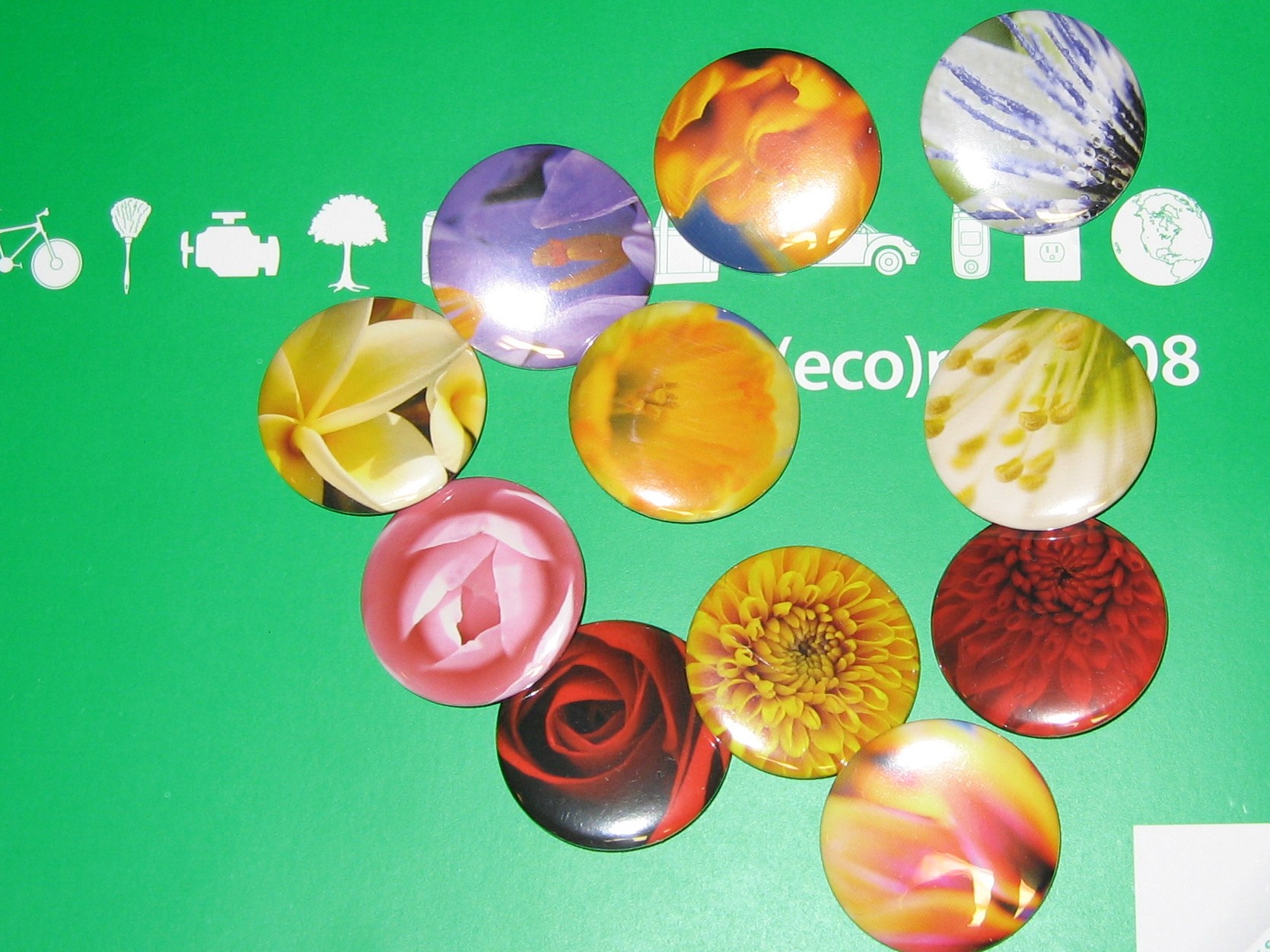
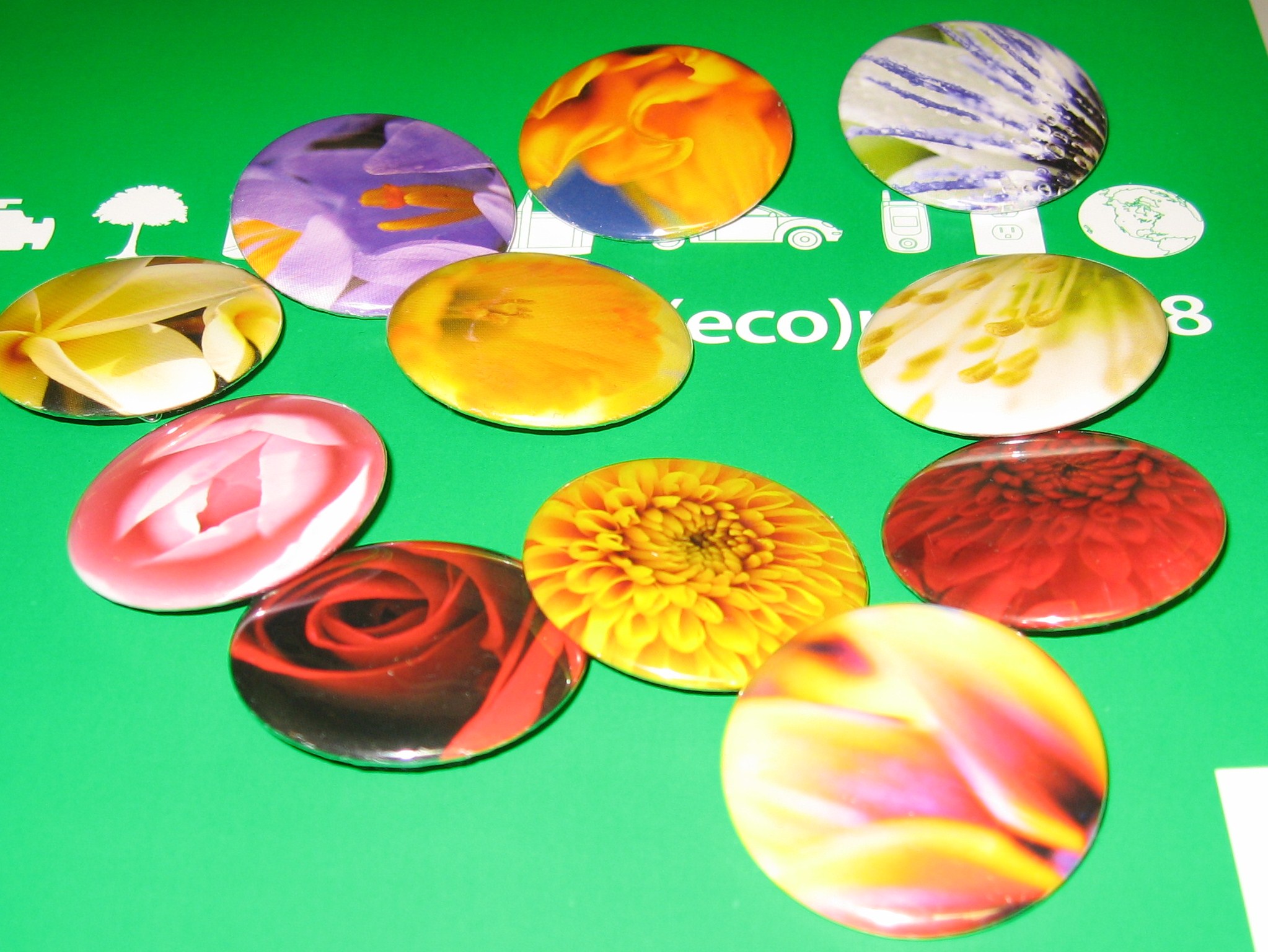
Now, what to do with the gorgeous thumbnails on the back of this calendar?

How about buttons?!

Have more pretty calendars? Keep recycling!

Recycled Envelopes to gift.

Happy crafting!

Find my free patterns on Sewhooked & Fandom in Stitches.

♥ Jennifer O

Posts on this blog may contain affiliate links to help cover the cost of my website. I thank you for your generous support. ♥

Sewing: Reduce, Reuse, Recycle a Thrift Store Sweater into a fun bag!

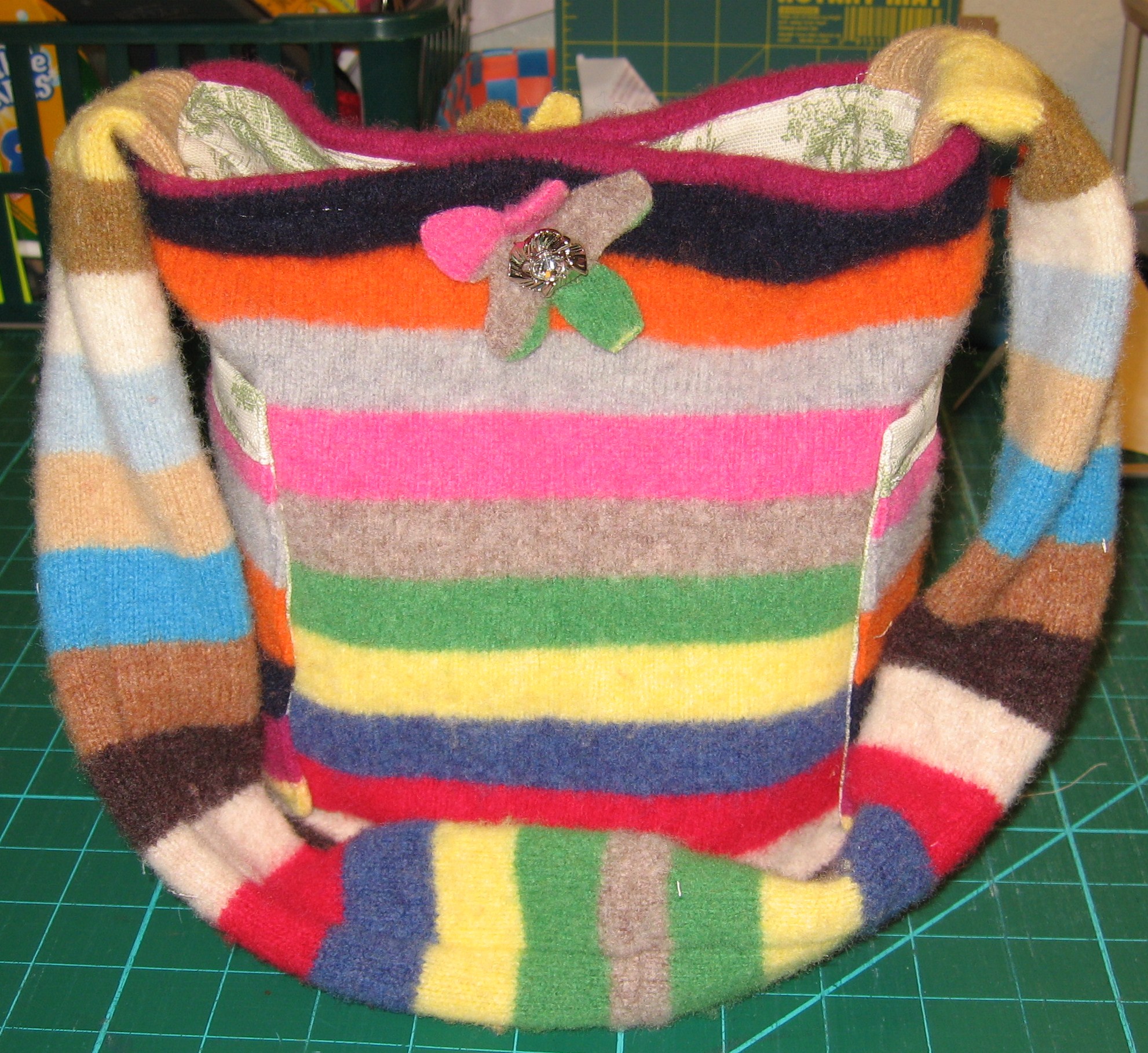
Recycled Sweater Bag 2008

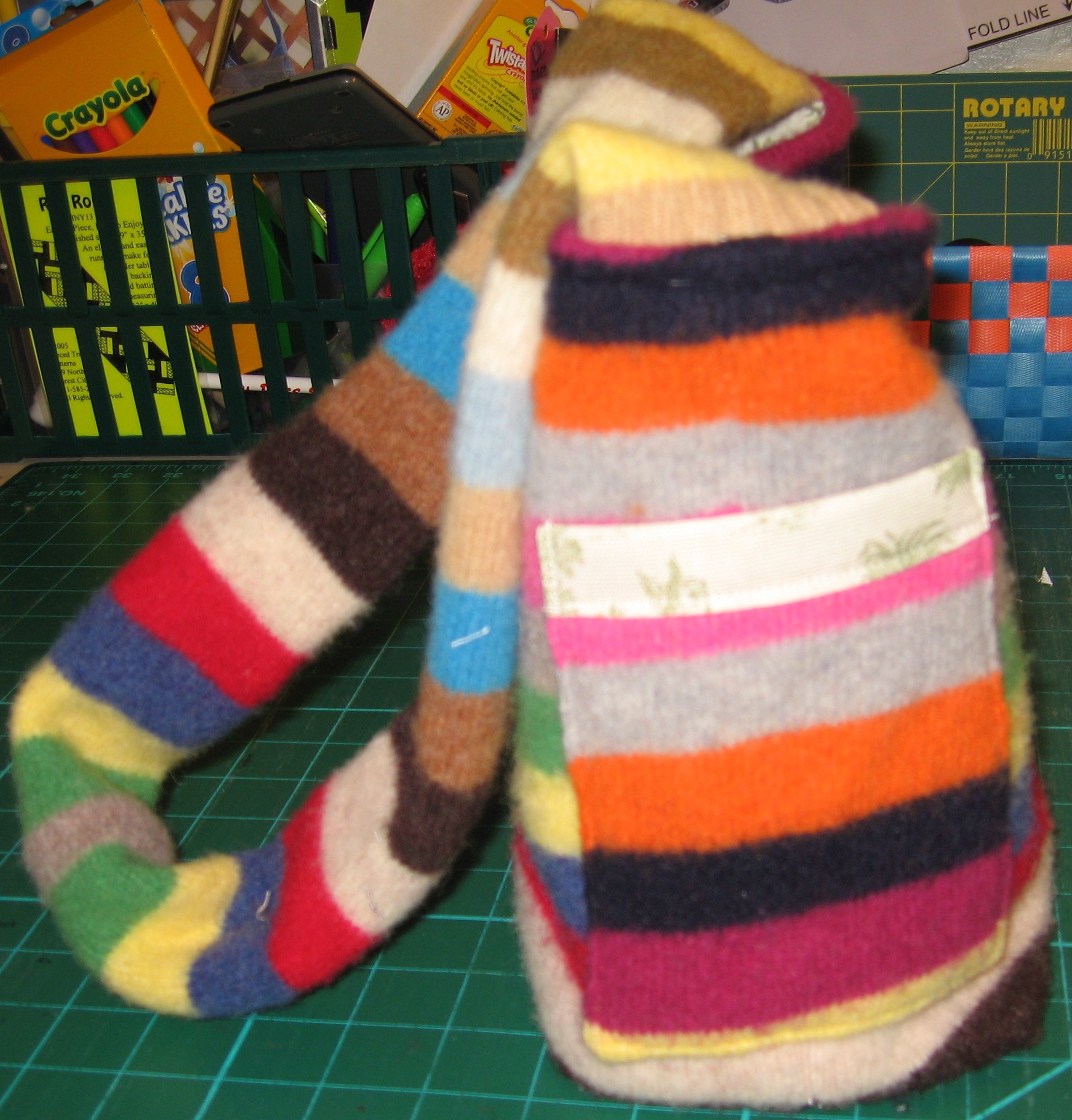
The Recycled Sweater Bag isn’t quite old enough to be considered a Way Back Craft.  I first started making this bag last year.  It works great with a felted thrift store sweater, but you can also make this bag out of denim, upholstery fabric, or just about any other heavy duty material.

The bag size will vary based on the size of your sweater.

Do I need a reason to make a new bag?  Not really, but recycling is a darn good incentive!

Use the written instructions below or watch the video. (Please note this video tutorial was posted in 2008, and the quality reflects that).

You will need:

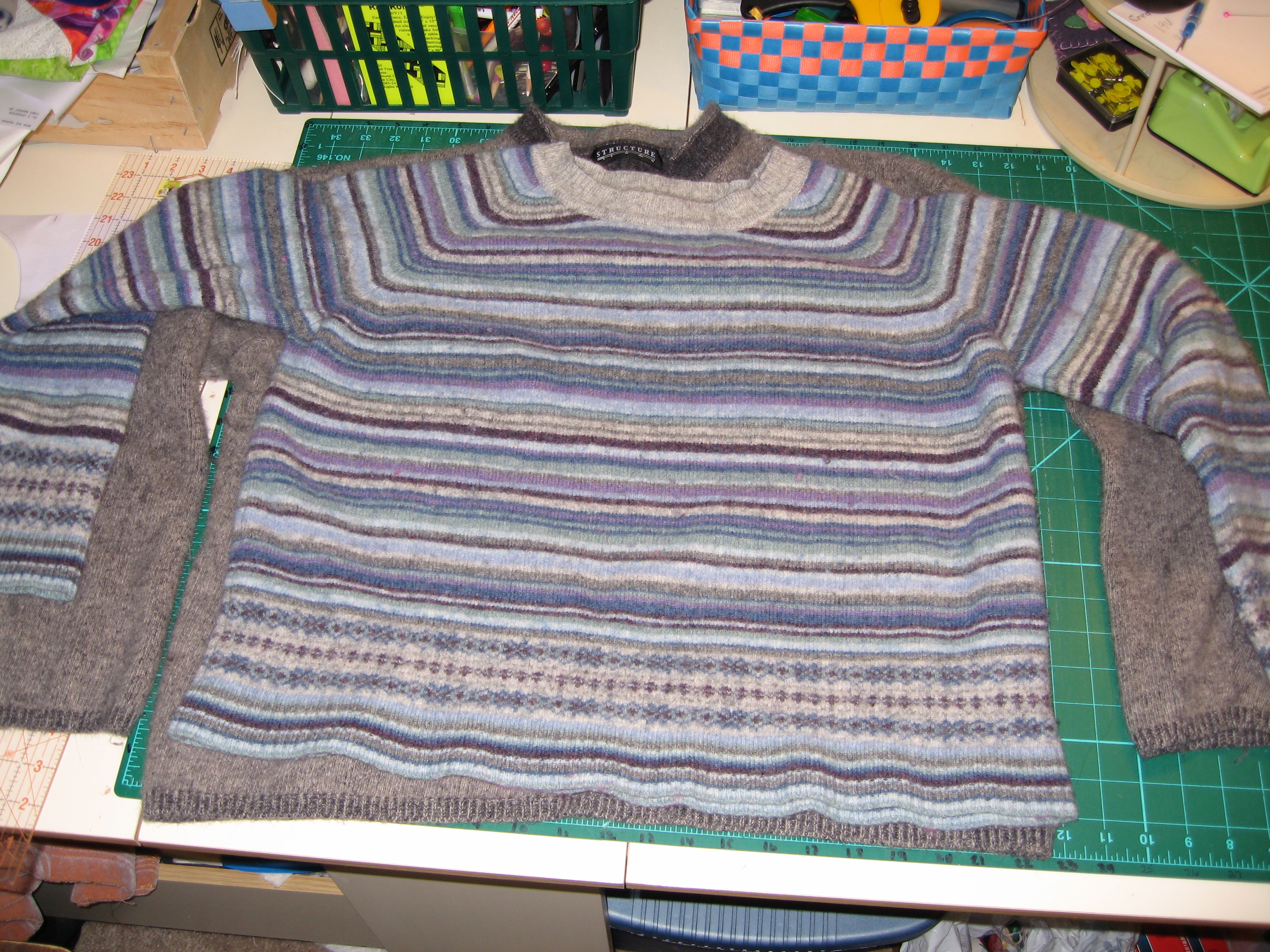
  • 1 old (or thrift store) 100% wool sweater – felted
  • fabric for lining & pockets
  • magnet purse snap
  • 2 buttons
  • sewing machine
  • thread
  • scissors
  • chalk
  • pins
  • rotary cutter (optional)
  • walking foot (optional)

I used a 1/2″ seam allowance throughout. If your sweater is bulkier, go a little wider or use what works for you.

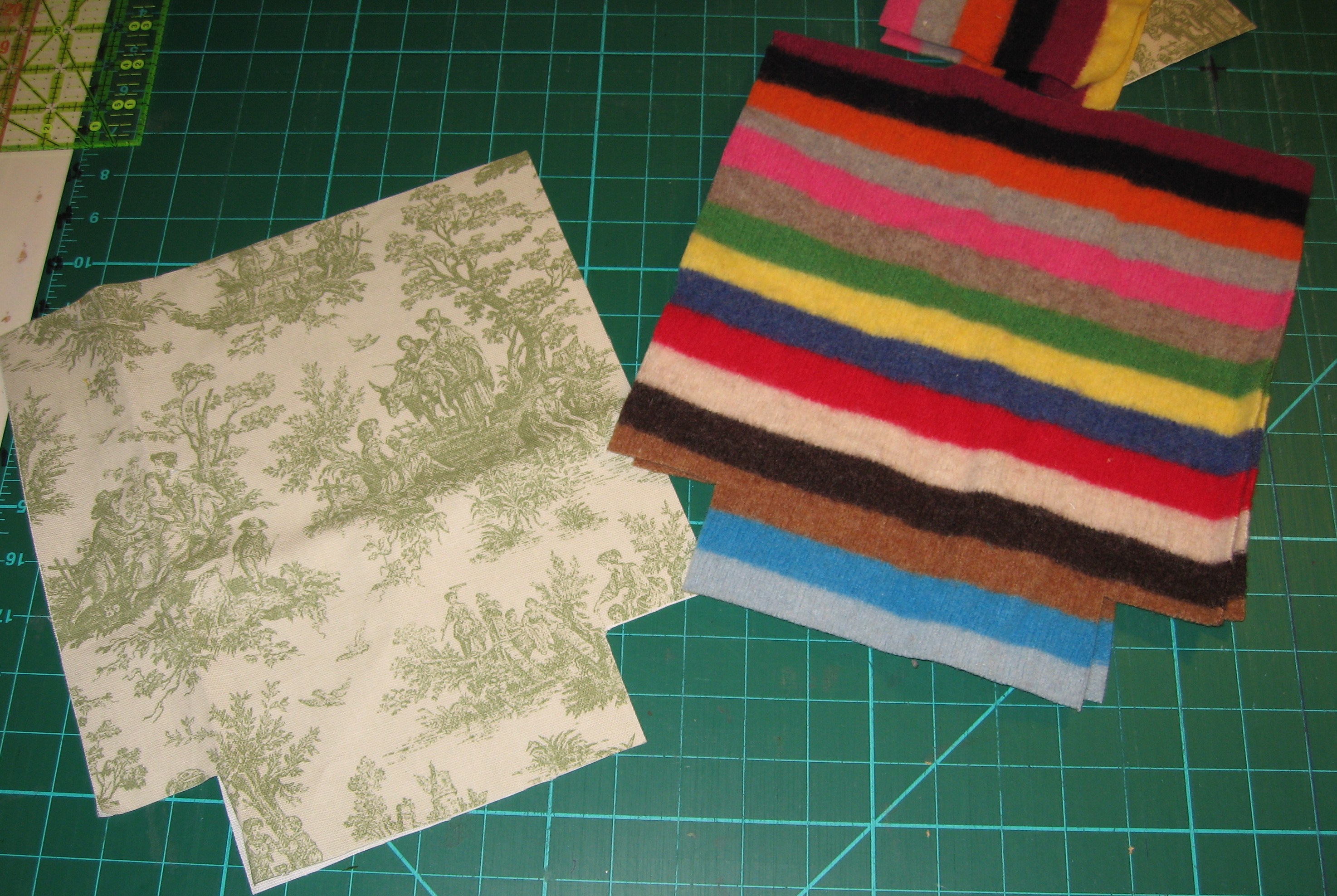
First up – let’s prep our fabrics!

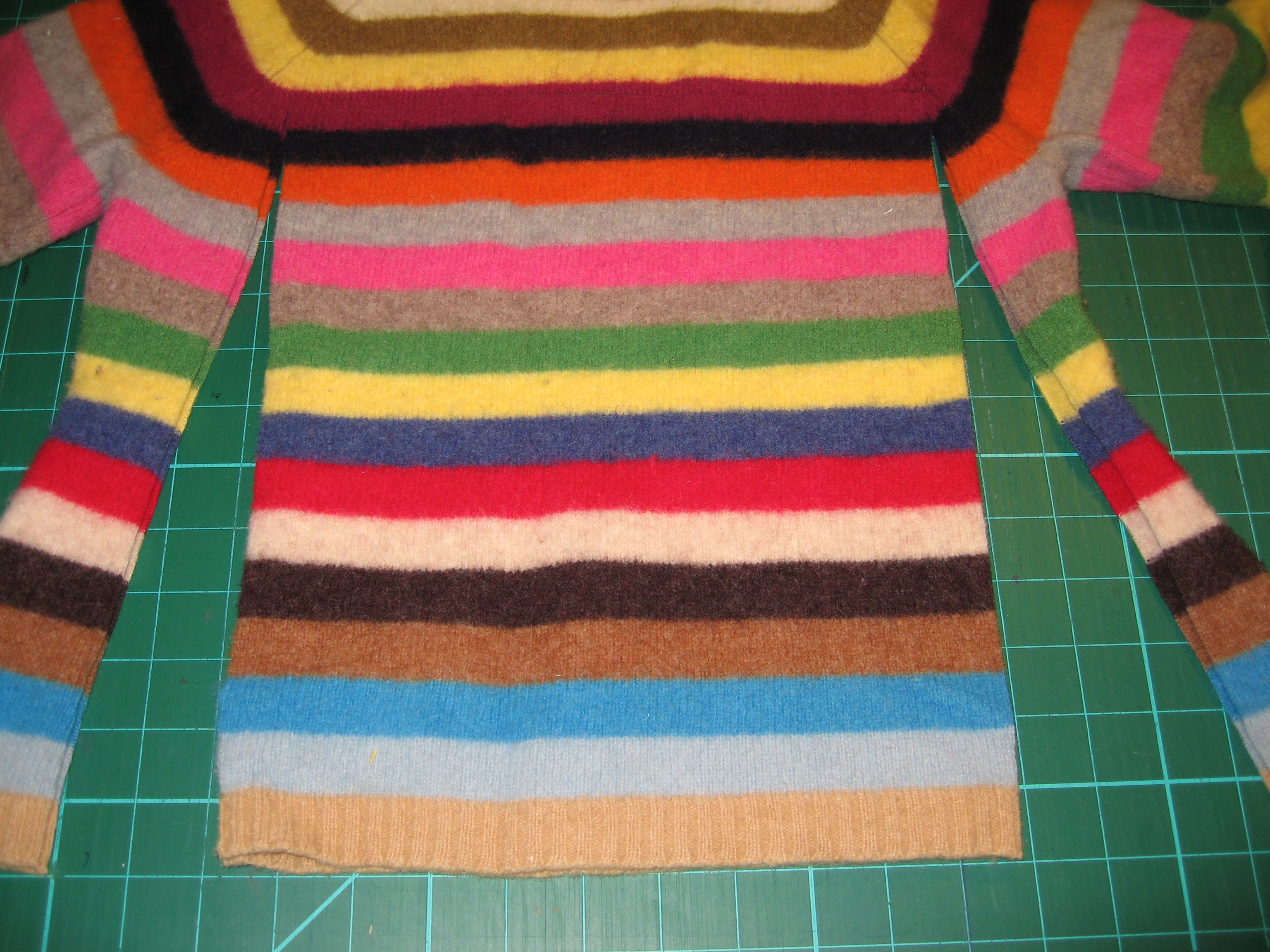
Cut a square or rectangle out of the body of the sweater, cut the same dimensions from lining fabric, remove sweater arms.

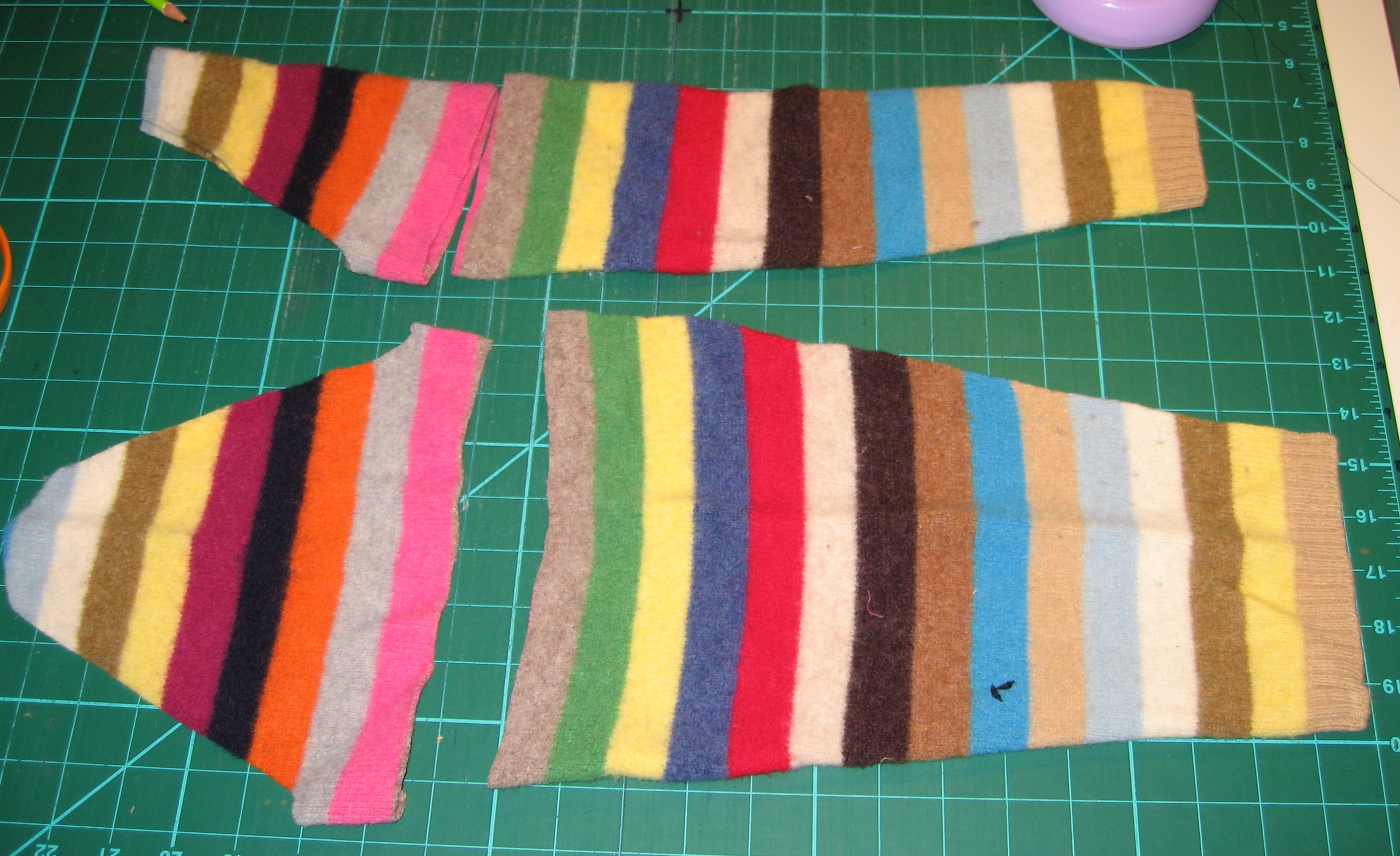
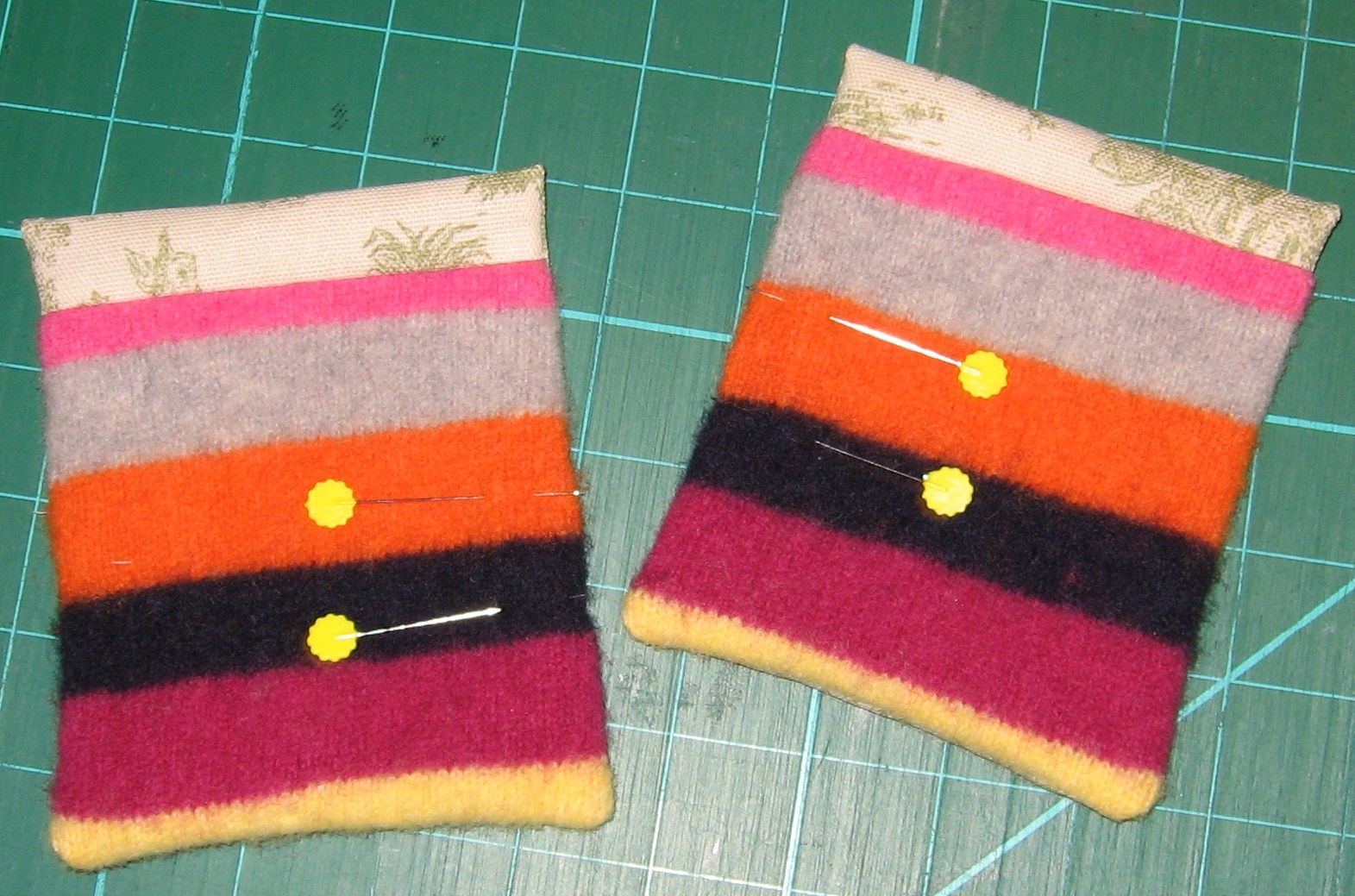
Split sleeves up seam and cut off the tops for pockets.

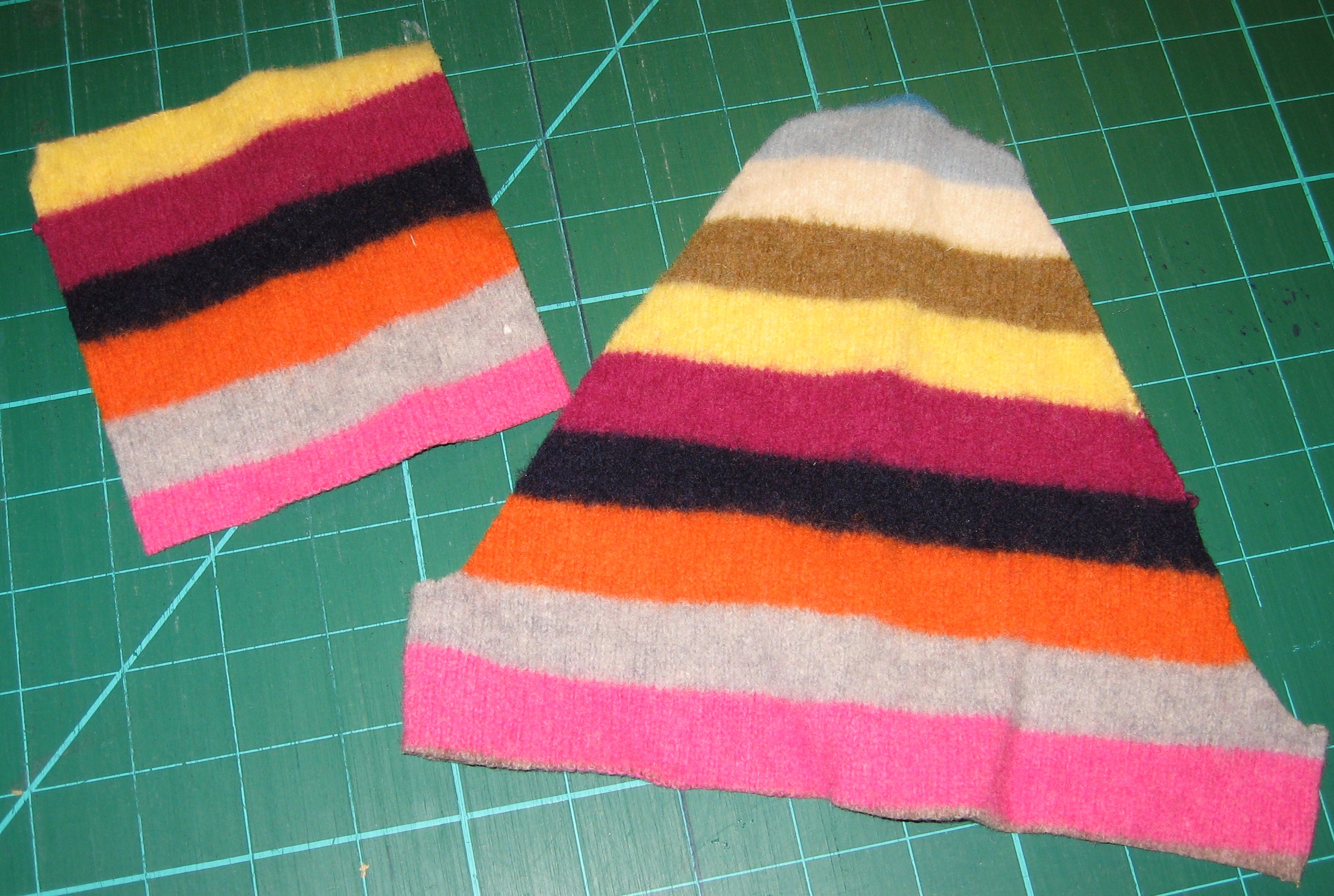
Cut rectangles out of the sleeve tops, cut same dimensions +1.5″ in length for lining.

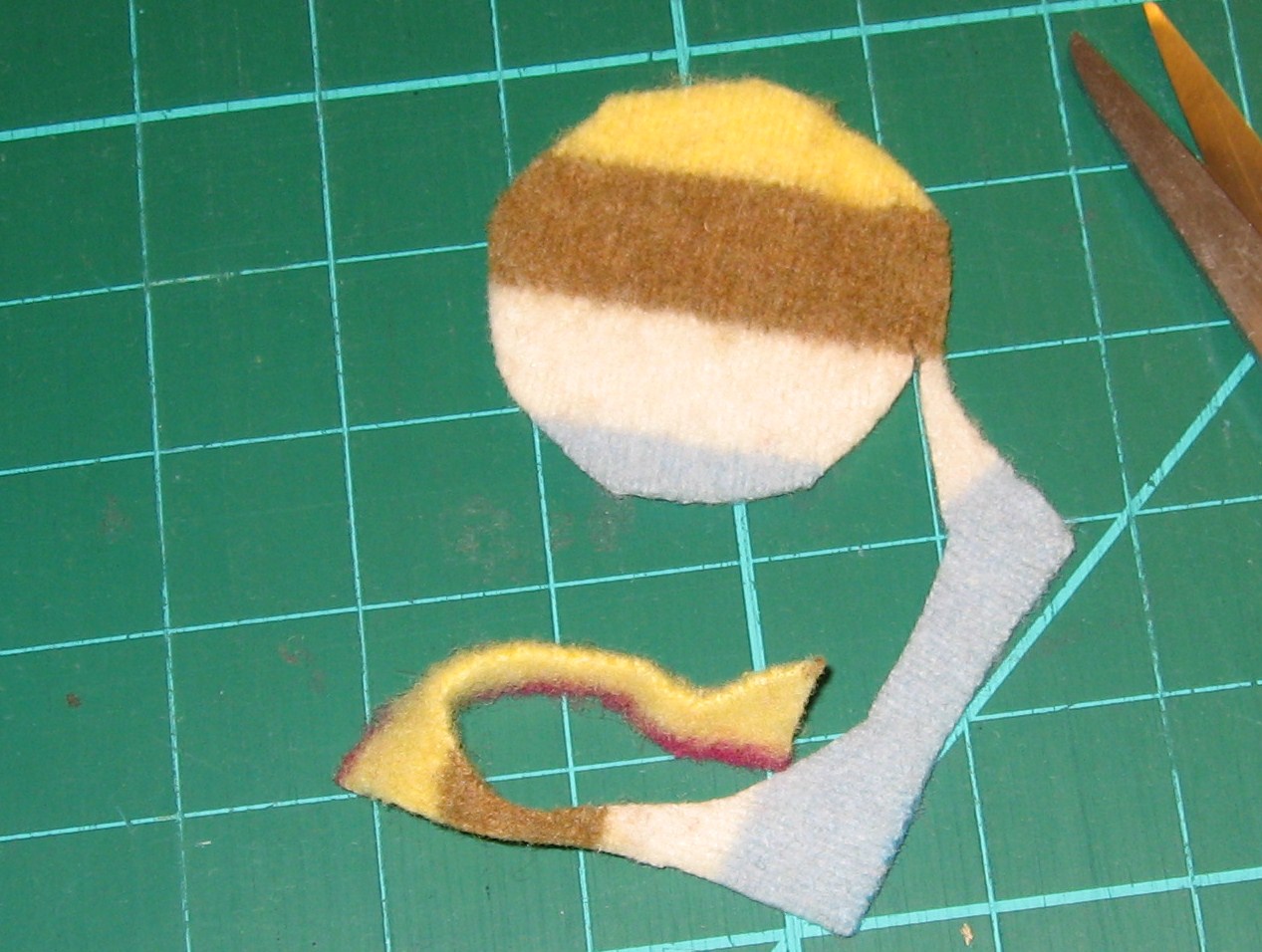
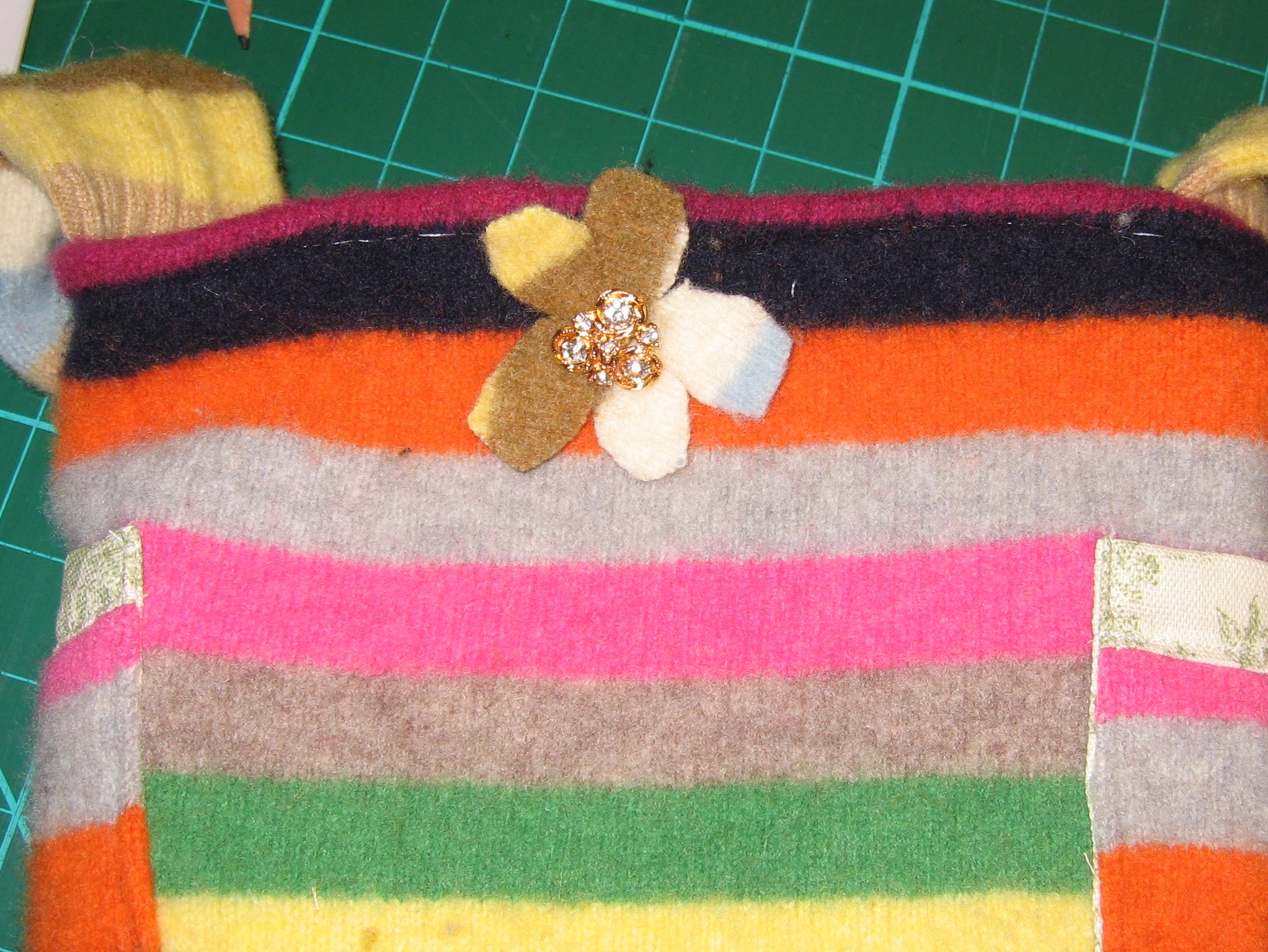
Using the remaining scraps, cut out 2 circles and trim the circles into free-form flowers.

Cut 2″ squares out of the bottom left and right, repeat for lining fabric.

Now, let’s make the lining!

Cut a square the same width and length from lining fabric for inside pockets. Fold in half and stitch along the fold.

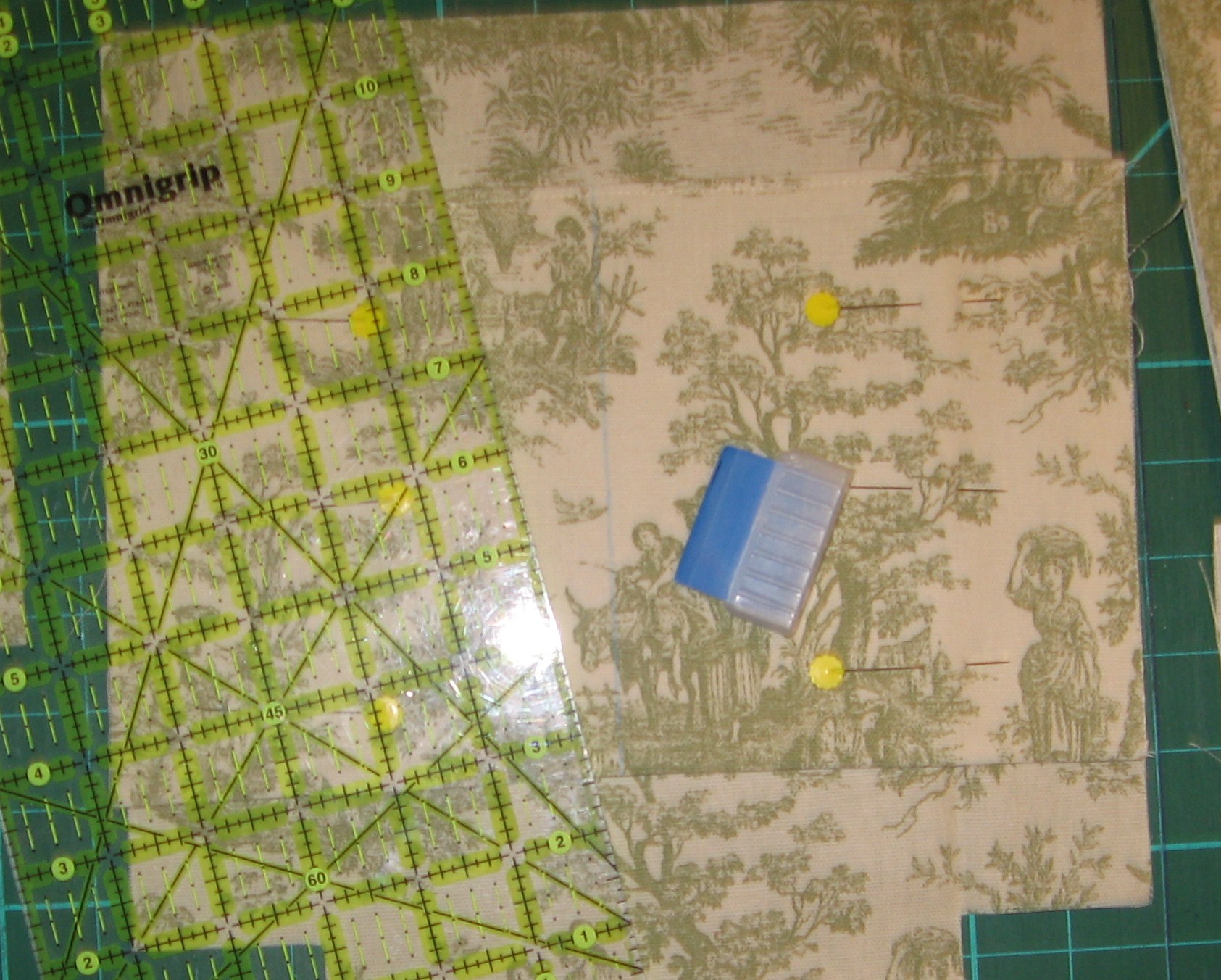
Pin pocket to inside and mark center with chalk for stitching line.

Pin sides and bottom of lining, stitch, leave 2″ corners open, leave opening in the side or bottom for turning.

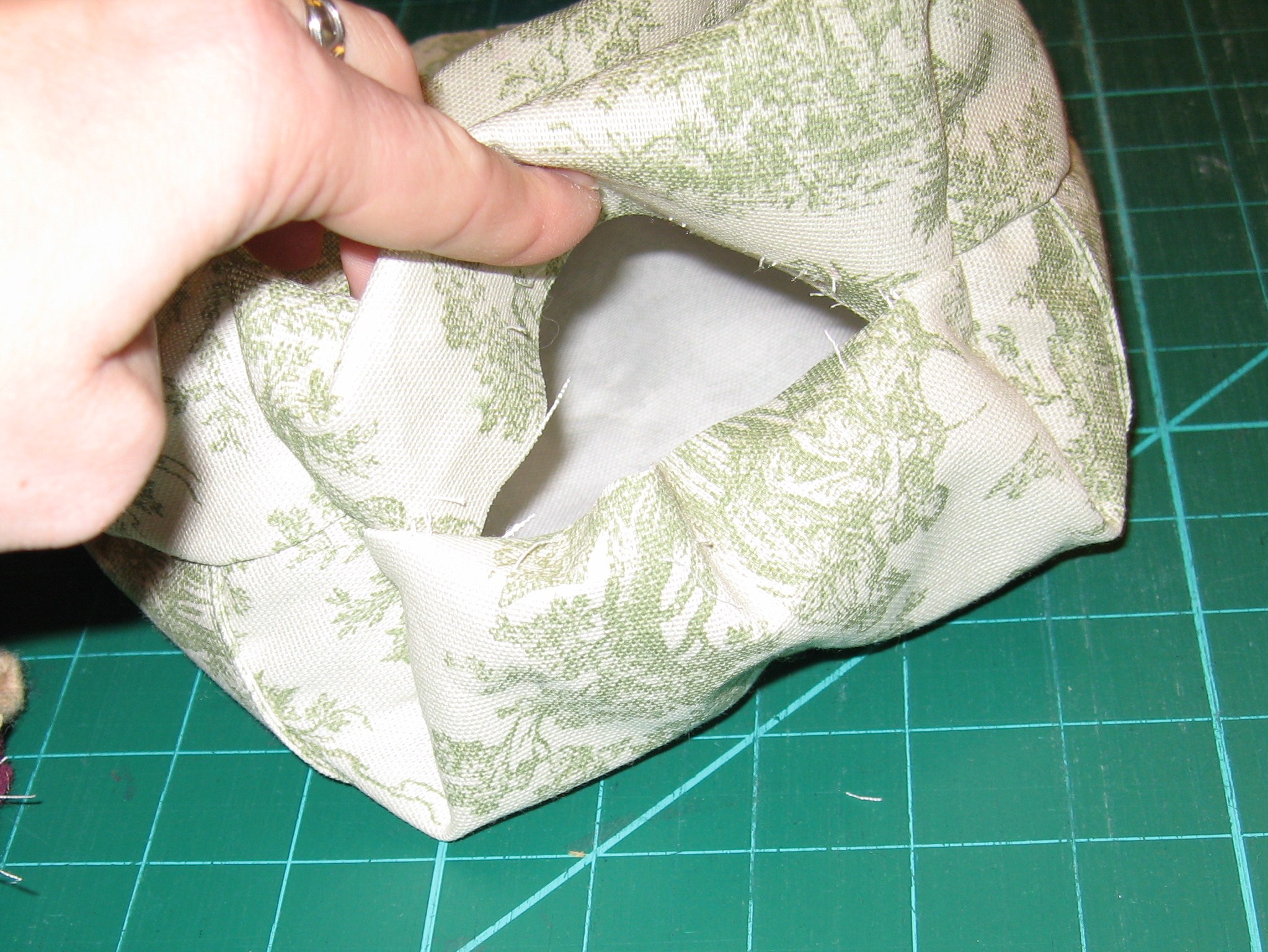
Match boxed corners (the notches in the bottom of the bag), pin & stitch.

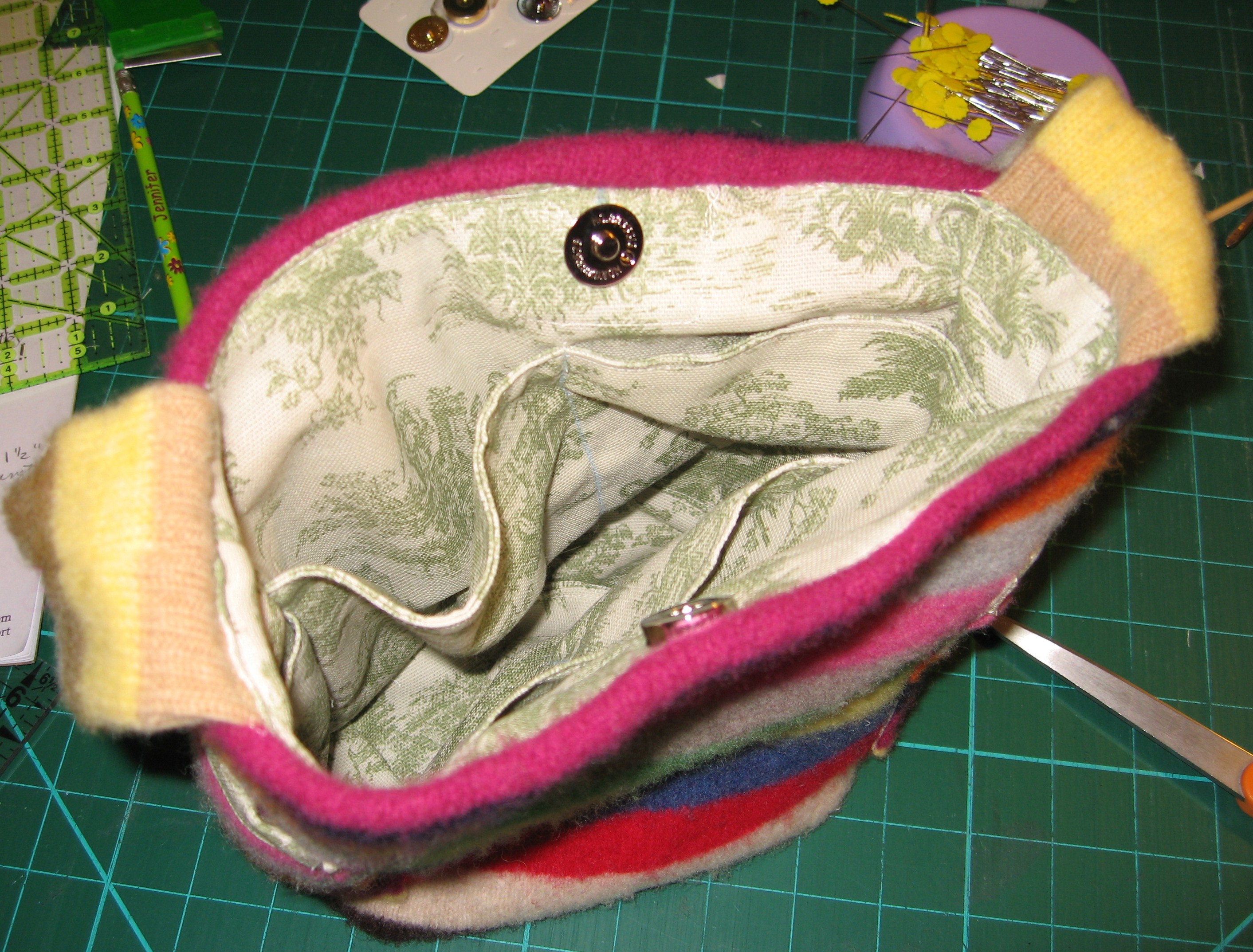
Press seams then turn right side out. The bottom and pockets of your lining should now look like this.

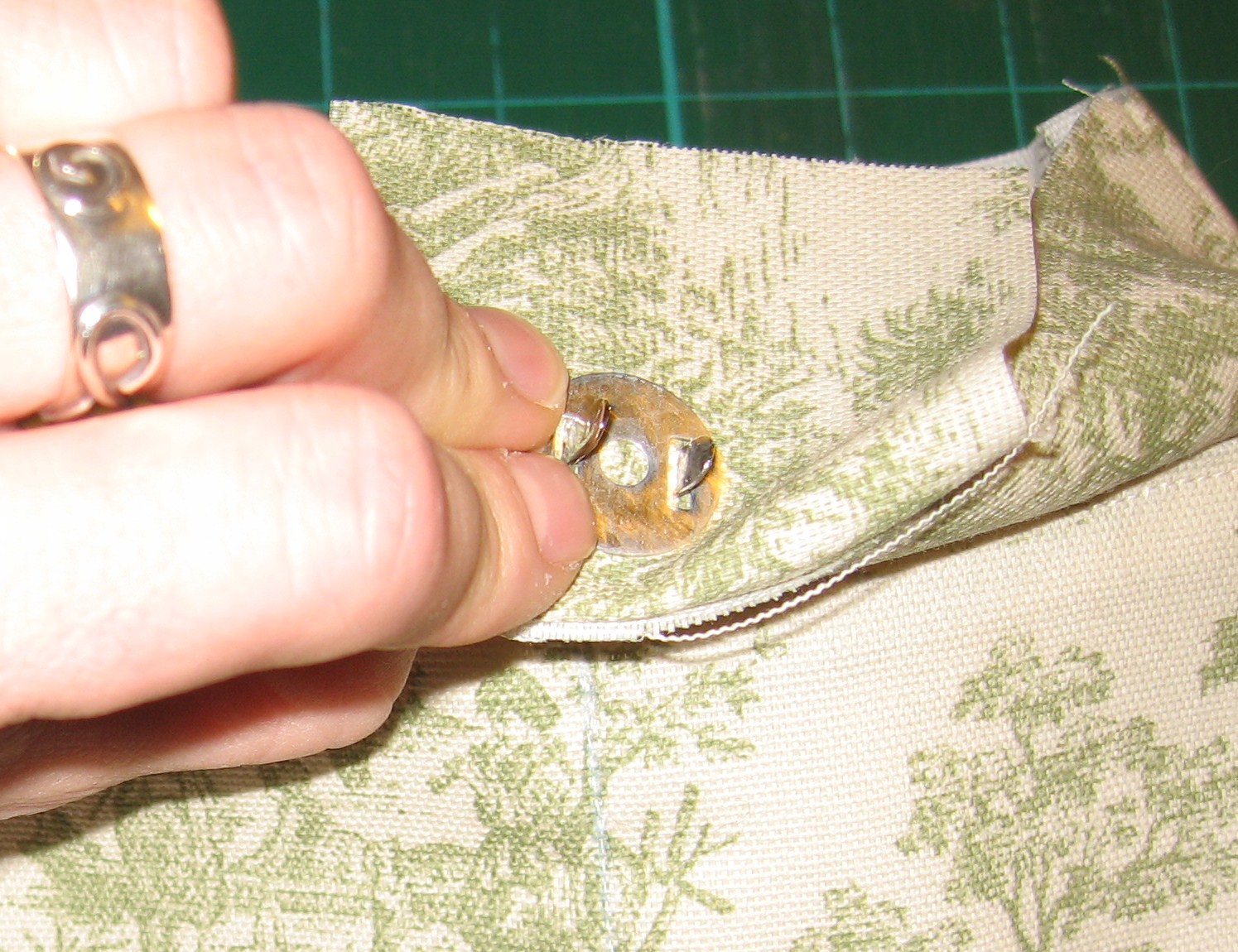
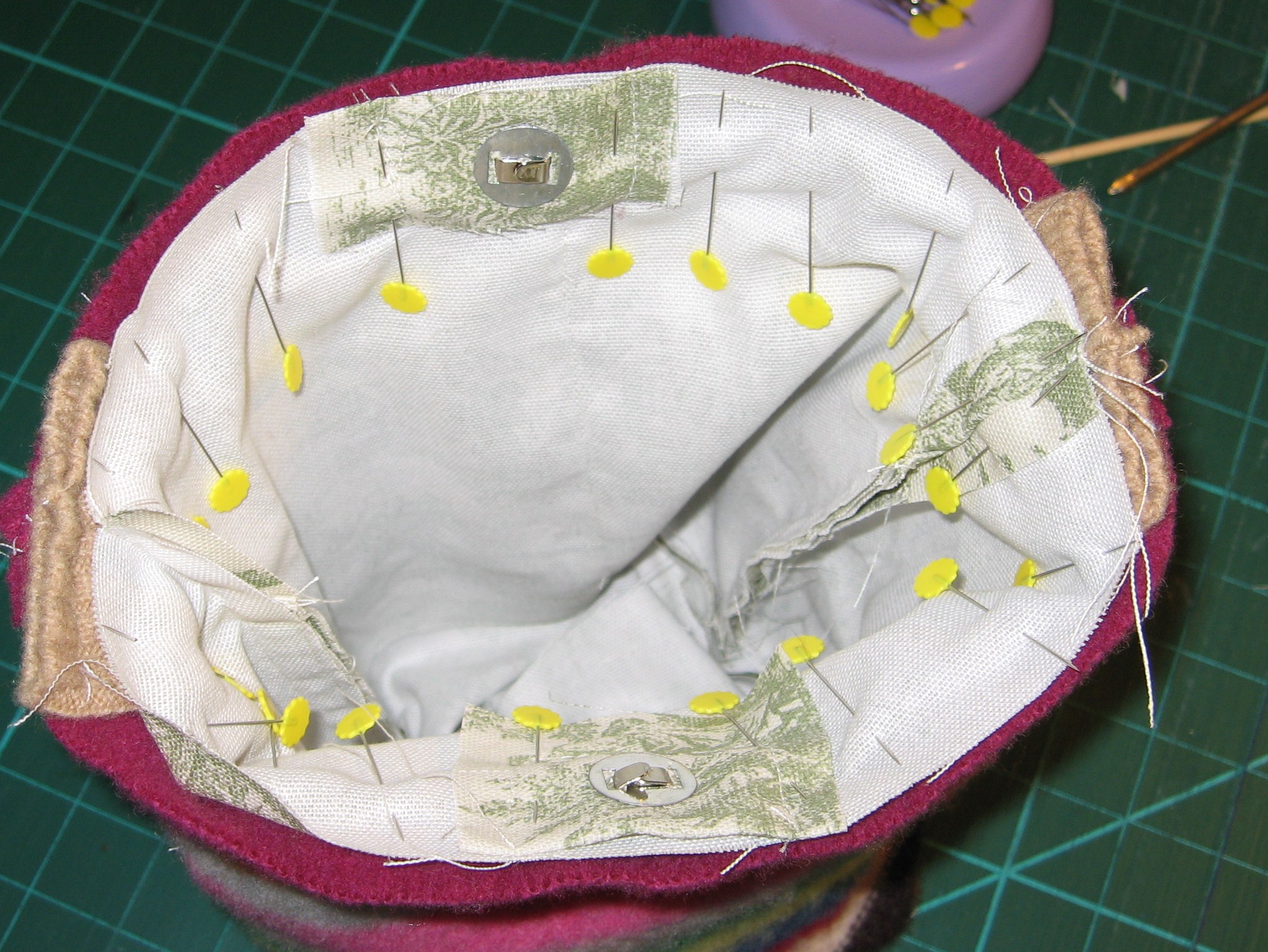
Add magnetic snaps to your lining following the manufacturer’s directions. Leave enough seam allowance at the top for stitching around. I recommend 1″ or more of space. Add a folded piece of scrap fabric to the back to reinforce the snap. Stitch around the snap to reinforce extra fabric.

Time to work on the outside sweater pieces!

Pin sweater pocket piece to lining pocket piece, right sides together (lining should be 1.5″ longer), stitch ends.

Line up bottom of pocket, pin, then stitch sides. Leave an opening for turning.

Trim corners, turn pocket and pin openings.

Stitch side seams of bag, leaving bottom open.

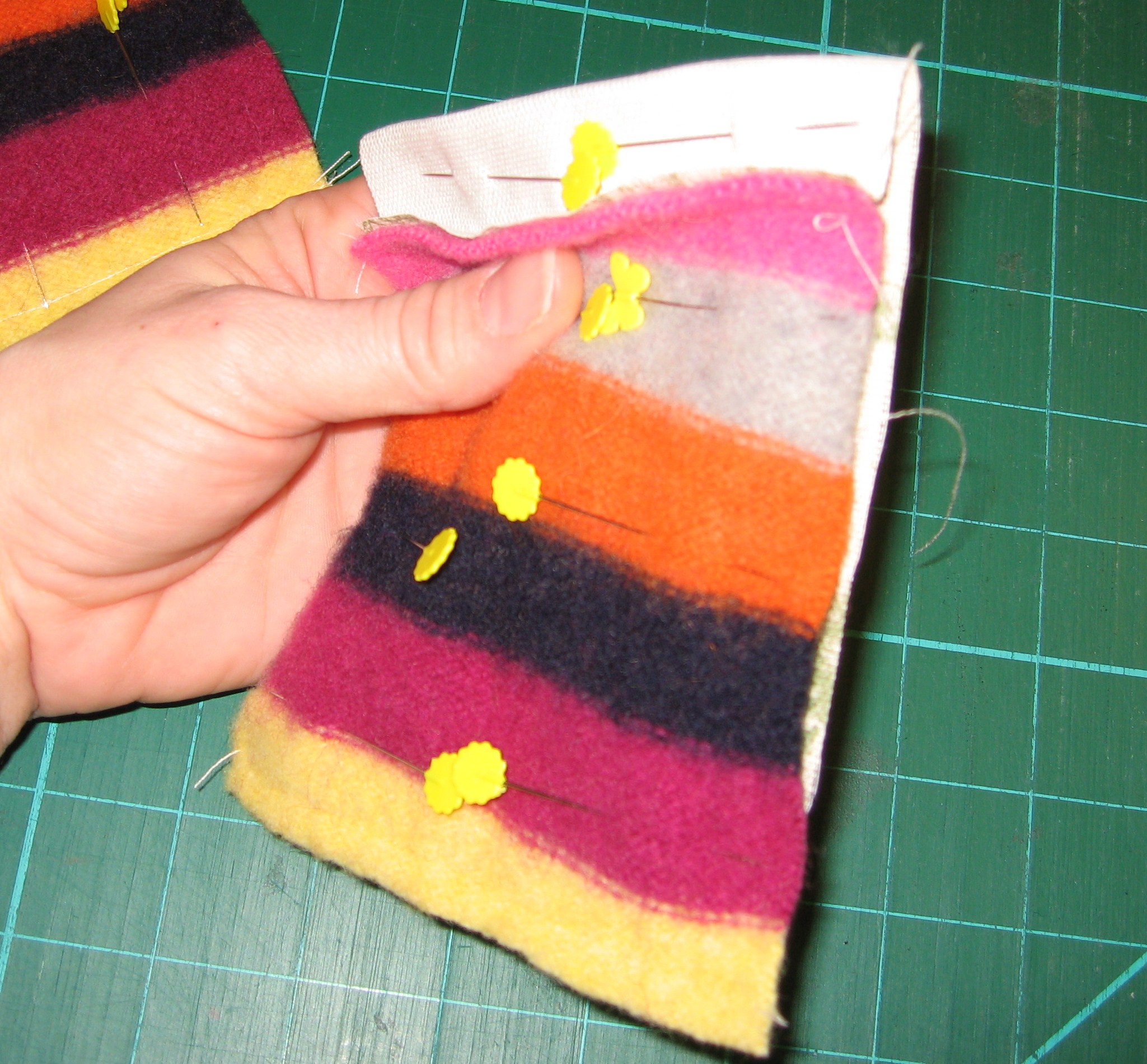
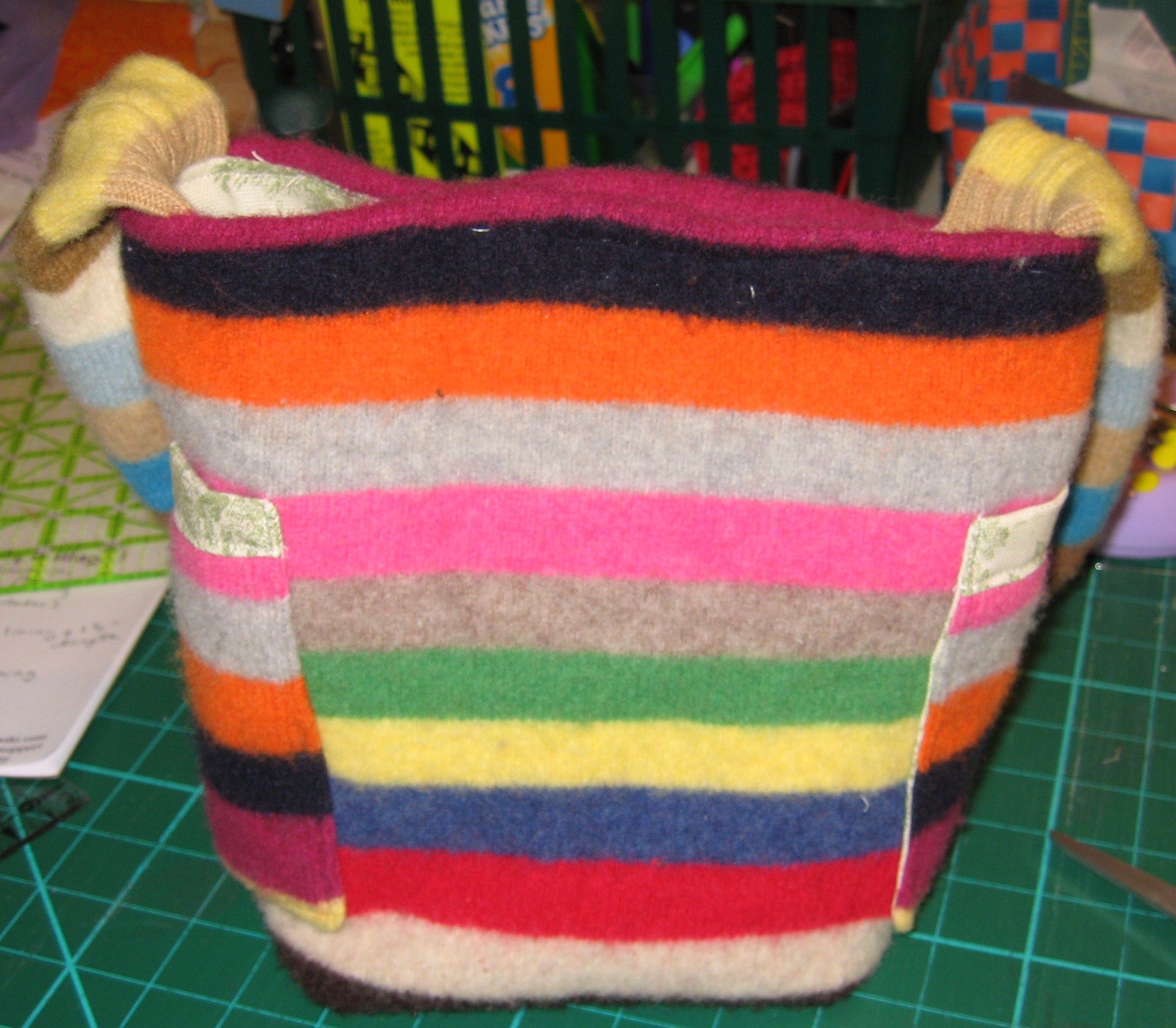
Turn the sweater bag body right side out, matching seams. Pin pockets over the side seams, then stitch to attach.

With right sides together, stitch across sweater bag bottom.

Fold in boxed corners, matching side & bottom seams, pin & stitch.

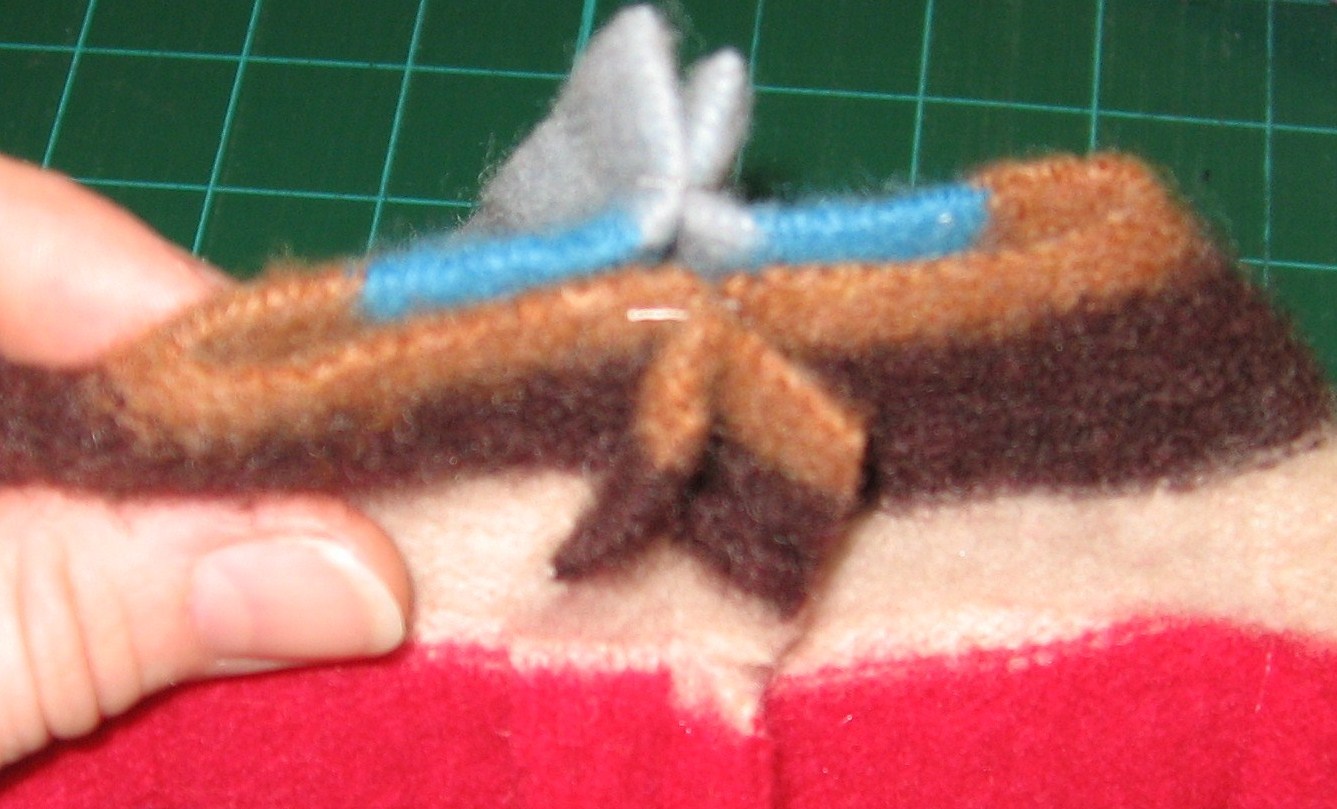
The inside bottom should look like this.

Time for Sleeves!

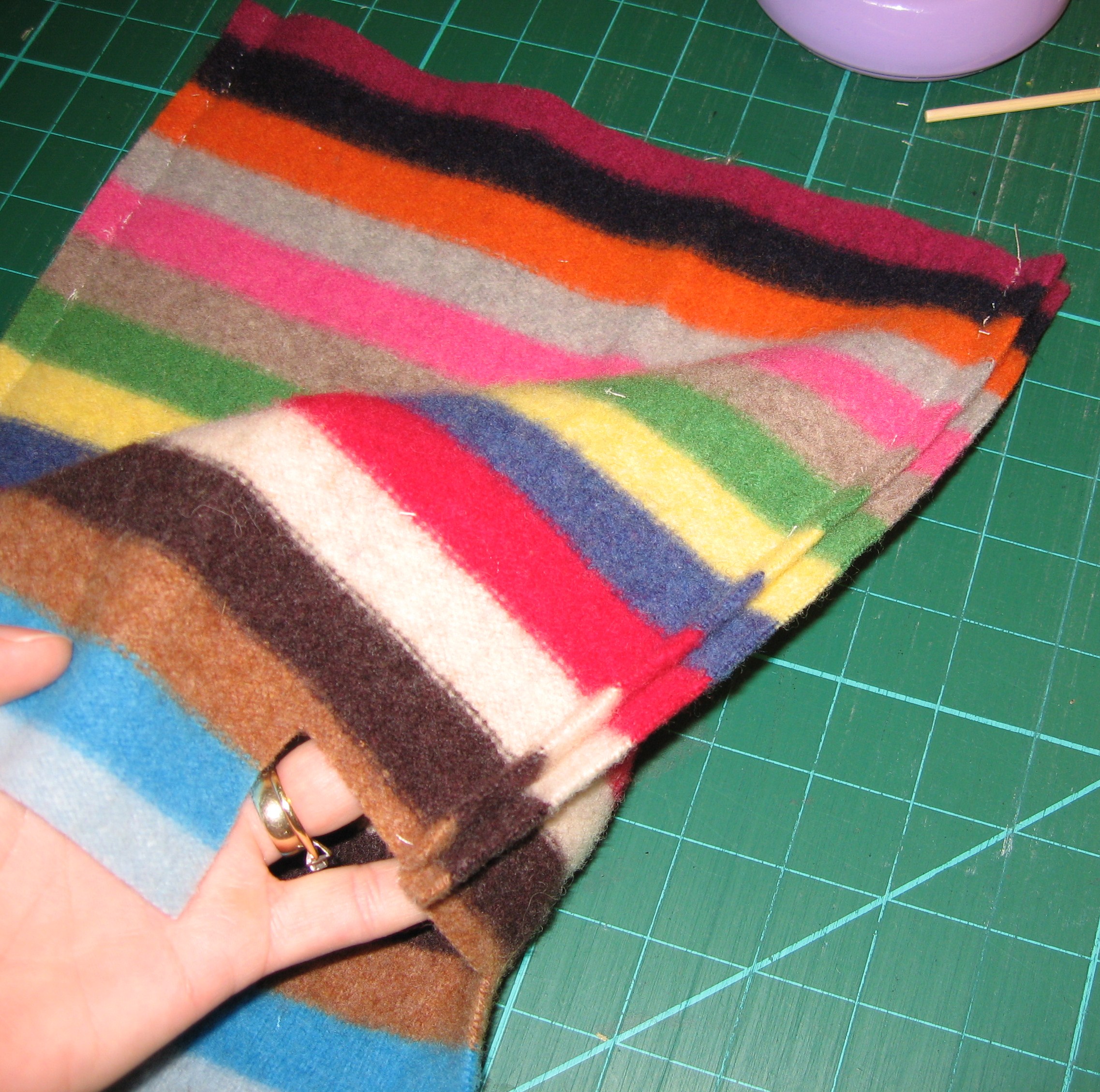
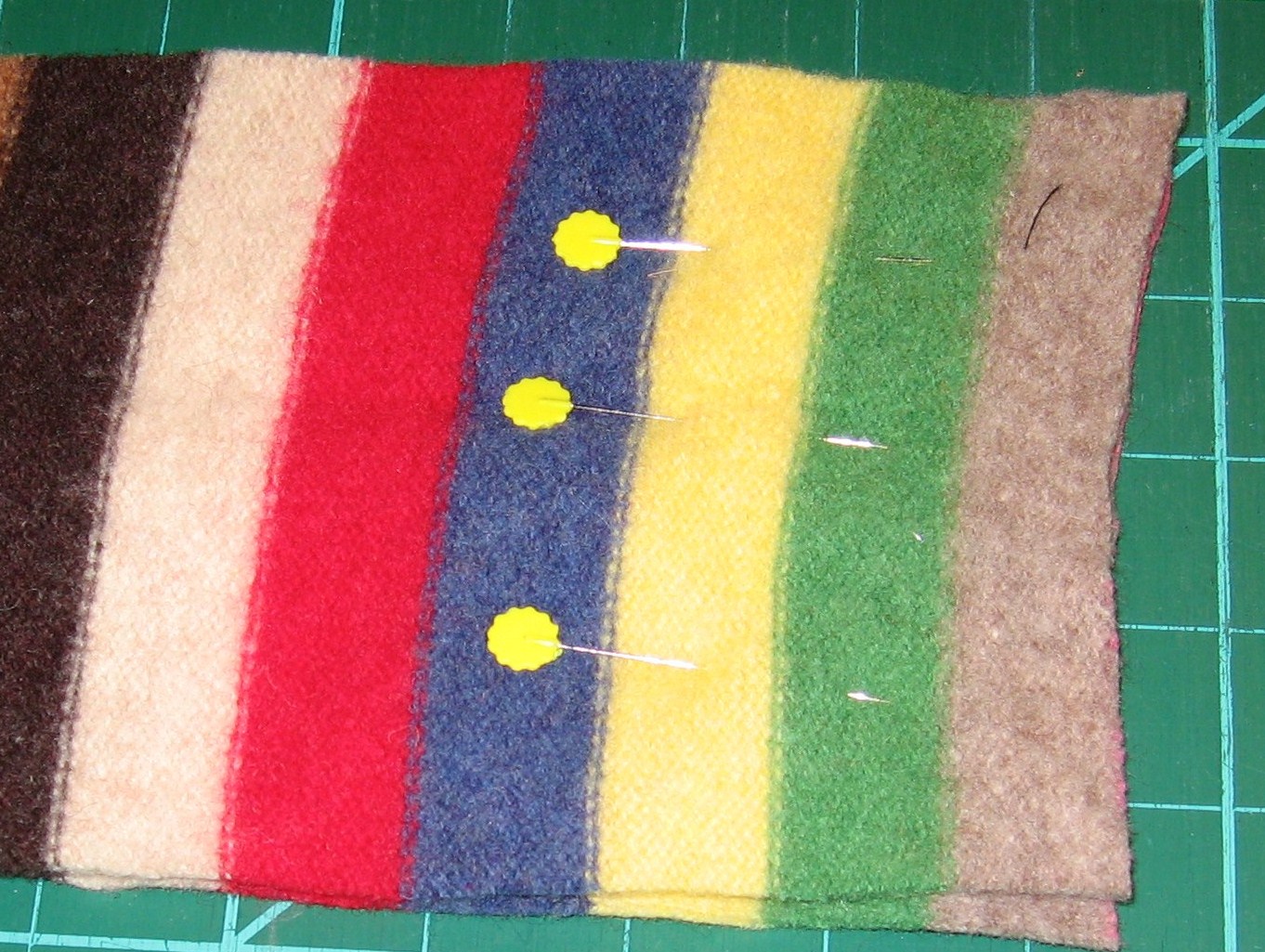
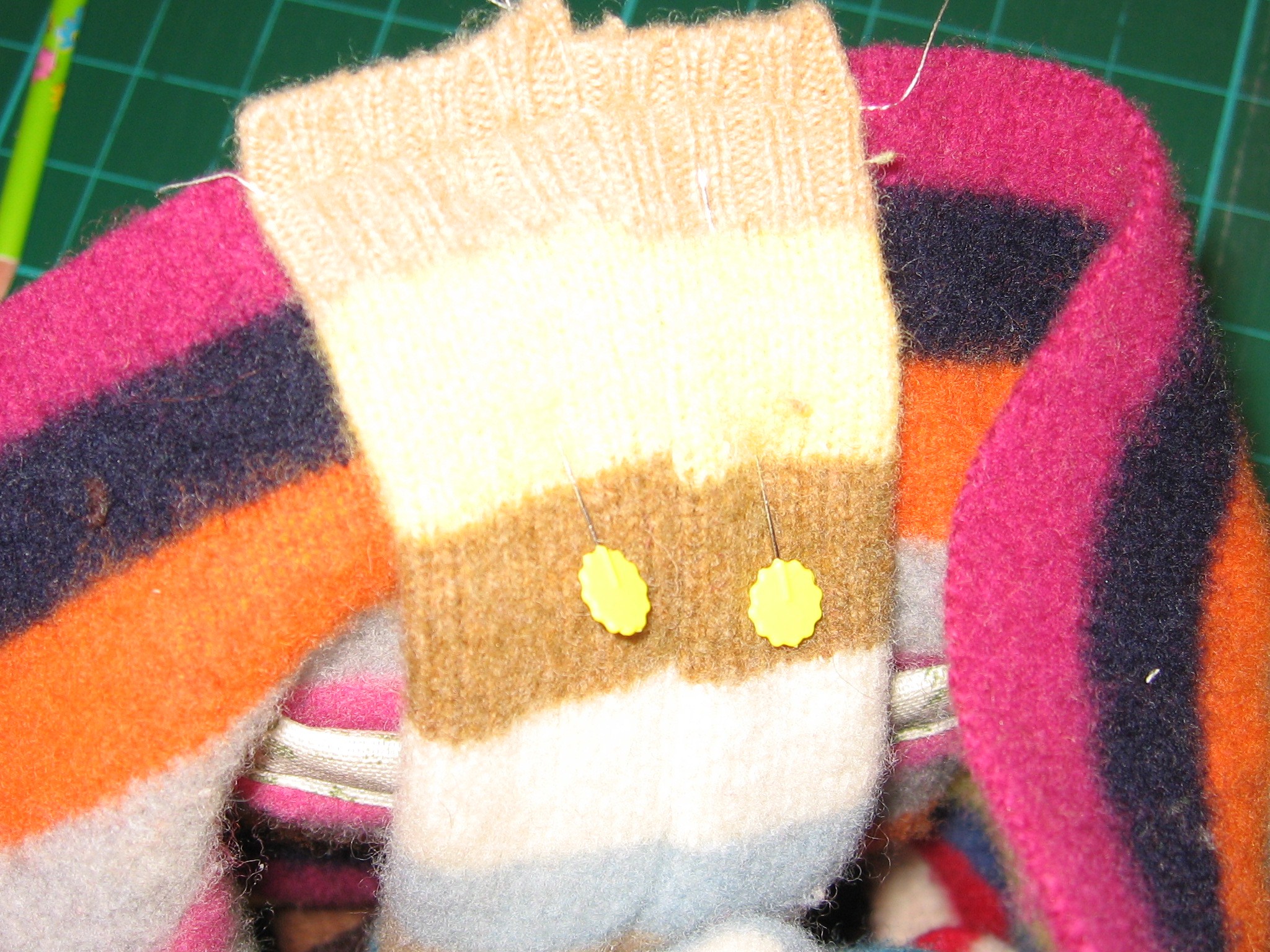
Trim sleeves to desired width for strap, I like a wider strip so tend to cut about 5″. This includes seam allowance. Remember, this is your bag, and this width will vary based on your sweater, so the dimensions are all yours!

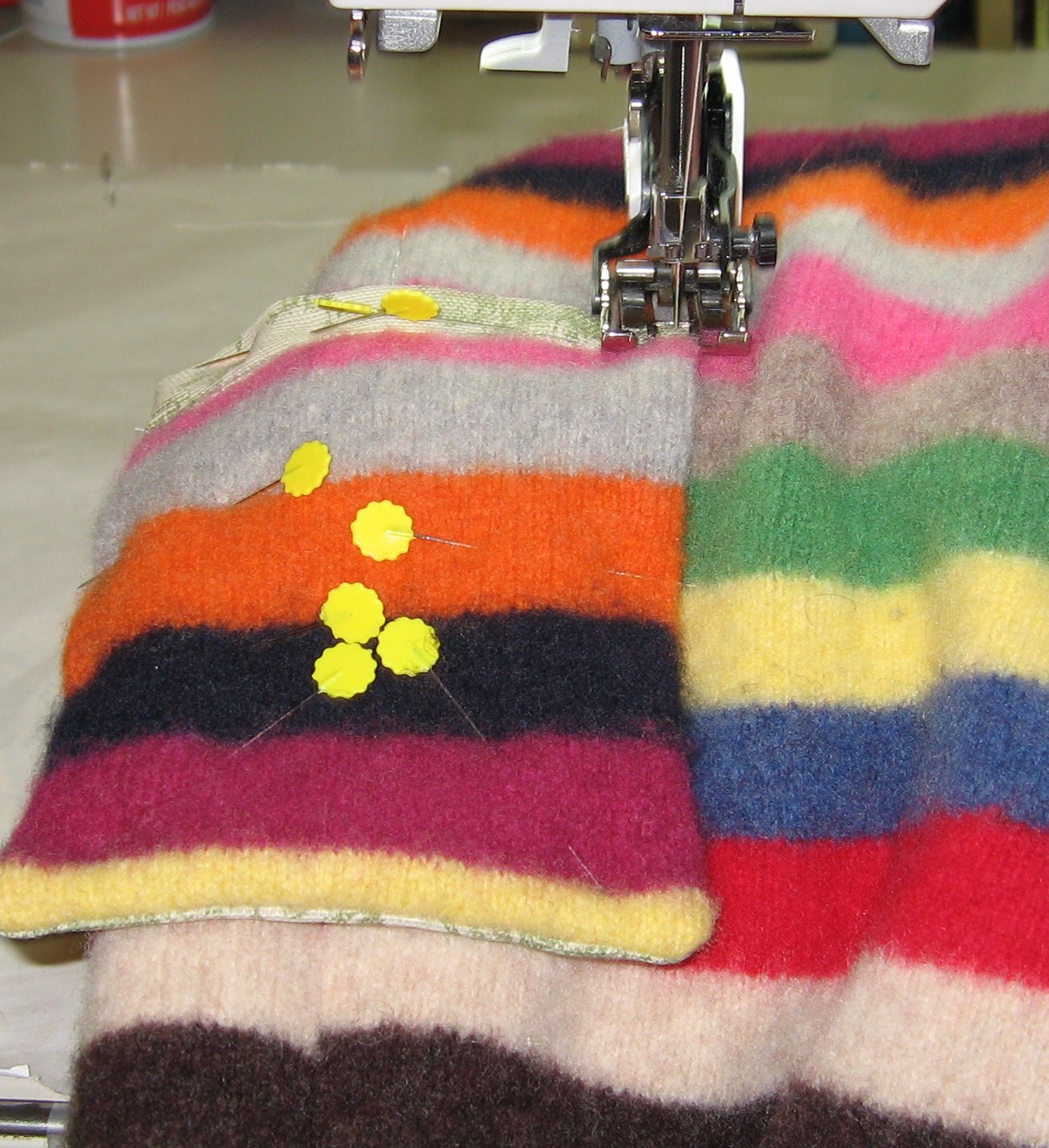
Pin ends of two sleeves together, stitch and trim seam.

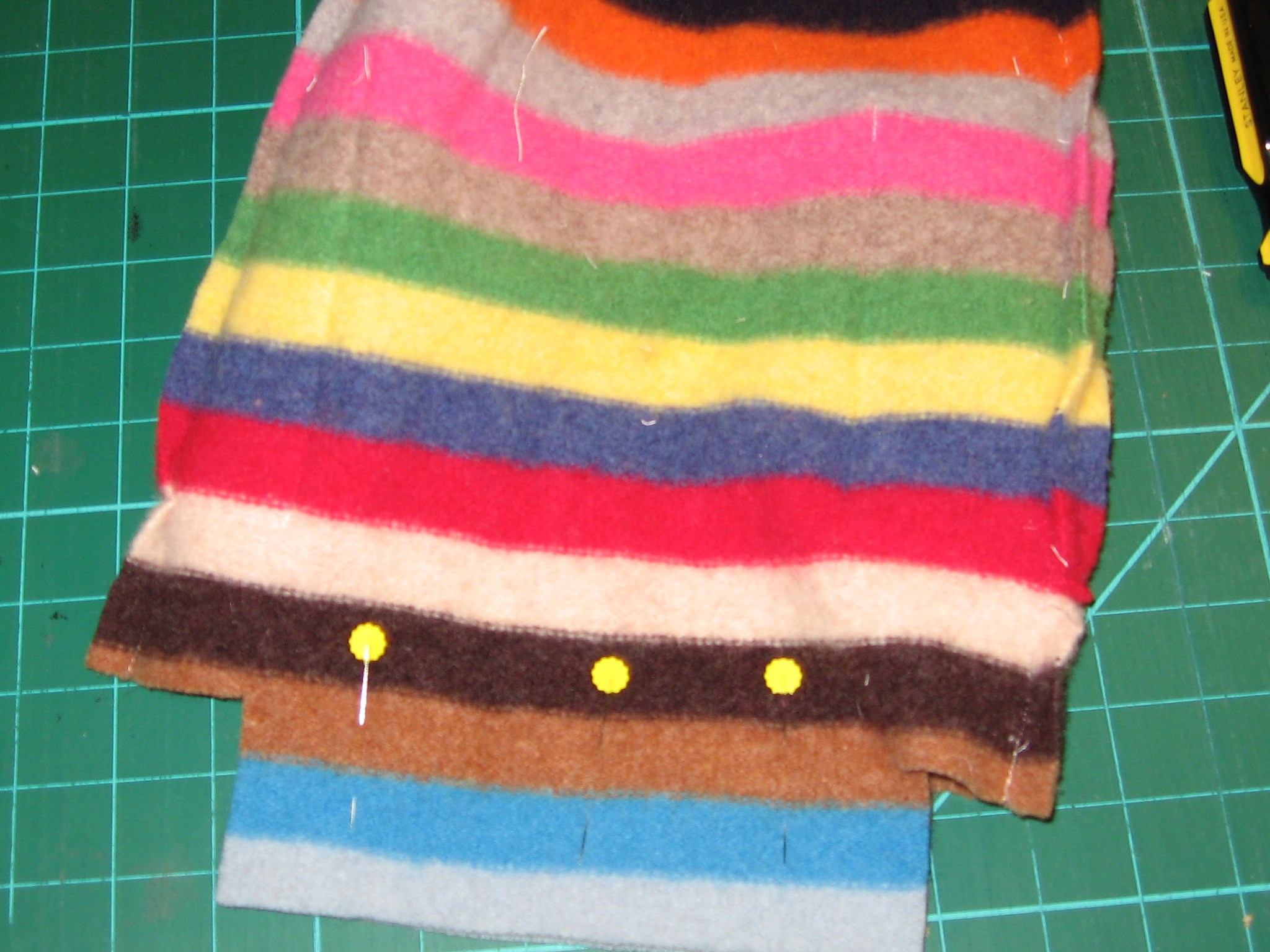
Fold lengthwise, stitch, leaving approx. 6″ open for turning

Turn right side out and smooth opening.


Stitch closed with a tight whip stitch.

Center and pin straps to side seams, being sure to match right sides. Stitch in place.

Ensure the straps are inside and pin the lining to the sweater (outside of the bag), right sides together. Stitch around the top.

Turn the bag right side out through the opening in the lining.

Pin opening in lining. Stitch closed.

Turn lining inside, smooth and pin. Top stitch.

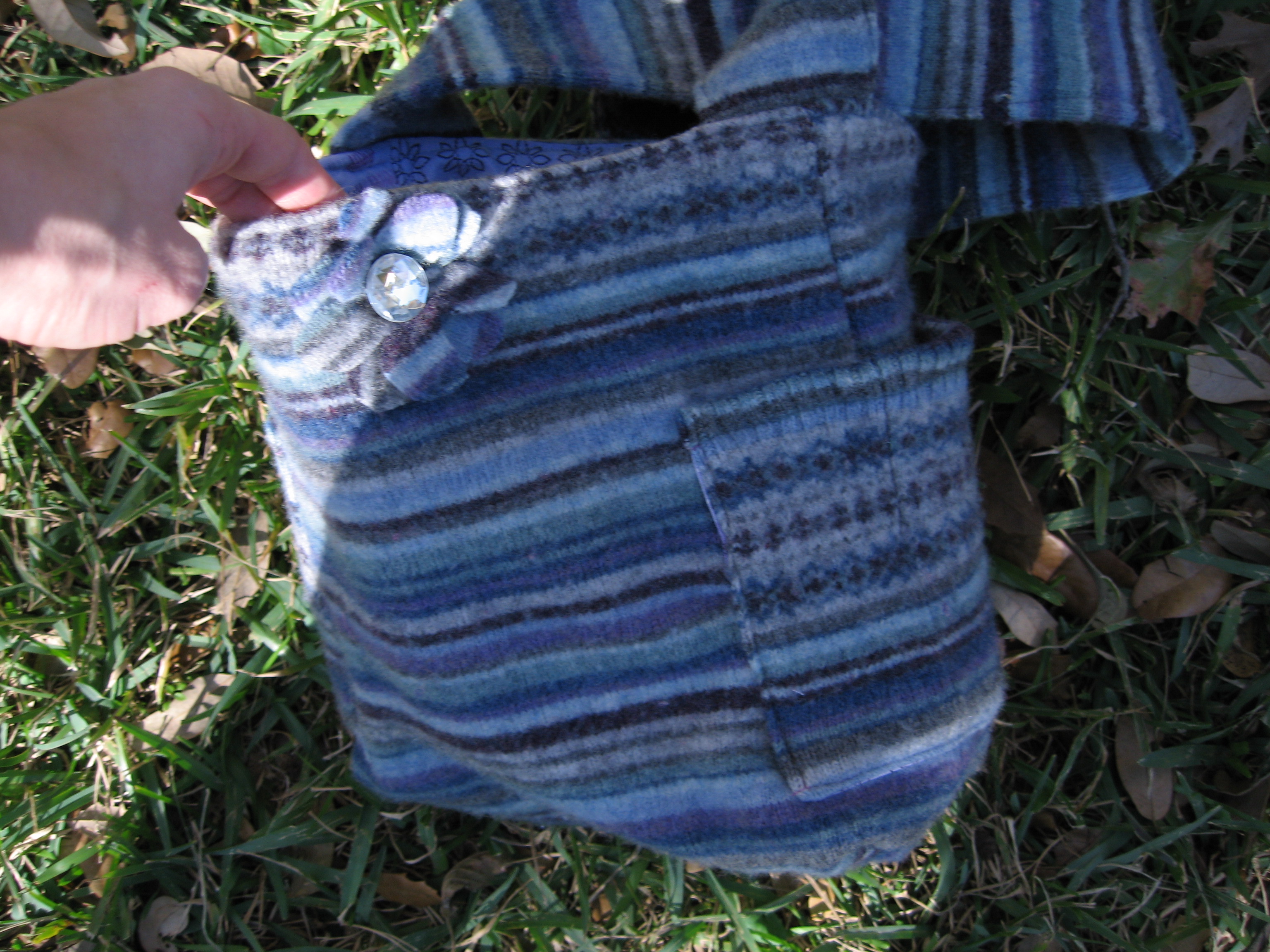
Stitch flower to center of each side over snap, stitch button on top. We are DONE!

What a fun way to recycle an old sweater!

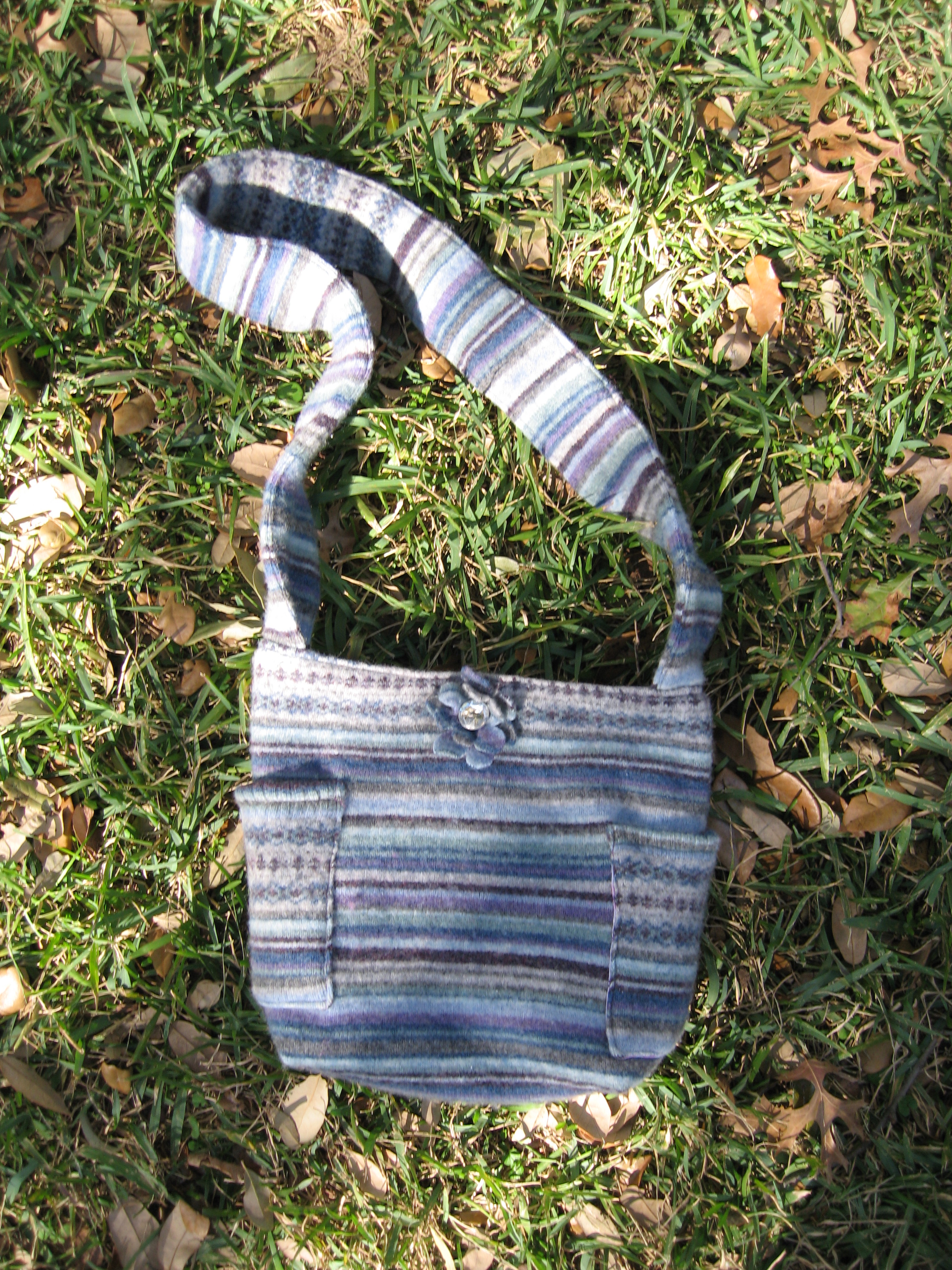
Here’s a fun one I made with a cute purple sweater!

Happy Crafting!

Find my free patterns on Sewhooked & Fandom in Stitches.

♥ Jennifer O

Posts on this blog may contain affiliate links to help cover the cost of my website. I thank you for your generous support. ♥